ECAM Paul Perskin CFN 204 Adapted with permission
- Slides: 27
+ ECAM Paul Perskin CFN 204 Adapted, with permission: Akay Tuncak, NYC DOE Amy Hoffman, NYC DOE Hal Melnick, Bank Street College Faculty Marvin Cohen, Bank Street College Faculty
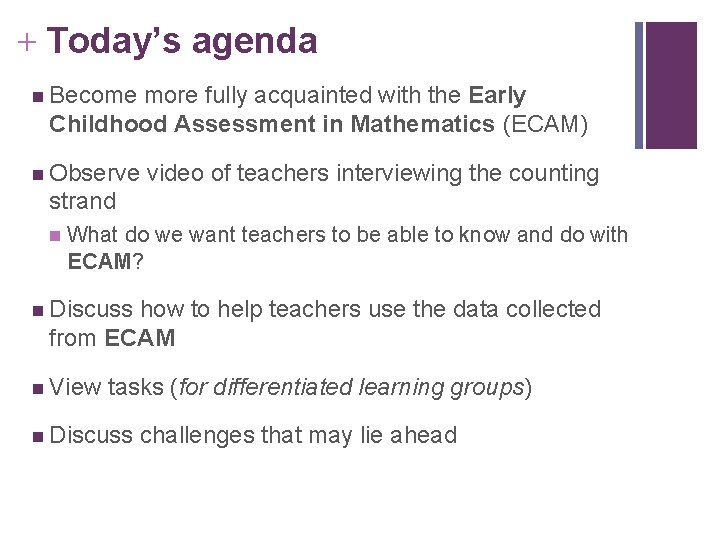
+ Today’s agenda n Become more fully acquainted with the Early Childhood Assessment in Mathematics (ECAM) n Observe video of teachers interviewing the counting strand n What do we want teachers to be able to know and do with ECAM? n Discuss how to help teachers use the data collected from ECAM n View tasks (for differentiated learning groups) n Discuss challenges that may lie ahead
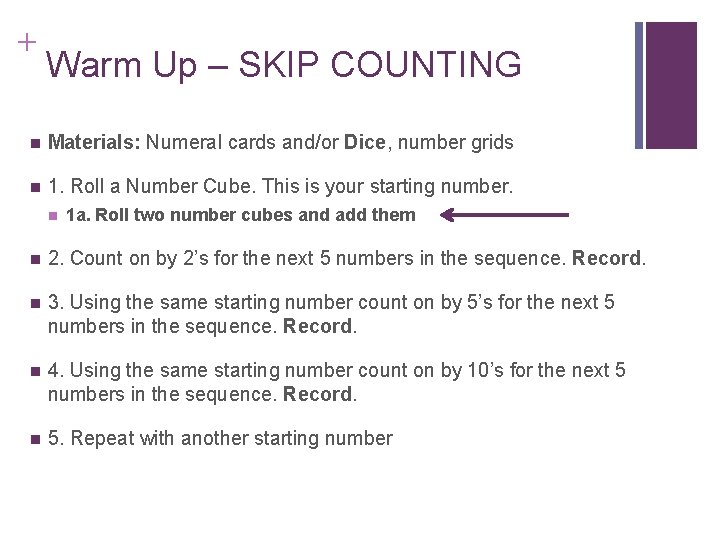
+ Warm Up – SKIP COUNTING n Materials: Numeral cards and/or Dice, number grids n 1. Roll a Number Cube. This is your starting number. n 1 a. Roll two number cubes and add them n 2. Count on by 2’s for the next 5 numbers in the sequence. Record. n 3. Using the same starting number count on by 5’s for the next 5 numbers in the sequence. Record. n 4. Using the same starting number count on by 10’s for the next 5 numbers in the sequence. Record. n 5. Repeat with another starting number
+ Purpose of this Tool n Identify what a child CAN do n Provide a snapshot of a child’s mathematical thinking n Align a child’s strengths against a developmental learning line n Inform whole class instruction n Inform appropriate groupings and align activities to specific groups n Not an end but a means to more focused instruction
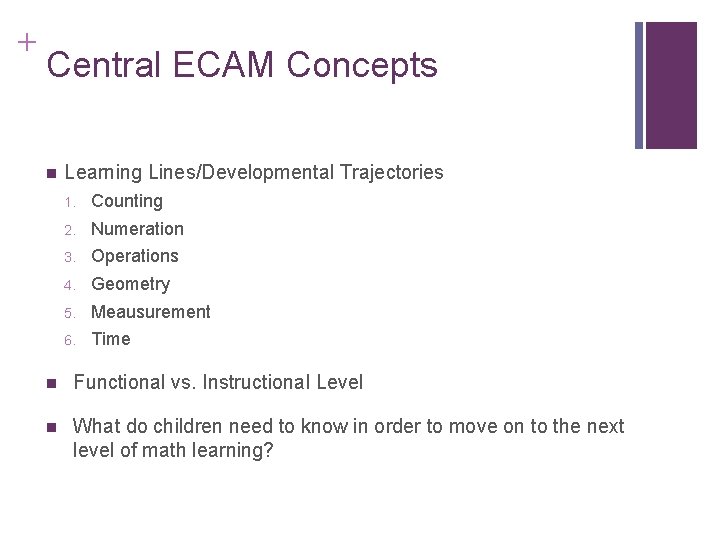
+ Central ECAM Concepts n Learning Lines/Developmental Trajectories 1. Counting 2. Numeration 3. Operations 4. Geometry 5. Meausurement 6. Time n Functional vs. Instructional Level n What do children need to know in order to move on to the next level of math learning?
+ The tool is NOT meant to: n Evaluate n Provide grades n Determine a grade level n Assess a whole class in one sitting
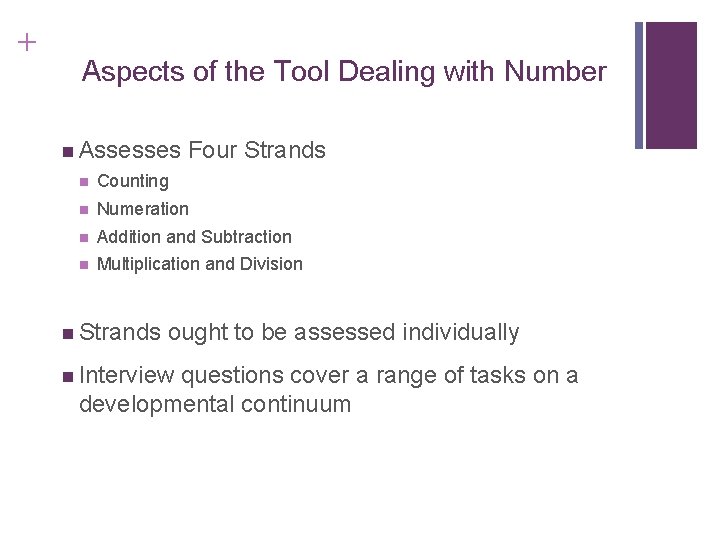
+ Aspects of the Tool Dealing with Number n Assesses Four Strands n Counting n Numeration n Addition and Subtraction n Multiplication and Division n Strands ought to be assessed individually n Interview questions cover a range of tasks on a developmental continuum
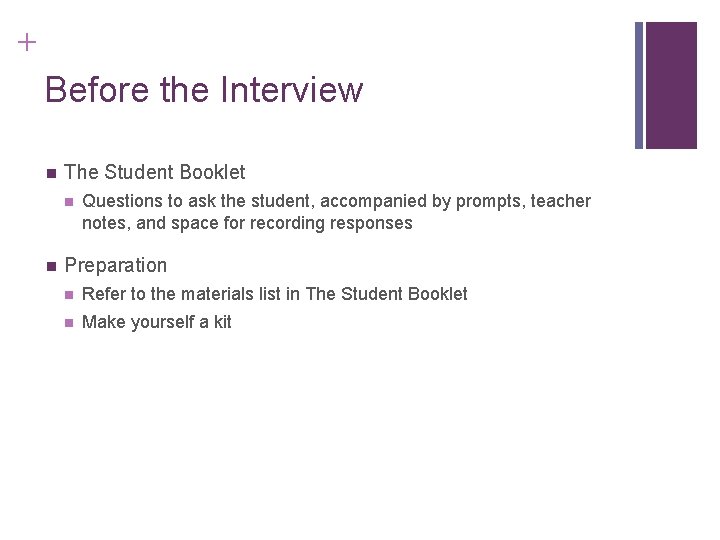
+ Before the Interview n The Student Booklet n n Questions to ask the student, accompanied by prompts, teacher notes, and space for recording responses Preparation n Refer to the materials list in The Student Booklet n Make yourself a kit
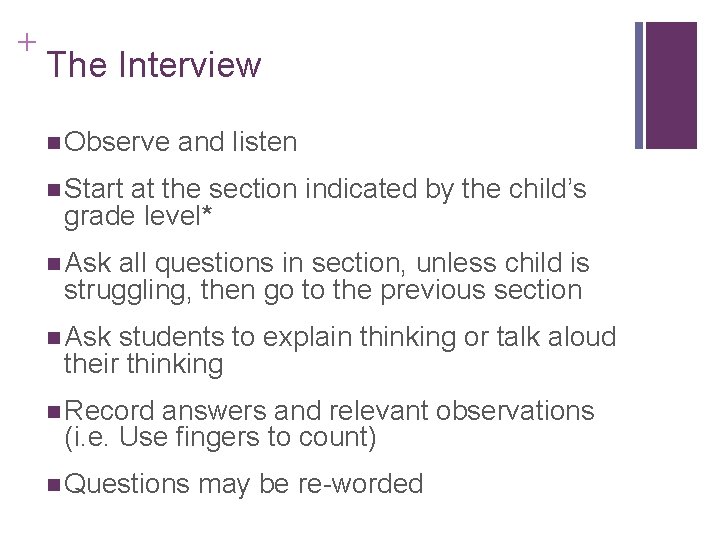
+ The Interview n Observe and listen n Start at the section indicated by the child’s grade level* n Ask all questions in section, unless child is struggling, then go to the previous section n Ask students to explain thinking or talk aloud their thinking n Record answers and relevant observations (i. e. Use fingers to count) n Questions may be re-worded
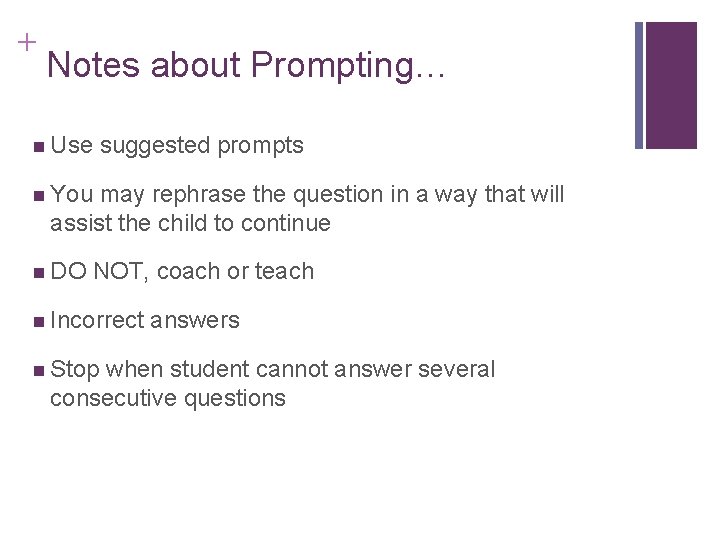
+ Notes about Prompting… n Use suggested prompts n You may rephrase the question in a way that will assist the child to continue n DO NOT, coach or teach n Incorrect answers n Stop when student cannot answer several consecutive questions
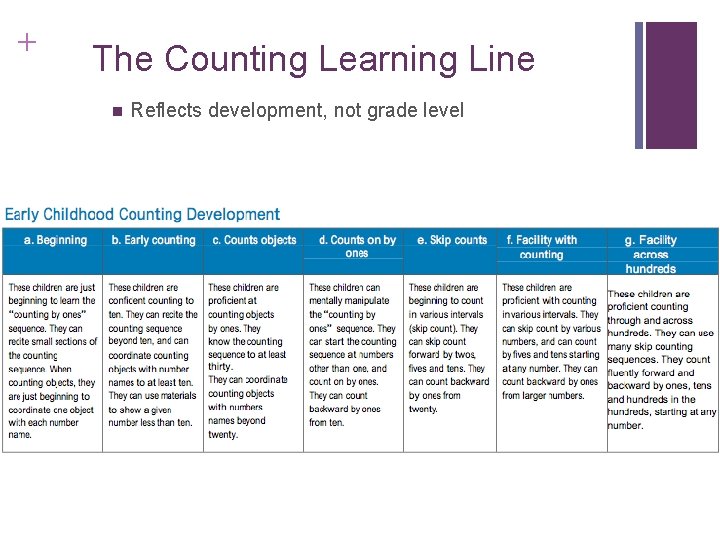
+ The Counting Learning Line n Reflects development, not grade level
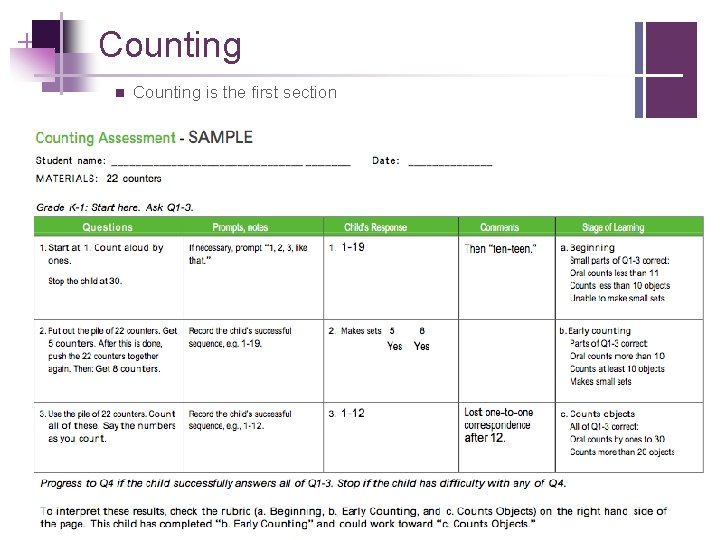
+ Counting n Counting is the first section
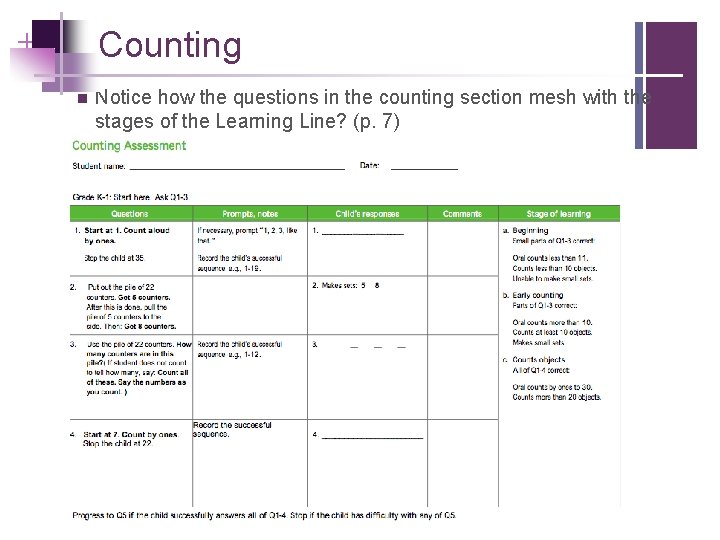
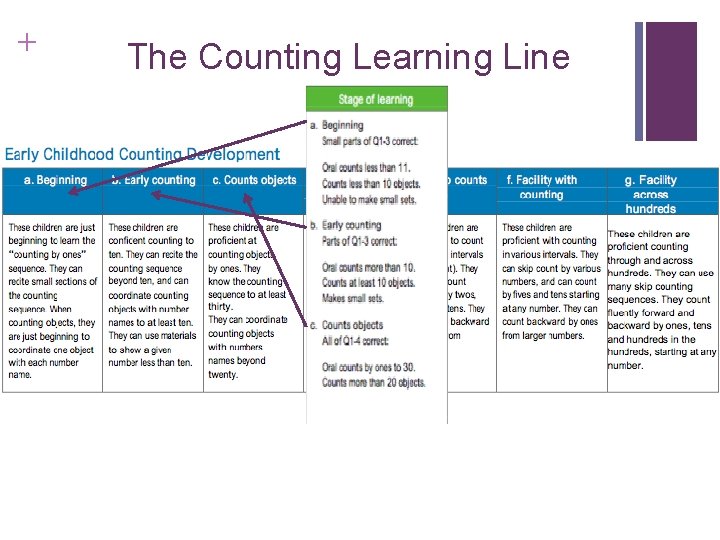
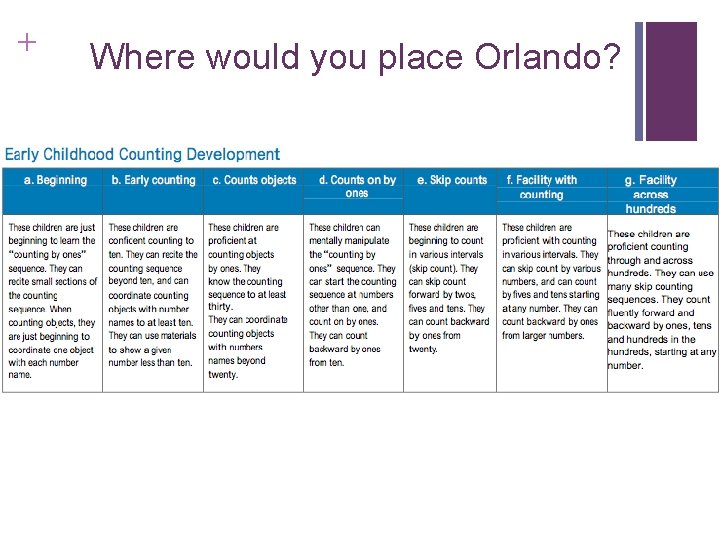
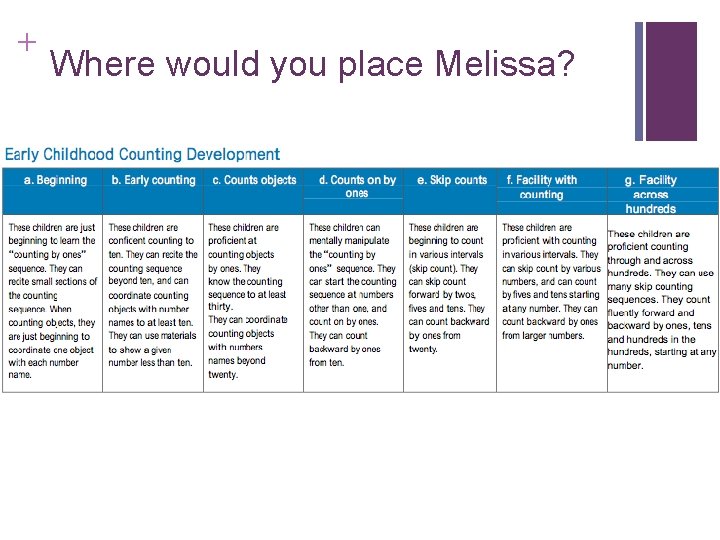
+ Counting n Notice how the questions in the counting section mesh with the stages of the Learning Line? (p. 7)
+ The Counting Learning Line
+ A ‘taste’ of ECAM? Let’s watch interviews Of Orlando and then Melissa
+ Video - Orlando n What can we learn about Orlando? n How far has he progressed along the Counting Learning Line?
+ Where would you place Orlando?
+ Video - Melissa n What can we learn about Melissa? n How far has she progressed along the Counting Learning Line?
+ Where would you place Melissa?
+ Discussion n What does a child have to know and be able to do to successfully count?
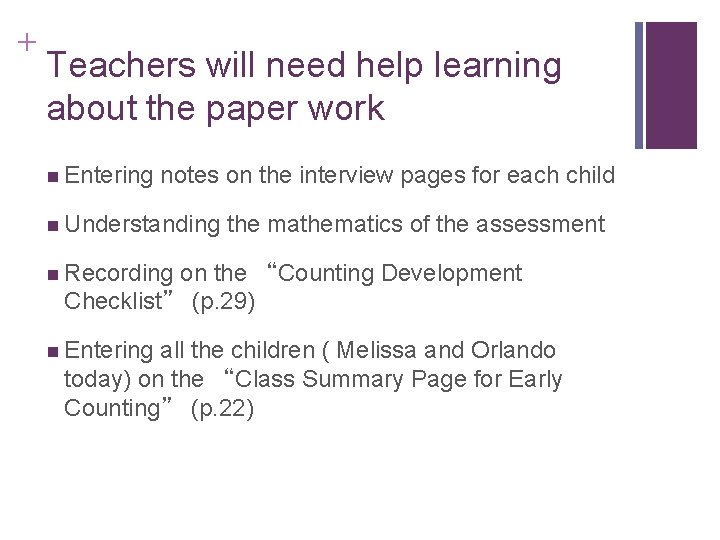
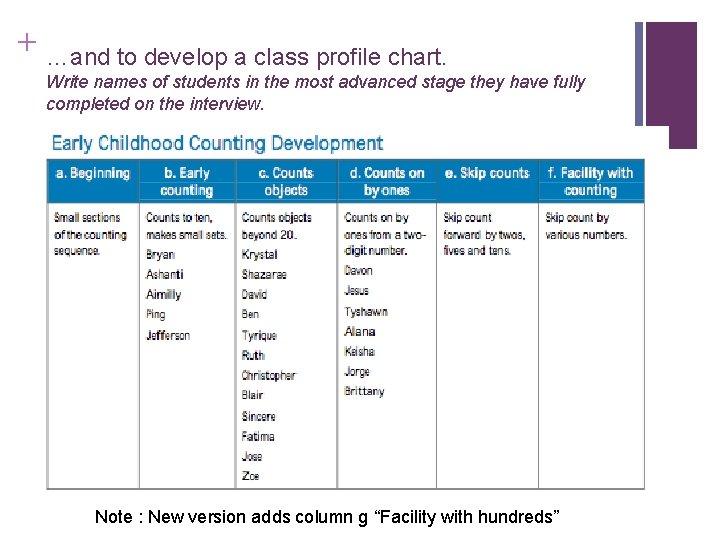
+ Teachers will need help learning about the paper work n Entering notes on the interview pages for each child n Understanding the mathematics of the assessment n Recording on the “Counting Development Checklist” (p. 29) n Entering all the children ( Melissa and Orlando today) on the “Class Summary Page for Early Counting” (p. 22)
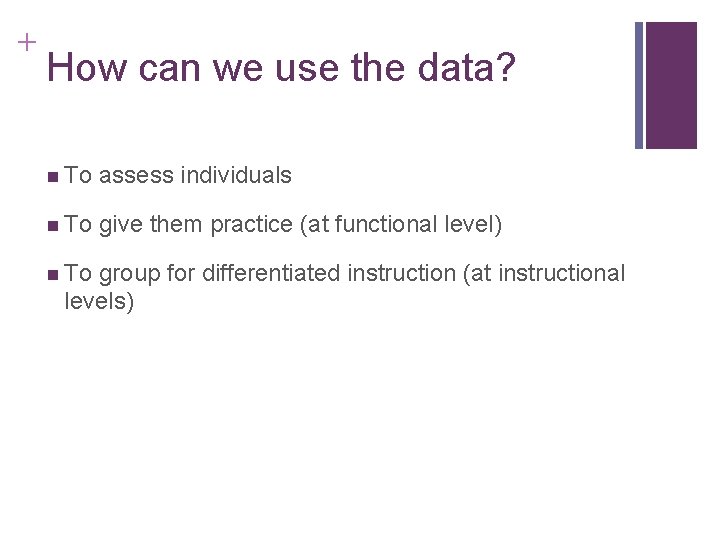
+ How can we use the data? n To assess individuals n To give them practice (at functional level) n To group for differentiated instruction (at instructional levels)
+ …and to develop a class profile chart. Write names of students in the most advanced stage they have fully completed on the interview. Note : New version adds column g “Facility with hundreds”
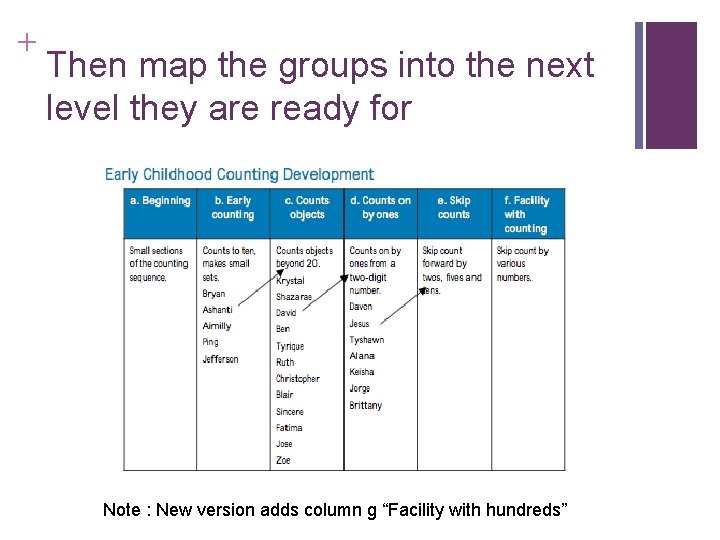
+ Then map the groups into the next level they are ready for Note : New version adds column g “Facility with hundreds”
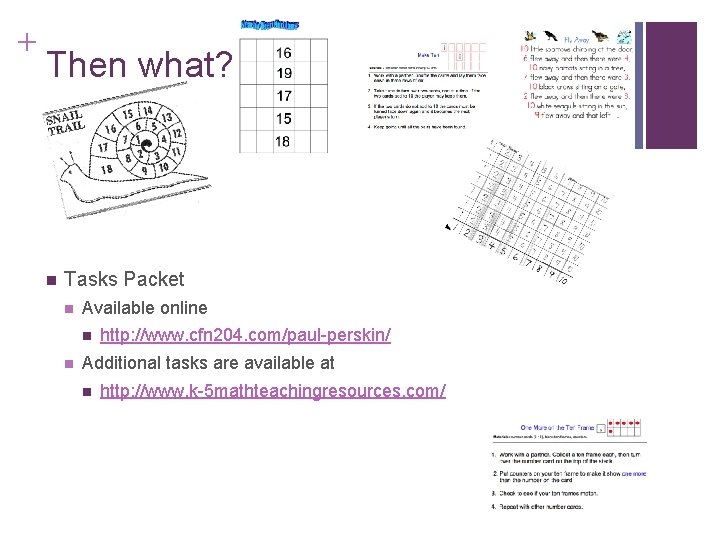
+ Then what? n Tasks Packet n Available online n n http: //www. cfn 204. com/paul-perskin/ Additional tasks are available at n http: //www. k-5 mathteachingresources. com/
+ Preparing for next session n Select three students to assess n You might want to assess a typical student, a struggling student, and an advanced student n Please be prepared to discuss the experiences and outcomes at our next meeting.
+ Next Math Meeting n Wednesday, February 15, 2012 n 8: 30 am-11: 30 am n Location: PS 153 n Content: to be determined