Dr Muhammad AliurRasheed Lecturer Department of Physiotherapy Sargodha



- Slides: 38
Dr. Muhammad Ali-ur-Rasheed Lecturer , Department of Physiotherapy. Sargodha Medical College.
Outline • Cranial nerves Assessment
Sources • http: //www. osceskills. com/elearning/subjects/cranial-nerve-examination/ • O’ Sullivan • Neurological examination
A mechanic does not need to use every tool on every project
Tools of the trade
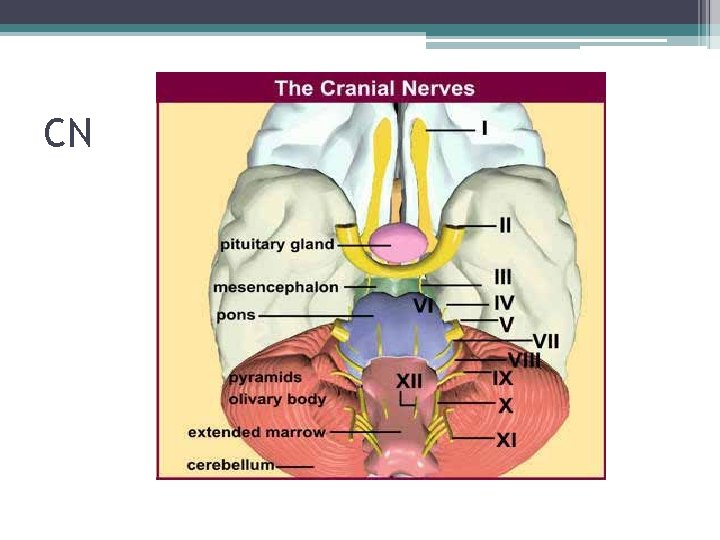
CN
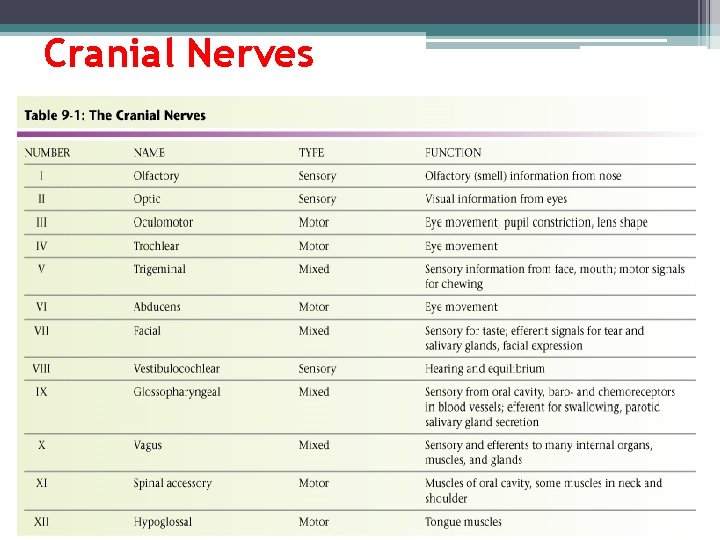
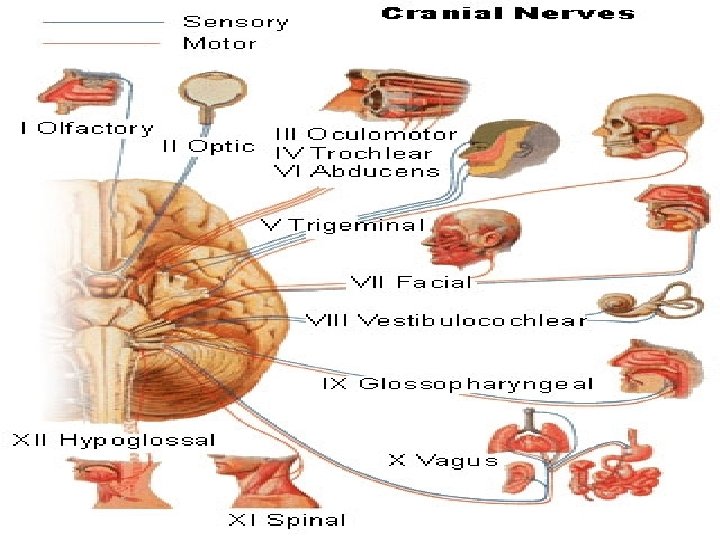
Cranial Nerves • Total number of cranial nerves • Sensory cranial nerves I, II, VIII = 12 =3 • Motor cranial nerves III, IV, VI, XII = 5 • Mixed cranial nerves V, VII, IX, X =4
Cranial Nerves Table 9 -1: The Cranial Nerves
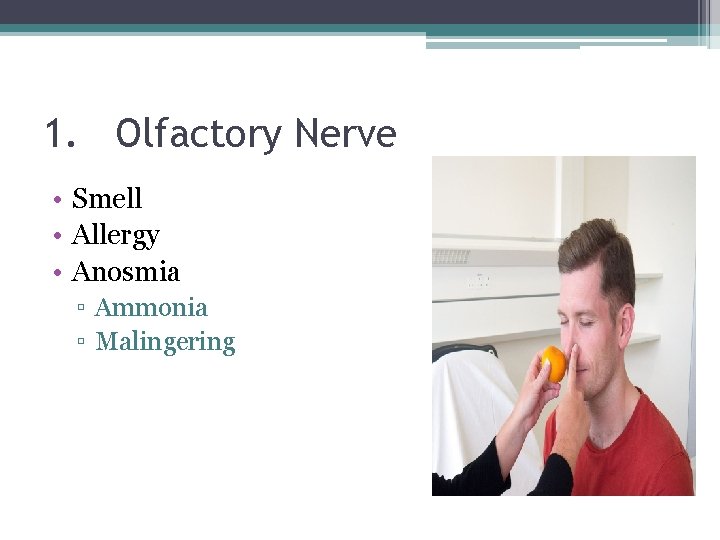
1. Olfactory Nerve • Smell • Allergy • Anosmia ▫ Ammonia ▫ Malingering
Lesion • Frontal lobe tumor • Closed head injuries • Nasal obstruction • Viral infections • Parkinsons disease • Alzheimer’s • Multiple Sclerosis
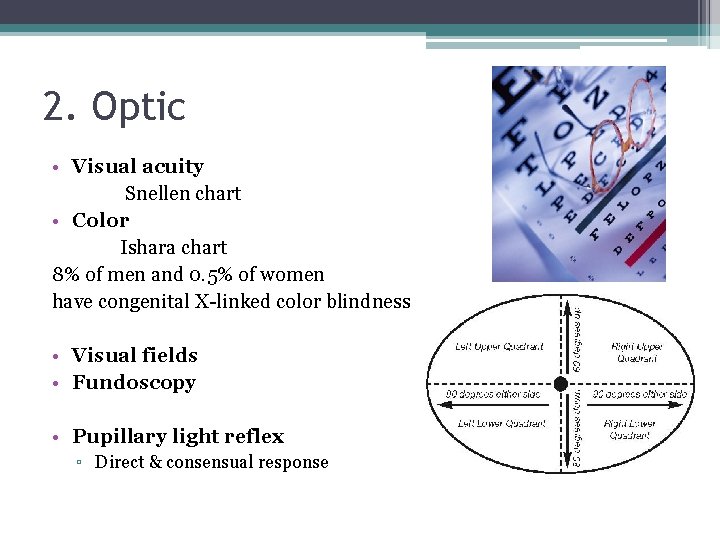
2. Optic • Visual acuity Snellen chart • Color Ishara chart 8% of men and 0. 5% of women have congenital X-linked color blindness • Visual fields • Fundoscopy • Pupillary light reflex ▫ Direct & consensual response
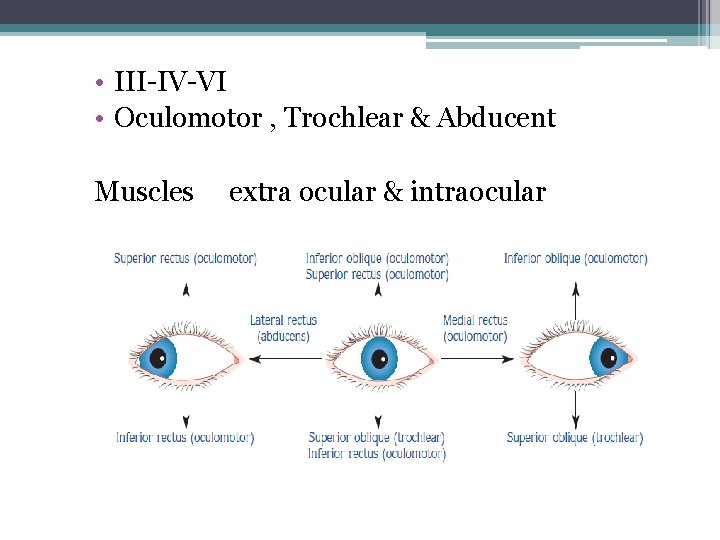
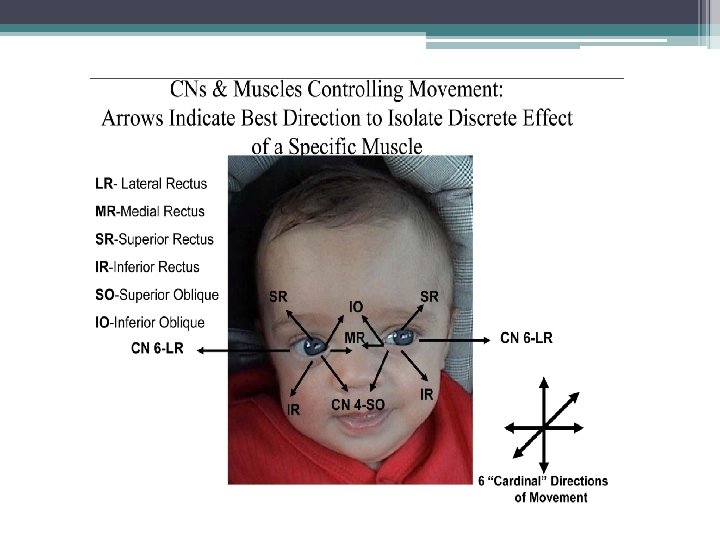
• III-IV-VI • Oculomotor , Trochlear & Abducent Muscles extra ocular & intraocular
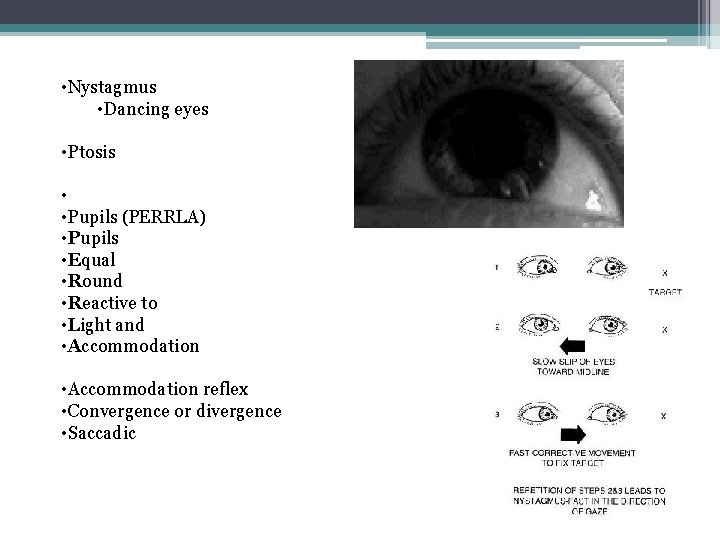
• Nystagmus • Dancing eyes • Ptosis • • Pupils (PERRLA) • Pupils • Equal • Round • Reactive to • Light and • Accommodation reflex • Convergence or divergence • Saccadic
3 rd CN • Vascular disorders • Space occupying lesions or tumors, both malignant and nonmalignant • • Inflammation and Infection Trauma Demyelinating disease (Multiple sclerosis) Autoimmune disorders such as Myasthenia gravis
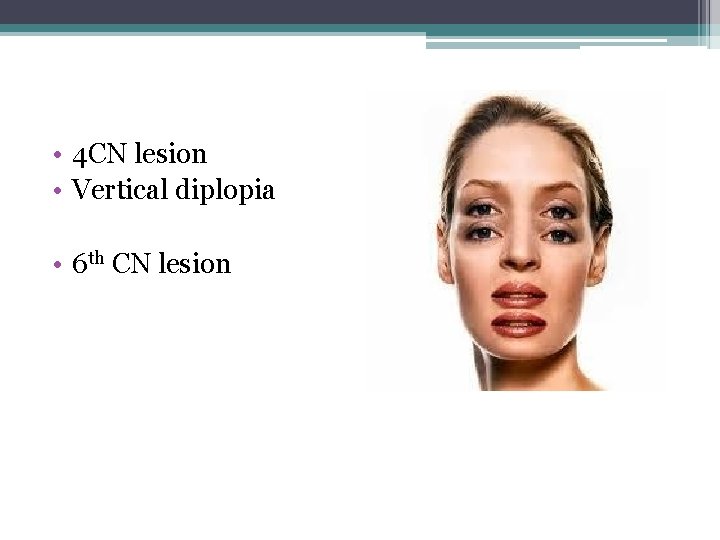
• 4 CN lesion • Vertical diplopia • 6 th CN lesion
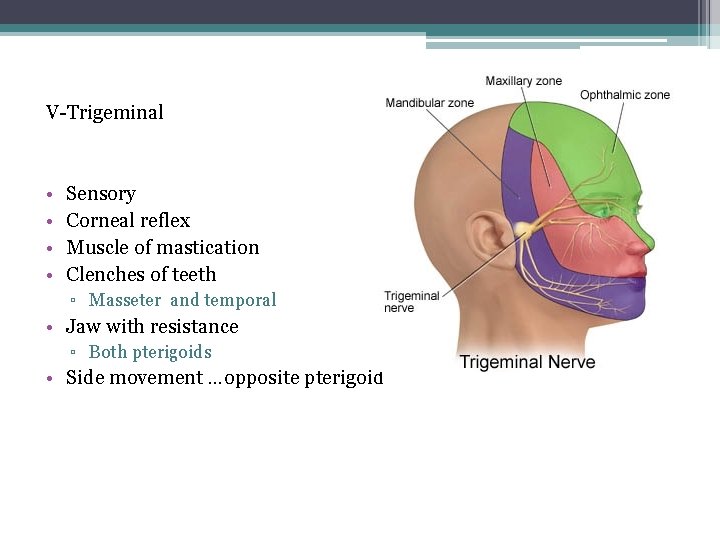
V-Trigeminal • • Sensory Corneal reflex Muscle of mastication Clenches of teeth ▫ Masseter and temporal • Jaw with resistance ▫ Both pterigoids • Side movement …opposite pterigoid
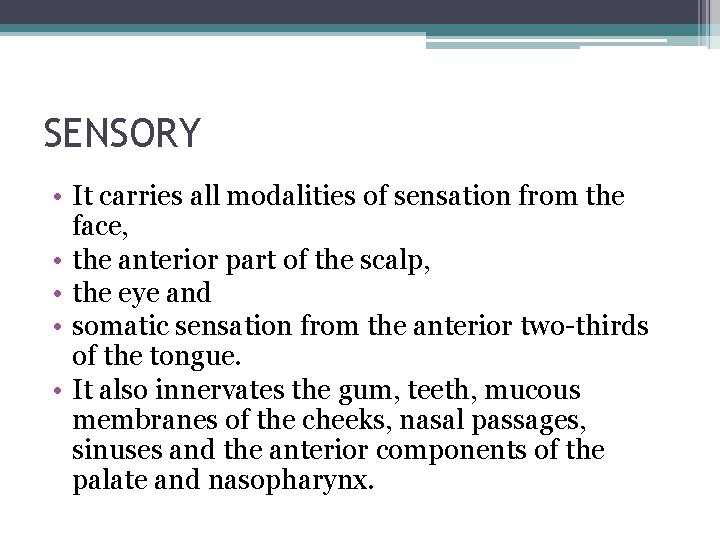
SENSORY • It carries all modalities of sensation from the face, • the anterior part of the scalp, • the eye and • somatic sensation from the anterior two-thirds of the tongue. • It also innervates the gum, teeth, mucous membranes of the cheeks, nasal passages, sinuses and the anterior components of the palate and nasopharynx.
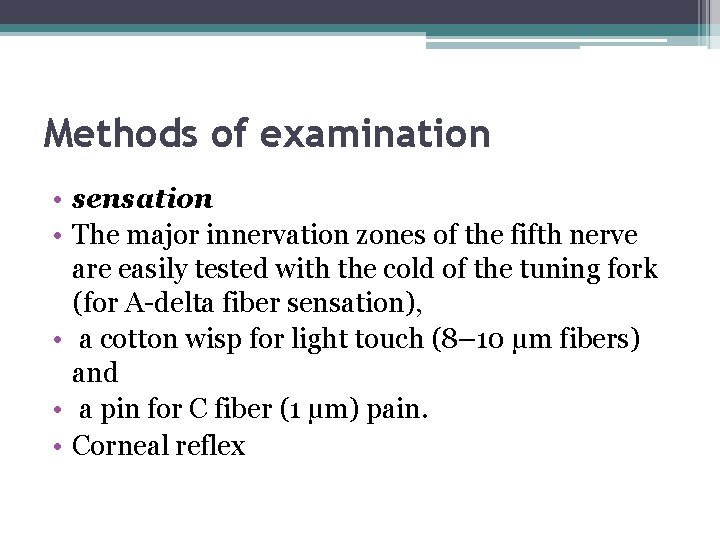
Methods of examination • sensation • The major innervation zones of the fifth nerve are easily tested with the cold of the tuning fork (for A-delta fiber sensation), • a cotton wisp for light touch (8– 10 μm fibers) and • a pin for C fiber (1 μm) pain. • Corneal reflex
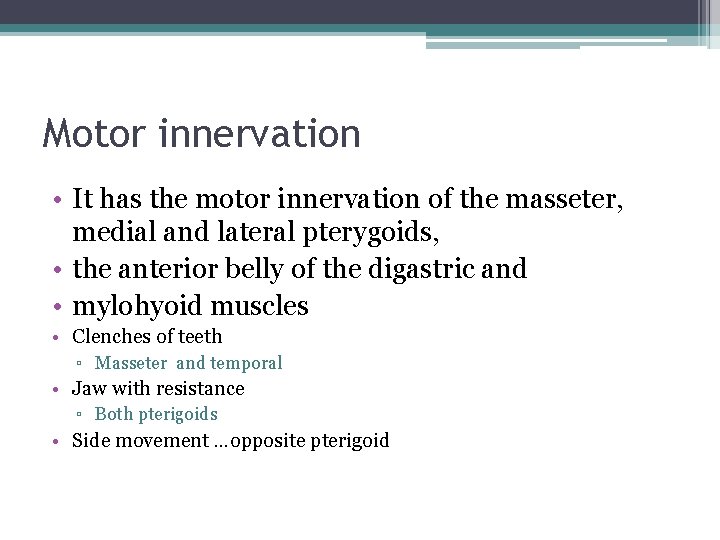
Motor innervation • It has the motor innervation of the masseter, medial and lateral pterygoids, • the anterior belly of the digastric and • mylohyoid muscles • Clenches of teeth ▫ Masseter and temporal • Jaw with resistance ▫ Both pterigoids • Side movement …opposite pterigoid
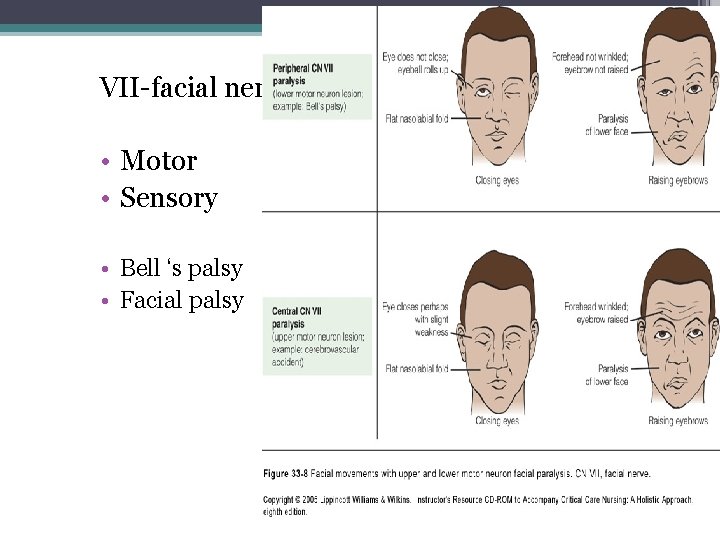
VII-facial nerve • Motor • Sensory • Bell ‘s palsy • Facial palsy
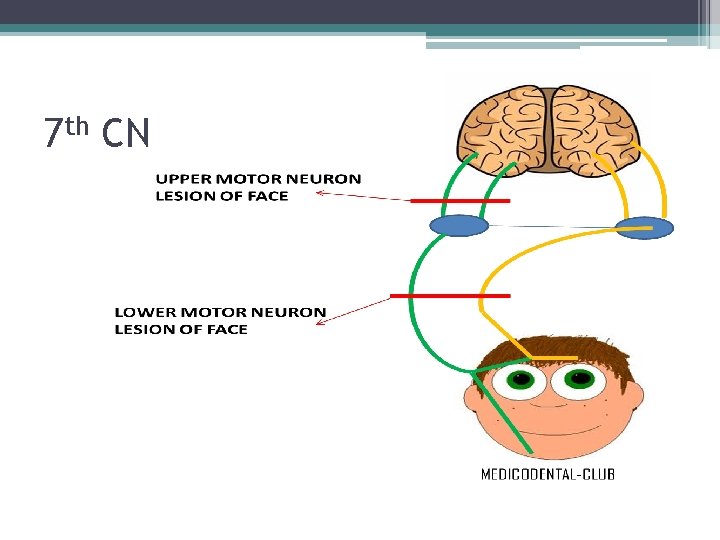
7 th CN
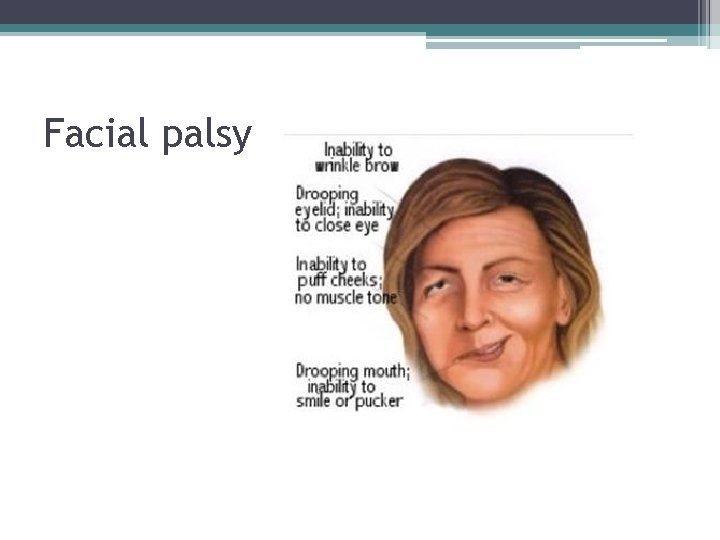
Facial palsy
• VIII-Vestibulocochlear • Vestibular Balance Pendular walking Fukuda test Cochlear • Whisper …… • Weber ‘ test
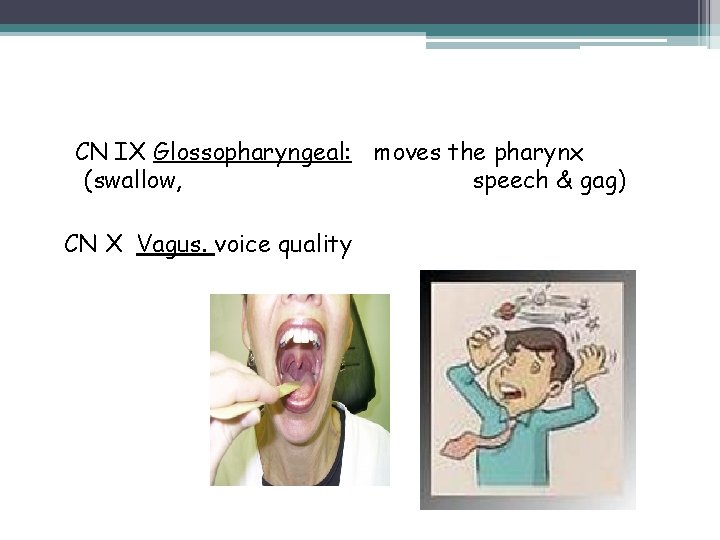
CN IX Glossopharyngeal: moves the pharynx (swallow, speech & gag) CN X Vagus. voice quality
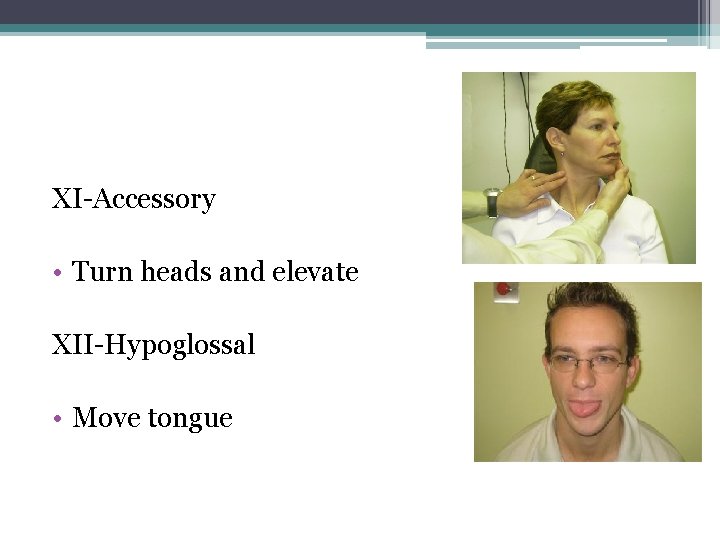
XI-Accessory • Turn heads and elevate XII-Hypoglossal • Move tongue
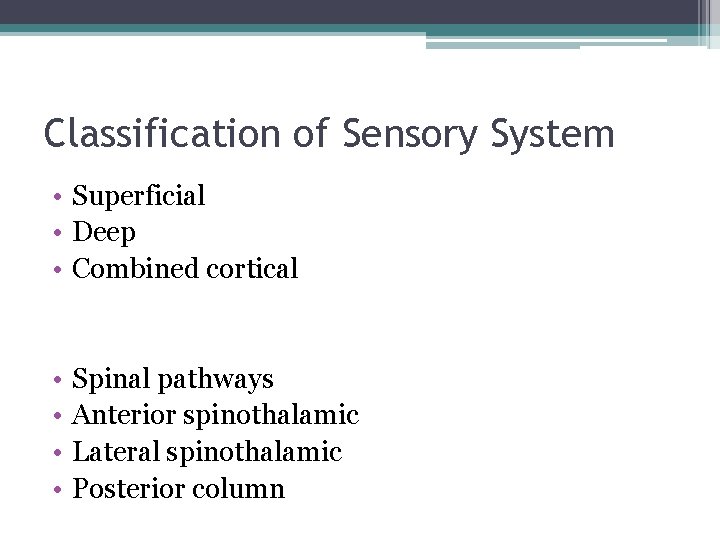
Classification of Sensory System • Superficial • Deep • Combined cortical • • Spinal pathways Anterior spinothalamic Lateral spinothalamic Posterior column
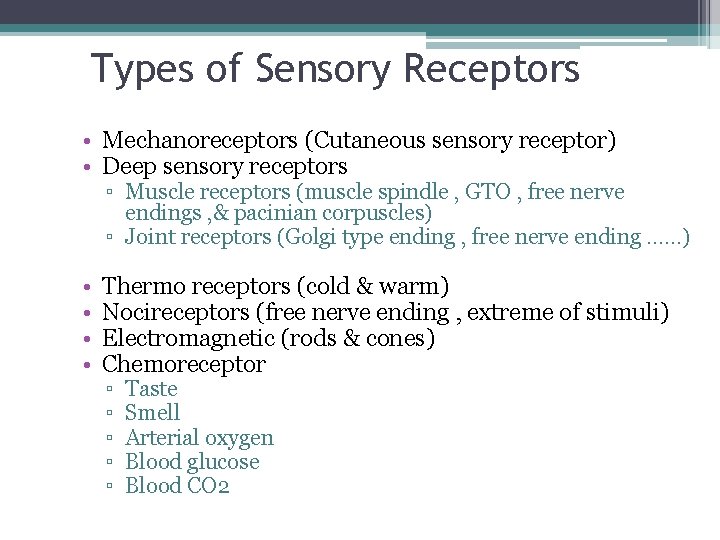
Types of Sensory Receptors • Mechanoreceptors (Cutaneous sensory receptor) • Deep sensory receptors ▫ Muscle receptors (muscle spindle , GTO , free nerve endings , & pacinian corpuscles) ▫ Joint receptors (Golgi type ending , free nerve ending ……) • • Thermo receptors (cold & warm) Nocireceptors (free nerve ending , extreme of stimuli) Electromagnetic (rods & cones) Chemoreceptor ▫ ▫ ▫ Taste Smell Arterial oxygen Blood glucose Blood CO 2
Terminology describing common sensory Impairments • • Abarognosis Allodynia Asterognosis Dysesthesia Hyperalgesia Hyperesthesia Paresthesia Thalamic syndrome
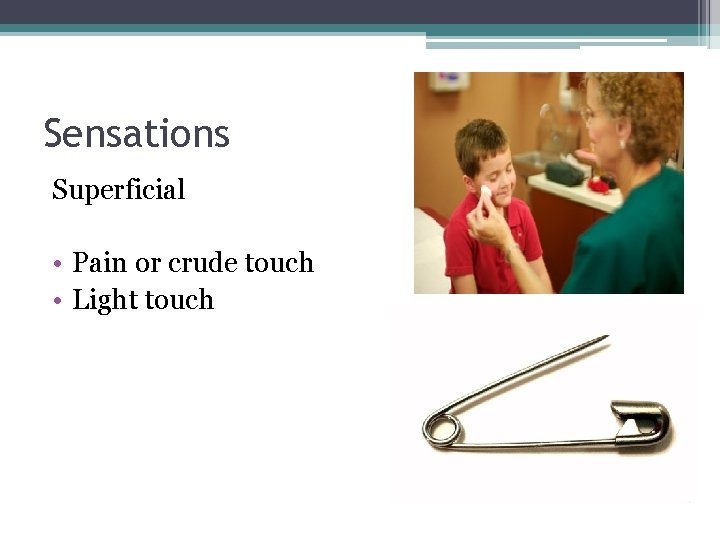
Sensations Superficial • Pain or crude touch • Light touch
• Deep sensation • Kinesthesia • Proprioceptive • Vibration
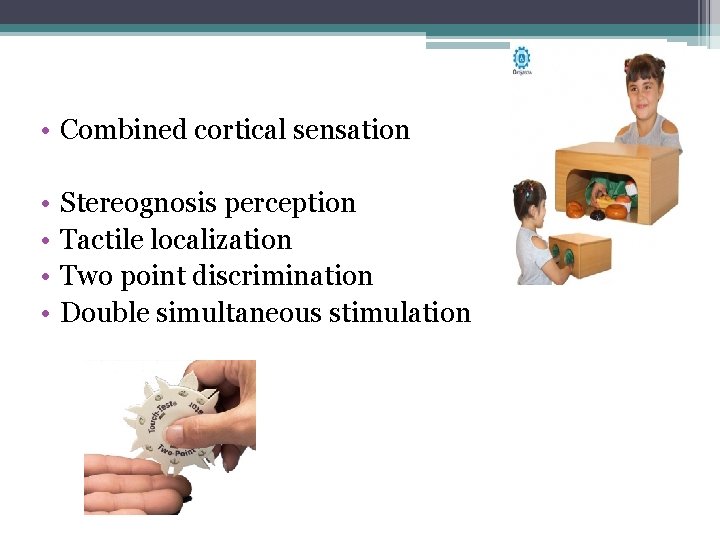
• Combined cortical sensation • • Stereognosis perception Tactile localization Two point discrimination Double simultaneous stimulation
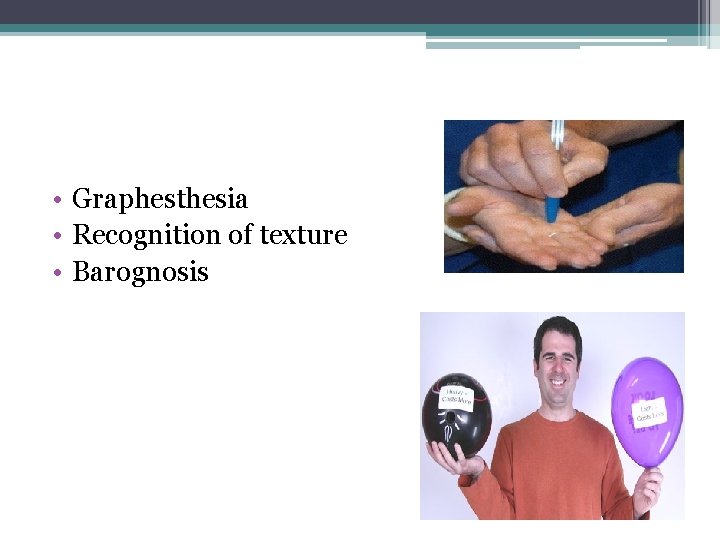
• Graphesthesia • Recognition of texture • Barognosis
Extinction • To test extinction, have the patient sit on the edge of the examining table and close their eyes. • Touch the patient on the trunk or legs in one place and then tell the patient to open their eyes and point to the location where they noted sensation. • Repeat this maneuver a second time, touching the patient in two places on opposite sides of their body, simultaneously. Then ask the patient to point to where they felt sensation. Normally they will point to both areas. If not, extinction is present. • With lesions of the sensory cortex in the parietal lobe, the patient may only report feeling one finger touch their body, when in fact they were touched twice on opposite sides of their body, simultaneously. With extinction, the stimulus not felt is on the side opposite of the damaged cortex. The sensation not felt is considered "extinguished".
Feedback • Summary • Feedback • What is missing ? ? ?
Thanks