DOWNWIND MARK ROUNDINGS HOW TO SET YOURSELF UP

- Slides: 21
DOWNWIND MARK ROUNDINGS HOW TO SET YOURSELF UP FOR SUCCESS
TECHNIQUE A successful rounding incorporates balance, sheeting, and steering. The following slides will demonstrate the proper technique of a leeward mark rounding. By following them correctly a sailor can maximize their boat speed exiting the rounding.
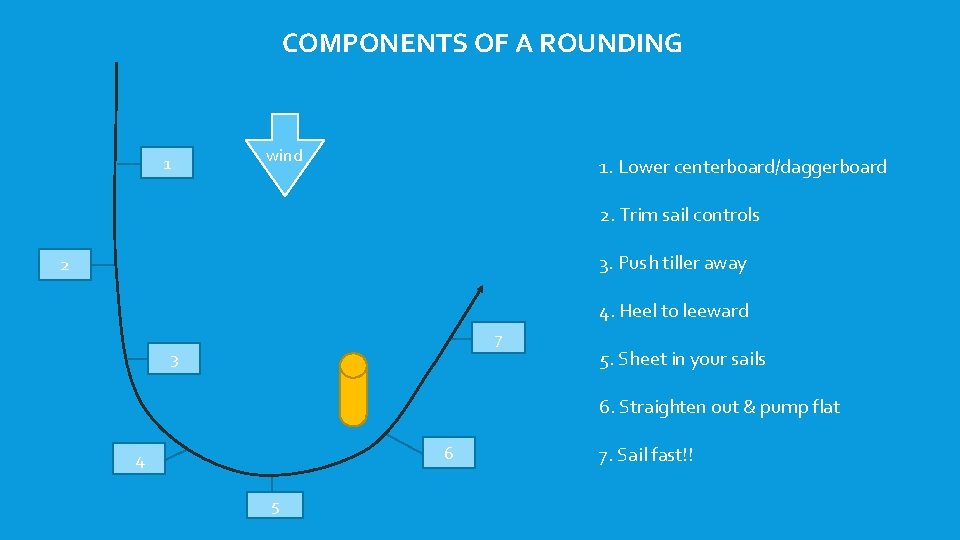
COMPONENTS OF A ROUNDING 1 wind 1. Lower centerboard/daggerboard 2. Trim sail controls 3. Push tiller away 2 4. Heel to leeward 7 3 5. Sheet in your sails 6. Straighten out & pump flat 6 4 5 7. Sail fast!!
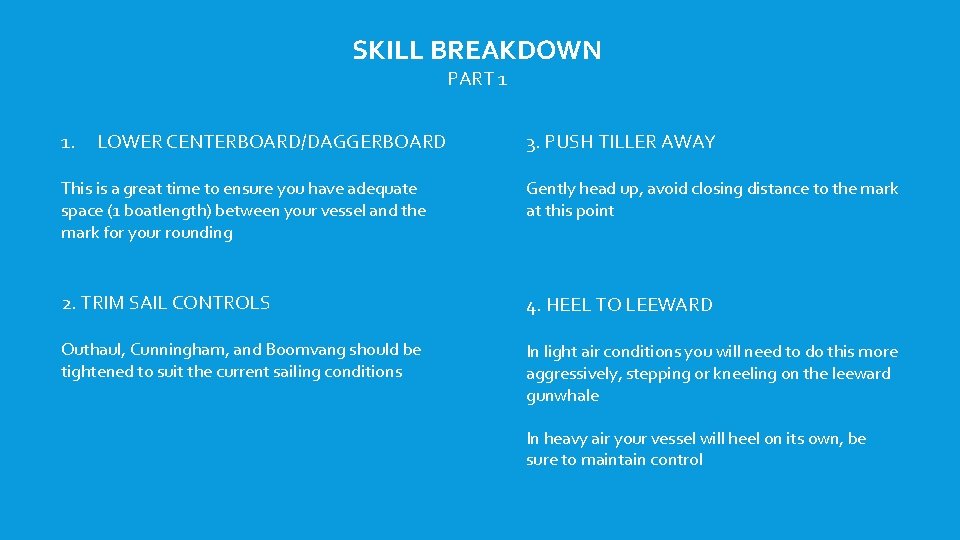
SKILL BREAKDOWN PART 1 1. LOWER CENTERBOARD/DAGGERBOARD 3. PUSH TILLER AWAY This is a great time to ensure you have adequate space (1 boatlength) between your vessel and the mark for your rounding Gently head up, avoid closing distance to the mark at this point 2. TRIM SAIL CONTROLS 4. HEEL TO LEEWARD Outhaul, Cunningham, and Boomvang should be tightened to suit the current sailing conditions In light air conditions you will need to do this more aggressively, stepping or kneeling on the leeward gunwhale In heavy air your vessel will heel on its own, be sure to maintain control
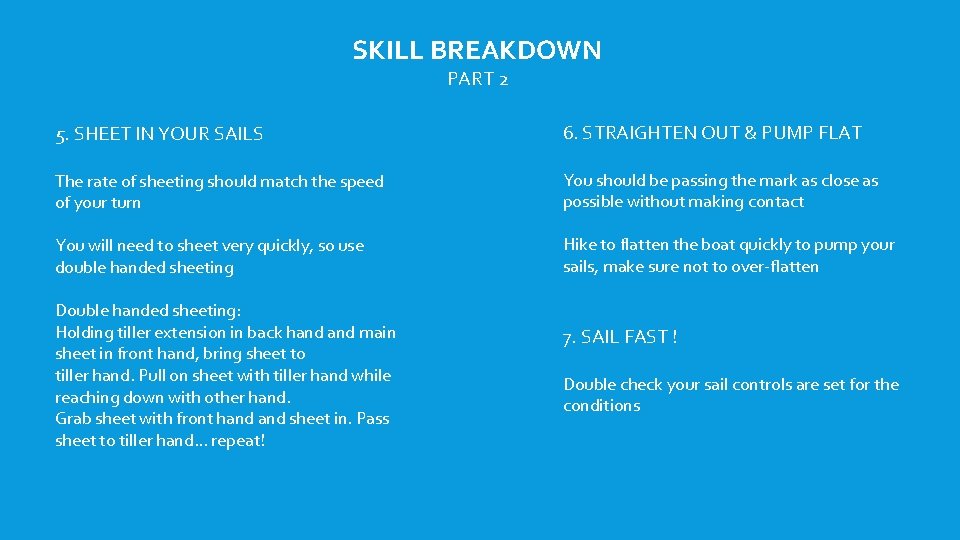
SKILL BREAKDOWN PART 2 5. SHEET IN YOUR SAILS 6. STRAIGHTEN OUT & PUMP FLAT The rate of sheeting should match the speed of your turn You should be passing the mark as close as possible without making contact You will need to sheet very quickly, so use double handed sheeting Hike to flatten the boat quickly to pump your sails, make sure not to over-flatten Double handed sheeting: Holding tiller extension in back hand main sheet in front hand, bring sheet to tiller hand. Pull on sheet with tiller hand while reaching down with other hand. Grab sheet with front hand sheet in. Pass sheet to tiller hand. . . repeat! 7. SAIL FAST ! Double check your sail controls are set for the conditions
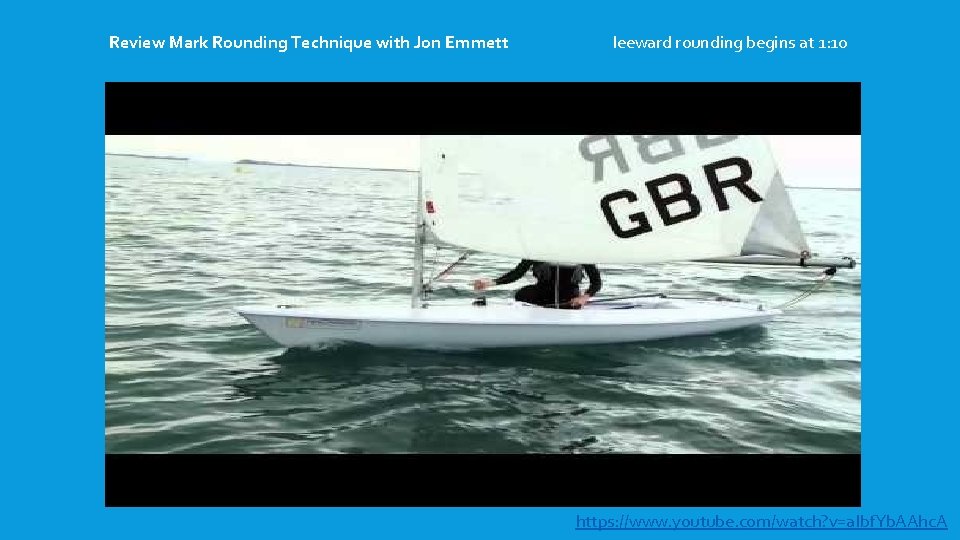
Review Mark Rounding Technique with Jon Emmett leeward rounding begins at 1: 10 https: //www. youtube. com/watch? v=a. Ibf. Yb. AAhc. A
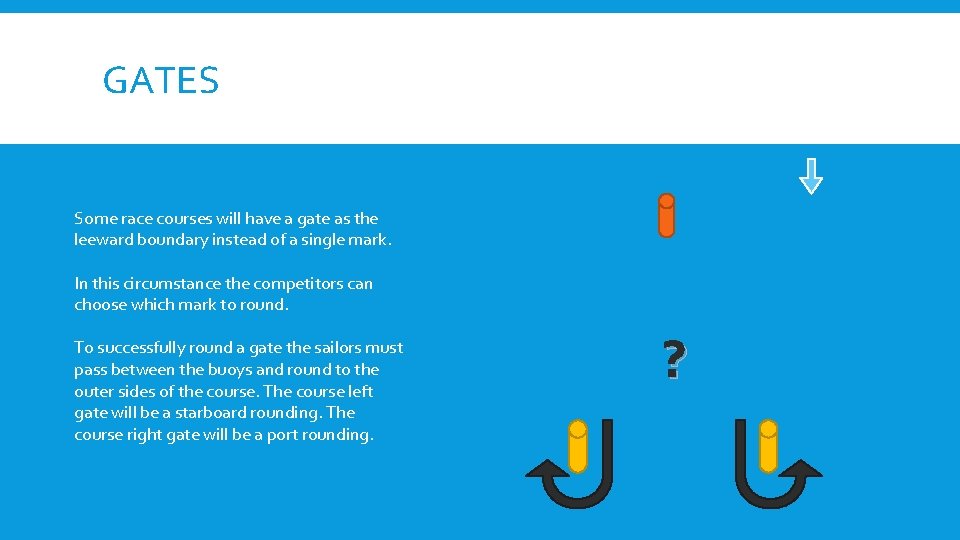
GATES Some race courses will have a gate as the leeward boundary instead of a single mark. In this circumstance the competitors can choose which mark to round. To successfully round a gate the sailors must pass between the buoys and round to the outer sides of the course. The course left gate will be a starboard rounding. The course right gate will be a port rounding. ?
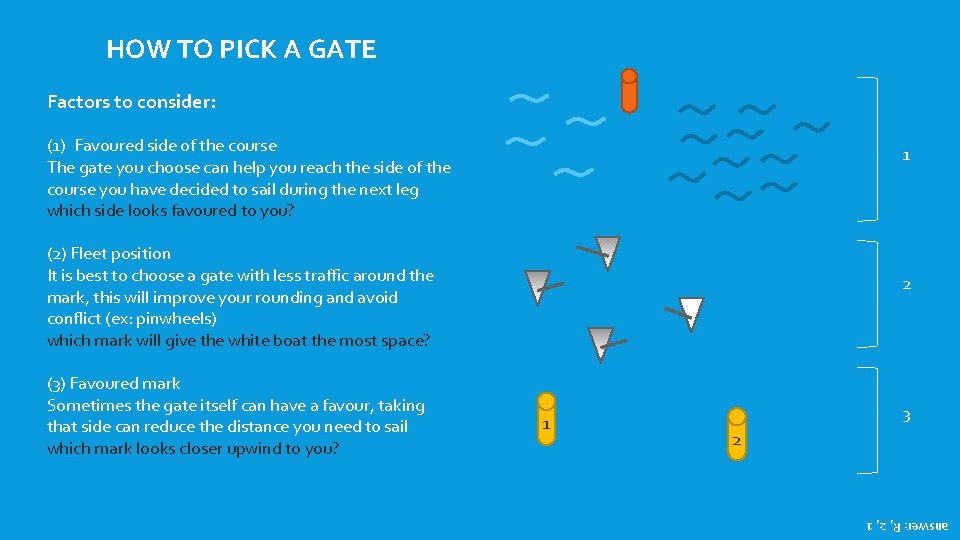
HOW TO PICK A GATE Factors to consider: (1) Favoured side of the course The gate you choose can help you reach the side of the course you have decided to sail during the next leg which side looks favoured to you? 1 (2) Fleet position It is best to choose a gate with less traffic around the mark, this will improve your rounding and avoid conflict (ex: pinwheels) which mark will give the white boat the most space? 1 3 2 answer: R, 2, 1 (3) Favoured mark Sometimes the gate itself can have a favour, taking that side can reduce the distance you need to sail which mark looks closer upwind to you? 2
RULES Understanding the rules of the road in the context of mark roundings is VERY important. Mark roundings are often a source of conflict and collision, which can greatly impact the sailor’s position in the race as well as their safety. The following slides will give you an overview of the rules you need to know for a leeward mark rounding.
FAMILIAR RULES RULE 10: Port and Starboard “Boats on a port tack shall keep clear of boats on starboard tack” RULE 11: On the Same Tack, Overlapped (aka Windward vs Leeward) “When boats are on the same tack and overlapped, the boat to windward shall keep clear of a leeward boat” RULE 12: Clear Ahead and Clear Astern (aka Overtaking Boat) “When boats are on the same tack and not overlapped, a boat clear astern shall keep clear of a boat clear ahead”
RULE 18: Rounding and Passing Marks and Obstructions aka Buoy Room In the most simple terms it states that: when boats are overlapped during a rounding the outside boat shall give the inside boat mark-room During a mark rounding rule 18 takes precedence over the three rules mentioned on the previous slide because rules from section C overrule those from section A or B when in conflict. This section C rule is one of the longest and most complex rules in the book, so lets break it down!
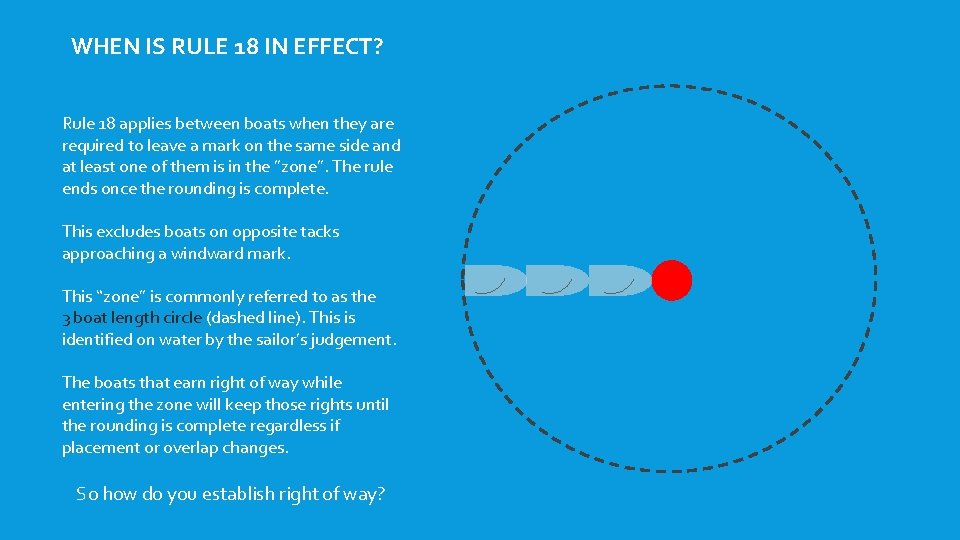
WHEN IS RULE 18 IN EFFECT? Rule 18 applies between boats when they are required to leave a mark on the same side and at least one of them is in the ”zone”. The rule ends once the rounding is complete. This excludes boats on opposite tacks approaching a windward mark. This “zone” is commonly referred to as the 3 boat length circle (dashed line). This is identified on water by the sailor’s judgement. The boats that earn right of way while entering the zone will keep those rights until the rounding is complete regardless if placement or overlap changes. So how do you establish right of way?
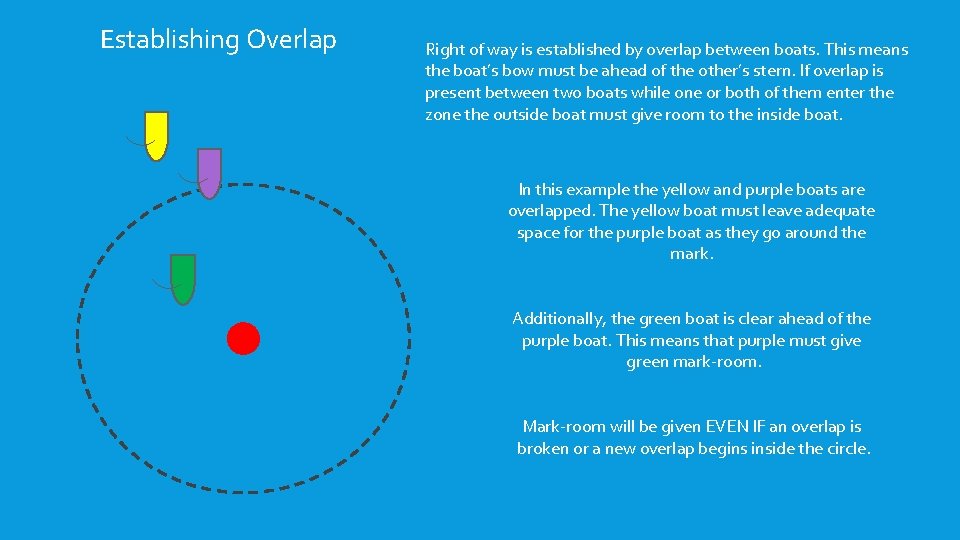
Establishing Overlap Right of way is established by overlap between boats. This means the boat’s bow must be ahead of the other’s stern. If overlap is present between two boats while one or both of them enter the zone the outside boat must give room to the inside boat. In this example the yellow and purple boats are overlapped. The yellow boat must leave adequate space for the purple boat as they go around the mark. Additionally, the green boat is clear ahead of the purple boat. This means that purple must give green mark-room. Mark-room will be given EVEN IF an overlap is broken or a new overlap begins inside the circle.
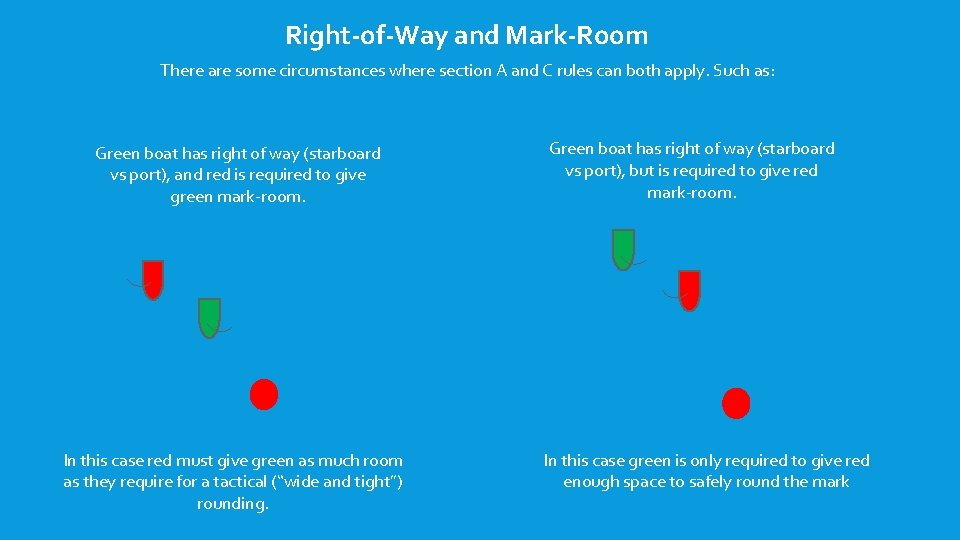
Right-of-Way and Mark-Room There are some circumstances where section A and C rules can both apply. Such as: Green boat has right of way (starboard vs port), and red is required to give green mark-room. In this case red must give green as much room as they require for a tactical (“wide and tight”) rounding. Green boat has right of way (starboard vs port), but is required to give red mark-room. In this case green is only required to give red enough space to safely round the mark
STRATEGY The measure of a good rounding is: 1) How much boat speed you have maintained you can maximise your boat speed by following the steps to a leeward rounding in sequential order with good form 2) How favourable your position is for the next upwind leg a good position helps you maintain clear air and ensures you can choose to sail either side of the course. The following slides will give you some techniques to help improve your position.
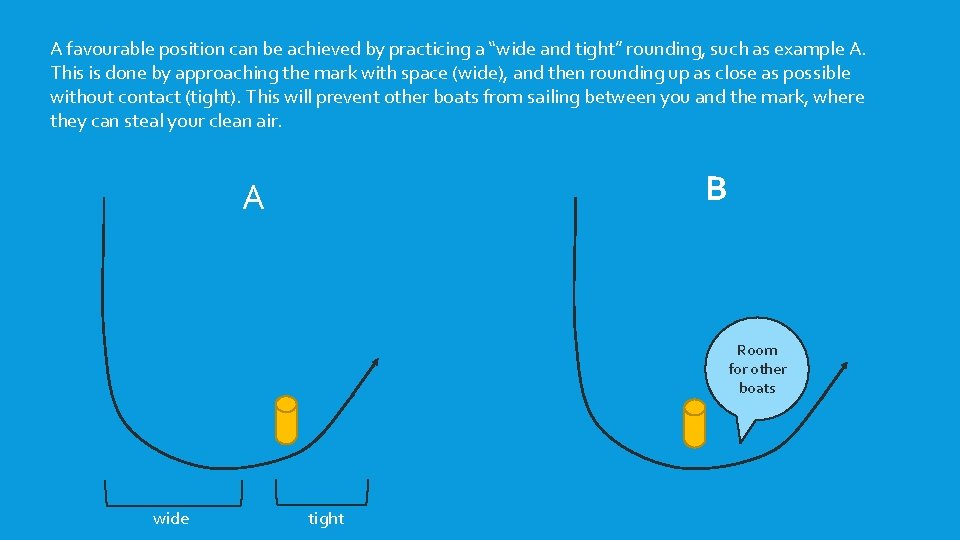
A favourable position can be achieved by practicing a “wide and tight” rounding, such as example A. This is done by approaching the mark with space (wide), and then rounding up as close as possible without contact (tight). This will prevent other boats from sailing between you and the mark, where they can steal your clean air. B A Room for other boats wide tight
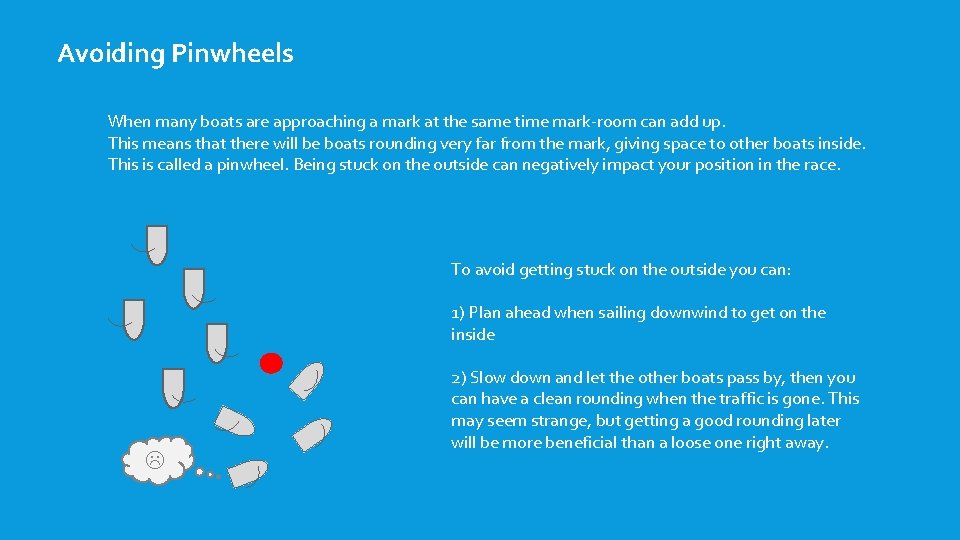
Avoiding Pinwheels When many boats are approaching a mark at the same time mark-room can add up. This means that there will be boats rounding very far from the mark, giving space to other boats inside. This is called a pinwheel. Being stuck on the outside can negatively impact your position in the race. To avoid getting stuck on the outside you can: 1) Plan ahead when sailing downwind to get on the inside 2) Slow down and let the other boats pass by, then you can have a clean rounding when the traffic is gone. This may seem strange, but getting a good rounding later will be more beneficial than a loose one right away.
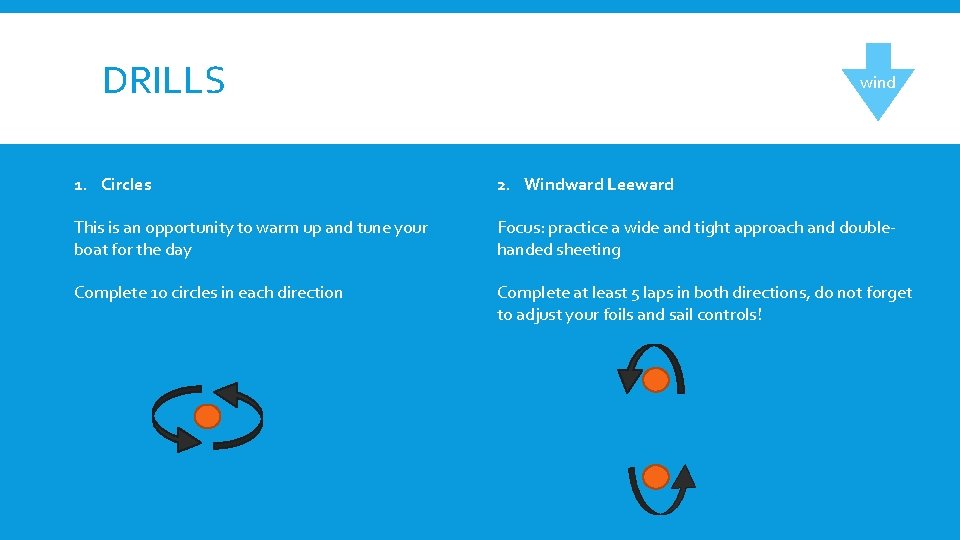
DRILLS wind 1. Circles 2. Windward Leeward This is an opportunity to warm up and tune your boat for the day Focus: practice a wide and tight approach and doublehanded sheeting Complete 10 circles in each direction Complete at least 5 laps in both directions, do not forget to adjust your foils and sail controls!
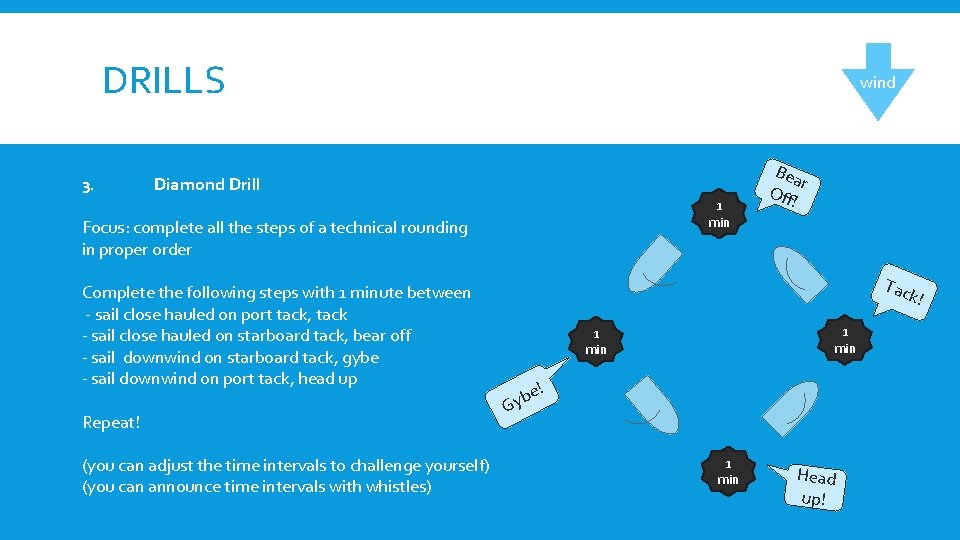
DRILLS 3. wind Diamond Drill 1 min Focus: complete all the steps of a technical rounding in proper order Complete the following steps with 1 minute between - sail close hauled on port tack, tack - sail close hauled on starboard tack, bear off - sail downwind on starboard tack, gybe - sail downwind on port tack, head up Repeat! (you can adjust the time intervals to challenge yourself) (you can announce time intervals with whistles) Bea r Off ! Tac k! 1 min ! be y G 1 min Head up!
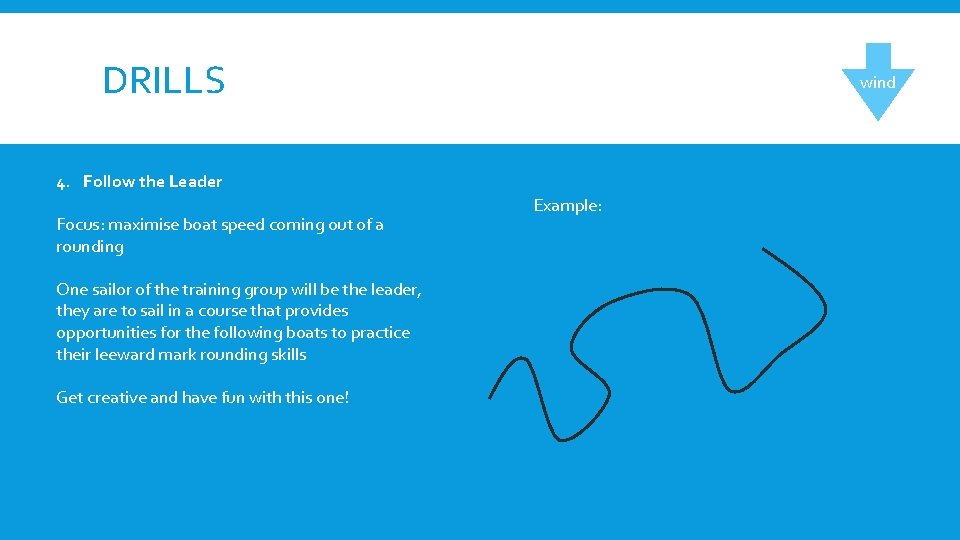
DRILLS wind 4. Follow the Leader Focus: maximise boat speed coming out of a rounding One sailor of the training group will be the leader, they are to sail in a course that provides opportunities for the following boats to practice their leeward mark rounding skills Get creative and have fun with this one! Example:
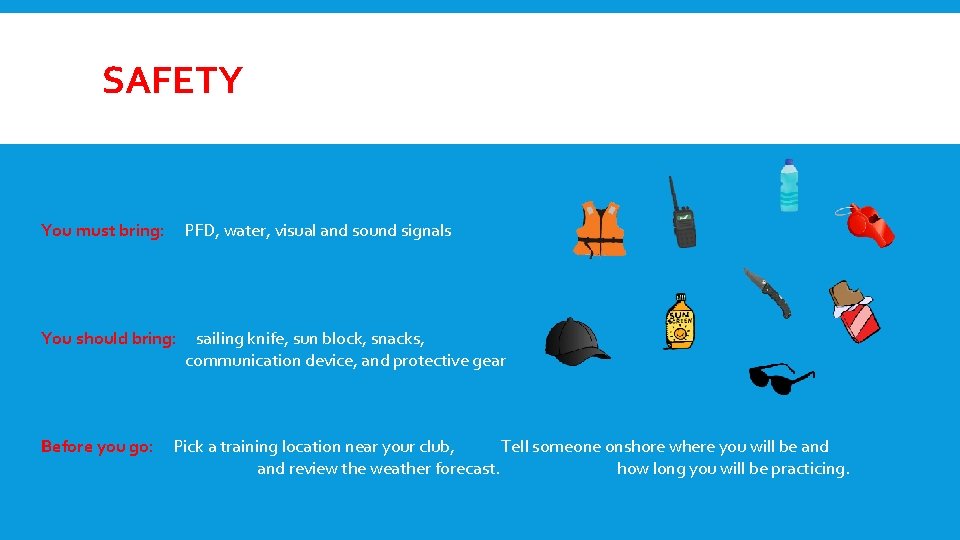
SAFETY You must bring: PFD, water, visual and sound signals You should bring: sailing knife, sun block, snacks, communication device, and protective gear Before you go: Pick a training location near your club, Tell someone onshore where you will be and review the weather forecast. how long you will be practicing.