Disorders of the Endocrine Glands Nrsg 407 Function
- Slides: 29
Disorders of the Endocrine Glands Nrsg 407
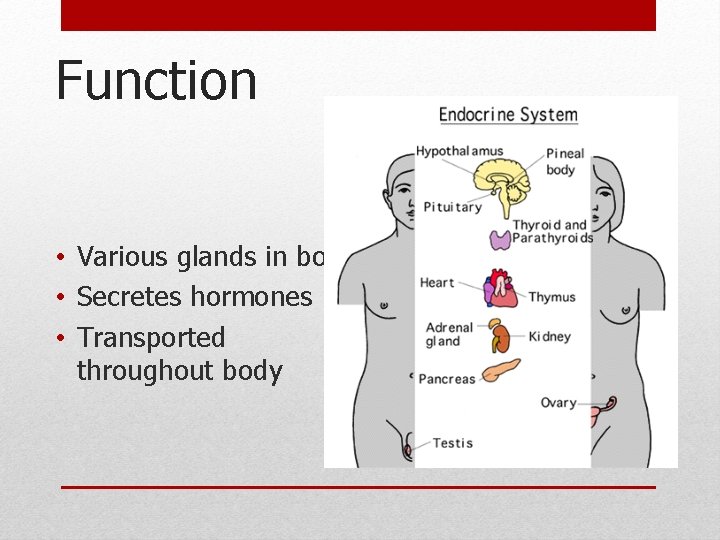
Function • Various glands in body • Secretes hormones • Transported throughout body
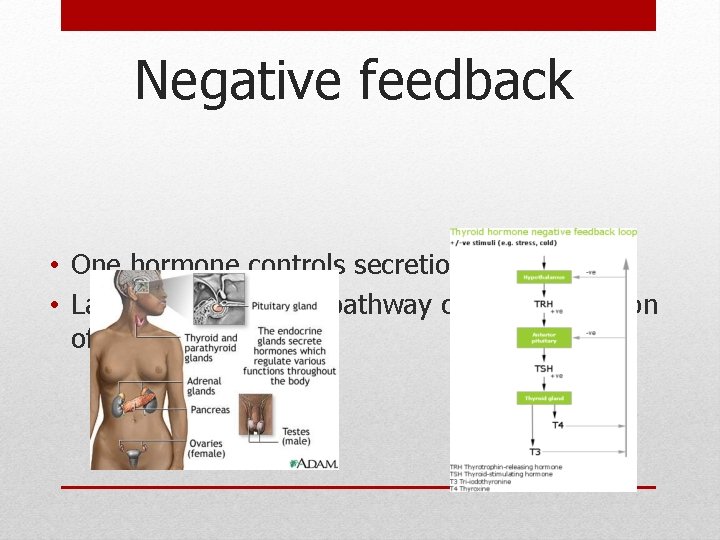
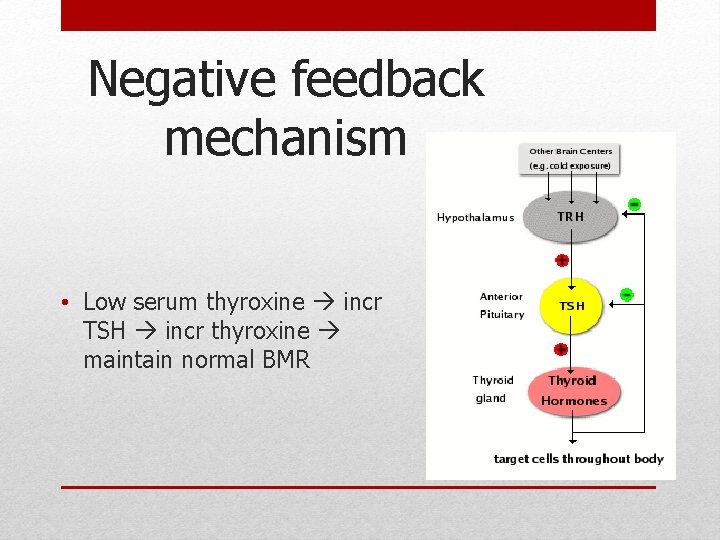
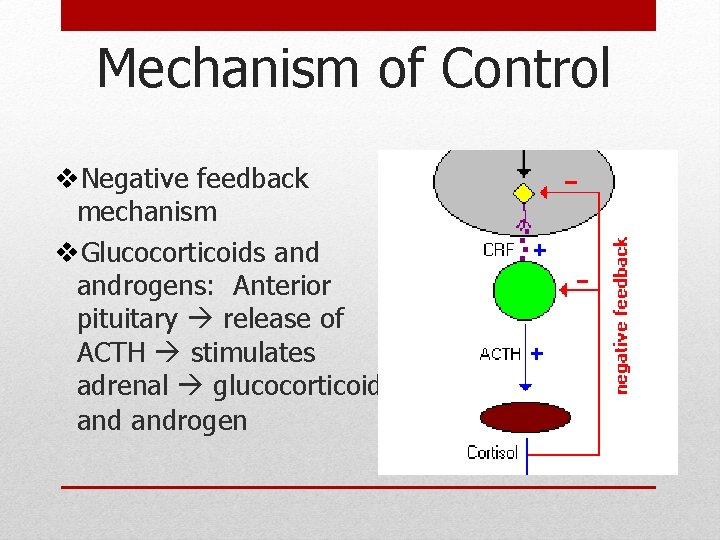
Negative feedback • One hormone controls secretion of another • Last hormone in the pathway controls secretion of first hormone
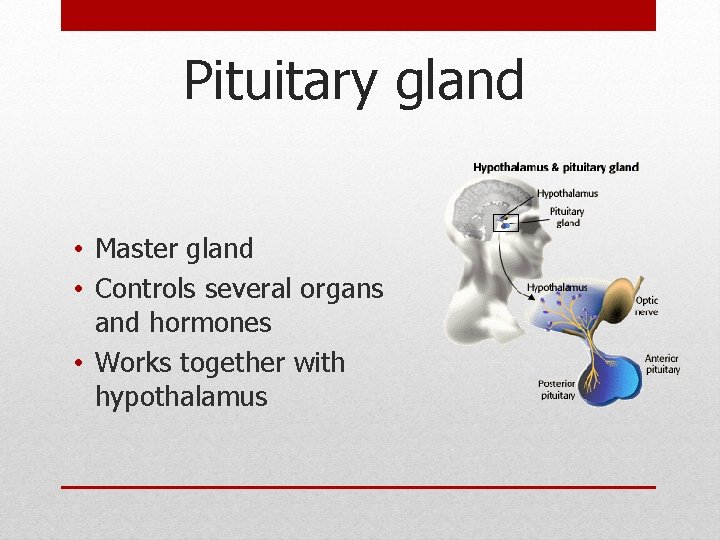
Pituitary gland • Master gland • Controls several organs and hormones • Works together with hypothalamus
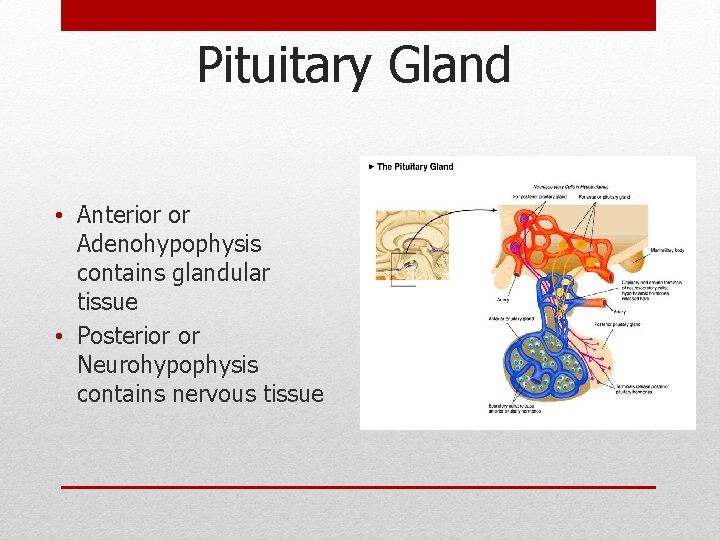
Pituitary Gland • Anterior or Adenohypophysis contains glandular tissue • Posterior or Neurohypophysis contains nervous tissue
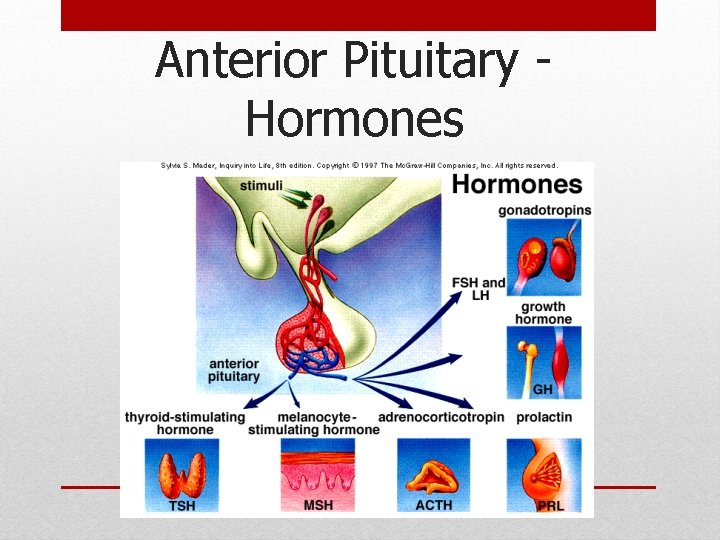
Anterior Pituitary Hormones
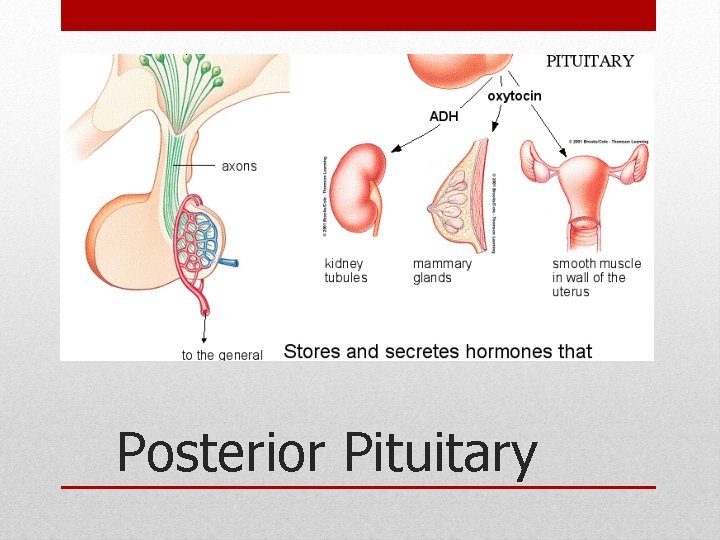
Posterior Pituitary
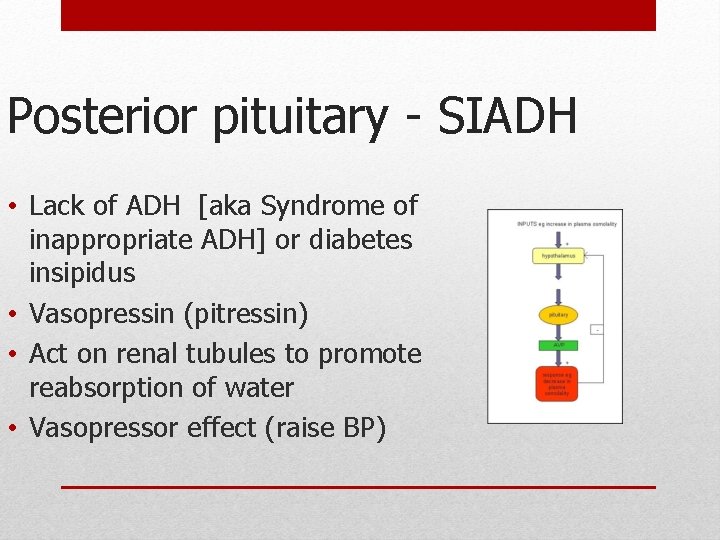
Posterior pituitary - SIADH • Lack of ADH [aka Syndrome of inappropriate ADH] or diabetes insipidus • Vasopressin (pitressin) • Act on renal tubules to promote reabsorption of water • Vasopressor effect (raise BP)
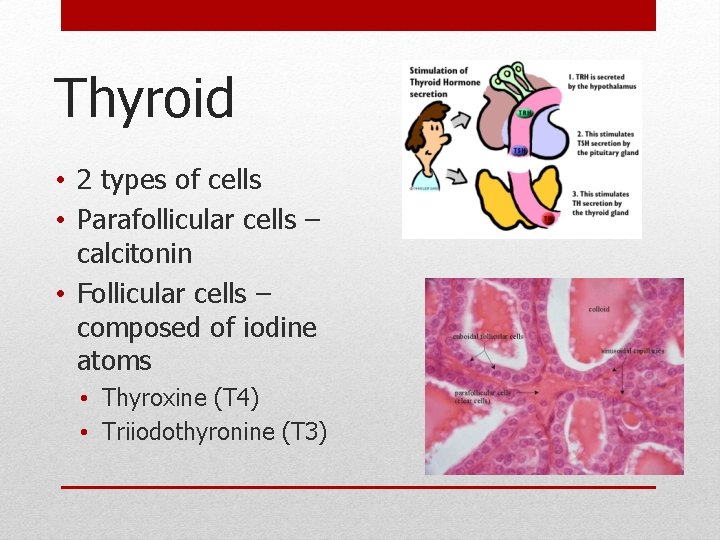
Thyroid • 2 types of cells • Parafollicular cells – calcitonin • Follicular cells – composed of iodine atoms • Thyroxine (T 4) • Triiodothyronine (T 3)
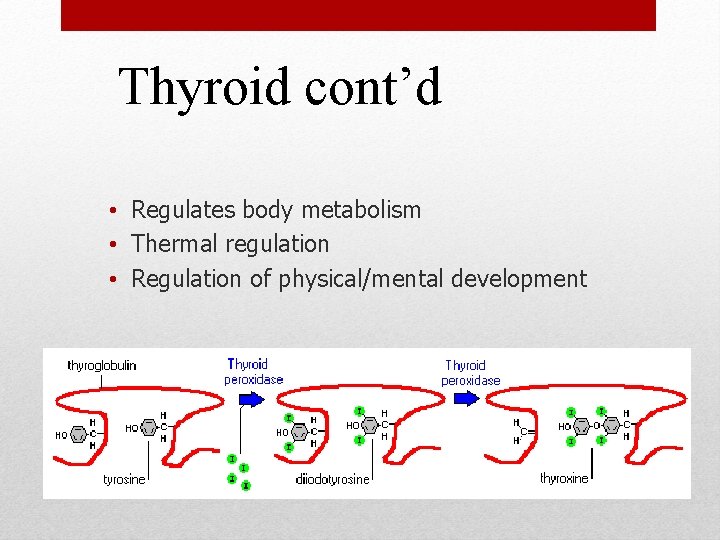
Thyroid cont’d • Regulates body metabolism • Thermal regulation • Regulation of physical/mental development Thyroxine hormone (T 4)
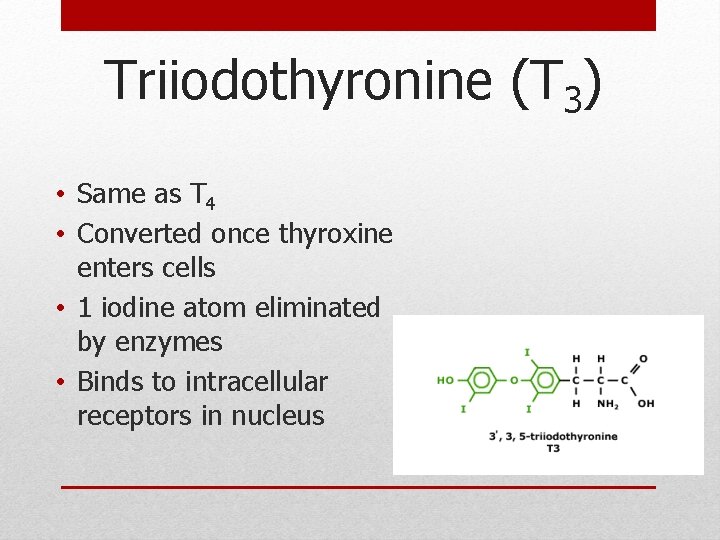
Triiodothyronine (T 3) • Same as T 4 • Converted once thyroxine enters cells • 1 iodine atom eliminated by enzymes • Binds to intracellular receptors in nucleus
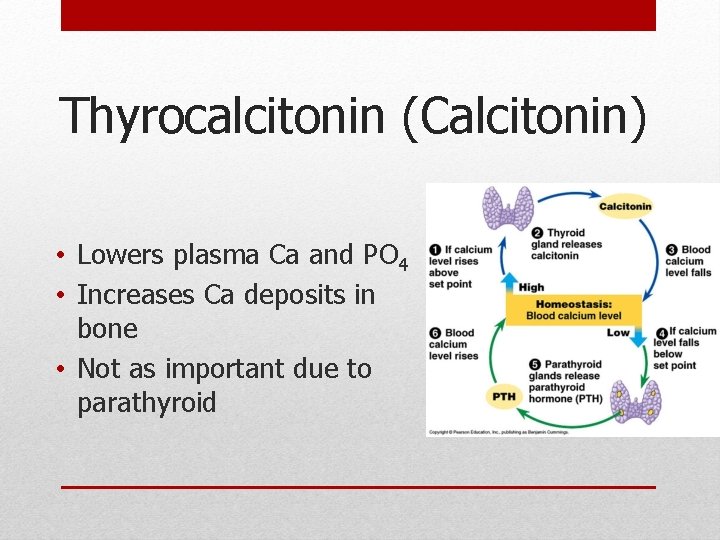
Thyrocalcitonin (Calcitonin) • Lowers plasma Ca and PO 4 • Increases Ca deposits in bone • Not as important due to parathyroid
Negative feedback mechanism • Low serum thyroxine incr TSH incr thyroxine maintain normal BMR
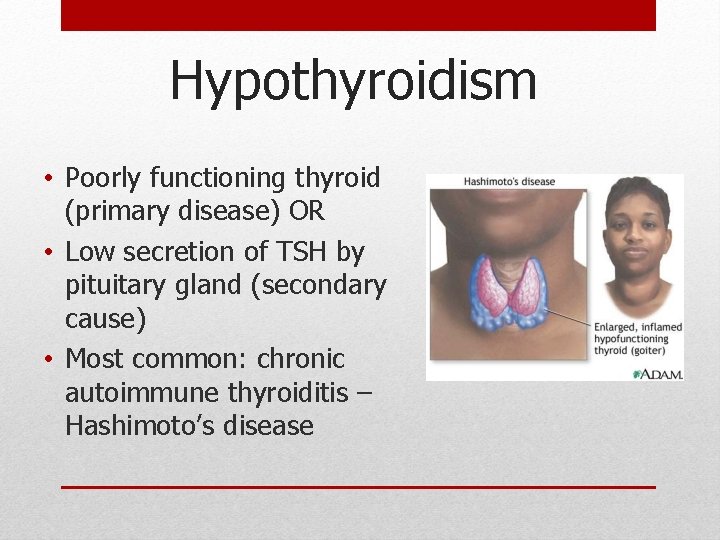
Hypothyroidism • Poorly functioning thyroid (primary disease) OR • Low secretion of TSH by pituitary gland (secondary cause) • Most common: chronic autoimmune thyroiditis – Hashimoto’s disease
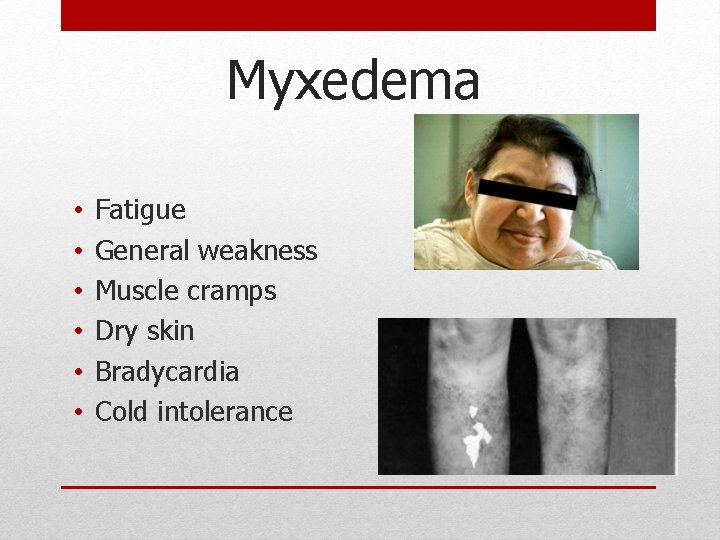
Myxedema • • • Fatigue General weakness Muscle cramps Dry skin Bradycardia Cold intolerance
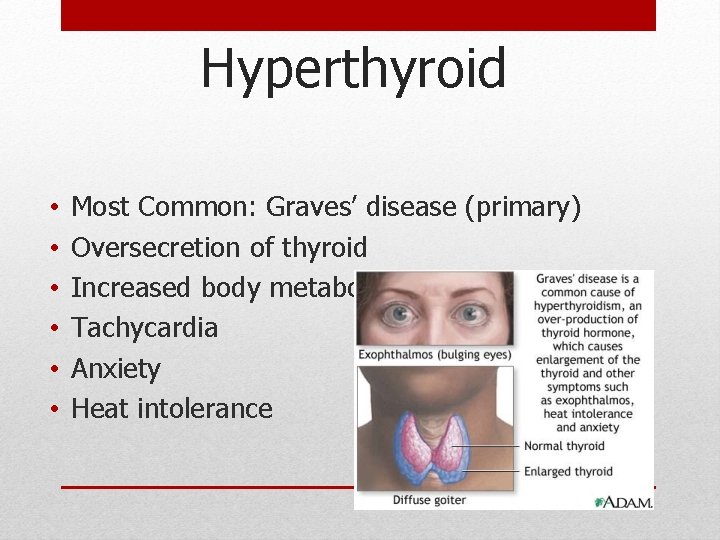
Hyperthyroid • • • Most Common: Graves’ disease (primary) Oversecretion of thyroid Increased body metabolism Tachycardia Anxiety Heat intolerance
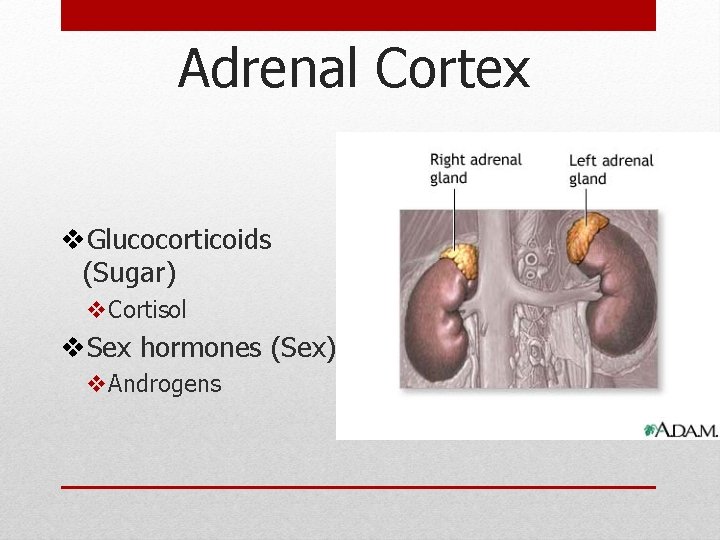
Adrenal Cortex v. Glucocorticoids (Sugar) v. Cortisol v. Sex hormones (Sex) v. Androgens
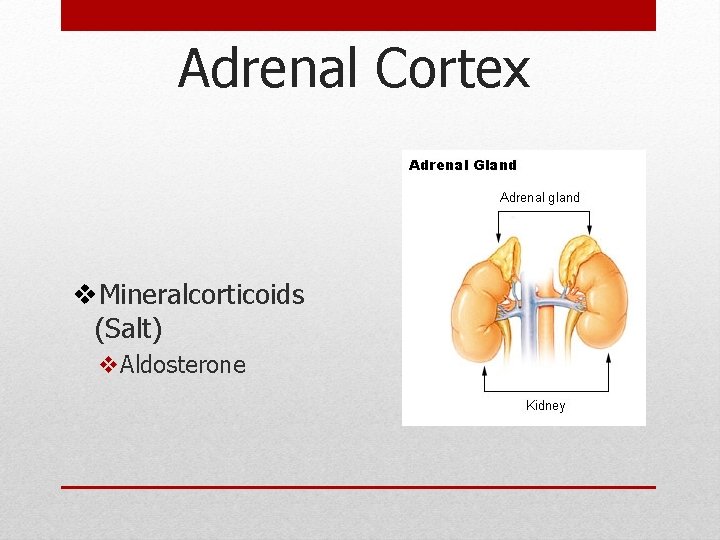
Adrenal Cortex v. Mineralcorticoids (Salt) v. Aldosterone
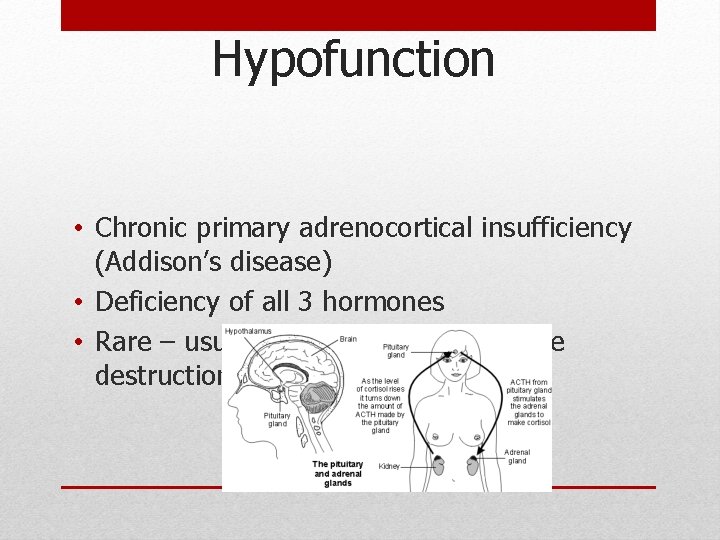
Mechanism of Control v. Negative feedback mechanism v. Glucocorticoids androgens: Anterior pituitary release of ACTH stimulates adrenal glucocorticoid androgen
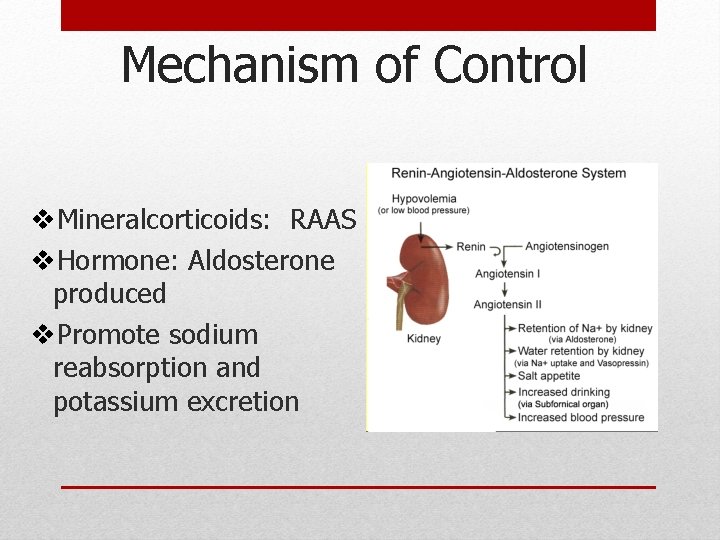
Mechanism of Control v. Mineralcorticoids: RAAS v. Hormone: Aldosterone produced v. Promote sodium reabsorption and potassium excretion
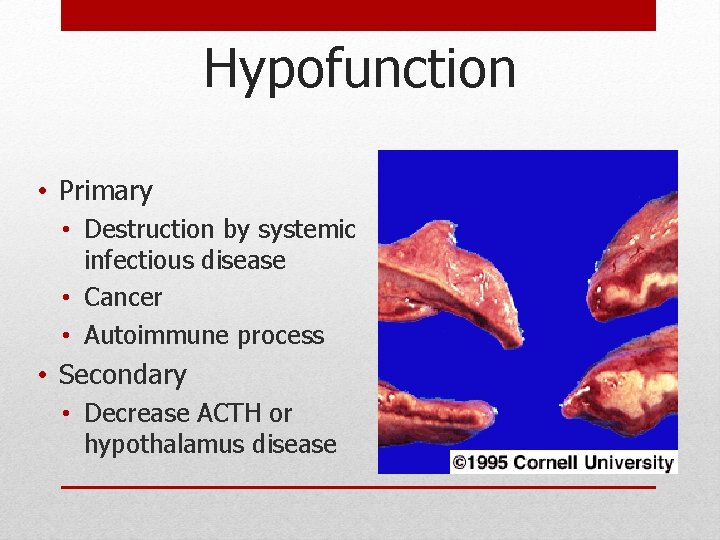
Hypofunction • Primary • Destruction by systemic infectious disease • Cancer • Autoimmune process • Secondary • Decrease ACTH or hypothalamus disease
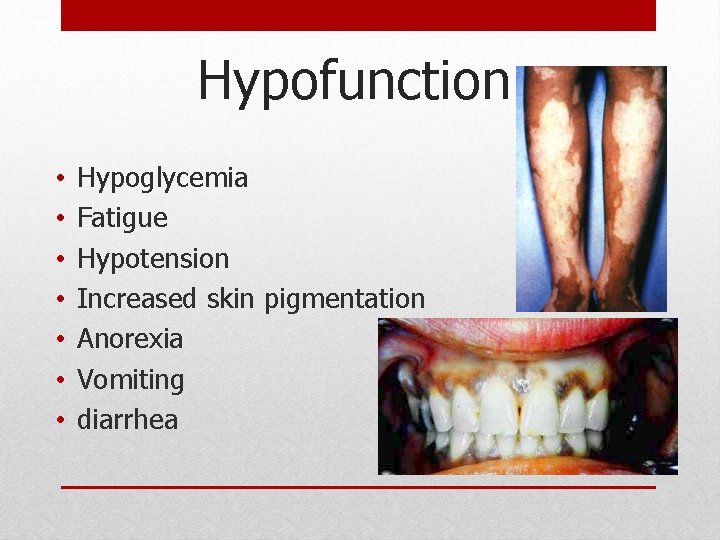
Hypofunction • • Hypoglycemia Fatigue Hypotension Increased skin pigmentation Anorexia Vomiting diarrhea
Hypofunction • Chronic primary adrenocortical insufficiency (Addison’s disease) • Deficiency of all 3 hormones • Rare – usually caused by autoimmune destruction
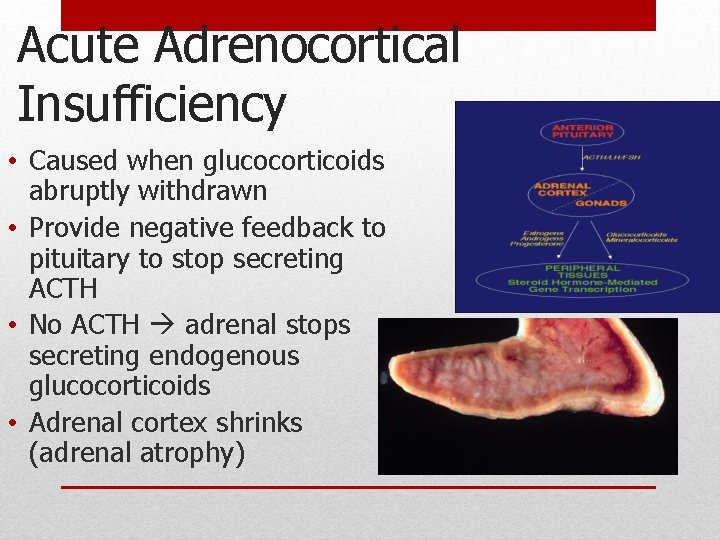
Acute Adrenocortical Insufficiency • Caused when glucocorticoids abruptly withdrawn • Provide negative feedback to pituitary to stop secreting ACTH • No ACTH adrenal stops secreting endogenous glucocorticoids • Adrenal cortex shrinks (adrenal atrophy)
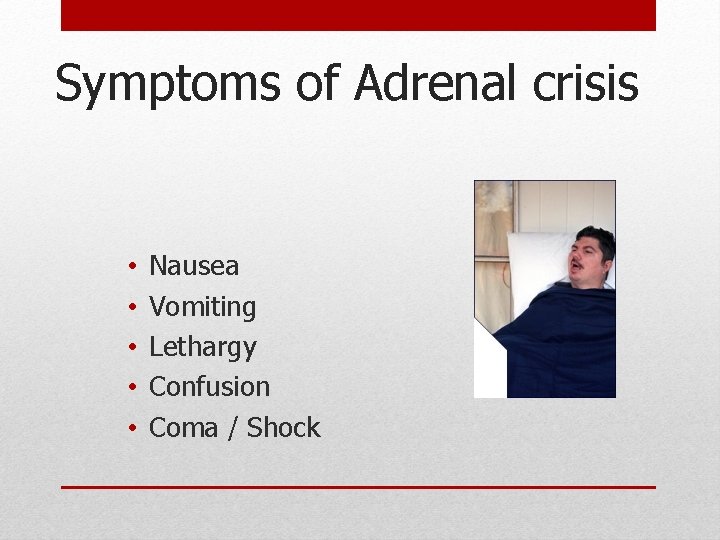
Symptoms of Adrenal crisis • • • Nausea Vomiting Lethargy Confusion Coma / Shock
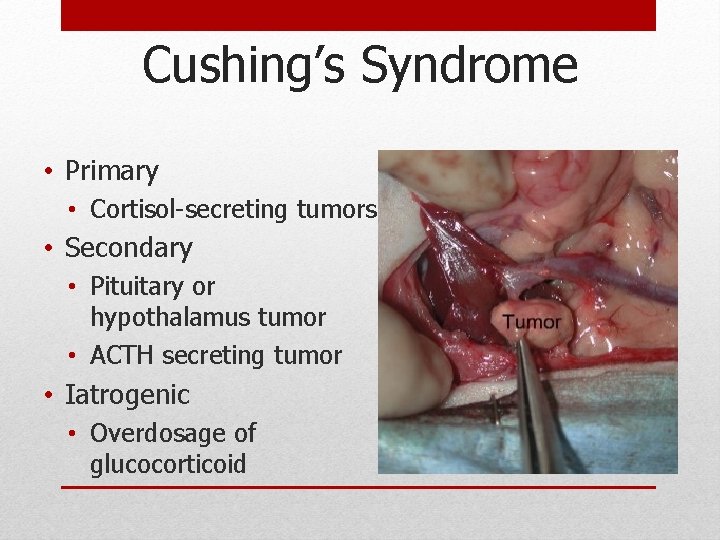
Cushing’s Syndrome • Primary • Cortisol-secreting tumors • Secondary • Pituitary or hypothalamus tumor • ACTH secreting tumor • Iatrogenic • Overdosage of glucocorticoid
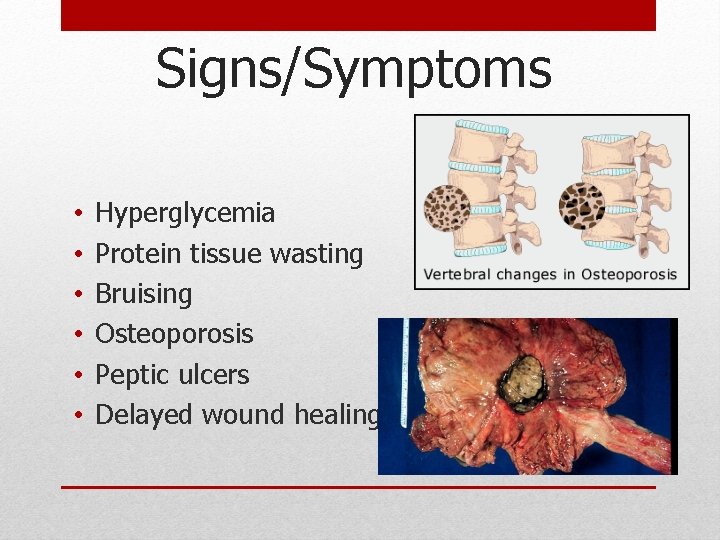
Signs/Symptoms • • • Hyperglycemia Protein tissue wasting Bruising Osteoporosis Peptic ulcers Delayed wound healing
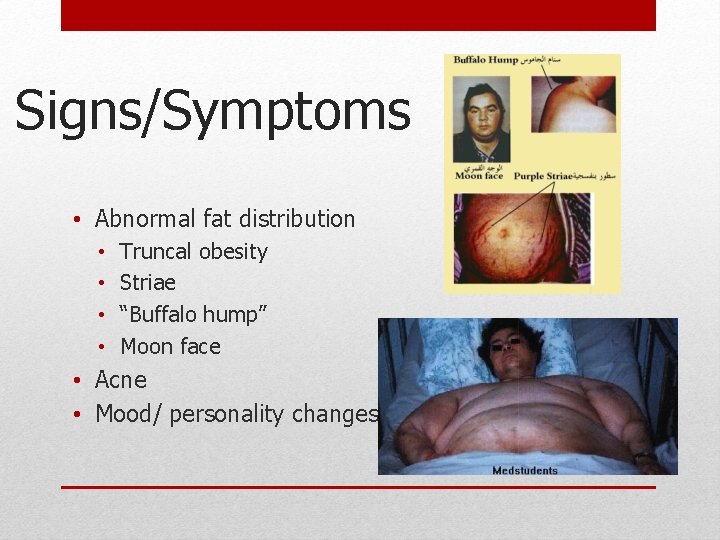
Signs/Symptoms • Abnormal fat distribution • • Truncal obesity Striae “Buffalo hump” Moon face • Acne • Mood/ personality changes
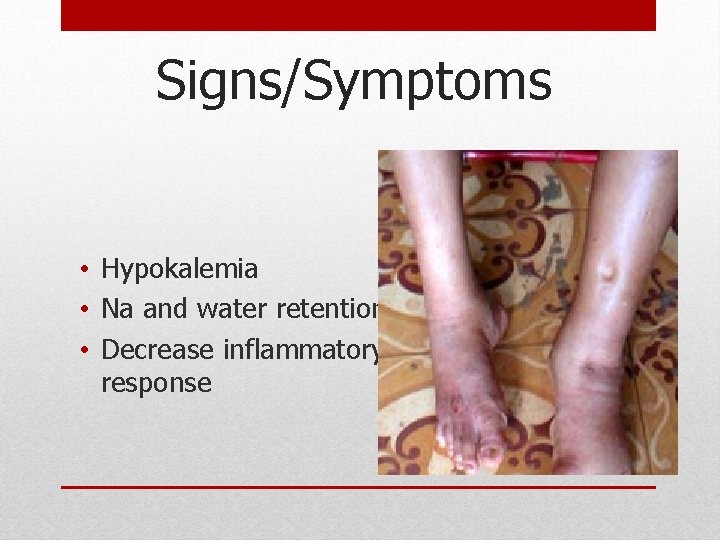
Signs/Symptoms • Hypokalemia • Na and water retention • Decrease inflammatory response