
Disaster Risk Management The FCC Perspective Thomas Sullivan
- Slides: 15
Disaster Risk Management: The FCC Perspective Thomas Sullivan Chief, International Bureau US Federal Communications Commission July 23, 2019 CANTO Annual Conference
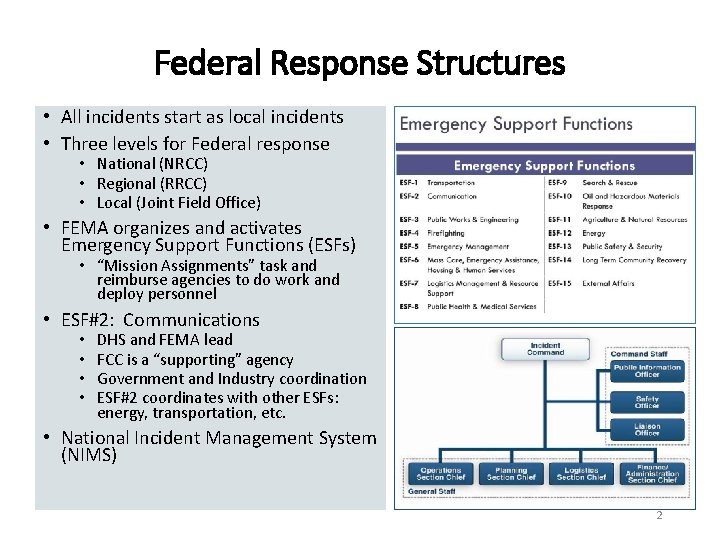
Federal Response Structures • All incidents start as local incidents • Three levels for Federal response • National (NRCC) • Regional (RRCC) • Local (Joint Field Office) • FEMA organizes and activates Emergency Support Functions (ESFs) • “Mission Assignments” task and reimburse agencies to do work and deploy personnel • ESF#2: Communications • • DHS and FEMA lead FCC is a “supporting” agency Government and Industry coordination ESF#2 coordinates with other ESFs: energy, transportation, etc. • National Incident Management System (NIMS) 2
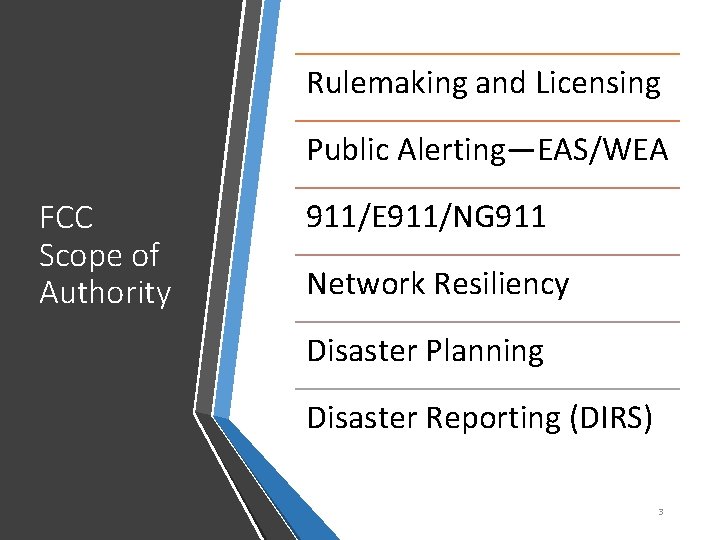
Rulemaking and Licensing Public Alerting—EAS/WEA FCC Scope of Authority 911/E 911/NG 911 Network Resiliency Disaster Planning Disaster Reporting (DIRS) 3
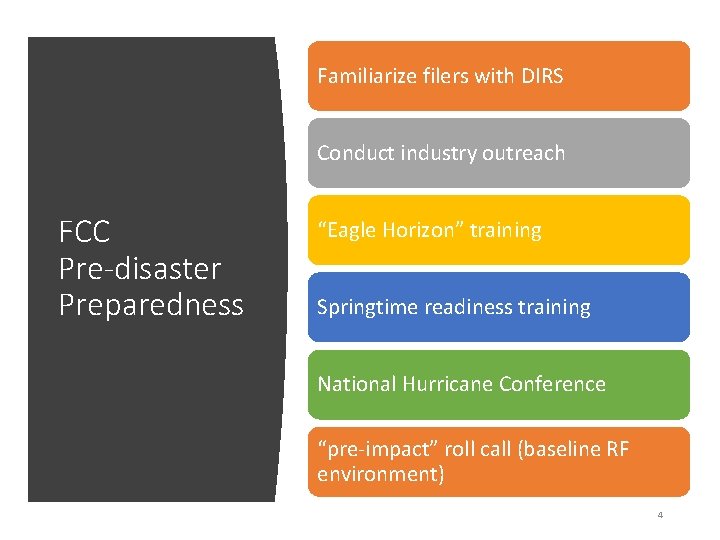
Familiarize filers with DIRS Conduct industry outreach FCC Pre-disaster Preparedness “Eagle Horizon” training Springtime readiness training National Hurricane Conference “pre-impact” roll call (baseline RF environment) 4
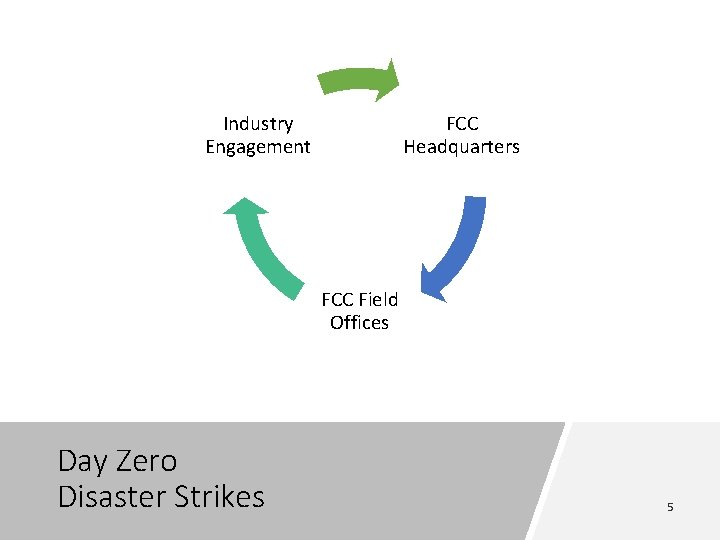
Industry Engagement FCC Headquarters FCC Field Offices Day Zero Disaster Strikes 5
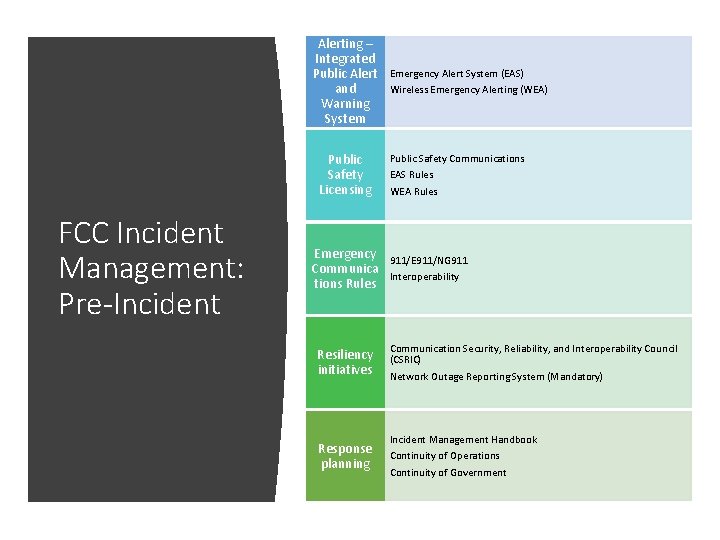
Public Alerting – Integrated Public Alert and Warning System (IPAWS) Public Safety Licensing FCC Incident Management: Pre-Incident Emergency Communica tions Rules Emergency Alert System (EAS) Wireless Emergency Alerting (WEA) Public Safety Communications EAS Rules WEA Rules 911/E 911/NG 911 Interoperability Resiliency initiatives Communication Security, Reliability, and Interoperability Council (CSRIC) Network Outage Reporting System (Mandatory) Response planning Incident Management Handbook Continuity of Operations Continuity of Government
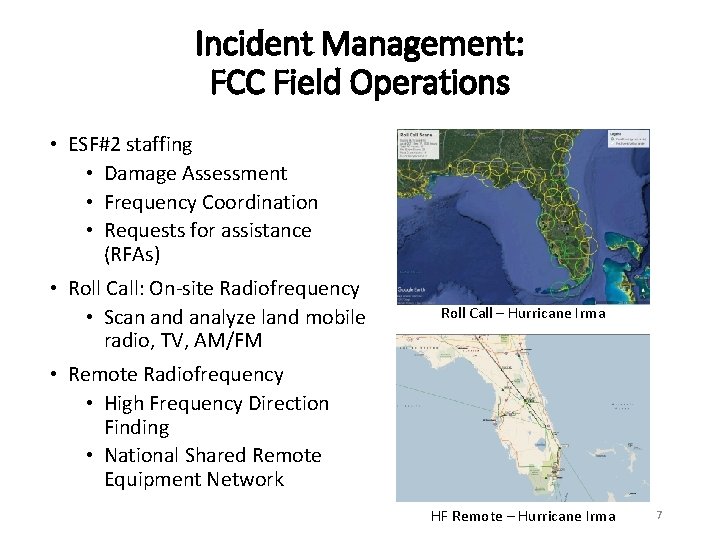
Incident Management: FCC Field Operations • ESF#2 staffing • Damage Assessment • Frequency Coordination • Requests for assistance (RFAs) • Roll Call: On-site Radiofrequency • Scan and analyze land mobile radio, TV, AM/FM Roll Call – Hurricane Irma • Remote Radiofrequency • High Frequency Direction Finding • National Shared Remote Equipment Network HF Remote – Hurricane Irma 7
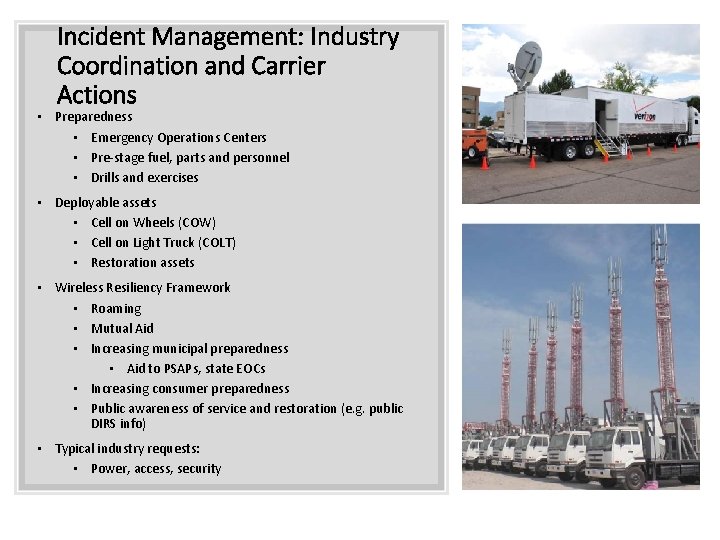
Incident Management: Industry Coordination and Carrier Actions • Preparedness • Emergency Operations Centers • Pre-stage fuel, parts and personnel • Drills and exercises • Deployable assets • Cell on Wheels (COW) • Cell on Light Truck (COLT) • Restoration assets • Wireless Resiliency Framework • Roaming • Mutual Aid • Increasing municipal preparedness • Aid to PSAPs, state EOCs • Increasing consumer preparedness • Public awareness of service and restoration (e. g. public DIRS info) • Typical industry requests: • Power, access, security
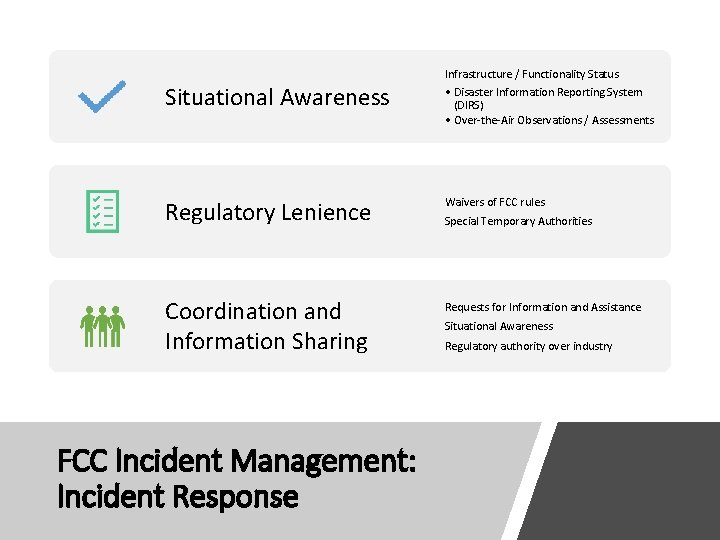
Infrastructure / Functionality Status Situational Awareness • Disaster Information Reporting System (DIRS) • Over-the-Air Observations / Assessments Regulatory Lenience Waivers of FCC rules Coordination and Information Sharing Requests for Information and Assistance FCC Incident Management: Incident Response Special Temporary Authorities Situational Awareness Regulatory authority over industry
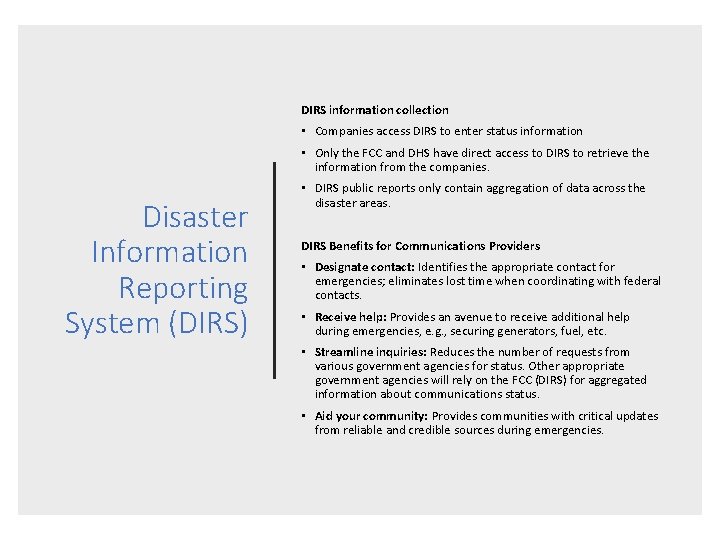
DIRS information collection • Companies access DIRS to enter status information • Only the FCC and DHS have direct access to DIRS to retrieve the information from the companies. Disaster Information Reporting System (DIRS) • DIRS public reports only contain aggregation of data across the disaster areas. DIRS Benefits for Communications Providers • Designate contact: Identifies the appropriate contact for emergencies; eliminates lost time when coordinating with federal contacts. • Receive help: Provides an avenue to receive additional help during emergencies, e. g. , securing generators, fuel, etc. • Streamline inquiries: Reduces the number of requests from various government agencies for status. Other appropriate government agencies will rely on the FCC (DIRS) for aggregated information about communications status. • Aid your community: Provides communities with critical updates from reliable and credible sources during emergencies.
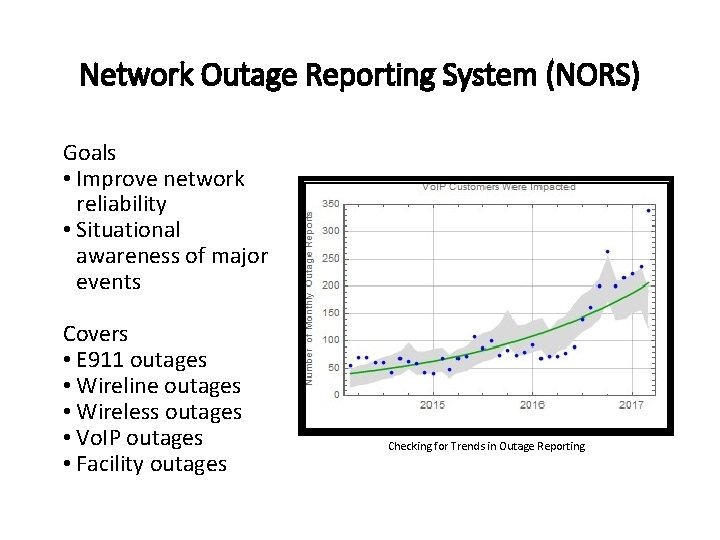
Network Outage Reporting System (NORS) Goals • Improve network reliability • Situational awareness of major events Covers • E 911 outages • Wireline outages • Wireless outages • Vo. IP outages • Facility outages Checking for Trends in Outage Reporting
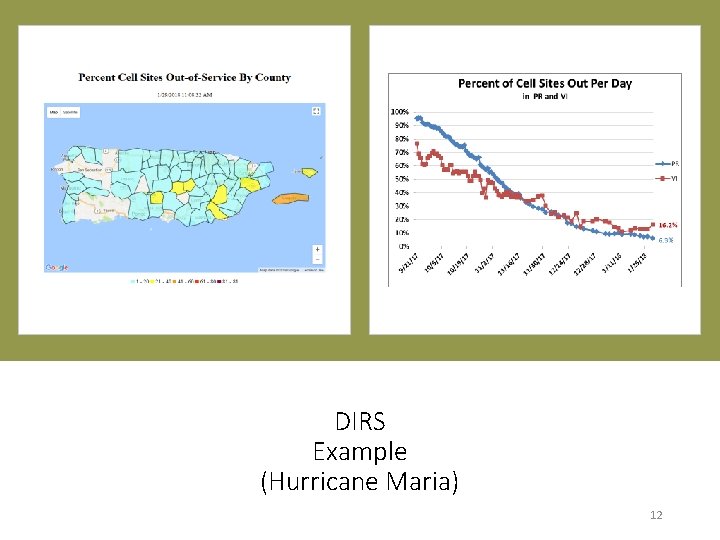
DIRS Example (Hurricane Maria) 12
Lessons Learned 2017 Hurricane Season • Pre-disaster relationships among stakeholders • Coordination is key (unintentional fiber cuts!) • Investments in resiliency pays • Trenched vs. aerial fiber • Well-maintained/secure generators & fuel • Physical plant build to high standards • Path redundancy • Shift in focus to long-term recovery • PR and USVI: Shared federal LMR network See: https: //www. fcc. gov/document/2017 -atlantic-hurricane-seasonreport-impact-communications 13
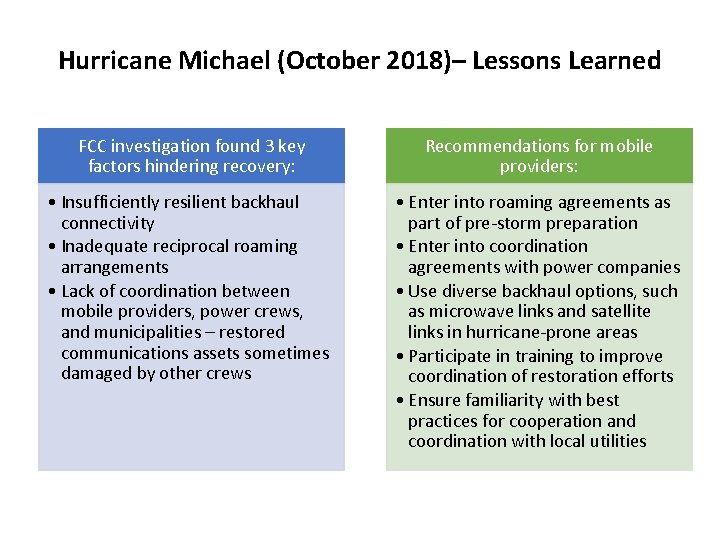
Hurricane Michael (October 2018)– Lessons Learned FCC investigation found 3 key factors hindering recovery: Recommendations for mobile providers: • Insufficiently resilient backhaul connectivity • Inadequate reciprocal roaming arrangements • Lack of coordination between mobile providers, power crews, and municipalities – restored communications assets sometimes damaged by other crews • Enter into roaming agreements as part of pre-storm preparation • Enter into coordination agreements with power companies • Use diverse backhaul options, such as microwave links and satellite links in hurricane-prone areas • Participate in training to improve coordination of restoration efforts • Ensure familiarity with best practices for cooperation and coordination with local utilities
QUESTIONS