Differentiating Instruction for All Learners LEANNE STRICKLAND JANUARY



- Slides: 20
Differentiating Instruction for All Learners LEANNE STRICKLAND JANUARY 16, 2017
Welcome Dayton ISD appreciates your commitment to professional growth and learning. In order to respect every attendee’s time and contributions, we will follow these expectations during today’s meeting: ● ● ● Be Attentive - participate, contribute, collaborate Be Prepared - we will begin on time & follow the agenda Be Polite - silence phones, limit messages, take calls outside Be Open-Minded - thinking is student centered & solution driven Be Present - avoid sidebar conversations & multi-tasking Be Professional - respect others’ opinions and perspectives DISD Learning Today, Leading Tomorrow
Name Tent Make a name tent with your construction paper at your table with your name and your grade/subject underneath
What is differentiation? Differentiation means tailoring instruction to meet individual needs. Whether teachers differentiate content, process, products, or the learning environment, the use of ongoing assessment and flexible grouping makes this a successful approach to instruction. --Reading Rockets
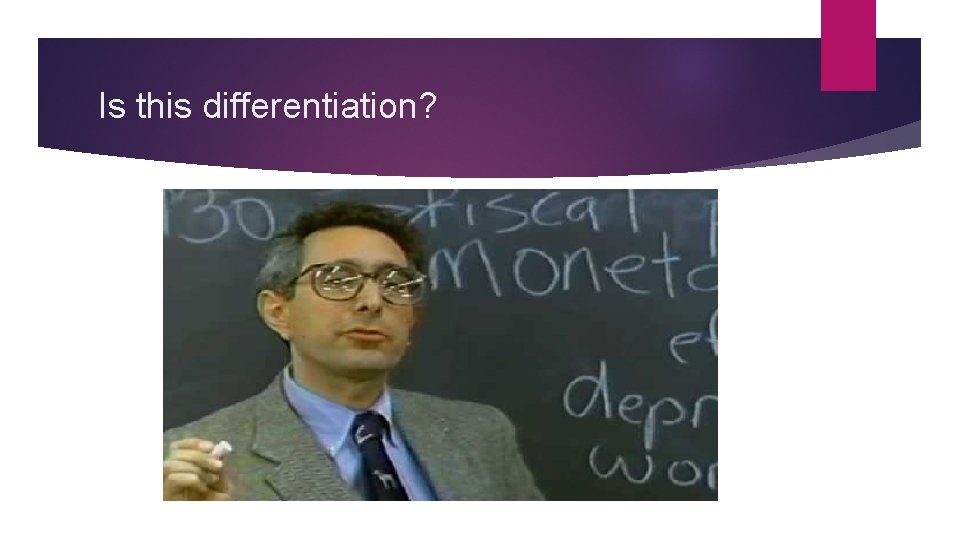
Is this differentiation?
Kahoot! Go to kahoot. it Log in with the code given. Let’s play!
What does that mean in my classroom? What ways do you differentiate for your students’ needs? Small group instruction – guided reading or guided math Varied levels of questioning (Bloom’s or Costa’s) Presenting material to students in various formats, such as visual, auditory, kinesthetic Meeting with struggling students for reteach Meeting with advanced students for extension
Differentiating for All We spend a lot of time, as teachers, trying to reach our struggling learners. This time is definitely well worth it. It is a key piece of the “differentiation” puzzle. Another part of the puzzle is time spent stretching our students to extend their thinking beyond the basics.
Thinking Beyond the Text A good place to start “training” our students to think beyond the text is during a read-aloud. Kids love making predictions and inferring from text and illustrations. Making predictions based on the text is easier to start with because they can be confirmed or denied through further investigation in the text. Making inferences involves using your schema (prior knowledge), plus the clues from the text. These inferences are not clearly confirmed or denied through reading.
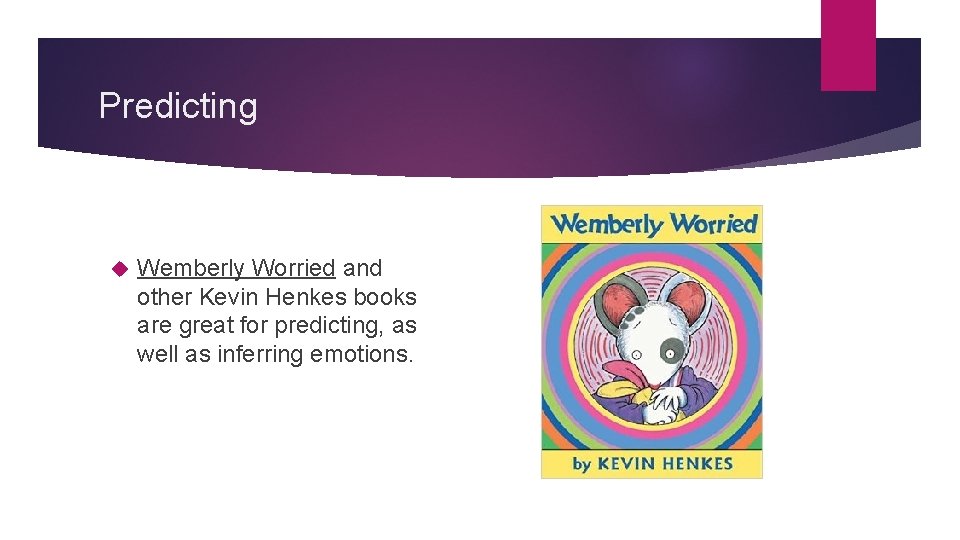
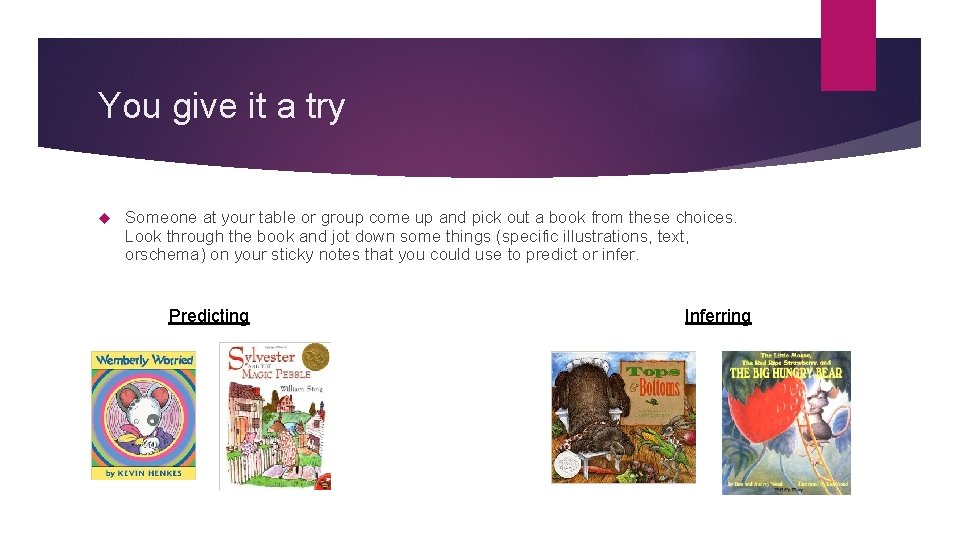
Predicting Wemberly Worried and other Kevin Henkes books are great for predicting, as well as inferring emotions.
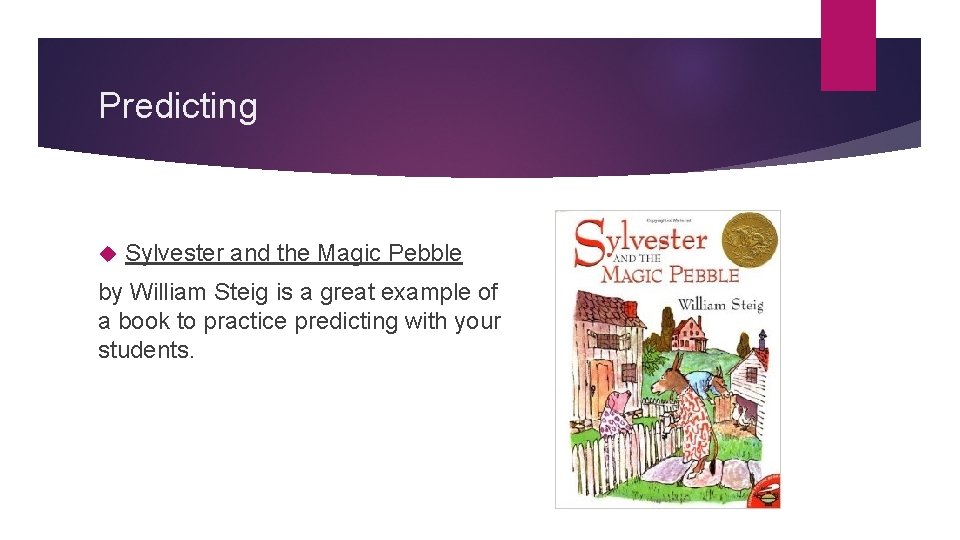
Predicting Sylvester and the Magic Pebble by William Steig is a great example of a book to practice predicting with your students.
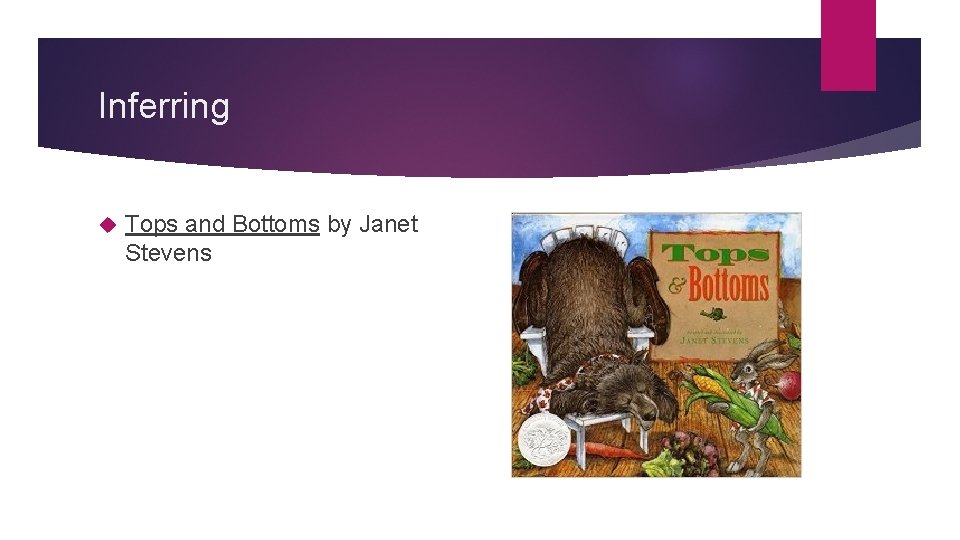
Inferring Tops and Bottoms by Janet Stevens
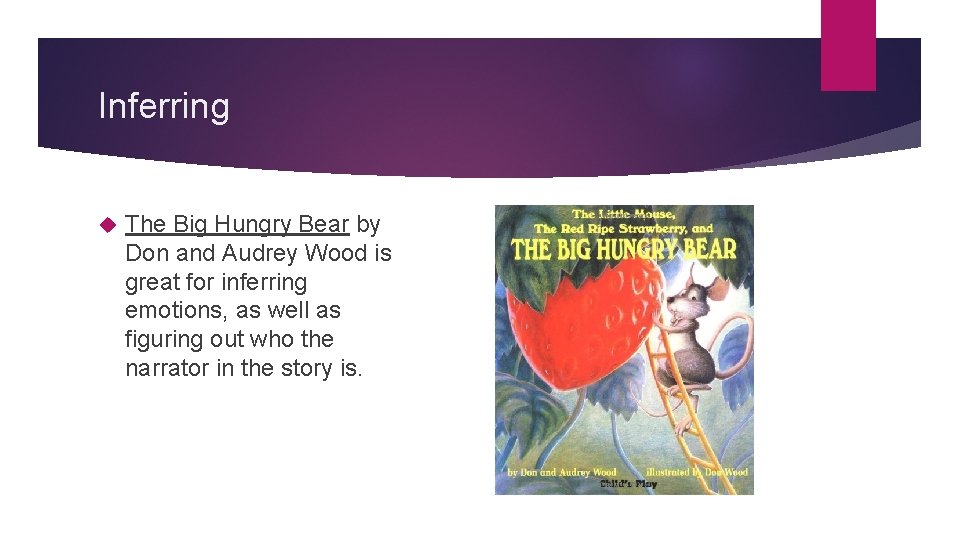
Inferring The Big Hungry Bear by Don and Audrey Wood is great for inferring emotions, as well as figuring out who the narrator in the story is.
You give it a try Someone at your table or group come up and pick out a book from these choices. Look through the book and jot down some things (specific illustrations, text, orschema) on your sticky notes that you could use to predict or infer. Predicting Inferring
Inferring Outside of the Text You can even create a real-life situation in your classroom that your students have to infer about. For example, have some cones set up around your guided reading table when the students enter the room. Don’t call their attention to them. Just let them discover it and talk with their friends about what they think they’re for. Creating situations like these in your classroom, will also promote their academic vocabulary because they’re talking with their friends, discussing their ideas and thoughts about the situation, and figuring it out!
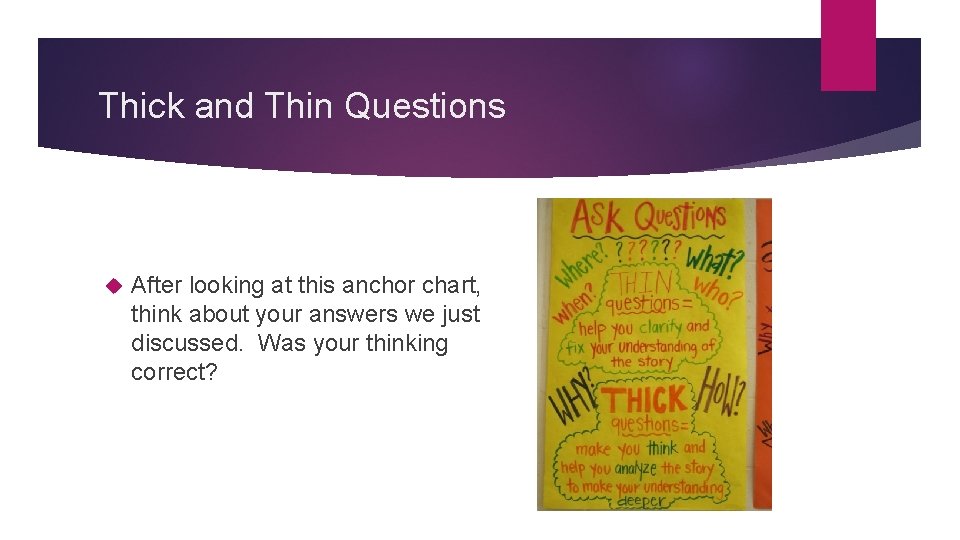
Thick and Thin Questions Talk with your elbow partner about some examples of “thick” and “thin” questions. Write your questions on the sticky notes provided at your table. Do not label “thick” or “thin”. We’ll read them aloud and ask you to decide which category they fall in. What connection can you draw between our discussion about thick and thin questions and your students? How can these be applied cross-curricular? (Math, Reading, Science, etc. )
Thick and Thin Questions After looking at this anchor chart, think about your answers we just discussed. Was your thinking correct?
Hots! – Higher Order Thinking Skills The lower level thinking skills is where we get most of our questions and responses. (knowledge and comprehension levels) But, the higher level thinking skills is our ultimate goal for our students. We achieve this through differentiated instruction. As I read an example from each level, think about how the wording and the questioning changes from level to level. How can these questions be applied to math? reading? science?
What level do you teach from? When you think about your teaching, what level do you think you question your students from? What level do your students ask questions from? How can we encourage them to think more on the lines of the “blue” and “purple” questions? Can your students help start conversations that opens up discussions that are more open-ended?
Reflection Were these learning strategies something you can see yourself using in your classroom? Are they appropriate for your grade level? Subject? If not, how can you make them appropriate for your kids? What other ideas did these strategies make you think of that you could use in your classrooms?