Diagnosis Related Groups and AR DRGs Introduction Prof

- Slides: 26
Diagnosis Related Groups and AR -DRGs - Introduction Prof Ric Marshall OAM The University of Sydney. DRG Workshop Belgrade, 18 -22. November 2013.
QUESTIONS • When asked to use DRGs people want to know. – What are DRGs? – What are DRGs useful for? • People wanting to use DRGs usually have some purpose in mind. – How can DRGs help us to … ? • What people who use them want to know about how they work – their limitations. DRG Workshop Belgrade, 18 -22. November 2013.
The usual context: PAYING FOR HEALTH SERVICES BASED ON ACTIVITY RATHER THAN EXPENDITURE DRG Workshop Belgrade, 18 -22. November 2013.
WHY DRG’S? • IF USED EFFECTIVELY AS A FUNDING TOOL – DRG’s help to focus on hospital efficiency and quality. – DRG’s help to contain growth in hospital costs. • THE DRG IS JUST THE TOOL NOT THE POLICY DRG Workshop Belgrade, 18 -22. November 2013.
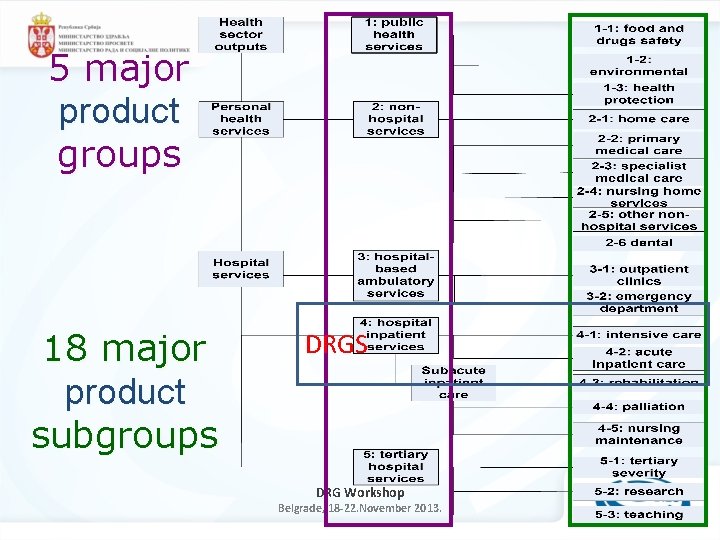
5 major product groups 18 major product subgroups DRGS DRG Workshop Belgrade, 18 -22. November 2013.
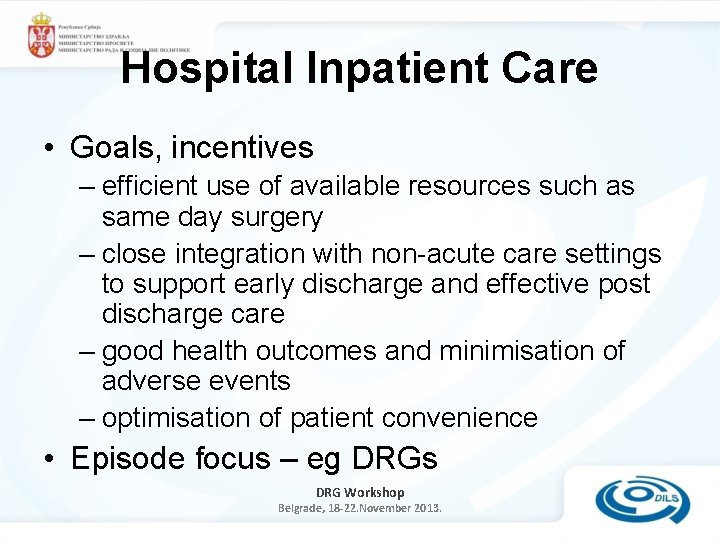
Hospital Inpatient Care • Goals, incentives – efficient use of available resources such as same day surgery – close integration with non-acute care settings to support early discharge and effective post discharge care – good health outcomes and minimisation of adverse events – optimisation of patient convenience • Episode focus – eg DRGs DRG Workshop Belgrade, 18 -22. November 2013.
What is needed to fund a hospital system by DRG payments? ? ? THE 4 COMPONENTS OF A DRG FUNDING SYSTEM DRG Workshop Belgrade, 18 -22. November 2013.
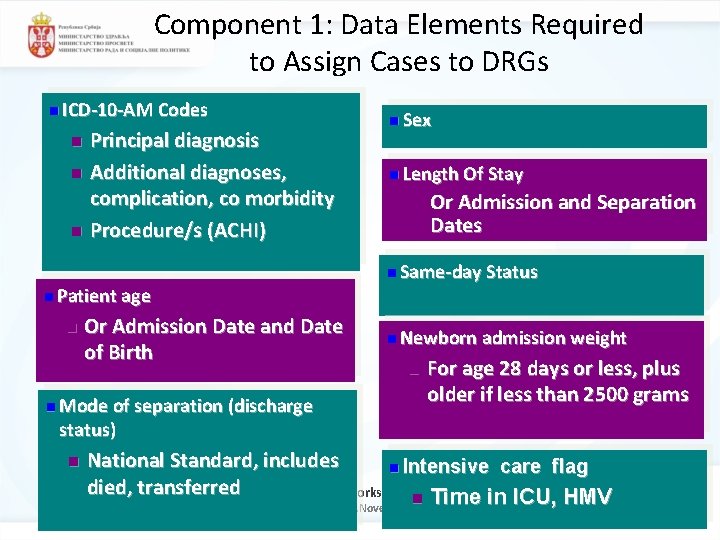
Component 1: Data Elements Required to Assign Cases to DRGs n ICD-10 -AM Codes n n n Principal diagnosis Additional diagnoses, complication, co morbidity Procedure/s (ACHI) n Length Of Stay n Or Admission and Separation Dates n Same-day Status n Patient age n n Sex Or Admission Date and Date of Birth n Mode of separation (discharge n Newborn admission weight n For age 28 days or less, plus older if less than 2500 grams status) n National Standard, includes n Intensive care flag died, transferred DRG Workshop n Time in ICU, HMV Belgrade, 18 -22. November 2013.
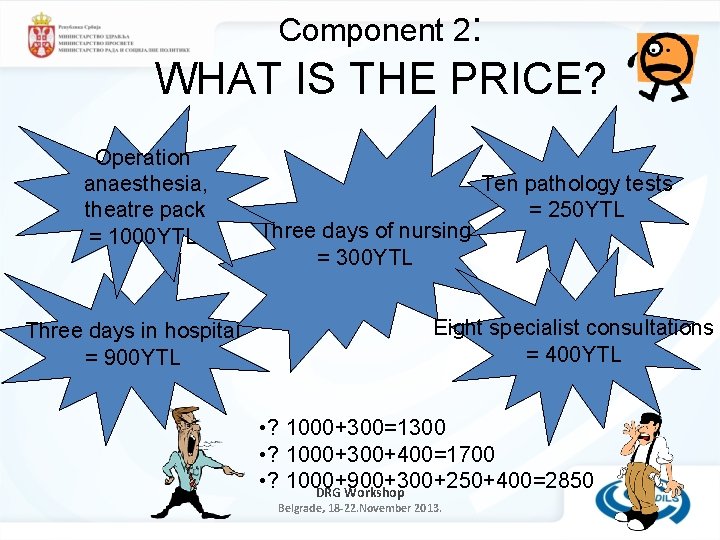
Component 2: WHAT IS THE PRICE? Operation anaesthesia, theatre pack = 1000 YTL Three days in hospital = 900 YTL Three days of nursing = 300 YTL Ten pathology tests = 250 YTL Eight specialist consultations = 400 YTL • ? 1000+300=1300 • ? 1000+300+400=1700 • ? 1000+900+300+250+400=2850 DRG Workshop Belgrade, 18 -22. November 2013.
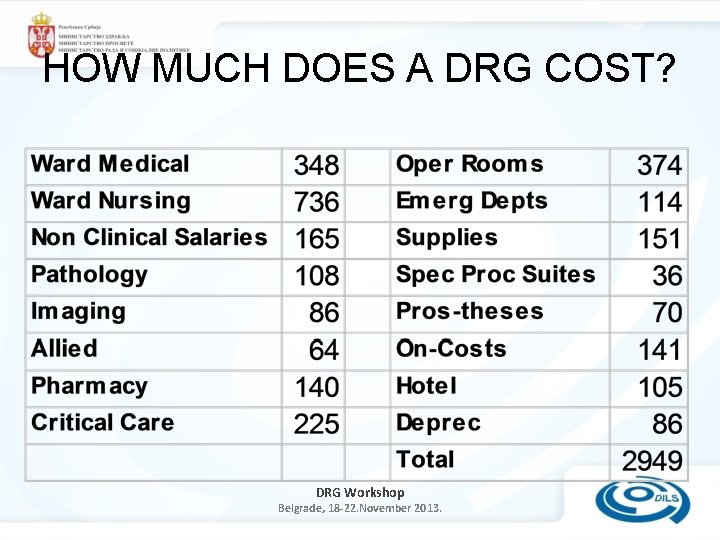
HOW MUCH DOES A DRG COST? DRG Workshop Belgrade, 18 -22. November 2013.
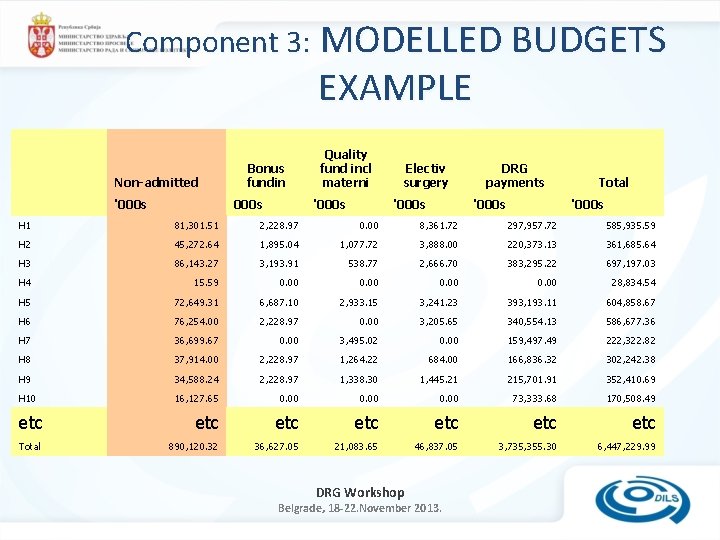
Component 3: MODELLED BUDGETS EXAMPLE Non-admitted '000 s Bonus fundin 000 s Quality fund incl materni '000 s Electiv surgery '000 s DRG payments '000 s Total '000 s H 1 81, 301. 51 2, 228. 97 0. 00 8, 361. 72 297, 957. 72 585, 935. 59 H 2 45, 272. 64 1, 895. 04 1, 077. 72 3, 888. 00 220, 373. 13 361, 685. 64 H 3 86, 143. 27 3, 193. 91 538. 77 2, 666. 70 383, 295. 22 697, 197. 03 H 4 15. 59 0. 00 28, 834. 54 H 5 72, 649. 31 6, 687. 10 2, 933. 15 3, 241. 23 393, 193. 11 604, 858. 67 H 6 76, 254. 00 2, 228. 97 0. 00 3, 205. 65 340, 554. 13 586, 677. 36 H 7 36, 699. 67 0. 00 3, 495. 02 0. 00 159, 497. 49 222, 322. 82 H 8 37, 914. 00 2, 228. 97 1, 264. 22 684. 00 166, 836. 32 302, 242. 38 H 9 34, 588. 24 2, 228. 97 1, 338. 30 1, 445. 21 215, 701. 91 352, 410. 69 H 10 16, 127. 65 0. 00 73, 333. 68 170, 508. 49 etc etc Total 890, 120. 32 36, 627. 05 21, 083. 65 46, 837. 05 3, 735, 355. 30 6, 447, 229. 99 DRG Workshop Belgrade, 18 -22. November 2013.
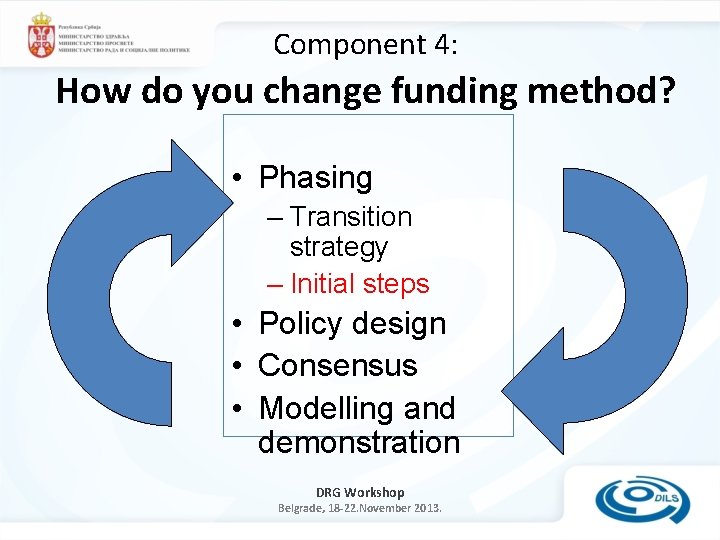
Component 4: How do you change funding method? • Phasing – Transition strategy – Initial steps • Policy design • Consensus • Modelling and demonstration DRG Workshop Belgrade, 18 -22. November 2013.
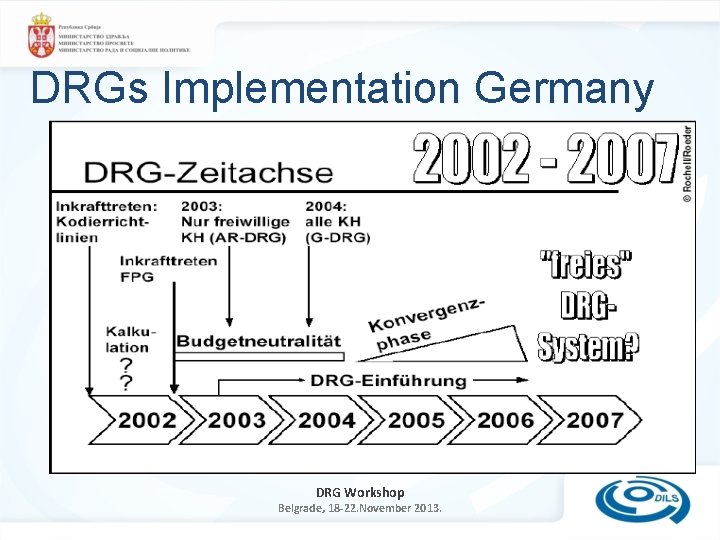
DRGs Implementation Germany DRG Workshop Belgrade, 18 -22. November 2013.
HEALTHCARE SYSTEM OUTPUTS RATHER THAN INPUTS DRG Workshop Belgrade, 18 -22. November 2013.
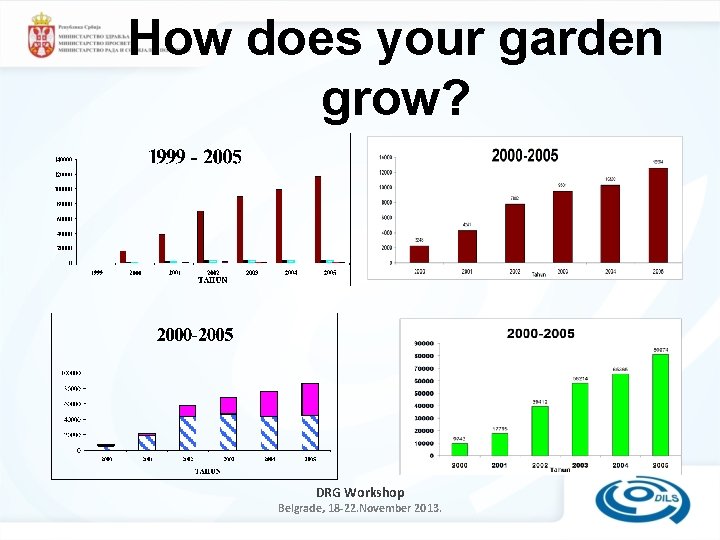
How does your garden grow? DRG Workshop Belgrade, 18 -22. November 2013.
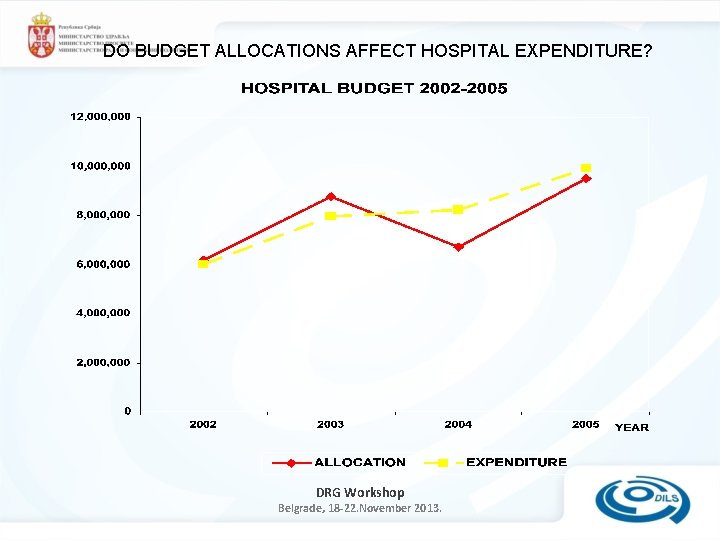
DO BUDGET ALLOCATIONS AFFECT HOSPITAL EXPENDITURE? DRG Workshop Belgrade, 18 -22. November 2013.
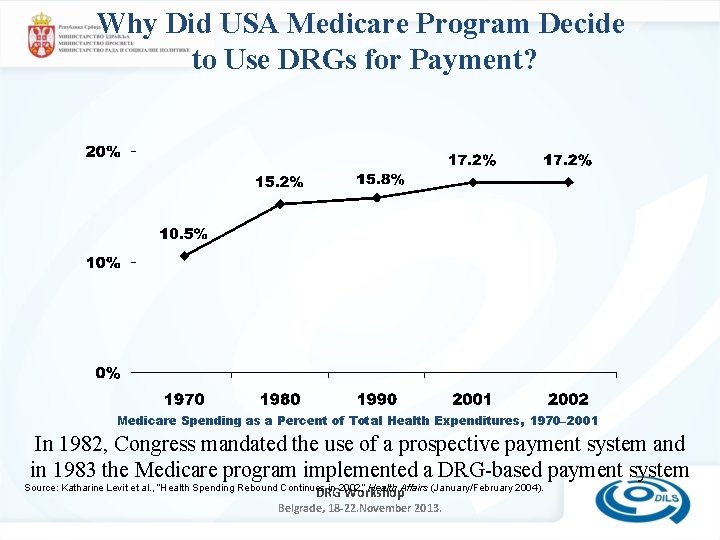
Why Did USA Medicare Program Decide to Use DRGs for Payment? Medicare Spending as a Percent of Total Health Expenditures, 1970– 2001 In 1982, Congress mandated the use of a prospective payment system and in 1983 the Medicare program implemented a DRG-based payment system Source: Katharine Levit et al. , “Health Spending Rebound Continues in 2002, ” Health Affairs (January/February 2004). DRG Workshop Belgrade, 18 -22. November 2013.
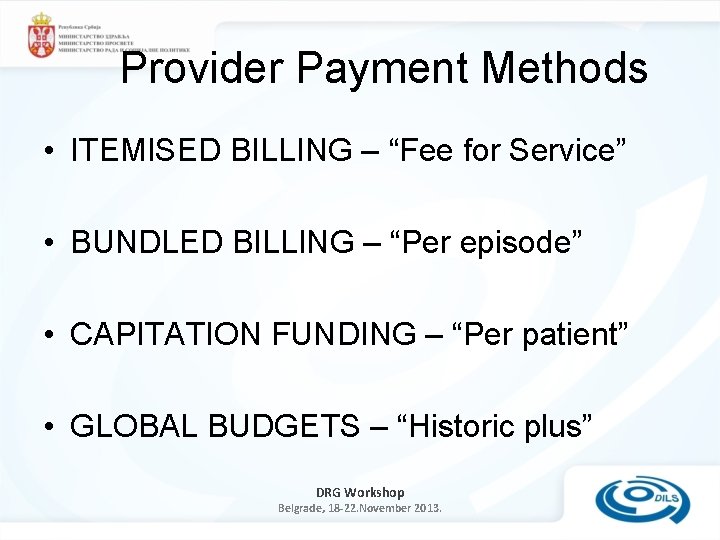
Provider Payment Methods • ITEMISED BILLING – “Fee for Service” • BUNDLED BILLING – “Per episode” • CAPITATION FUNDING – “Per patient” • GLOBAL BUDGETS – “Historic plus” DRG Workshop Belgrade, 18 -22. November 2013.
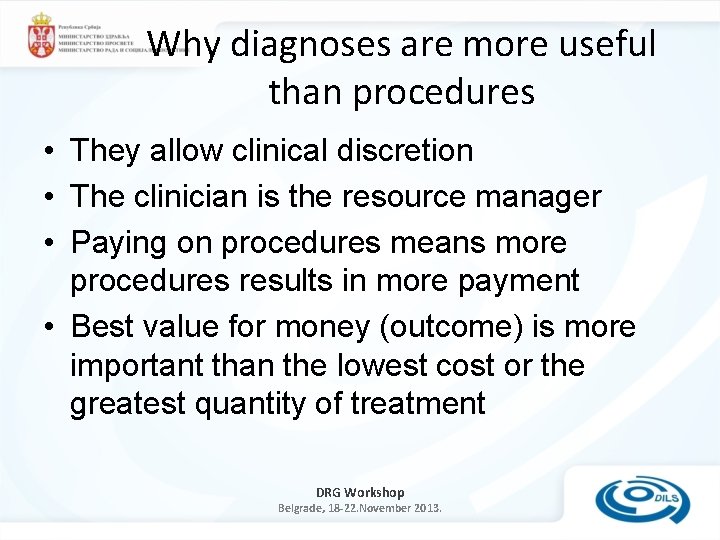
Why diagnoses are more useful than procedures • They allow clinical discretion • The clinician is the resource manager • Paying on procedures means more procedures results in more payment • Best value for money (outcome) is more important than the lowest cost or the greatest quantity of treatment DRG Workshop Belgrade, 18 -22. November 2013.
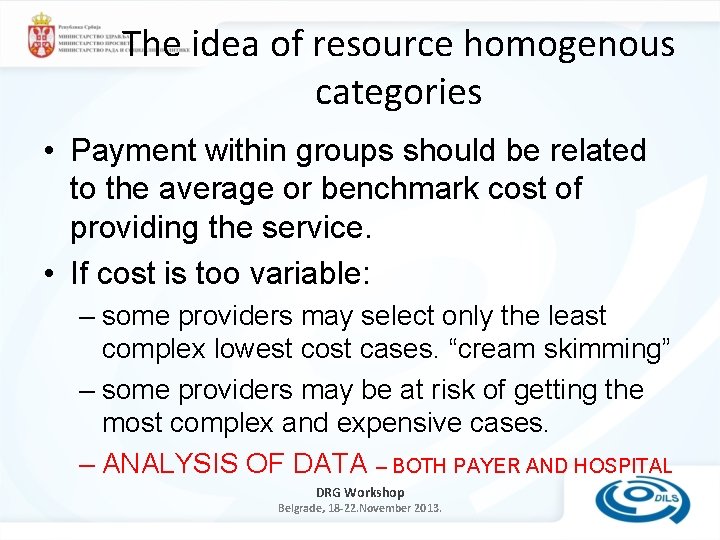
The idea of resource homogenous categories • Payment within groups should be related to the average or benchmark cost of providing the service. • If cost is too variable: – some providers may select only the least complex lowest cost cases. “cream skimming” – some providers may be at risk of getting the most complex and expensive cases. – ANALYSIS OF DATA – BOTH PAYER AND HOSPITAL DRG Workshop Belgrade, 18 -22. November 2013.
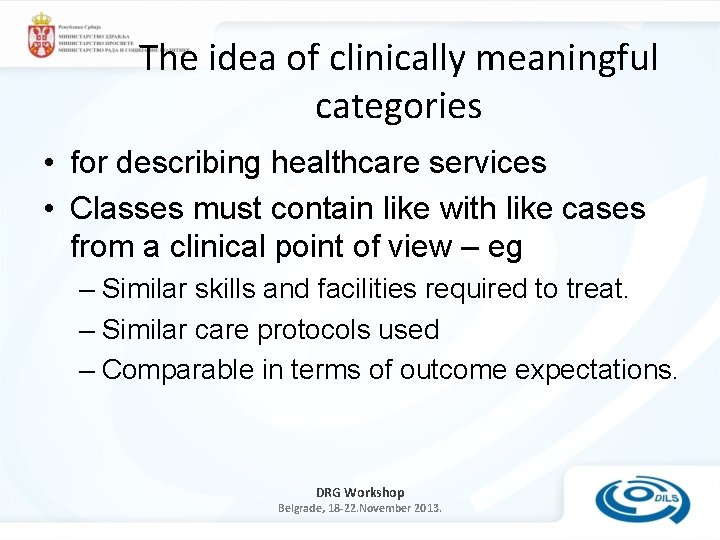
The idea of clinically meaningful categories • for describing healthcare services • Classes must contain like with like cases from a clinical point of view – eg – Similar skills and facilities required to treat. – Similar care protocols used – Comparable in terms of outcome expectations. DRG Workshop Belgrade, 18 -22. November 2013.
THE IDEA OF THE DIAGNOSIS RELATED GROUP DRG Workshop Belgrade, 18 -22. November 2013.
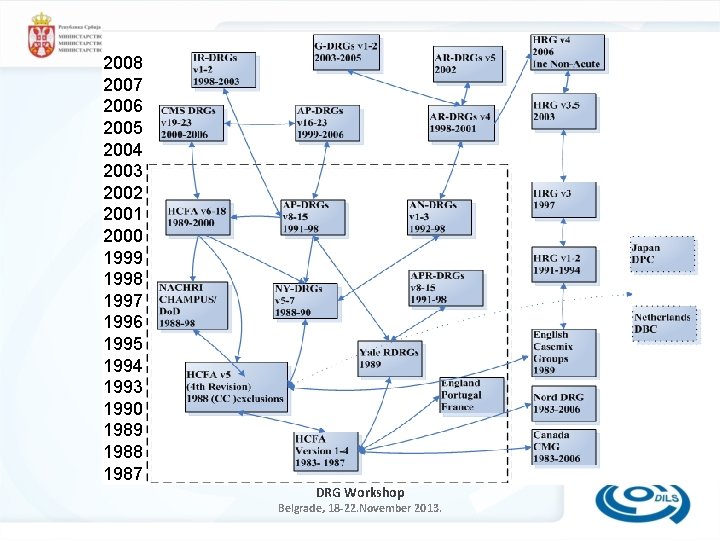
2008 2007 2006 2005 2004 2003 2002 2001 2000 1999 1998 1997 1996 1995 1994 1993 1990 1989 1988 1987 DRG Workshop Belgrade, 18 -22. November 2013.
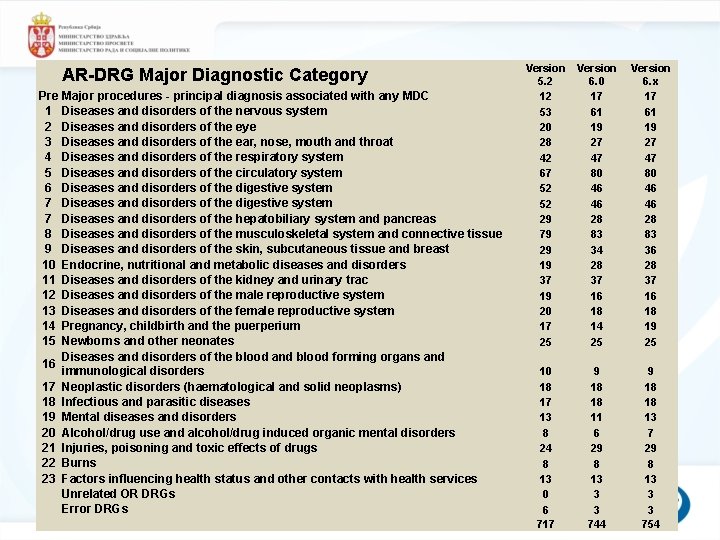
AR-DRG Major Diagnostic Category Pre 1 2 3 4 5 6 7 7 8 9 10 11 12 13 14 15 16 17 18 19 20 21 22 23 Major procedures - principal diagnosis associated with any MDC Diseases and disorders of the nervous system Diseases and disorders of the eye Diseases and disorders of the ear, nose, mouth and throat Diseases and disorders of the respiratory system Diseases and disorders of the circulatory system Diseases and disorders of the digestive system Diseases and disorders of the hepatobiliary system and pancreas Diseases and disorders of the musculoskeletal system and connective tissue Diseases and disorders of the skin, subcutaneous tissue and breast Endocrine, nutritional and metabolic diseases and disorders Diseases and disorders of the kidney and urinary trac Diseases and disorders of the male reproductive system Diseases and disorders of the female reproductive system Pregnancy, childbirth and the puerperium Newborns and other neonates Diseases and disorders of the blood and blood forming organs and immunological disorders Neoplastic disorders (haematological and solid neoplasms) Infectious and parasitic diseases Mental diseases and disorders Alcohol/drug use and alcohol/drug induced organic mental disorders Injuries, poisoning and toxic effects of drugs Burns Factors influencing health status and other contacts with health services DRG Workshop Unrelated OR DRGs Belgrade, 18 -22. November 2013. Error DRGs Version 5. 2 6. 0 12 17 53 61 20 19 28 27 42 47 67 80 52 46 29 28 79 83 29 34 19 28 37 37 19 16 20 18 17 14 25 25 10 18 17 13 8 24 8 13 0 6 717 9 18 18 11 6 29 8 13 3 3 744 Version 6. x 17 61 19 27 47 80 46 46 28 83 36 28 37 16 18 19 25 9 18 18 13 7 29 8 13 3 3 754
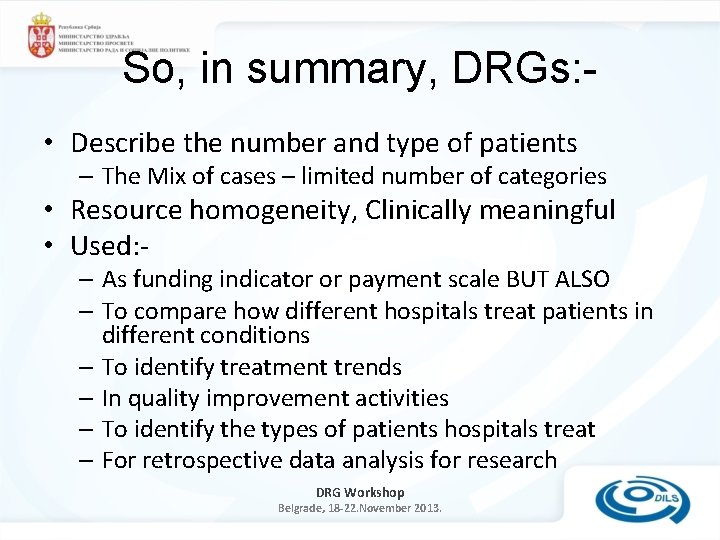
So, in summary, DRGs: • Describe the number and type of patients – The Mix of cases – limited number of categories • Resource homogeneity, Clinically meaningful • Used: - – As funding indicator or payment scale BUT ALSO – To compare how different hospitals treat patients in different conditions – To identify treatment trends – In quality improvement activities – To identify the types of patients hospitals treat – For retrospective data analysis for research DRG Workshop Belgrade, 18 -22. November 2013.
QUESTIONS DRG Workshop Belgrade, 18 -22. November 2013.