Cultural Heritage Damned if you do Damned if
- Slides: 34
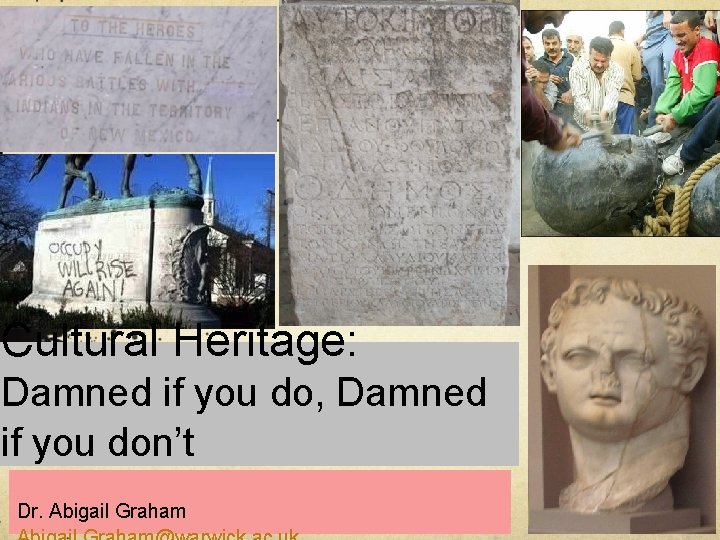
Cultural Heritage: Damned if you do, Damned if you don’t Dr. Abigail Graham
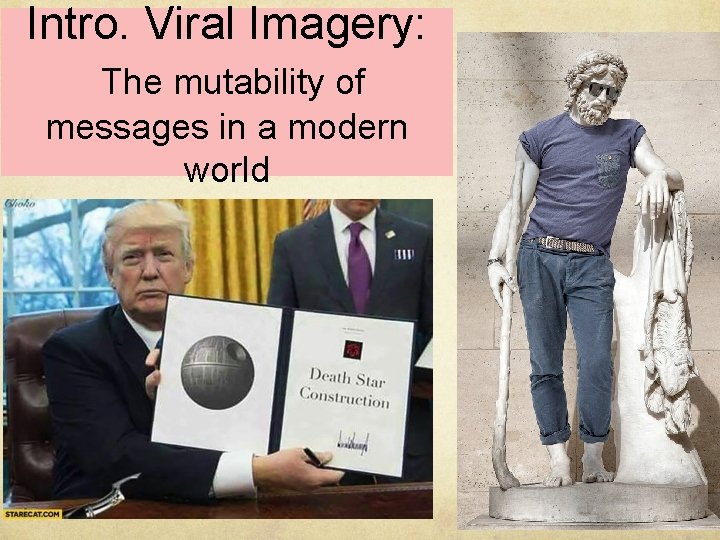
Intro. Viral Imagery: The mutability of messages in a modern world
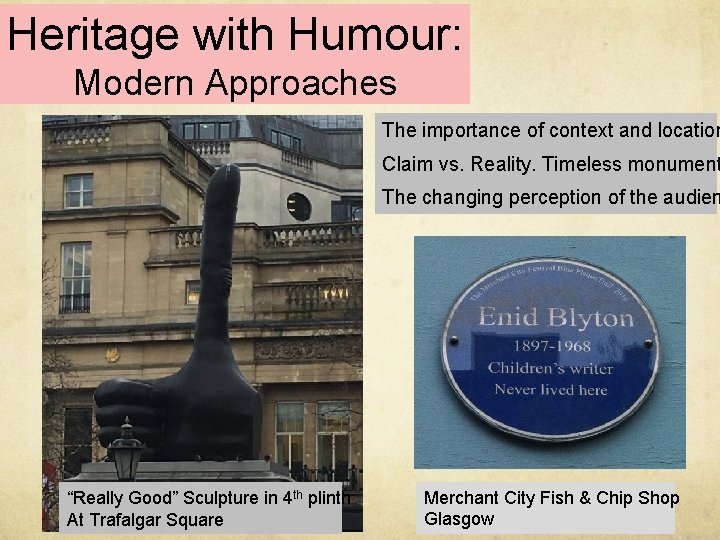
Heritage with Humour: Modern Approaches The importance of context and location Claim vs. Reality. Timeless monument The changing perception of the audien “Really Good” Sculpture in 4 th plinth At Trafalgar Square Merchant City Fish & Chip Shop Glasgow
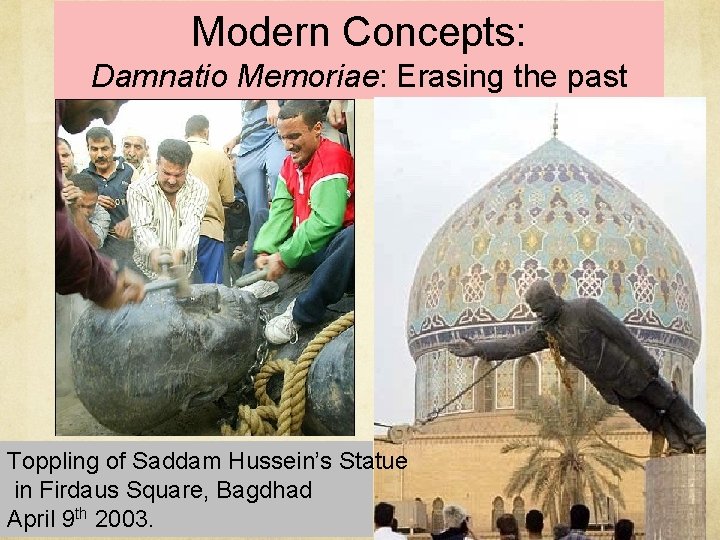
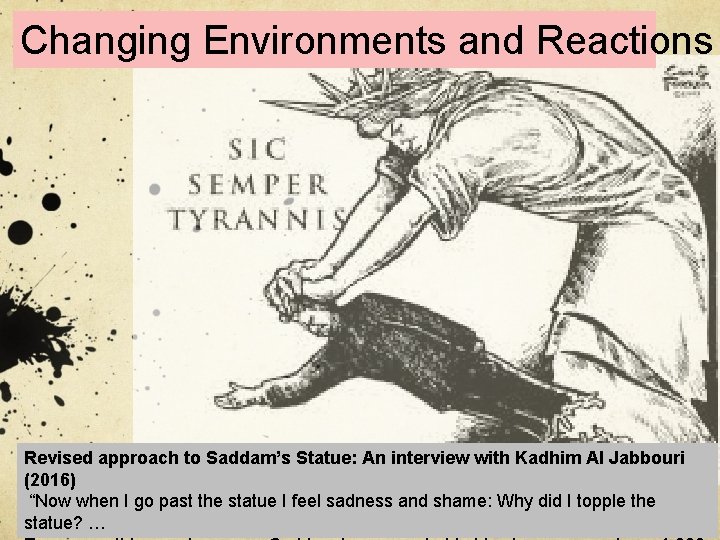
Modern Concepts: Damnatio Memoriae: Erasing the past Toppling of Saddam Hussein’s Statue in Firdaus Square, Bagdhad April 9 th 2003.
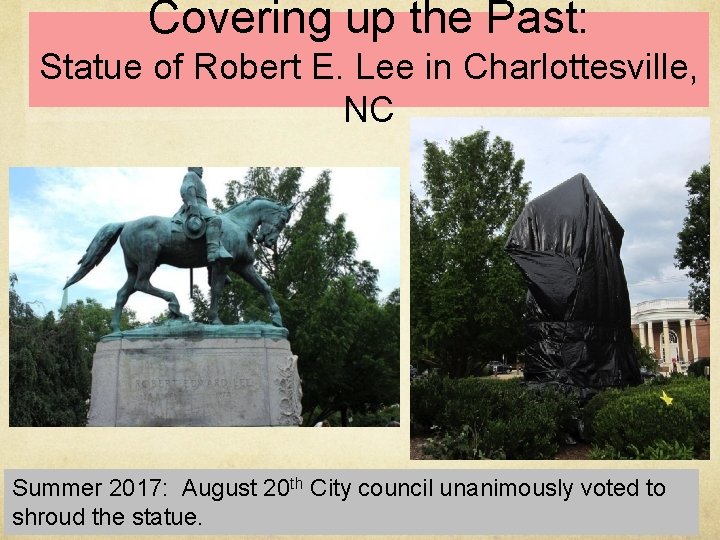
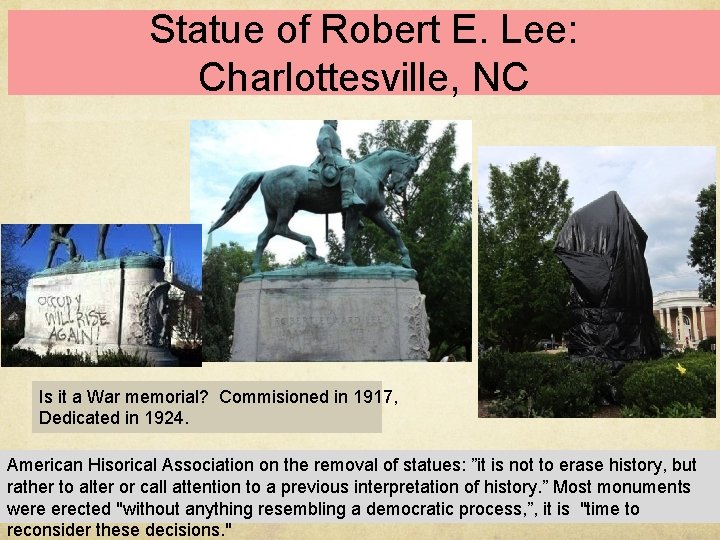
Covering up the Past: Statue of Robert E. Lee in Charlottesville, NC Summer 2017: August 20 th City council unanimously voted to shroud the statue.
How do we React to Monuments of Cultural Heritage? KEY QUESTIONS How do we respond to monuments? How do permanent images operate in modern society &media? What do we do with monuments that no longer fit within our social standards or values? Can we reinscribe history and cultural heritage without destroying or damaging it? What are the short and long term consequences of these practises?
Historia Magistra Vitae Est: The Damnatio Memoriae of Domitian (AD 96) Part I. Contextualising Condemnation Domitian’s damnatio as recorded in historical sources. Domitian as a benefactor at Ephesos Part II. Viewing Erasures • The appearance of Erasures on Monuments at Ephesos • Outcomes of Monumental Erasures: intended and unintended Part III. Modern Reflections How can an understanding of ancient events inform a modern perspective?
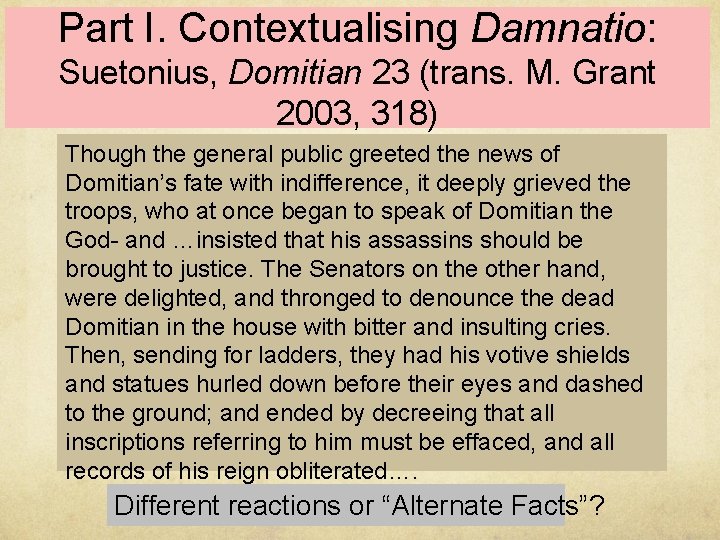
Part I. Contextualising Damnatio: Suetonius, Domitian 23 (trans. M. Grant 2003, 318) Though the general public greeted the news of Domitian’s fate with indifference, it deeply grieved the troops, who at once began to speak of Domitian the God- and …insisted that his assassins should be brought to justice. The Senators on the other hand, were delighted, and thronged to denounce the dead Domitian in the house with bitter and insulting cries. Then, sending for ladders, they had his votive shields and statues hurled down before their eyes and dashed to the ground; and ended by decreeing that all inscriptions referring to him must be effaced, and all records of his reign obliterated…. Different reactions or “Alternate Facts”?
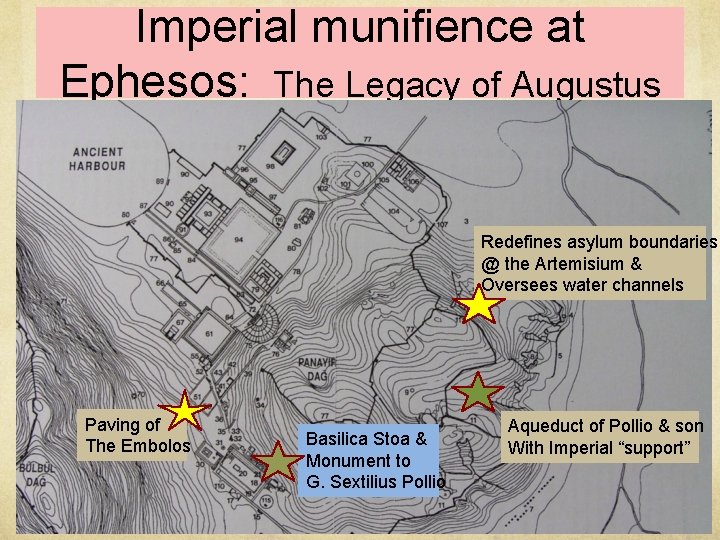
Imperial munifience at Ephesos: The Legacy of Augustus Redefines asylum boundaries @ the Artemisium & Oversees water channels Paving of The Embolos Basilica Stoa & Monument to G. Sextilius Pollio Aqueduct of Pollio & son With Imperial “support”
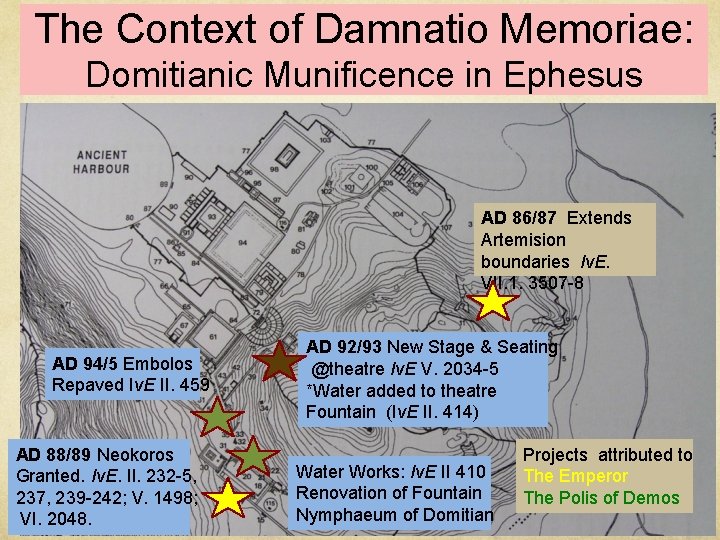
The Context of Damnatio Memoriae: Domitianic Munificence in Ephesus AD 86/87 Extends Artemision boundaries Iv. E. VII. 1. 3507 -8 AD 94/5 Embolos Repaved Iv. E II. 459 AD 88/89 Neokoros Granted. Iv. E. II. 232 -5, 237, 239 -242; V. 1498; VI. 2048. AD 92/93 New Stage & Seating @theatre Iv. E V. 2034 -5 *Water added to theatre Fountain (Iv. E II. 414) Water Works: Iv. E II 410 Renovation of Fountain Nymphaeum of Domitian Projects attributed to The Emperor The Polis of Demos
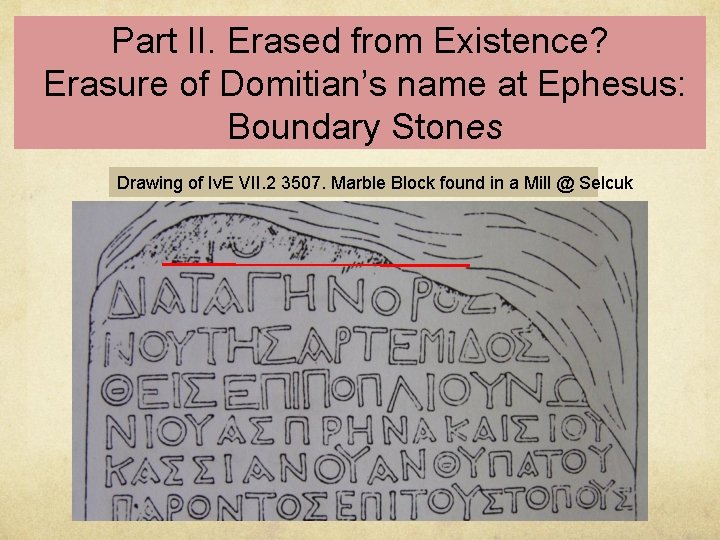
Part II. Erased from Existence? Erasure of Domitian’s name at Ephesus: Boundary Stones Drawing of Iv. E VII. 2 3507. Marble Block found in a Mill @ Selcuk
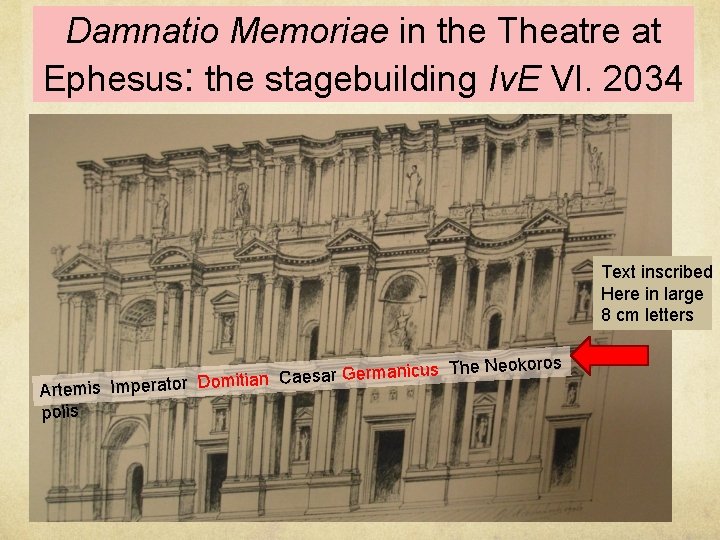
Damnatio Memoriae in the Theatre at Ephesus: the stagebuilding Iv. E VI. 2034 Text inscribed Here in large 8 cm letters rmanicus e G r sa e a C n a iti m o Artemis Imperator D polis The Neokoros
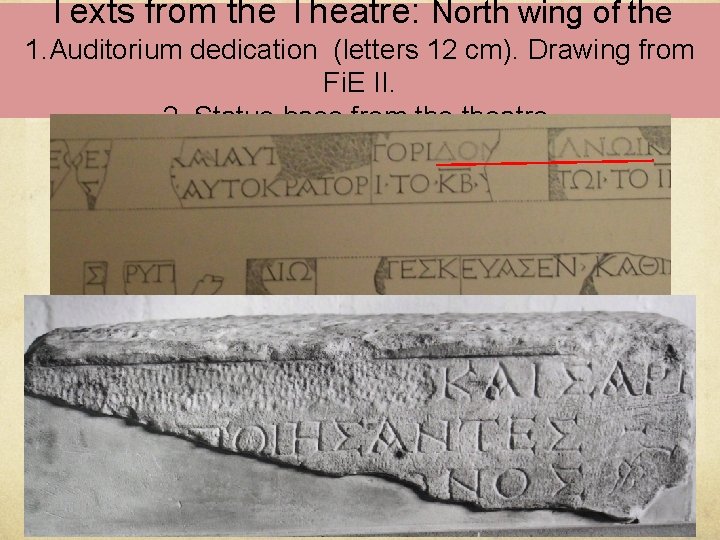
Texts from the Theatre: North wing of the 1. Auditorium dedication (letters 12 cm). Drawing from Fi. E II. 2. Statue base from theatre.
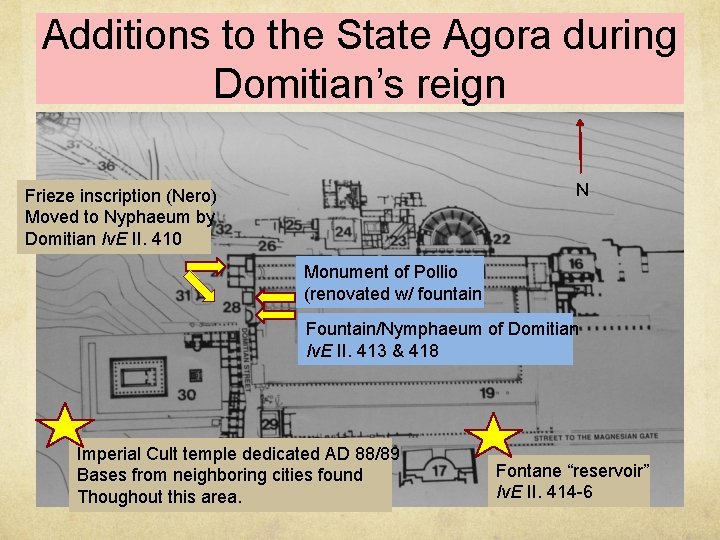
Additions to the State Agora during Domitian’s reign N Frieze inscription (Nero) Moved to Nyphaeum by Domitian Iv. E II. 410 Monument of Pollio (renovated w/ fountain Fountain/Nymphaeum of Domitian Iv. E II. 413 & 418 Imperial Cult temple dedicated AD 88/89 Bases from neighboring cities found Thoughout this area. Fontane “reservoir” Iv. E II. 414 -6
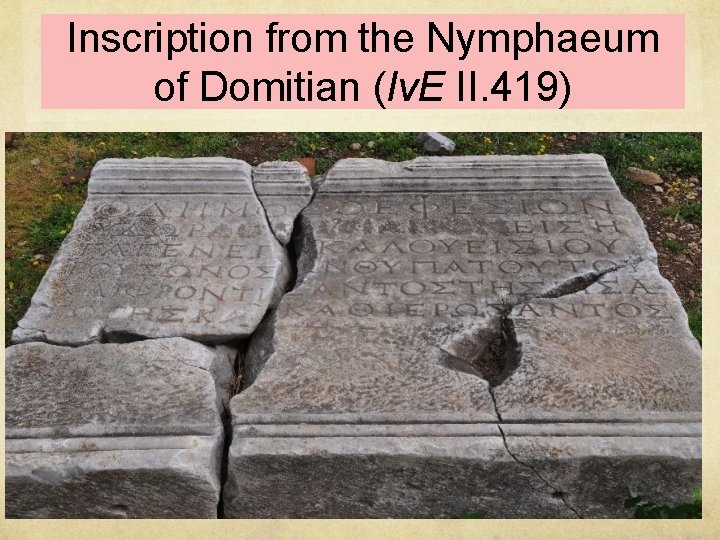
Inscription from the Nymphaeum of Domitian (Iv. E II. 419)
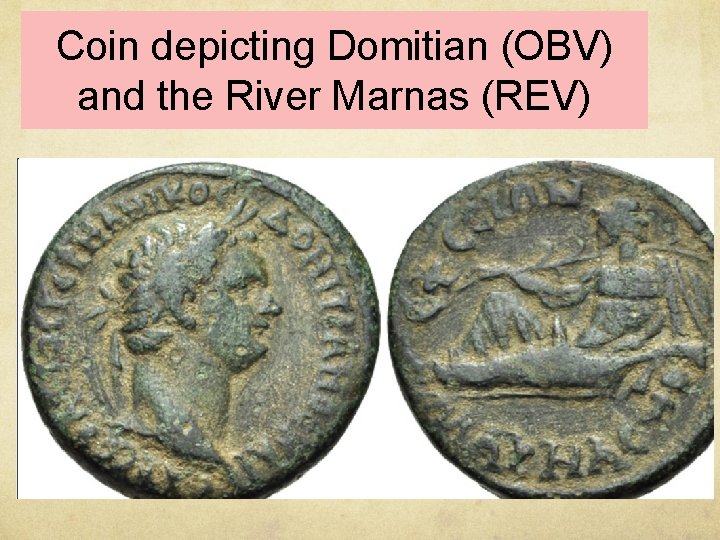
Coin depicting Domitian (OBV) and the River Marnas (REV)
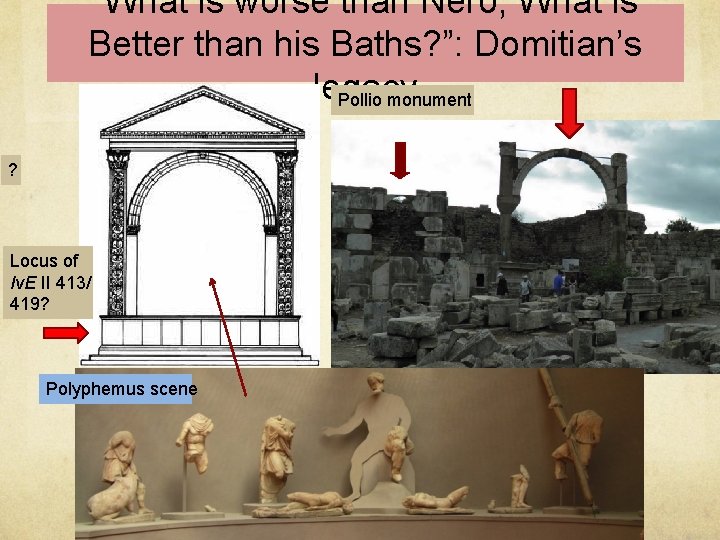
“What is worse than Nero, What is Better than his Baths? ”: Domitian’s legacy Pollio monument ? Locus of Iv. E II 413/ 419? Polyphemus scene
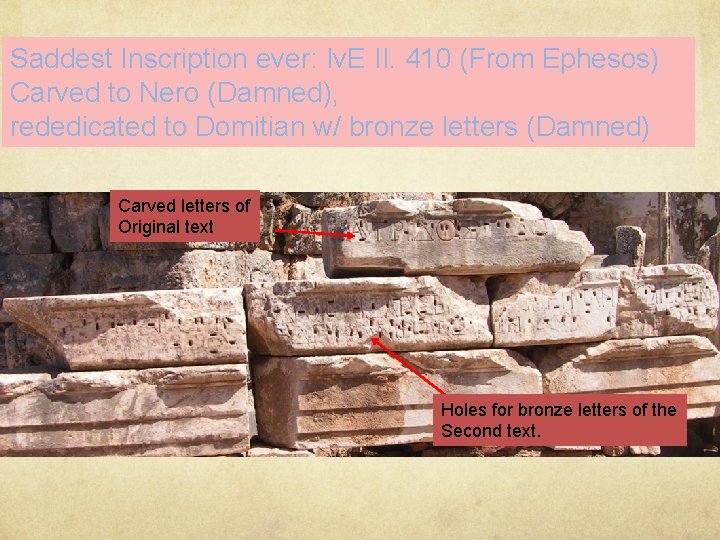
Saddest Inscription ever: Iv. E II. 410 (From Ephesos) Carved to Nero (Damned), rededicated to Domitian w/ bronze letters (Damned) Carved letters of Original text Holes for bronze letters of the Second text.
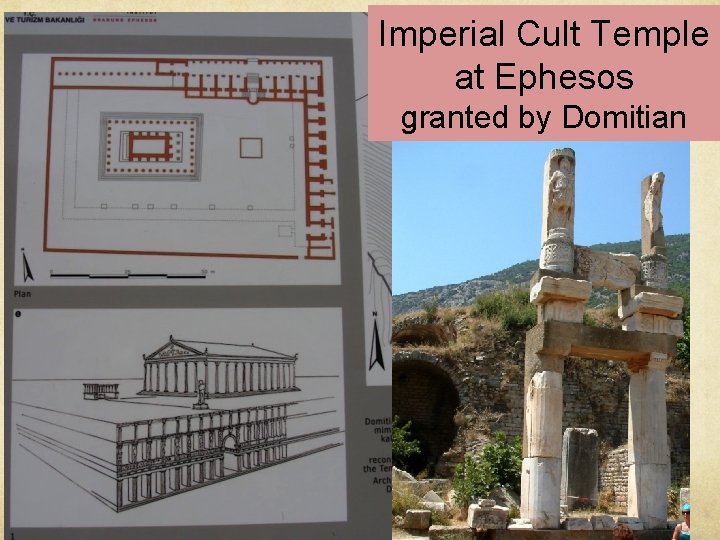
Imperial Cult Temple at Ephesos granted by Domitian
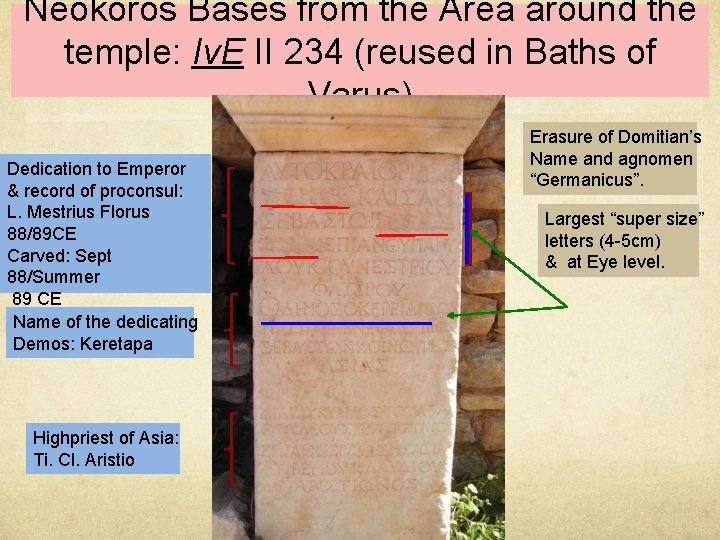
Neokoros Bases from the Area around the temple: Iv. E II 234 (reused in Baths of Varus) Dedication to Emperor & record of proconsul: L. Mestrius Florus 88/89 CE Carved: Sept 88/Summer 89 CE Name of the dedicating Demos: Keretapa Highpriest of Asia: Ti. Cl. Aristio Erasure of Domitian’s Name and agnomen “Germanicus”. Largest “super size” letters (4 -5 cm) & at Eye level.
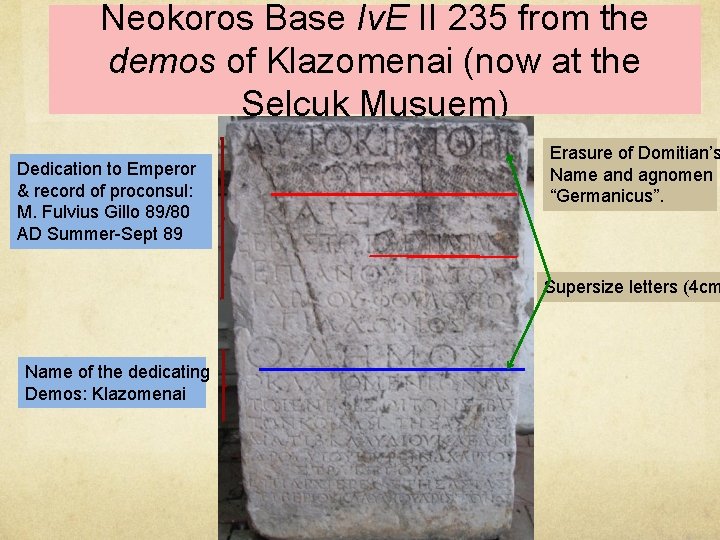
Neokoros Base Iv. E II 235 from the demos of Klazomenai (now at the Selcuk Musuem) Dedication to Emperor & record of proconsul: M. Fulvius Gillo 89/80 AD Summer-Sept 89 Erasure of Domitian’s Name and agnomen “Germanicus”. Supersize letters (4 cm Name of the dedicating Demos: Klazomenai
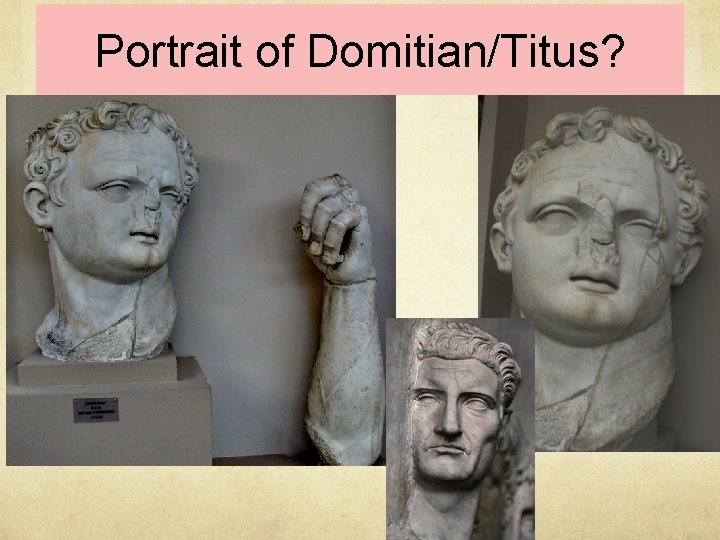
Portrait of Domitian/Titus?
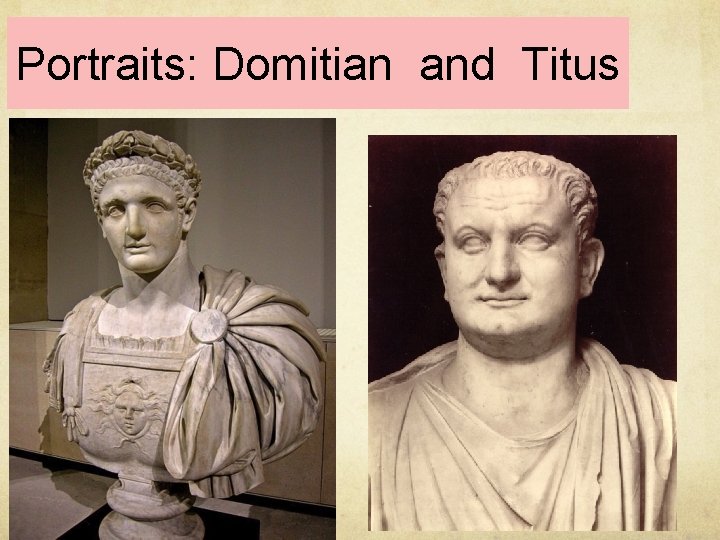
Portraits: Domitian and Titus
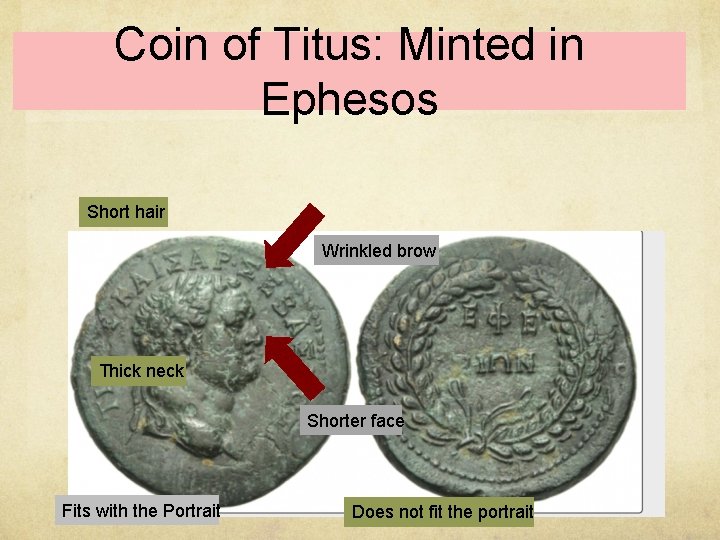
Coin of Titus: Minted in Ephesos Short hair Wrinkled brow Thick neck Shorter face Fits with the Portrait Does not fit the portrait
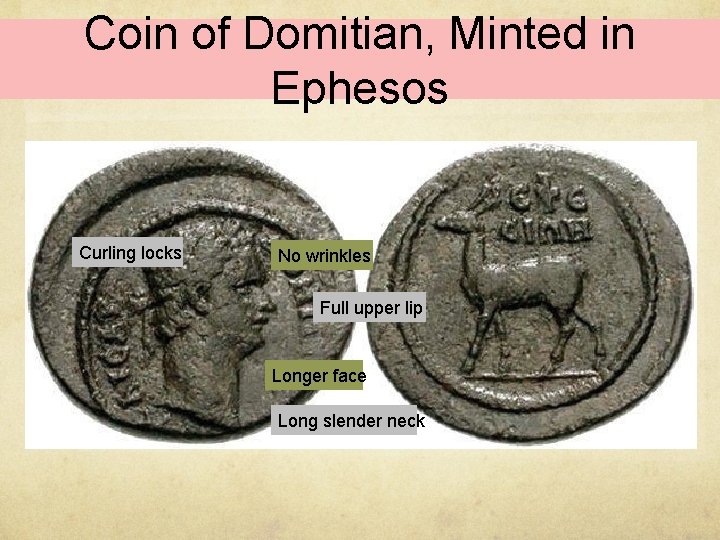
Coin of Domitian, Minted in Ephesos Curling locks No wrinkles Full upper lip Longer face Long slender neck
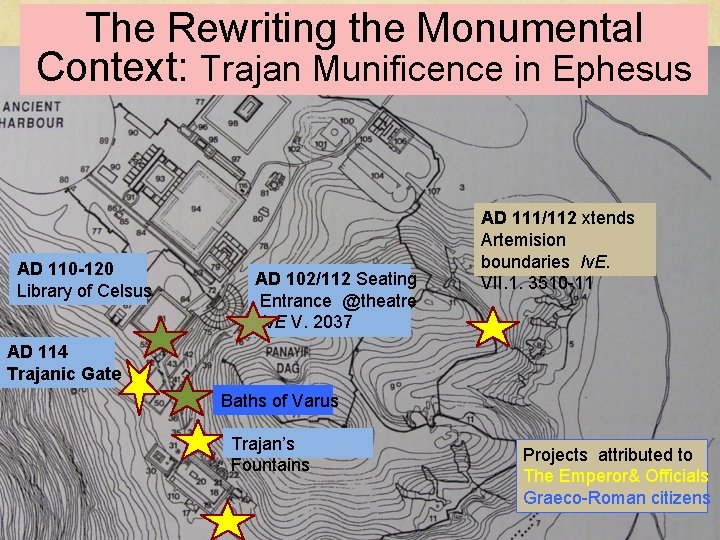
The Rewriting the Monumental Context: Trajan Munificence in Ephesus AD 110 -120 Library of Celsus AD 102/112 Seating Entrance @theatre Iv. E V. 2037 AD 111/112 xtends Artemision boundaries Iv. E. VII. 1. 3510 -11 AD 114 Trajanic Gate Baths of Varus Trajan’s Fountains Projects attributed to The Emperor& Officials Graeco-Roman citizens
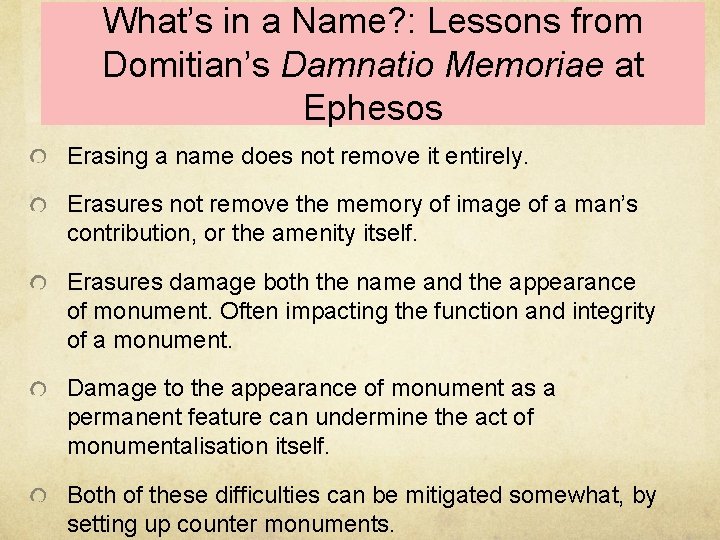
What’s in a Name? : Lessons from Domitian’s Damnatio Memoriae at Ephesos Erasing a name does not remove it entirely. Erasures not remove the memory of image of a man’s contribution, or the amenity itself. Erasures damage both the name and the appearance of monument. Often impacting the function and integrity of a monument. Damage to the appearance of monument as a permanent feature can undermine the act of monumentalisation itself. Both of these difficulties can be mitigated somewhat, by setting up counter monuments.
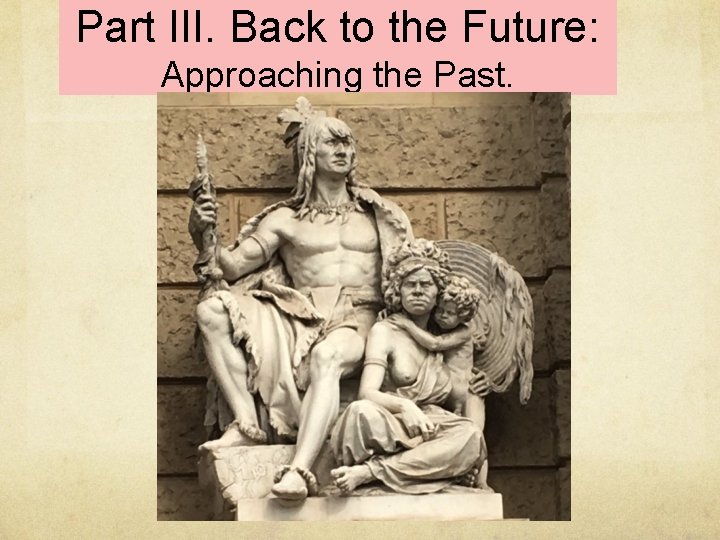
Part III. Back to the Future: Approaching the Past.
Part III. Back to the Future: Approaching the Past. “The evil that men do lives after them, the good is oft interred with their bones” - Shakespeare, Julius Caesar. When was the monument set up? What purpose did it serve? What values did it reflect? How do subsequent changes impact both the monument and its message? How can we learn from it?
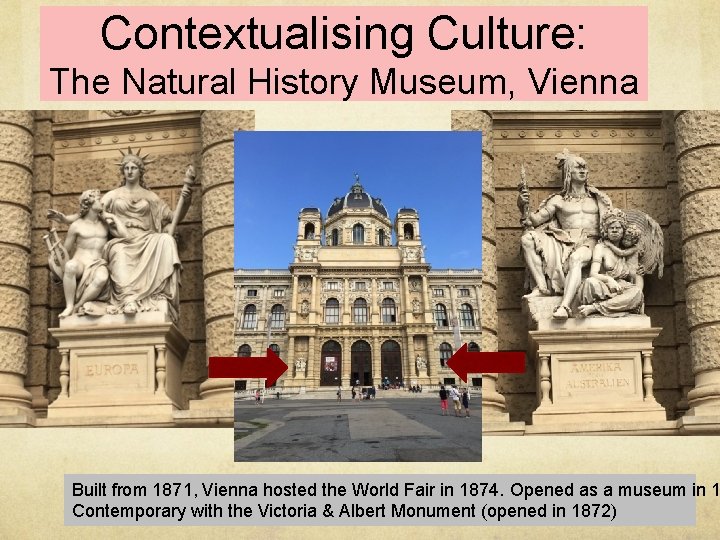
Contextualising Culture: The Natural History Museum, Vienna Built from 1871, Vienna hosted the World Fair in 1874. Opened as a museum in 1 Contemporary with the Victoria & Albert Monument (opened in 1872)
Changing Environments and Reactions Revised approach to Saddam’s Statue: An interview with Kadhim Al Jabbouri (2016) “Now when I go past the statue I feel sadness and shame: Why did I topple the statue? … www. Coxand. Forkum. com Source:
Statue of Robert E. Lee: Charlottesville, NC Is it a War memorial? Commisioned in 1917, Dedicated in 1924. American Hisorical Association on the removal of statues: ”it is not to erase history, but rather to alter or call attention to a previous interpretation of history. ” Most monuments were erected "without anything resembling a democratic process, ”, it is "time to reconsider these decisions. "
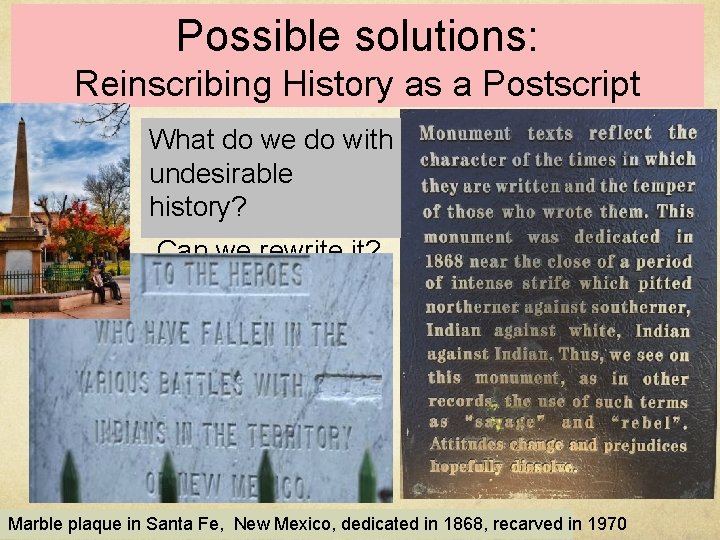
Possible solutions: Reinscribing History as a Postscript What do we do with undesirable history? Can we rewrite it? Marble plaque in Santa Fe, New Mexico, dedicated in 1868, recarved in 1970
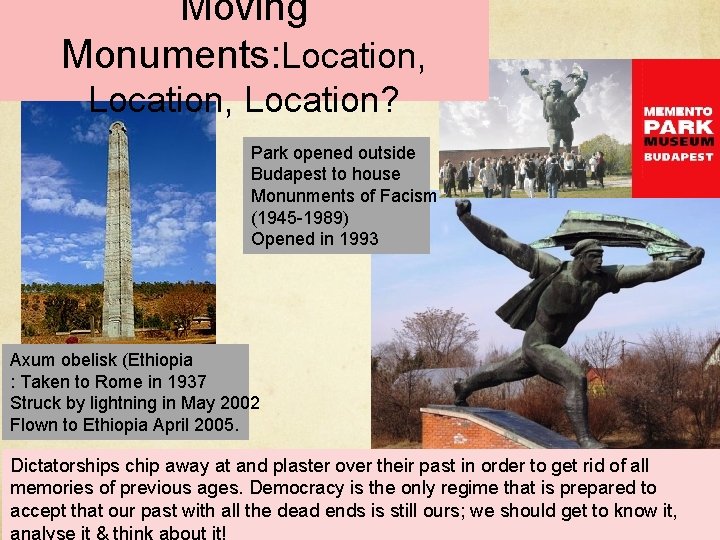
Moving Monuments: Location, Location? Park opened outside Budapest to house Monunments of Facism (1945 -1989) Opened in 1993 Axum obelisk (Ethiopia : Taken to Rome in 1937 Struck by lightning in May 2002 Flown to Ethiopia April 2005. Dictatorships chip away at and plaster over their past in order to get rid of all memories of previous ages. Democracy is the only regime that is prepared to accept that our past with all the dead ends is still ours; we should get to know it,