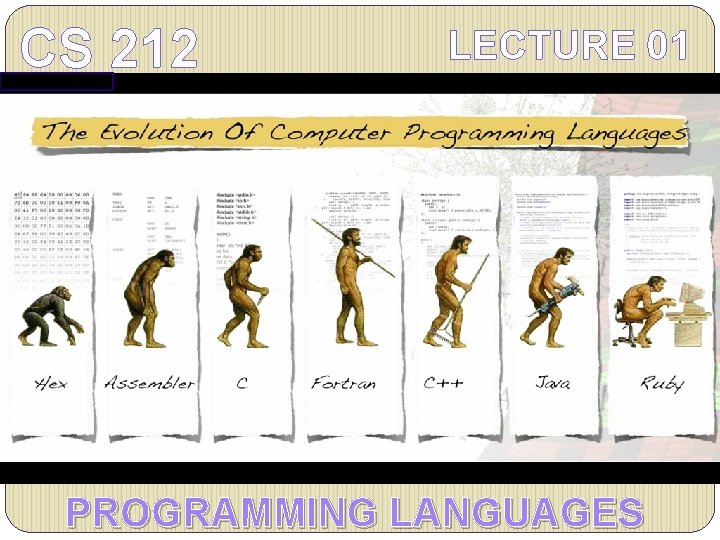
CS 212 LECTURE 01 PROGRAMMING LANGUAGES CS 212
- Slides: 20
CS 212 LECTURE 01 PROGRAMMING LANGUAGES
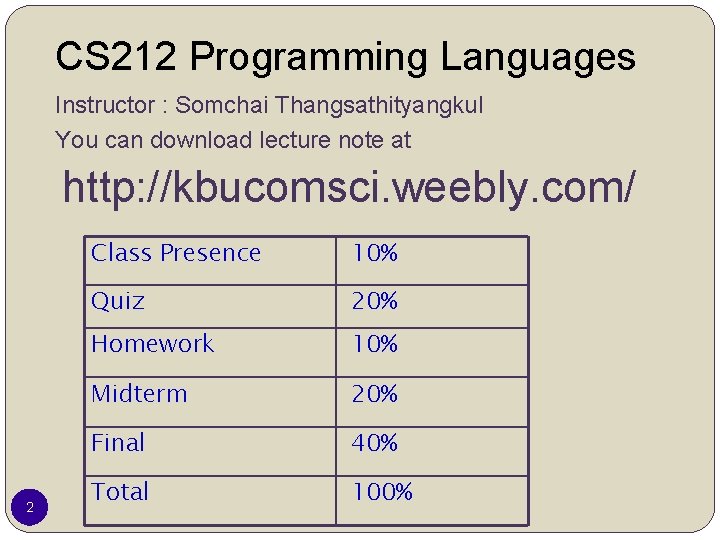
CS 212 Programming Languages Instructor : Somchai Thangsathityangkul You can download lecture note at http: //kbucomsci. weebly. com/ 2 Class Presence 10% Quiz 20% Homework 10% Midterm 20% Final 40% Total 100%
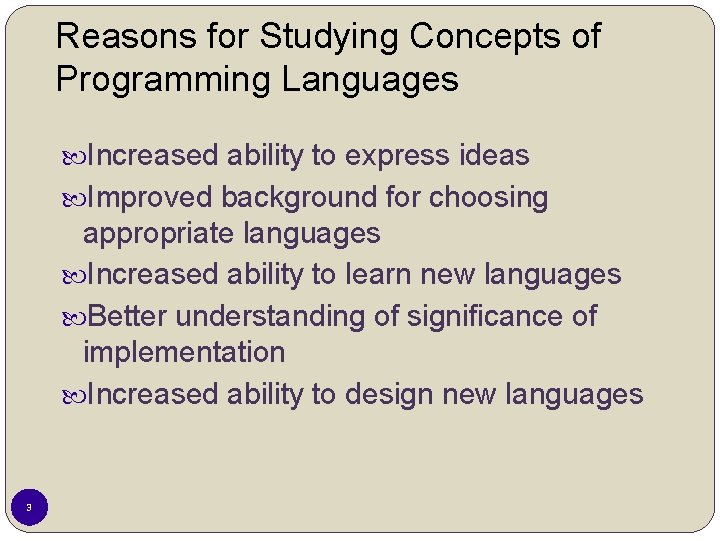
Reasons for Studying Concepts of Programming Languages Increased ability to express ideas Improved background for choosing appropriate languages Increased ability to learn new languages Better understanding of significance of implementation Increased ability to design new languages 3
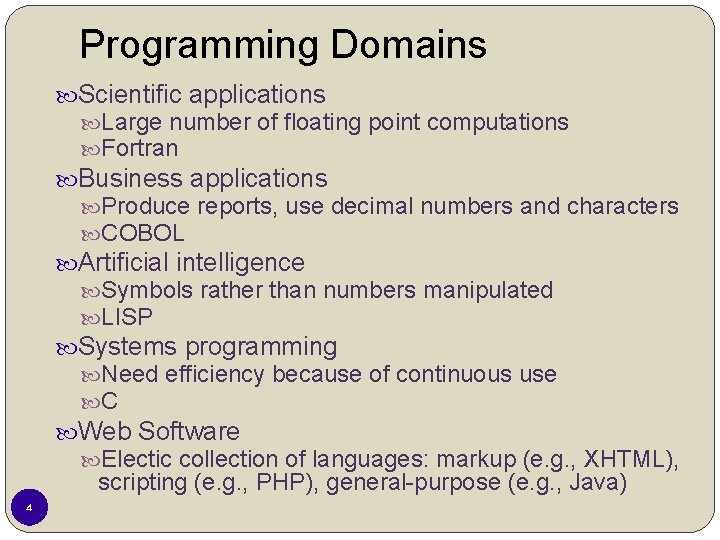
Programming Domains Scientific applications Large number of floating point computations Fortran Business applications Produce reports, use decimal numbers and characters COBOL Artificial intelligence Symbols rather than numbers manipulated LISP Systems programming Need efficiency because of continuous use C Web Software Electic collection of languages: markup (e. g. , XHTML), scripting (e. g. , PHP), general-purpose (e. g. , Java) 4
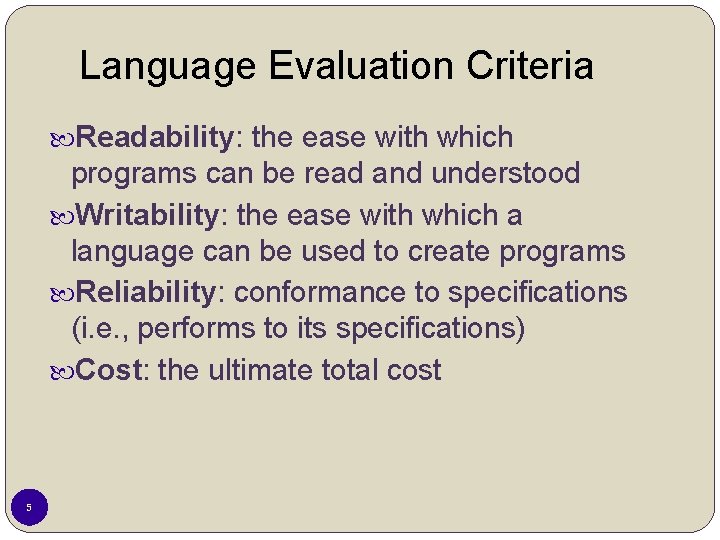
Language Evaluation Criteria Readability: the ease with which programs can be read and understood Writability: the ease with which a language can be used to create programs Reliability: conformance to specifications (i. e. , performs to its specifications) Cost: the ultimate total cost 5
Influences on Language Design Computer Architecture Languages are developed around the prevalent computer architecture, known as the von Neumann architecture Programming Methodologies New software development methodologies (e. g. , object-oriented software development) led to new programming paradigms and by extension, new programming languages 6
Computer Architecture Influence Well-known computer architecture: Von Neumann Imperative languages, most dominant, because of von Neumann computers Data and programs stored in memory Memory is separate from CPU Instructions and data are piped from memory to CPU 7
Programming Methodologies Influences 1950 s and early 1960 s: Simple applications; worry about machine efficiency Late 1960 s: People efficiency became important; readability, better control structures structured programming top-down design and step-wise refinement Late 1970 s: Process-oriented to data-oriented data abstraction Middle 1980 s: Object-oriented programming Data abstraction + inheritance + polymorphism 8
Language Categories Imperative Central features are variables, assignment statements, and iteration Examples: C, Pascal Functional Main means of making computations is by applying functions to given parameters Examples: LISP, Scheme Logic Rule-based (rules are specified in no particular order) Example: Prolog Object-oriented Data abstraction, inheritance, late binding Examples: Java, C++ Markup New; not a programming per se, but used to specify 9 the layout of information in Web documents Examples: XHTML, XML
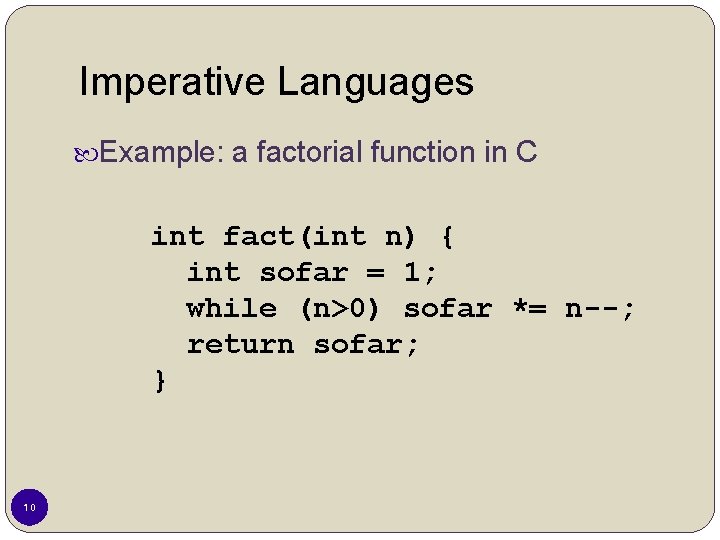
Imperative Languages Example: a factorial function in C int fact(int n) { int sofar = 1; while (n>0) sofar *= n--; return sofar; } 10
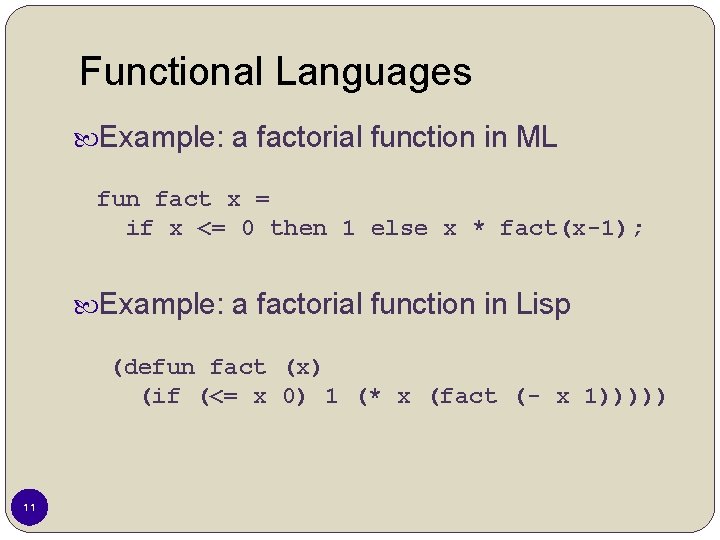
Functional Languages Example: a factorial function in ML fun fact x = if x <= 0 then 1 else x * fact(x-1); Example: a factorial function in Lisp (defun fact (x) (if (<= x 0) 1 (* x (fact (- x 1))))) 11
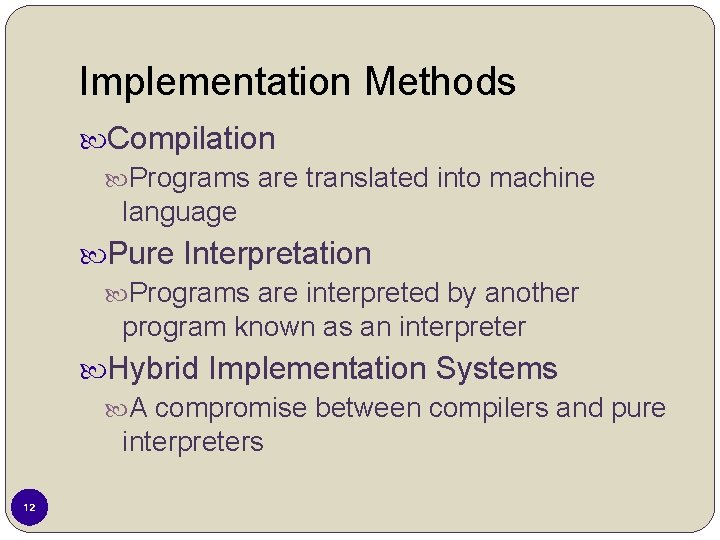
Implementation Methods Compilation Programs are translated into machine language Pure Interpretation Programs are interpreted by another program known as an interpreter Hybrid Implementation Systems A compromise between compilers and pure interpreters 12
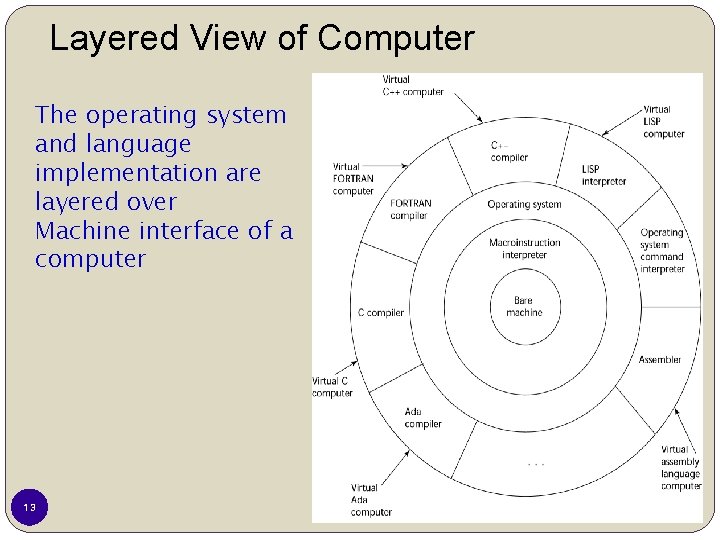
Layered View of Computer The operating system and language implementation are layered over Machine interface of a computer 13
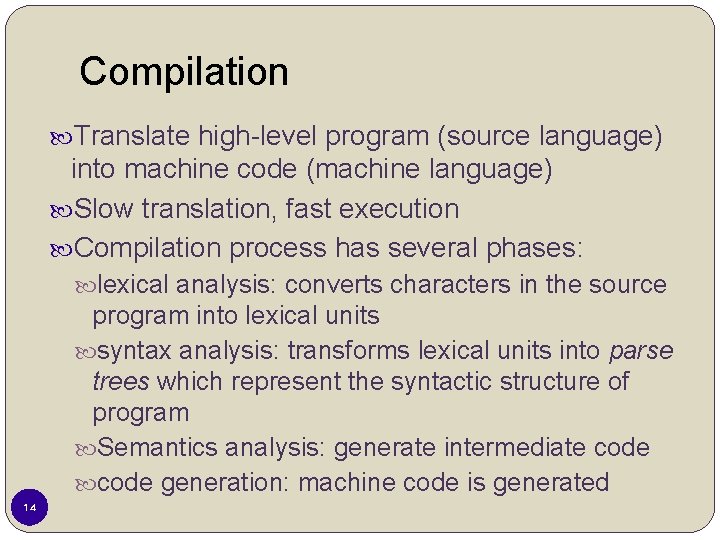
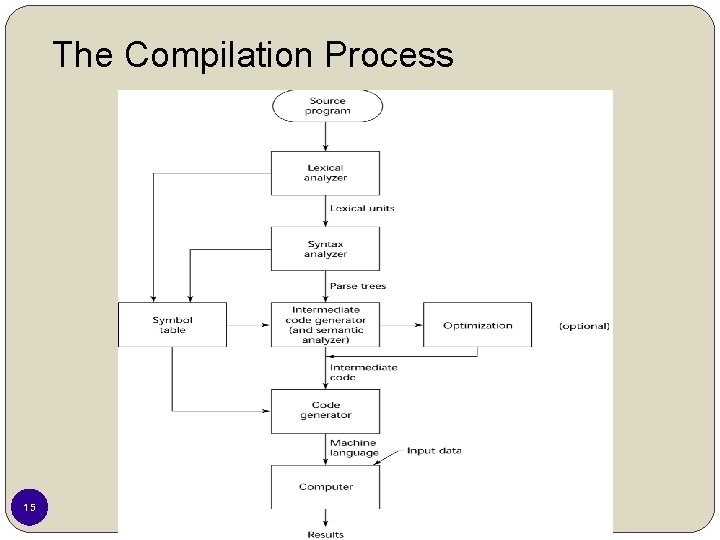
Compilation Translate high-level program (source language) into machine code (machine language) Slow translation, fast execution Compilation process has several phases: lexical analysis: converts characters in the source program into lexical units syntax analysis: transforms lexical units into parse trees which represent the syntactic structure of program Semantics analysis: generate intermediate code generation: machine code is generated 14
The Compilation Process 15
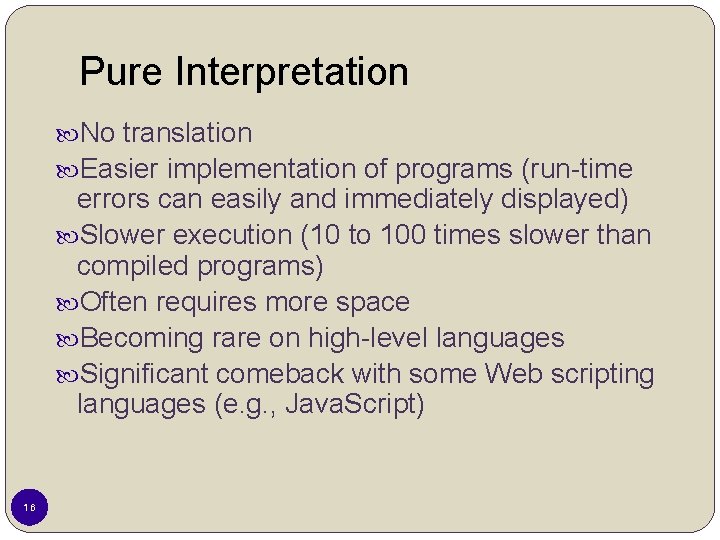
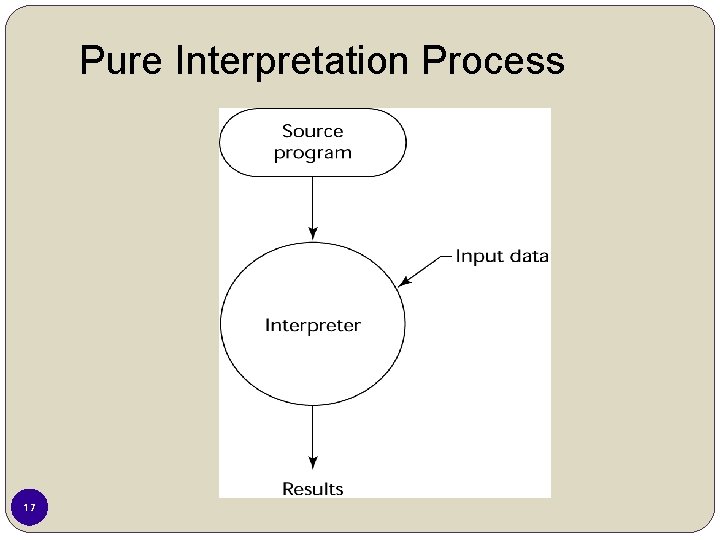
Pure Interpretation No translation Easier implementation of programs (run-time errors can easily and immediately displayed) Slower execution (10 to 100 times slower than compiled programs) Often requires more space Becoming rare on high-level languages Significant comeback with some Web scripting languages (e. g. , Java. Script) 16
Pure Interpretation Process 17
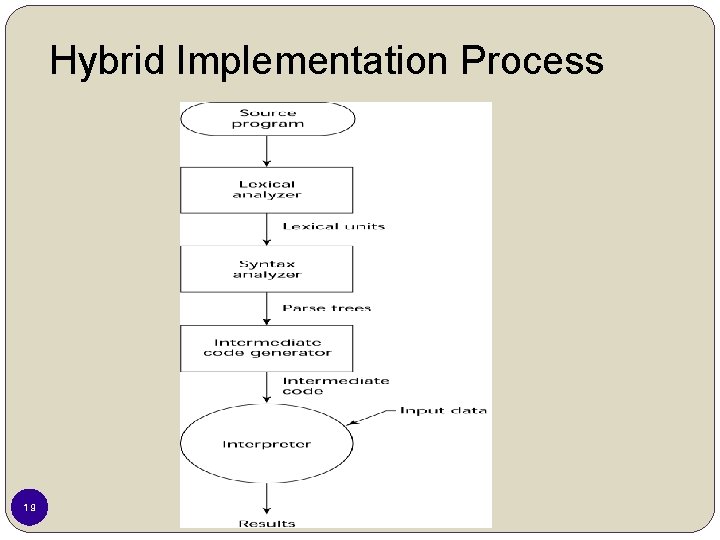
Hybrid Implementation Systems A compromise between compilers and pure interpreters A high-level language program is translated to an intermediate language that allows easy interpretation Faster than pure interpretation Examples Perl programs are partially compiled to detect 18 errors before interpretation Initial implementations of Java were hybrid; the intermediate form, byte code, provides portability to any machine that has a byte code interpreter and a run-time system (together, these are called
Hybrid Implementation Process 19
Just-in-Time Implementation Systems Initially translate programs to an intermediate language Then compile intermediate language into machine code Machine code version is kept for subsequent calls JIT systems are widely used for Java programs . NET languages are implemented with a JIT system 20