
Programming Languages and Computer Systems Cornell Keshav Pingali
- Slides: 49
Programming Languages and Computer Systems @Cornell Keshav Pingali CS & ECE
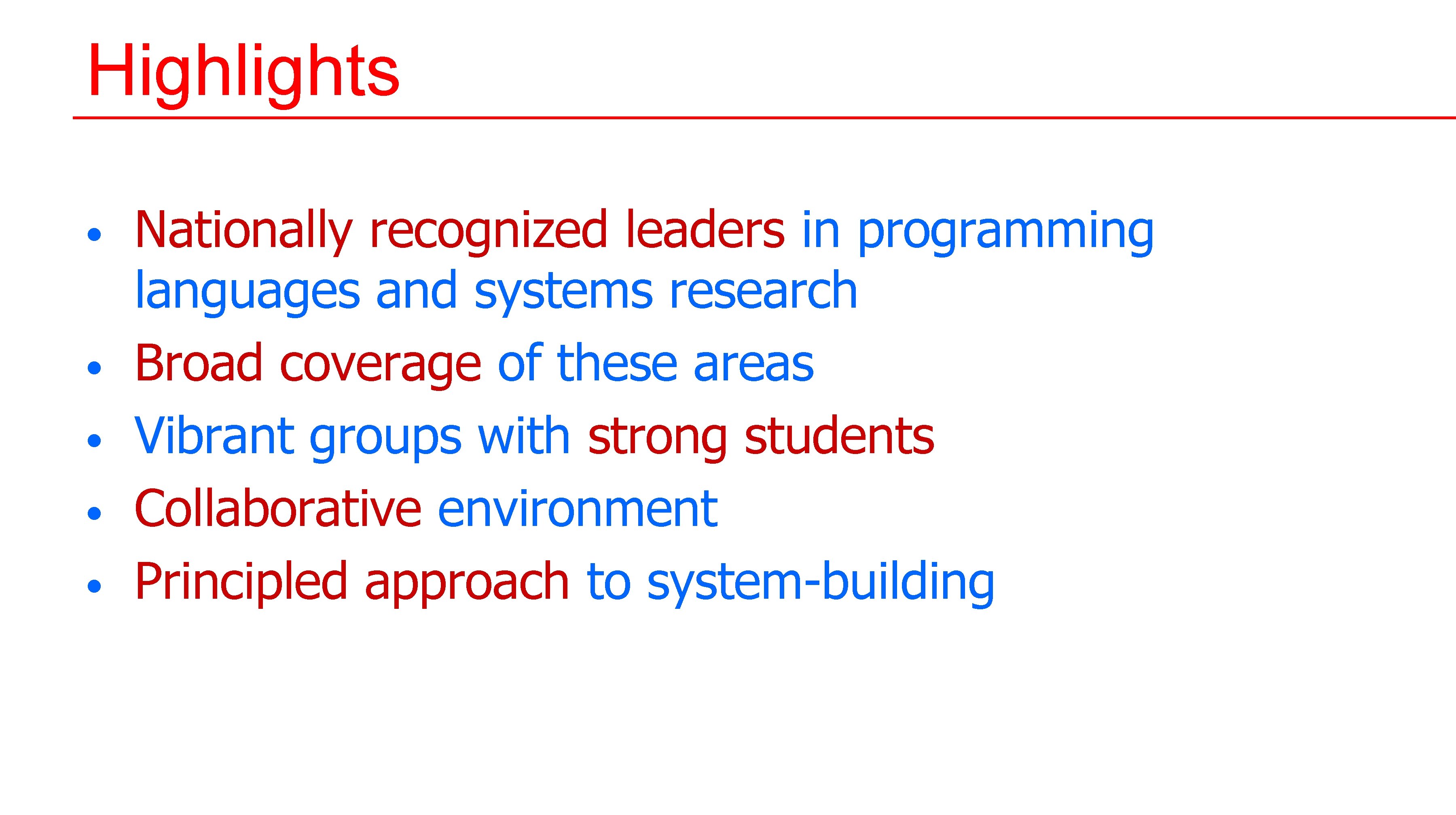
Highlights • • • Nationally recognized leaders in programming languages and systems research Broad coverage of these areas Vibrant groups with strong students Collaborative environment Principled approach to system-building
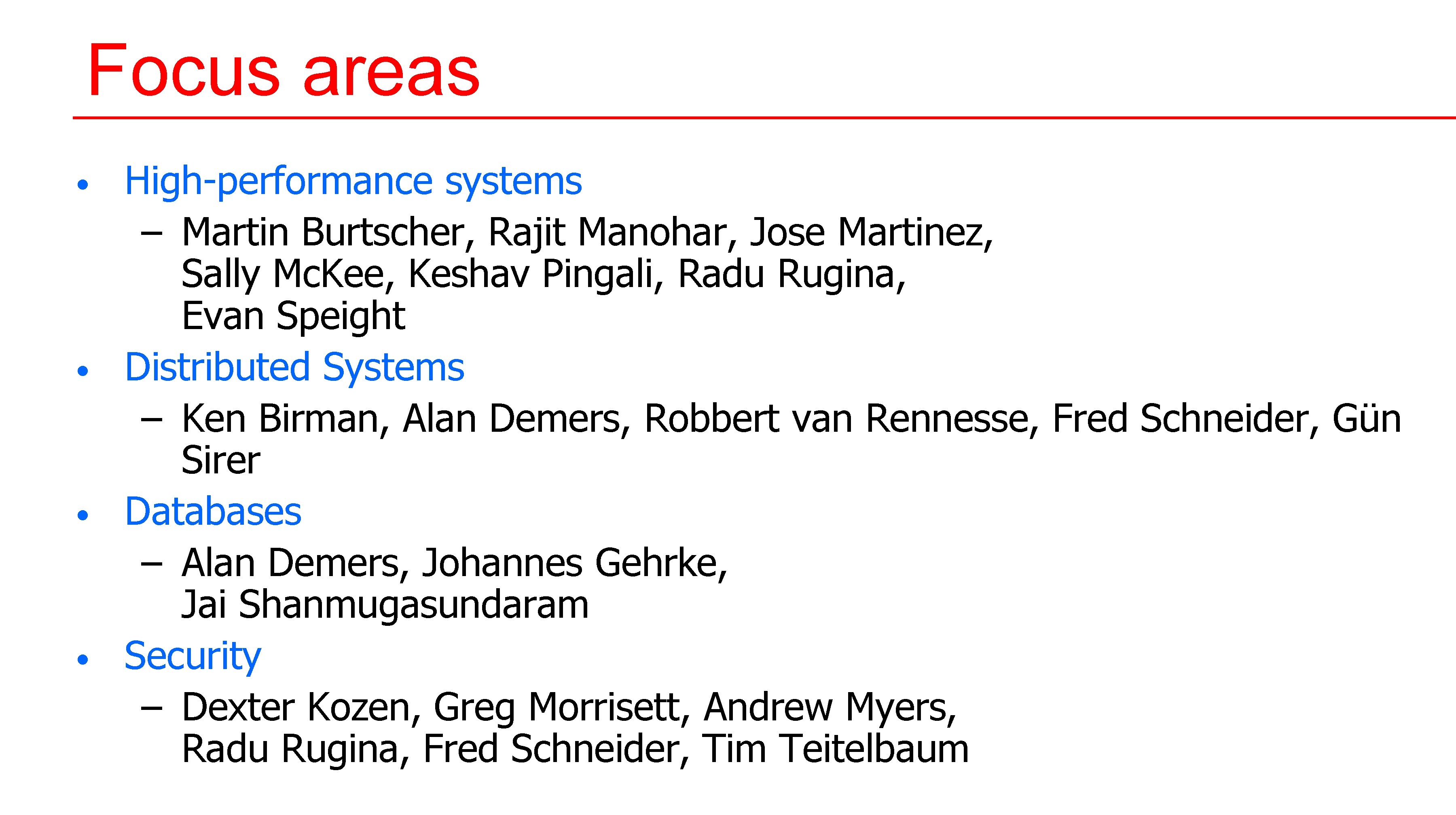
Focus areas • • High-performance systems – Martin Burtscher, Rajit Manohar, Jose Martinez, Sally Mc. Kee, Keshav Pingali, Radu Rugina, Evan Speight Distributed Systems – Ken Birman, Alan Demers, Robbert van Rennesse, Fred Schneider, Gün Sirer Databases – Alan Demers, Johannes Gehrke, Jai Shanmugasundaram Security – Dexter Kozen, Greg Morrisett, Andrew Myers, Radu Rugina, Fred Schneider, Tim Teitelbaum
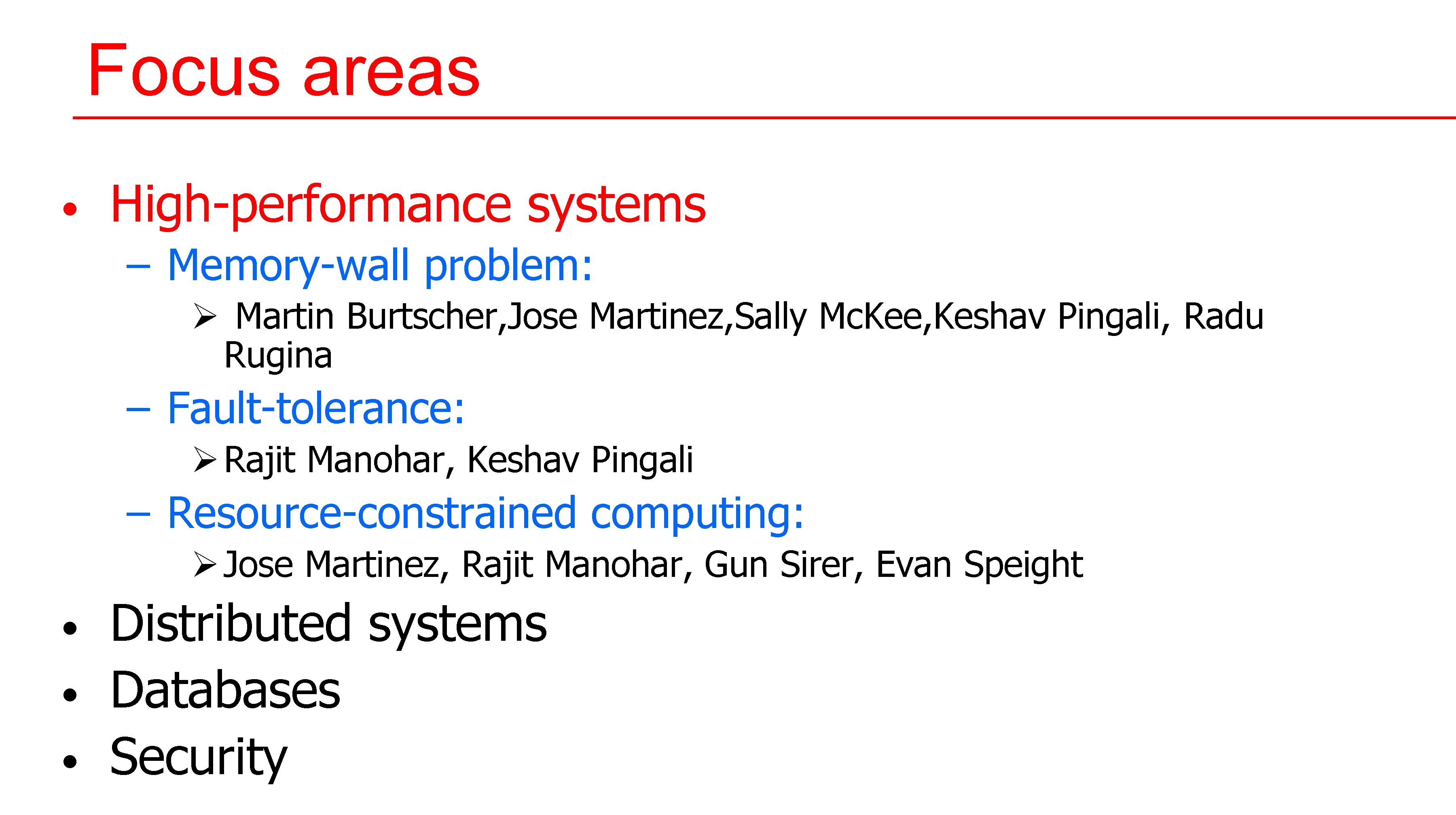
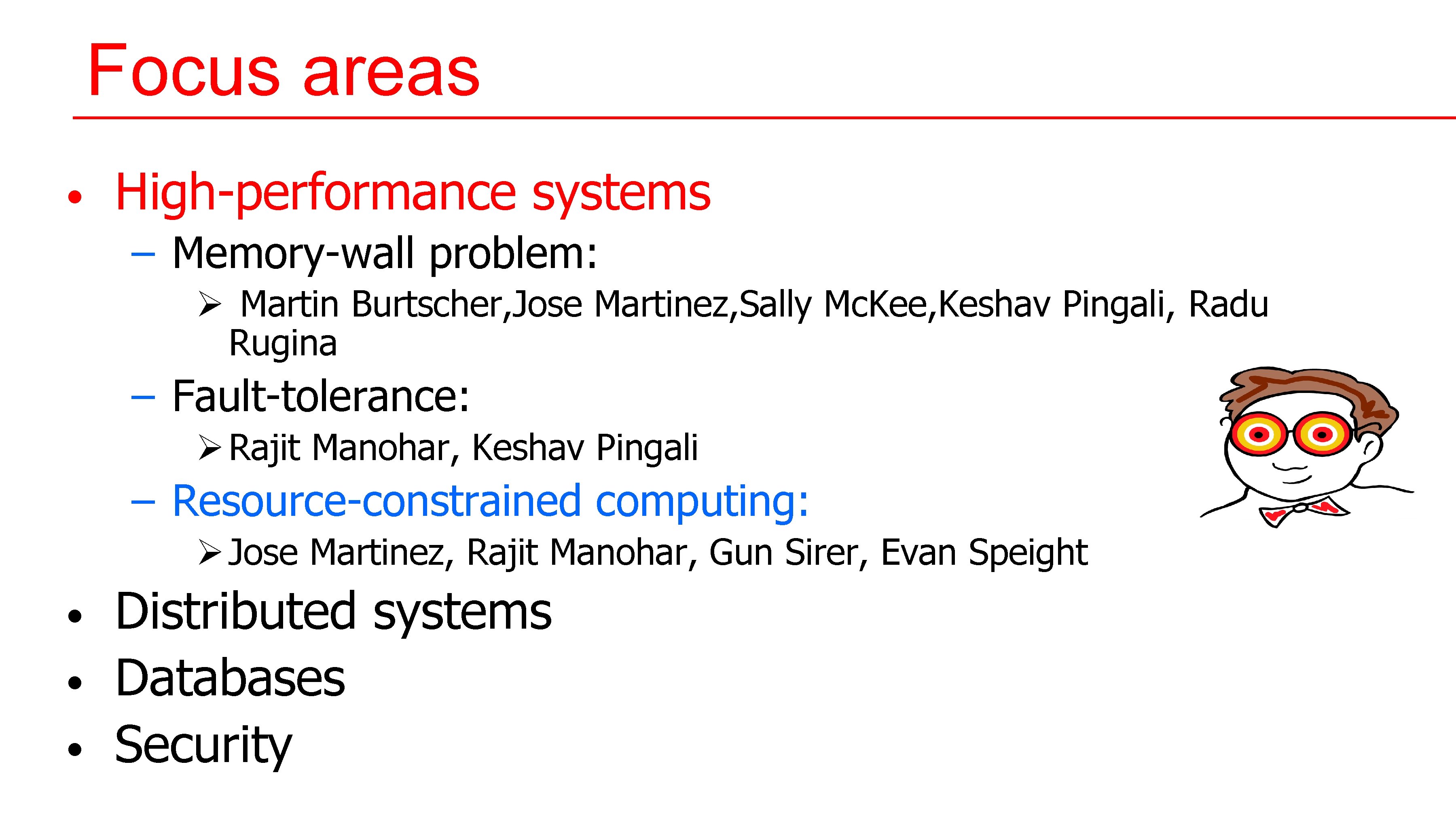
Focus areas • High-performance systems – Memory-wall problem: Ø Martin Burtscher, Jose Martinez, Sally Mc. Kee, Keshav Pingali, Radu Rugina – Fault-tolerance: Ø Rajit Manohar, Keshav Pingali – Resource-constrained computing: Ø Jose Martinez, Rajit Manohar, Gun Sirer, Evan Speight • • • Distributed systems Databases Security
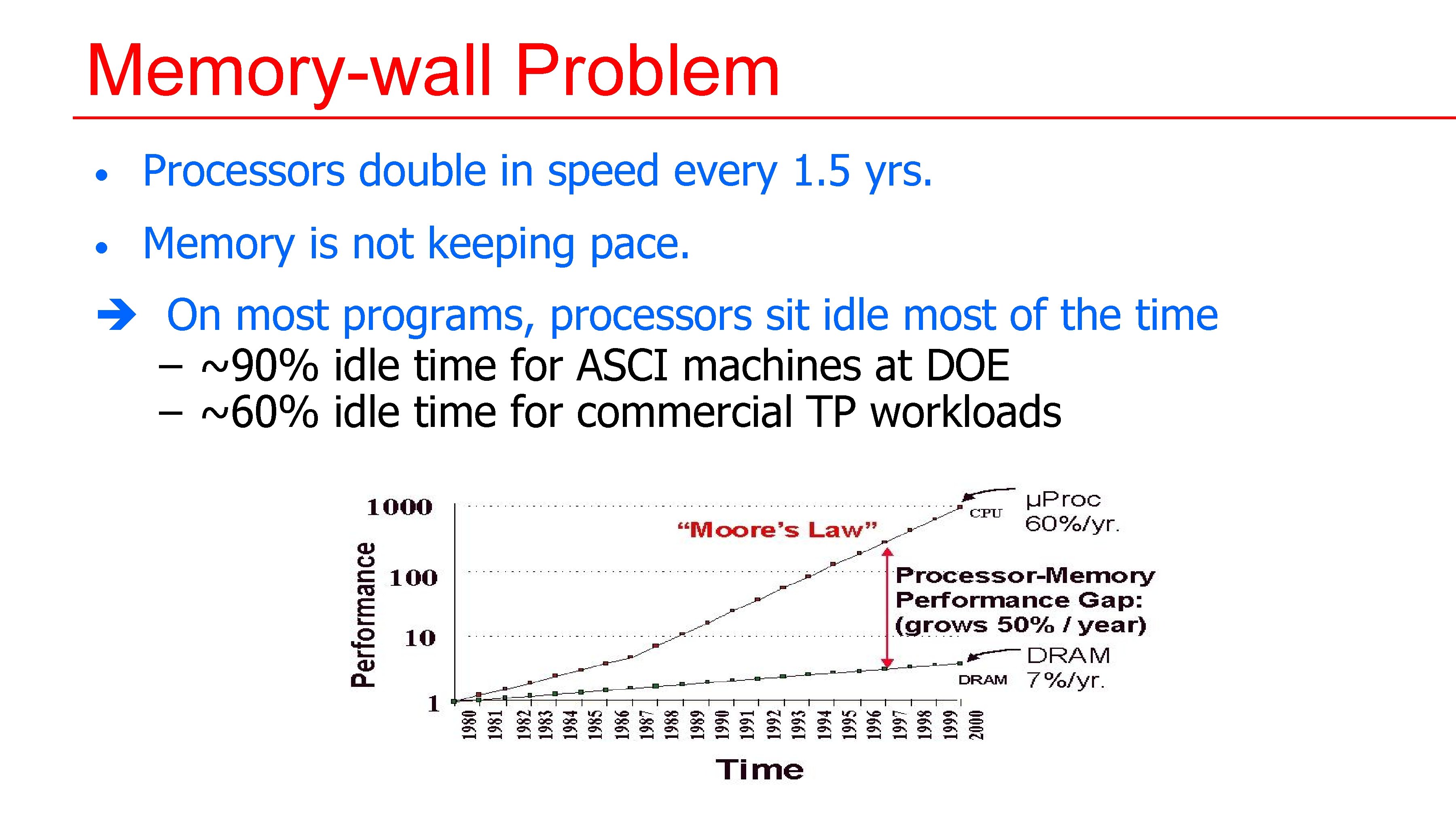
Memory-wall Problem • Processors double in speed every 1. 5 yrs. • Memory is not keeping pace. On most programs, processors sit idle most of the time – ~90% idle time for ASCI machines at DOE – ~60% idle time for commercial TP workloads
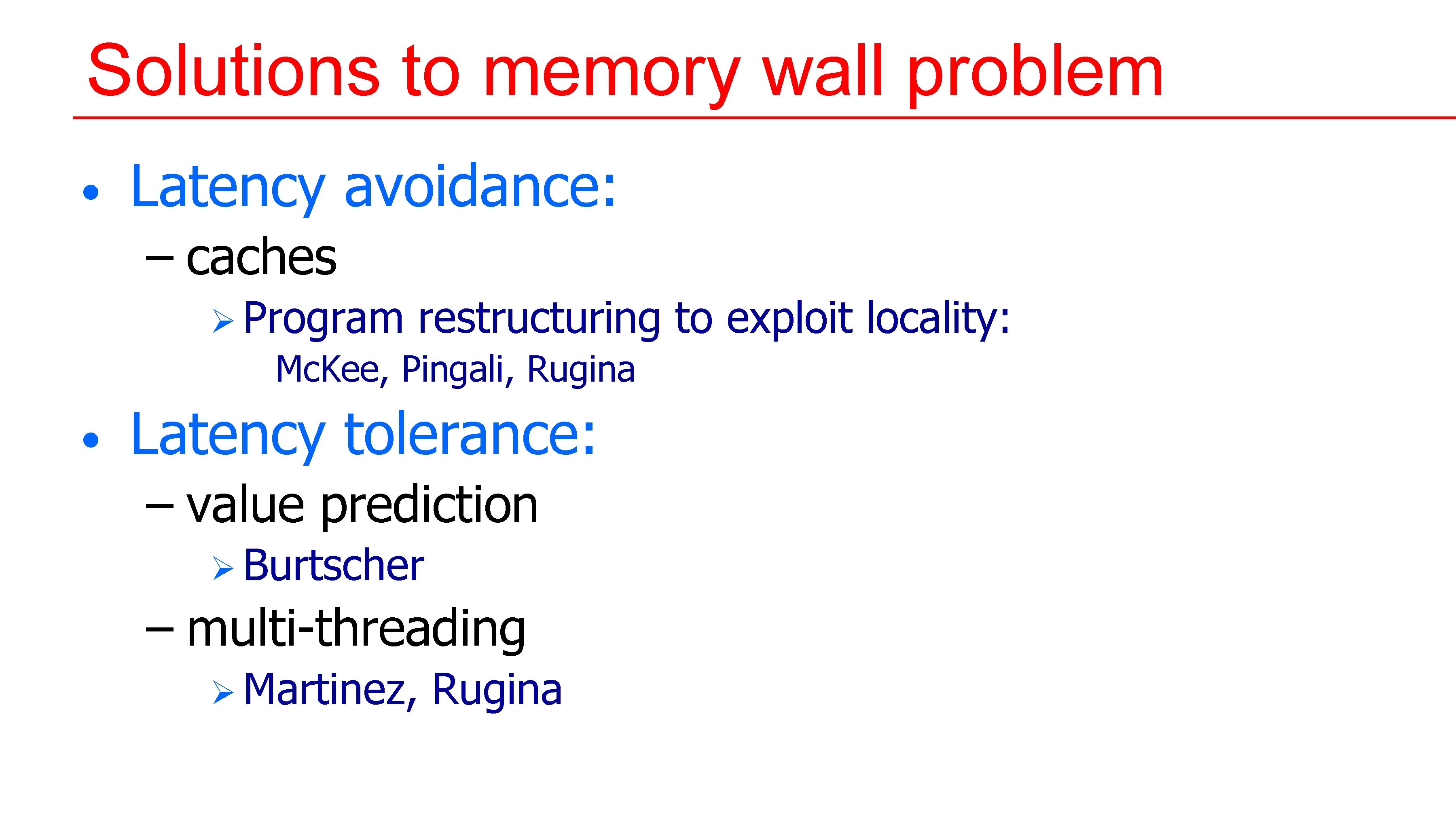
Solutions to memory wall problem • Latency avoidance: – caches Ø Program restructuring to exploit locality: Mc. Kee, Pingali, Rugina • Latency tolerance: – value prediction Ø Burtscher – multi-threading Ø Martinez, Rugina
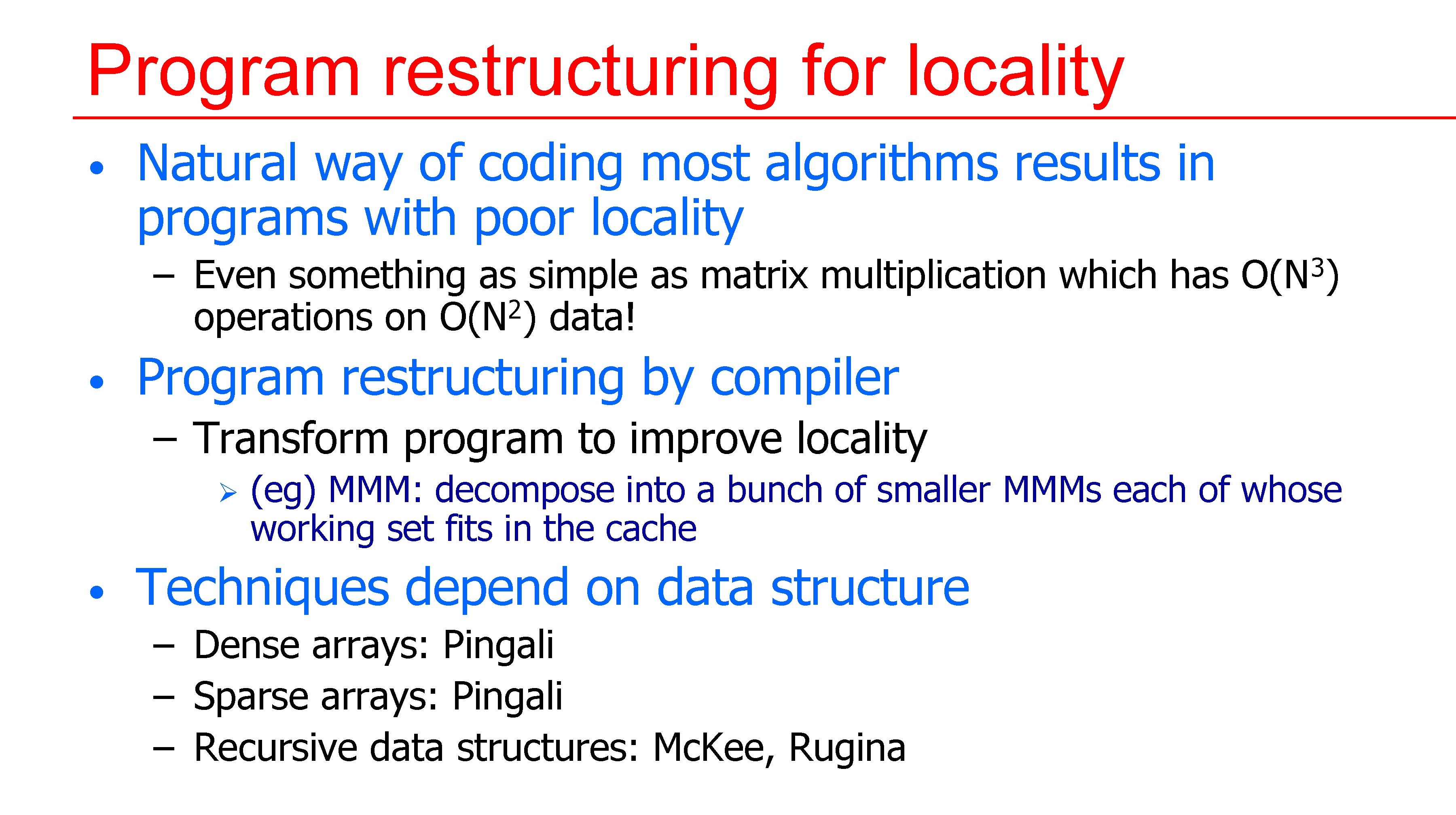
Program restructuring for locality • Natural way of coding most algorithms results in programs with poor locality – Even something as simple as matrix multiplication which has 2 operations on O(N ) data! • 3 O(N ) Program restructuring by compiler – Transform program to improve locality Ø • (eg) MMM: decompose into a bunch of smaller MMMs each of whose working set fits in the cache Techniques depend on data structure – Dense arrays: Pingali – Sparse arrays: Pingali – Recursive data structures: Mc. Kee, Rugina
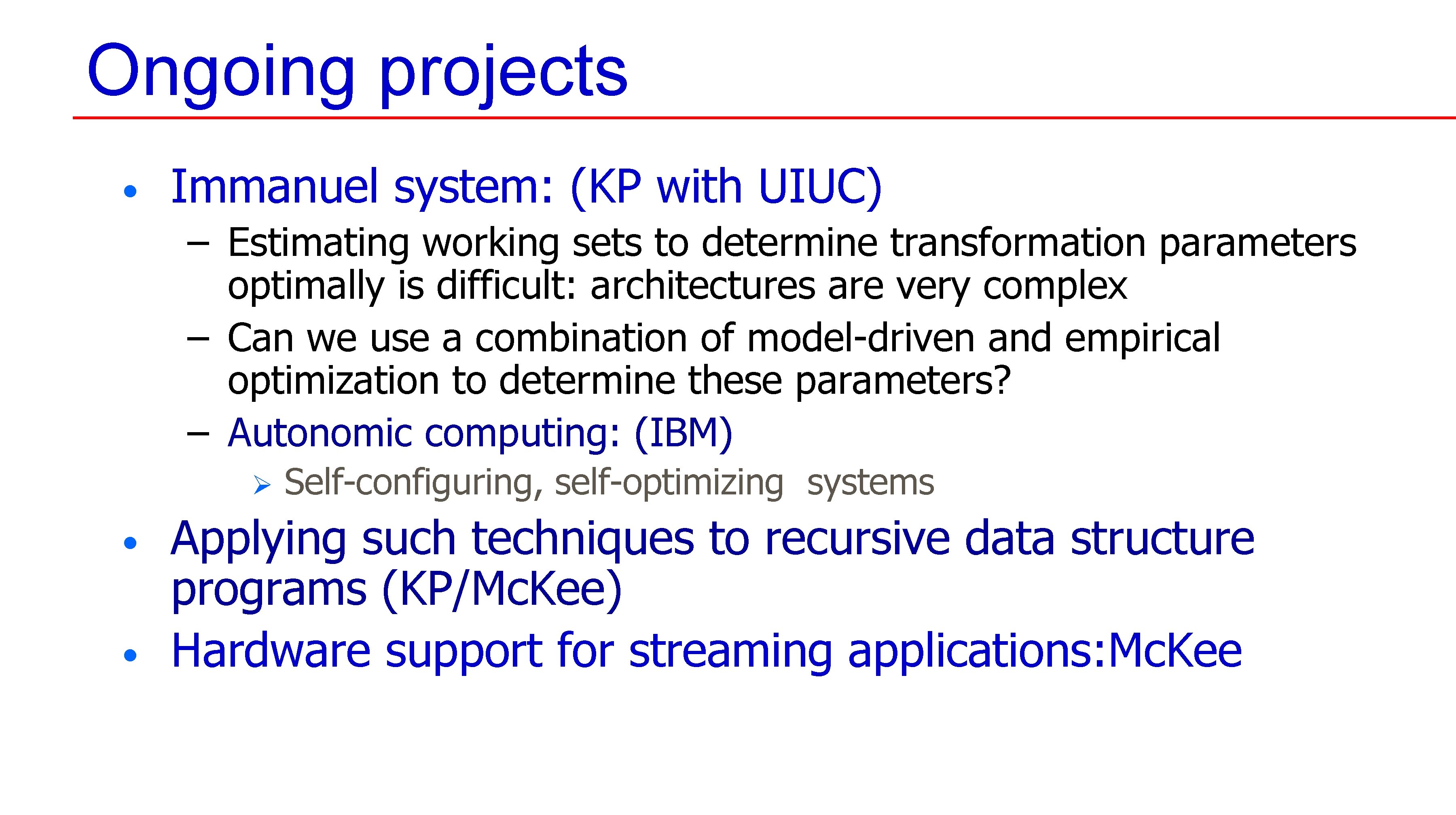
Ongoing projects • Immanuel system: (KP with UIUC) – Estimating working sets to determine transformation parameters optimally is difficult: architectures are very complex – Can we use a combination of model-driven and empirical optimization to determine these parameters? – Autonomic computing: (IBM) Ø • • Self-configuring, self-optimizing systems Applying such techniques to recursive data structure programs (KP/Mc. Kee) Hardware support for streaming applications: Mc. Kee
Ongoing projects contd. (Rugina) • Complex dynamic data structures: trees/graphs – Reachability analysis Ø Determine heap locations reachable from stack Ø Detect memory leaks, improve garbage collection – Region analysis Ø Compute accessed regions: sub-lists, sub-trees – Analysis of parallel programs: Ø Threads concurrently access shared data structures Ø Must analyze potential interactions between threads
Value prediction (Burtscher) • • Processor guesses value returned by load and speculatively computes with guess – If memory value = guess, OK – Else backup and redo computation with correct value Performance depends on – Accuracy of predictor – Overhead of back-up and redo SPEC benchmarks: 25 -50% of ints can be guessed correctly. Ongoing work: – use pattern mining to determine new predictors – Application to trace file compression
Thread-level speculation (Martinez) • Problem: – Data access patterns that escape parallelizing compilers – Hand parallelization that is too costly • Idea: Add hardware for speculative execution – – • Sequential codes: threads execute ahead of time Parallel codes: threads skip synchronization Hardware watches for data races, corrects on the fly Keep a fall-back plan: safe thread(s) Outcome: More performance with less effort
Focus areas • High-performance systems – Memory-wall problem: Ø Martin Burtscher, Jose Martinez, Sally Mc. Kee, Keshav Pingali, Radu Rugina – Fault-tolerance: Ø Rajit Manohar, Keshav Pingali – Resource-constrained computing: Ø Jose Martinez, Rajit Manohar, Gun Sirer, Evan Speight • • • Distributed systems Databases Security
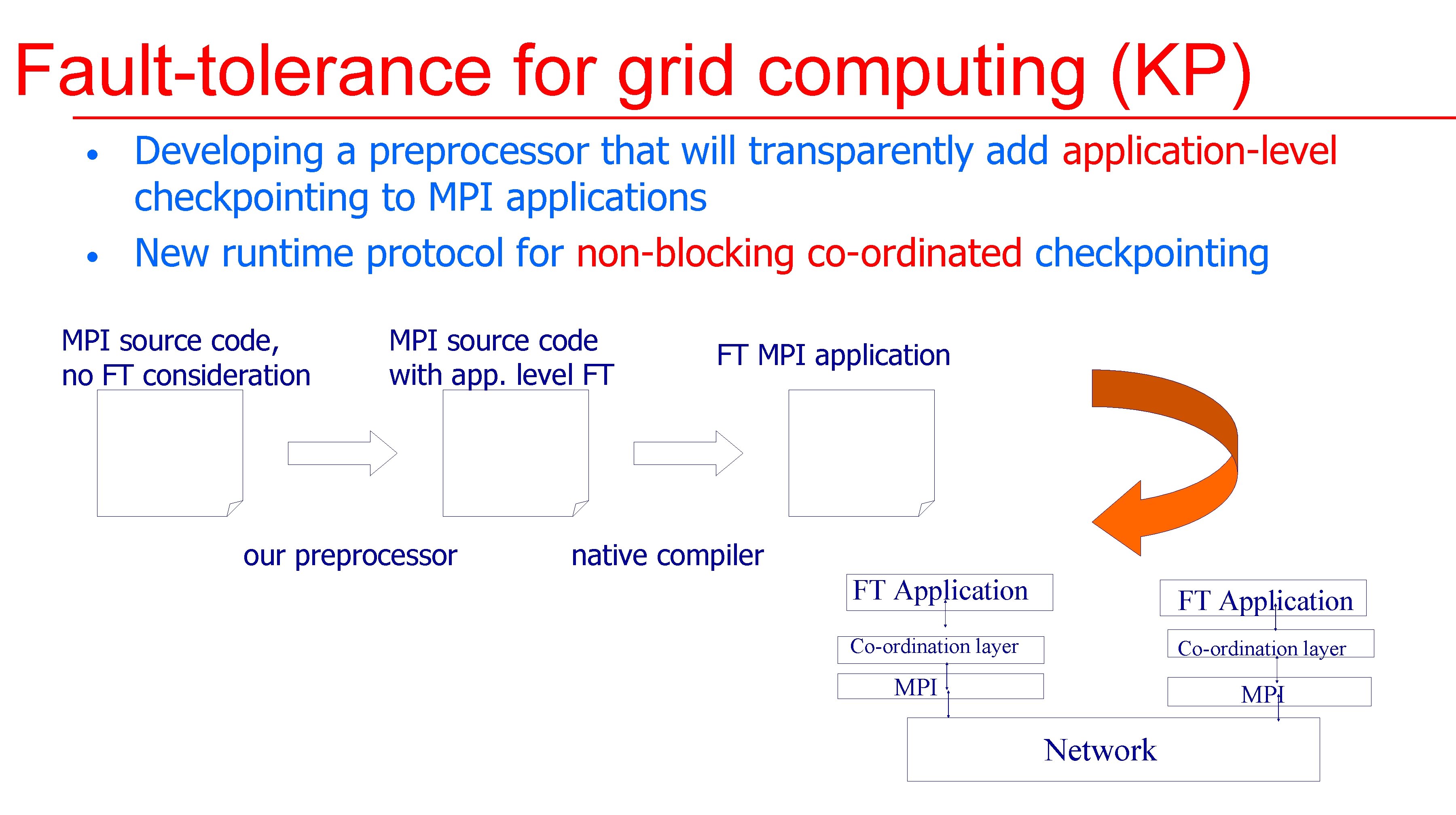
Fault-tolerance for grid computing (KP) • • Developing a preprocessor that will transparently add application-level checkpointing to MPI applications New runtime protocol for non-blocking co-ordinated checkpointing MPI source code, no FT consideration MPI source code with app. level FT our preprocessor FT MPI application native compiler FT Application Co-ordination layer MPI Network
Fault-tolerance at nanoscale (Manohar) • • • How do we design reliable systems with unreliable devices? Timing faults: asynchronous circuits Real faults – Cellular architecture – Dynamic translation and virtual machines – Fault recovery
Focus areas • High-performance systems – Memory-wall problem: Ø Martin Burtscher, Jose Martinez, Sally Mc. Kee, Keshav Pingali, Radu Rugina – Fault-tolerance: Ø Rajit Manohar, Keshav Pingali – Resource-constrained computing: Ø Jose Martinez, Rajit Manohar, Gun Sirer, Evan Speight • • • Distributed systems Databases Security
Resource-constrained Systems • How do we design systems in the presence of resource constraints? – Hardware resources: registers, execution units, … – Energy constraints • Solutions: – Micro-architecture level Ø Manohar – Architecture level Ø Martinez – OS level Ø Sirer
Energy-efficient Computing (Manohar) • • • Asynchronous circuits: no clocks – Idle until activated (1. 2 x) Microarchitecture optimization (1. 5 x) Dynamic datapath adaptation (5. 6 x) Dynamic voltage scaling 10 x reduction in E – At constant throughput SNAP: low power asynchronous architecture for sensor networks – Asynchronous processor optimized for network protocols – MEMS battery + RF transmitter + sensor – 100 year lifetime!
Resource-conscious processors (Martinez) • • Problem: – Processor-memory speed gap continuously widening – Processor’s recipe: more in-flight instructions – Traditional approach: enlarge resources (reg. files, queues, etc. ) – But technology not scalable: Pipeline depth, clock cycle, etc. Observation: – Many resources allocated to inactive instructions Ø Waiting for data that is not (yet) coming Idea: Become resource-conscious – Grab resources when predicted to be needed (as late as possible) – Release them when unlikely to be needed (as early as possible) – Keep a fall-back plan: state checkpointing Outcome: More performance with less silicon
Focus areas • • High-performance systems Distributed systems Wide-area, Mobile and Peer-to-peer Ø Ken Birman, Al Demers, Zygmunt Haas, Robbert van Renesse, Fred B. Schneider, Gün Sirer, Evan Speight – Astrolabe: Distributed Databases – Galaxy: Cluster Computing – COCA: Cornell Online Certification Authority – Magnet. OS: Operating Systems – Bifrost: Mobile Computing – SHARP: Routing Algorithms – Kelips: Efficient Distributed Hash Tables – Herbivore: Anonymous Communication Substrate – Karma: Microeconomic Framework for P 2 P Databases Security
Isis, Horus and Ensemble (Birman) • Seminal work on group communication systems at Cornell – The virtual synchrony model – Group membership and multicast protocols – Epidemic (gossip-based) algorithms Isis is still used in some important settings: – New York Stock Exchange (runs overhead quote display system), Swiss Exchange (replicates state of the whole exchange in real-time) – French Air Traffic Control System (PHIDIAS high availability console cluster architecture, and also as the communication layer for inter-airport flight plan update reporting) – AEGIS Naval Warship integrated information system • Recent focus: Spinglass • – State replication ultimately doesn’t scale well enough to deal with a new generation of really big systems • Spinglass project responds to this need – Goal is to provide robustness but also scalability, stability under stress – Looks for probabilistic instead of deterministic reliability guarantees Ken Birman
Five Spinglass Technologies • • • Astrolabe: A virtual database constructed with peer-to-peer techniques, tracks system state and supports a novel form of scalable data mining. For large-scale distributed control. Select. Cast: Uses Astrolabe to support a powerful new kind of IP multicast with a pub-sub capability Bimodal Multicast: A protocol that can be layered over Select. Cast to provide scalable, reliable multicast – All three can be combined to support scalable, fault-tolerant publish-subscribe. – An initial target is Air Force Joint Battlespace Infosphere • • Kelips: A distributed hash table, for rapidly finding things in very large networks (like Napster and Gnutella) Galaxy: Scalable tools for Web Services and Data Center or cluster management Ken Birman
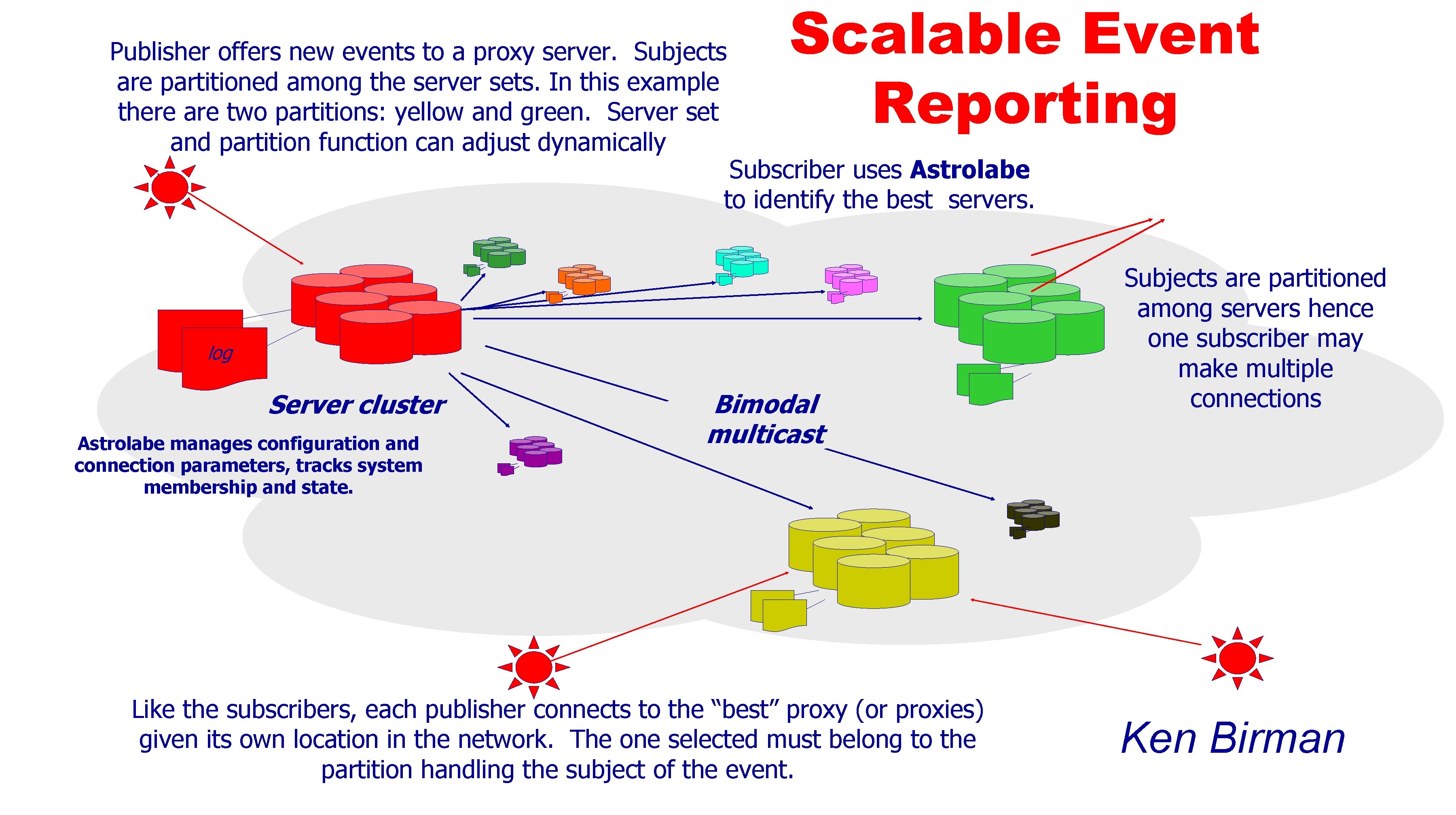
Publisher offers new events to a proxy server. Subjects are partitioned among the server sets. In this example there are two partitions: yellow and green. Server set and partition function can adjust dynamically Scalable Event Reporting Subscriber uses Astrolabe to identify the best servers. log Server cluster Astrolabe manages configuration and connection parameters, tracks system membership and state. Bimodal multicast Like the subscribers, each publisher connects to the “best” proxy (or proxies) given its own location in the network. The one selected must belong to the partition handling the subject of the event. Subjects are partitioned among servers hence one subscriber may make multiple connections Ken Birman
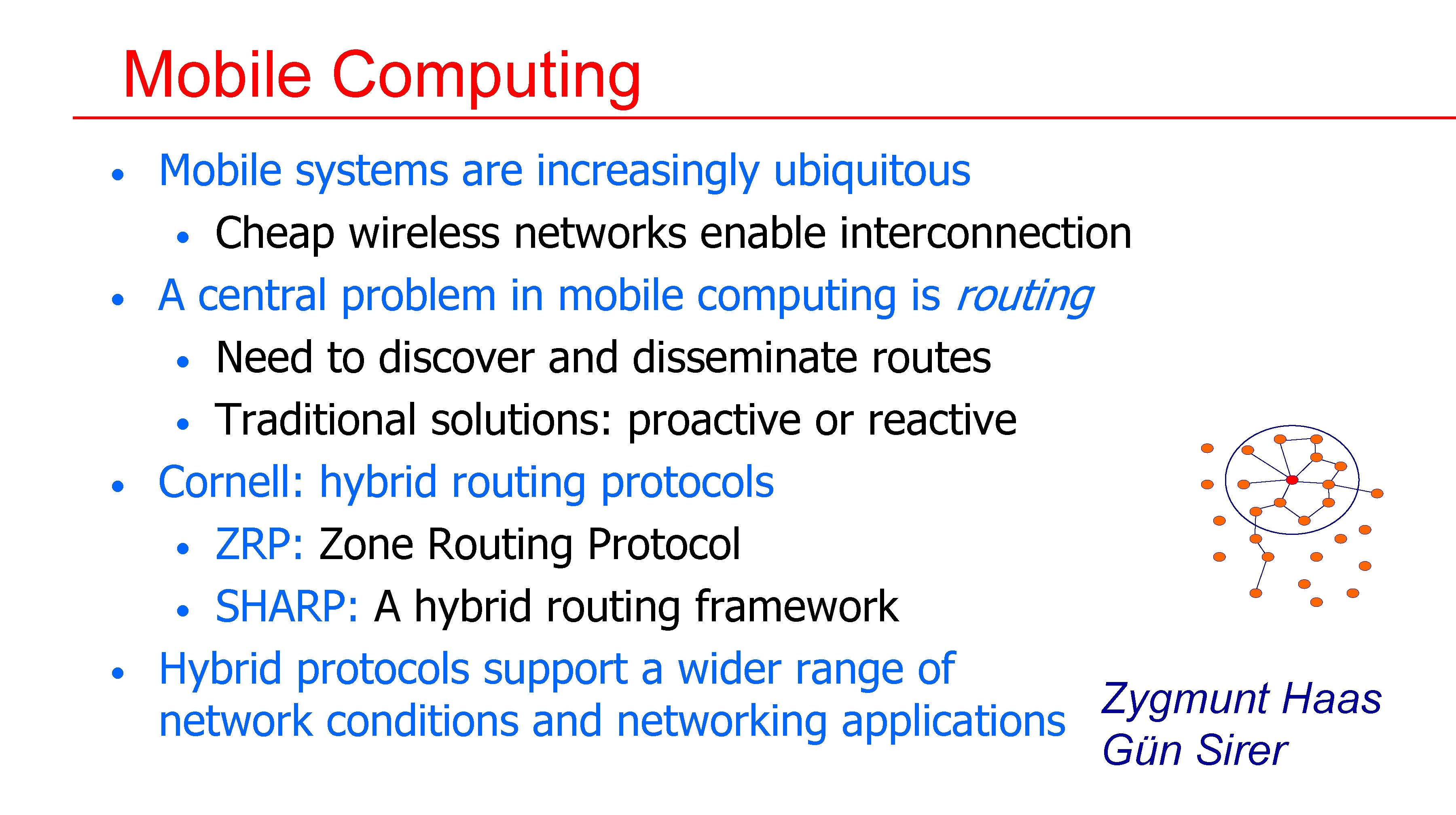
Mobile Computing • • Mobile systems are increasingly ubiquitous • Cheap wireless networks enable interconnection A central problem in mobile computing is routing • Need to discover and disseminate routes • Traditional solutions: proactive or reactive Cornell: hybrid routing protocols • ZRP: Zone Routing Protocol • SHARP: A hybrid routing framework Hybrid protocols support a wider range of Zygmunt Haas network conditions and networking applications Gün Sirer
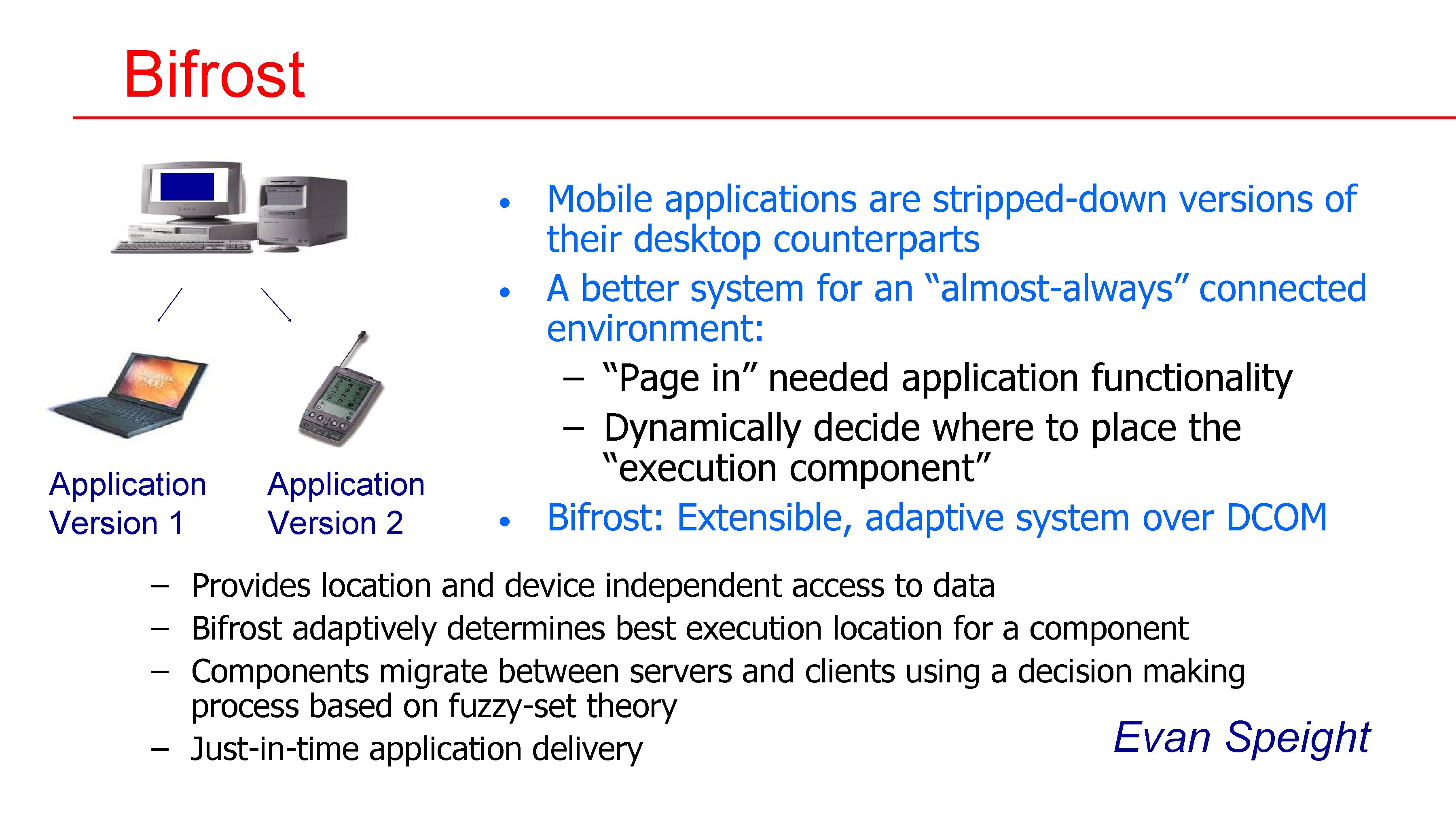
Bifrost • • Application Version 1 Application Version 2 • Mobile applications are stripped-down versions of their desktop counterparts A better system for an “almost-always” connected environment: – “Page in” needed application functionality – Dynamically decide where to place the “execution component” Bifrost: Extensible, adaptive system over DCOM – Provides location and device independent access to data – Bifrost adaptively determines best execution location for a component – Components migrate between servers and clients using a decision making process based on fuzzy-set theory Evan Speight – Just-in-time application delivery
Magnet. OS • Ad hoc networks are an emerging domain, but… – No programming model – Hard to develop applications – Competing applications can jam the network • Magnet. OS is an adaptive operating system for power-efficient computing on ad hoc networks – A unifying single-system image abstraction – Automatic partitioning – Transparent component migration • Factor of 4 -5 increase in system longevity Gün Sirer
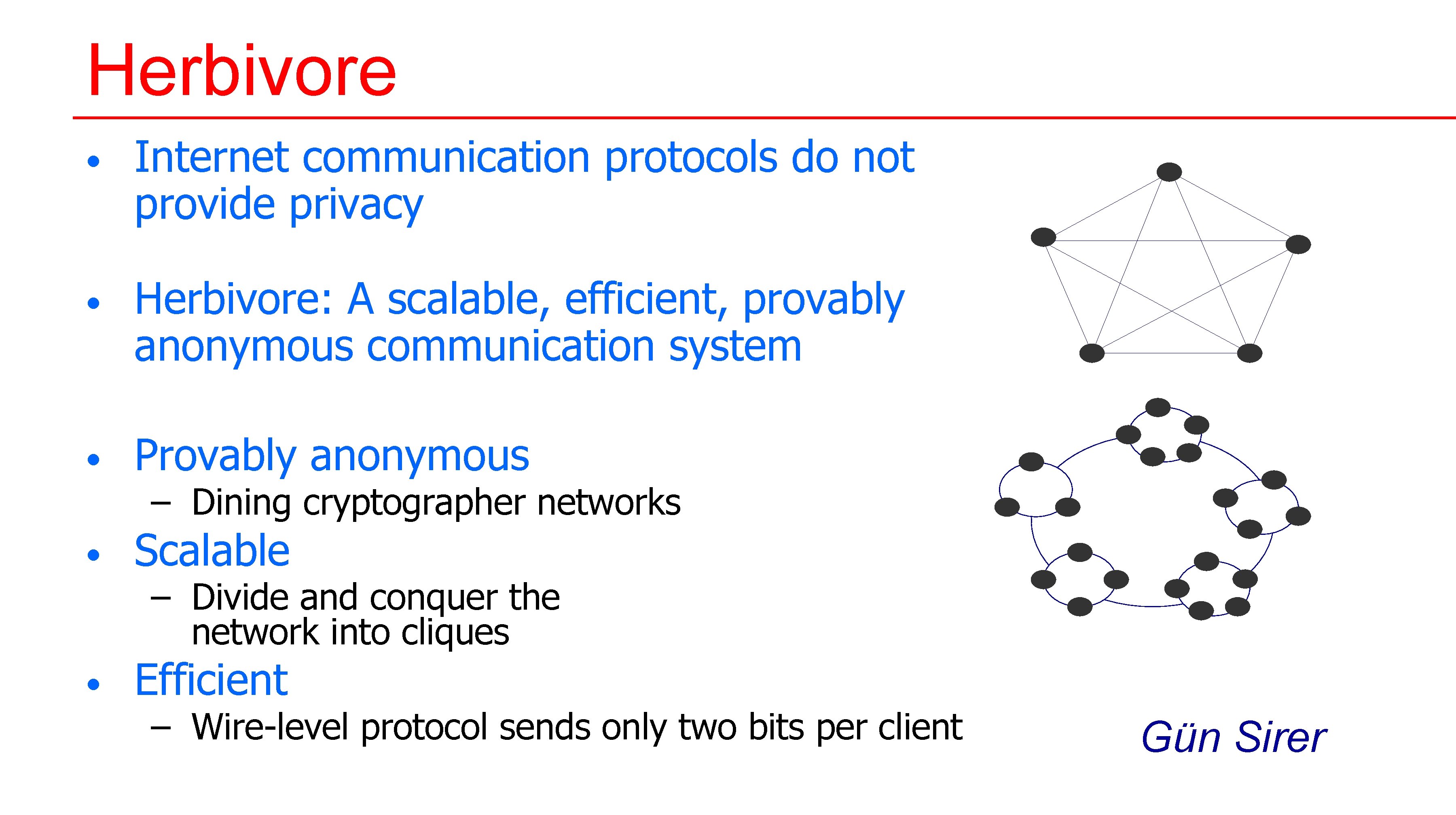
Herbivore • Internet communication protocols do not provide privacy • Herbivore: A scalable, efficient, provably anonymous communication system • Provably anonymous – Dining cryptographer networks • Scalable – Divide and conquer the network into cliques • Efficient – Wire-level protocol sends only two bits per client Gün Sirer
Karma • The newly-emerging peer-to-peer computing model is based on a principle of cooperation – Yet up to 70% of peers freeload, i. e. use many more resources than they provide to others • Karma is a peer-to-peer microeconomic system for keeping track of the resource contributions of peers – Associate karma, a measure of their contributions to the global community, with each participant – Provide the ability to transfer karma, securely and atomically, in exchange for resources – Create a microeconomic foundation for P 2 P sharing Gün Sirer
Focus areas • • • High-performance systems Distributed systems Databases – – – • Amazon: Stream Processing Cougar: Sensor Databases Deep Glue: Internet Querying Himalaya: Data Mining PEPPER: Peer-to-Peer Databases Quark: Unifying Databases and IR Security
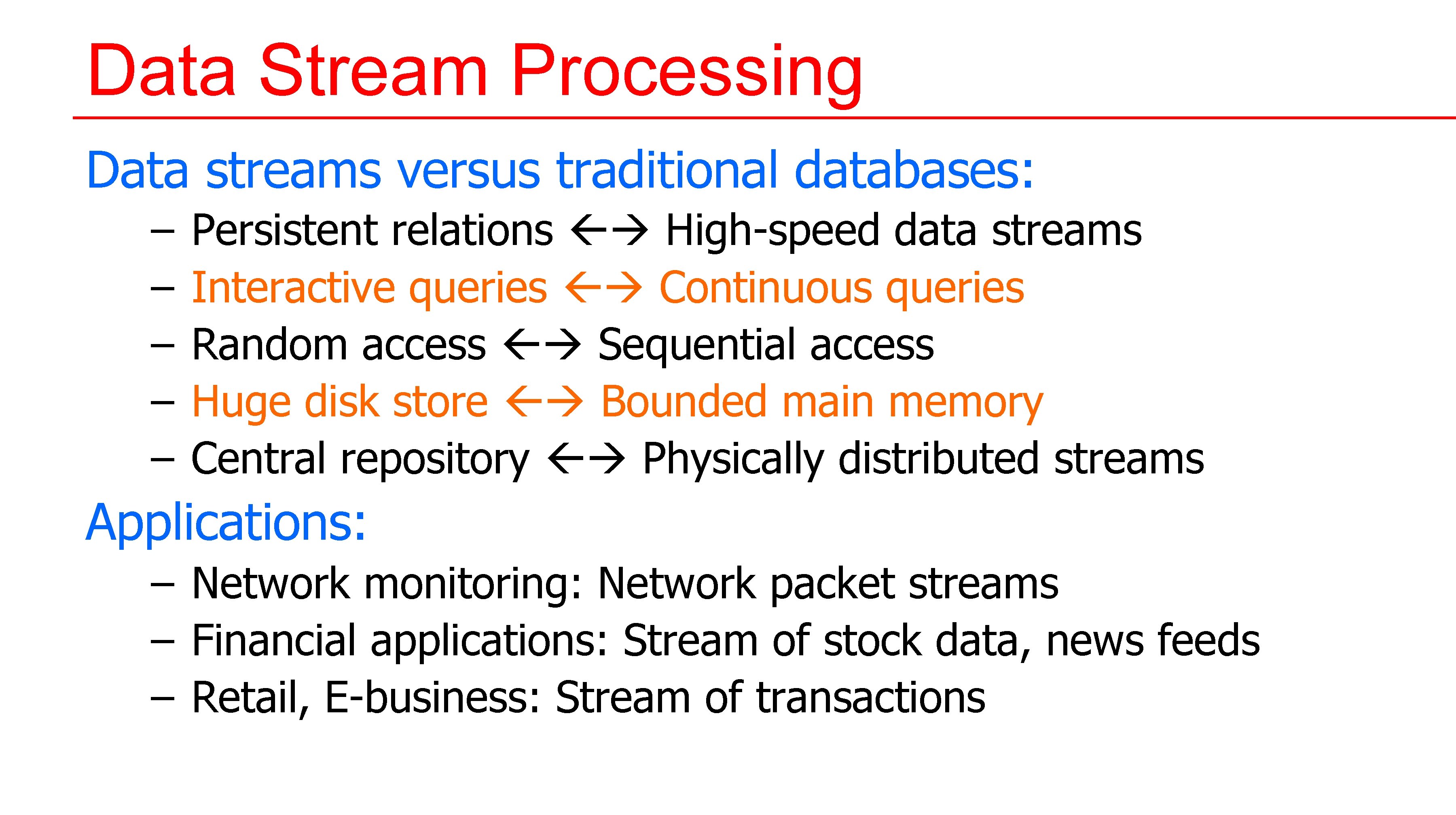
Data Stream Processing Data streams versus traditional databases: – – – Persistent relations High-speed data streams Interactive queries Continuous queries Random access Sequential access Huge disk store Bounded main memory Central repository Physically distributed streams Applications: – Network monitoring: Network packet streams – Financial applications: Stream of stock data, news feeds – Retail, E-business: Stream of transactions
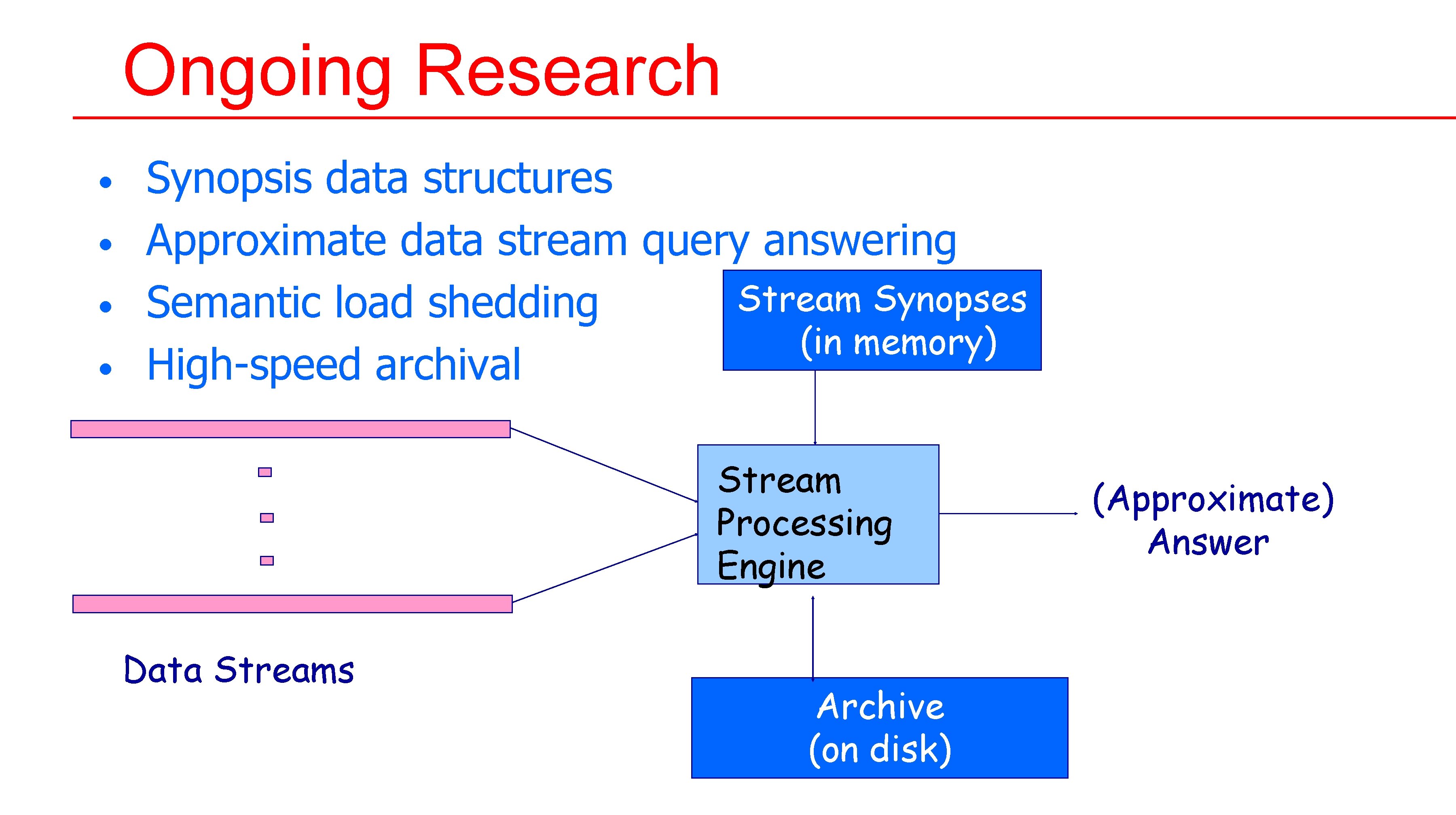
Ongoing Research • • Synopsis data structures Approximate data stream query answering Stream Synopses Semantic load shedding (in memory) High-speed archival Stream Processing Engine Data Streams Archive (on disk) (Approximate) Answer
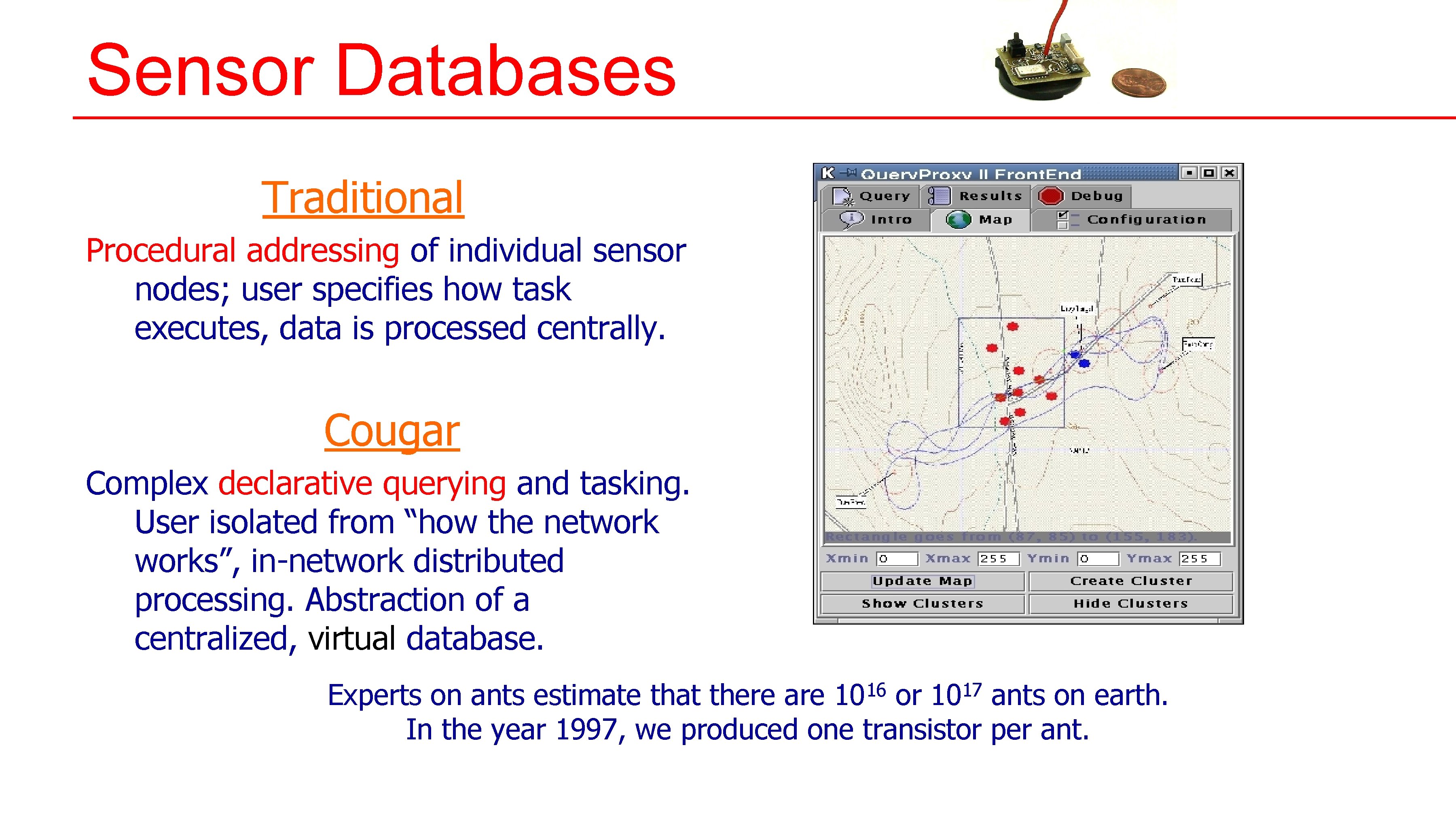
Sensor Databases Traditional Procedural addressing of individual sensor nodes; user specifies how task executes, data is processed centrally. Cougar Complex declarative querying and tasking. User isolated from “how the networks”, in-network distributed processing. Abstraction of a centralized, virtual database. 16 10 17 10 Experts on ants estimate that there are or ants on earth. In the year 1997, we produced one transistor per ant.
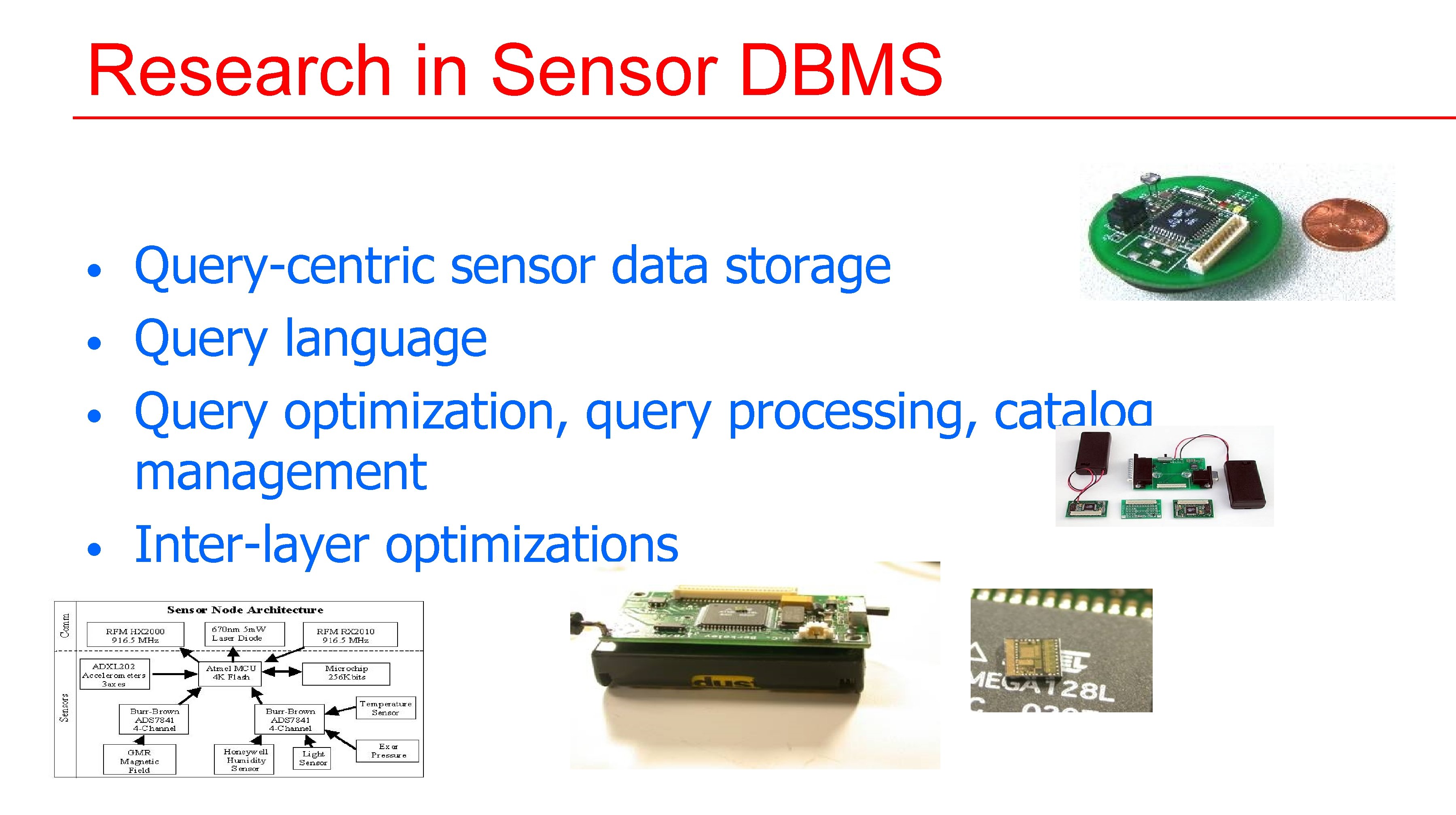
Research in Sensor DBMS • • Query-centric sensor data storage Query language Query optimization, query processing, catalog management Inter-layer optimizations
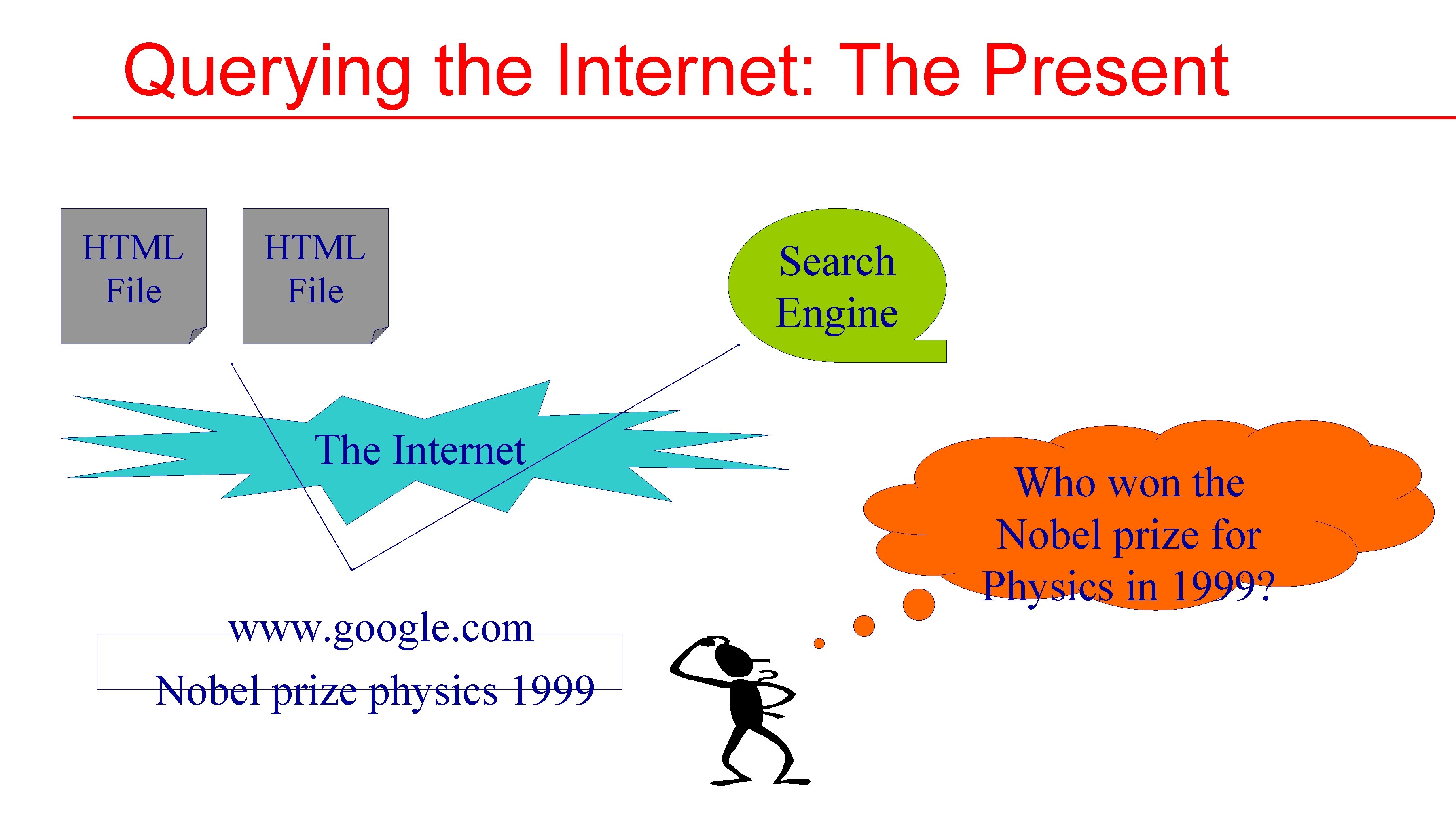
Querying the Internet: The Present HTML File The Internet www. google. com Nobel prize physics 1999 Search Engine Who won the Nobel prize for Physics in 1999?
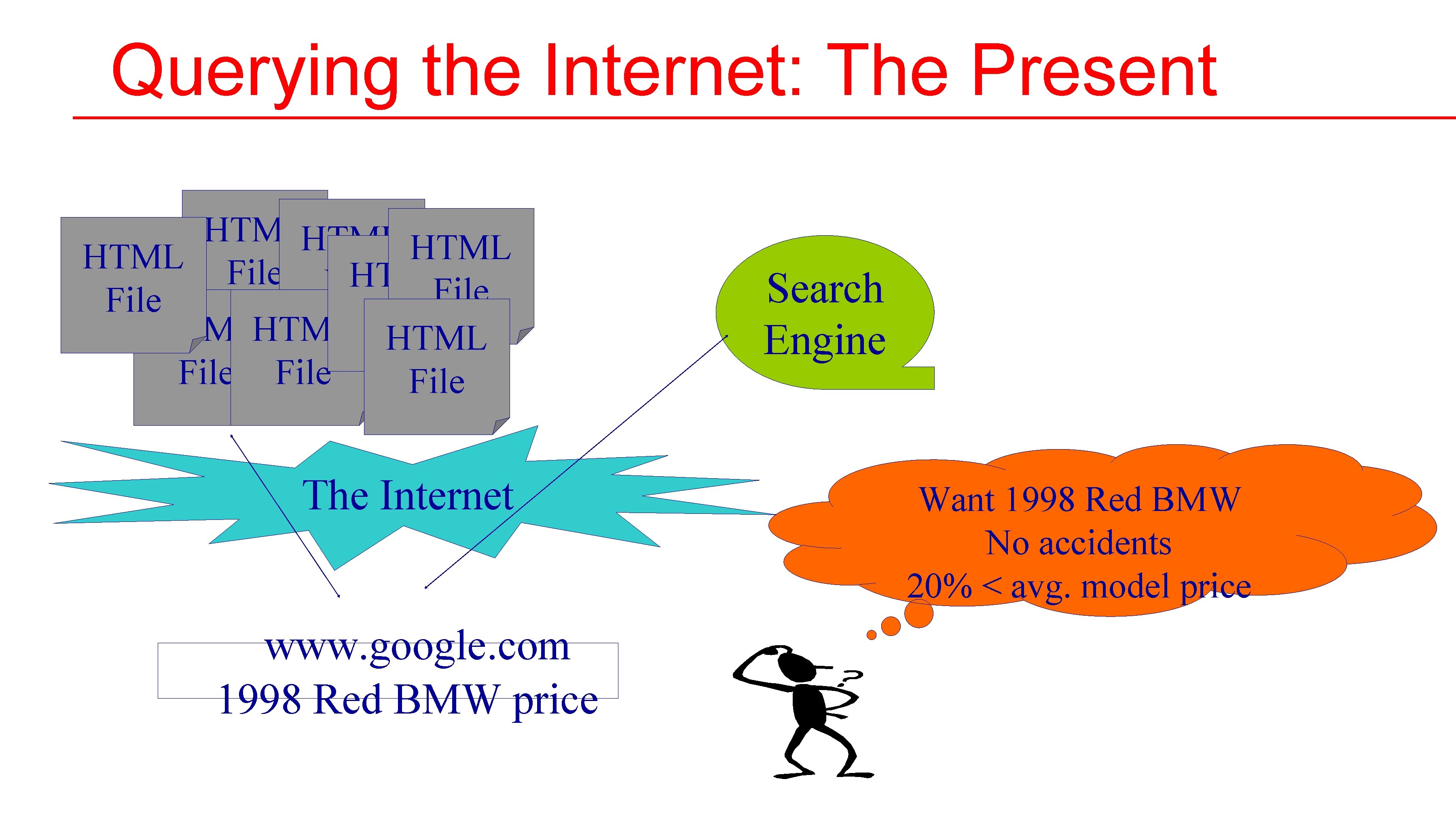
Querying the Internet: The Present HTML File HTML File HTML File The Internet www. google. com 1998 Red BMW price Search Engine Want 1998 Red BMW No accidents 20% < avg. model price
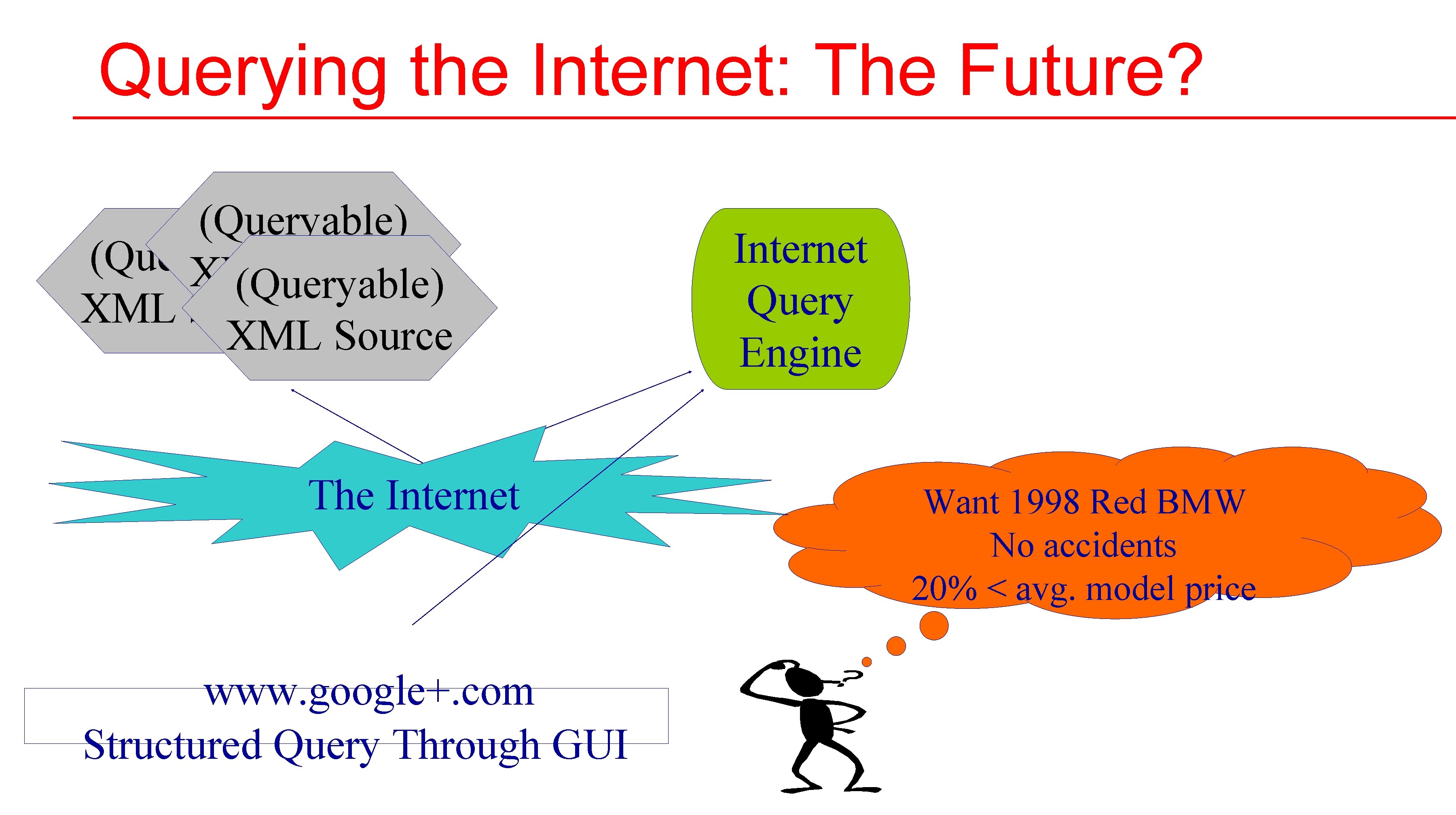
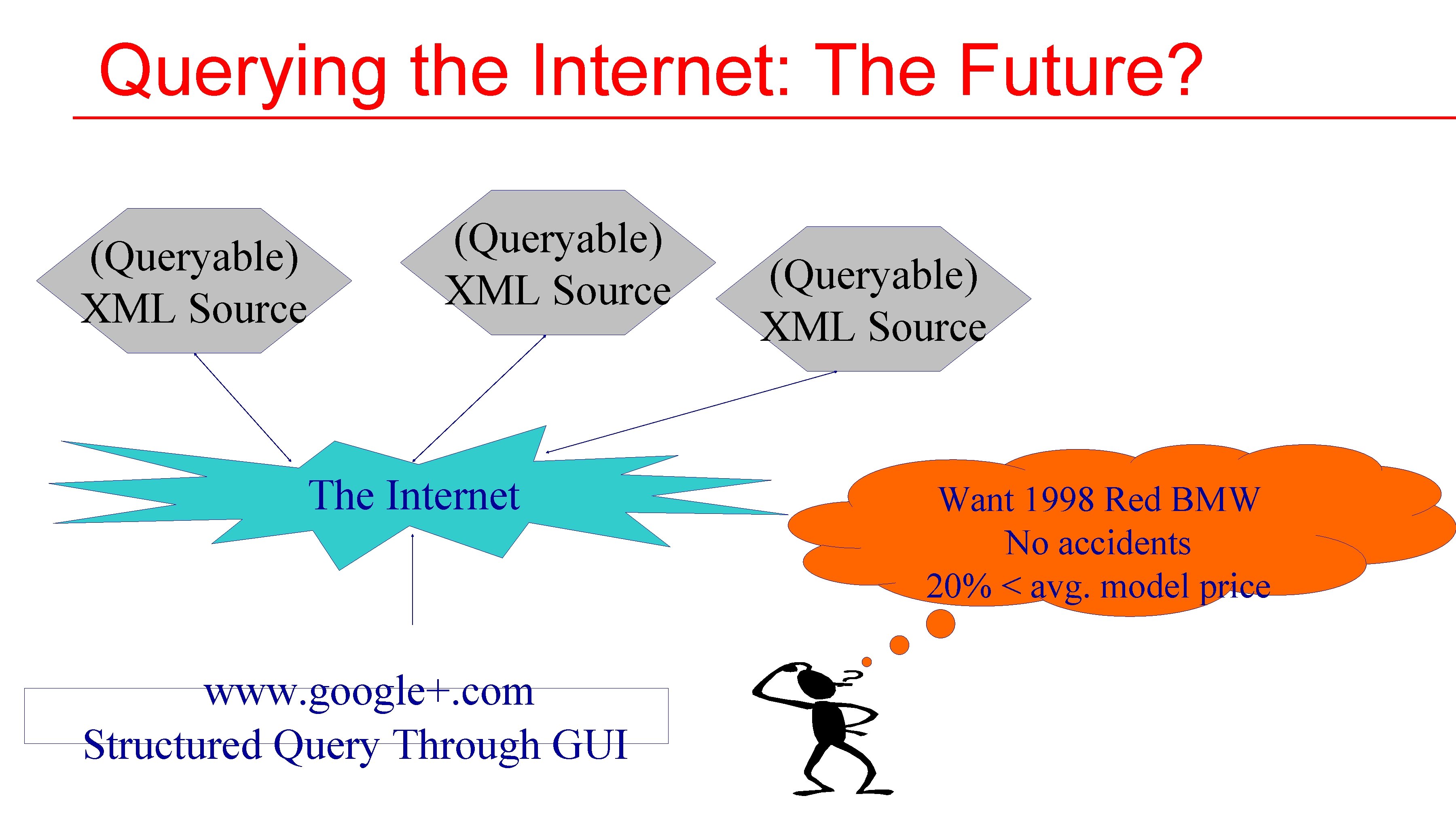
Querying the Internet: The Future? (Queryable) XML Source The Internet www. google+. com Structured Query Through GUI Internet Query Engine Want 1998 Red BMW No accidents 20% < avg. model price
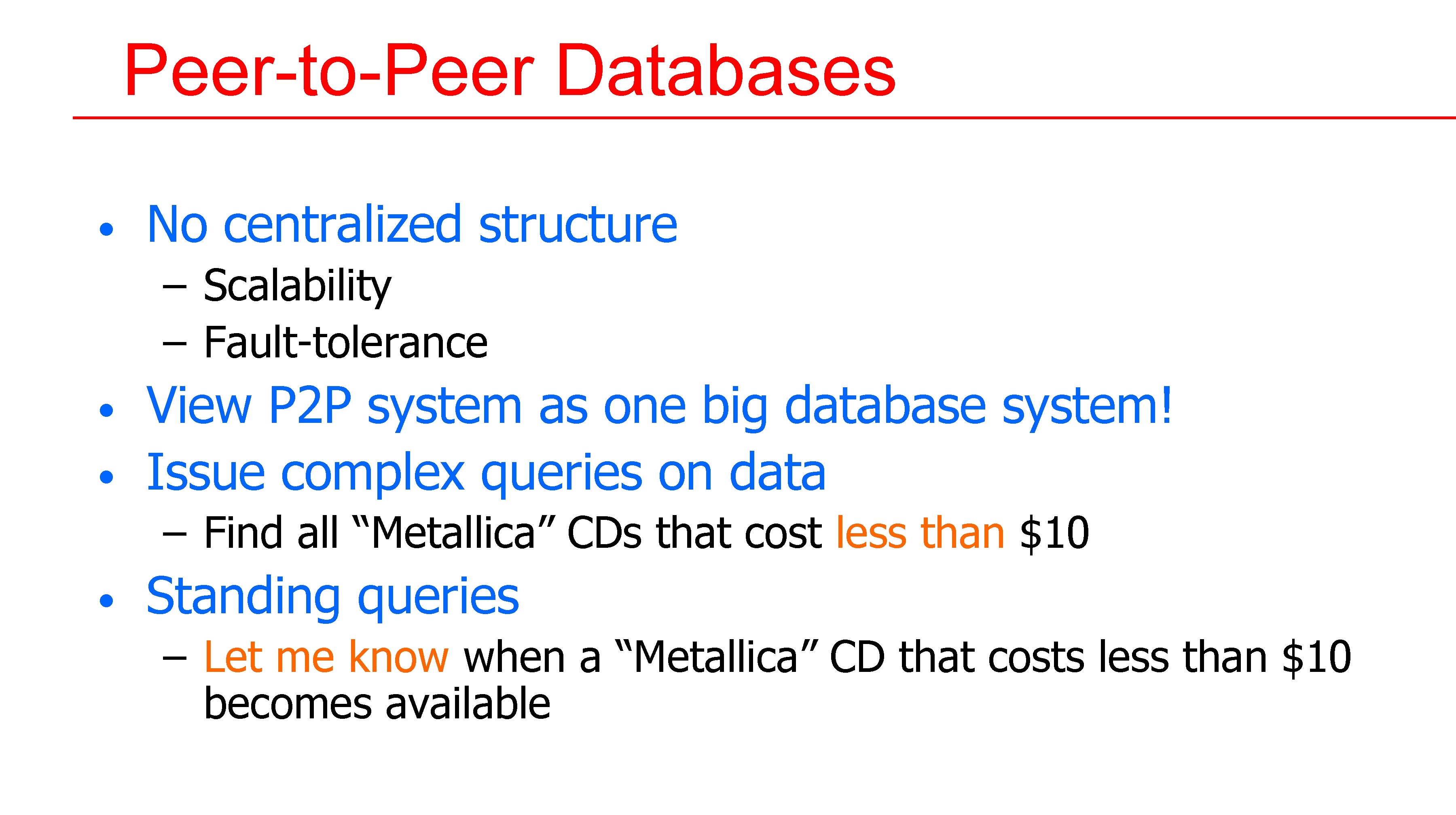
Peer-to-Peer Databases • No centralized structure – Scalability – Fault-tolerance • • View P 2 P system as one big database system! Issue complex queries on data – Find all “Metallica” CDs that cost less than $10 • Standing queries – Let me know when a “Metallica” CD that costs less than $10 becomes available
Querying the Internet: The Future? (Queryable) XML Source The Internet www. google+. com Structured Query Through GUI (Queryable) XML Source Want 1998 Red BMW No accidents 20% < avg. model price
Focus areas • • High-performance systems Distributed systems Databases Security
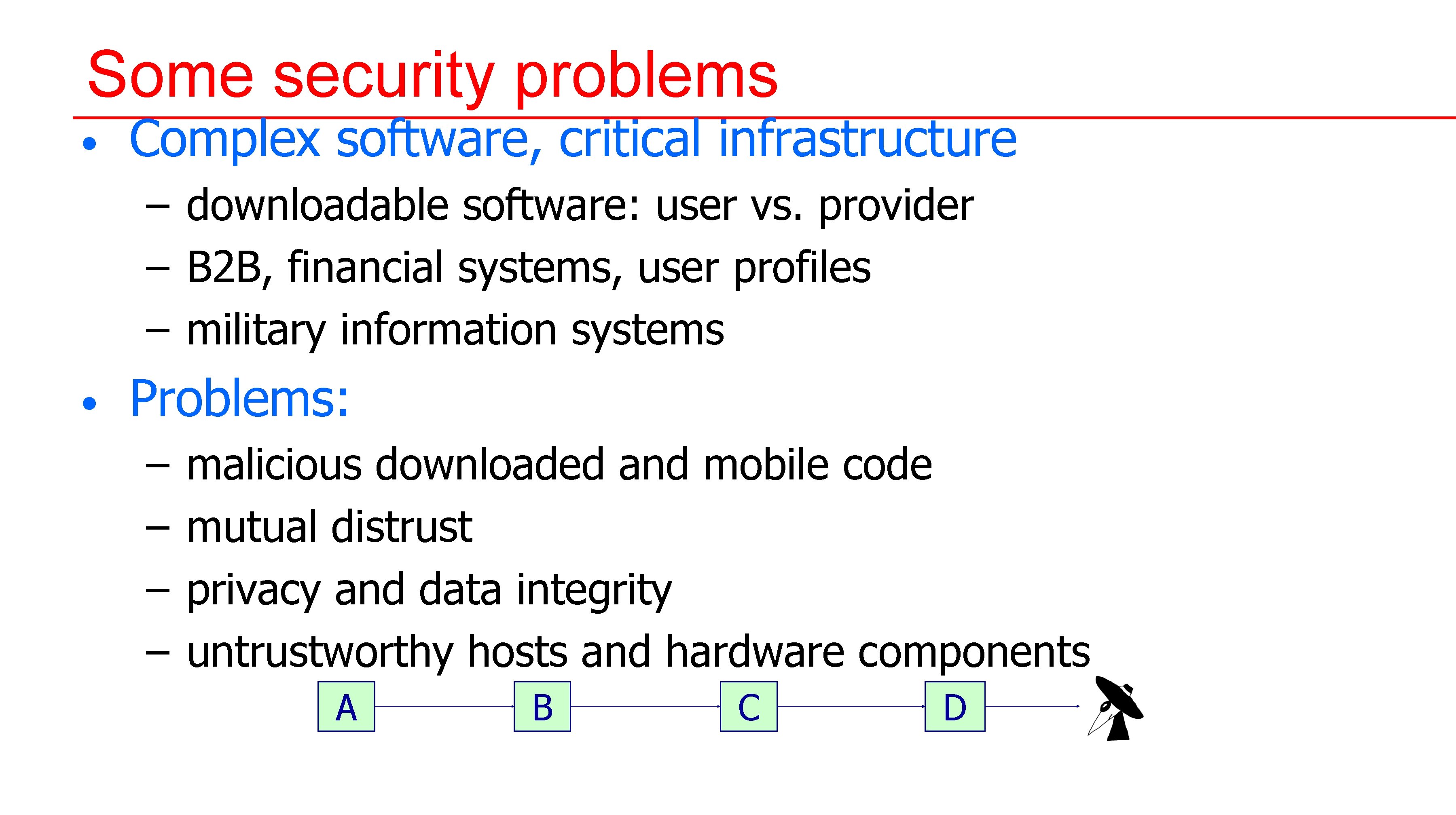
Some security problems • Complex software, critical infrastructure – downloadable software: user vs. provider – B 2 B, financial systems, user profiles – military information systems • Problems: – – malicious downloaded and mobile code mutual distrust privacy and data integrity untrustworthy hosts and hardware components A B C D
Language-based Security Exploit and extend programming language- based technologies to enable – specifying security policies – enforcing security policies – increasing assurance – relocating trust in software systems.
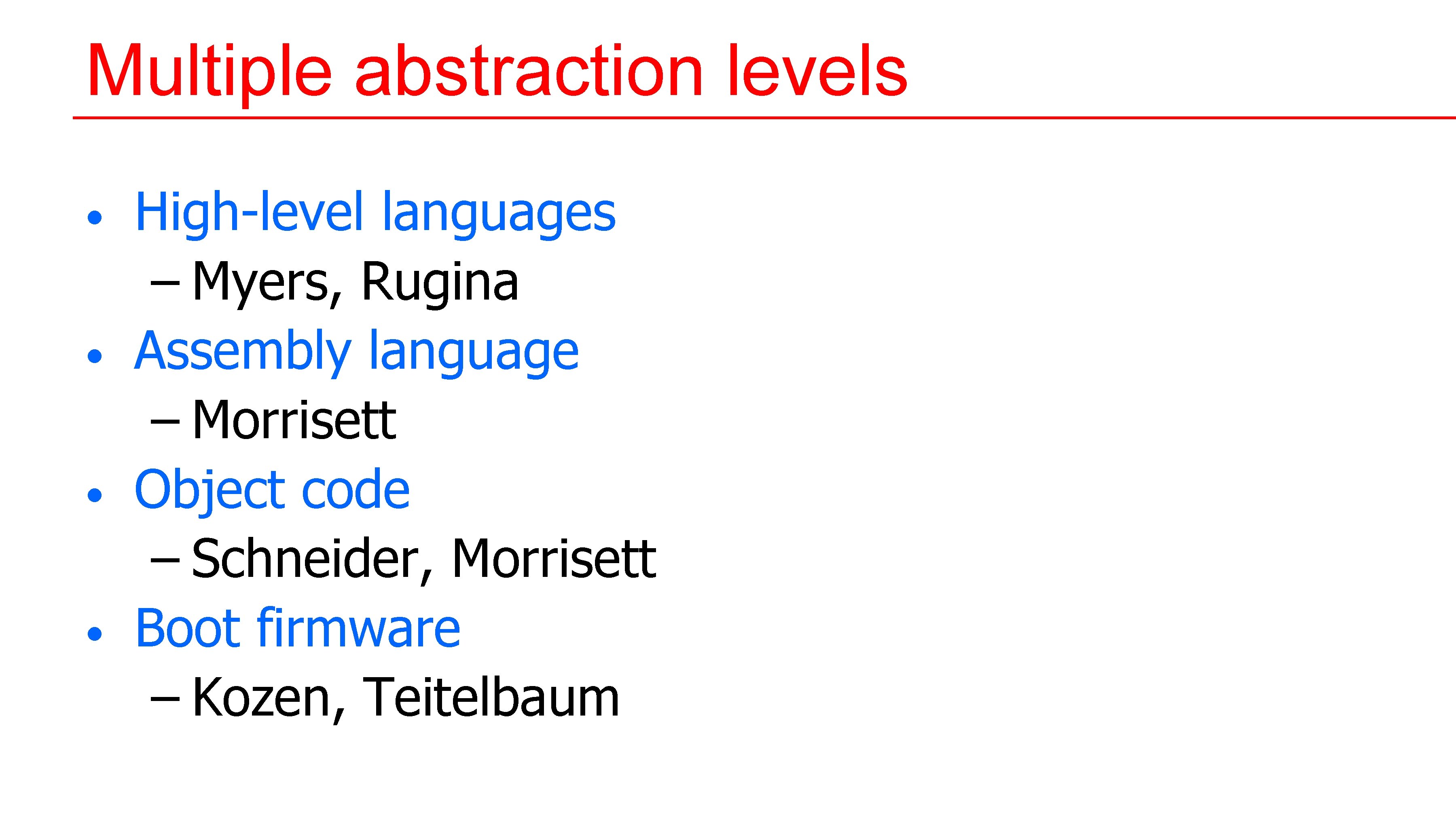
Multiple abstraction levels • • High-level languages – Myers, Rugina Assembly language – Morrisett Object code – Schneider, Morrisett Boot firmware – Kozen, Teitelbaum
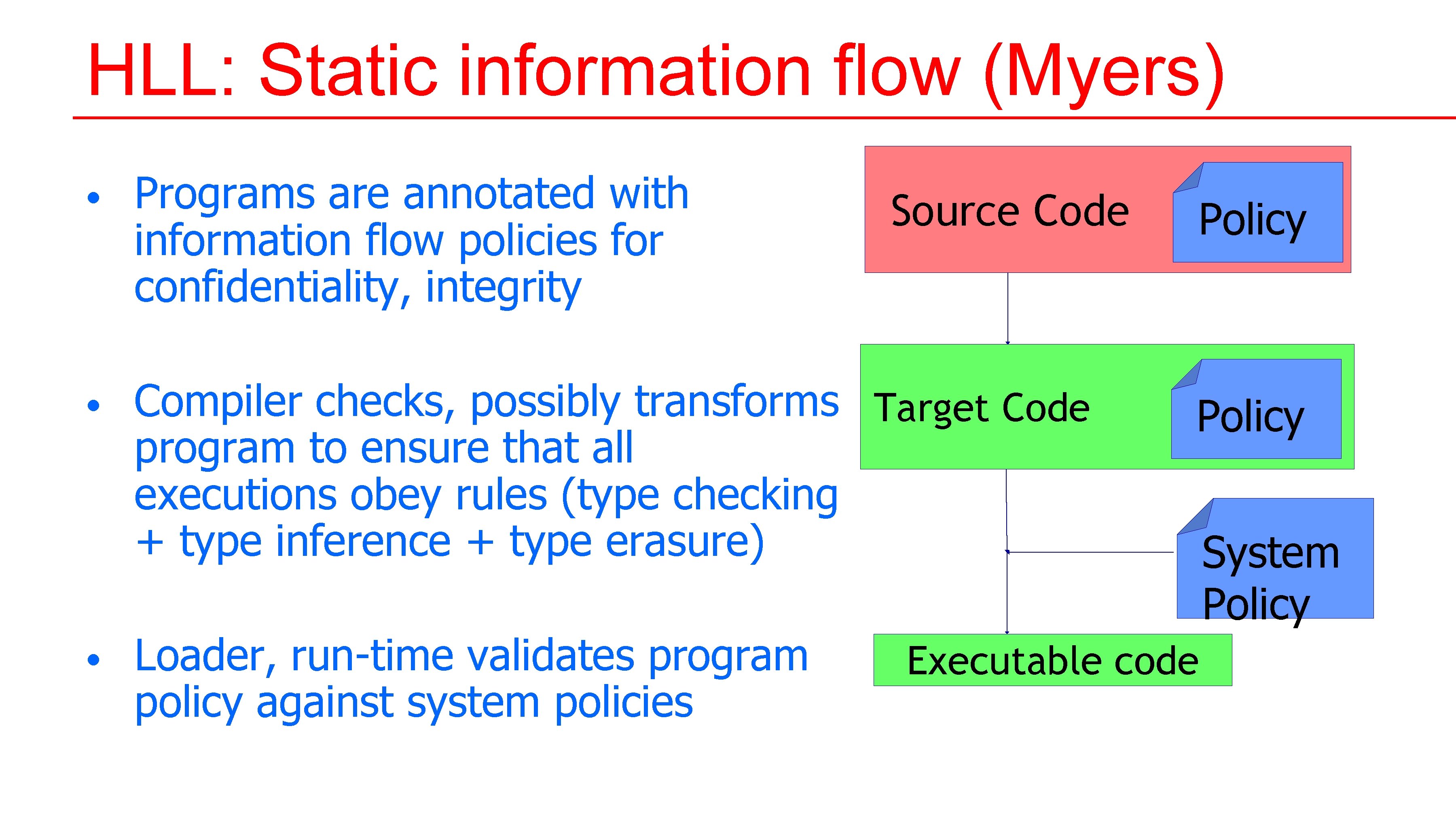
HLL: Static information flow (Myers) • Programs are annotated with information flow policies for confidentiality, integrity • Compiler checks, possibly transforms Target Code program to ensure that all executions obey rules (type checking + type inference + type erasure) • Loader, run-time validates program policy against system policies Source Code Policy Executable code System Policy
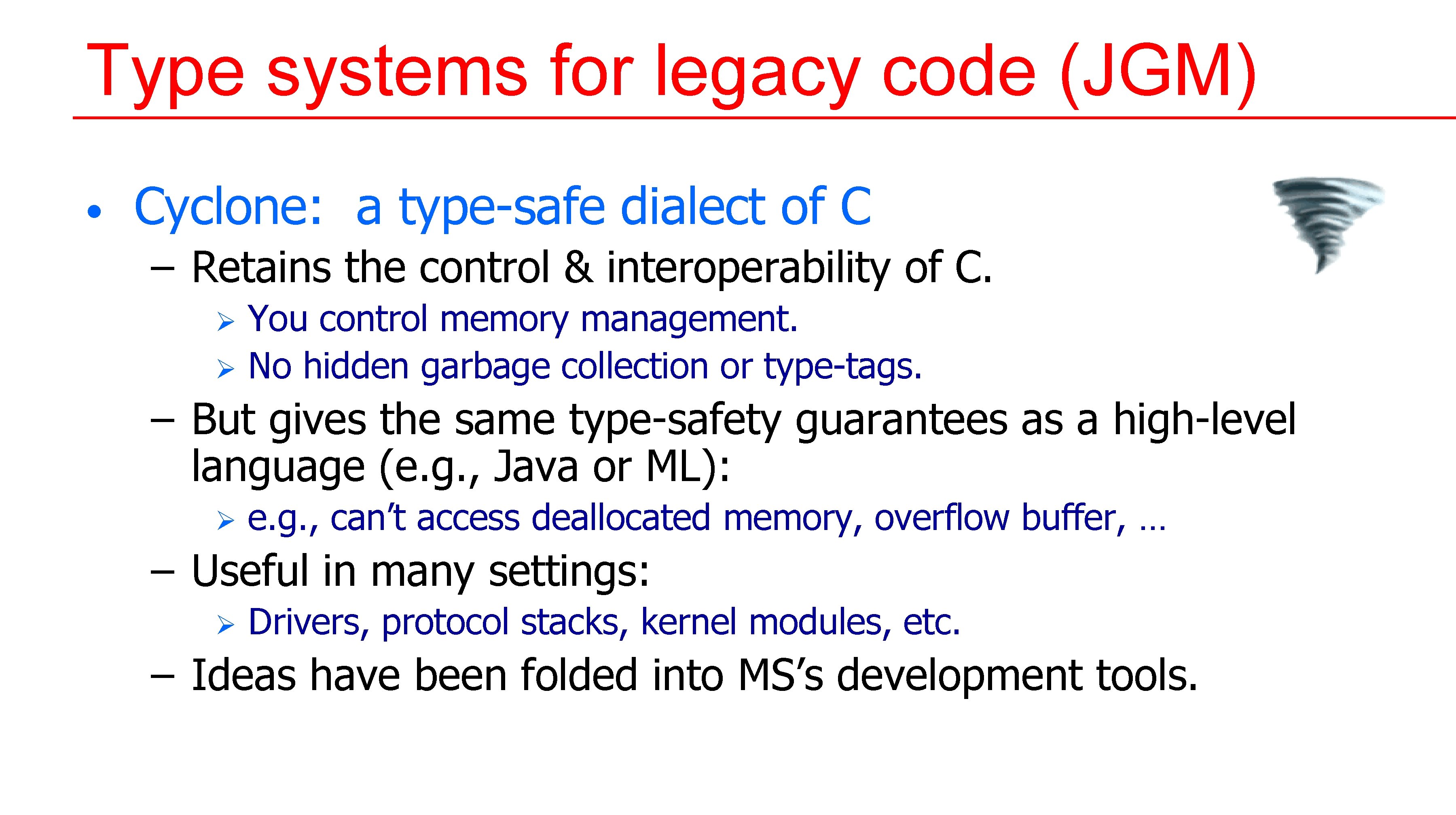
Type systems for legacy code (JGM) • Cyclone: a type-safe dialect of C – Retains the control & interoperability of C. Ø Ø You control memory management. No hidden garbage collection or type-tags. – But gives the same type-safety guarantees as a high-level language (e. g. , Java or ML): Ø e. g. , can’t access deallocated memory, overflow buffer, … – Useful in many settings: Ø Drivers, protocol stacks, kernel modules, etc. – Ideas have been folded into MS’s development tools.
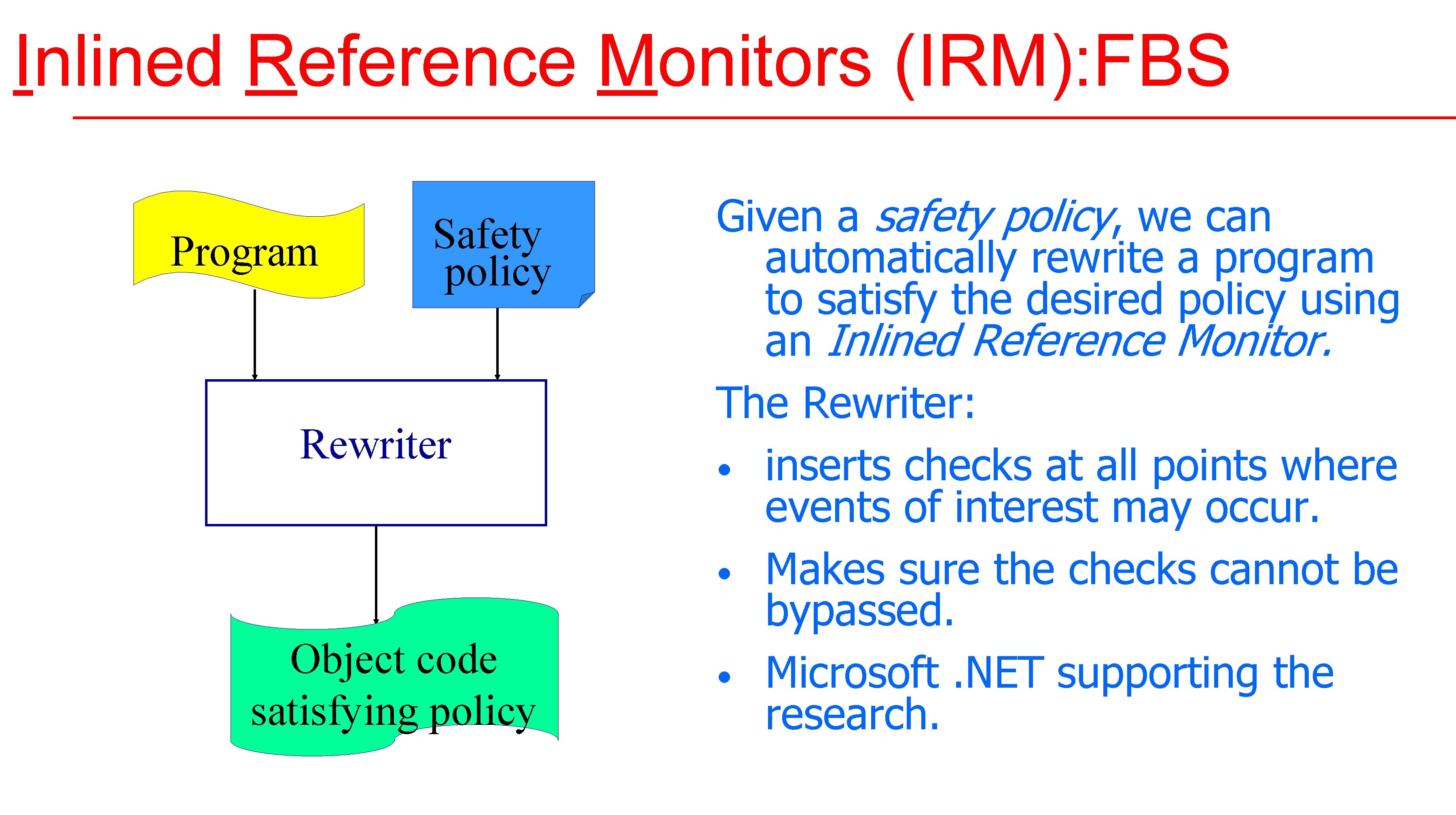
Inlined Reference Monitors (IRM): FBS Program Safety policy Rewriter Object code satisfying policy Given a safety policy, we can automatically rewrite a program to satisfy the desired policy using an Inlined Reference Monitor. The Rewriter: • inserts checks at all points where events of interest may occur. • Makes sure the checks cannot be bypassed. • Microsoft. NET supporting the research.
Typed Assembly Language (JGM) “RISC”-like type system for assembly language: – Guarantees machine code is type-safe Ø no need to trust the rewriter, optimizer, JIT, etc. – A general set of primitive type constructors: Ø Ø Ø Independent of a particular source language (e. g. , Java). Can encode high-level language abstractions (e. g. , objects, ADTs, classes, etc. ) Can encode compiler invariants (e. g. , calling conventions). – TALx 86 tools and TAL-targeted compilers Ø Linux and Win 32 supported binaries – CMU, Penn, Princeton all using it in research projects.
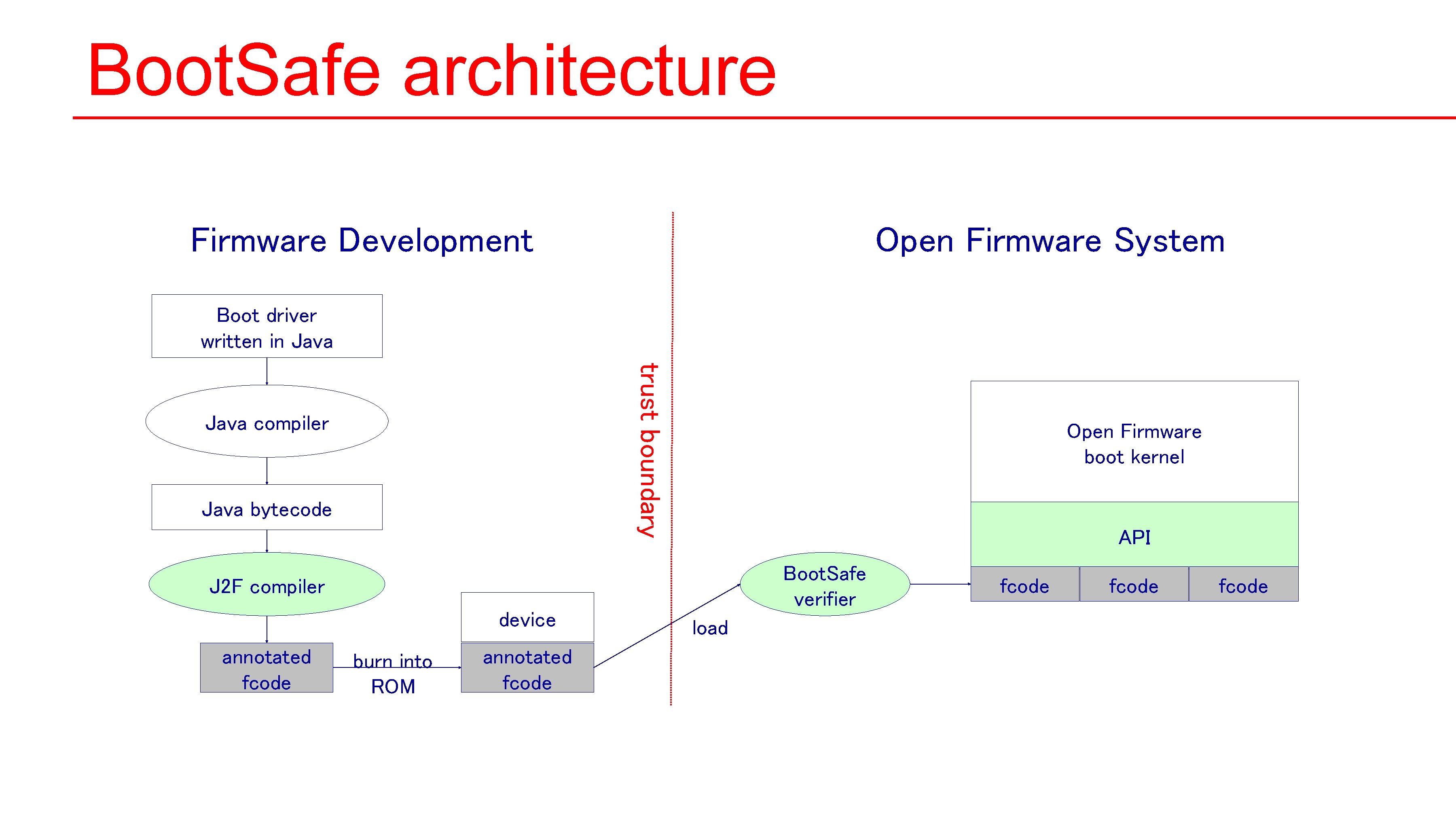
Boot. Safe (Kozen) • • Purpose: Guard against malicious boot firmware Context: Open Firmware (IEEE 1275 -1994) Approach: Compile device drivers written in Java to annotated fcode (Forth VM code), statically verify against a strict security policy at load time Components: – J 2 F, a certifying Java bytecode to Forth fcode compiler – Trusted verifier, part of the Open Firmware kernel – Java API and runtime support package • Project status: Compiler, runtime, 12/02 st 1 level verifier operational,
Boot. Safe architecture Firmware Development Open Firmware System Boot driver written in Java trust boundary Java compiler Java bytecode Open Firmware boot kernel API Boot. Safe verifier J 2 F compiler device annotated fcode burn into ROM annotated fcode load fcode
Research that has impact … • • Compiler optimizations – Pingali: Intel’s Merced, SGI, DEC DCPI, HP Virtual synchrony – Birman, van Renesse and Vogels: Isis Inc, French air traffic control system, NYSE, etc. Distributed virtual machines – Sirer: Appliant Inc, Hewlett-Packard Chai. VM Inline reference monitors – Schneider and Morrisett: Microsoft. NET IRM • National Academy Trust in Cyberspace study • AFRL/Cornell Information Assurance Institute
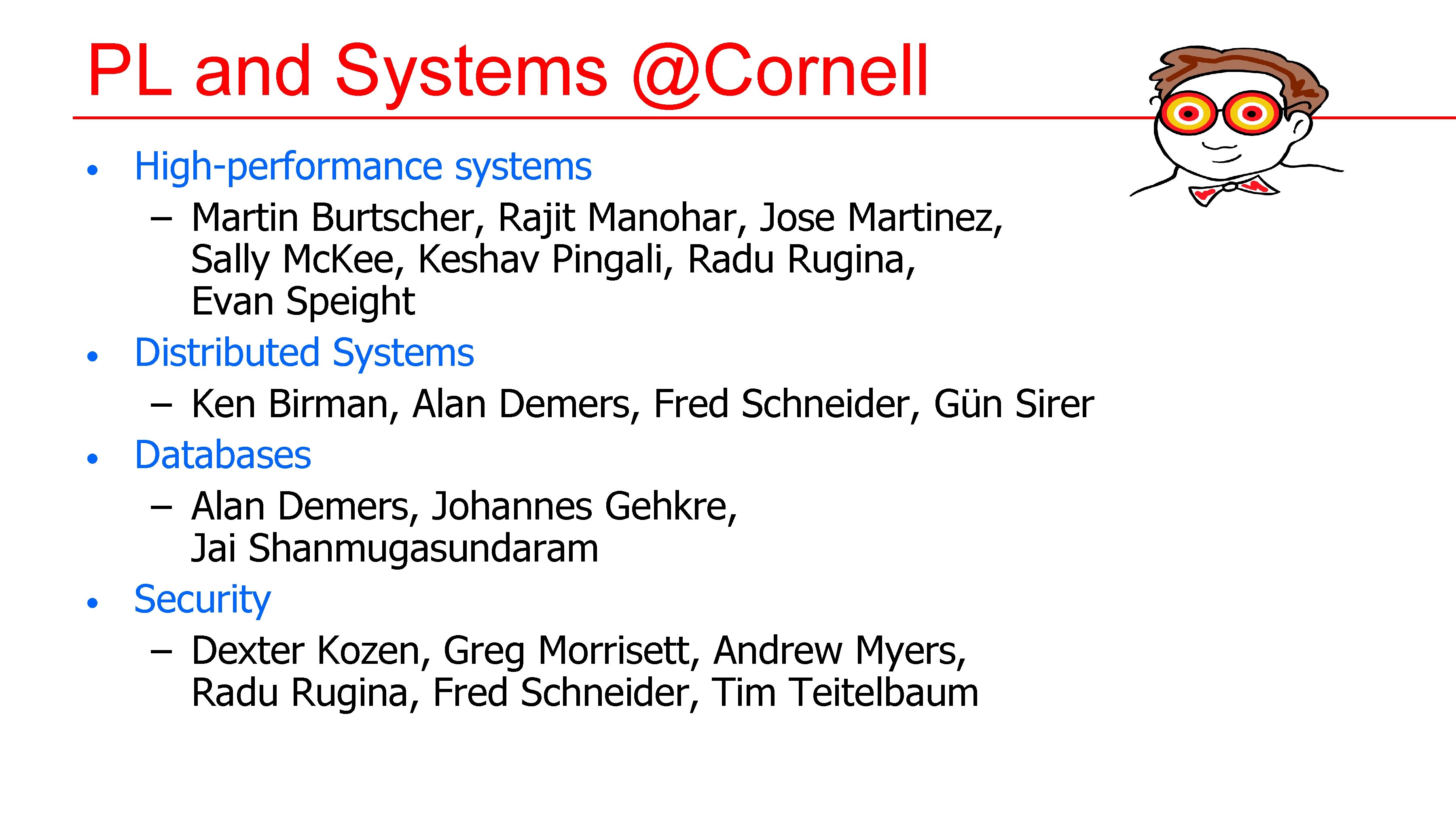
PL and Systems @Cornell • • High-performance systems – Martin Burtscher, Rajit Manohar, Jose Martinez, Sally Mc. Kee, Keshav Pingali, Radu Rugina, Evan Speight Distributed Systems – Ken Birman, Alan Demers, Fred Schneider, Gün Sirer Databases – Alan Demers, Johannes Gehkre, Jai Shanmugasundaram Security – Dexter Kozen, Greg Morrisett, Andrew Myers, Radu Rugina, Fred Schneider, Tim Teitelbaum