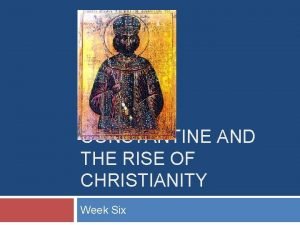
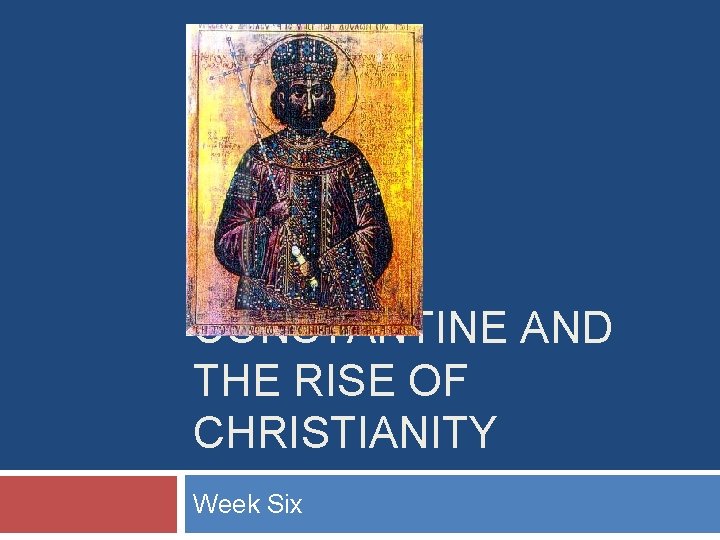
CONSTANTINE AND THE RISE OF CHRISTIANITY Week Six


- Slides: 27
CONSTANTINE AND THE RISE OF CHRISTIANITY Week Six
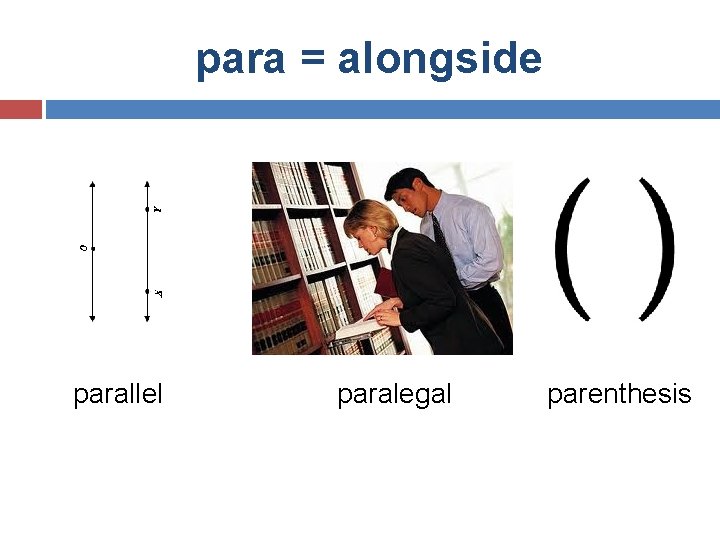
para = alongside parallel paralegal parenthesis
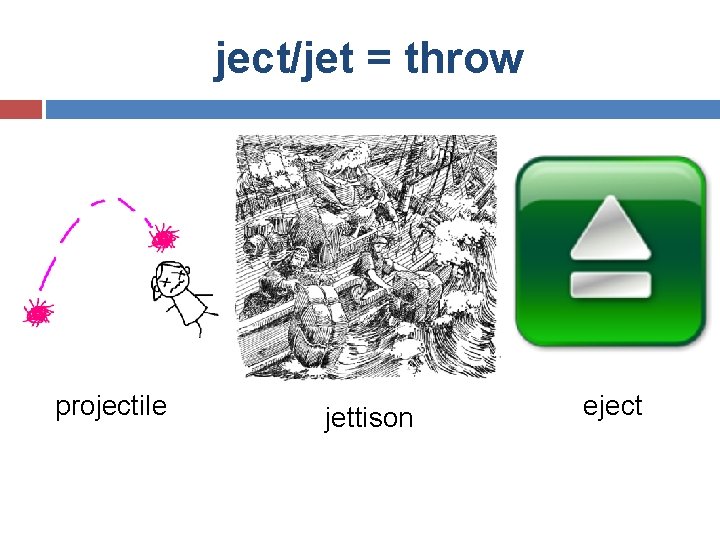
ject/jet = throw projectile jettison eject
CONSTANTINE AND THE RISE OF CHRISTIANITY Week Six
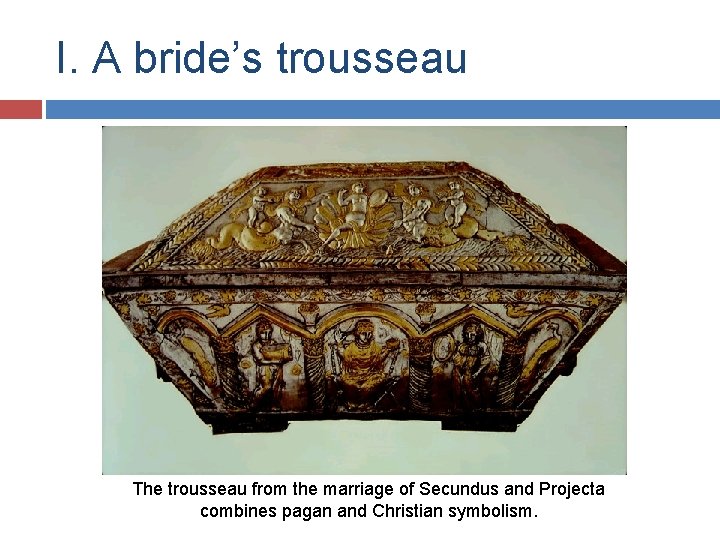
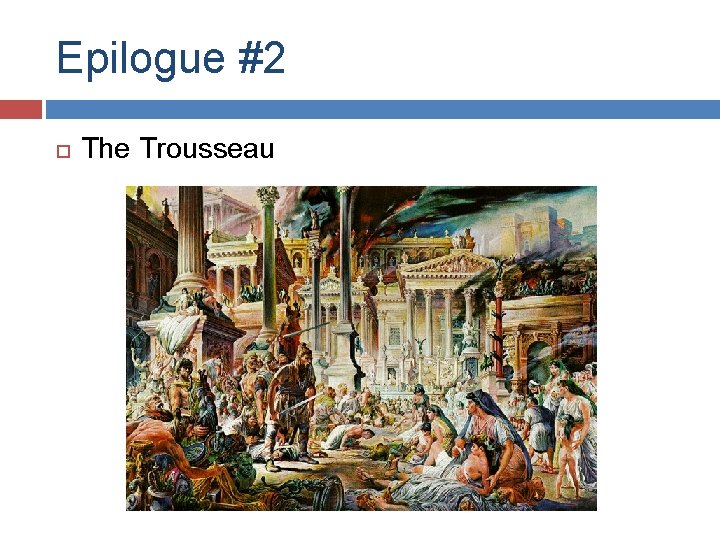
I. A bride’s trousseau The trousseau from the marriage of Secundus and Projecta combines pagan and Christian symbolism.
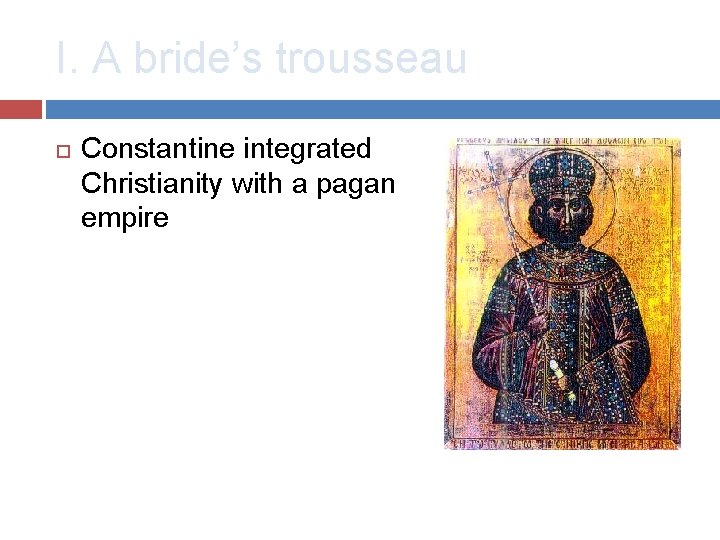
I. A bride’s trousseau Constantine integrated Christianity with a pagan empire
Jerusalem Temple
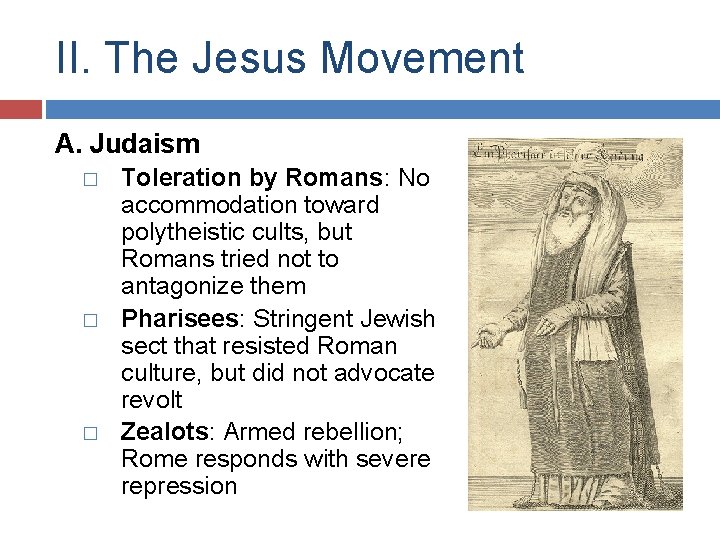
II. The Jesus Movement A. Judaism � � � Toleration by Romans: No accommodation toward polytheistic cults, but Romans tried not to antagonize them Pharisees: Stringent Jewish sect that resisted Roman culture, but did not advocate revolt Zealots: Armed rebellion; Rome responds with severe repression
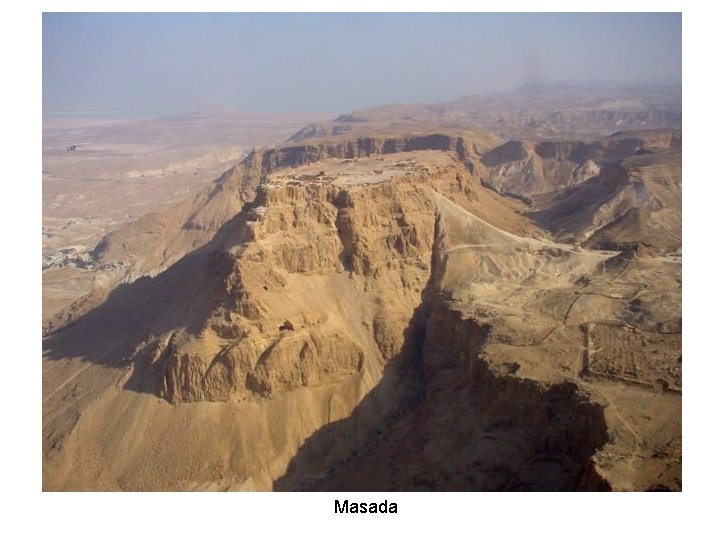
Masada
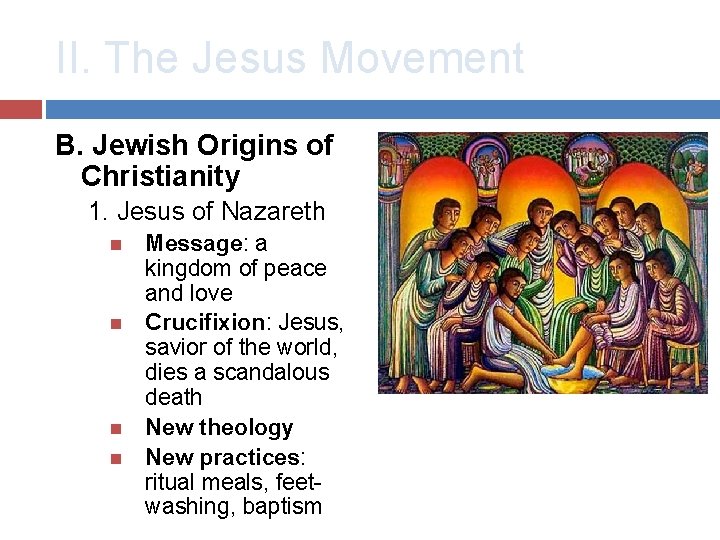
II. The Jesus Movement B. Jewish Origins of Christianity 1. Jesus of Nazareth Message: a kingdom of peace and love Crucifixion: Jesus, savior of the world, dies a scandalous death New theology New practices: ritual meals, feetwashing, baptism
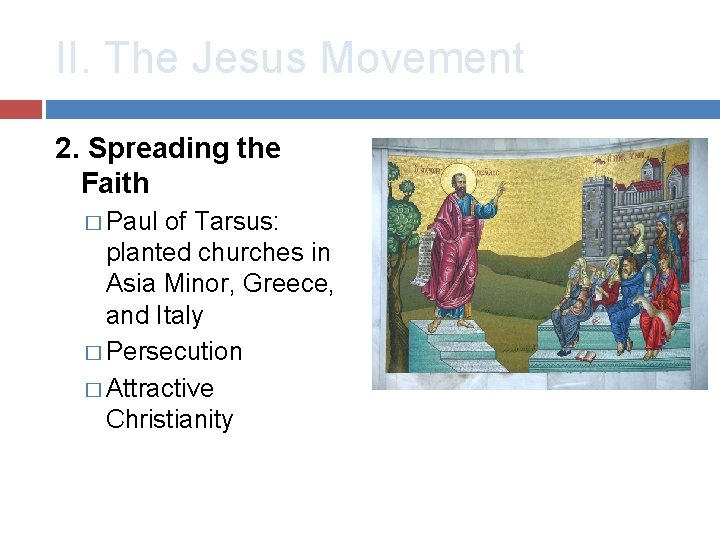
II. The Jesus Movement 2. Spreading the Faith � Paul of Tarsus: planted churches in Asia Minor, Greece, and Italy � Persecution � Attractive Christianity
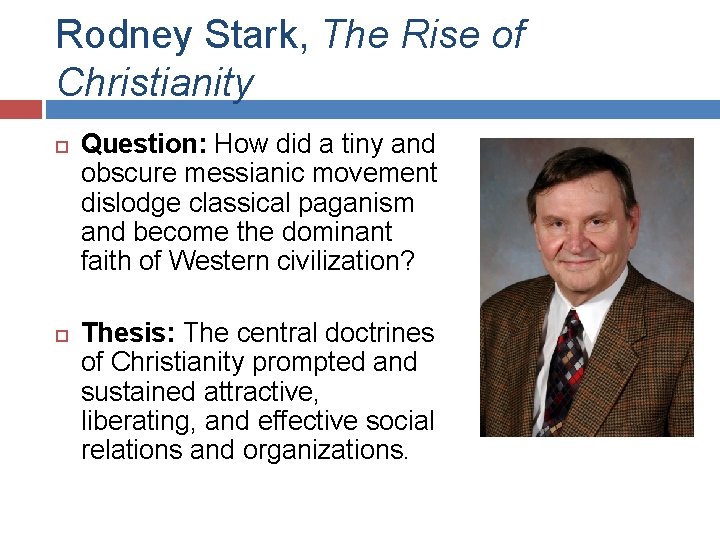
Rodney Stark, The Rise of Christianity Question: How did a tiny and obscure messianic movement dislodge classical paganism and become the dominant faith of Western civilization? Thesis: The central doctrines of Christianity prompted and sustained attractive, liberating, and effective social relations and organizations.
Questions for discussion, part I Chapter One Describe the network theory of conversion. Chapters Four and Seven What made Christian faith so attractive? Push and pull.
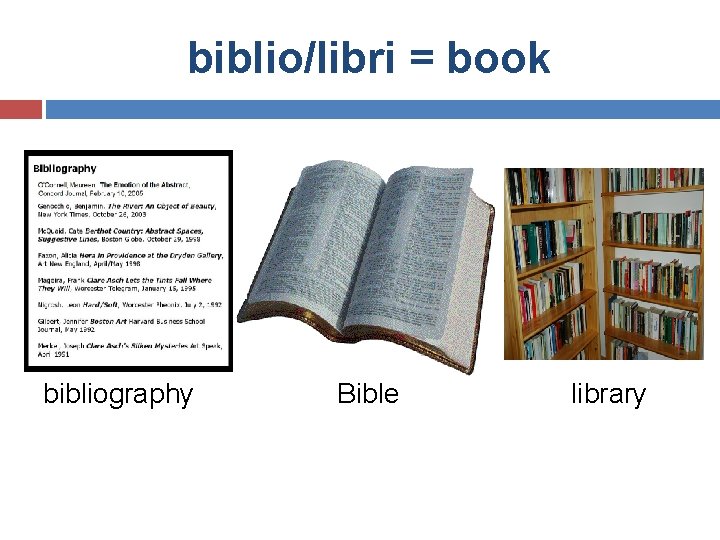
biblio/libri = book bibliography Bible library
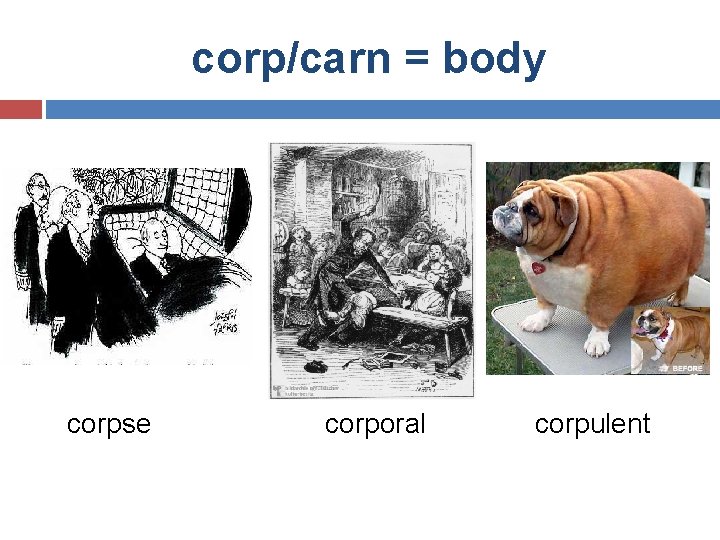
corp/carn = body corpse corporal corpulent
Questions for discussion, part II Chapter Five: Stark argues that Christianity was especially attractive to women. How so? Chapter Eight: Stark argues that martyrs were not clinically crazy or masochistic. Why not? Chapter Ten: In the end, what is the revolutionary message of the early Christians to the Roman world?
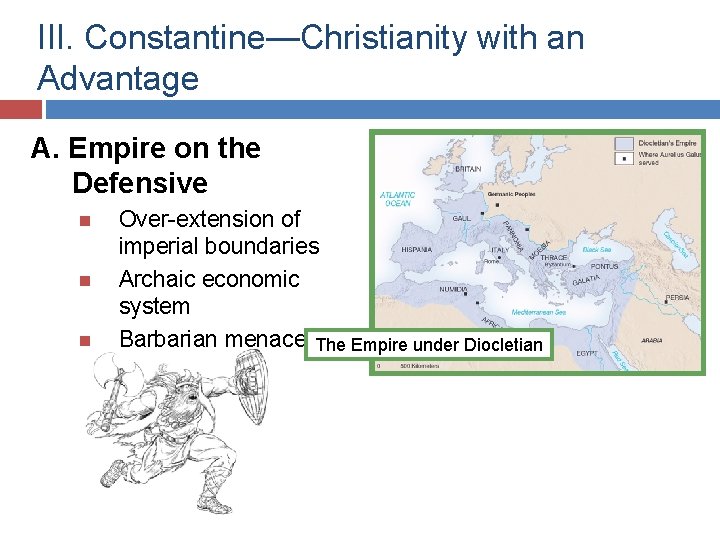
III. Constantine—Christianity with an Advantage A. Empire on the Defensive Over-extension of imperial boundaries Archaic economic system Barbarian menace The Empire under Diocletian
B. Triumph of Christianity Rise of Constantine Conversion of Constantine Official religion of Rome Suppression of pagan cults Growth of Christianity
Constantine I
Constantine II
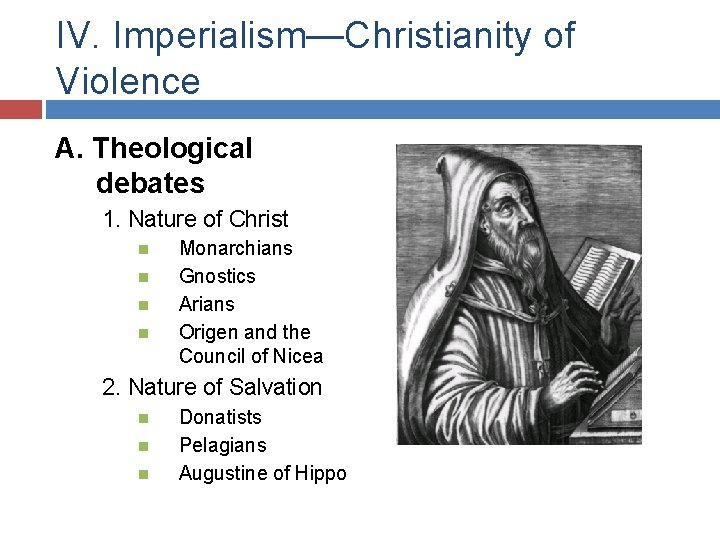
IV. Imperialism—Christianity of Violence A. Theological debates 1. Nature of Christ Monarchians Gnostics Arians Origen and the Council of Nicea 2. Nature of Salvation Donatists Pelagians Augustine of Hippo
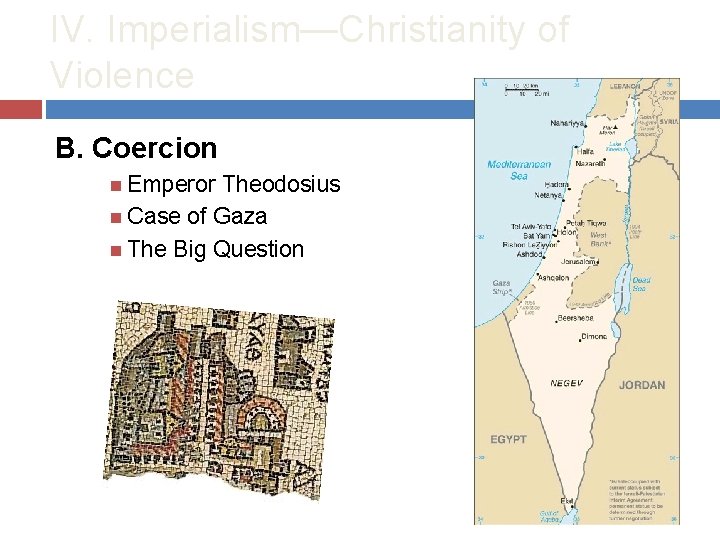
IV. Imperialism—Christianity of Violence B. Coercion Emperor Theodosius Case of Gaza The Big Question
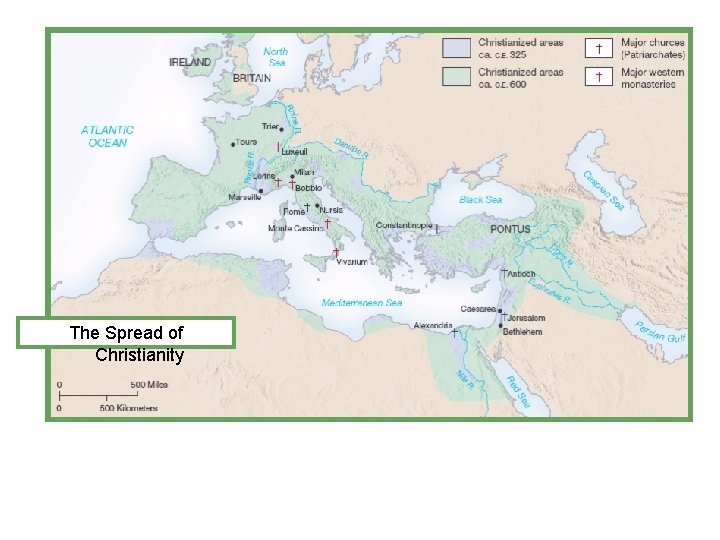
The Spread of Christianity
Critiques of the Constantinian Shift Tertullian: “It is no part of religion to compel religion” Lactantius: “There is no occasion for violence and injury, for religion cannot be compelled by force. . . We teach, we prove, we show. ” Augustine: “Christ-followers” had turned into “depraved persons who in mobs fill the churches in a bodily sense only. ” Jesus: In the Sermon on the Mount, Jesus lauds those who are gentle, poor in spirit, peacemakers, and persecuted.
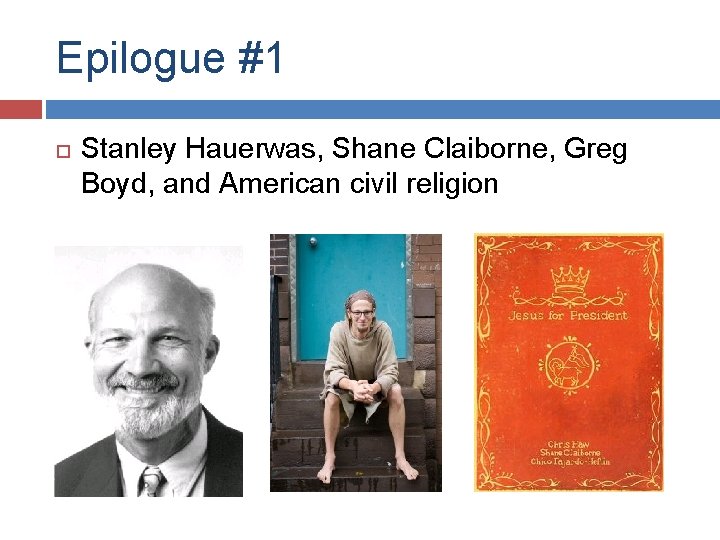
Epilogue #1 Stanley Hauerwas, Shane Claiborne, Greg Boyd, and American civil religion
Boyd on Constantine
Epilogue #2 The Trousseau