Connecticut Youth Services Presenters Mary Ann Haley Deputy



- Slides: 25
Connecticut Youth Services
Presenters Mary Ann Haley Deputy Director, Connecticut Coalition to End Homelessness Amy Marracino, L. C. S. W Acting Director of Young Adult Services
Youth Homelessness in CT There an estimated 3, 000 homeless/unstably housed youth in Connecticut 40% indicated that they had no permanent place to live for over a year
Challenges to End Youth Homelessness • Homeless and unstably housed youth are challenging to identify and engage. • They are considered a “hidden” population • CT ranked 49 th of all 50 states for identifying and educating homeless students
Effects on Youth Significantly increases risk and results in poor outcomes for young people – School: chronic absenteeism, drop out – Health: poor nutrition, physical/sexual assault, STD/HIV, drug addiction – Mental health: depression, anxiety, suicide – Delinquency: arrests, criminal record
Systems are Working! Collaboration + Resources + Data = Ending Homelessness • CT was the first state to end chronic homelessness among Veterans in 2015 • CT was the second state to end all homelessness amongst all Veterans in February of 2016 • As of December 2016, all chronically homeless individuals in CT have been matched to housing!
Youth Engagement Team Initiatives (YETIs) Youth Engagement Team Initiatives are regional groups dedicated to creating a plan and taking step to end youth homelessness in their region. YETIs conducted the 2017 CT Youth Count! in January of 2017 in over 60 towns with over 300 volunteers.
H LT L A T EN M S F E O C I T RV N E SE G M N T N U R O O A TI Y P E C DE DI ID AD T E W S S T E R A V I C E A D N A A E H D U L T S E A R V IC E S U N D U L T G S Amy Marracino, L. C. S. W. 8
The Department of Mental Health and Addiction Services • Mission: “promote the overall health and wellness of persons with behavioral health needs through an integrated network of holistic, comprehensive, effective, and efficient services and supports that foster dignity, respect, and self-sufficiency in those we serve. ” 9
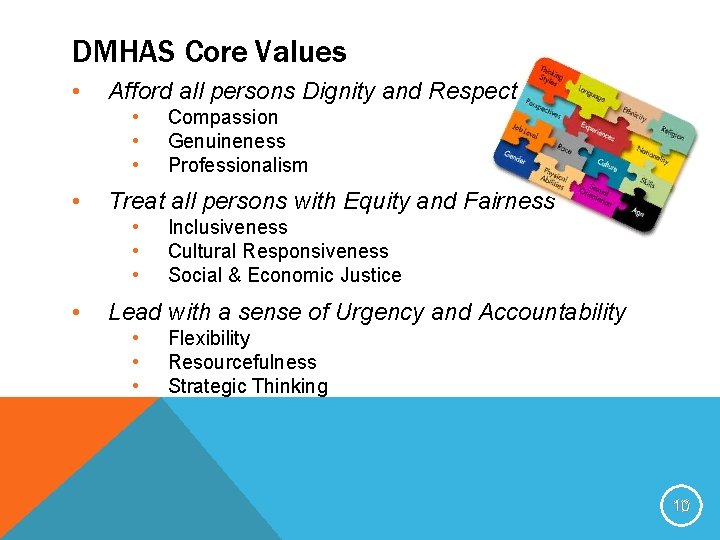
DMHAS Core Values • Afford all persons Dignity and Respect • • Treat all persons with Equity and Fairness • • Compassion Genuineness Professionalism Inclusiveness Cultural Responsiveness Social & Economic Justice Lead with a sense of Urgency and Accountability • • • Flexibility Resourcefulness Strategic Thinking 10
DMHAS Treatment Options • DMHAS “operates on the belief that most people with mental illnesses and/or substance use disorders can and should be treated in community settings…” • State inpatient services are available and should be used only when absolutely necessary 11
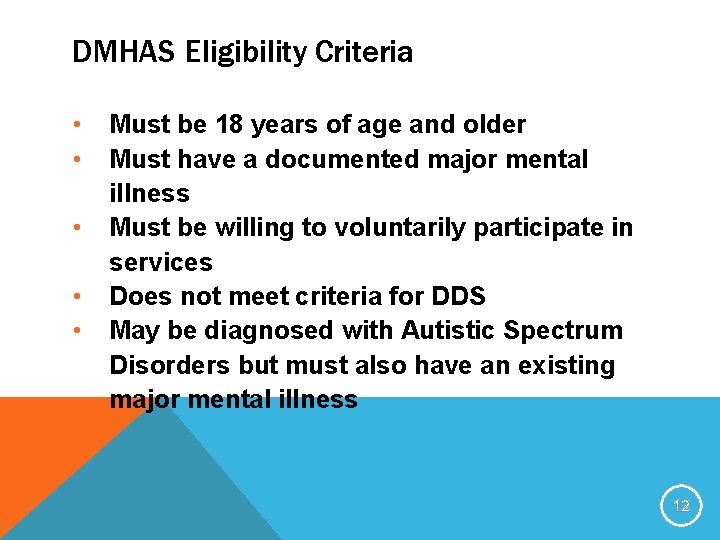
DMHAS Eligibility Criteria • • • Must be 18 years of age and older Must have a documented major mental illness Must be willing to voluntarily participate in services Does not meet criteria for DDS May be diagnosed with Autistic Spectrum Disorders but must also have an existing major mental illness 12
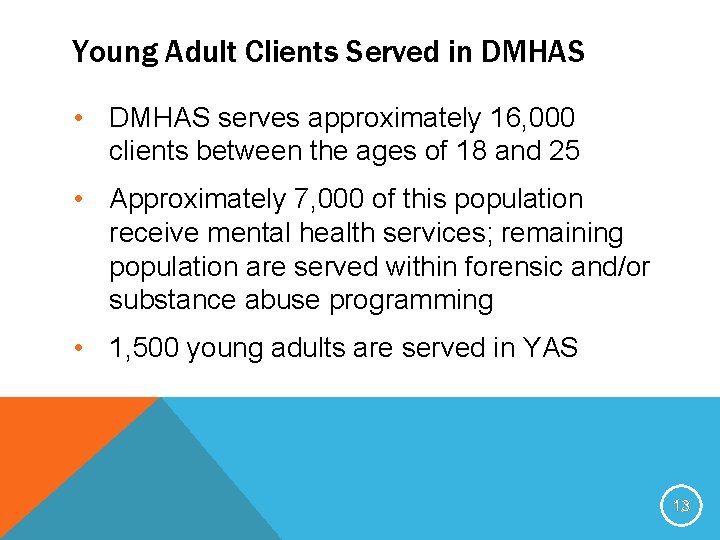
Young Adult Clients Served in DMHAS • DMHAS serves approximately 16, 000 clients between the ages of 18 and 25 • Approximately 7, 000 of this population receive mental health services; remaining population are served within forensic and/or substance abuse programming • 1, 500 young adults are served in YAS 13
Young Adult Services Mission Statement • Our mission is to improve the lives of young people by providing the highest quality services possible. We do this by forming a partnership with the individual, their family, identified significant persons, and with other community service providers. • By doing so we create a “community of care” that fosters mutual respect and individualized client centered treatment. 14
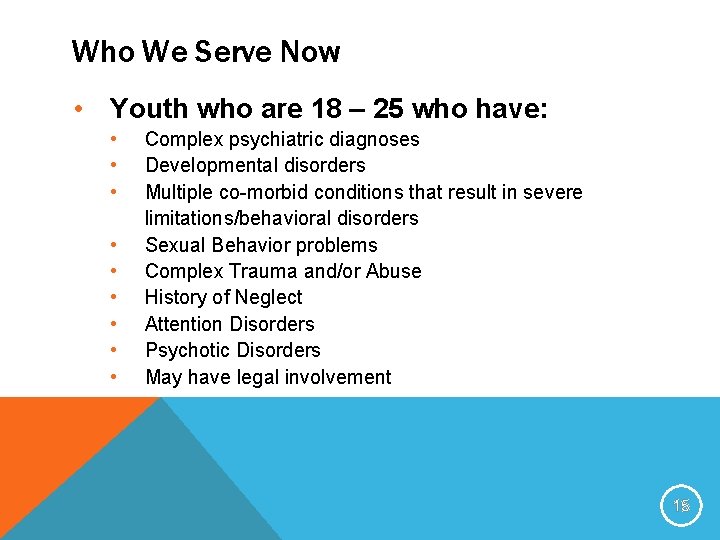
Who We Serve Now • Youth who are 18 – 25 who have: • • • Complex psychiatric diagnoses Developmental disorders Multiple co-morbid conditions that result in severe limitations/behavioral disorders Sexual Behavior problems Complex Trauma and/or Abuse History of Neglect Attention Disorders Psychotic Disorders May have legal involvement 15
Who We Serve Now (cont’d) • Multiple hospitalizations • An average of 7 - 10 out of home placements prior to the age of 16 • Significant attachment disorders which make it extremely difficult to engage in treatment • May have co-morbid substance abuse issues 16
Who We Serve Now (cont’d) • Have not had the opportunity to learn any of the necessary life skills or emotion regulation skills to cope with daily challenges • Lack of education/vocational experiences • Have not had the opportunity to experience and transition through the typical developmental tasks of young adulthood 17
FOCUS • • • Early Intervention Engagement Transition Services Recovery 18
Service Components of YAS • Young Adult Services - Office of Commissioner • Young Adult Services - Local Mental Health Authorities (18 community programs, including state operated and DMHAS funded PNP LMHAs) • Contracted PNP Services in CT • Specialized Residential Programs • Inpatient Unit 19
Transition Planning Preparing Youth for Adulthood, Reducing Culture Shock • Providers and the client begin working together to prepare the youth for transition to adult services. • Planning Include: • Clinical needs assessment • Life skills assessment • On-going and regular interagency meetings to review progress and plans • Matching youth to an adult service program that might best meet his or her needs and desires 20
Transition Action Plan (TAP) • Prior to transition from current placement to YAS services, a TAP meeting is convened. This meeting includes the current provider and the new provider, the client, his DCF worker, family members, attorney’s and any other stakeholder. • The TAP provides a road map to transition: ensures that all documentation is available; all clinical issues are addressed; continuity of educational planning; identified housing; date of transition visits; date of intake and move in. 21
Young Adult Services Program offer: • Psychiatry • Crisis Services • Individual Psychotherapy • Rehabilitation Services • Case Management Services • Consultation Services • Assessment Services • Clinical Services • • Nursing Services Linkage to Vocational/Educational Services • Group Psychotherapy • Residential/Housing Support • Trauma Services • Programming to support young parents 22
DMHAS – YAS Programs 23
Referral Process • DCF involved: DCF worker will submit a referral packet to DCF Central Office at age 16; the referral will be forwarded to DMHAS OOC Statewide Young Adult Services for eligibility determination • Non DCF involved: Close to young person’s 18 th birthday, the young person can be assisted by guardian and current provider to contact the Local Mental Health Authority in the person’s area to request an intake appointment 24
Questions… Young Adult Services Please type any questions you have into the Chat Box or Questions Box. We are recording this webinar and will send out the link to everyone who registered later today Contact: Mary Ann Haley, Ph. D (860) 721 -7876 x. 113 mhaley@cceh. org Amy Marracino, LCSW (860) 262 -6974 Amy. Marracino@ct. gov Thank You! Rev. 2/1/17 25