Community Infrastructure Levy S 106 vs CIL July
- Slides: 14
Community Infrastructure Levy S 106 vs CIL July 2014
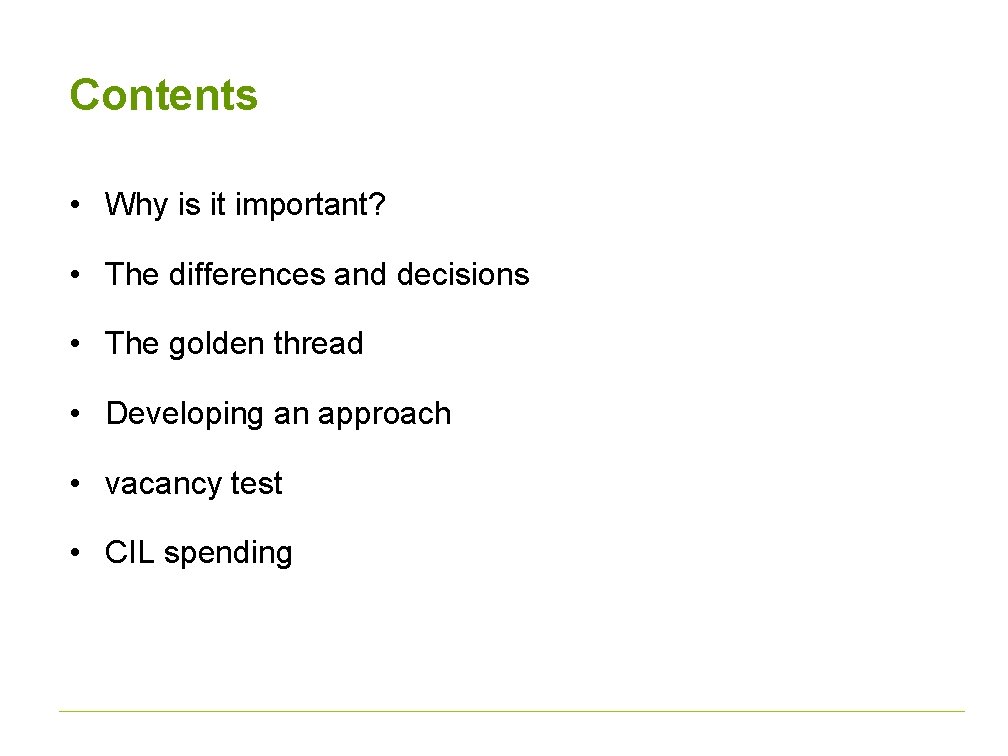
Contents • Why is it important? • The differences and decisions • The golden thread • Developing an approach • vacancy test • CIL spending
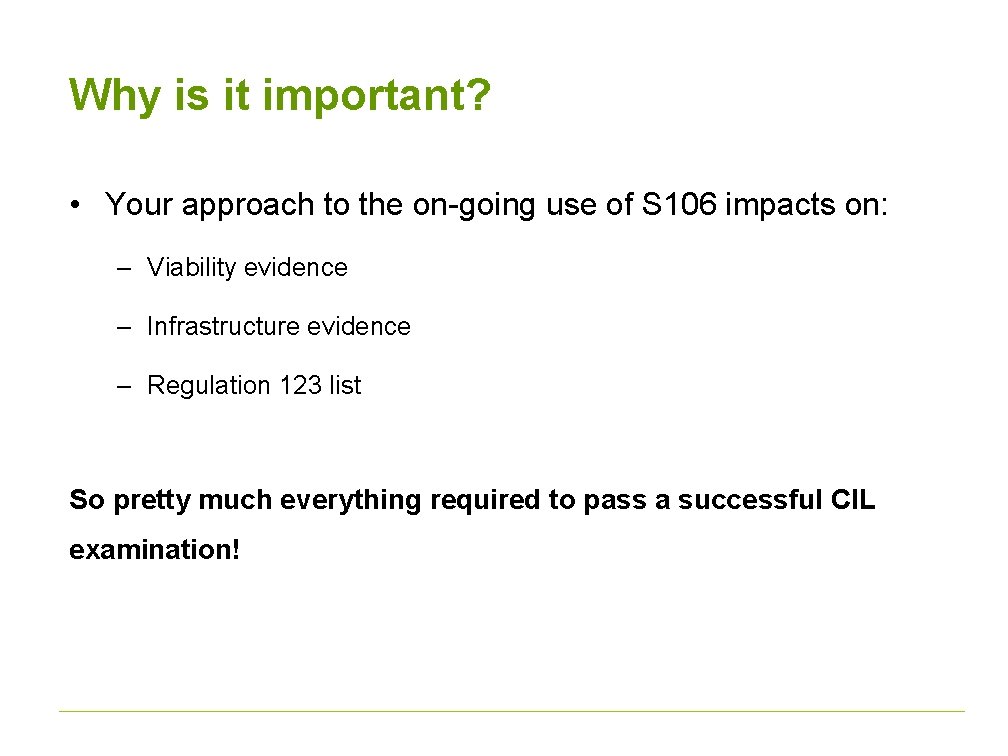
Why is it important? • Your approach to the on-going use of S 106 impacts on: – Viability evidence – Infrastructure evidence – Regulation 123 list So pretty much everything required to pass a successful CIL examination!
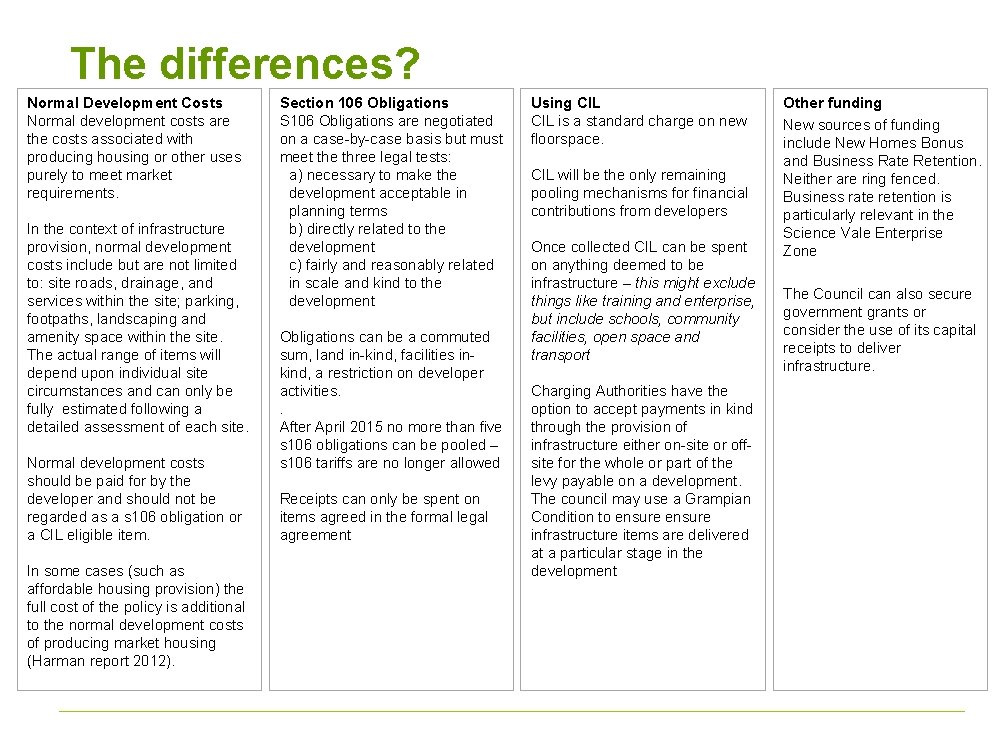
The differences? Normal Development Costs Normal development costs are the costs associated with producing housing or other uses purely to meet market requirements. In the context of infrastructure provision, normal development costs include but are not limited to: site roads, drainage, and services within the site; parking, footpaths, landscaping and amenity space within the site. The actual range of items will depend upon individual site circumstances and can only be fully estimated following a detailed assessment of each site. Normal development costs should be paid for by the developer and should not be regarded as a s 106 obligation or a CIL eligible item. In some cases (such as affordable housing provision) the full cost of the policy is additional to the normal development costs of producing market housing (Harman report 2012). Section 106 Obligations S 106 Obligations are negotiated on a case-by-case basis but must meet the three legal tests: a) necessary to make the development acceptable in planning terms b) directly related to the development c) fairly and reasonably related in scale and kind to the development Obligations can be a commuted sum, land in-kind, facilities inkind, a restriction on developer activities. . After April 2015 no more than five s 106 obligations can be pooled – s 106 tariffs are no longer allowed Receipts can only be spent on items agreed in the formal legal agreement Using CIL is a standard charge on new floorspace. CIL will be the only remaining pooling mechanisms for financial contributions from developers Once collected CIL can be spent on anything deemed to be infrastructure – this might exclude things like training and enterprise, but include schools, community facilities, open space and transport Charging Authorities have the option to accept payments in kind through the provision of infrastructure either on-site or offsite for the whole or part of the levy payable on a development. The council may use a Grampian Condition to ensure infrastructure items are delivered at a particular stage in the development Other funding New sources of funding include New Homes Bonus and Business Rate Retention. Neither are ring fenced. Business rate retention is particularly relevant in the Science Vale Enterprise Zone The Council can also secure government grants or consider the use of its capital receipts to deliver infrastructure.
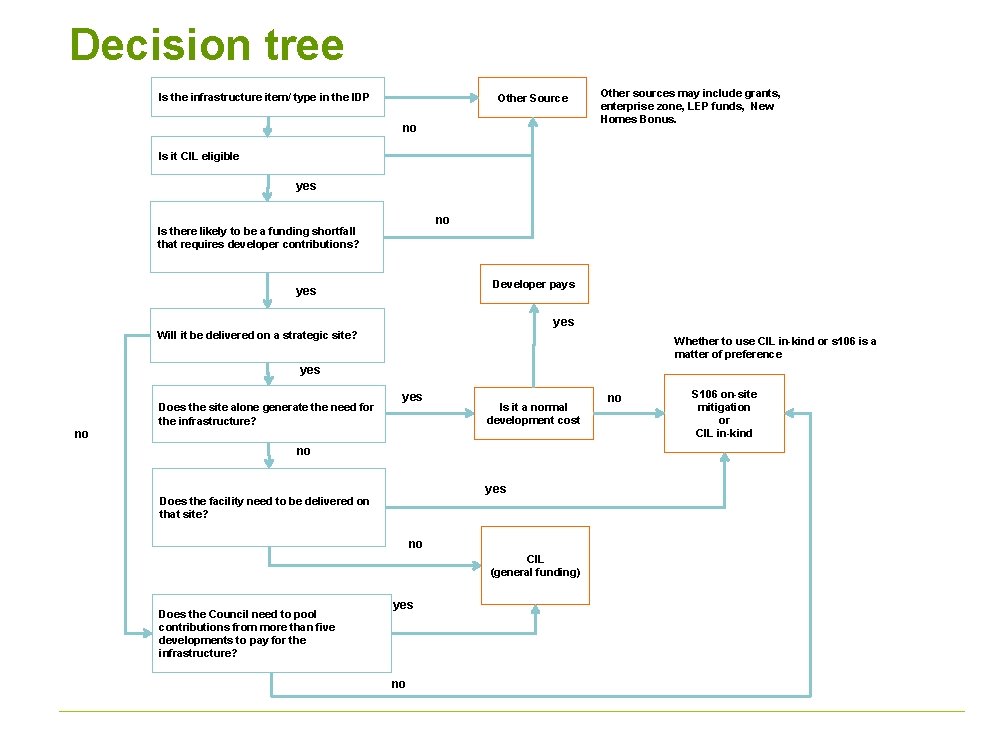
Decision tree Is the infrastructure item/ type in the IDP Other Source no Other sources may include grants, enterprise zone, LEP funds, New Homes Bonus. Is it CIL eligible yes no Is there likely to be a funding shortfall that requires developer contributions? Developer pays yes Will it be delivered on a strategic site? Whether to use CIL in-kind or s 106 is a matter of preference yes Does the site alone generate the need for the infrastructure? yes Is it a normal development cost no no yes Does the facility need to be delivered on that site? no CIL (general funding) Does the Council need to pool contributions from more than five developments to pay for the infrastructure? yes no no S 106 on-site mitigation or CIL in-kind
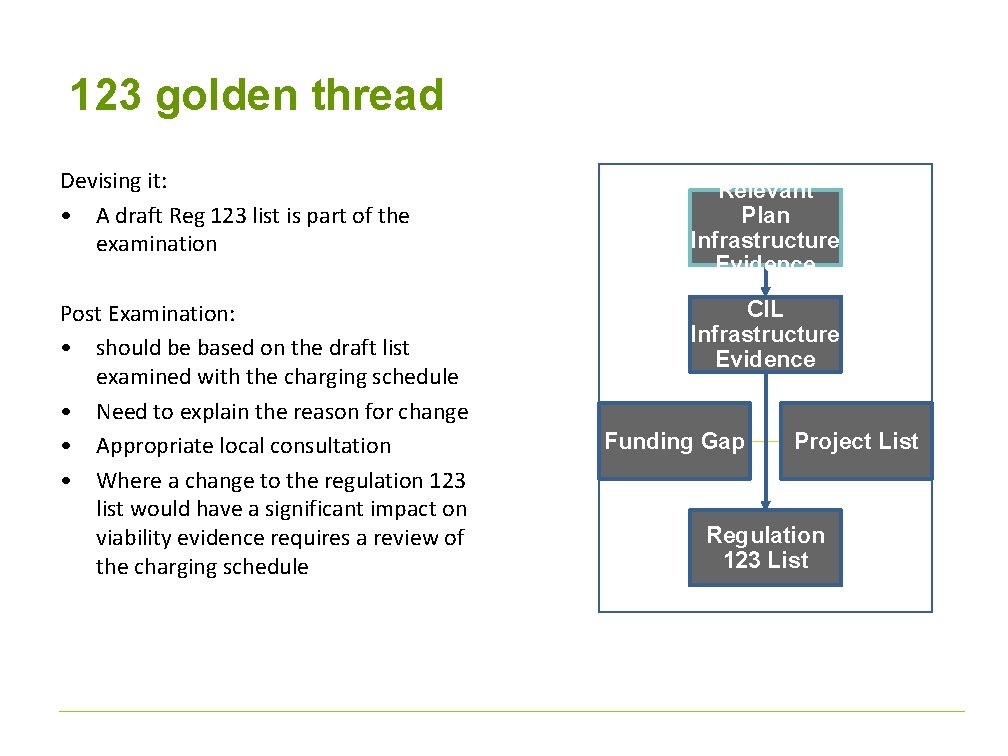
123 golden thread Devising it: • A draft Reg 123 list is part of the examination Post Examination: • should be based on the draft list examined with the charging schedule • Need to explain the reason for change • Appropriate local consultation • Where a change to the regulation 123 list would have a significant impact on viability evidence requires a review of the charging schedule Relevant Plan Infrastructure Evidence CIL Infrastructure Evidence Funding Gap Project List Regulation 123 List
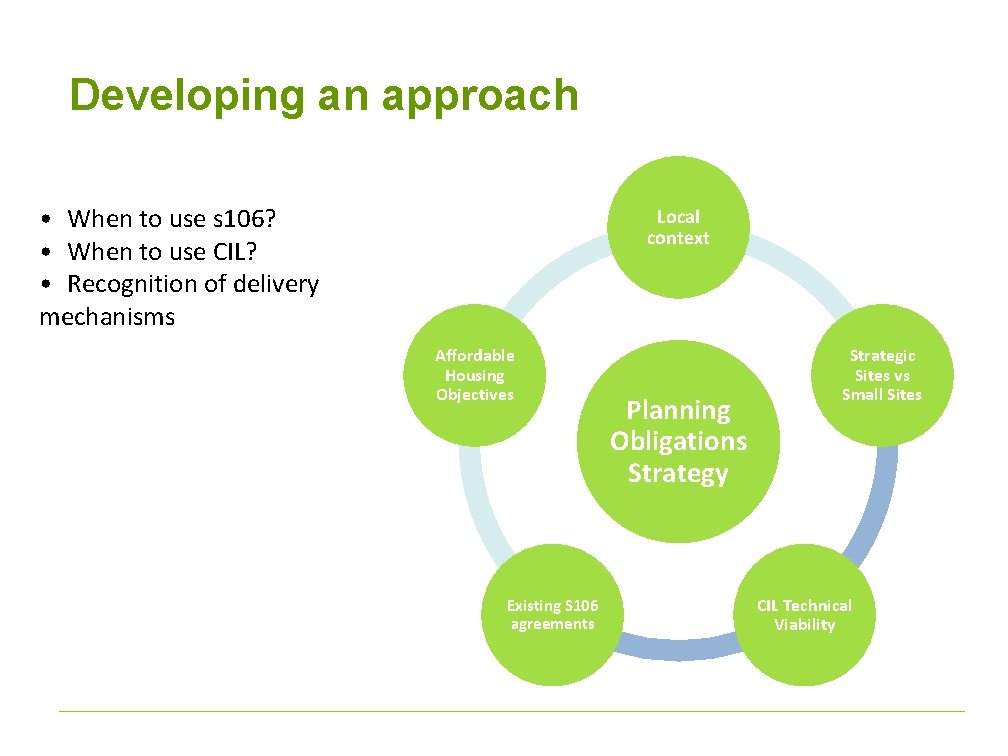
Developing an approach • When to use s 106? • When to use CIL? • Recognition of delivery mechanisms Local context Affordable Housing Objectives Existing S 106 agreements Planning Obligations Strategy Strategic Sites vs Small Sites CIL Technical Viability
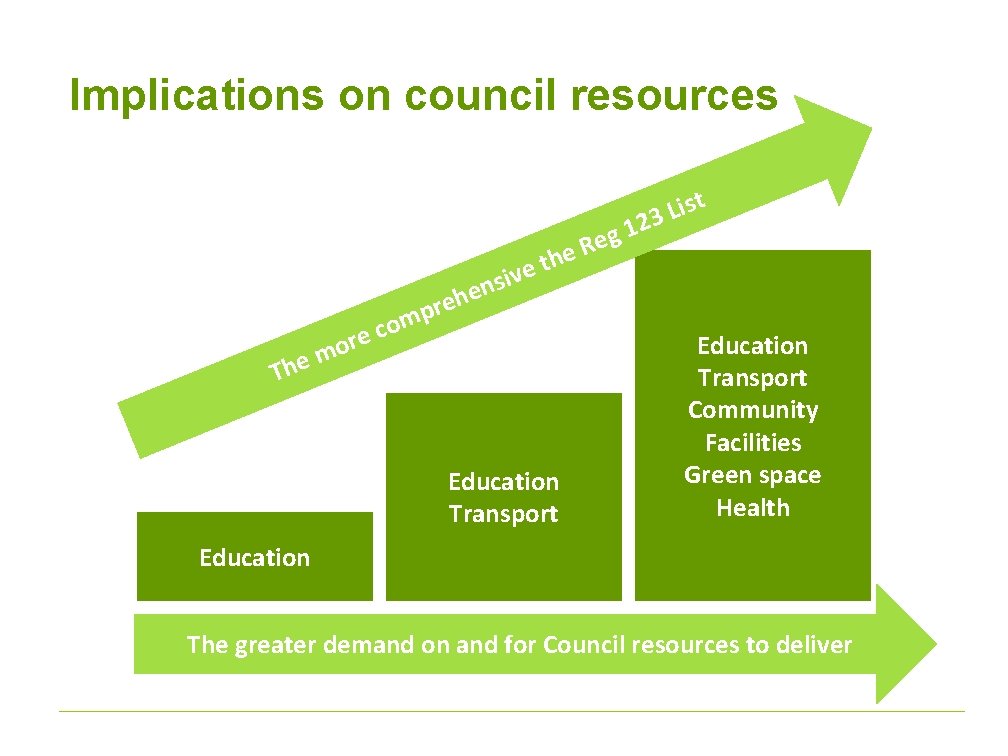
Implications on council resources 1 g e e. R h t e iv s n he e r mp o c e or m e h T Education Transport st i L 23 Education Transport Community Facilities Green space Health Education The greater demand on and for Council resources to deliver
Community Infrastructure Levy LA Experience
What are other LA’s doing? • Reviewing existing planning permissions, S 106 agreements • Having discussions with developers • Considering the financial benefits of switching to CIL (in theory there should be no difference. . ) • The most significant technical challenge in the regs
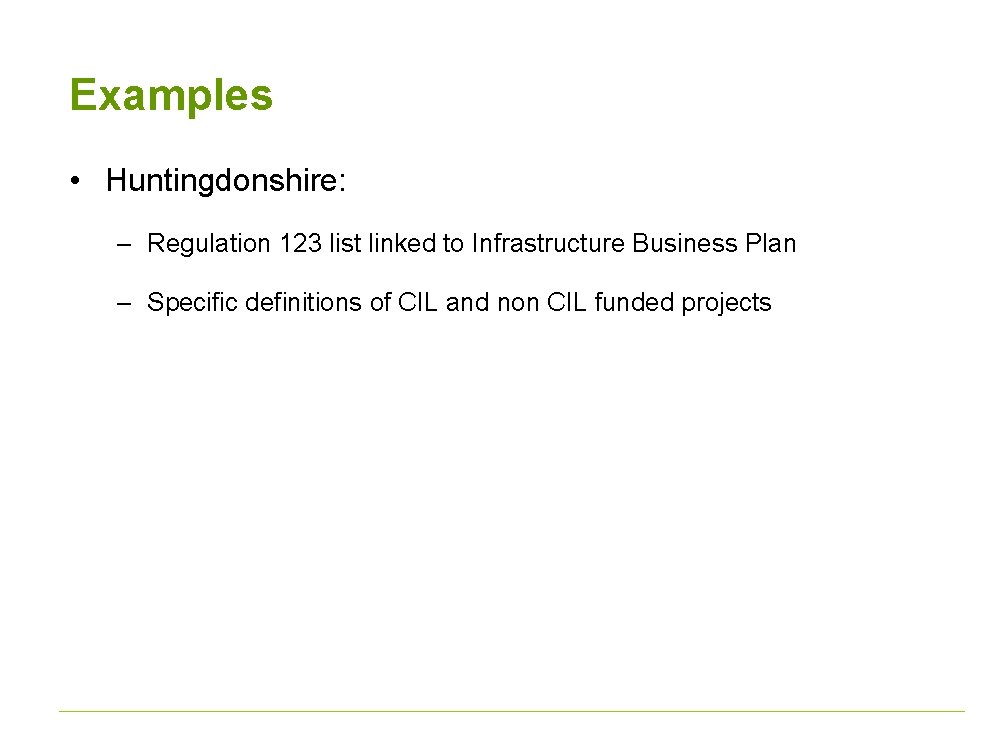
Examples • Huntingdonshire: – Regulation 123 list linked to Infrastructure Business Plan – Specific definitions of CIL and non CIL funded projects
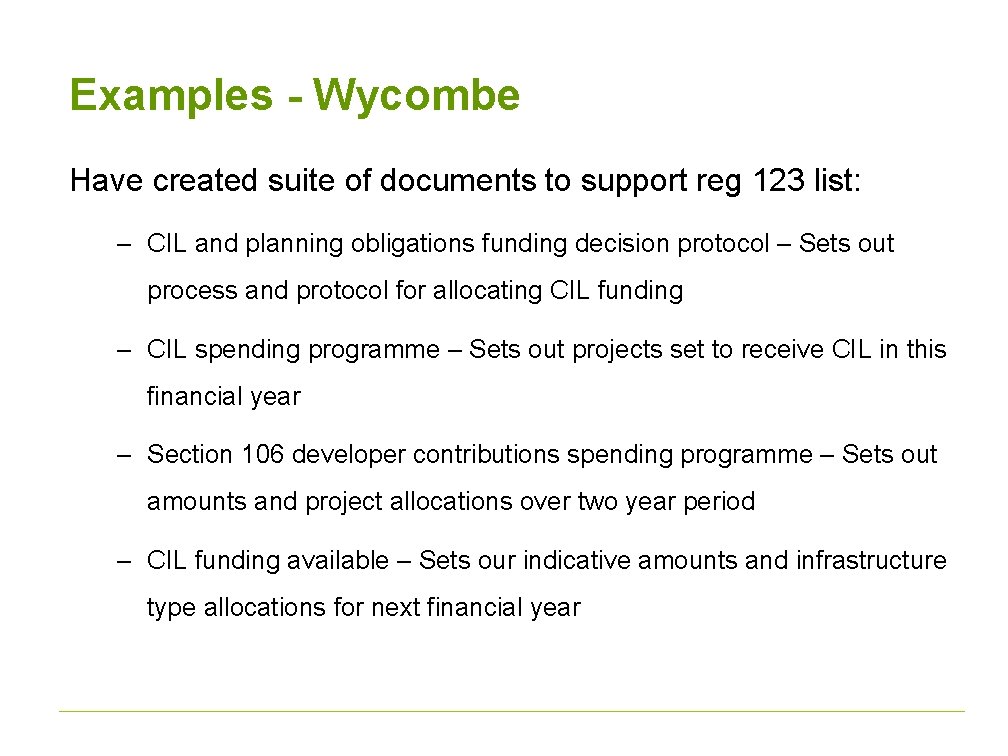
Examples - Wycombe Have created suite of documents to support reg 123 list: – CIL and planning obligations funding decision protocol – Sets out process and protocol for allocating CIL funding – CIL spending programme – Sets out projects set to receive CIL in this financial year – Section 106 developer contributions spending programme – Sets out amounts and project allocations over two year period – CIL funding available – Sets our indicative amounts and infrastructure type allocations for next financial year
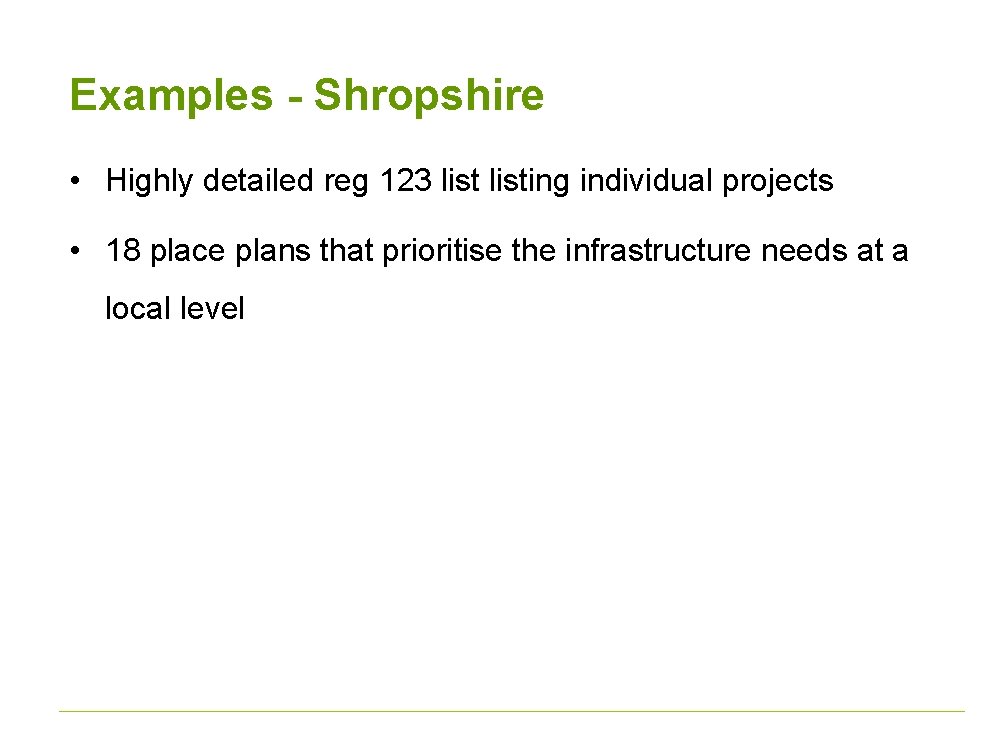
Examples - Shropshire • Highly detailed reg 123 listing individual projects • 18 place plans that prioritise the infrastructure needs at a local level
Questions www. CILknowledge. com