CLS 223 Reem Alkhamis Email ralkhamisksu edu sa
- Slides: 11
CLS 223 Reem Alkhamis Email: ralkhamis@ksu. edu. sa 3 rd floor/ office # 113
Lecture #1 • Introduction to Pathology • Cellular response to stress
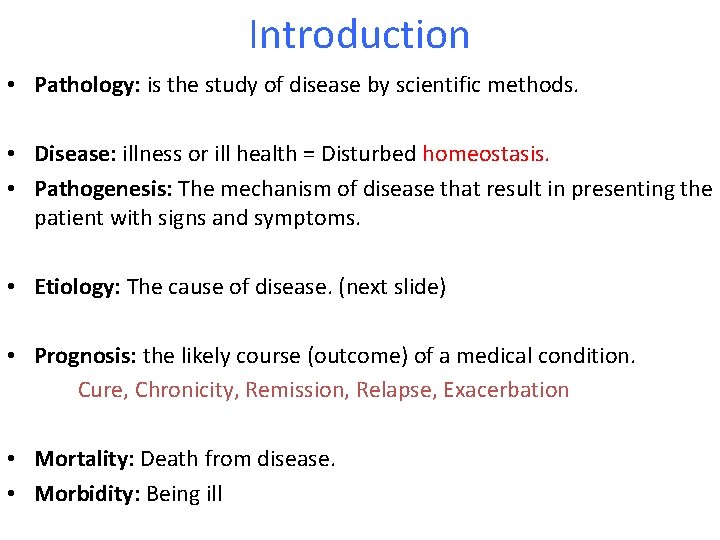
Introduction • Pathology: is the study of disease by scientific methods. • Disease: illness or ill health = Disturbed homeostasis. • Pathogenesis: The mechanism of disease that result in presenting the patient with signs and symptoms. • Etiology: The cause of disease. (next slide) • Prognosis: the likely course (outcome) of a medical condition. Cure, Chronicity, Remission, Relapse, Exacerbation • Mortality: Death from disease. • Morbidity: Being ill
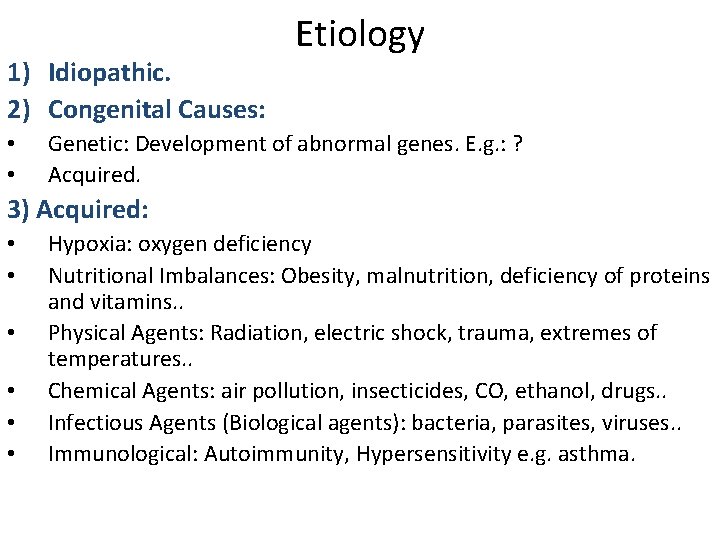
1) Idiopathic. 2) Congenital Causes: • • Etiology Genetic: Development of abnormal genes. E. g. : ? Acquired. 3) Acquired: • • • Hypoxia: oxygen deficiency Nutritional Imbalances: Obesity, malnutrition, deficiency of proteins and vitamins. . Physical Agents: Radiation, electric shock, trauma, extremes of temperatures. . Chemical Agents: air pollution, insecticides, CO, ethanol, drugs. . Infectious Agents (Biological agents): bacteria, parasites, viruses. . Immunological: Autoimmunity, Hypersensitivity e. g. asthma.
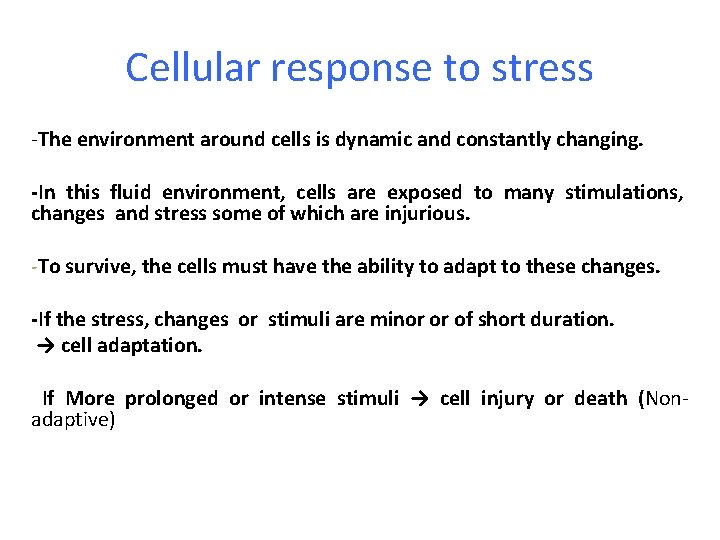
Cellular response to stress -The environment around cells is dynamic and constantly changing. -In this fluid environment, cells are exposed to many stimulations, changes and stress some of which are injurious. -To survive, the cells must have the ability to adapt to these changes. -If the stress, changes or stimuli are minor or of short duration. → cell adaptation. If More prolonged or intense stimuli → cell injury or death (Nonadaptive)
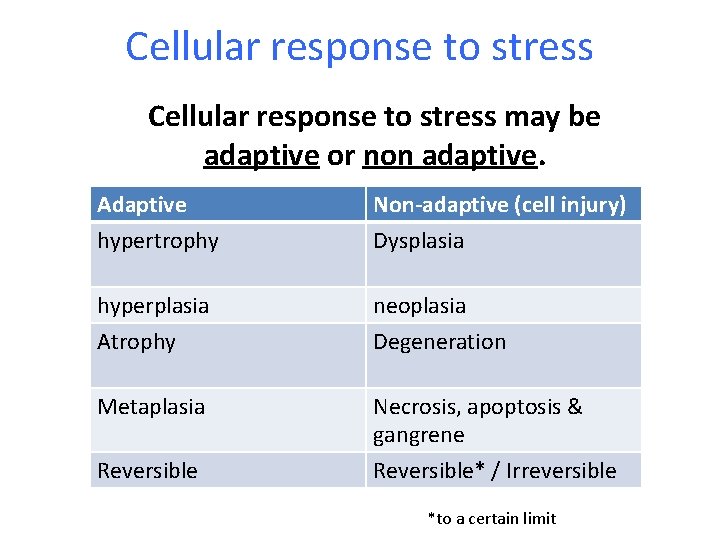
Cellular response to stress may be adaptive or non adaptive. Adaptive hypertrophy Non-adaptive (cell injury) Dysplasia hyperplasia neoplasia Atrophy Degeneration Metaplasia Necrosis, apoptosis & gangrene Reversible* / Irreversible Reversible *to a certain limit
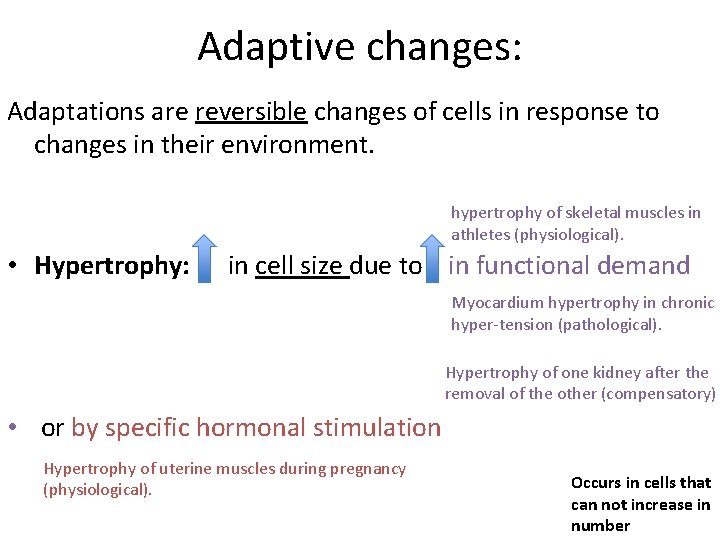
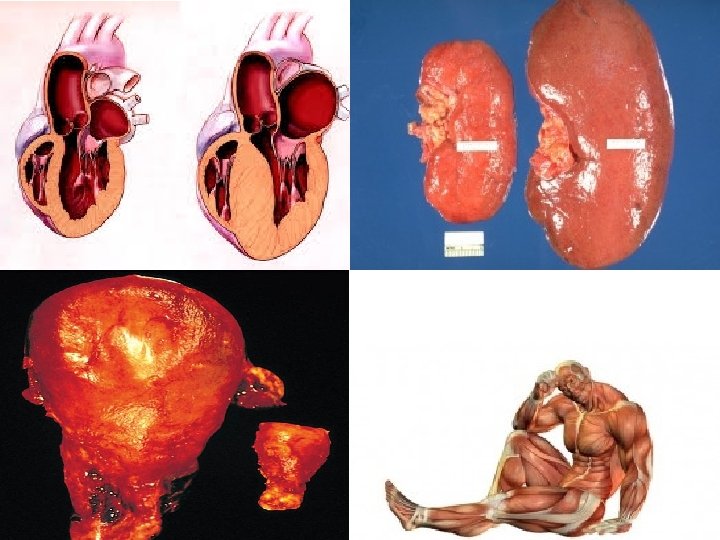
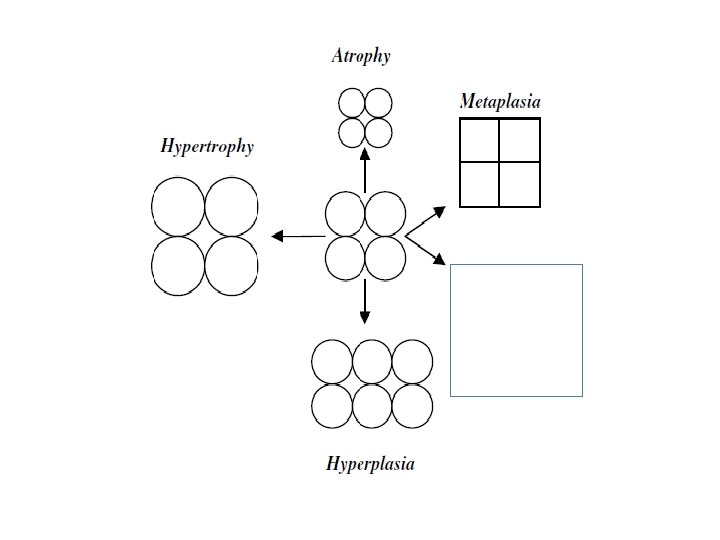
Adaptive changes: Adaptations are reversible changes of cells in response to changes in their environment. hypertrophy of skeletal muscles in athletes (physiological). • Hypertrophy: in cell size due to in functional demand Myocardium hypertrophy in chronic hyper-tension (pathological). Hypertrophy of one kidney after the removal of the other (compensatory) • or by specific hormonal stimulation Hypertrophy of uterine muscles during pregnancy (physiological). Occurs in cells that can not increase in number
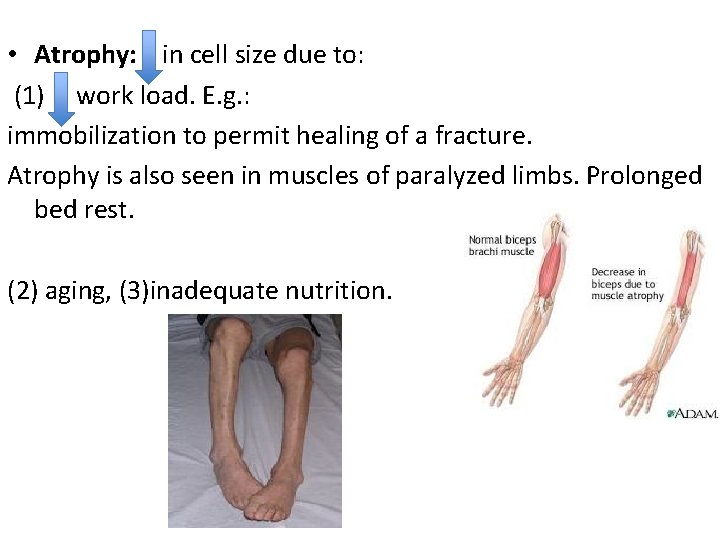
• Atrophy: in cell size due to: (1) work load. E. g. : immobilization to permit healing of a fracture. Atrophy is also seen in muscles of paralyzed limbs. Prolonged bed rest. (2) aging, (3)inadequate nutrition.
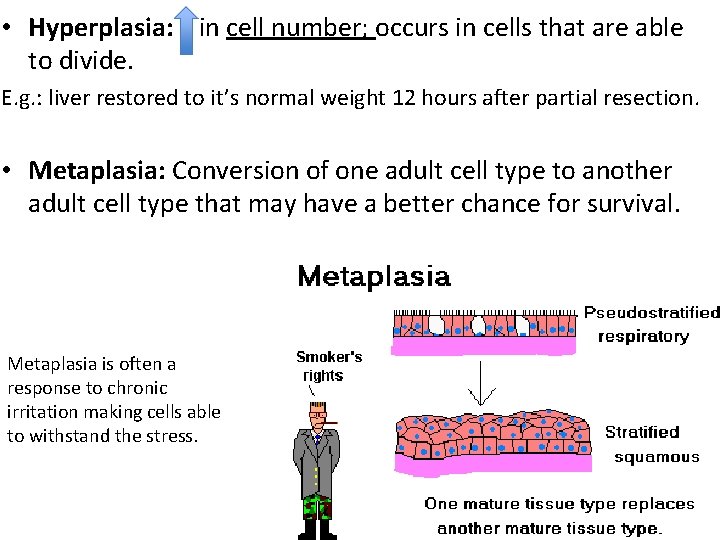
• Hyperplasia: in cell number; occurs in cells that are able to divide. E. g. : liver restored to it’s normal weight 12 hours after partial resection. • Metaplasia: Conversion of one adult cell type to another adult cell type that may have a better chance for survival. Metaplasia is often a response to chronic irritation making cells able to withstand the stress.