Chapter I THE LIVING WORLD Characteristics of Living



- Slides: 9
Chapter –I THE LIVING WORLD
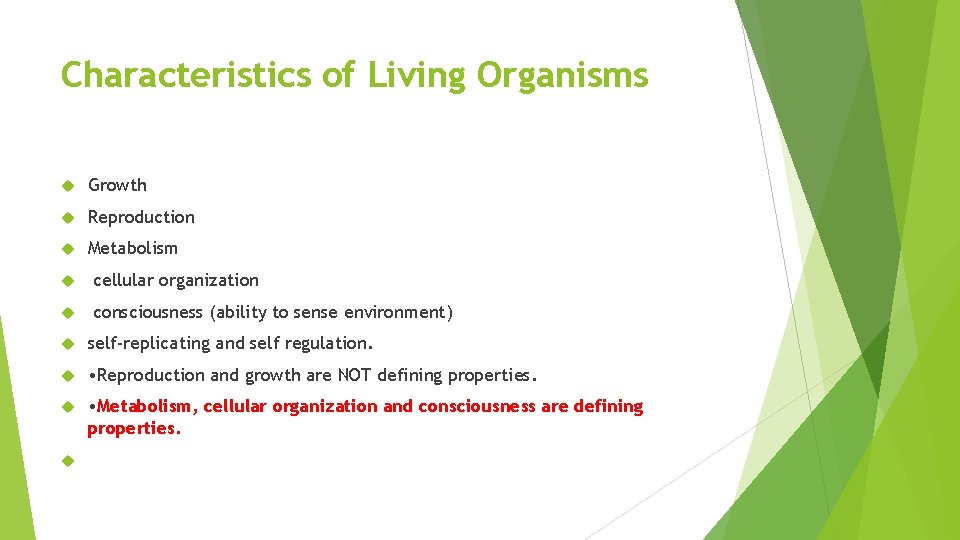
Characteristics of Living Organisms Growth Reproduction Metabolism cellular organization consciousness (ability to sense environment) self-replicating and self regulation. • Reproduction and growth are NOT defining properties. • Metabolism, cellular organization and consciousness are defining properties.
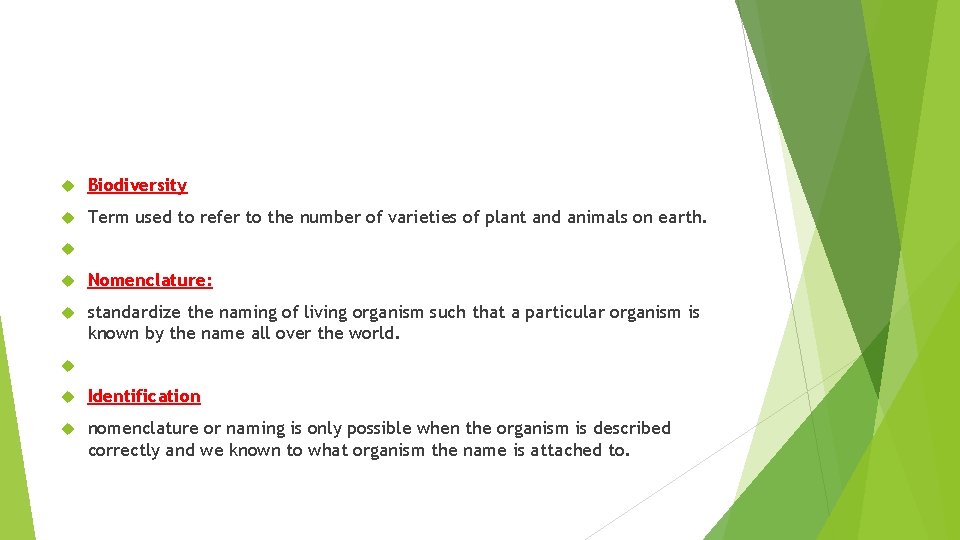
Biodiversity Term used to refer to the number of varieties of plant and animals on earth. Nomenclature: standardize the naming of living organism such that a particular organism is known by the name all over the world. Identification nomenclature or naming is only possible when the organism is described correctly and we known to what organism the name is attached to.
Need for classification: To organize the vast number of plants and animals into categories that could be named, remembered, studied and understood. Taxonomy: Study of principles and procedures of classification. Systematics It deals with classification of organisms based on their diversities and relationships among them. Term was proposed by Carolus Linnaeus who wrote ‘Systema Naturae’.
Binomial Nomenclature Given by Carolus Linnaeus. Each scientific name has two components Generic name + Specific epithet. ICBN: International Code of Botanical Nomenclature (for giving scientific name to plants. ) ICZN: International Code of Zoological Nomenclature (for giving scientific name to animals. )
Rules for Nomenclature • Latinized names are used, written in italics • First word represents the genus, second word is species name. • Printed in italics; if handwritten then underline separately. • First word starts with capital letter while species name written in small letter. Eg: Mangifera indica (Mango tree)
Taxonomic Hierarchy: Arrangement of various steps (categories or taxa Species → Genus → Family → Order → Class → Phylum (for animals) /Division (for plants) Kingdom→
Taxonomical aids: Herbarium: Storehouse of dried, pressed and preserved plant specimen on sheets. Botanical Garden: Collection of living plants for reference. Zoological Park (Places where wild animals are kept in protected environment. ) •
Keys (Used for identification of plant and animals on the basis of similarities and dissimilarities. ) • Fauna: (Index to animal species found in a particular area) • Flora (Index to plant species found in a particular area. ) • Manuals (Provide information for identification of name of species in an area. ) • Monograph (Contain information on one taxon. )