Chapter 7 JustinTime and Lean Systems Operations Management
- Slides: 20
Chapter 7 – Just-in-Time and Lean Systems Operations Management by R. Dan Reid & Nada R. Sander
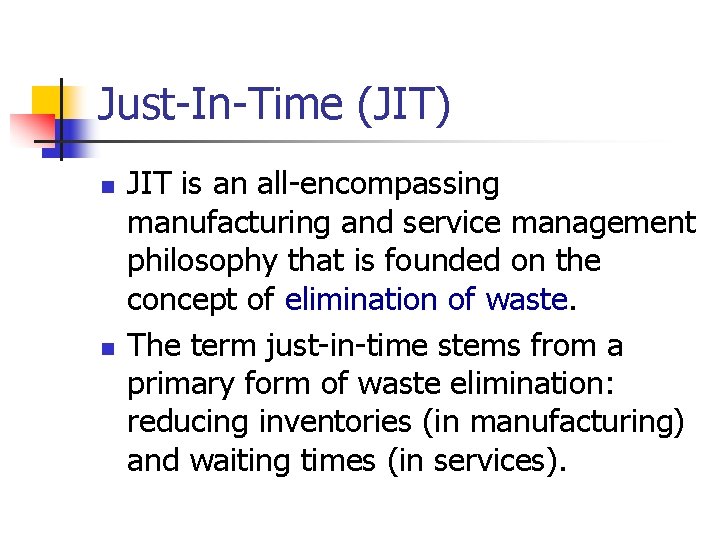
Just-In-Time (JIT) n n JIT is an all-encompassing manufacturing and service management philosophy that is founded on the concept of elimination of waste. The term just-in-time stems from a primary form of waste elimination: reducing inventories (in manufacturing) and waiting times (in services).
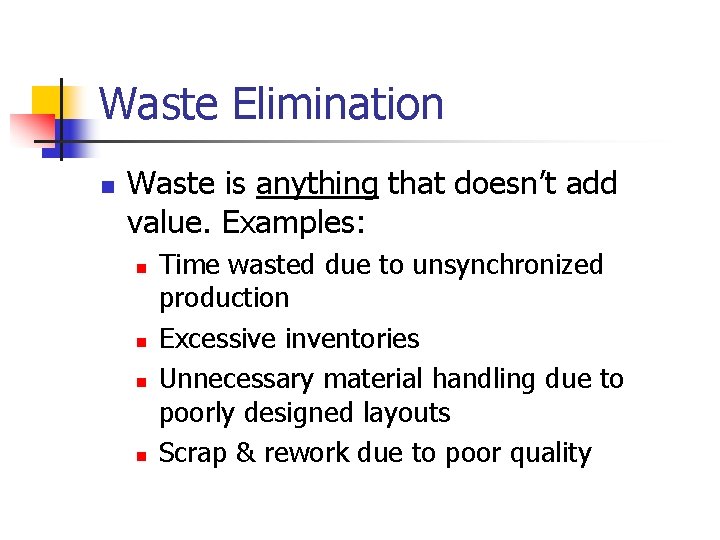
Waste Elimination n Waste is anything that doesn’t add value. Examples: n n Time wasted due to unsynchronized production Excessive inventories Unnecessary material handling due to poorly designed layouts Scrap & rework due to poor quality
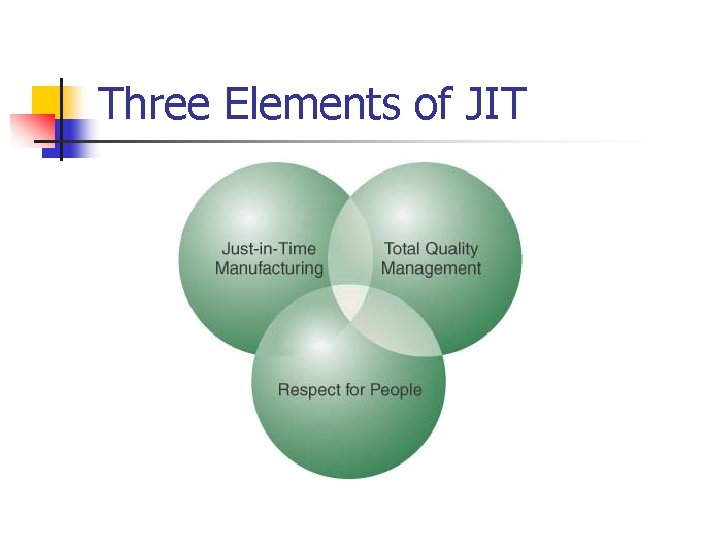
Three Elements of JIT
The Philosophy of JIT n n n n Often termed “Lean Systems” All waste must be eliminated Broad view that entire organization must focus on serving customers JIT is built on simplicity- the simpler the better Focuses on improving every operation- Kaizen Install simple visible control systems Flexibility to produce different models/features
Elements of JIT Manufacturing n n n Inventory reduction exposes problems Kanbans & pull production systems Small lots & quick setups Uniform plant loading Flexible resources Efficient facility layouts
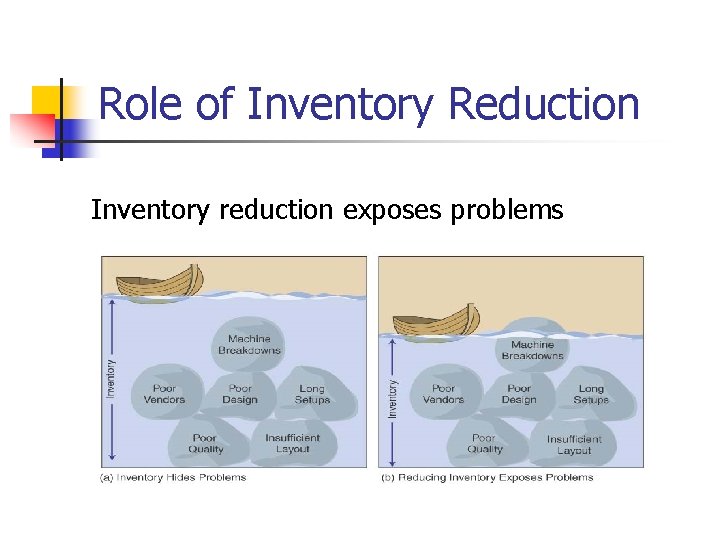
Role of Inventory Reduction Inventory reduction exposes problems
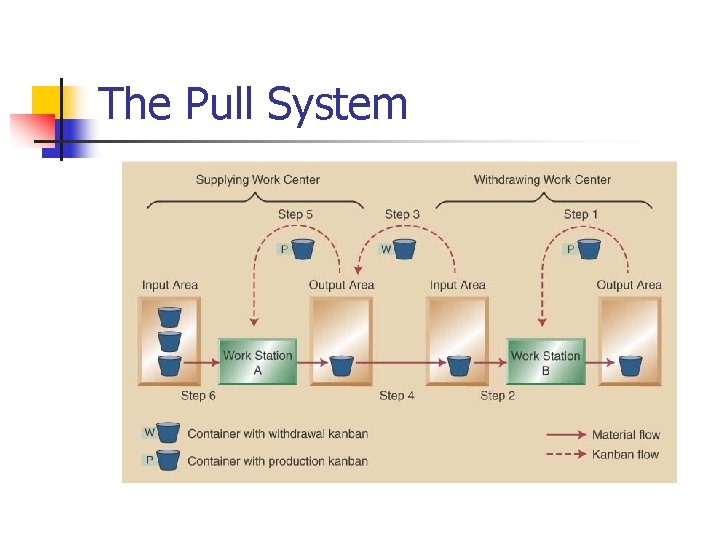
The Pull System
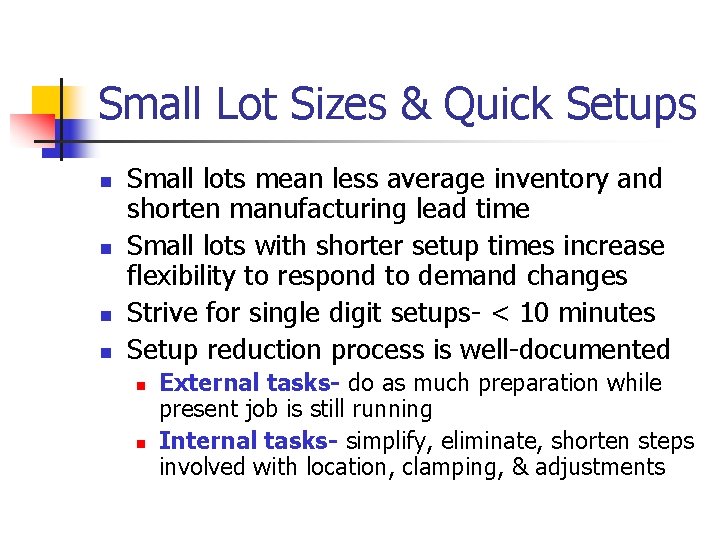
Small Lot Sizes & Quick Setups n n Small lots mean less average inventory and shorten manufacturing lead time Small lots with shorter setup times increase flexibility to respond to demand changes Strive for single digit setups- < 10 minutes Setup reduction process is well-documented n n External tasks- do as much preparation while present job is still running Internal tasks- simplify, eliminate, shorten steps involved with location, clamping, & adjustments
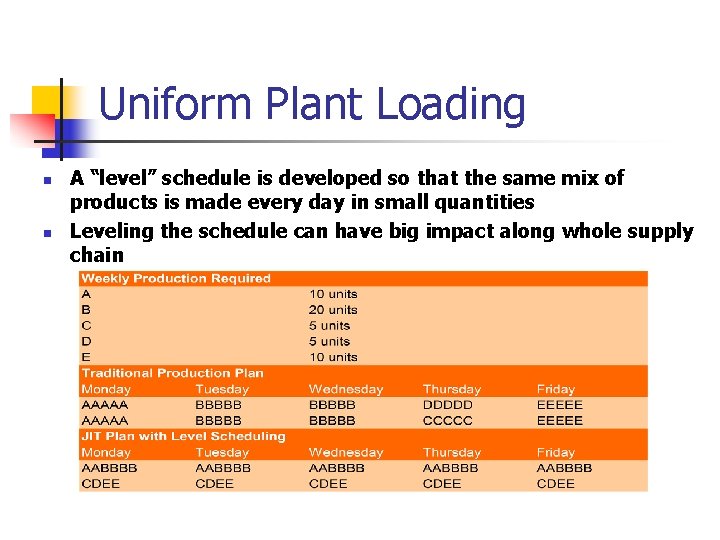
Uniform Plant Loading n n A “level” schedule is developed so that the same mix of products is made every day in small quantities Leveling the schedule can have big impact along whole supply chain
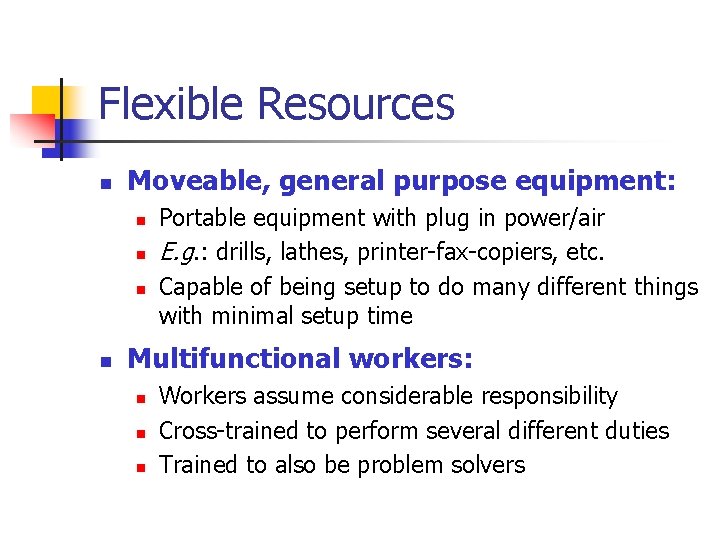
Flexible Resources n Moveable, general purpose equipment: n n Portable equipment with plug in power/air E. g. : drills, lathes, printer-fax-copiers, etc. Capable of being setup to do many different things with minimal setup time Multifunctional workers: n n n Workers assume considerable responsibility Cross-trained to perform several different duties Trained to also be problem solvers
Effective Facility Layouts n n n Workstations in close physical proximity to reduce transport & movement Streamlined flow of material Often use: n n Cellular Manufacturing (instead of process focus) U-shaped lines: (allows material handler to quickly drop off materials & pick up finished work)
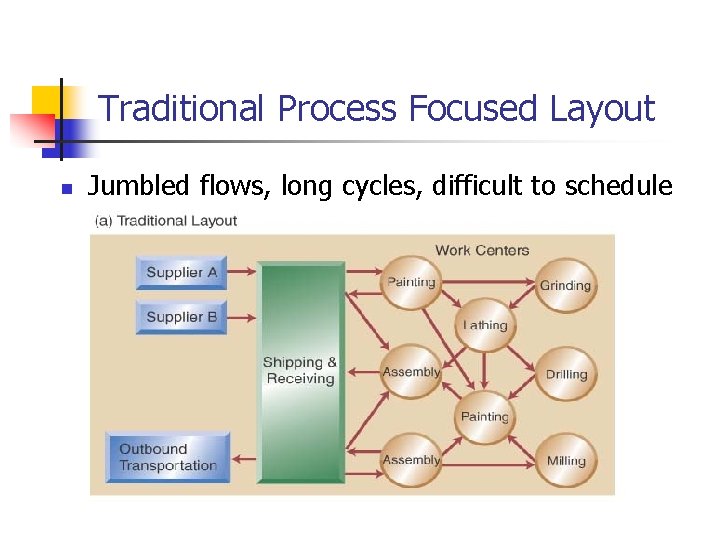
Traditional Process Focused Layout n Jumbled flows, long cycles, difficult to schedule
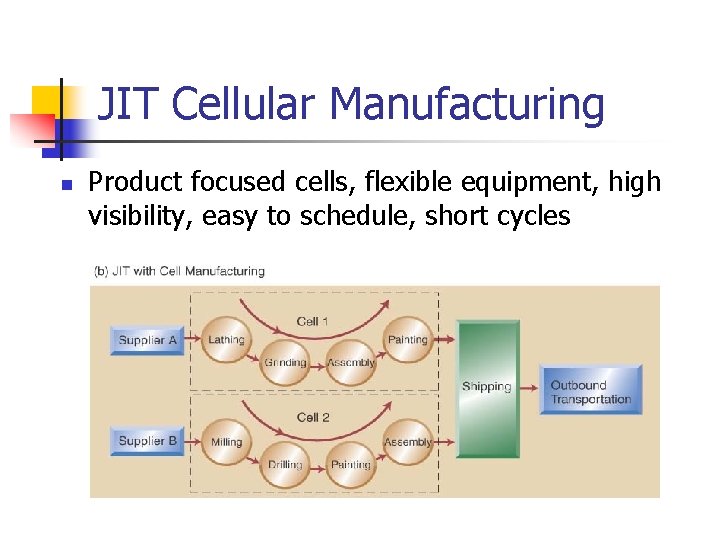
JIT Cellular Manufacturing n Product focused cells, flexible equipment, high visibility, easy to schedule, short cycles
JIT and TQM- Partners n n n n Build quality into all processes Focus on continuous improvement - Kaizen Quality at the source- sequential inspection Jidoka (authority to stop line) Poka-yoke (fail-safe all processes) Preventive maintenance- scheduled Work environment- everything in its place, a place for everything
Respect for People: The Role of Employees n n n n n Genuine and meaningful respect for associates Willingness to develop cross-functional skills Actively engage in problem-solving (quality circles) Everyone is empowered Everyone is responsible for quality: understand both internal and external customer needs Associates gather performance data Team approaches used for problem-solving Decisions made from bottom-up Everyone is responsible for preventive maintenance
The Role of Management n n n Responsible for culture of mutual trust Serve as coaches & facilitators Support culture with appropriate incentive system including non-monetary Responsible for developing workers Provide multi-functional training Facilitate teamwork
Supplier Relationships and JIT n Use single-source suppliers when possible n Build long-term relationships n Work together to certify processes n Co-locate facilities to reduce transport if possible n Stabilize delivery schedules n Share cost & other information n Early involvement during new product designs
Benefits of JIT n n n n Smaller inventories Shorter lead times Improved quality Reduced space requirements Lower production costs Increased productivity Greater flexibility
JIT in Services n n n Most of the JIT concepts apply equally to Service companies Cellular layouts, product focused, & flexible employees shorten response times Service inventory, “paperwork”, should be eliminated, simplified, examined for “waste” “Fail-safe” all processes from Orders-Payment Team based organizations