Chapter 7 Energy Its Forms What is Energy
- Slides: 20
Chapter 7 Energy & Its Forms
What is Energy n Energy: the ability to do work n Energy is transferred by a force over a distance n Also measured in Joules
Types of Energy n Kinetic Energy: “energy of motion” n Potential Energy: “stored energy”
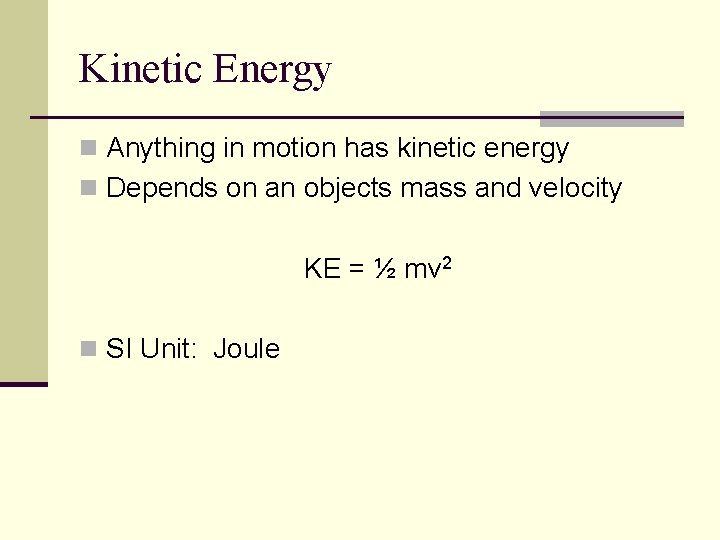
Kinetic Energy n Anything in motion has kinetic energy n Depends on an objects mass and velocity KE = ½ mv 2 n SI Unit: Joule
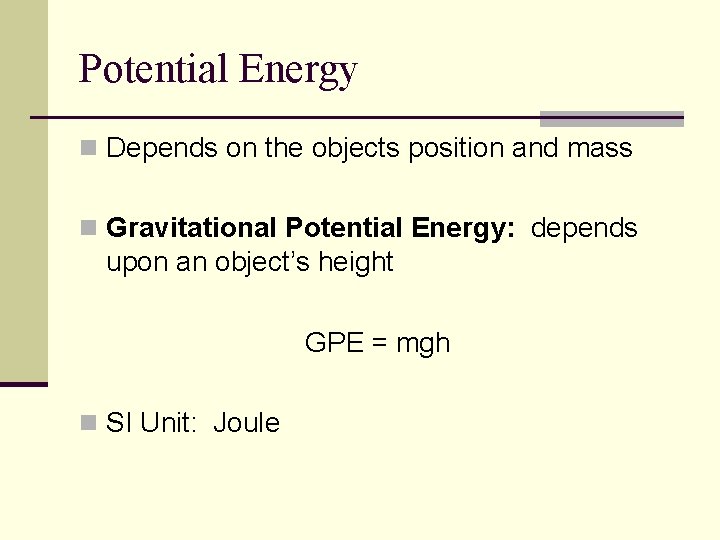
Potential Energy n Depends on the objects position and mass n Gravitational Potential Energy: depends upon an object’s height GPE = mgh n SI Unit: Joule
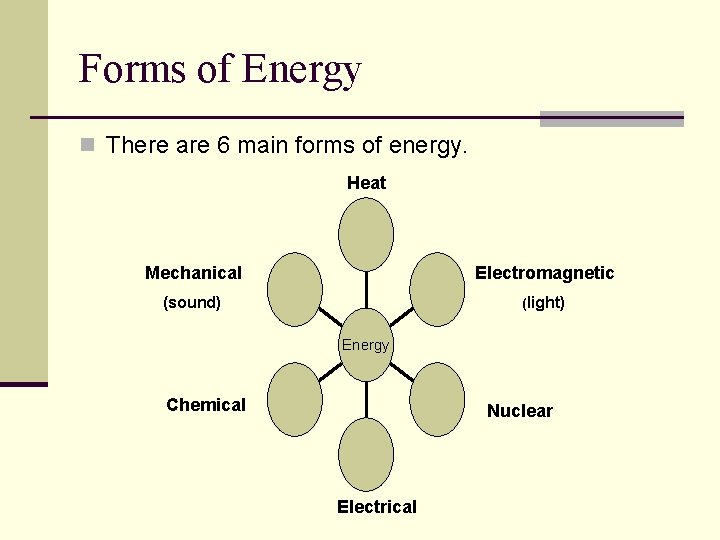
Forms of Energy n There are 6 main forms of energy. Heat Mechanical Electromagnetic (sound) (light) Energy Chemical Nuclear Electrical
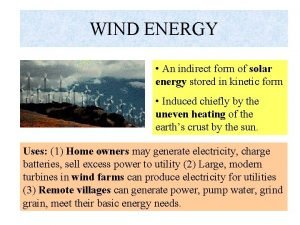
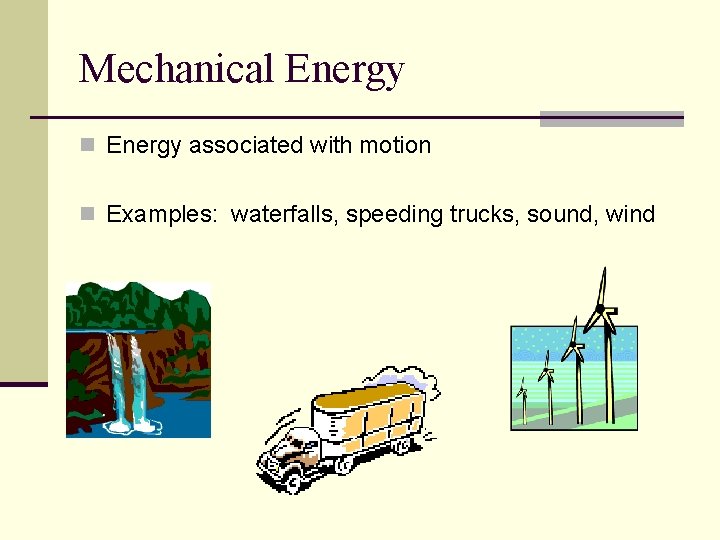
Mechanical Energy n Energy associated with motion n Examples: waterfalls, speeding trucks, sound, wind
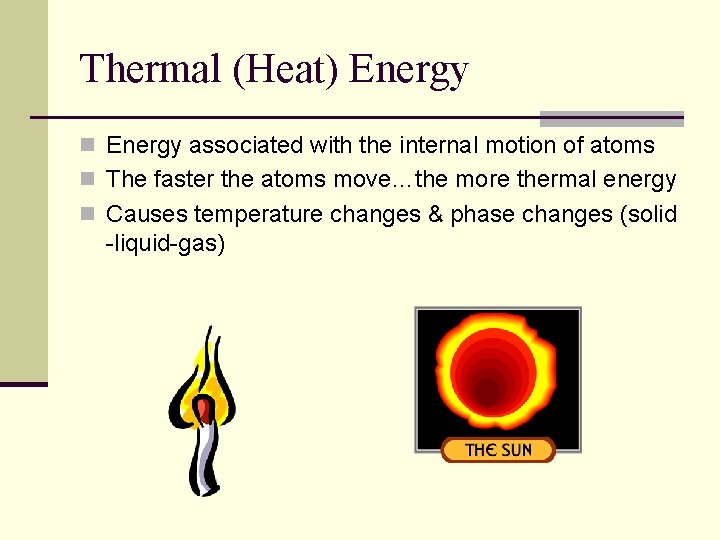
Thermal (Heat) Energy n Energy associated with the internal motion of atoms n The faster the atoms move…the more thermal energy n Causes temperature changes & phase changes (solid -liquid-gas)
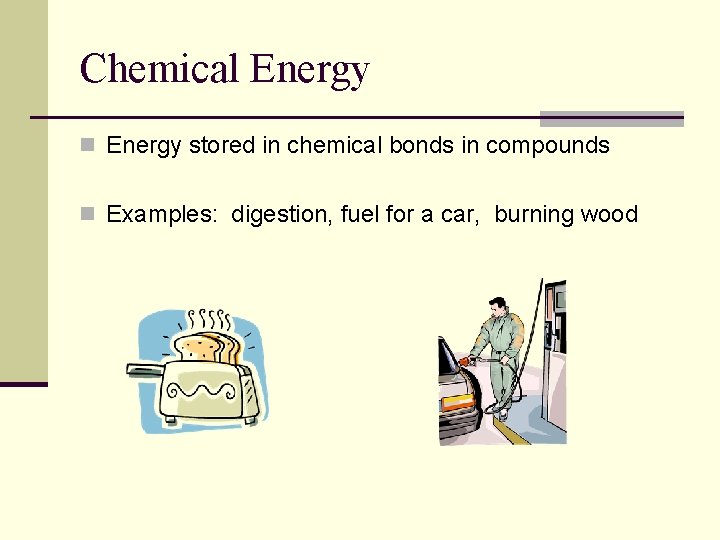
Chemical Energy n Energy stored in chemical bonds in compounds n Examples: digestion, fuel for a car, burning wood
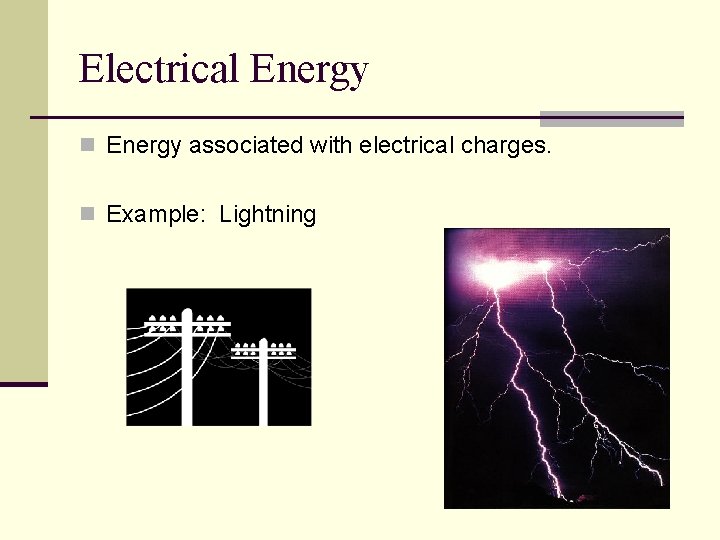
Electrical Energy n Energy associated with electrical charges. n Example: Lightning
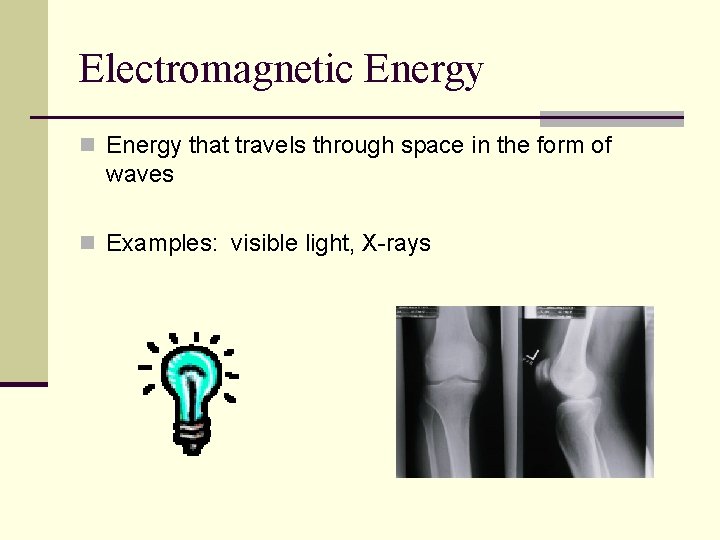
Electromagnetic Energy n Energy that travels through space in the form of waves n Examples: visible light, X-rays
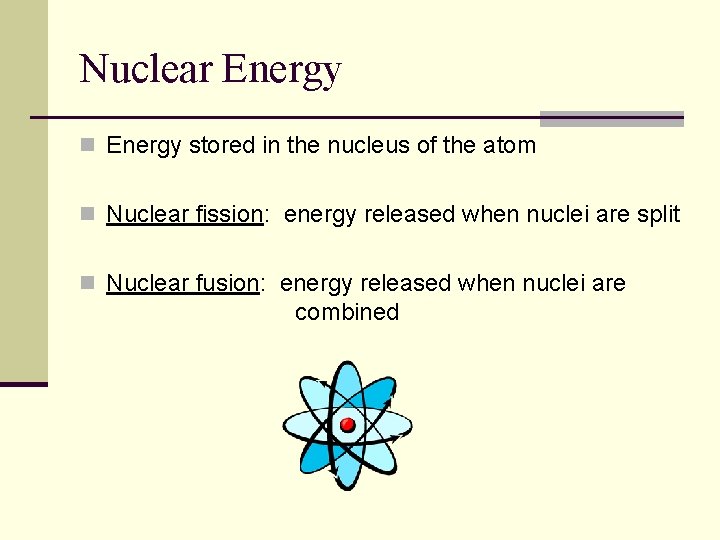
Nuclear Energy n Energy stored in the nucleus of the atom n Nuclear fission: energy released when nuclei are split n Nuclear fusion: energy released when nuclei are combined
Energy Conversion & Conservation
Law of Conservation of Energy n States that: n Energy cannot be created or destroyed n Energy can only be converted from one form to another
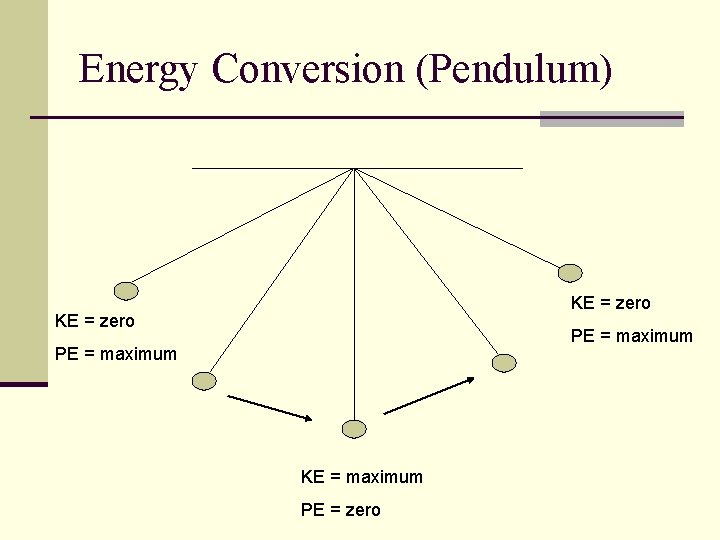
Energy Conversion (Pendulum) KE = zero PE = maximum KE = maximum PE = zero
Energy & Mass n Albert Einstein discovered the relationship between energy and mass in 1905. n The equation E = mc 2 shows that mass and energy can be converted into each other n c= speed of light (3 x 10⁸ m/s)
Energy Resources
Types of Energy Resources n Nonrenewable energy resources: n Exist in limited quantities n Once used, they cannot be replaced quickly or easily (only over millions of years) n Renewable energy resources: n Relatively unlimited n Can be replaced in a shorter period of time
Nonrenewable Energy Resources n Fossil Fuels: formed underground from the remains of once-living organisms n Relatively inexpensive, but create pollution & are limited in quantity n Examples: Oil, natural gas, coal
Renewable Energy Resources n Hydroelectric: energy from flowing water n Solar: usable energy from sunlight n Geothermal: energy from the heat beneath Earth’s surface (steam) n Other: Biomass, Hydrogen fuel cell, wind