Chapter 3 Evaluating a Companys External Environment n


- Slides: 40
Chapter 3 Evaluating a Company’s External Environment
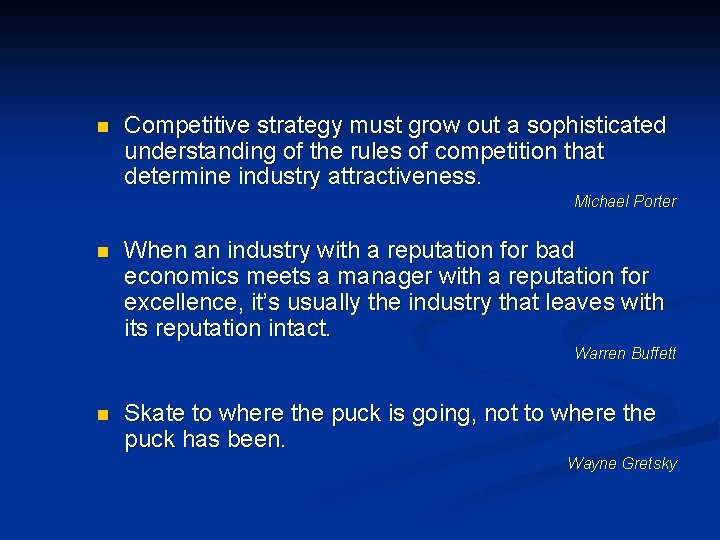
n Competitive strategy must grow out a sophisticated understanding of the rules of competition that determine industry attractiveness. Michael Porter n When an industry with a reputation for bad economics meets a manager with a reputation for excellence, it’s usually the industry that leaves with its reputation intact. Warren Buffett n Skate to where the puck is going, not to where the puck has been. Wayne Gretsky
External Analysis n It’s not recognizing that change will occur that is the problem, it’s figuring out: n what will happen? n how it will affect us? n what to do about it? Therefore, forecasting is necessary to predict direction and the effect of change
External Analysis n 1) Analyze the environment macroenvironment n industry environment n 3) Competitive analysis n 4) Identification of key success factors n
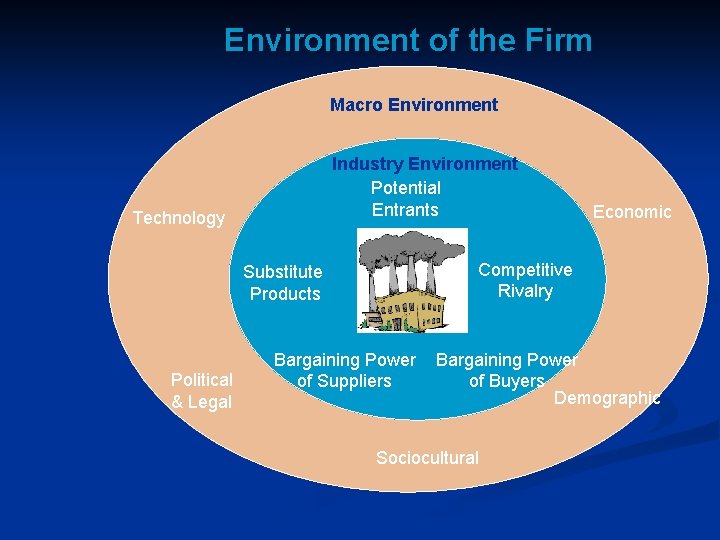
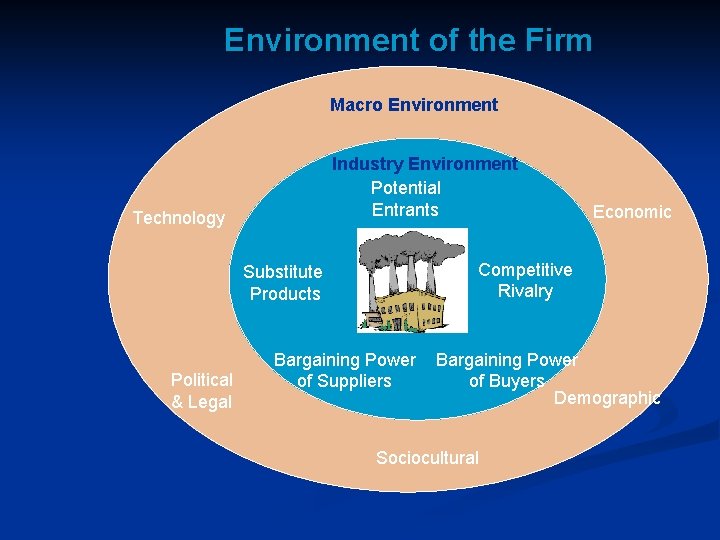
Environment of the Firm Macro Environment Industry Environment Potential Entrants Technology Competitive Rivalry Substitute Products Political & Legal Economic Bargaining Power of Suppliers Bargaining Power of Buyers Demographic Sociocultural
Macroenvironment 1) 2) 3) 4) 5) Technology Demographics Socioculture Demographic Economic
1) Technological Forces n Changes in technology that affect the workplace, and the products and services consumers expect n e. g. , Information technologies, entertainment technologies, product technologies.
2) Political/Legal Forces n Tax laws, minimum wages, environmental laws, labor laws, consumer protection, product liability, etc.
3) Sociocultural Forces n Attitudes of society towards work, careers, products, services and consumer activism. n e. g. , concern for quality of life, birth rates, woman in the work force, low-carb dieting, health consciousness, respect for intellectual property, desire for “green retailing”
4) Demographic Forces n Characteristics of the population n e. g. , age, race, gender, sexual orientation and social classes Domestically - falling birth rates, falling death rates, increase in minority populations n Internationally – birth rates are increasing in some of the poorest (and most underserved) populations of the world. n
5) Economic Forces n General health/wellbeing of the local, regional, national or global economy. n e. g. , Interest rates, unemployment rates, consumer spending, confidence and savings, energy costs, personal disposable income, inflation rates, housing costs
Macroenvironment Firms can not influence them, but they can have a significant influence on the firm, its industry, its strategy, and its performance n Cast a wide net and to identify the emerging trends n Then determine which factors are relevant, and how these changes will have an effect upon the firm. n
Environment of the Firm Macro Environment Industry Environment Potential Entrants Technology Competitive Rivalry Substitute Products Political & Legal Economic Bargaining Power of Suppliers Bargaining Power of Buyers Demographic Sociocultural
Porter’s Five Forces Competitive Rivalry n Power of Buyers n Power of Suppliers n Potential Entrants n Substitute Products Each of these forces affect costs/prices, therefore, profitability n
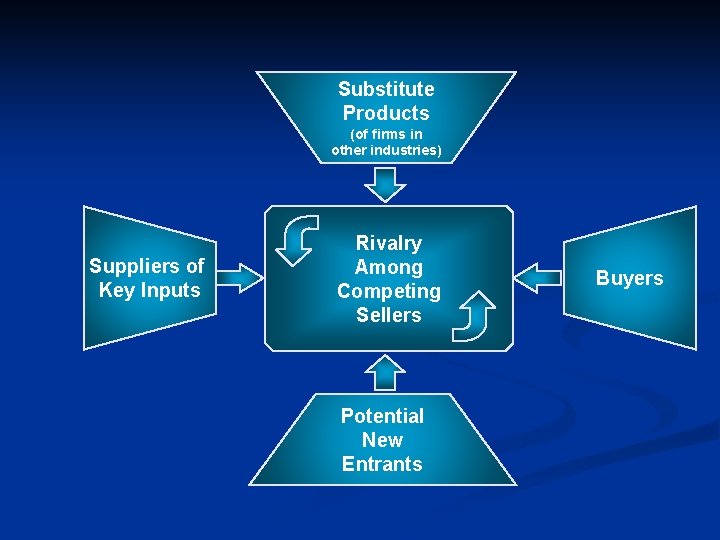
Substitute Products (of firms in other industries) Suppliers of Key Inputs Rivalry Among Competing Sellers Potential New Entrants Buyers
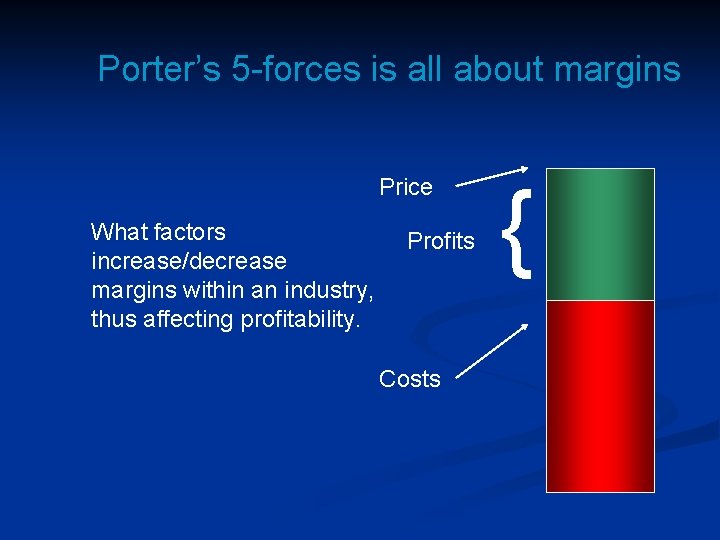
Porter’s 5 -forces is all about margins Price What factors increase/decrease margins within an industry, thus affecting profitability. Profits Costs {
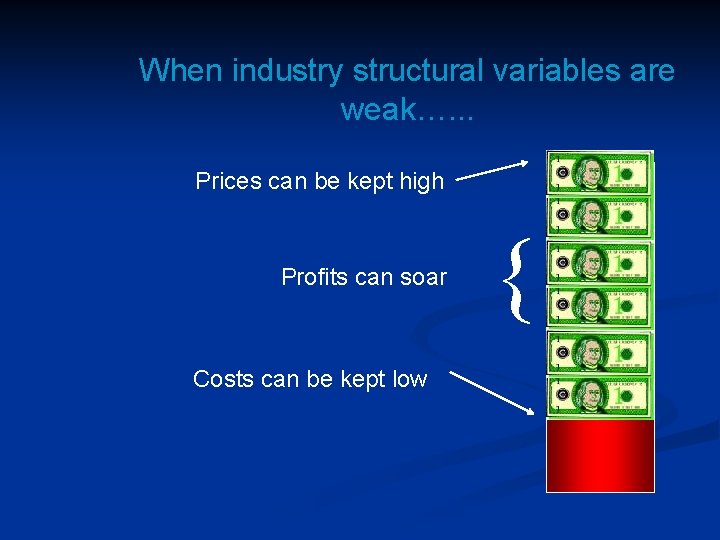
When industry structural variables are weak…. . . Prices can be kept high Profits can soar Costs can be kept low {
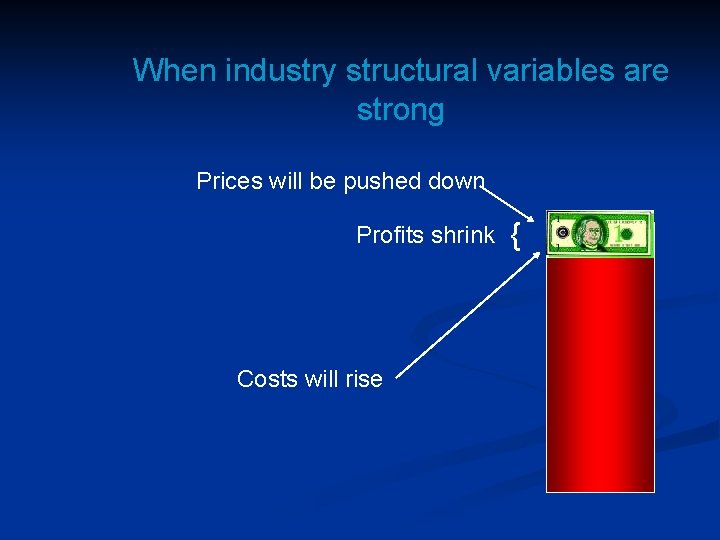
When industry structural variables are strong Prices will be pushed down Profits shrink Costs will rise {
Potential New Entrants Firms enter when industries are attractive, unless they find themselves at an immediate disadvantage relative to incumbents. n Firms can create “barriers to enter” n Barriers of entry are desirable for entrenched firms n
Barriers to Entry n n n n n
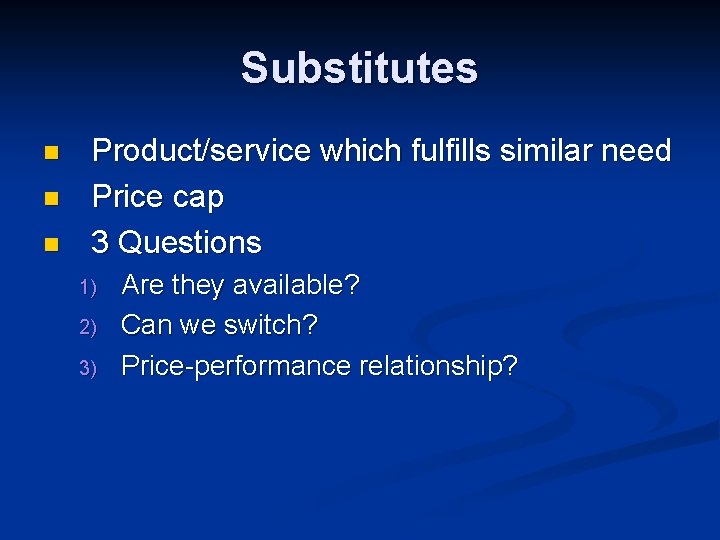
Substitutes n n n Product/service which fulfills similar need Price cap 3 Questions 1) 2) 3) Are they available? Can we switch? Price-performance relationship?
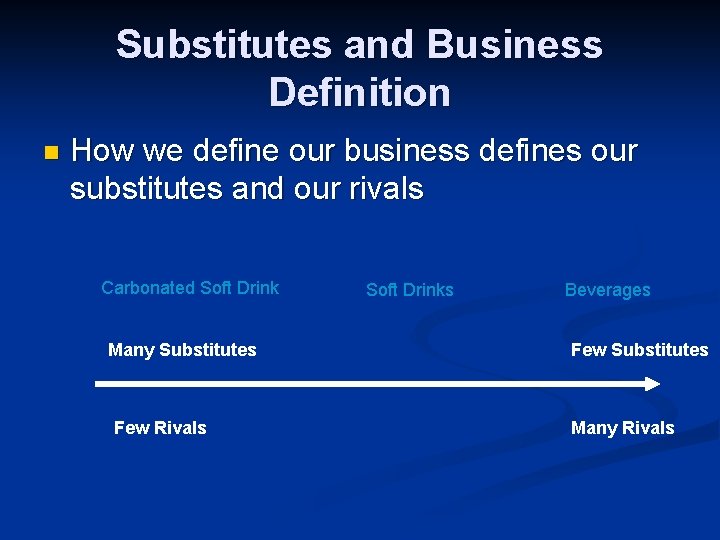
Substitutes and Business Definition n How we define our business defines our substitutes and our rivals Carbonated Soft Drink Many Substitutes Few Rivals Soft Drinks Beverages Few Substitutes Many Rivals
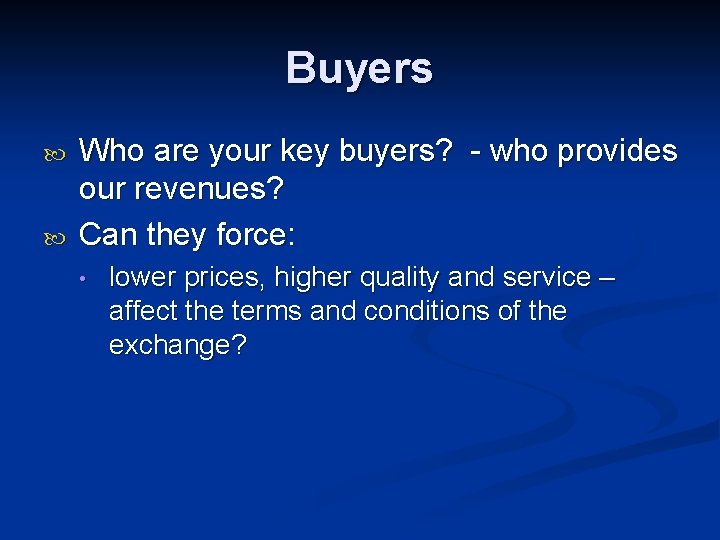
Buyers Who are your key buyers? - who provides our revenues? Can they force: • lower prices, higher quality and service – affect the terms and conditions of the exchange?
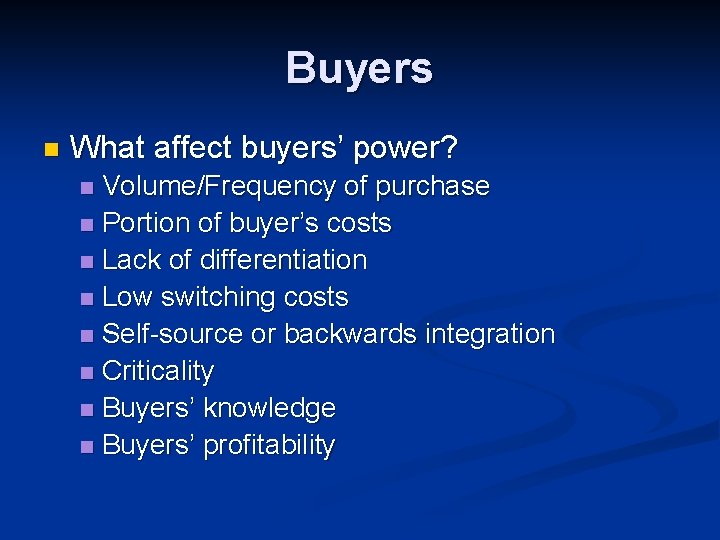
Buyers n What affect buyers’ power? Volume/Frequency of purchase n Portion of buyer’s costs n Lack of differentiation n Low switching costs n Self-source or backwards integration n Criticality n Buyers’ knowledge n Buyers’ profitability n
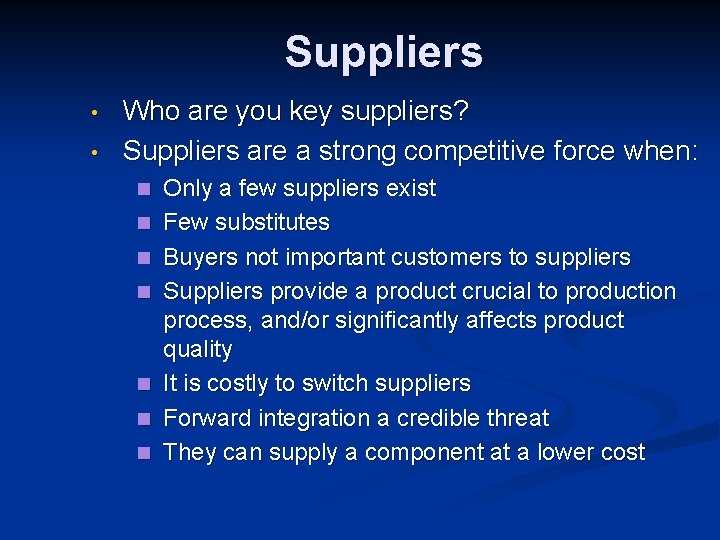
Suppliers • • Who are you key suppliers? Suppliers are a strong competitive force when: n n n n Only a few suppliers exist Few substitutes Buyers not important customers to suppliers Suppliers provide a product crucial to production process, and/or significantly affects product quality It is costly to switch suppliers Forward integration a credible threat They can supply a component at a lower cost
Rivalry and Profitability Industry profitability is a collective good. n Collective good is served by coordination n • n Are there industries were pricing is coordinated? Incentive to violate
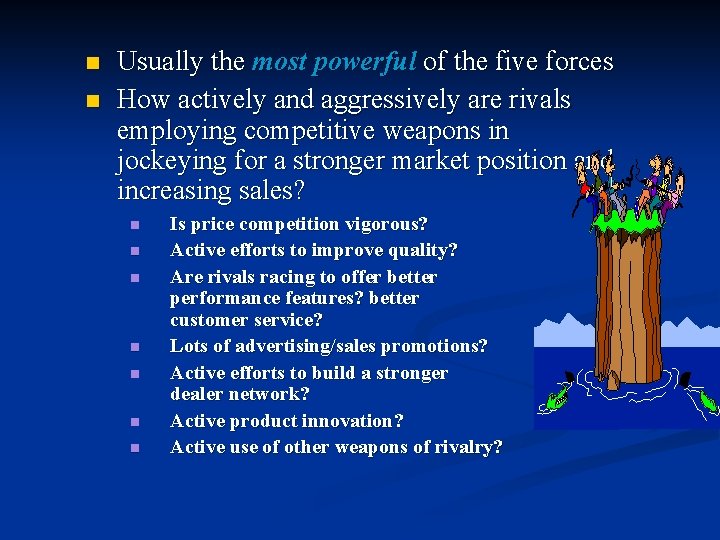
n n Usually the most powerful of the five forces How actively and aggressively are rivals employing competitive weapons in jockeying for a stronger market position and increasing sales? n n n n Is price competition vigorous? Active efforts to improve quality? Are rivals racing to offer better performance features? better customer service? Lots of advertising/sales promotions? Active efforts to build a stronger dealer network? Active product innovation? Active use of other weapons of rivalry?
Rivalry – What drives it? n n n n n
Industries and Segments What is a segment? n Different segments…. . n • • posses different combinations of 5 -forces therefore: n reward different strategies n possess different levels of profitability
Porter’s. . in conclusion n Attractiveness of industry/segment current industry n adjacent segments n industries you might consider entering n n Which forces possess the greatest influence? n Can we influence them?
Static model & Hypercompetition • If the pace of transformation is rapid, if entry rapidly undermines the market power of dominant firms, if innovation speedily transforms industry structure by changing process technology, creating new substitutes, and by shifting the basis on which firms compete, then there is little merit in using industry structure as a basis for analyzing competition and profit.
What Forces Are at Work to Change Industry Conditions? n Industries change because forces are driving industry participants to alter their actions n Driving forces are the major underlying causes of changing industry and competitive conditions
Common Types of Driving Forces n Changes in long-term industry growth rate n Changes in who buys the product and how they use it n Product innovation n Technological change/process innovation n Marketing innovation n Entry or exit of major firms n Diffusion of technical knowledge
Common Types of Driving Forces n Increasing globalization of industry n Changes in cost and efficiency n Market shift from standardized to differentiated products (or vice versa) n New regulatory policies and/or government legislation n Changing societal concerns, attitudes, and lifestyles n Changes in degree of uncertainty and risk
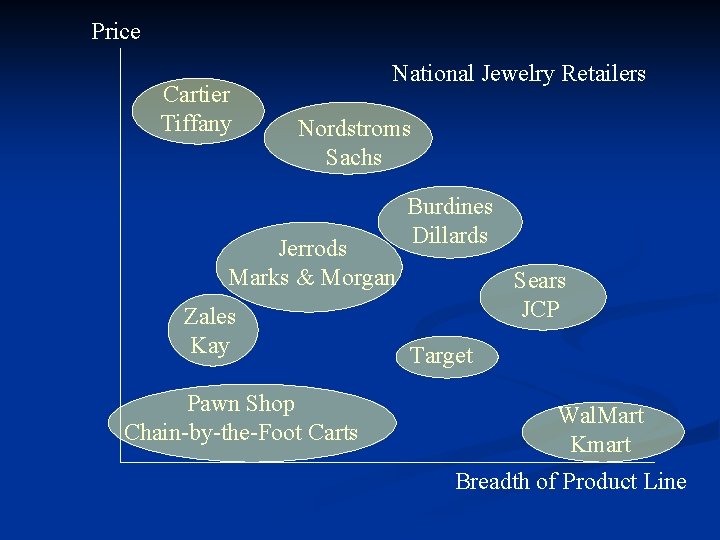
Competitor Analysis n n Strategic group mapping A strategic group consists of those rivals with similar competitive approaches in an industry
Price Cartier Tiffany National Jewelry Retailers Nordstroms Sachs Jerrods Marks & Morgan Zales Kay Pawn Shop Chain-by-the-Foot Carts Burdines Dillards Sears JCP Target Wal. Mart Kmart Breadth of Product Line
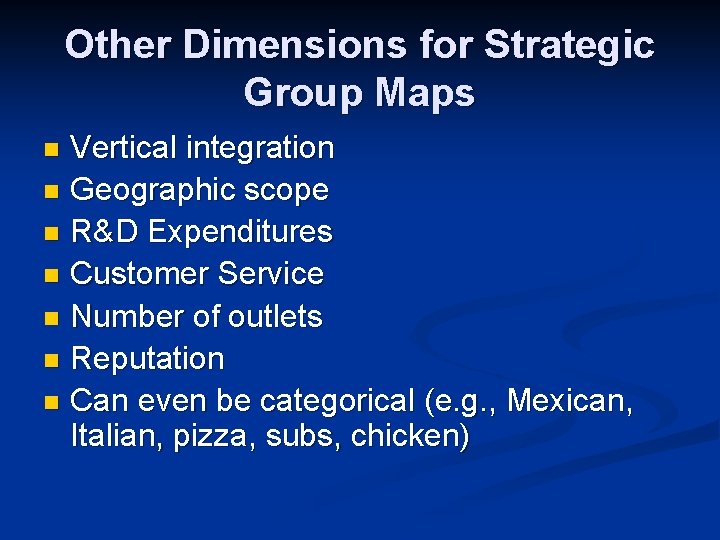
Other Dimensions for Strategic Group Maps Vertical integration n Geographic scope n R&D Expenditures n Customer Service n Number of outlets n Reputation n Can even be categorical (e. g. , Mexican, Italian, pizza, subs, chicken) n
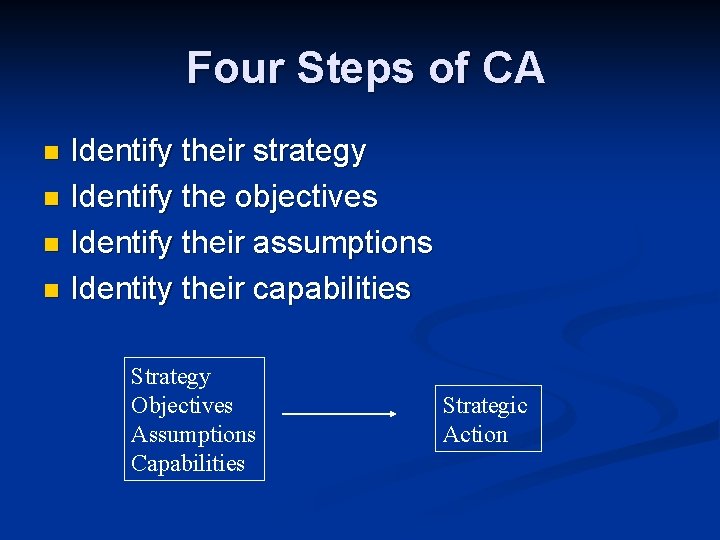
Four Steps of CA Identify their strategy n Identify the objectives n Identify their assumptions n Identity their capabilities n Strategy Objectives Assumptions Capabilities Strategic Action
Competitive Analysis Important in concentrated industries (few, large share competitors) n Benefits n forecast future actions, predict reactions n can we influence rivals’ behavior? n
Identification of Key Success Factors? KSFs are product attributes, competencies, competitive capabilities, and market achievements with the greatest direct bearing on profitability n opportunities for competitive advantage n