Chapter 2 Lesson 2 Farming the Plains Farming


- Slides: 10
Chapter 2 Lesson 2 Farming the Plains
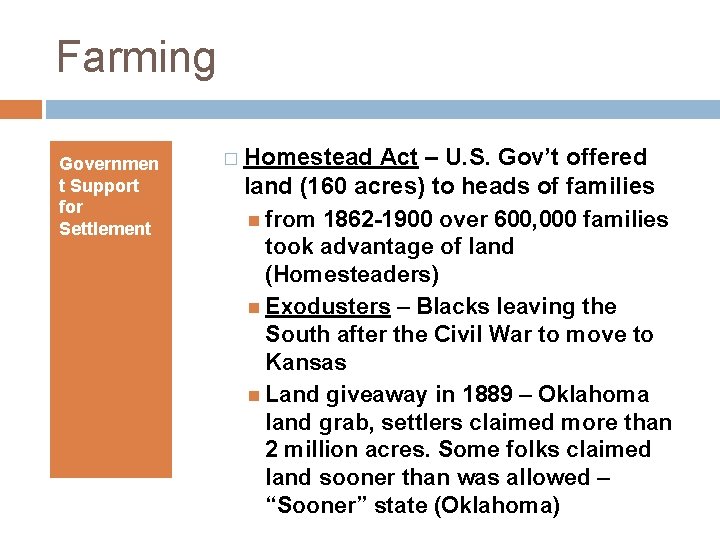
Farming Governmen t Support for Settlement � Homestead Act – U. S. Gov’t offered land (160 acres) to heads of families from 1862 -1900 over 600, 000 families took advantage of land (Homesteaders) Exodusters – Blacks leaving the South after the Civil War to move to Kansas Land giveaway in 1889 – Oklahoma land grab, settlers claimed more than 2 million acres. Some folks claimed land sooner than was allowed – “Sooner” state (Oklahoma)
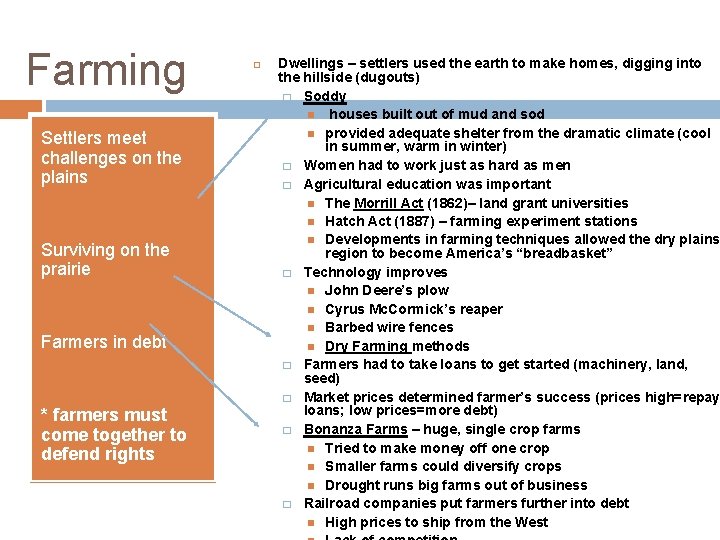
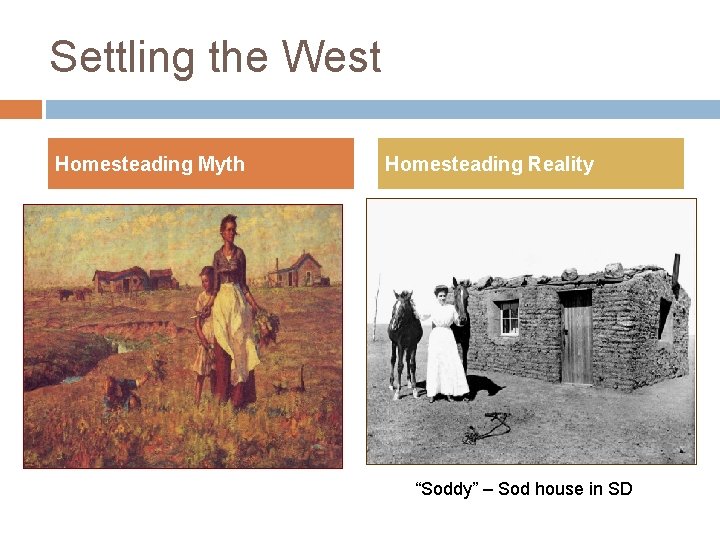
Farming Settlers meet challenges on the plains Surviving on the prairie Farmers in debt * farmers must come together to defend rights Dwellings – settlers used the earth to make homes, digging into the hillside (dugouts) � Soddy houses built out of mud and sod provided adequate shelter from the dramatic climate (cool in summer, warm in winter) � Women had to work just as hard as men � Agricultural education was important The Morrill Act (1862)– land grant universities Hatch Act (1887) – farming experiment stations Developments in farming techniques allowed the dry plains region to become America’s “breadbasket” � Technology improves John Deere’s plow Cyrus Mc. Cormick’s reaper Barbed wire fences Dry Farming methods � Farmers had to take loans to get started (machinery, land, seed) � Market prices determined farmer’s success (prices high=repay loans; low prices=more debt) � Bonanza Farms – huge, single crop farms Tried to make money off one crop Smaller farms could diversify crops Drought runs big farms out of business � Railroad companies put farmers further into debt High prices to ship from the West
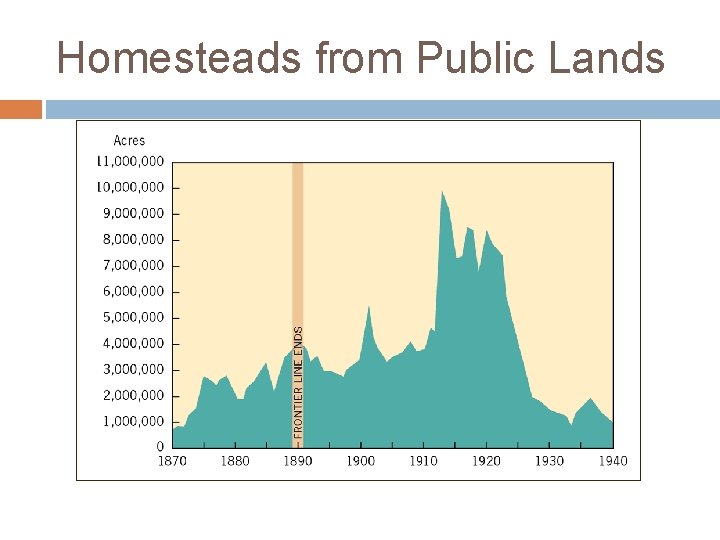
Homesteads from Public Lands
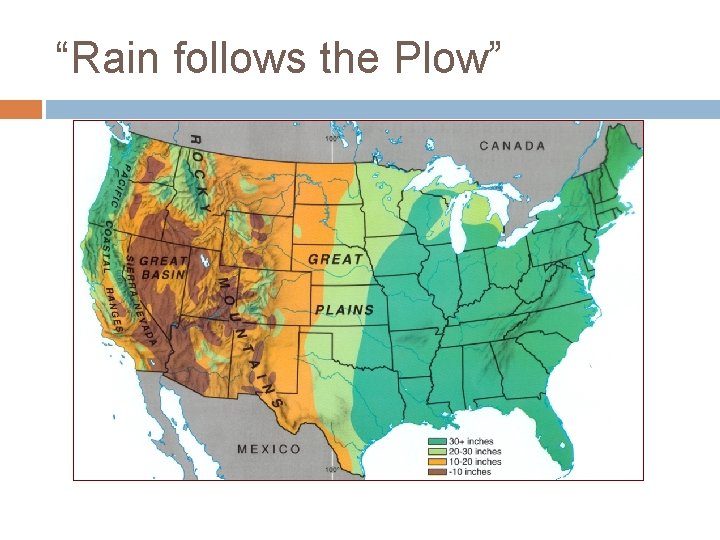
“Rain follows the Plow”
Settling the West Homesteading Myth Homesteading Reality “Soddy” – Sod house in SD
Farming “PRAIRIE FA N” (Water Pump) Technology tames the prairie “Sod Buster” (Steel Plow)
Closing the Frontier The Frontier Ends � The Frederick Jackson Turner – The Significanc e of the Frontier on American Society U. S. loses its frontier – Unique American characteristic gone � (Frontier = territory uninhabited by white settlers) � 1 st National Park – Yellowstone National Park (1872). Tourist destination
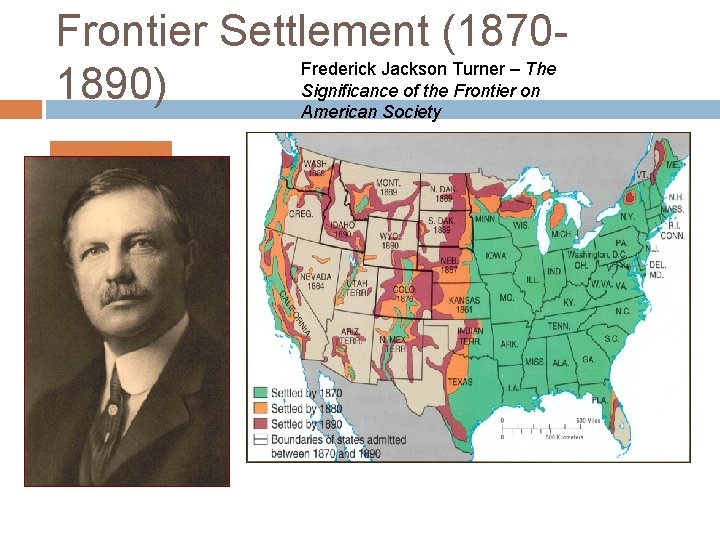
Frontier Settlement (1870 Frederick Jackson Turner – The Significance of the Frontier on 1890) American Society