Chapter 13 Genetic Control of Development Jones and
- Slides: 29
Chapter 13 Genetic Control of Development Jones and Bartlett Publishers © 2005
• How do cells choose which type of cell to become during embryonic development? • The first few embryonic cells give rise to all other cells. They are called totipotent, or pleuripotent. • Cell fate decisions result in differentiation into all cell types in an organism.
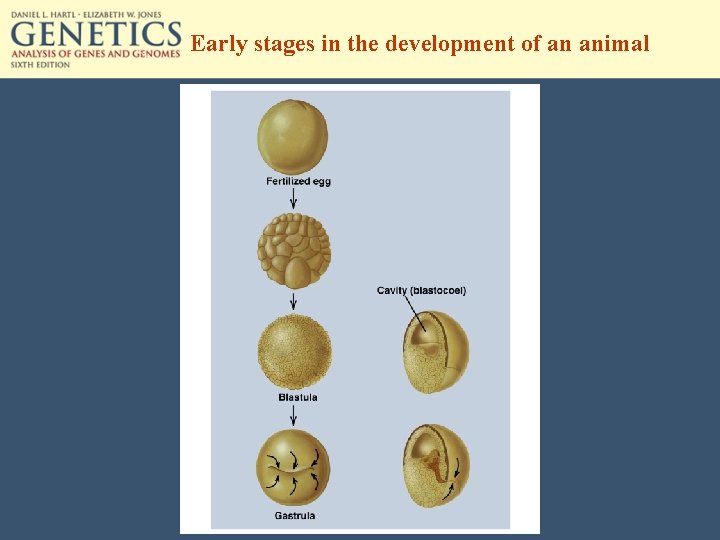
Early stages in the development of an animal
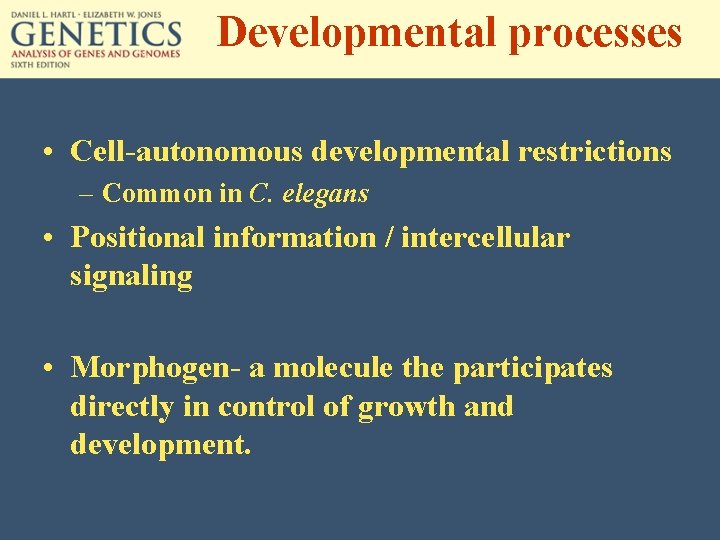
Developmental processes • Cell-autonomous developmental restrictions – Common in C. elegans • Positional information / intercellular signaling • Morphogen- a molecule the participates directly in control of growth and development.
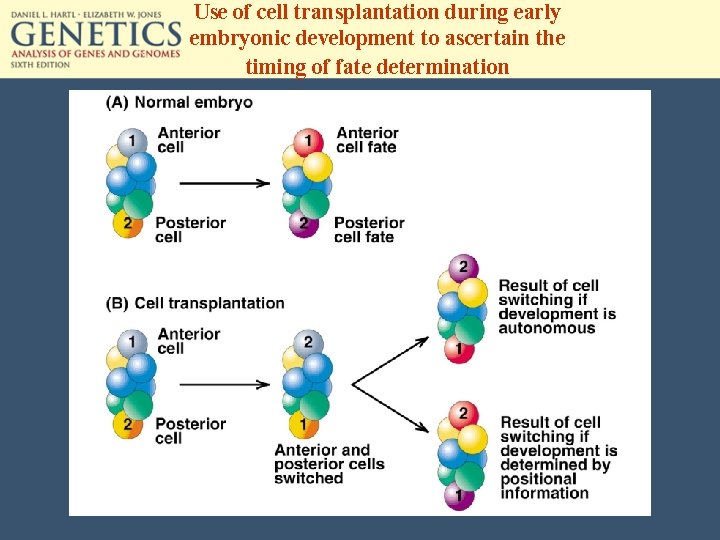
Use of cell transplantation during early embryonic development to ascertain the timing of fate determination
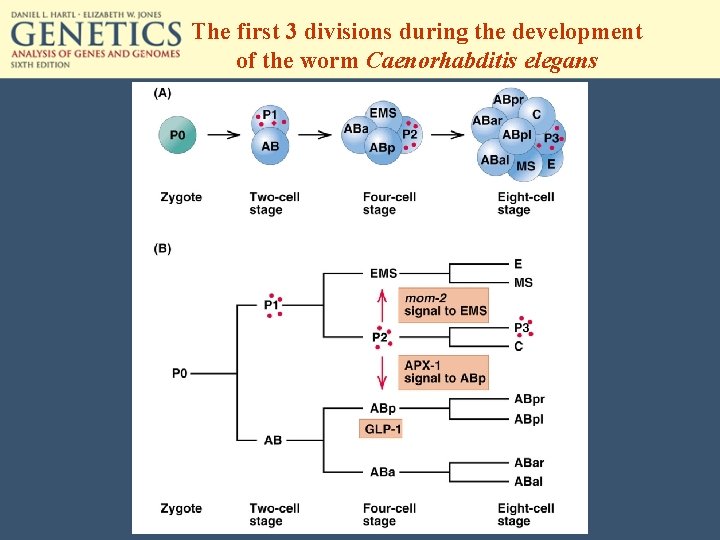
The first 3 divisions during the development of the worm Caenorhabditis elegans
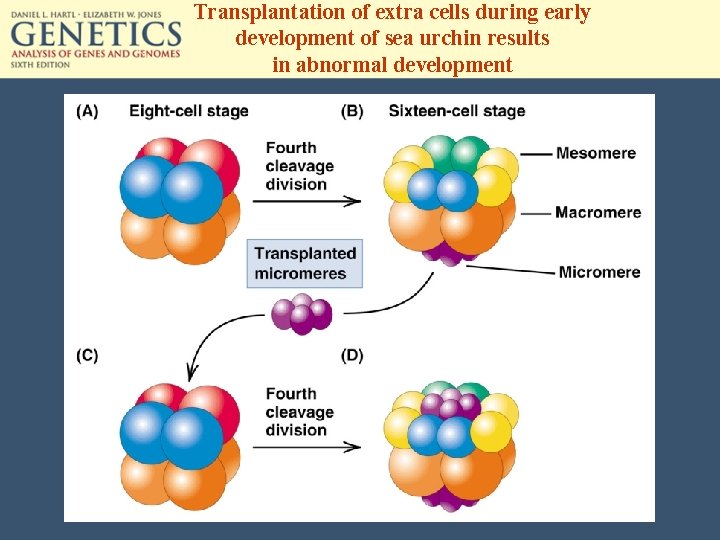
Transplantation of extra cells during early development of sea urchin results in abnormal development
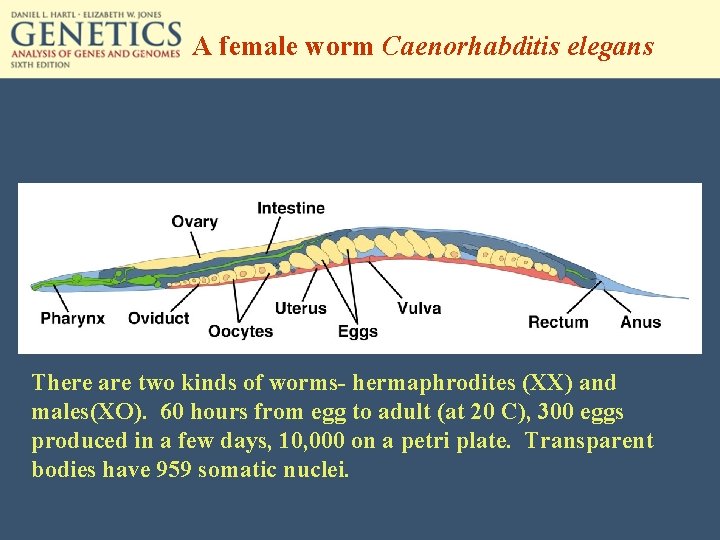
A female worm Caenorhabditis elegans There are two kinds of worms- hermaphrodites (XX) and males(XO). 60 hours from egg to adult (at 20 C), 300 eggs produced in a few days, 10, 000 on a petri plate. Transparent bodies have 959 somatic nuclei.
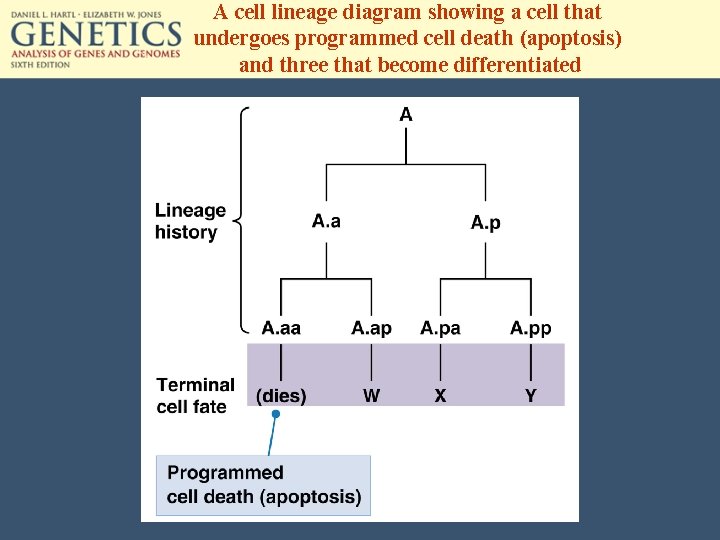
A cell lineage diagram showing a cell that undergoes programmed cell death (apoptosis) and three that become differentiated
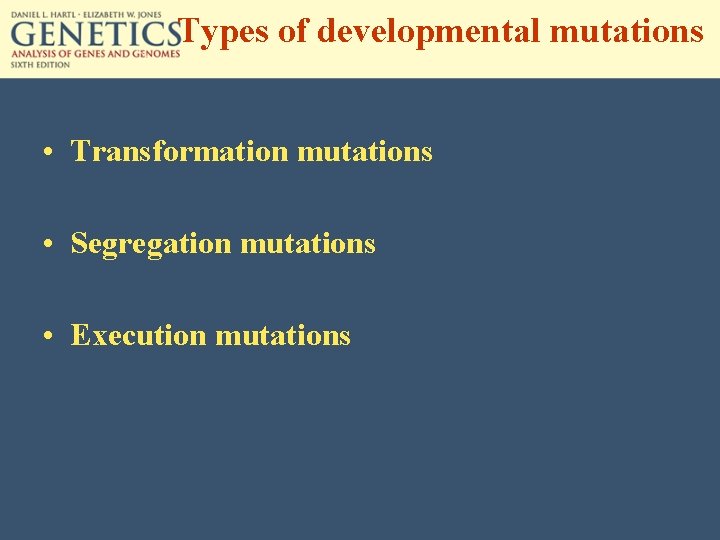
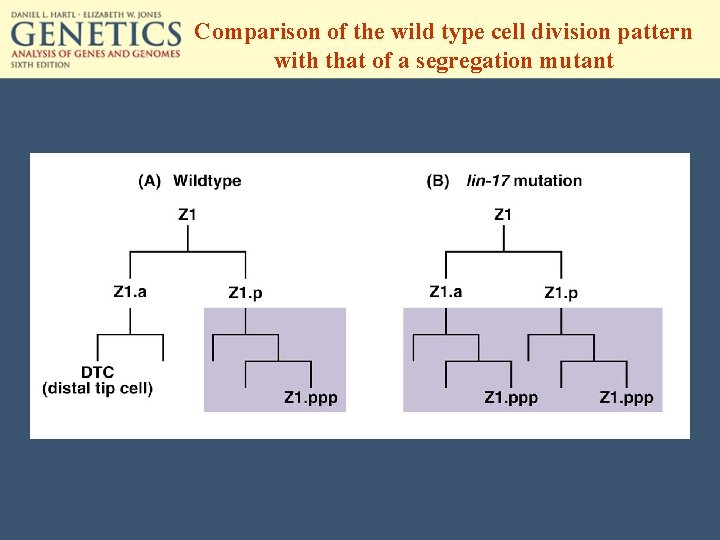
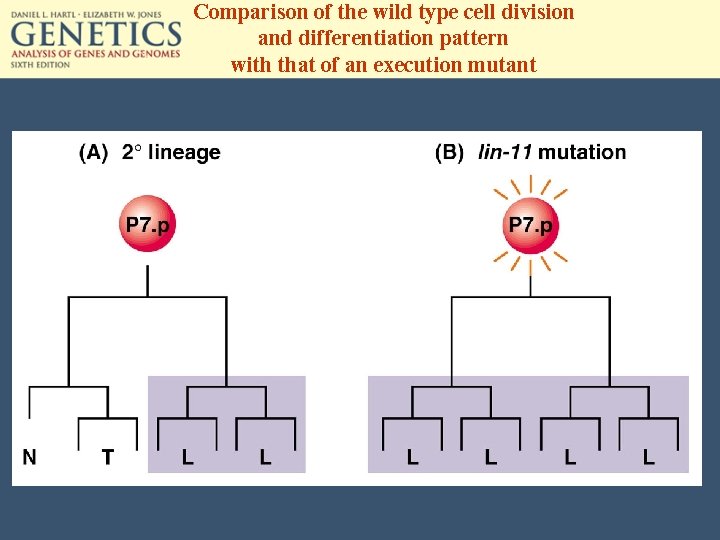
Types of developmental mutations • Transformation mutations • Segregation mutations • Execution mutations
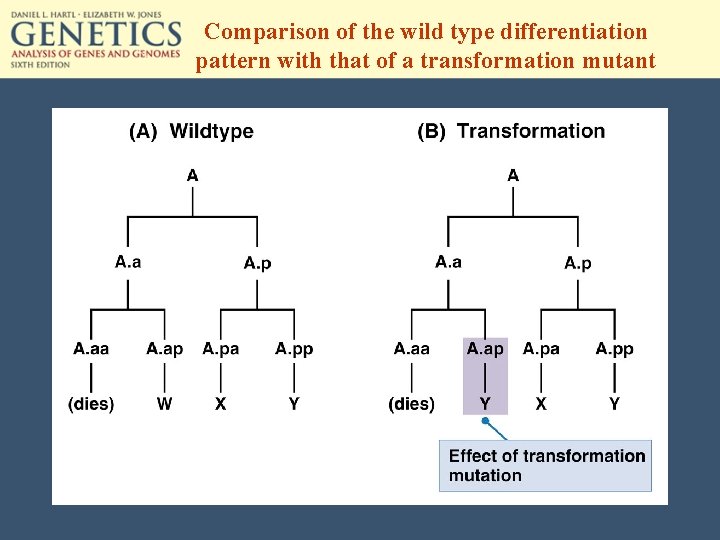
Comparison of the wild type differentiation pattern with that of a transformation mutant
Comparison of the wild type cell division pattern with that of a segregation mutant
Comparison of the wild type cell division and differentiation pattern with that of an execution mutant
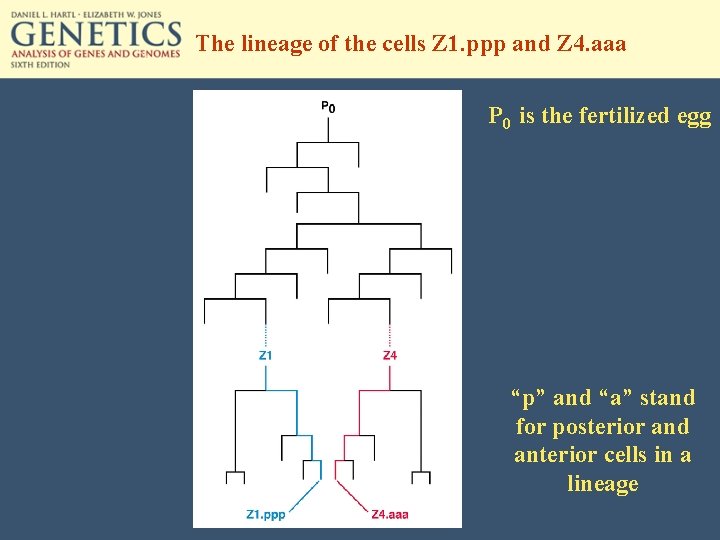
The lineage of the cells Z 1. ppp and Z 4. aaa P 0 is the fertilized egg “p” and “a” stand for posterior and anterior cells in a lineage
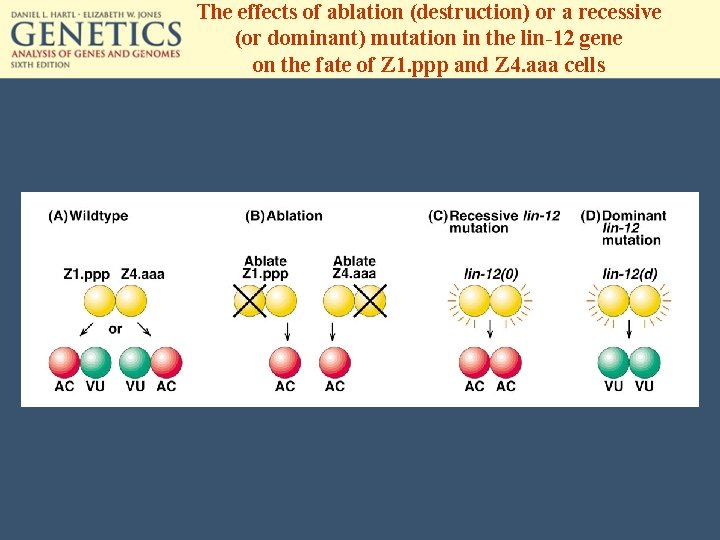
The effects of ablation (destruction) or a recessive (or dominant) mutation in the lin-12 gene on the fate of Z 1. ppp and Z 4. aaa cells
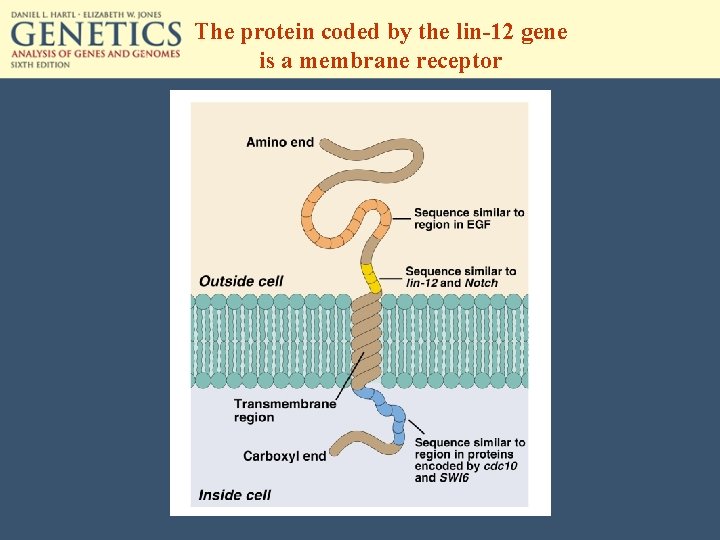
The protein coded by the lin-12 gene is a membrane receptor
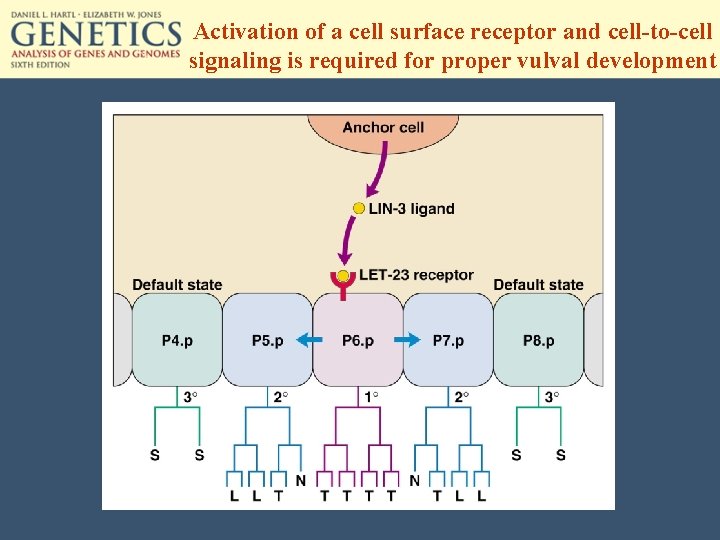
Activation of a cell surface receptor and cell-to-cell signaling is required for proper vulval development
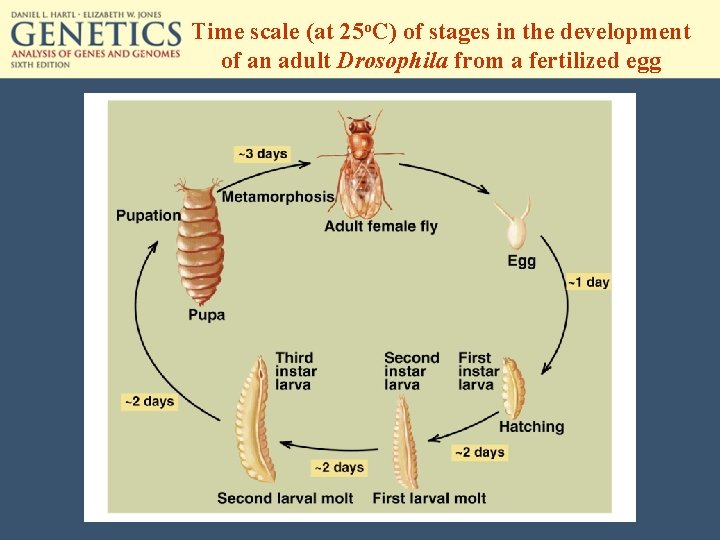
Time scale (at 25 o. C) of stages in the development of an adult Drosophila from a fertilized egg
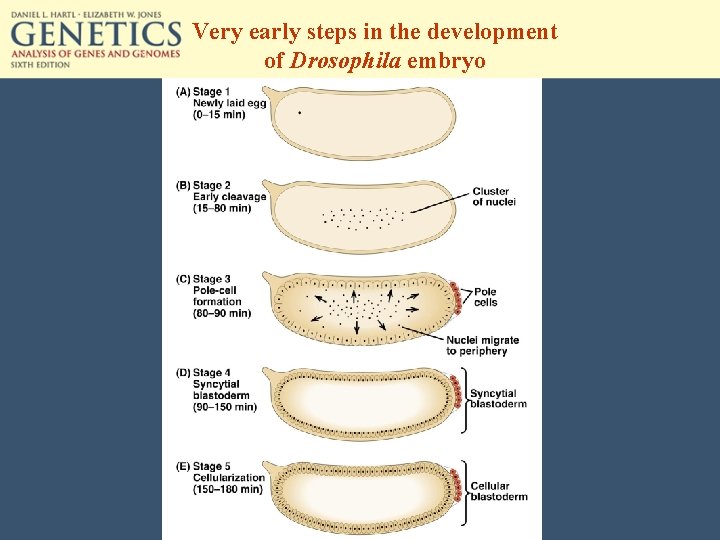
Very early steps in the development of Drosophila embryo
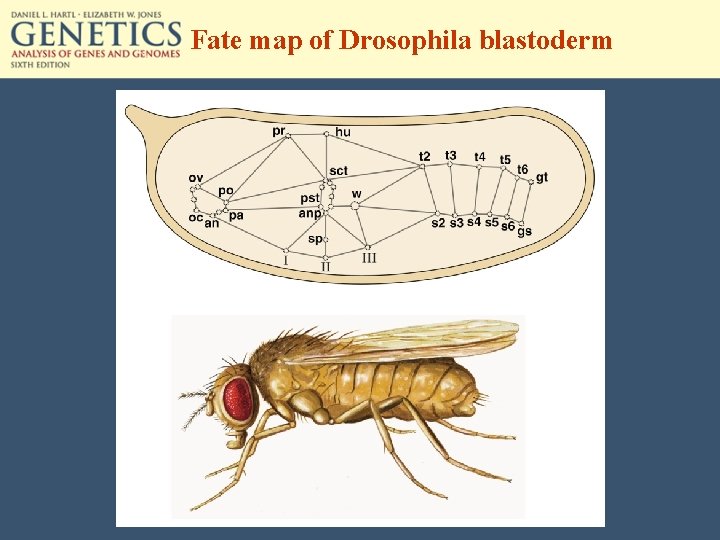
Fate map of Drosophila blastoderm
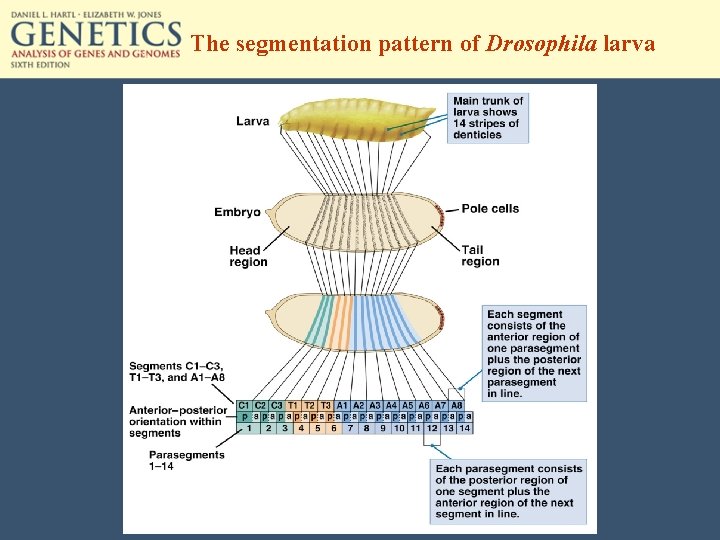
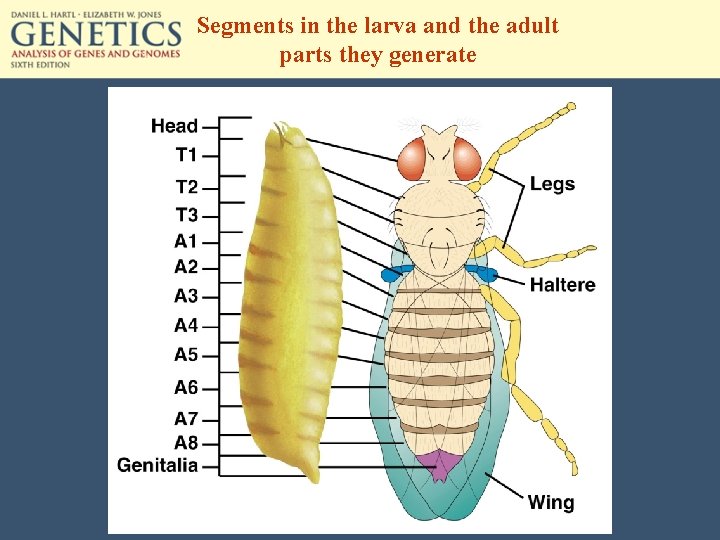
The segmentation pattern of Drosophila larva
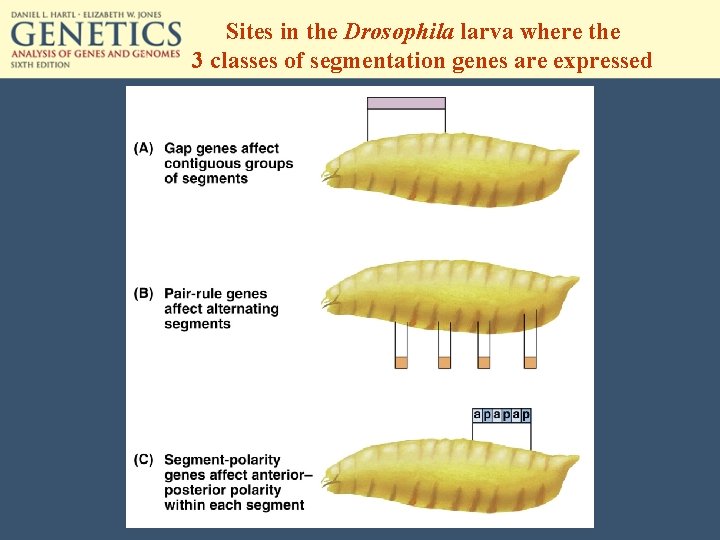
Sites in the Drosophila larva where the 3 classes of segmentation genes are expressed
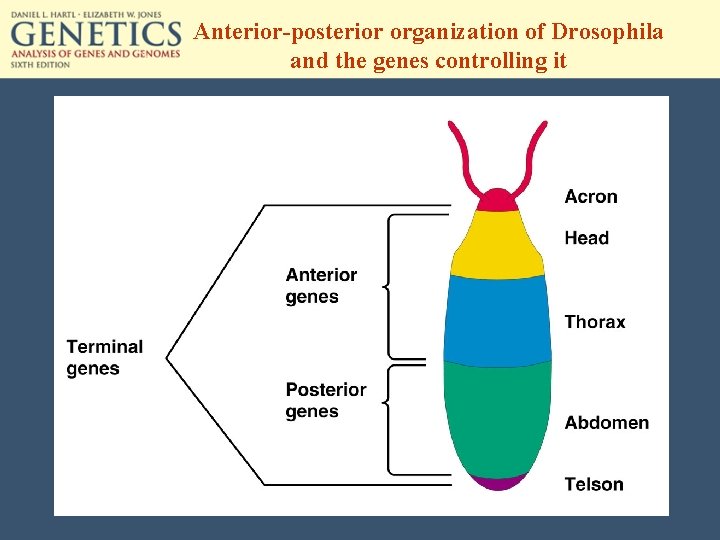
Anterior-posterior organization of Drosophila and the genes controlling it
Segments in the larva and the adult parts they generate
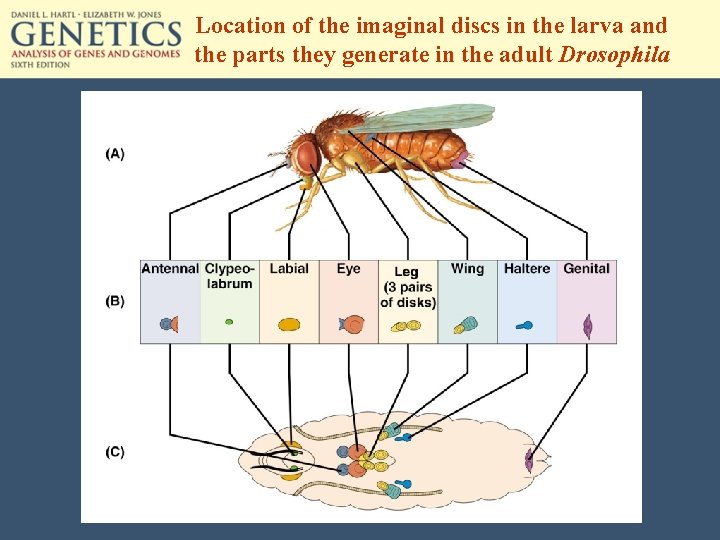
Location of the imaginal discs in the larva and the parts they generate in the adult Drosophila
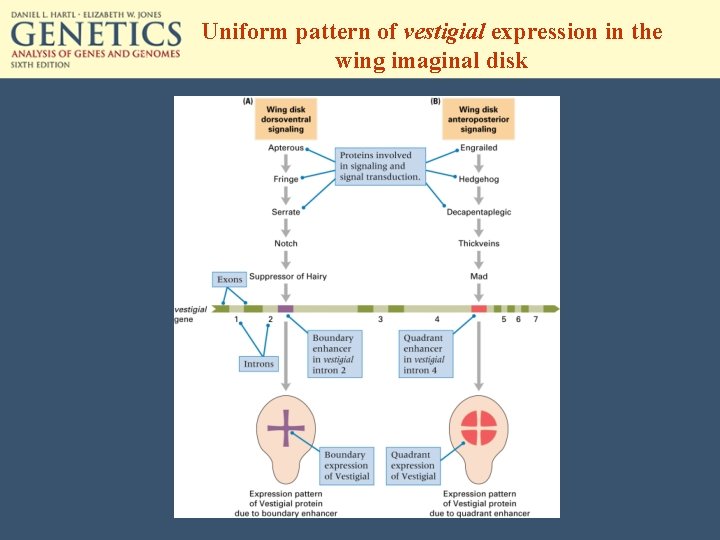
Uniform pattern of vestigial expression in the wing imaginal disk
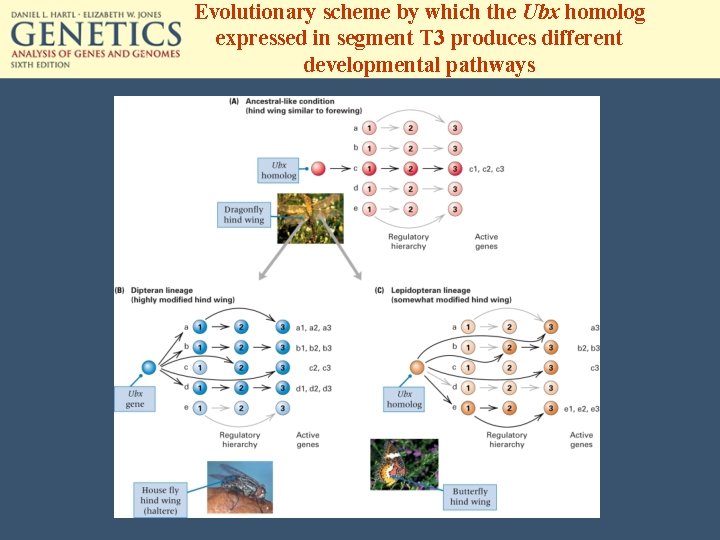
Evolutionary scheme by which the Ubx homolog expressed in segment T 3 produces different developmental pathways
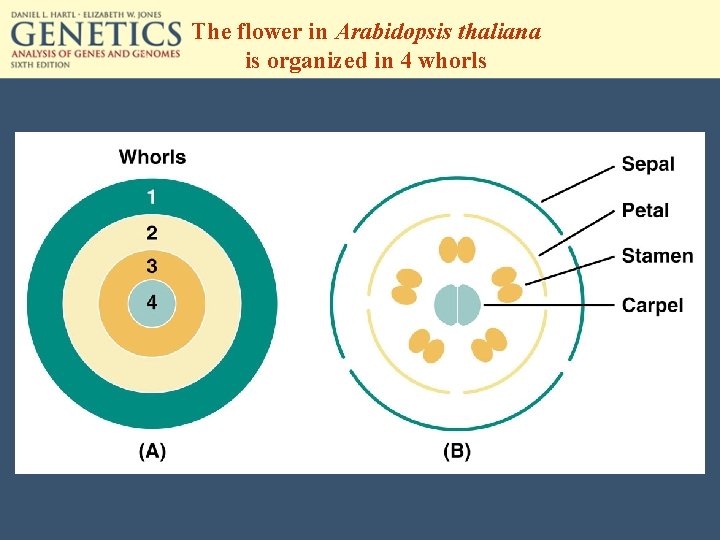
The flower in Arabidopsis thaliana is organized in 4 whorls
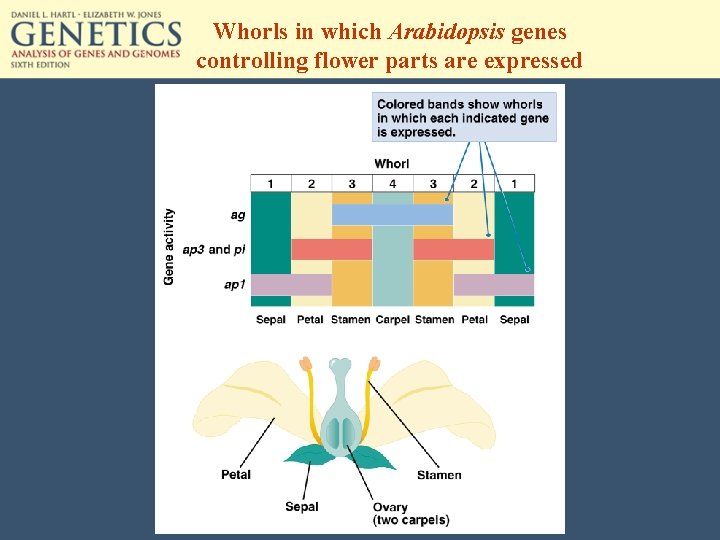
Whorls in which Arabidopsis genes controlling flower parts are expressed