Chapter 12 Religion Romanticism and Reform 1800 1860
- Slides: 26
Chapter 12 Religion, Romanticism, and Reform, 1800 -1860 © 2016 W. W. Norton & Company, Inc.
Rational Religion • Deism- believed in a rational God. All equal. They prized science and reason. • Deists were skeptical of Christianity, miracles, and the divinity of Jesus. • Unitarianism and Universalism • Unitarianism is the belief that Jesus was not divine, but just a good person, while Universalism proclaimed salvation for all people, not just a chosen few. © 2016 W. W. Norton & Company, Inc.
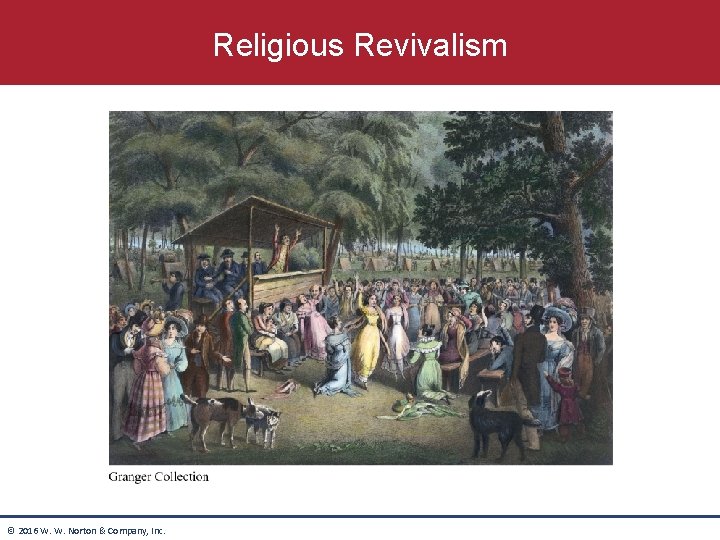
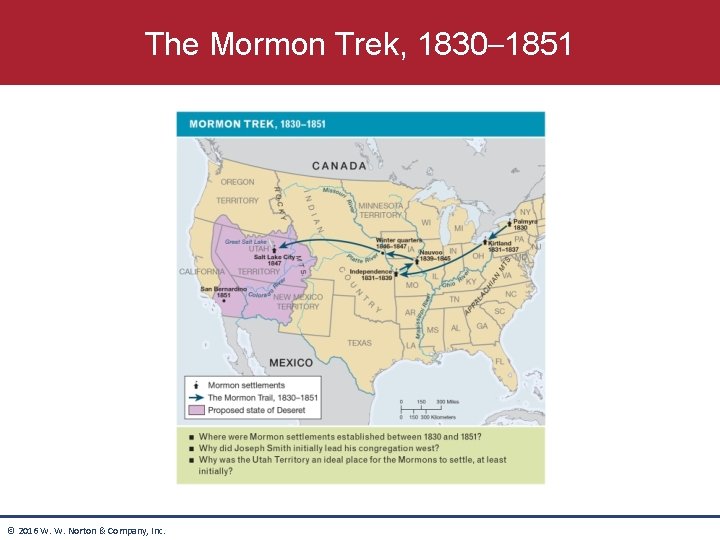
The Second Great Awakening • Baptists, Methodists, and Presbyterians grew as revivalists warned of lust. • Frontier Revivals- traveling evangelist and frontier camp meetings. • People believed in magic, dreams, and visions. • Became community events of singing • Charles Finney and the Burned-Over District- most famous, 100, 000 conversions. • The Mormons-Joseph Smith 1823 • asserted that Christ had come to the Americas to preach to a lost tribe of Hebrews. Smith gathered like-minded followers around him, but the Mormons would be pushed out of several cities until settling in the Utah Territory. © 2016 W. W. Norton & Company, Inc.
Religious Revivalism © 2016 W. W. Norton & Company, Inc.
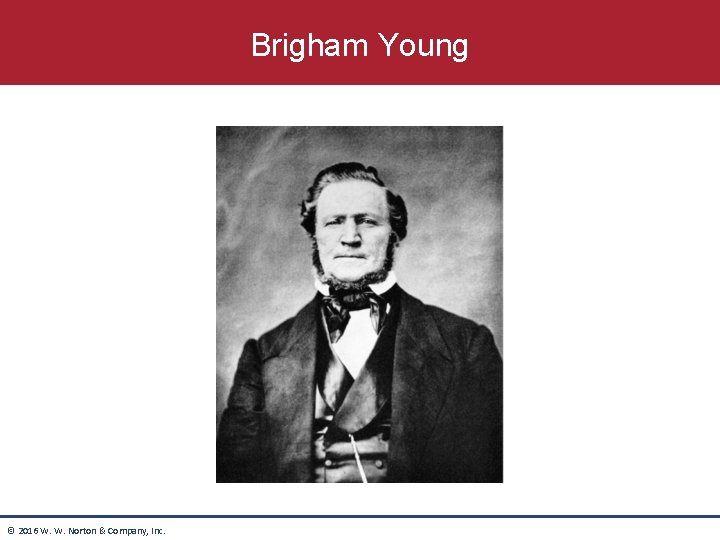
Brigham Young © 2016 W. W. Norton & Company, Inc.
The Mormon Trek, 1830– 1851 © 2016 W. W. Norton & Company, Inc.
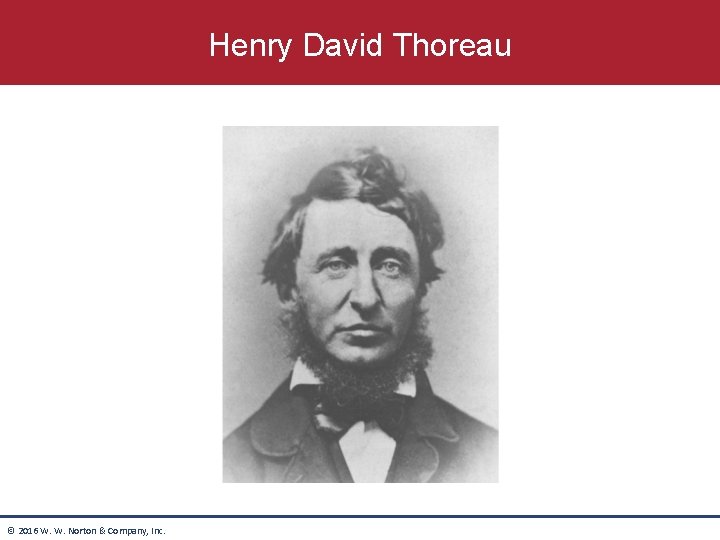
Romanticism in America • Transcendentalism • was a belief that those things that could not be proven by science were justified by faith and that everyone held within them a spark of divinity. • Ralph Waldo Emerson • Emerson promoted individualism and independence. Emerson would serve as mentor to Thoreau, • Henry David Thoreau • whose essay, “Civil Disobedience, ” would be the rallying cry of Martin Luther King, Jr. , and Mahatma Gandhi. • Wrote “Walden” © 2016 W. W. Norton & Company, Inc.
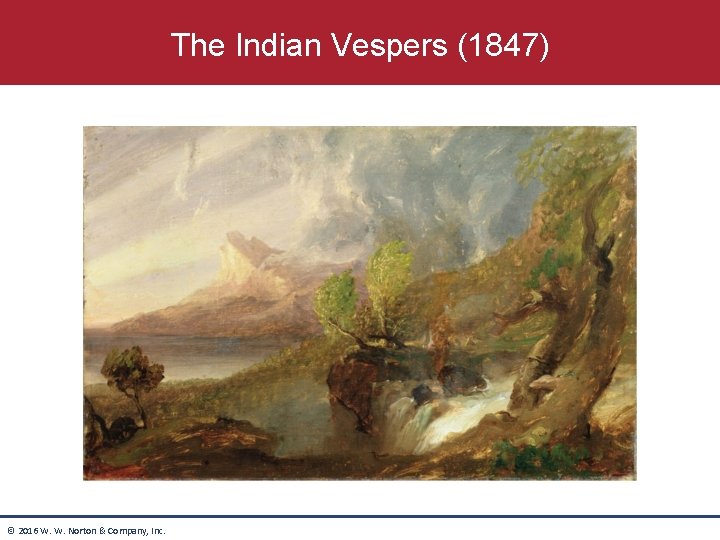
The Indian Vespers (1847) © 2016 W. W. Norton & Company, Inc.
Henry David Thoreau © 2016 W. W. Norton & Company, Inc.
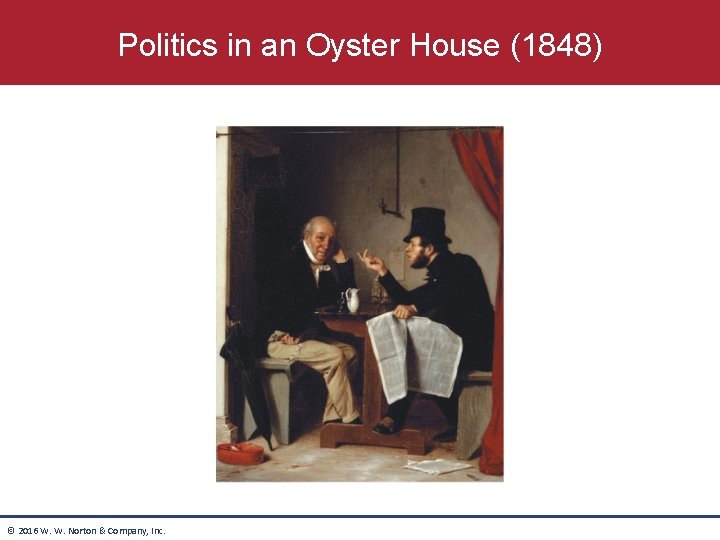
The Flowering of American Literature • Literary Giants – Hawthorne and “The Scarlet Letter” – Melville “Moby Dick” – Emily Dickinson and Walt Whitman with themes of life, death, fear – Edgar Allen Poe-”unworldly tales” The Raven Tell. Tale Heart • Newspapers • technology of the steam engine would be applied to the newspaper press, increasing the capacity to print papers by a factor of five. The mass production of these papers drove the price down to a penny, and newspapers soon became a popular form of entertainment. © 2016 W. W. Norton & Company, Inc.
Politics in an Oyster House (1848) © 2016 W. W. Norton & Company, Inc.
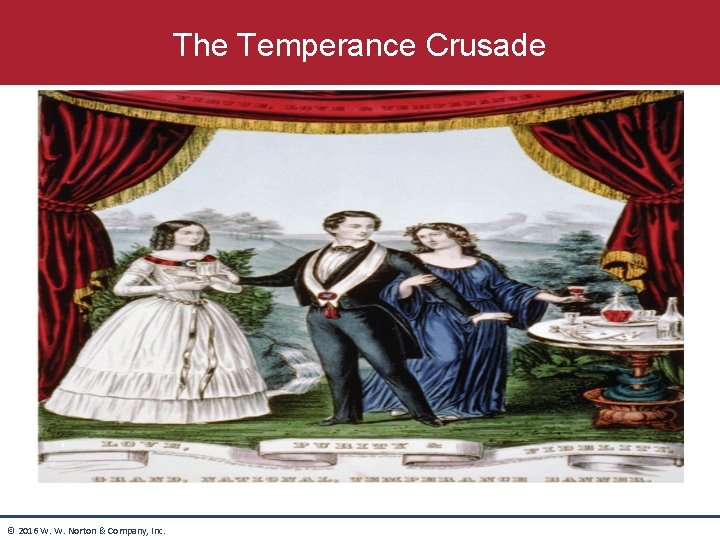
The Reform Impulse • Temperance- try to ban alcohol with American Temperance Union being formed. • Prisons and Asylums • Asylums and prisons during this time would go from places to keep those deemed unfit to exist in society to centers for rehabilitation, reflecting the Romanticism of the day. • Dorothea Dix is most credited with starting this reform through her investigations of the jails and asylums in Massachusetts over a two-year period. © 2016 W. W. Norton & Company, Inc.
The Temperance Crusade © 2016 W. W. Norton & Company, Inc.
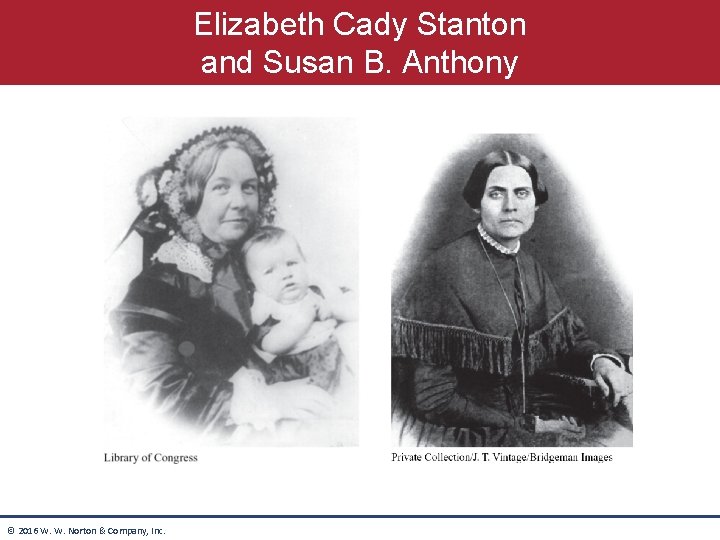
Antebellum Reform • Women’s Rights • Catherine Beecher publishes “A Treatise on Domestic Economy” promoting cult of domesticity. • -accept and celebrate role as manager of house and children. • Women had no control over property, no vote or serve on juries. 1. Seneca Falls • 1848, about three hundred reformers led by Elizabeth Cady Stanton and Lucretia Mott gathered at Seneca Falls, New York, for the first national woman’s rights convention; delegates published the Seneca Falls Declaration of Sentiments, an ambitious agenda that demanded civil liberties for women © 2016 W. W. Norton & Company, Inc.
• B. The Education and Training of Youths • 1. Public Schools—The market economy required expanded opportunities for training youth of both sexes; state-supported public schools were the norm in the North and South by the 1830 s. • 2, Female Teachers—Literacy for white females climbed dramatically; the fact that taxpayers paid for public schools created an incentive to seek an inexpensive teaching force • Higher Education and Career Opportunities—Colleges expanded in the 1830 s, with an additional two dozen colleges for men and several more female seminaries opening; but only a very small percentage of young people attended institutions of higher learning; vast majority of male youth left public school at age fourteen to apprentice in trades or seek entry-level clerkships © 2016 W. W. Norton & Company, Inc.
Elizabeth Cady Stanton and Susan B. Anthony © 2016 W. W. Norton & Company, Inc.
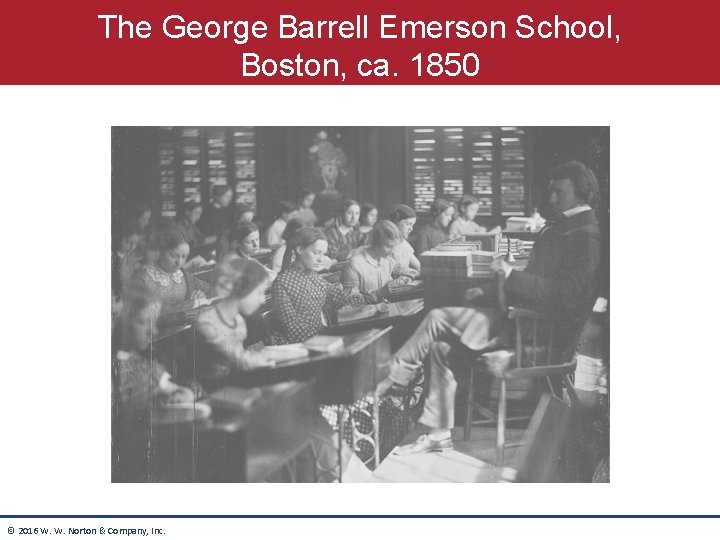
Education • Early Public Schools • If a family wanted their children taught, they sent them to a private school, arranged for a tutor, or taught themselves. This would change mid-century, when the first public schools would be created in the North. • Horace Mann- push for tax supported public schools in Massachusetts. • Higher Education © 2016 W. W. Norton & Company, Inc.
The George Barrell Emerson School, Boston, ca. 1850 © 2016 W. W. Norton & Company, Inc.
Utopia • SHAKERS- Mother Ann and her visions start community in New York. • Oneida- John Noyes founder of “Complex marriage” • Everyone married to every woman. © 2016 W. W. Norton & Company, Inc.
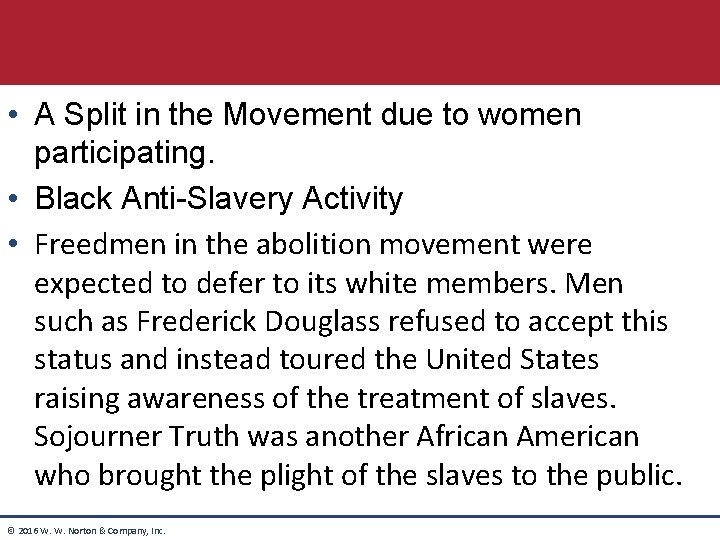
The Anti-Slavery Movement • Early Opposition to Slavery • The American Colonization Society secured land in Africa, but very few people were ever sent there. • William Lloyd garrison- published “Liberator” pushed abolition and formed AASS-American Anti. Slavery Society • David Walker—free black man who wrote “Appeal”- pushed for riots and rebellion © 2016 W. W. Norton & Company, Inc.
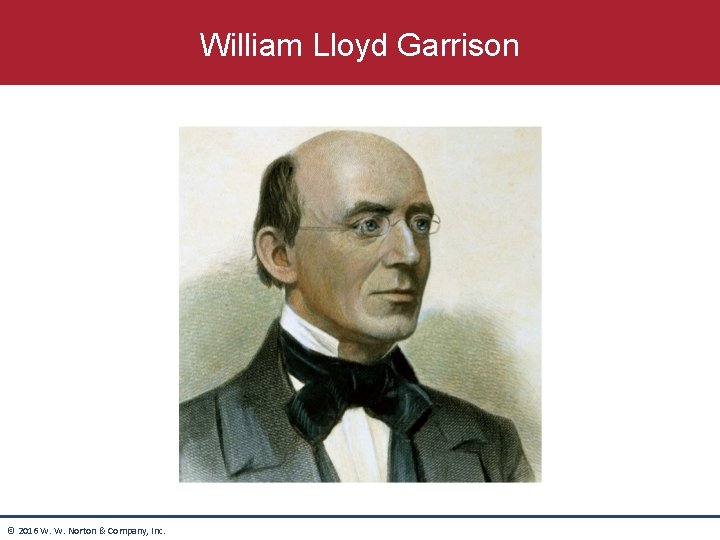
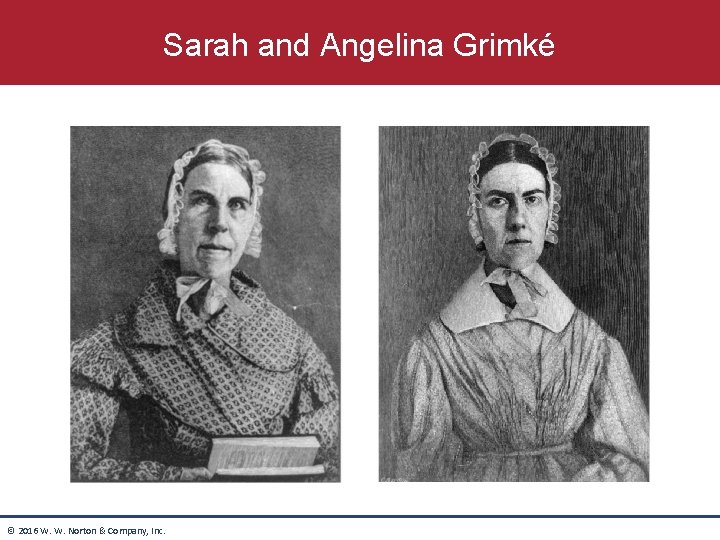
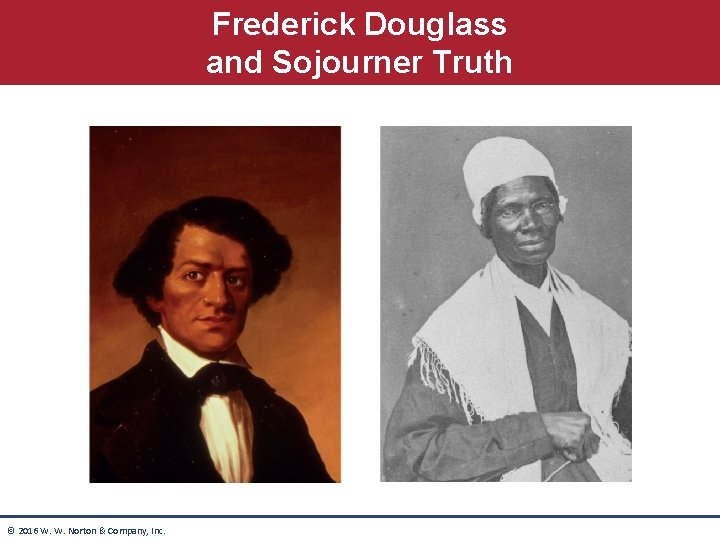
• A Split in the Movement due to women participating. • Black Anti-Slavery Activity • Freedmen in the abolition movement were expected to defer to its white members. Men such as Frederick Douglass refused to accept this status and instead toured the United States raising awareness of the treatment of slaves. Sojourner Truth was another African American who brought the plight of the slaves to the public. © 2016 W. W. Norton & Company, Inc.
William Lloyd Garrison © 2016 W. W. Norton & Company, Inc.
Sarah and Angelina Grimké © 2016 W. W. Norton & Company, Inc.
Frederick Douglass and Sojourner Truth © 2016 W. W. Norton & Company, Inc.
The Anti-Slavery Movement • Reactions to Abolition • Abolitionists had to face opposition, not only from those in the South, but also of like-minded northerners. Even some states that did not hold slaves did not wish to grant rights to them. • The Defense of Slavery • Proponents of slavery argued that the conditions that slaves lived in were better than those they had experienced in Africa and that they experienced better and longer lives. Thomas Jefferson wrote that should slavery be abolished, a race war would erupt between whites and blacks over past injustices. © 2016 W. W. Norton & Company, Inc.
This concludes the Lecture Power. Point presentation for Chapter 12 Religion, Romanticism, and Reform, 1800 -1860 Please visit the Student Site for more resources: http: //wwnorton. com/college/history/america 10/ © 2016 W. W. Norton & Company, Inc.