Chapter 11 Products and Services for Consumers 11


- Slides: 29
Chapter 11 Products and Services for Consumers
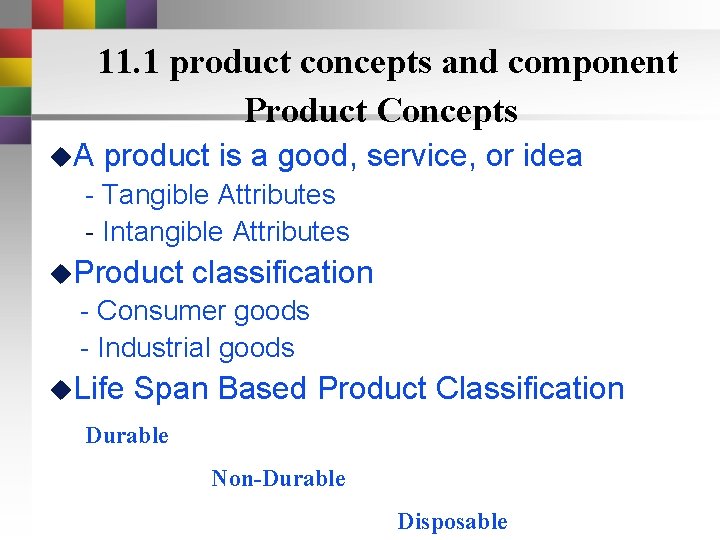
11. 1 product concepts and component Product Concepts u. A product is a good, service, or idea - Tangible Attributes - Intangible Attributes u. Product classification - Consumer goods - Industrial goods u. Life Span Based Product Classification Durable Non-Durable Disposable
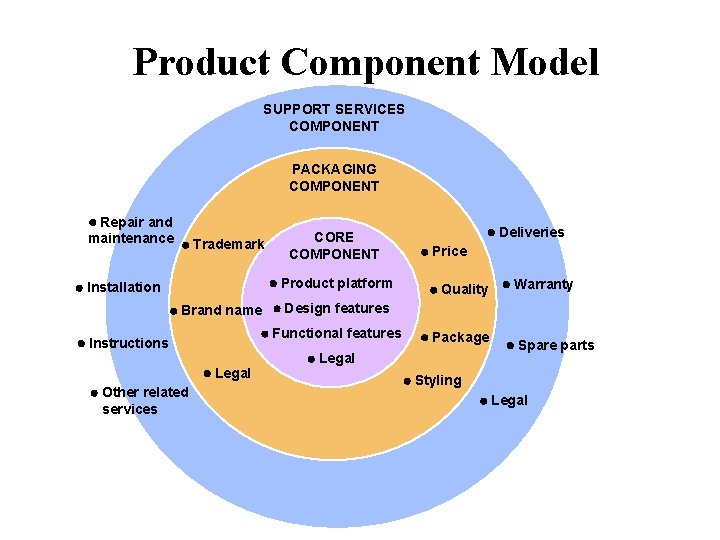
Product Component Model SUPPORT SERVICES COMPONENT PACKAGING COMPONENT Repair and maintenance Brand name Instructions Other related services Legal CORE COMPONENT Trademark Installation Product platform Deliveries Price Quality Warranty Design features Functional features Package Legal Spare parts Styling Legal
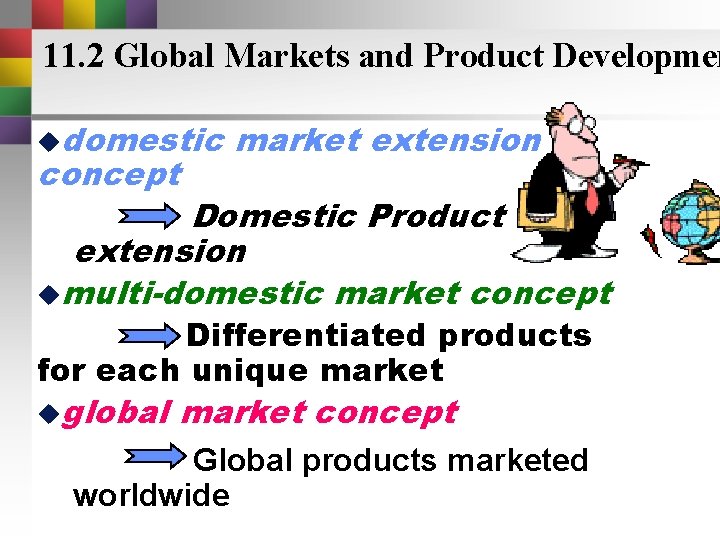
11. 2 Global Markets and Product Developmen udomestic concept market extension Domestic Product extension umulti-domestic market concept Differentiated products for each unique market uglobal market concept Global products marketed worldwide
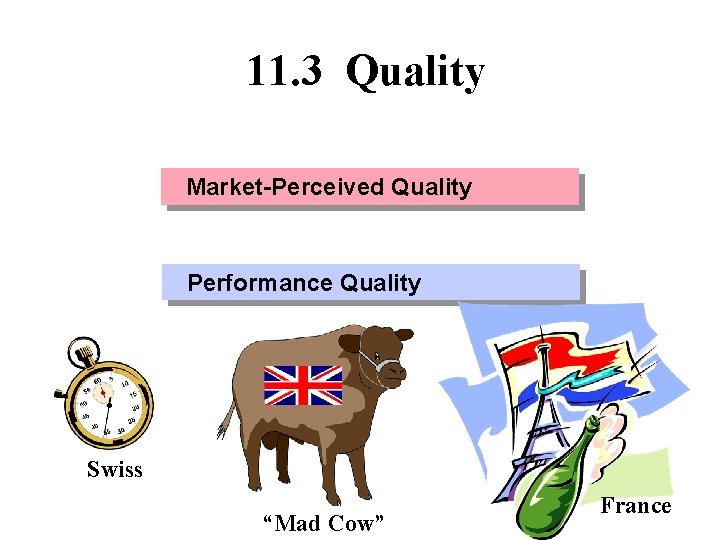
11. 3 Quality Market-Perceived Quality Performance Quality Swiss “Mad Cow” France
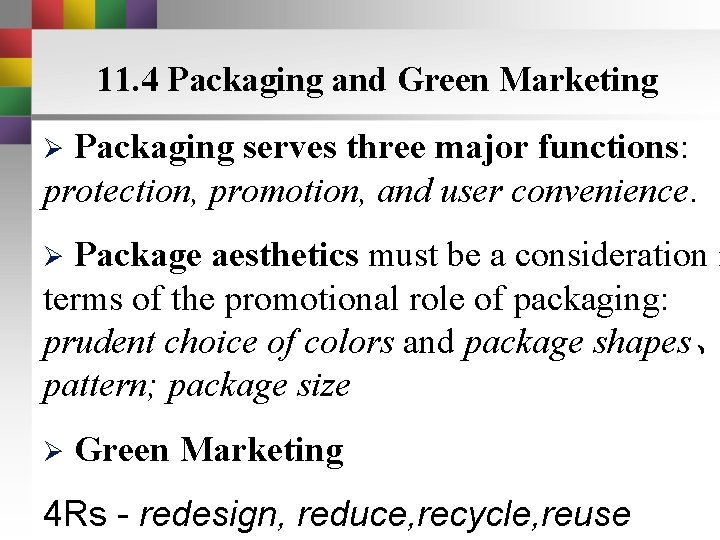
11. 4 Packaging and Green Marketing Packaging serves three major functions: protection, promotion, and user convenience. Ø Package aesthetics must be a consideration i terms of the promotional role of packaging: prudent choice of colors and package shapes、 pattern; package size Ø Ø Green Marketing 4 Rs - redesign, reduce, recycle, reuse
11. 5 Brands u. Bundle of images and experiences in the customer’s mind u. A promise made by a particular company about a particular product u. A quality certification u. Differentiation between competing products
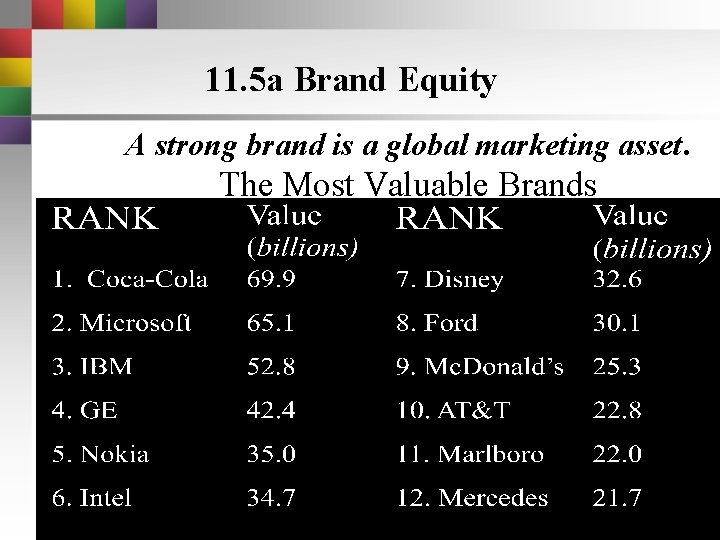
11. 5 a Brand Equity A strong brand is a global marketing asset. The Most Valuable Brands
11. 5 a Brand Equity u. An asset that represents the value created by the relationship between the brand customer over time. u. The added value that accrues to a product as a result of investments in the marketing of the brand.
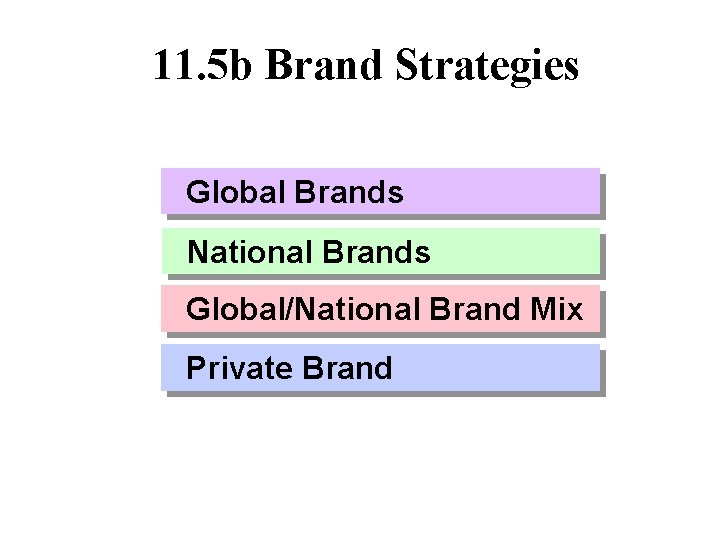
11. 5 b Brand Strategies Global Brands National Brands Global/National Brand Mix Private Brand
Global brands uworldwide use of: –name –sign (logos) –symbols u‘brand equity’ –the main asset of some corporations –use this equity to create worldwide image (which may proceed products) e. g. Top 20 Global Brands
ØGlobal brands have the same name and similar image and positioning throughout the wo Ø Operated under the same global brand strate While flexible Marketing combination.
National brand ØBrand locally ØImportance of nationalistic pride ØBe rebuilt as global brand
Global/National Brand Mix same or different names across borders ? dual strategy -Global brand - many country-specific brands Example: Unilever Nestlé
1. 1 a Globalization Jack Welch : 1990 s Globalization
Nestlé Brand expansion strategy: - acquiring well-established national brands - using global brands local but technology global and people regional Global/National Brand Mix Ø It depends-the market dicates. Ø‘global brands where possible, national brands where necessary’
Private brands uprivate (distributor’s ) brands – owned by the retailers – increasingly common in many sectors (supermarkets) u. Wal-Mart vs Proctor & Gamble –who controls channels? –source of their respective power? –which brand is better known? uprivate brands may enjoy significant competitive advantages –higher margins preferred shelf space –strong in-store promotion
Products and Culture ØA product is more than a physical item. It is a bundle of satisfactions (or utilities) that the buyer receives. ØCultural Influences: A close study of the meaning of a product shows to what extent the culture determines an individual’s perception of what a product is and what satisfaction that product provides. l. When analyzing a product for a second market, the extent of adaptation required depends on cultural differences in product use and perception between the market the product was originally developed for and the new market. Irwin/Mc. Graw-Hill
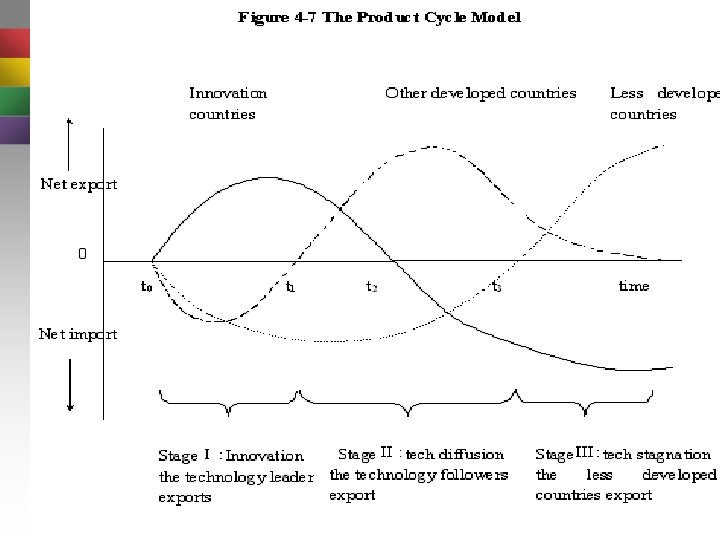
11. 6 a Innovative Products and Adaptatio uproduct life cycle and acceptance of new products –some examples: telegrams/ telex/ fax machines/ cellular phones/ e-mail
u. In stageⅠof innovation, the technology of a new prod is newly invented; the new product is really R&D intensi product; there is no export. u. In stage Ⅱof technology diffusion, the technology is mature and the production process becomes standard; product becomes capital and skilled-labor intensive product; the innovation country exports to other countrie to satisfy the rapidly increased demands abroad. u. In StageⅢ of technology stagnation, the technologica cycle comes to the end; the product becomes labor intensive. The less developed countries take the advantage of low-wage labor and become the main producers and exporters
1. 1 a Globalization Jack Welch : 1990 s Globalization
11. 6 b Diffusion of Innovations –starts with new products –distributed through channels –over a (variable) time period –among members of a social system Three extraneous variables affecting th rate of diffusion of an object: – the degree of perceived newness –The perceived attributes of the innovation –The method used to communicate the idea
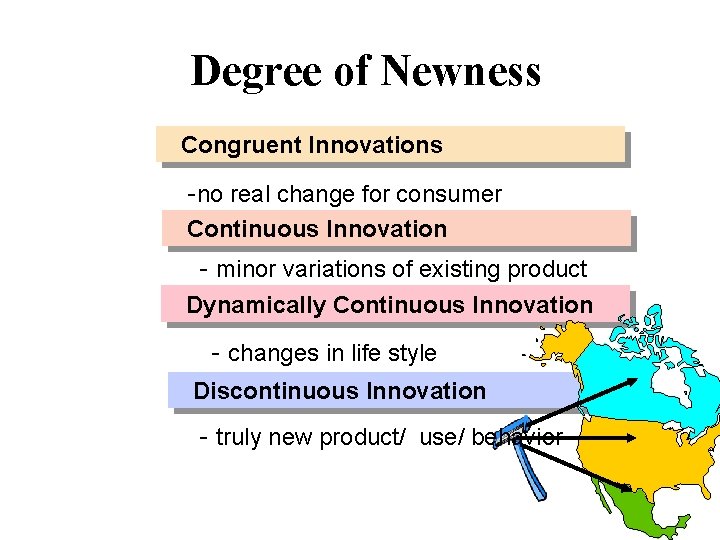
Degree of Newness Congruent Innovations -no real change for consumer Continuous Innovation - minor variations of existing product Dynamically Continuous Innovation - changes in life style Discontinuous Innovation - truly new product/ use/ behavior
factors affecting adoption rate Characteristics of Innovations Relative Advantage over older products Compatibility Complexity Trialability l. Observability (Kellogg is India - ‘breakfast’? )
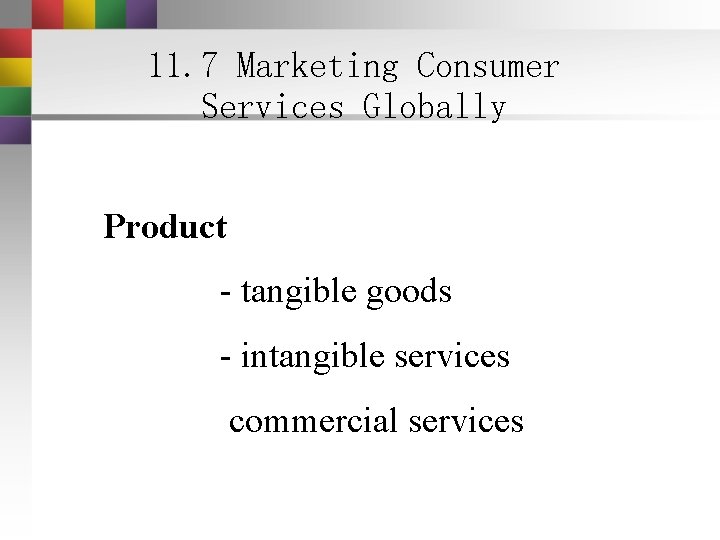
11. 7 Marketing Consumer Services Globally Product - tangible goods - intangible services commercial services
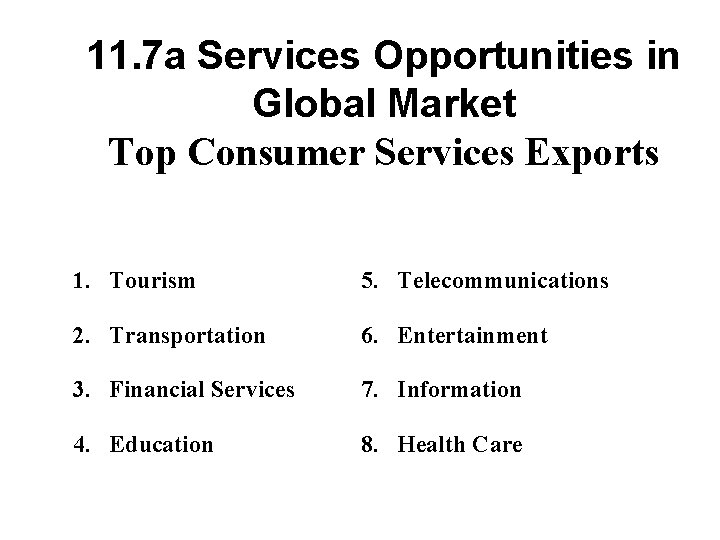
11. 7 a Services Opportunities in Global Market Top Consumer Services Exports 1. Tourism 5. Telecommunications 2. Transportation 6. Entertainment 3. Financial Services 7. Information 4. Education 8. Health Care
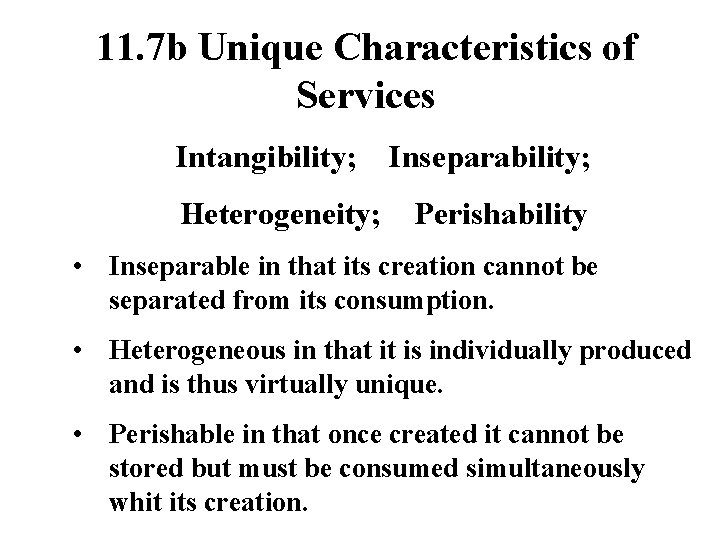
11. 7 b Unique Characteristics of Services Intangibility; Heterogeneity; Inseparability; Perishability • Inseparable in that its creation cannot be separated from its consumption. • Heterogeneous in that it is individually produced and is thus virtually unique. • Perishable in that once created it cannot be stored but must be consumed simultaneously whit its creation.
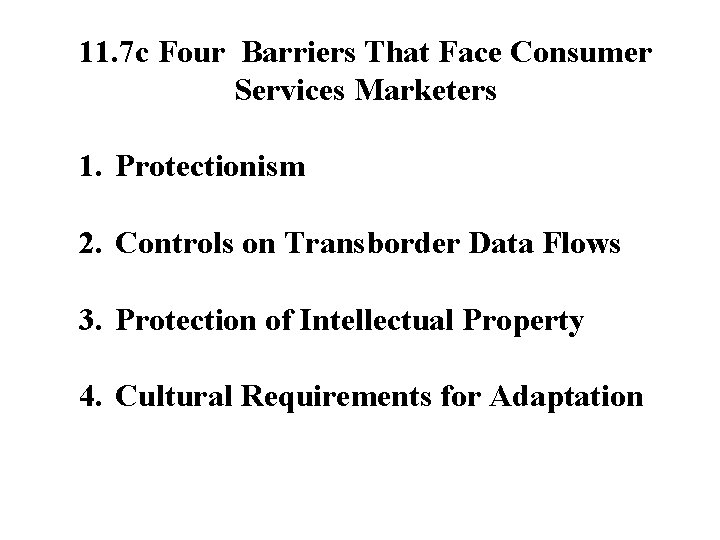
11. 7 c Four Barriers That Face Consumer Services Marketers 1. Protectionism 2. Controls on Transborder Data Flows 3. Protection of Intellectual Property 4. Cultural Requirements for Adaptation