Chapter 1 Marketing Strategy and Tactics an mp










- Slides: 52
Chapter 1 Marketing Strategy and Tactics
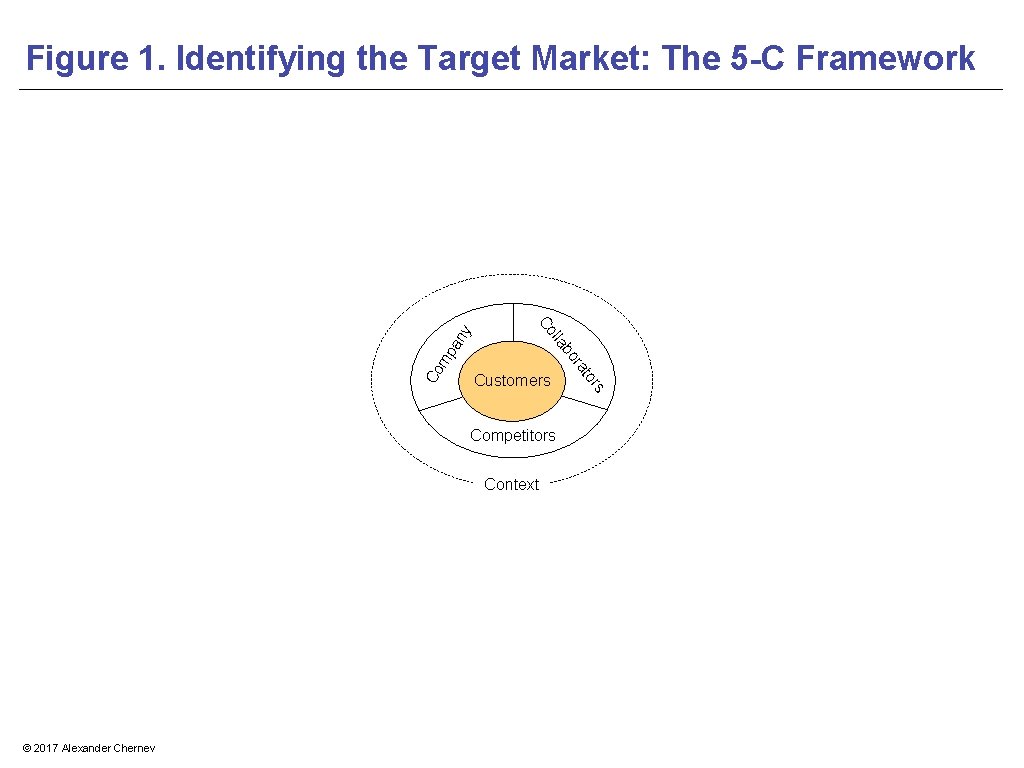
an mp Co Context © 2017 Alexander Chernev s Competitors r to Customers ra bo lla Co y Figure 1. Identifying the Target Market: The 5 -C Framework
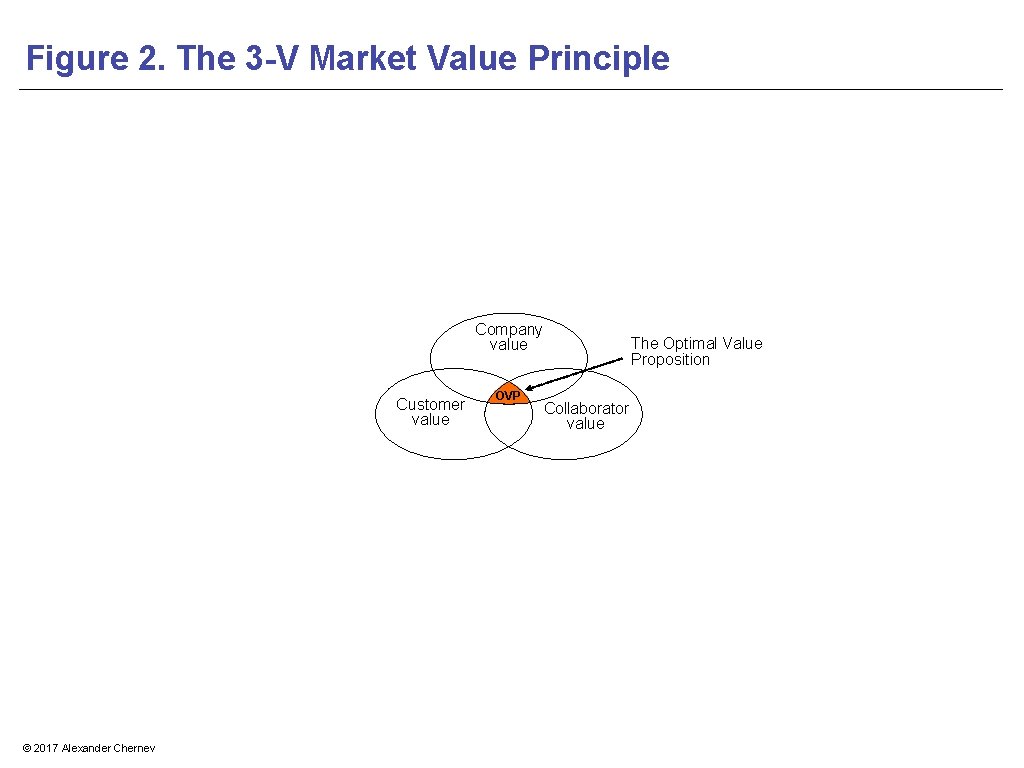
Figure 2. The 3 -V Market Value Principle Company value Customer value © 2017 Alexander Chernev OVP The Optimal Value Proposition Collaborator value
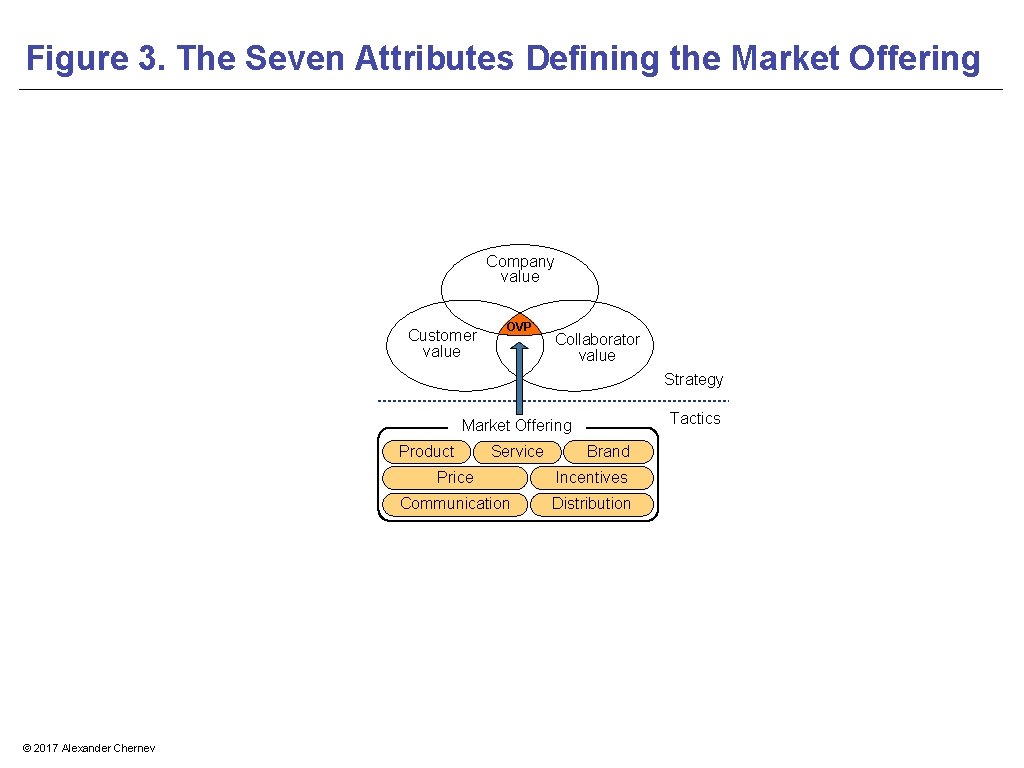
Figure 3. The Seven Attributes Defining the Market Offering Company value Customer value OVP Collaborator value Strategy Tactics Market Offering Product © 2017 Alexander Chernev Service Brand Price Incentives Communication Distribution
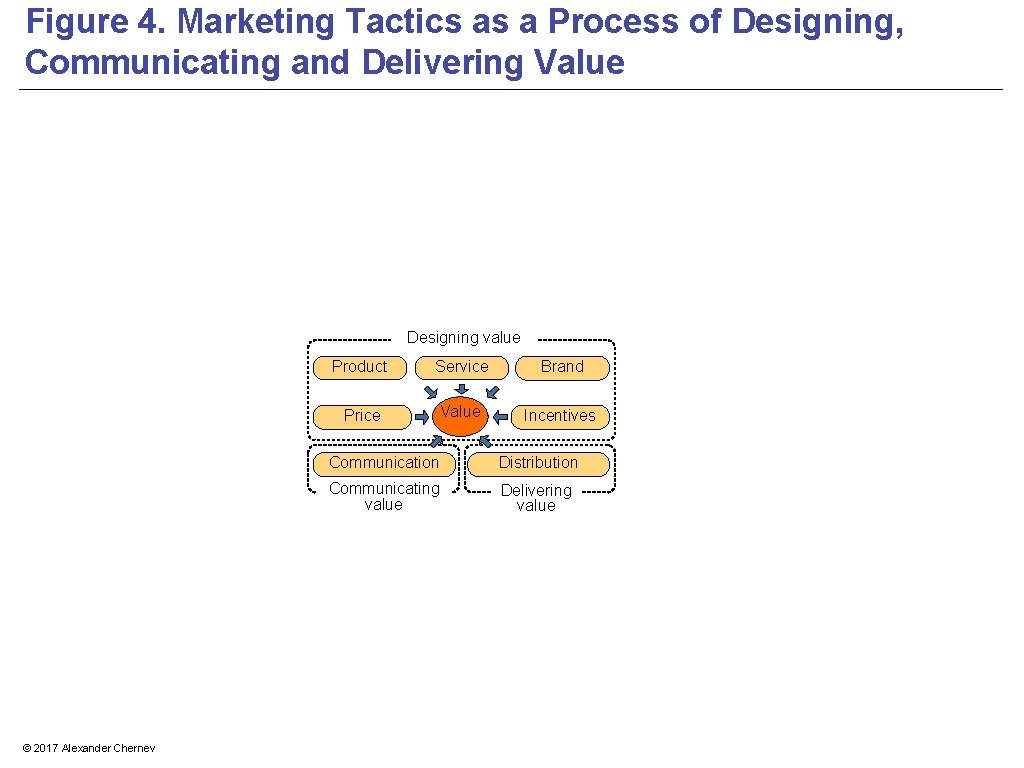
Figure 4. Marketing Tactics as a Process of Designing, Communicating and Delivering Value Designing value © 2017 Alexander Chernev Product Service Brand Price Value Incentives Communication Distribution Communicating value Delivering value
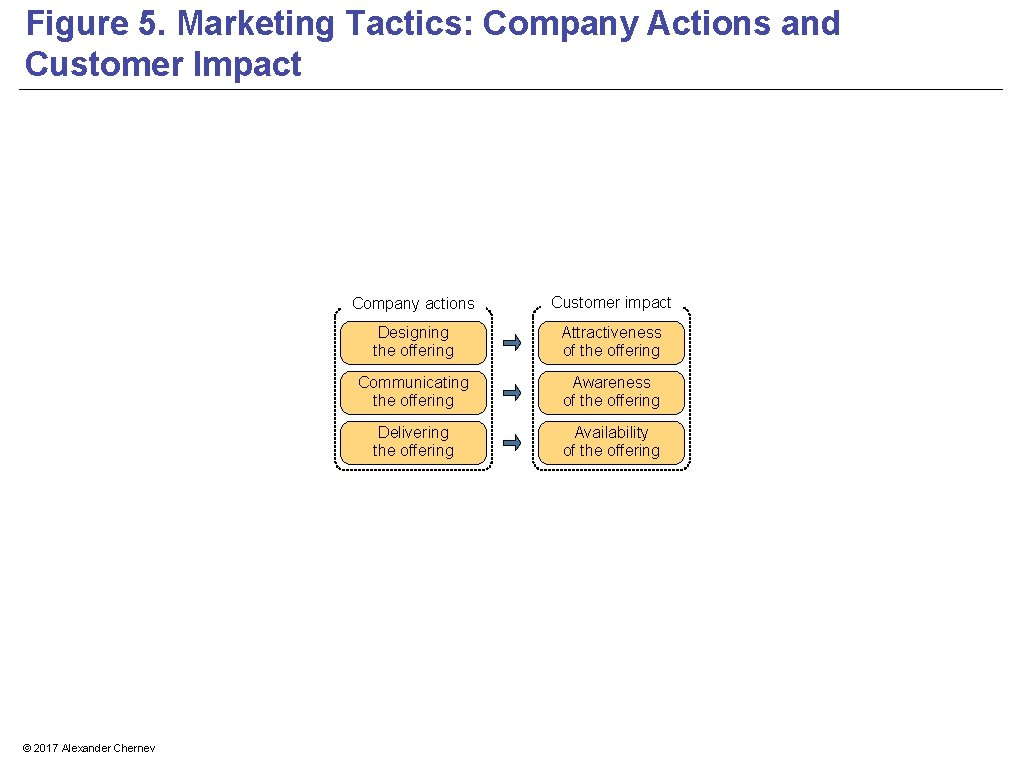
Figure 5. Marketing Tactics: Company Actions and Customer Impact © 2017 Alexander Chernev Company actions Customer impact Designing the offering Attractiveness of the offering Communicating the offering Awareness of the offering Delivering the offering Availability of the offering
Figure 6. The G-STIC Framework for Marketing Management The ultimate criterion for success Goal Focus Benchmarks The value created in the target market Strategy Target market Value proposition Tactics Product Service Brand Price Incentives Communication Distribution Implementation Development © 2017 Alexander Chernev The logistics of creating the offering Deployment The process of monitoring goal progress Control Performance The specifics of the market offering Environment
Chapter 2 Brands as a Means for Creating Market Value
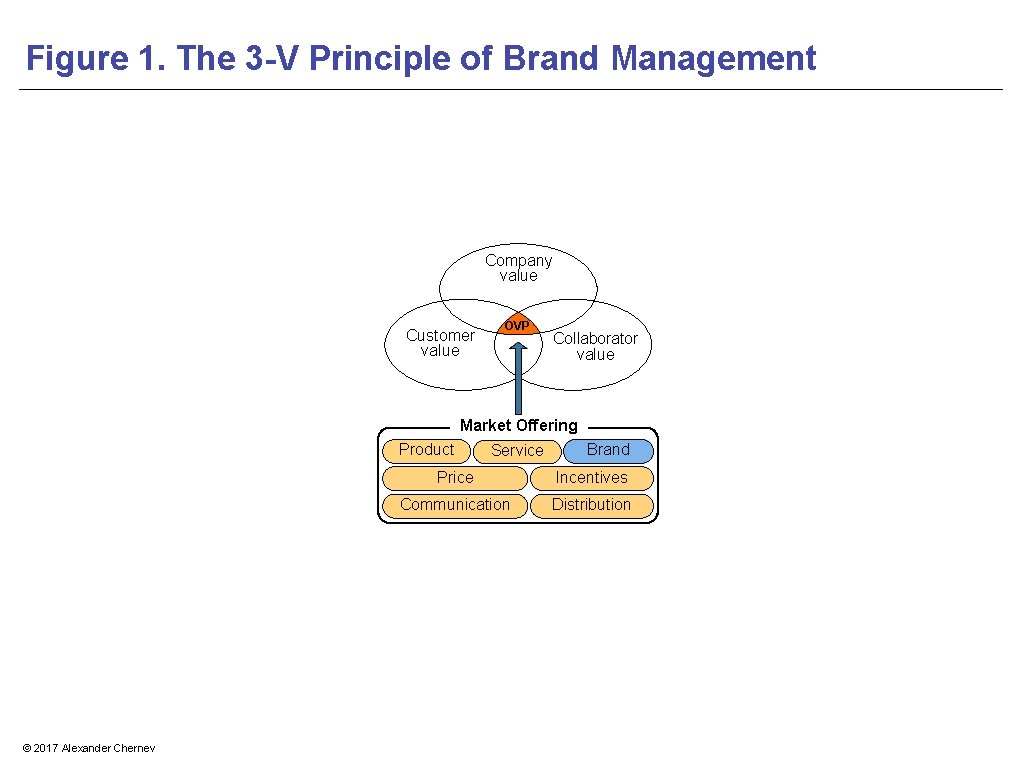
Figure 1. The 3 -V Principle of Brand Management Company value Customer value OVP Collaborator value Market Offering Product © 2017 Alexander Chernev Service Brand Price Incentives Communication Distribution
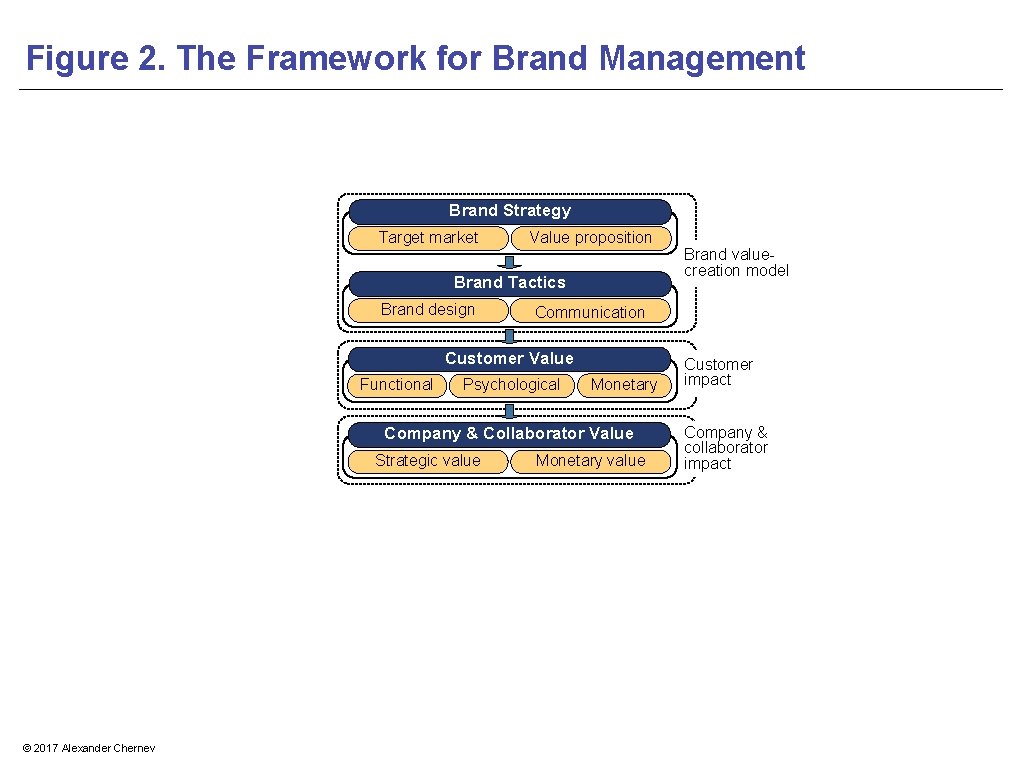
Figure 2. The Framework for Brand Management Brand Strategy Target market Value proposition Brand Tactics Brand design Communication Customer Value Functional Psychological Monetary Company & Collaborator Value Strategic value © 2017 Alexander Chernev Brand valuecreation model Monetary value Customer impact Company & collaborator impact
Chapter 3 Developing a Brand Strategy
Figure 1. The Market Value Principle of Brand Management Company value Customer value OVP Brand © 2017 Alexander Chernev Collaborator value
Figure 2. The Three Dimensions of Customer Value Functional value Customer value Psychological value Monetary value © 2017 Alexander Chernev
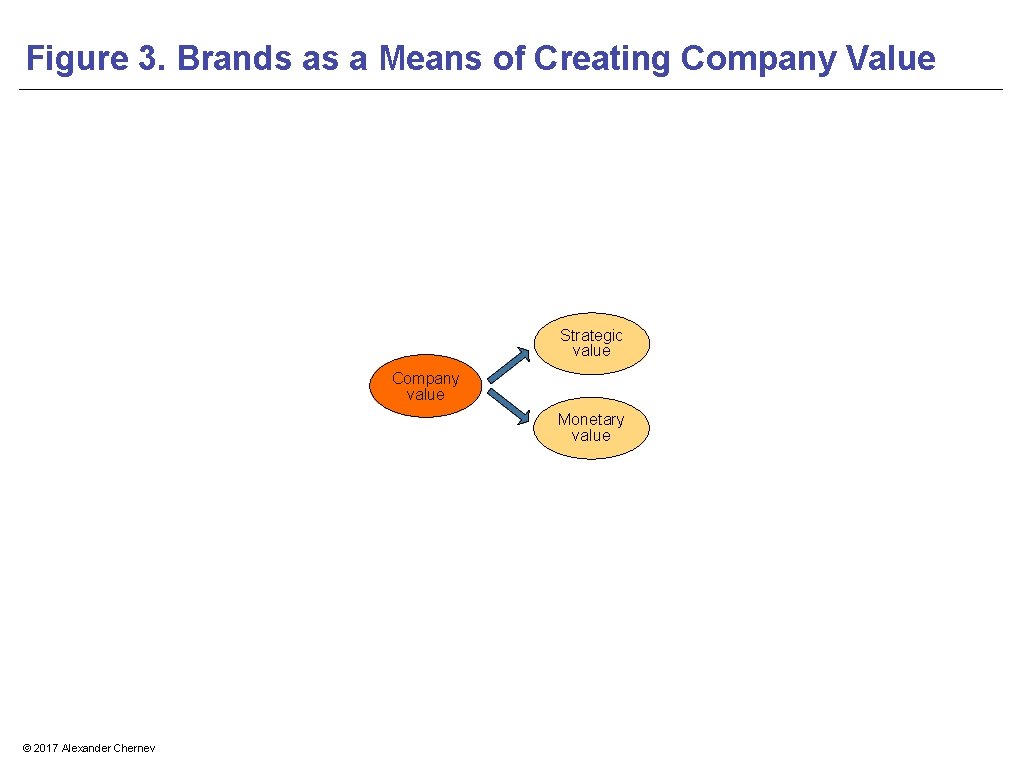
Figure 3. Brands as a Means of Creating Company Value Strategic value Company value Monetary value © 2017 Alexander Chernev
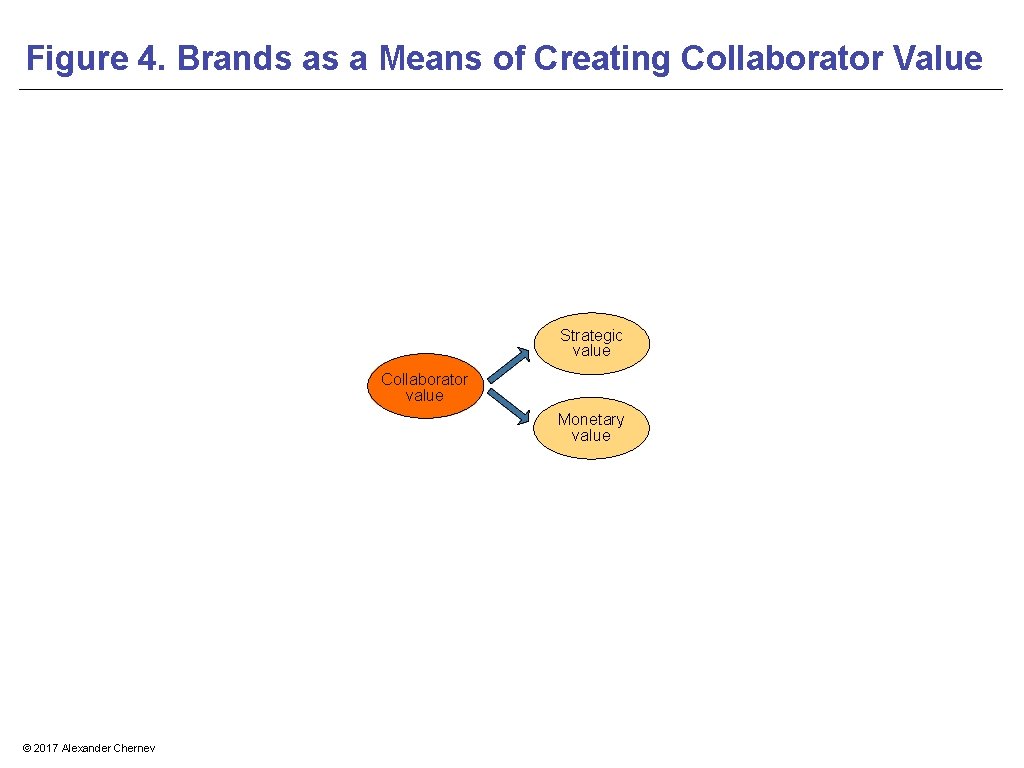
Figure 4. Brands as a Means of Creating Collaborator Value Strategic value Collaborator value Monetary value © 2017 Alexander Chernev
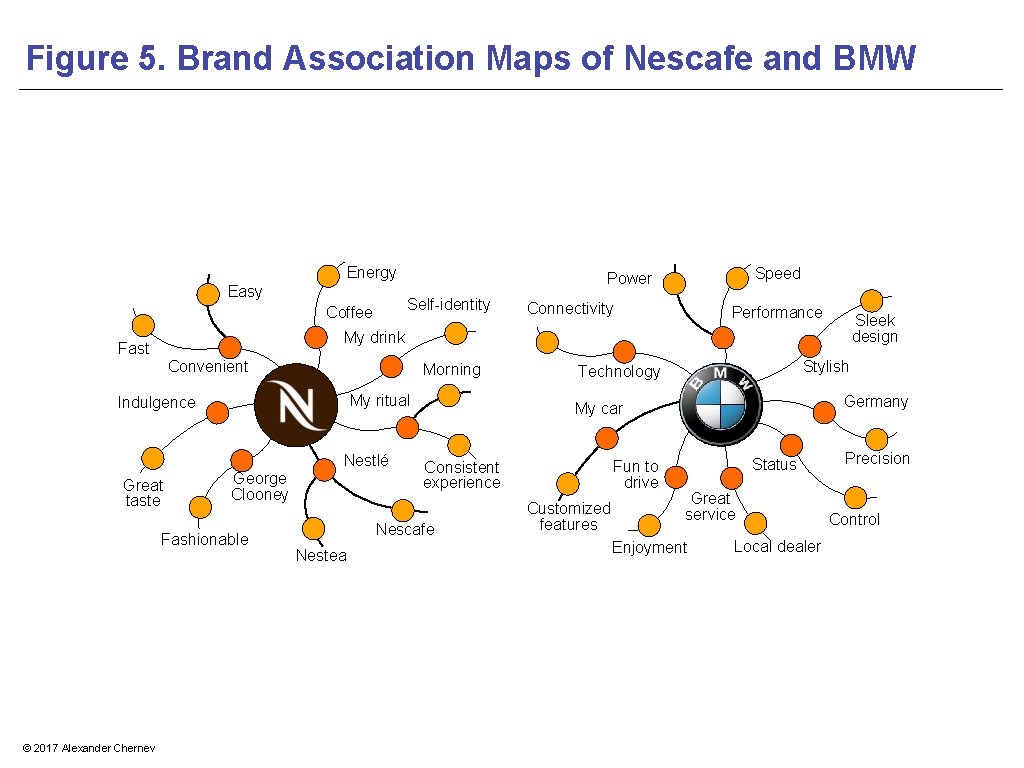
Figure 5. Brand Association Maps of Nescafe and BMW Energy Easy Self-identity Coffee Connectivity Performance Sleek design My drink Fast Convenient Morning My ritual Indulgence Nestlé Great taste George Clooney Fashionable © 2017 Alexander Chernev Speed Power Germany My car Fun to drive Consistent experience Nescafe Nestea Stylish Technology Customized features Status Great service Enjoyment Local dealer Precision Control
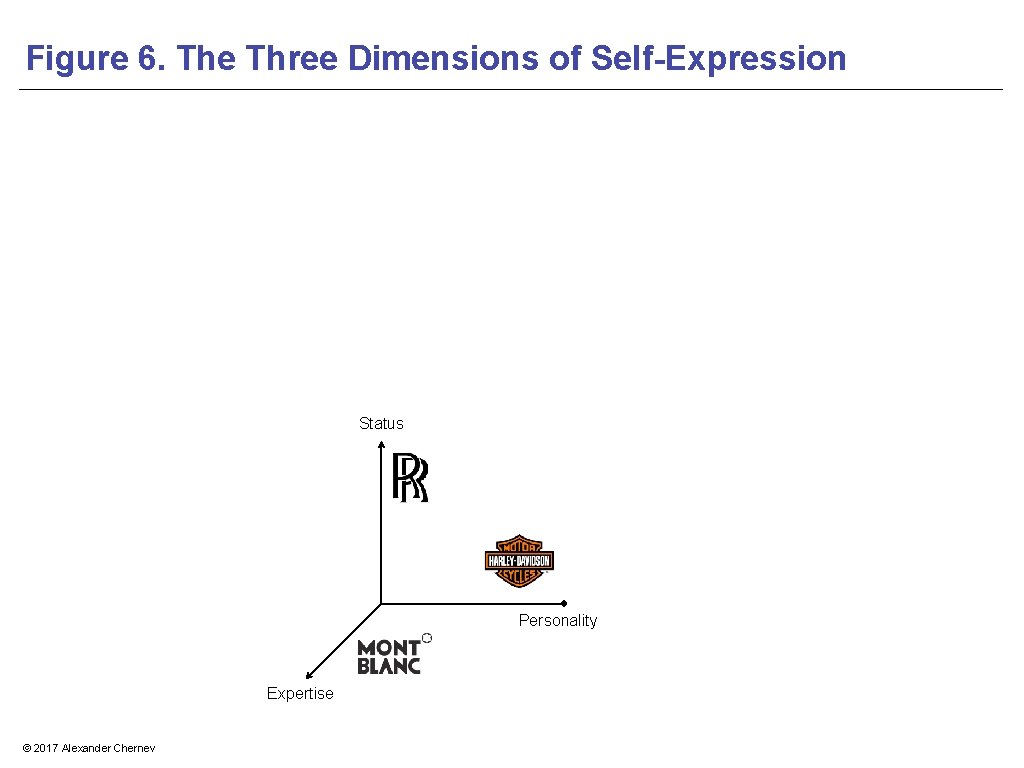
Figure 6. The Three Dimensions of Self-Expression Status Personality Expertise © 2017 Alexander Chernev
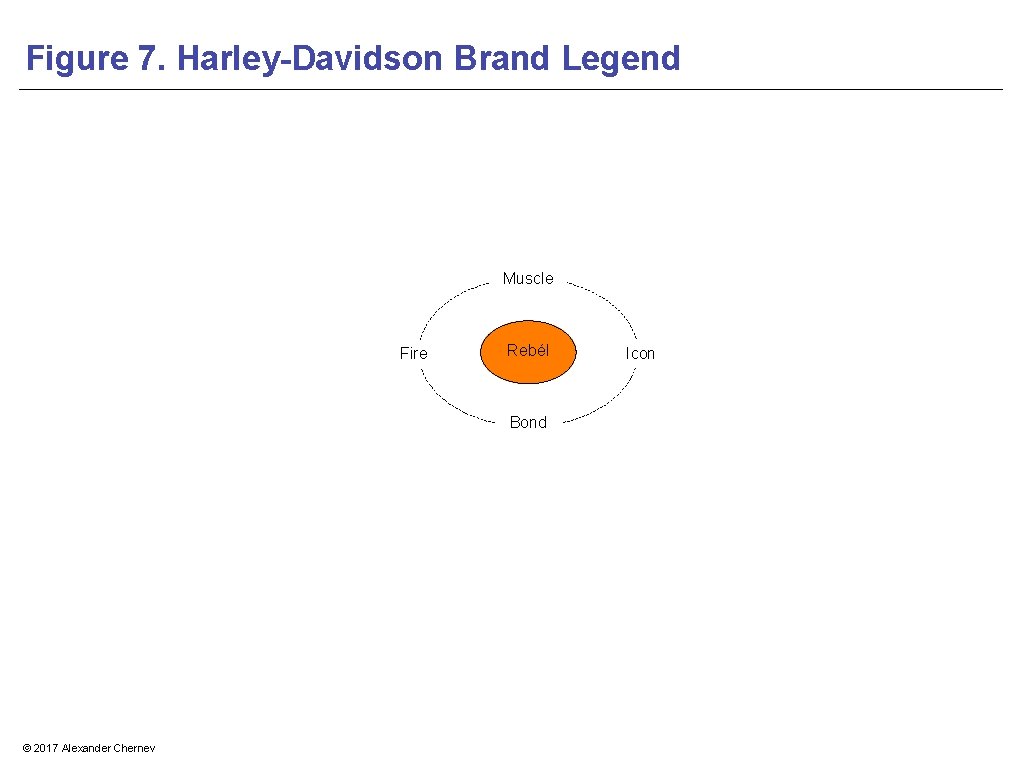
Figure 7. Harley-Davidson Brand Legend Muscle Fire Rebél Bond © 2017 Alexander Chernev Icon
Chapter 4 Designing Brand Tactics
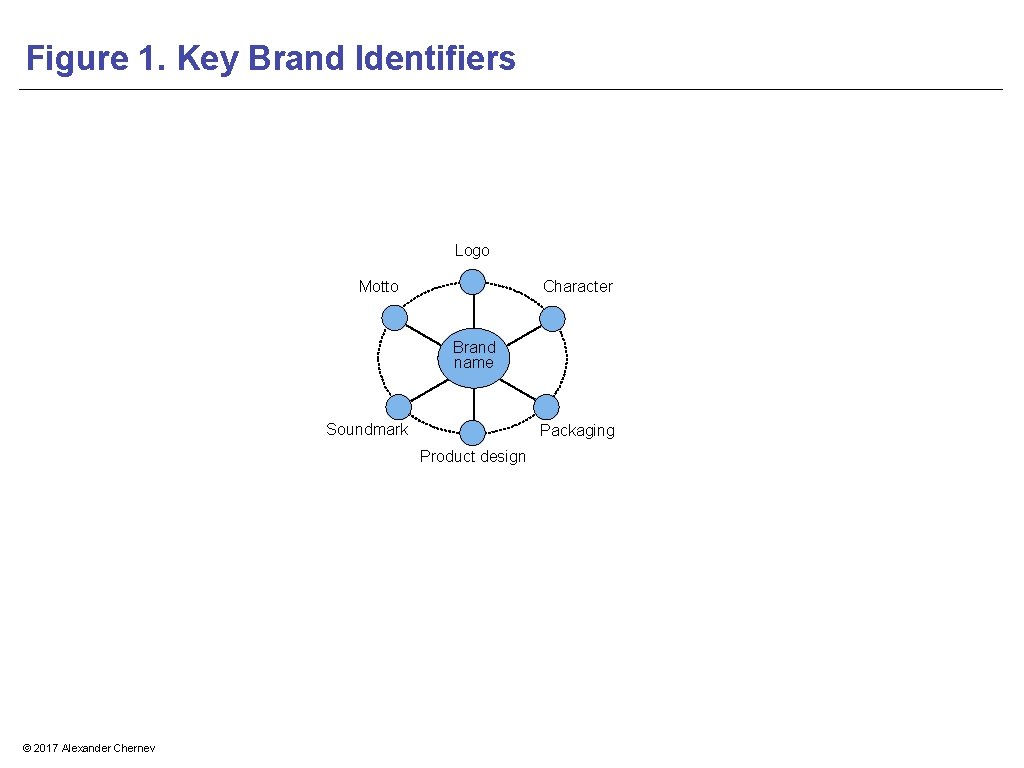
Figure 1. Key Brand Identifiers Logo Motto Character Brand name Soundmark Packaging Product design © 2017 Alexander Chernev
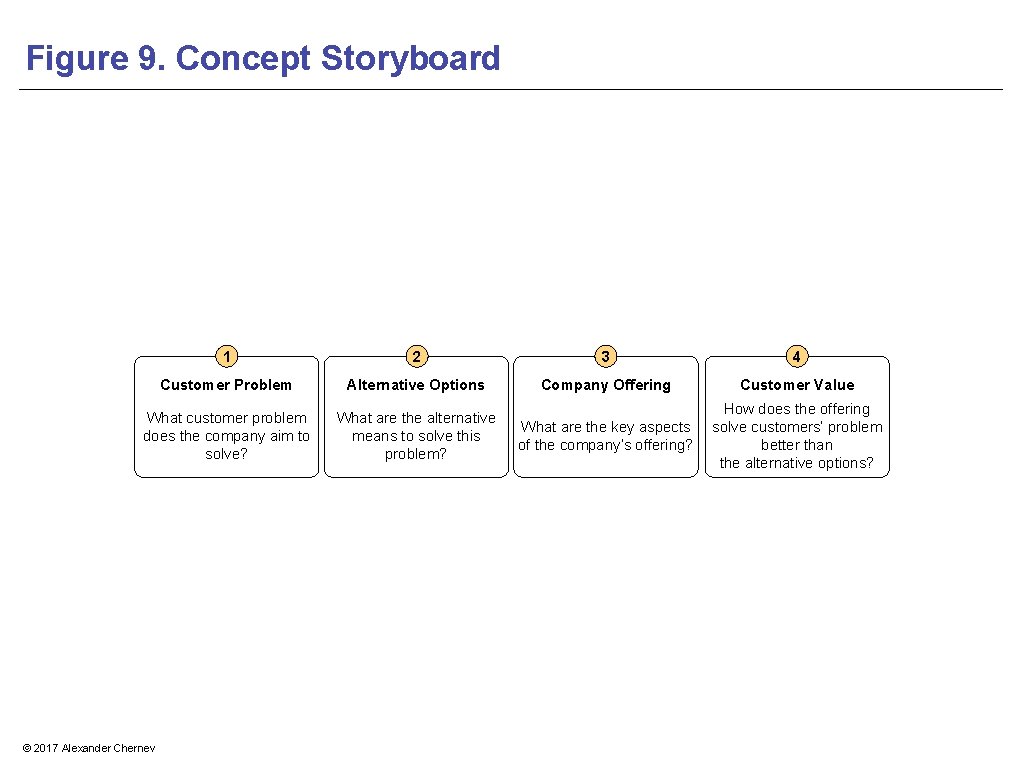
Figure 9. Concept Storyboard 1 2 3 4 Customer Problem Alternative Options Company Offering Customer Value What customer problem does the company aim to solve? What are the alternative means to solve this problem? What are the key aspects of the company’s offering? How does the offering solve customers’ problem better than the alternative options? © 2017 Alexander Chernev
Chapter 5 Managing Brand Portfolios
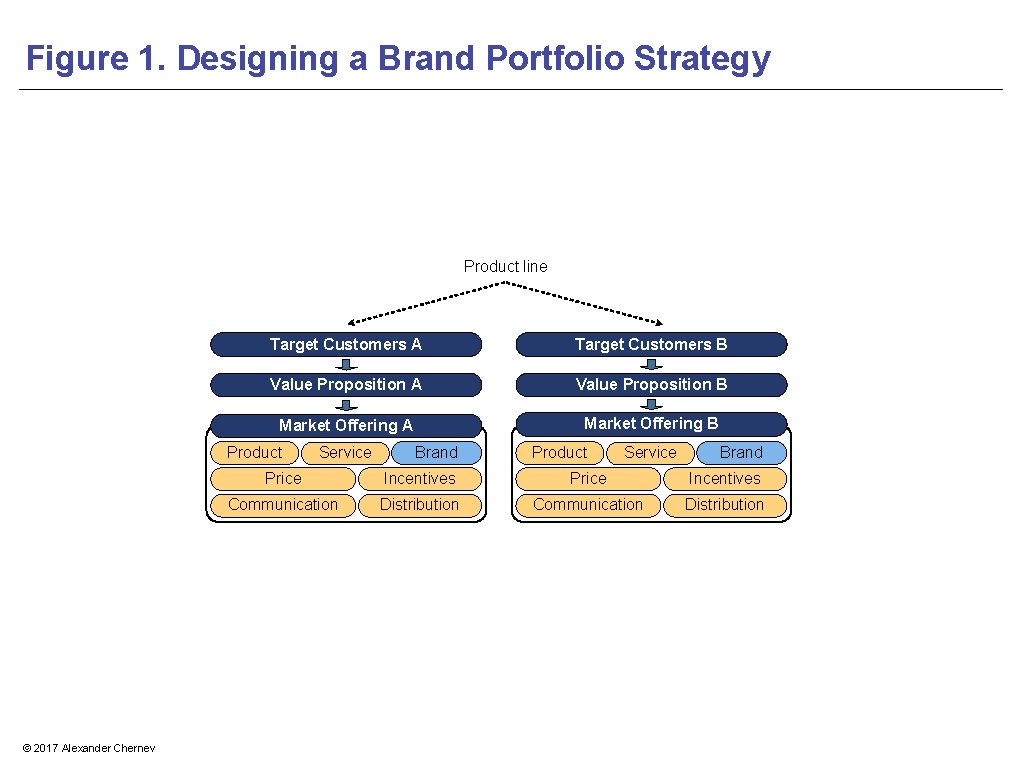
Figure 1. Designing a Brand Portfolio Strategy Product line Target Customers A Target Customers B Value Proposition A Value Proposition B Market Offering A Market Offering B Product © 2017 Alexander Chernev Service Brand Product Service Brand Price Incentives Communication Distribution
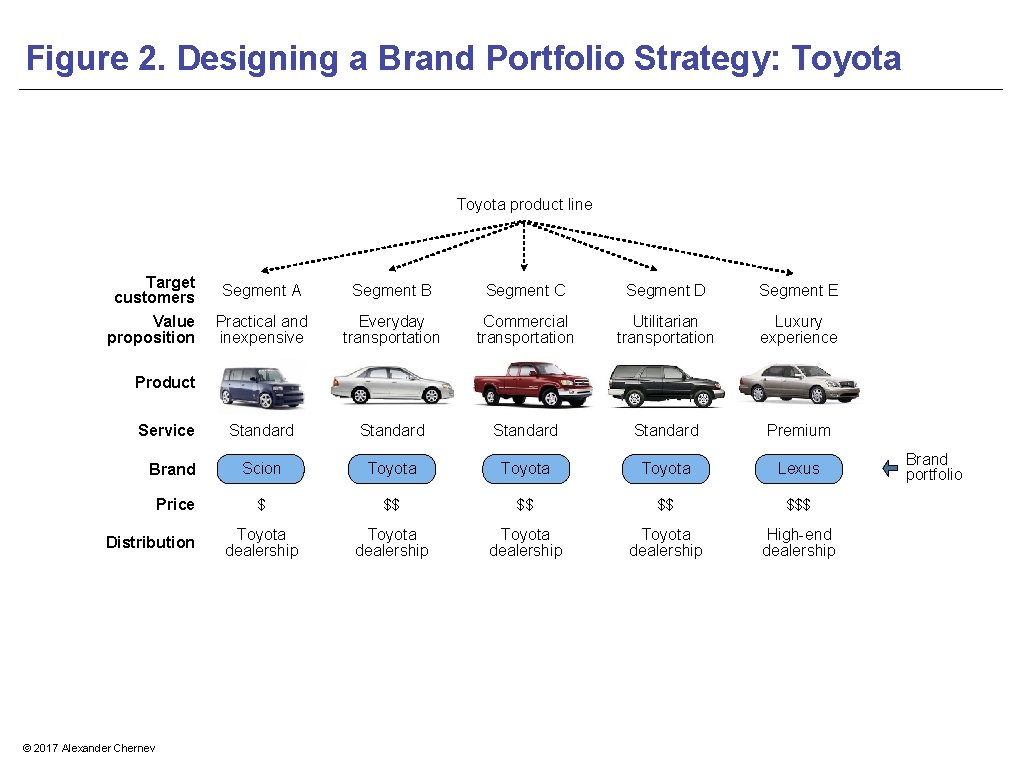
Figure 2. Designing a Brand Portfolio Strategy: Toyota product line Target customers Segment A Segment B Segment C Segment D Segment E Value proposition Practical and inexpensive Everyday transportation Commercial transportation Utilitarian transportation Luxury experience Standard Premium Brand Scion Toyota Lexus Price $ $$ $$$ Toyota dealership High-end dealership Product Service Distribution © 2017 Alexander Chernev Brand portfolio
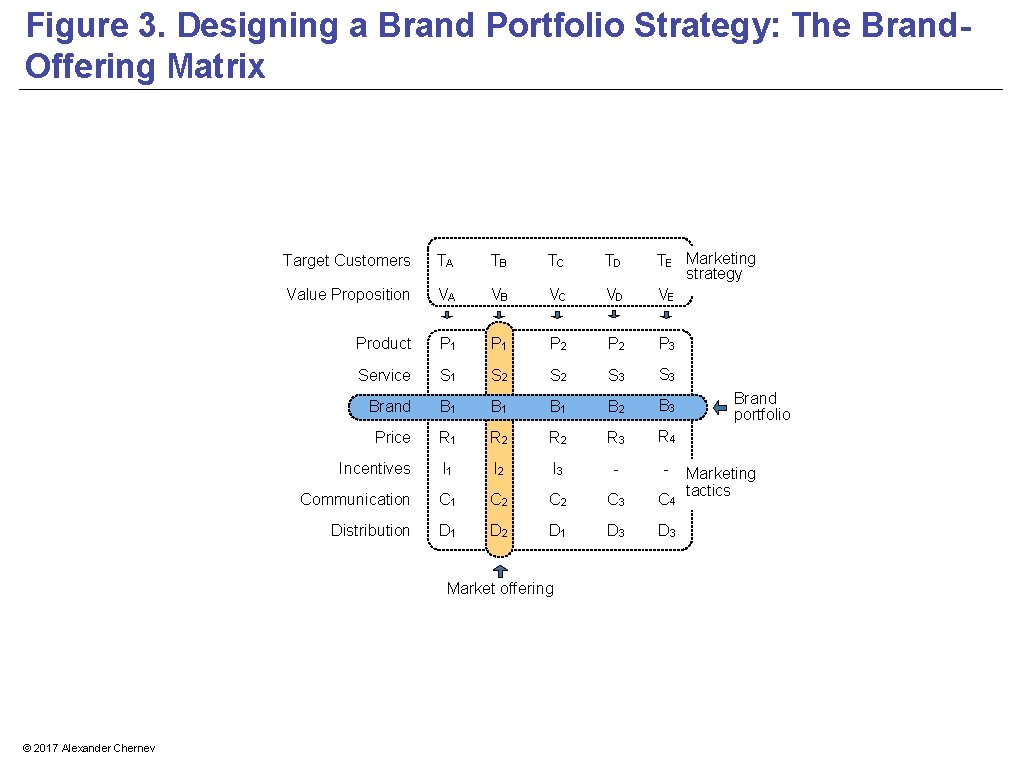
Figure 3. Designing a Brand Portfolio Strategy: The Brand. Offering Matrix Target Customers TA TB TC TD Value Proposition VA VB VC VD TE Marketing strategy VE Product P 1 P 2 P 3 Service S 1 S 2 S 3 Brand B 1 B 1 B 2 B 3 Price R 1 R 2 R 3 R 4 Incentives I 1 I 2 I 3 - - Communication C 1 C 2 C 3 C 4 Distribution D 1 D 2 D 1 D 3 Market offering © 2017 Alexander Chernev Brand portfolio Marketing tactics
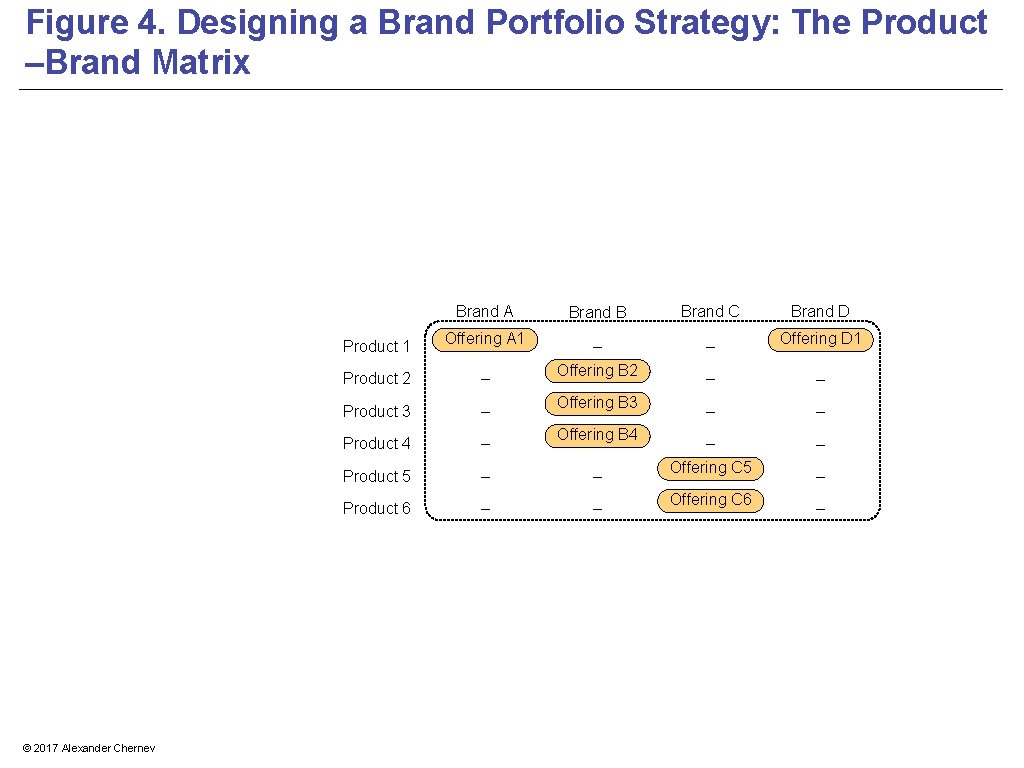
Figure 4. Designing a Brand Portfolio Strategy: The Product –Brand Matrix © 2017 Alexander Chernev Brand A Brand B Brand C Brand D Product 1 Offering A 1 – Offering D 1 – Product 2 – – Offering B 2 – – Product 3 – – – Product 4 – – Product 5 – – – Offering C 5 Product 6 – – Offering B 3 Offering B 4 Offering C 6 – –
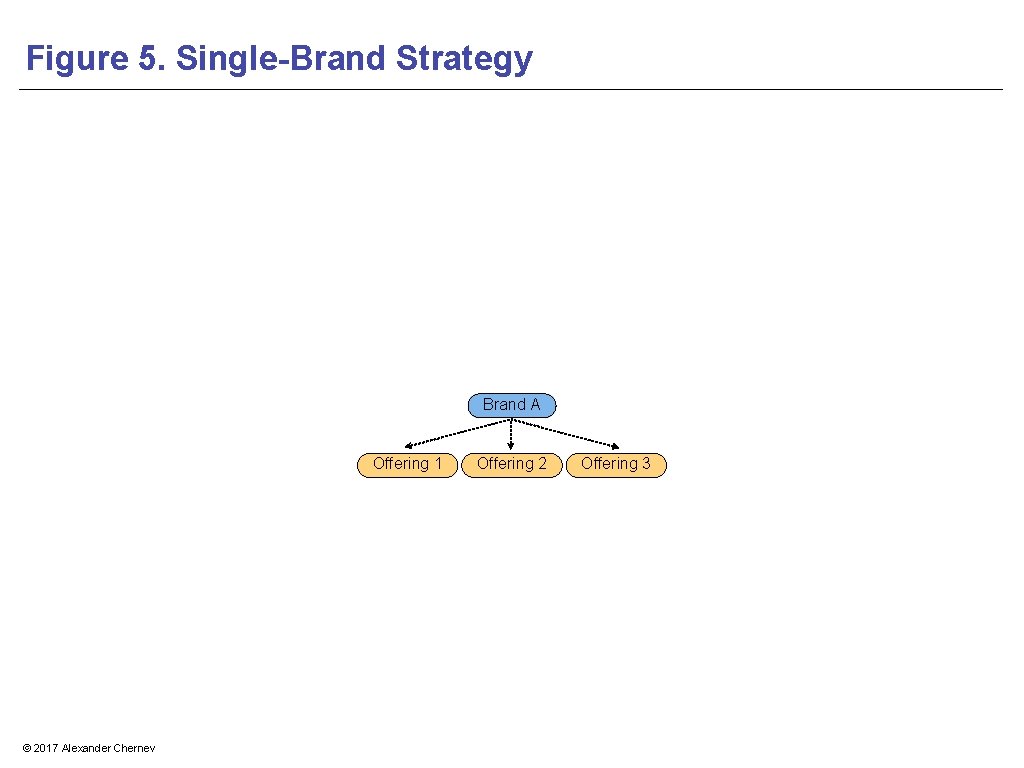
Figure 5. Single-Brand Strategy Brand A Offering 1 © 2017 Alexander Chernev Offering 2 Offering 3
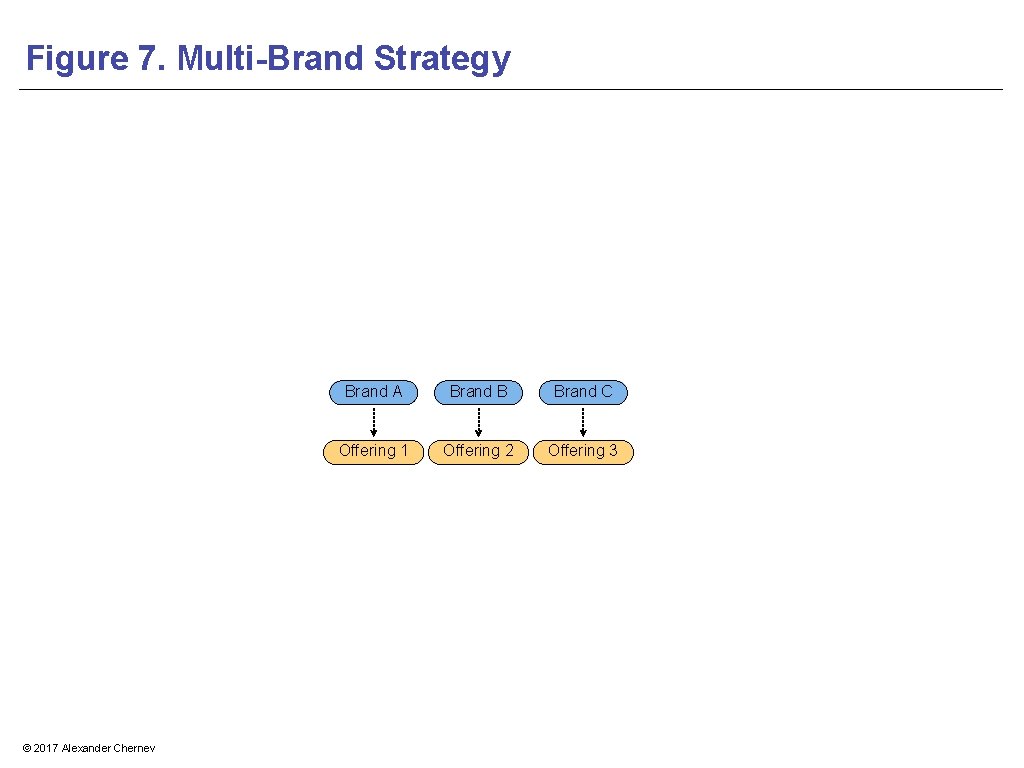
Figure 7. Multi-Brand Strategy © 2017 Alexander Chernev Brand A Brand B Brand C Offering 1 Offering 2 Offering 3
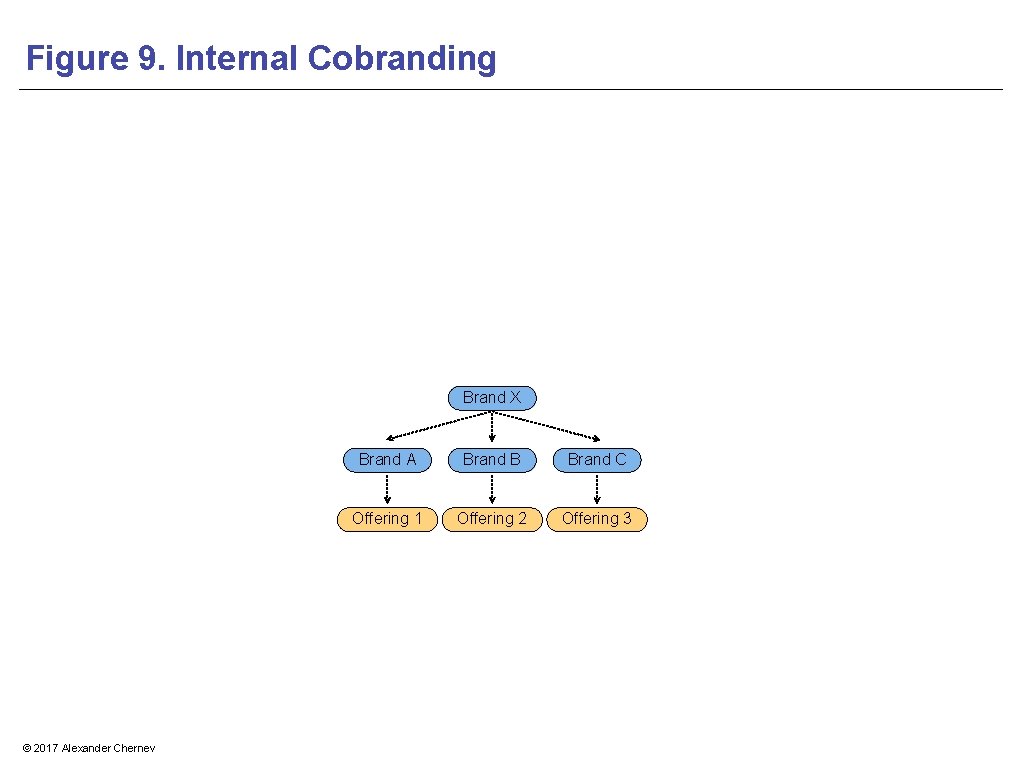
Figure 9. Internal Cobranding Brand X © 2017 Alexander Chernev Brand A Brand B Brand C Offering 1 Offering 2 Offering 3
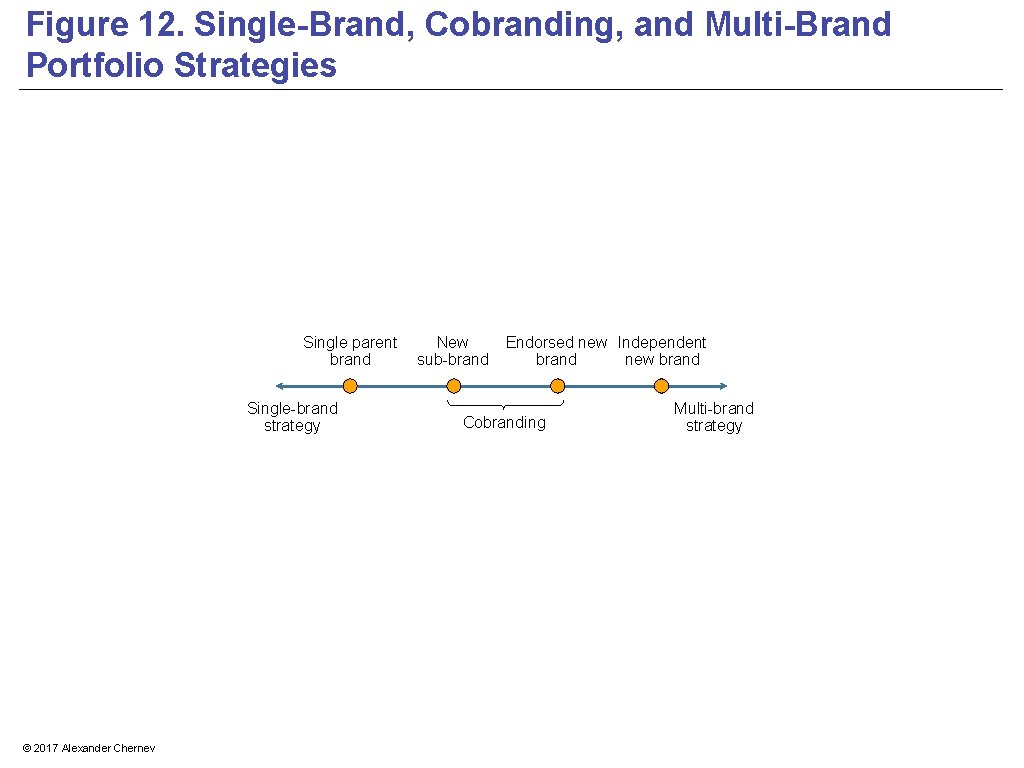
Figure 12. Single-Brand, Cobranding, and Multi-Brand Portfolio Strategies Single parent brand Single-brand strategy © 2017 Alexander Chernev New sub-brand Endorsed new Independent brand new brand Cobranding Multi-brand strategy
Chapter 6 Managing Brand Dynamics
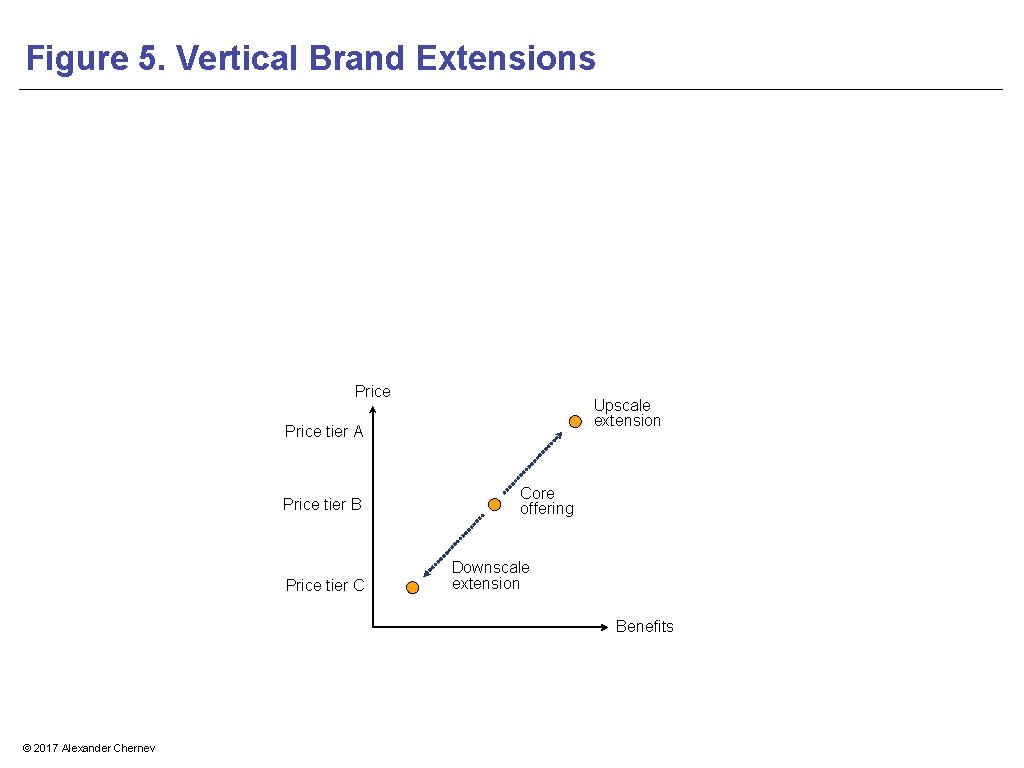
Figure 5. Vertical Brand Extensions Price Upscale extension Price tier A Price tier B Price tier C Core offering Downscale extension Benefits © 2017 Alexander Chernev
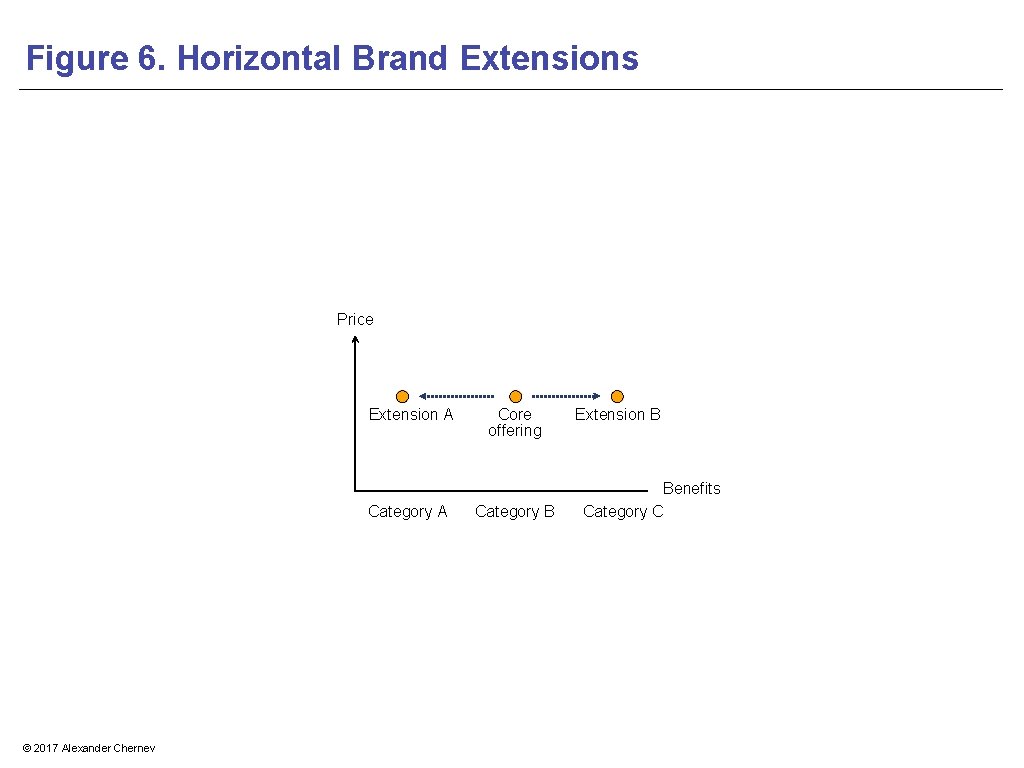
Figure 6. Horizontal Brand Extensions Price Extension A Category A © 2017 Alexander Chernev Core offering Category B Extension B Benefits Category C
Chapter 7 Protecting the Brand
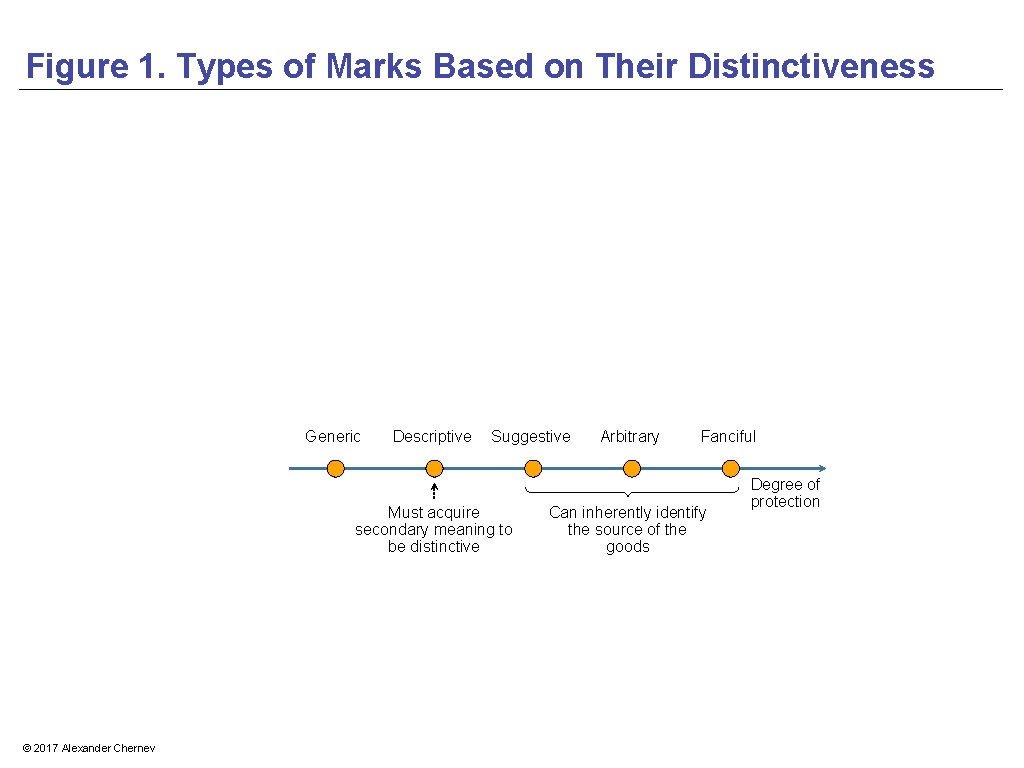
Figure 1. Types of Marks Based on Their Distinctiveness Generic Descriptive Suggestive Must acquire secondary meaning to be distinctive © 2017 Alexander Chernev Arbitrary Fanciful Can inherently identify the source of the goods Degree of protection
Chapter 8 Brand Analysis and Planning
Figure 1. The G-STIC Framework for Brand Management Goal Focus Benchmarks Strategy Target market Value proposition Tactics Brand design Communication Implementation Development Deployment Control Performance © 2017 Alexander Chernev Environment Specific goal(s) to be achieved by the brand Value created by the brand in the target market Actionable brand elements The logistics of building the brand Evaluating the brand (brand audit)
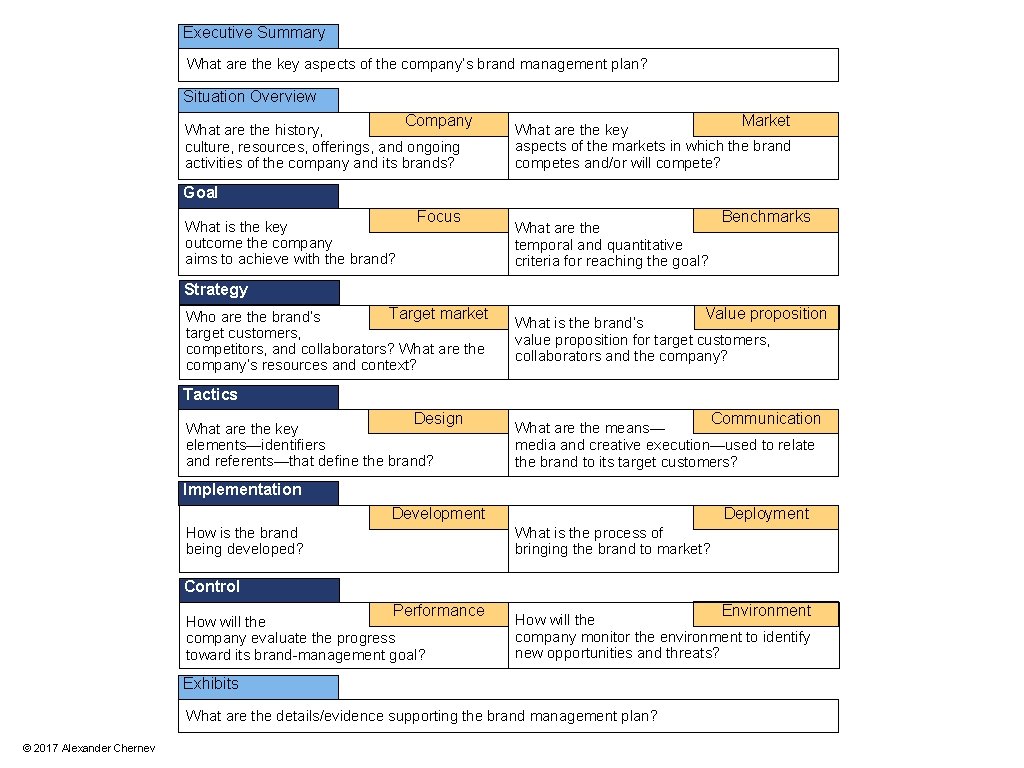
Executive Summary What are the key aspects of the company’s brand management plan? Situation Overview Company What are the history, culture, resources, offerings, and ongoing activities of the company and its brands? Market What are the key aspects of the markets in which the brand competes and/or will compete? Goal What is the key outcome the company aims to achieve with the brand? Focus Benchmarks What are the temporal and quantitative criteria for reaching the goal? Strategy Target market Who are the brand’s target customers, competitors, and collaborators? What are the company’s resources and context? Value proposition What is the brand’s value proposition for target customers, collaborators and the company? Tactics Design What are the key elements—identifiers and referents—that define the brand? Communication What are the means— media and creative execution—used to relate the brand to its target customers? Implementation Deployment Development What is the process of bringing the brand to market? How is the brand being developed? Control Performance How will the company evaluate the progress toward its brand-management goal? Exhibits What are the details/evidence supporting the brand management plan? © 2017 Alexander Chernev Environment How will the company monitor the environment to identify new opportunities and threats?
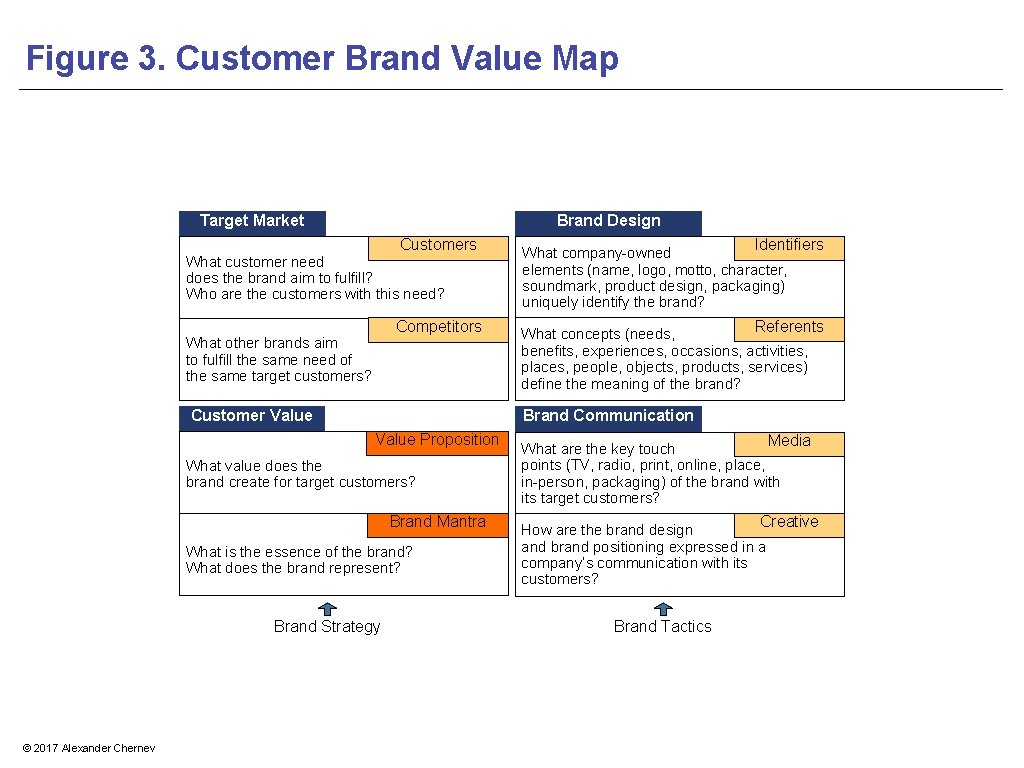
Figure 3. Customer Brand Value Map Target Market Brand Design Customers Identifiers What company-owned elements (name, logo, motto, character, soundmark, product design, packaging) uniquely identify the brand? Competitors Referents What concepts (needs, benefits, experiences, occasions, activities, places, people, objects, products, services) define the meaning of the brand? What customer need does the brand aim to fulfill? Who are the customers with this need? What other brands aim to fulfill the same need of the same target customers? Customer Value Brand Communication Value Proposition What value does the brand create for target customers? Brand Mantra What is the essence of the brand? What does the brand represent? Brand Strategy © 2017 Alexander Chernev Media What are the key touch points (TV, radio, print, online, place, in-person, packaging) of the brand with its target customers? Creative How are the brand design and brand positioning expressed in a company’s communication with its customers? Brand Tactics
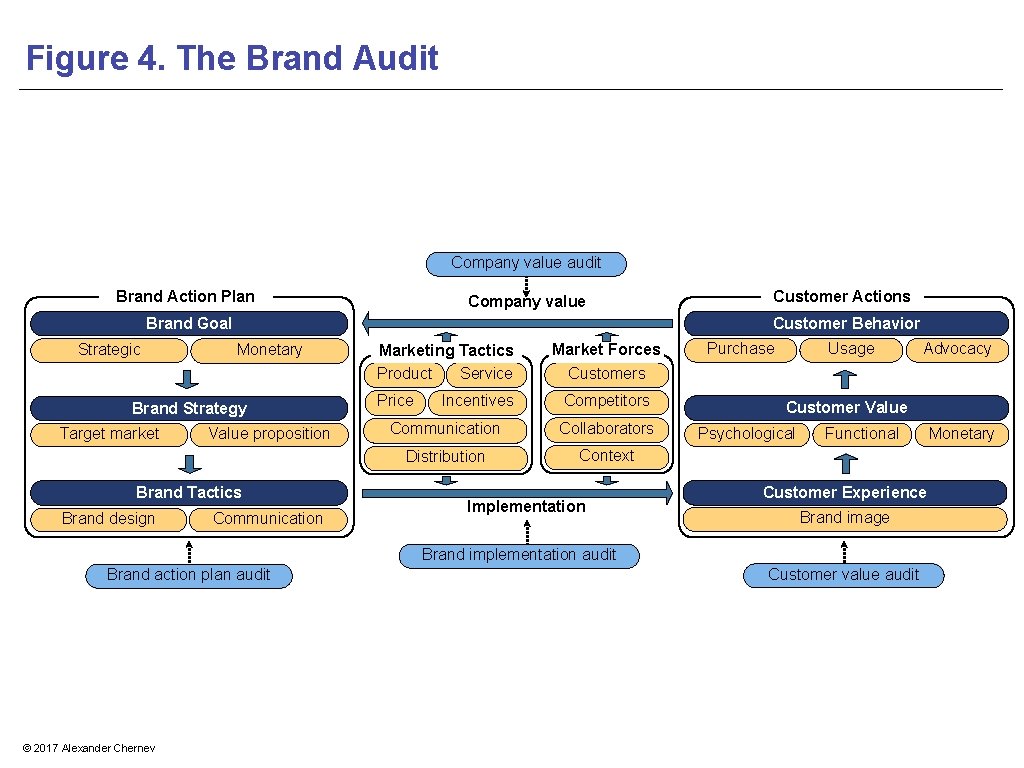
Figure 4. The Brand Audit Company value audit Brand Action Plan Company value Customer Behavior Brand Goal Strategic Monetary Brand Strategy Target market Value proposition Brand Tactics Brand design Customer Actions Communication Marketing Tactics Product Service Price Incentives Market Forces Customers Competitors Communication Collaborators Distribution Context Implementation Purchase Usage Customer Value Psychological Functional Customer Experience Brand image Brand implementation audit Brand action plan audit © 2017 Alexander Chernev Advocacy Customer value audit Monetary
Chapter 9 Brand Equity and Brand Power
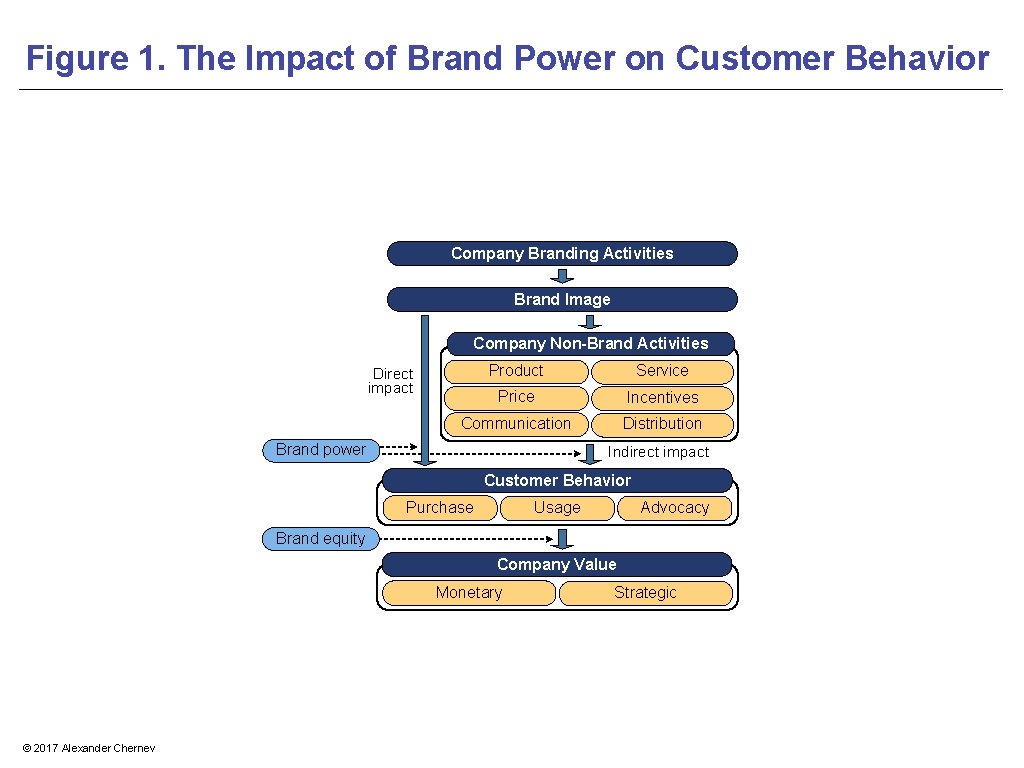
Figure 1. The Impact of Brand Power on Customer Behavior Company Branding Activities Brand Image Company Non-Brand Activities Product Service Price Incentives Communication Distribution Direct impact Brand power Indirect impact Customer Behavior Purchase Advocacy Usage Brand equity Company Value Monetary © 2017 Alexander Chernev Strategic
Chapter 10 Brand Research
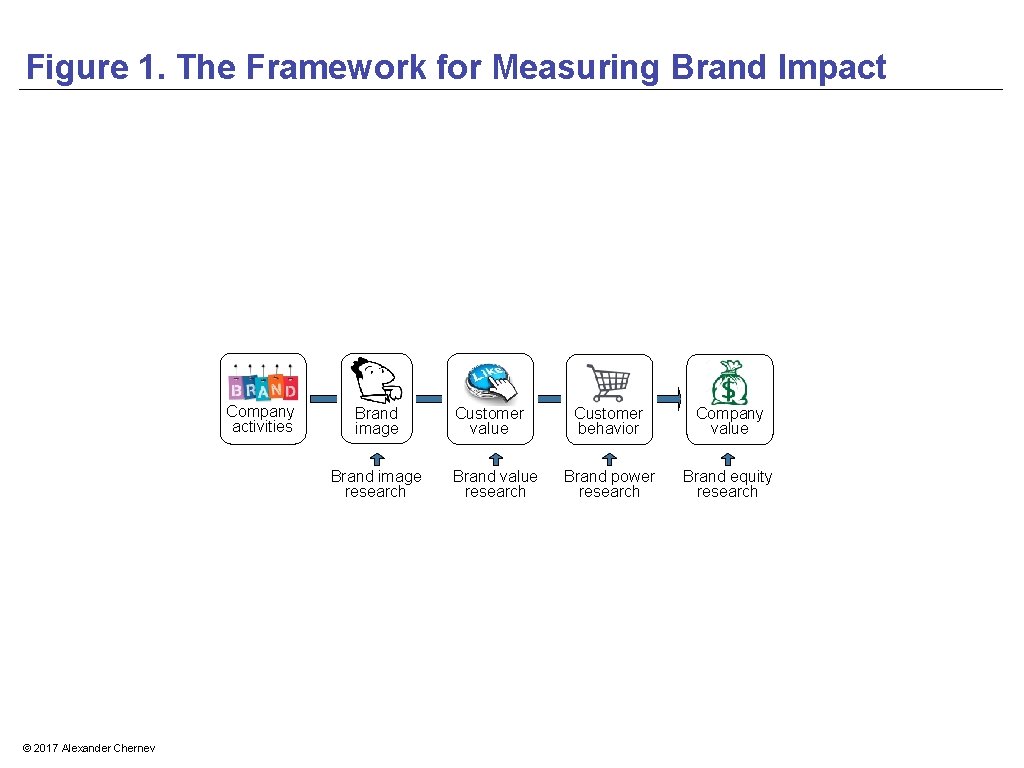
Figure 1. The Framework for Measuring Brand Impact Company activities Brand image research © 2017 Alexander Chernev Customer value Brand value research Customer behavior Company value Brand power research Brand equity research
Figure 2. Brand-Positioning Map Dimension 1 Brand A Brand B Dimension 2 Brand C Brand D © 2017 Alexander Chernev
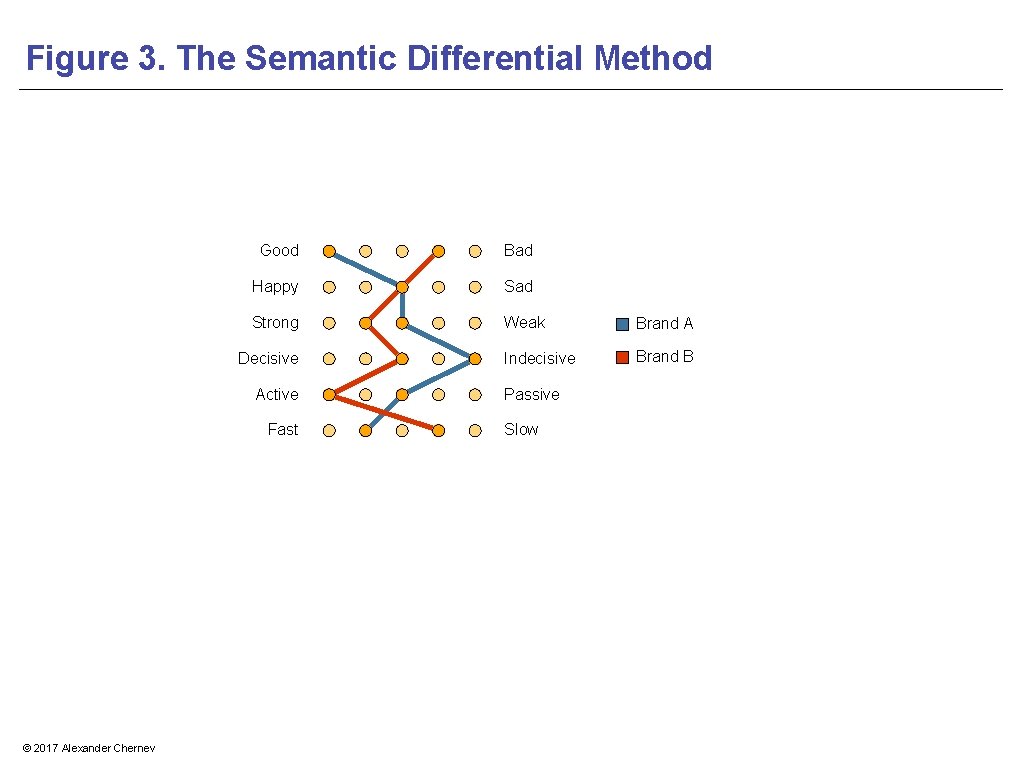
Figure 3. The Semantic Differential Method Good Bad Happy Sad Strong Weak Brand A Indecisive Brand B Decisive Active Fast © 2017 Alexander Chernev Passive Slow
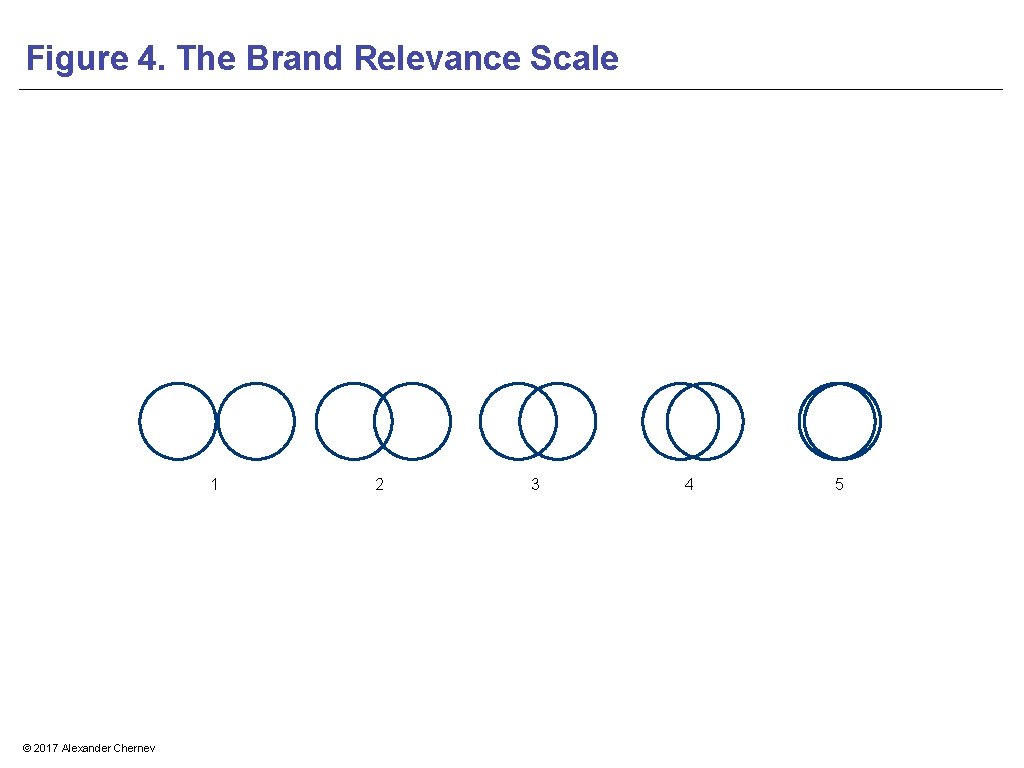
Figure 4. The Brand Relevance Scale 1 © 2017 Alexander Chernev 2 3 4 5
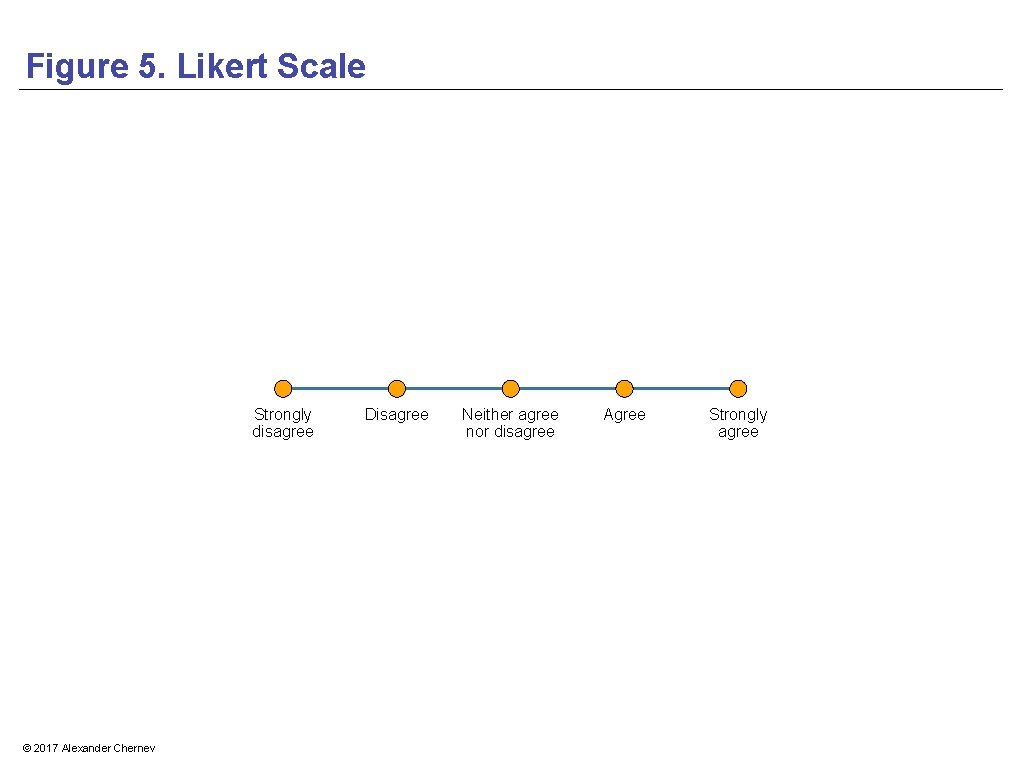
Figure 5. Likert Scale Strongly disagree © 2017 Alexander Chernev Disagree Neither agree nor disagree Agree Strongly agree
Brands as a Means of Creating Customer Value Identification benefit Functional value Signaling benefit Performance benefit Emotional benefit Customer value Psychological value Self-expressive benefit Societal benefit Monetary value Signaling benefit Financial benefit © 2017 Alexander Chernev
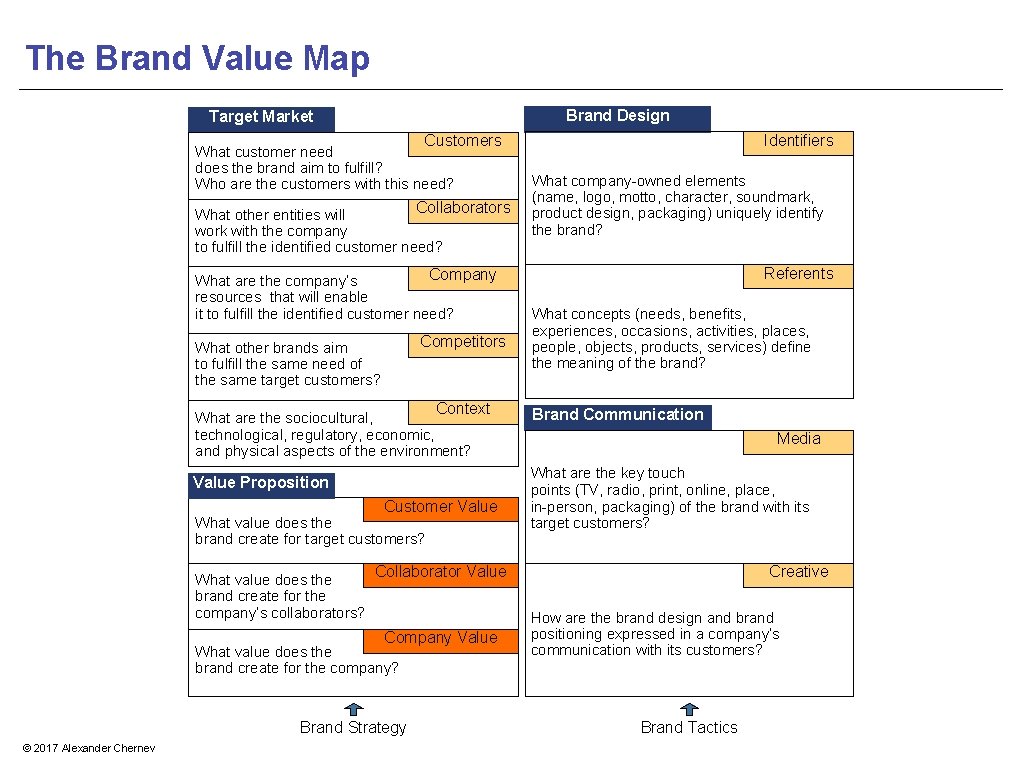
The Brand Value Map Brand Design Target Market Identifiers Customers What customer need does the brand aim to fulfill? Who are the customers with this need? Collaborators What other entities will work with the company to fulfill the identified customer need? Company What are the company’s resources that will enable it to fulfill the identified customer need? Competitors What other brands aim to fulfill the same need of the same target customers? Context What are the sociocultural, technological, regulatory, economic, and physical aspects of the environment? Value Proposition Customer Value What value does the brand create for target customers? What value does the brand create for the company’s collaborators? Referents What concepts (needs, benefits, experiences, occasions, activities, places, people, objects, products, services) define the meaning of the brand? Brand Communication Media What are the key touch points (TV, radio, print, online, place, in-person, packaging) of the brand with its target customers? Creative Collaborator Value Company Value What value does the brand create for the company? Brand Strategy © 2017 Alexander Chernev What company-owned elements (name, logo, motto, character, soundmark, product design, packaging) uniquely identify the brand? How are the brand design and brand positioning expressed in a company’s communication with its customers? Brand Tactics