CELLS Diffusion Osmosis and Transport The Structure of

- Slides: 20
CELLS Diffusion, Osmosis, and Transport
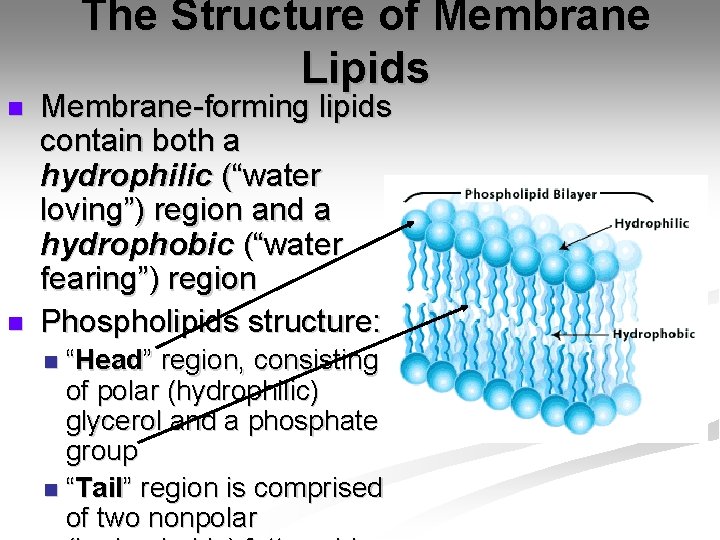
The Structure of Membrane Lipids n n Membrane-forming lipids contain both a hydrophilic (“water loving”) region and a hydrophobic (“water fearing”) region Phospholipids structure: “Head” region, consisting of polar (hydrophilic) glycerol and a phosphate group n “Tail” region is comprised of two nonpolar n
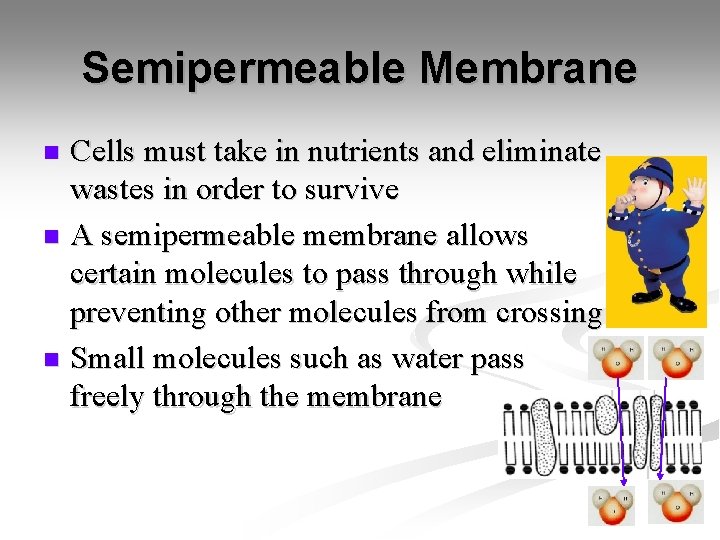
Semipermeable Membrane Cells must take in nutrients and eliminate wastes in order to survive n A semipermeable membrane allows certain molecules to pass through while preventing other molecules from crossing n Small molecules such as water pass freely through the membrane n
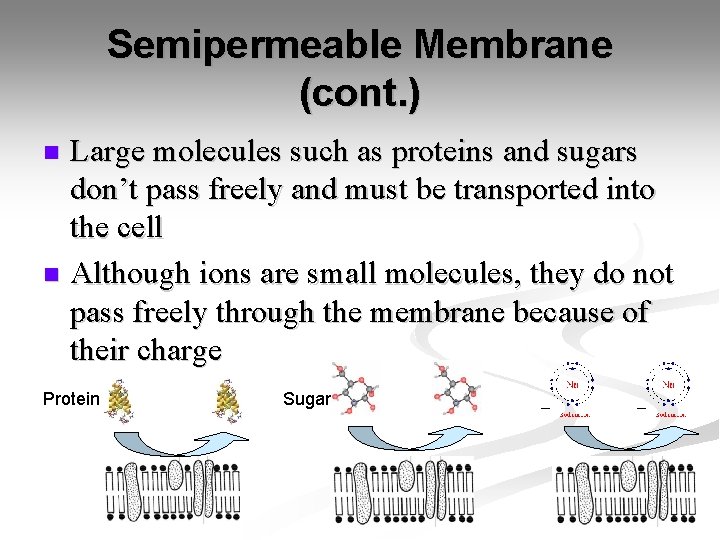
Semipermeable Membrane (cont. ) Large molecules such as proteins and sugars don’t pass freely and must be transported into the cell n Although ions are small molecules, they do not pass freely through the membrane because of their charge n Protein Sugar
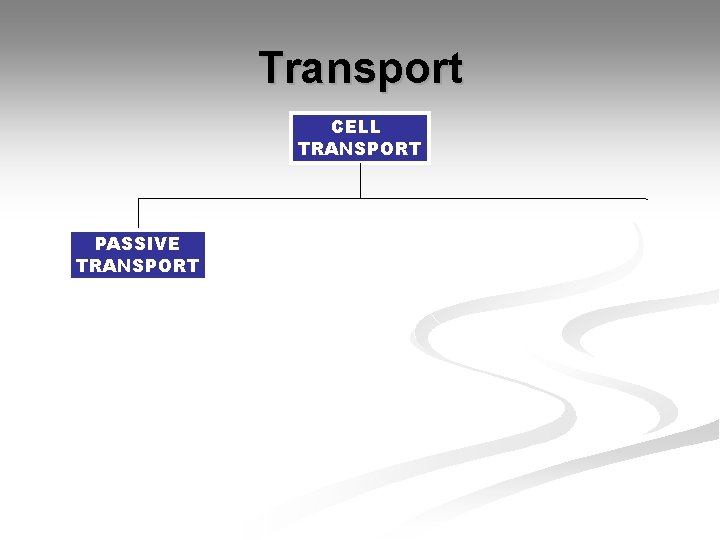
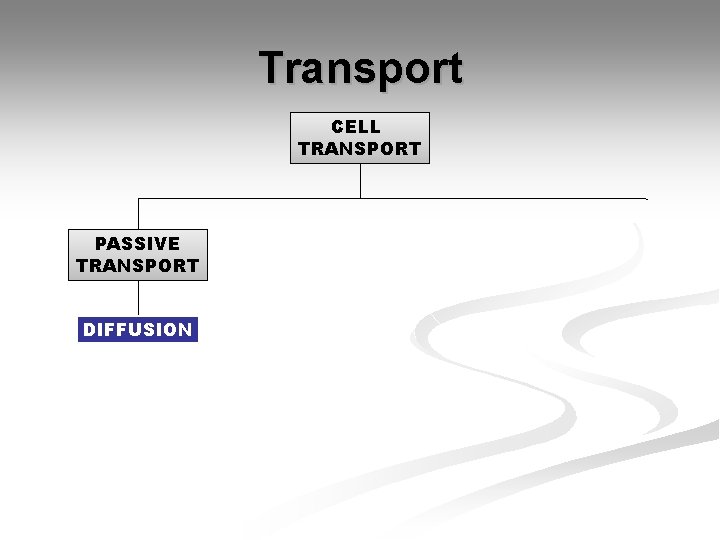
Transport CELL TRANSPORT PASSIVE TRANSPORT
Passive Transport Movement across the cell membrane without the use of energy n This movement always goes down the concentration gradient. n The concentration gradient is the difference in solute concentration between two mediums separated by a membrane. n Passive transport includes diffusion n
Transport CELL TRANSPORT PASSIVE TRANSPORT DIFFUSION
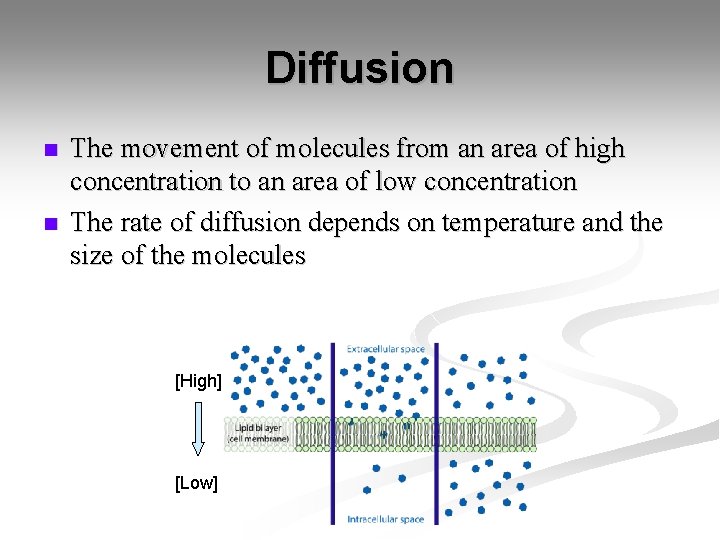
Diffusion n n The movement of molecules from an area of high concentration to an area of low concentration The rate of diffusion depends on temperature and the size of the molecules [High] [Low]
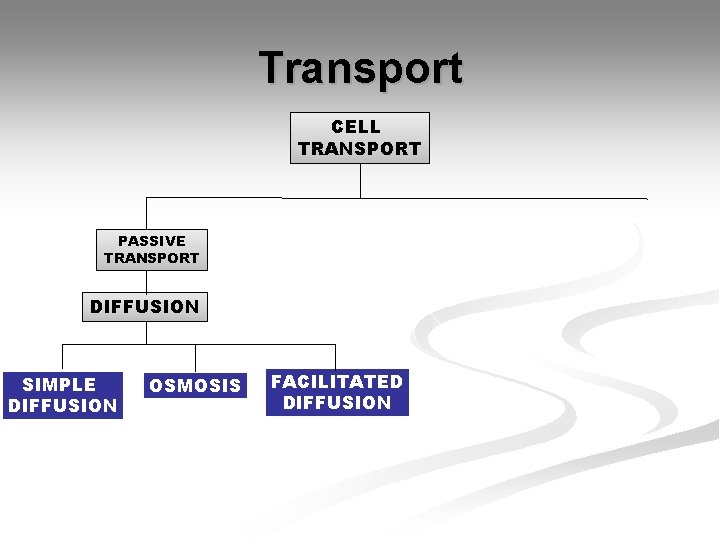
Transport CELL TRANSPORT PASSIVE TRANSPORT DIFFUSION SIMPLE DIFFUSION OSMOSIS FACILITATED DIFFUSION
Types of Diffusion n Simple—unassisted diffusion of small particles or lipid-soluble molecules Osmosis—unassisted diffusion of water Facilitated diffusion—diffusion with the help of carrier proteins
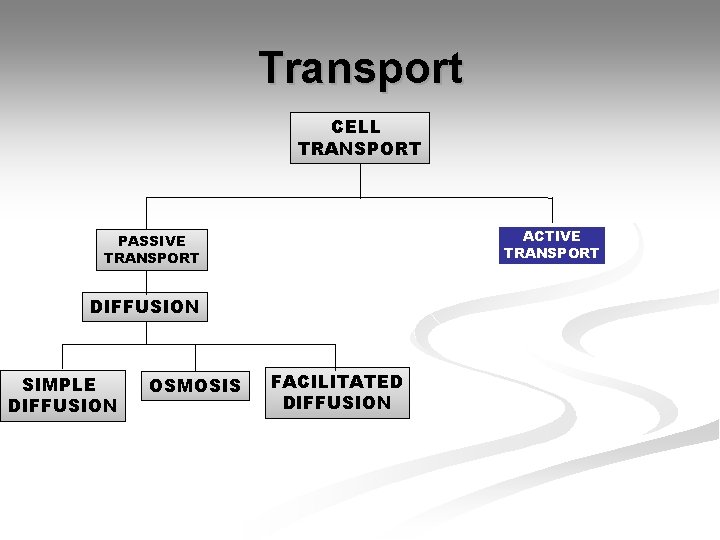
Transport CELL TRANSPORT ACTIVE TRANSPORT PASSIVE TRANSPORT DIFFUSION SIMPLE DIFFUSION OSMOSIS FACILITATED DIFFUSION
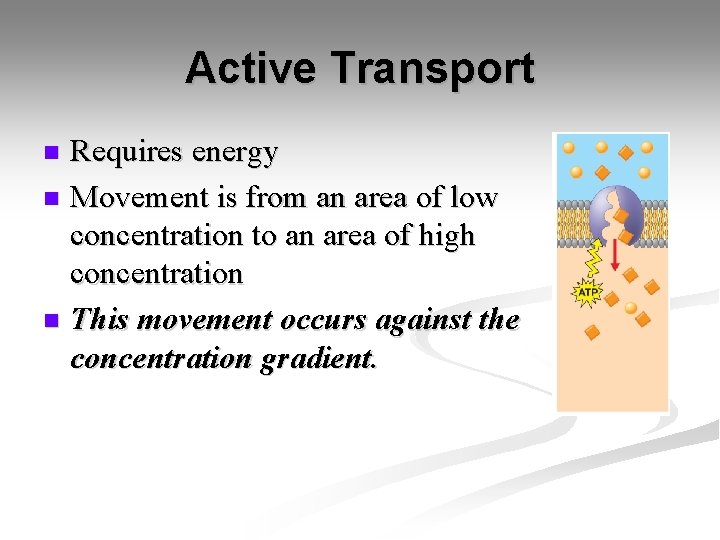
Active Transport Requires energy n Movement is from an area of low concentration to an area of high concentration n This movement occurs against the concentration gradient. n
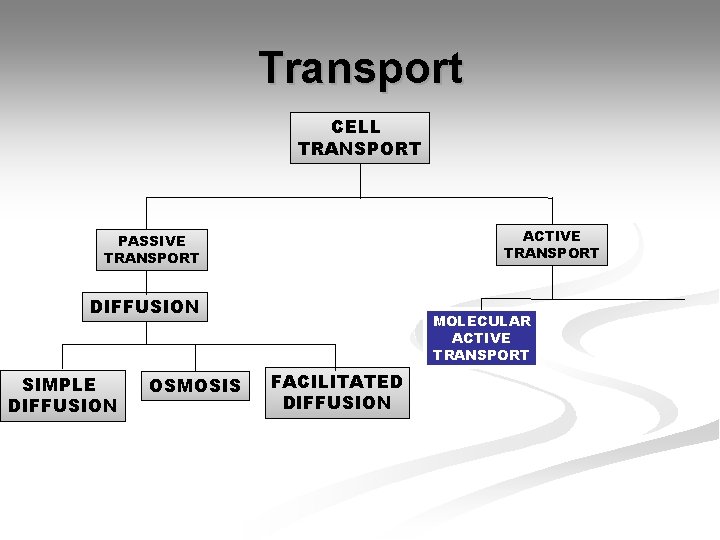
Transport CELL TRANSPORT ACTIVE TRANSPORT PASSIVE TRANSPORT DIFFUSION SIMPLE DIFFUSION OSMOSIS MOLECULAR ACTIVE TRANSPORT FACILITATED DIFFUSION
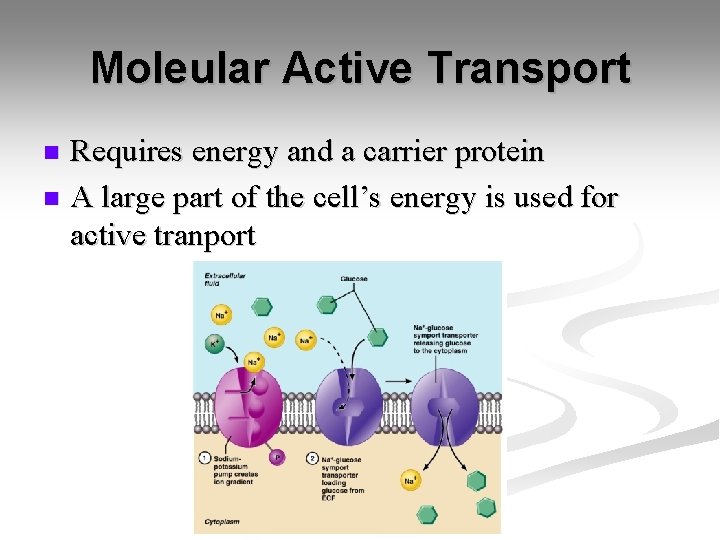
Moleular Active Transport Requires energy and a carrier protein n A large part of the cell’s energy is used for active tranport n
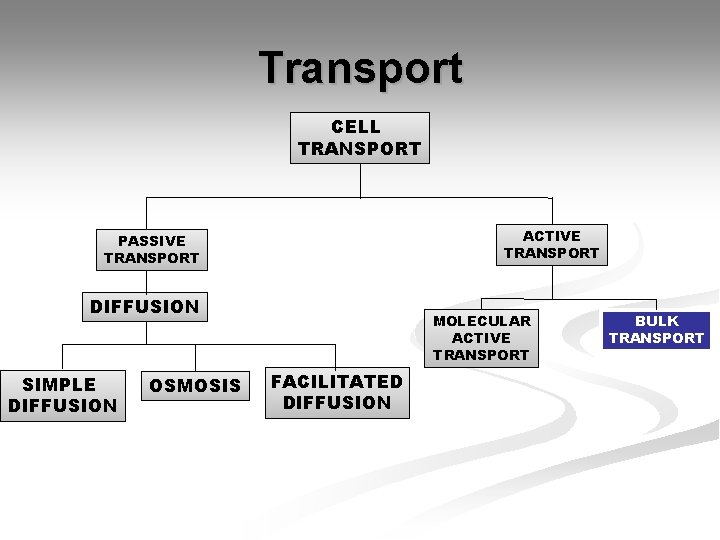
Transport CELL TRANSPORT ACTIVE TRANSPORT PASSIVE TRANSPORT DIFFUSION SIMPLE DIFFUSION OSMOSIS MOLECULAR ACTIVE TRANSPORT FACILITATED DIFFUSION BULK TRANSPORT
Bulk Transport Movement of large particles into or out of the cell n Requires energy and the cell membrane n
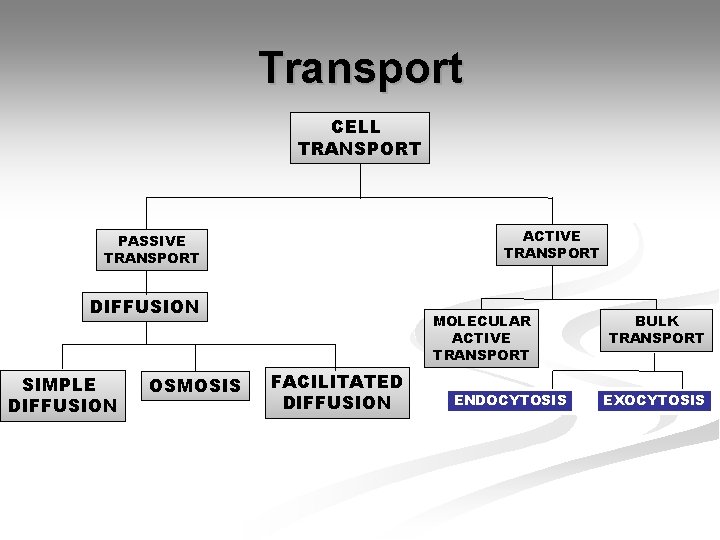
Transport CELL TRANSPORT ACTIVE TRANSPORT PASSIVE TRANSPORT DIFFUSION SIMPLE DIFFUSION OSMOSIS MOLECULAR ACTIVE TRANSPORT FACILITATED DIFFUSION ENDOCYTOSIS BULK TRANSPORT EXOCYTOSIS
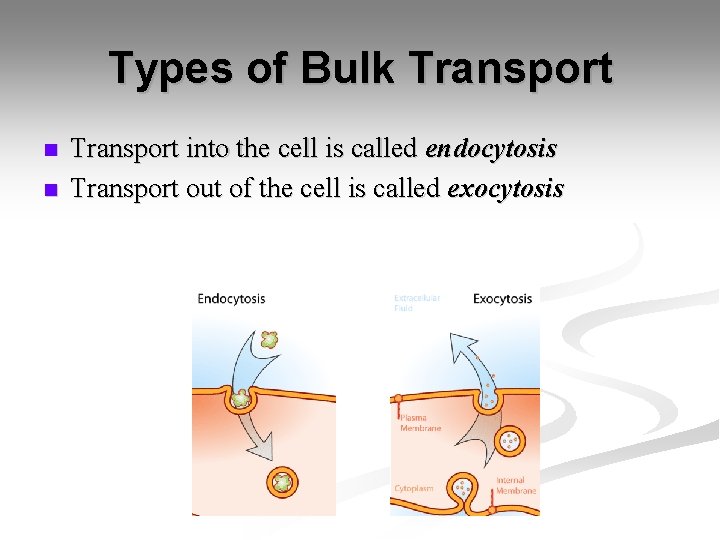
Types of Bulk Transport n n Transport into the cell is called endocytosis Transport out of the cell is called exocytosis
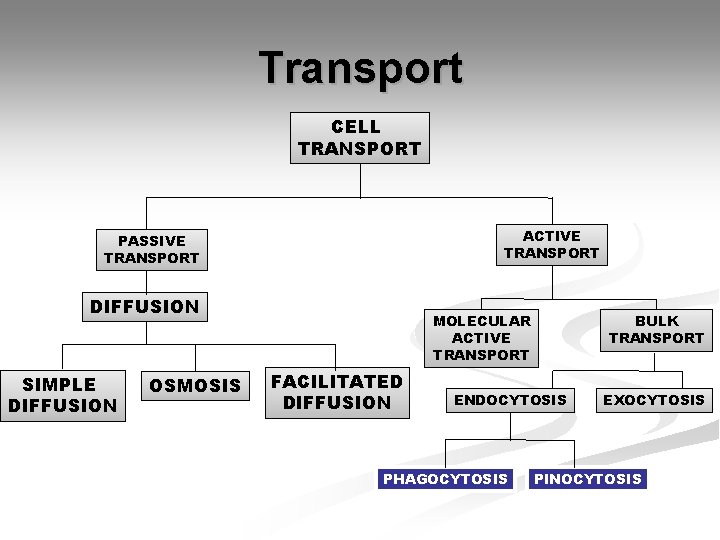
Transport CELL TRANSPORT ACTIVE TRANSPORT PASSIVE TRANSPORT DIFFUSION SIMPLE DIFFUSION OSMOSIS MOLECULAR ACTIVE TRANSPORT FACILITATED DIFFUSION BULK TRANSPORT ENDOCYTOSIS PHAGOCYTOSIS EXOCYTOSIS PINOCYTOSIS
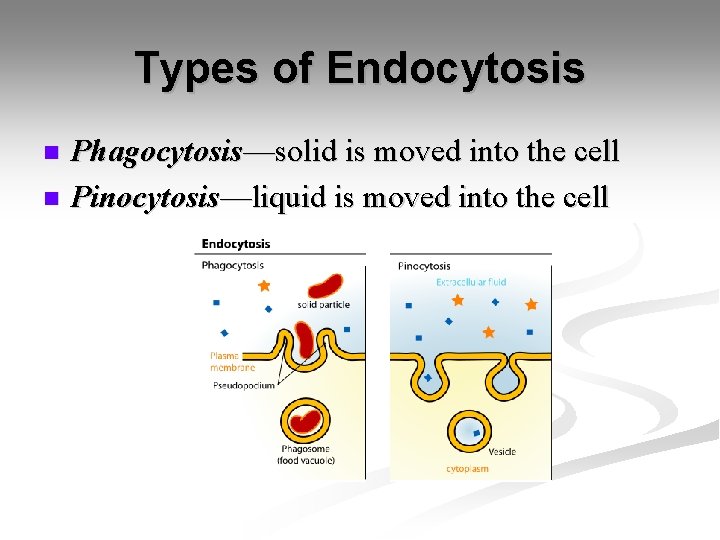
Types of Endocytosis Phagocytosis—solid is moved into the cell n Pinocytosis—liquid is moved into the cell n