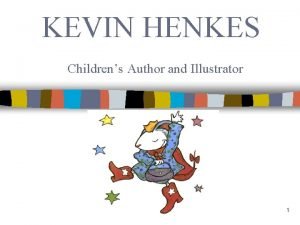
Author Study Unit Kevin Henkes Integrating all 2017


- Slides: 33
Author Study Unit Kevin Henkes Integrating all 2017 Language Arts Strands
Who Are We? Allison Waggy- Reading Resource ● Thomas Jefferson Elementary- Louisa County Public Schools ● waggyap@lcps. k 12. va. us Bethany Snyder- Reading Resource ● Moss-Nuckols Elementary- Louisa County Public Schools ● snyderbm@lcps. k 12. va. us
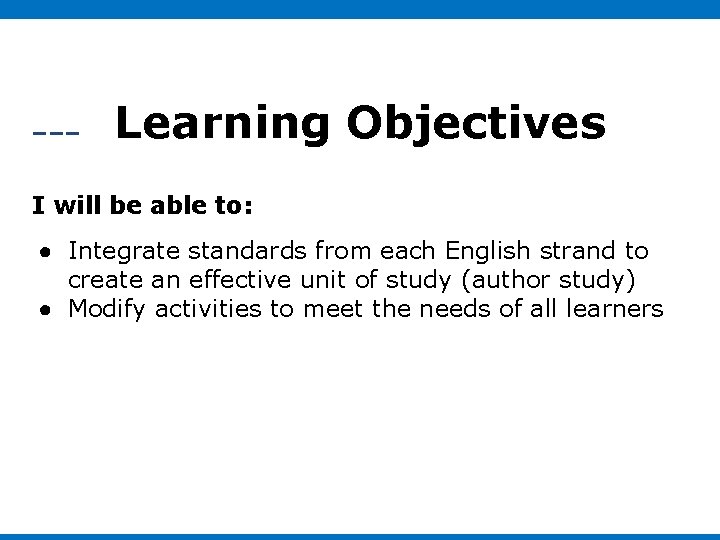
Learning Objectives I will be able to: ● Integrate standards from each English strand to create an effective unit of study (author study) ● Modify activities to meet the needs of all learners
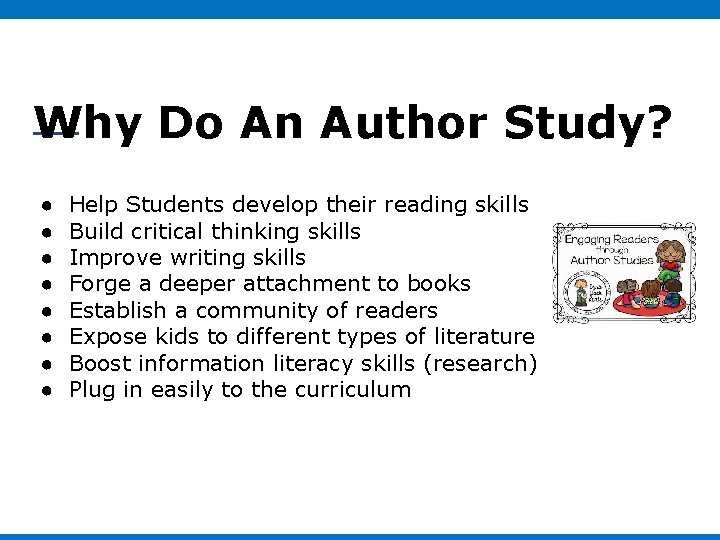
Why Do An Author Study? ● ● ● ● Help Students develop their reading skills Build critical thinking skills Improve writing skills Forge a deeper attachment to books Establish a community of readers Expose kids to different types of literature Boost information literacy skills (research) Plug in easily to the curriculum
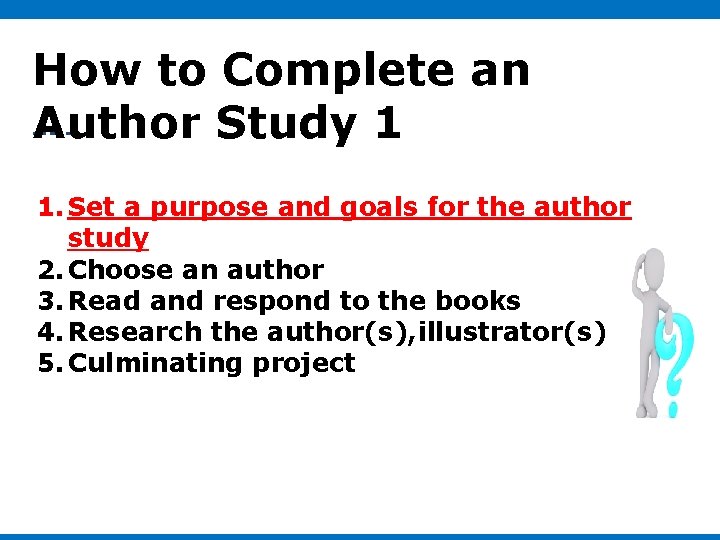
How to Complete an Author Study 1 1. Set a purpose and goals for the author study 2. Choose an author 3. Read and respond to the books 4. Research the author(s), illustrator(s) 5. Culminating project
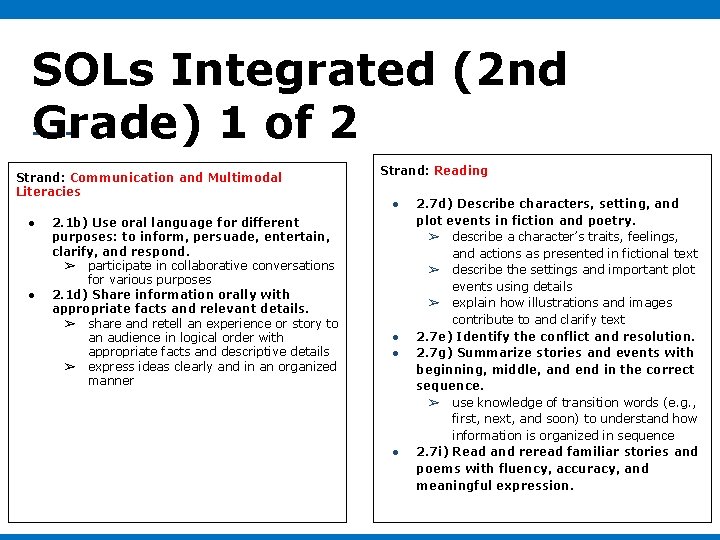
SOLs Integrated (2 nd Grade) 1 of 2 Strand: Communication and Multimodal Literacies ● ● 2. 1 b) Use oral language for different purposes: to inform, persuade, entertain, clarify, and respond. ➢ participate in collaborative conversations for various purposes 2. 1 d) Share information orally with appropriate facts and relevant details. ➢ share and retell an experience or story to an audience in logical order with appropriate facts and descriptive details ➢ express ideas clearly and in an organized manner Strand: Reading ● ● 2. 7 d) Describe characters, setting, and plot events in fiction and poetry. ➢ describe a character’s traits, feelings, and actions as presented in fictional text ➢ describe the settings and important plot events using details ➢ explain how illustrations and images contribute to and clarify text 2. 7 e) Identify the conflict and resolution. 2. 7 g) Summarize stories and events with beginning, middle, and end in the correct sequence. ➢ use knowledge of transition words (e. g. , first, next, and soon) to understand how information is organized in sequence 2. 7 i) Read and reread familiar stories and poems with fluency, accuracy, and meaningful expression.
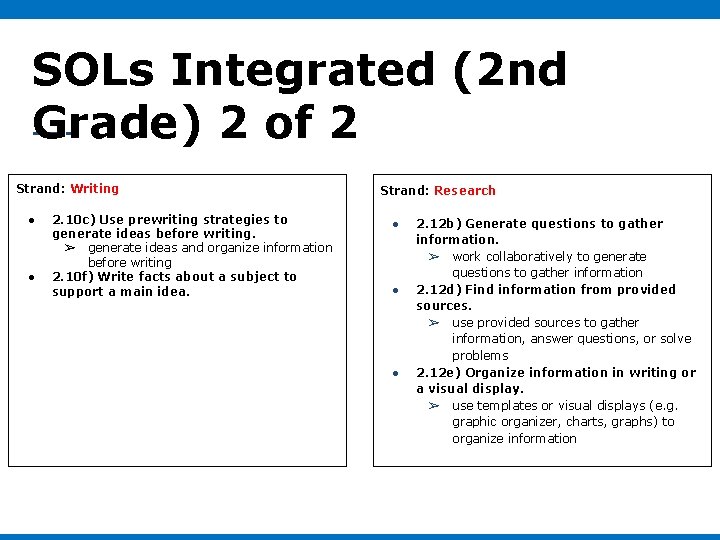
SOLs Integrated (2 nd Grade) 2 of 2 Strand: Writing ● ● 2. 10 c) Use prewriting strategies to generate ideas before writing. ➢ generate ideas and organize information before writing 2. 10 f) Write facts about a subject to support a main idea. Strand: Research ● ● ● 2. 12 b) Generate questions to gather information. ➢ work collaboratively to generate questions to gather information 2. 12 d) Find information from provided sources. ➢ use provided sources to gather information, answer questions, or solve problems 2. 12 e) Organize information in writing or a visual display. ➢ use templates or visual displays (e. g. graphic organizer, charts, graphs) to organize information
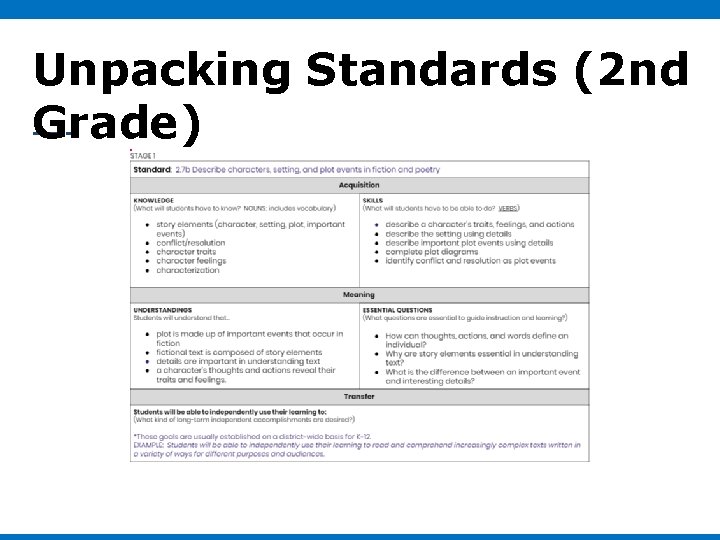
Unpacking Standards (2 nd Grade)
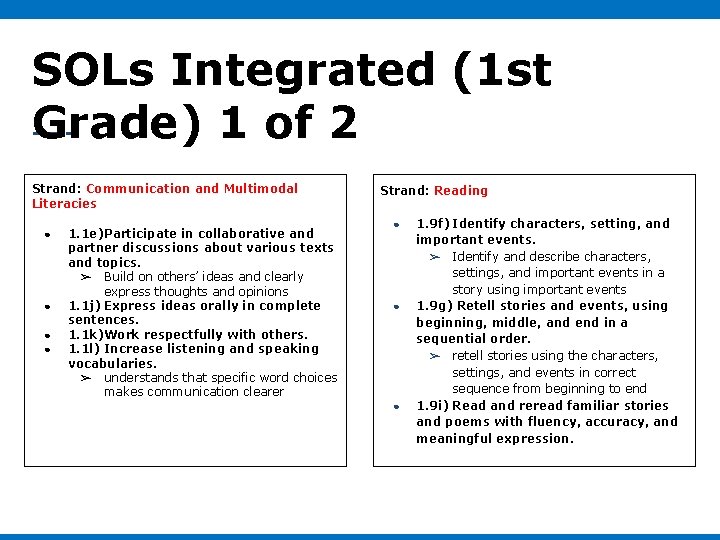
SOLs Integrated (1 st Grade) 1 of 2 Strand: Communication and Multimodal Literacies ● ● 1. 1 e)Participate in collaborative and partner discussions about various texts and topics. ➢ Build on others’ ideas and clearly express thoughts and opinions 1. 1 j) Express ideas orally in complete sentences. 1. 1 k)Work respectfully with others. 1. 1 l) Increase listening and speaking vocabularies. ➢ understands that specific word choices makes communication clearer Strand: Reading ● ● ● 1. 9 f) Identify characters, setting, and important events. ➢ Identify and describe characters, settings, and important events in a story using important events 1. 9 g) Retell stories and events, using beginning, middle, and end in a sequential order. ➢ retell stories using the characters, settings, and events in correct sequence from beginning to end 1. 9 i) Read and reread familiar stories and poems with fluency, accuracy, and meaningful expression.
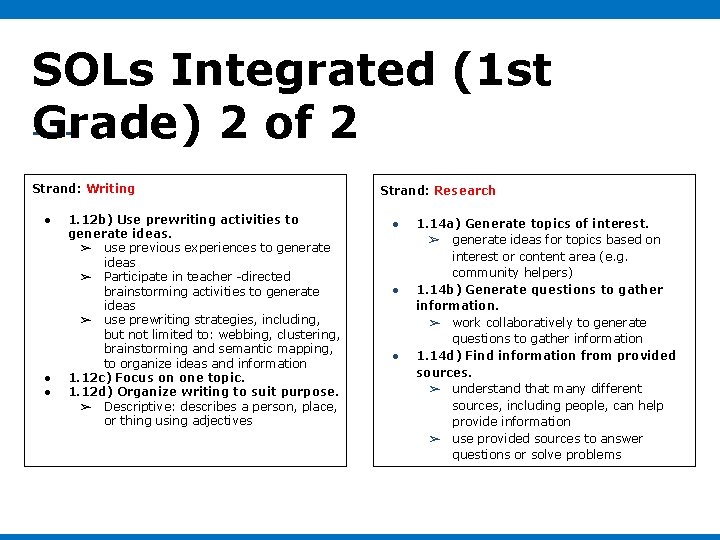
SOLs Integrated (1 st Grade) 2 of 2 Strand: Writing ● ● ● 1. 12 b) Use prewriting activities to generate ideas. ➢ use previous experiences to generate ideas ➢ Participate in teacher -directed brainstorming activities to generate ideas ➢ use prewriting strategies, including, but not limited to: webbing, clustering, brainstorming and semantic mapping, to organize ideas and information 1. 12 c) Focus on one topic. 1. 12 d) Organize writing to suit purpose. ➢ Descriptive: describes a person, place, or thing using adjectives Strand: Research ● ● ● 1. 14 a) Generate topics of interest. ➢ generate ideas for topics based on interest or content area (e. g. community helpers) 1. 14 b) Generate questions to gather information. ➢ work collaboratively to generate questions to gather information 1. 14 d) Find information from provided sources. ➢ understand that many different sources, including people, can help provide information ➢ use provided sources to answer questions or solve problems
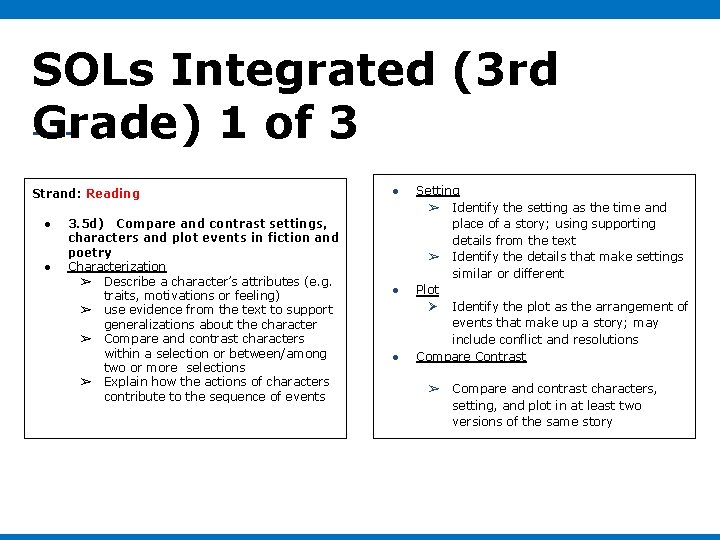
SOLs Integrated (3 rd Grade) 1 of 3 Strand: Reading ● ● 3. 5 d) Compare and contrast settings, characters and plot events in fiction and poetry Characterization ➢ Describe a character’s attributes (e. g. traits, motivations or feeling) ➢ use evidence from the text to support generalizations about the character ➢ Compare and contrast characters within a selection or between/among two or more selections ➢ Explain how the actions of characters contribute to the sequence of events ● ● ● Setting ➢ Identify the setting as the time and place of a story; using supporting details from the text ➢ Identify the details that make settings similar or different Plot Ø Identify the plot as the arrangement of events that make up a story; may include conflict and resolutions Compare Contrast ➢ Compare and contrast characters, setting, and plot in at least two versions of the same story
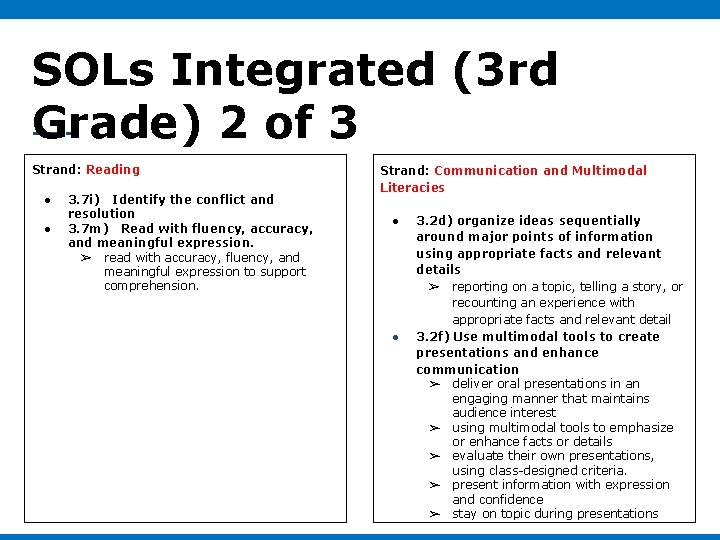
SOLs Integrated (3 rd Grade) 2 of 3 Strand: Reading ● ● 3. 7 i) Identify the conflict and resolution 3. 7 m) Read with fluency, accuracy, and meaningful expression. ➢ read with accuracy, fluency, and meaningful expression to support comprehension. Strand: Communication and Multimodal Literacies ● ● 3. 2 d) organize ideas sequentially around major points of information using appropriate facts and relevant details ➢ reporting on a topic, telling a story, or recounting an experience with appropriate facts and relevant detail 3. 2 f) Use multimodal tools to create presentations and enhance communication ➢ deliver oral presentations in an engaging manner that maintains audience interest ➢ using multimodal tools to emphasize or enhance facts or details ➢ evaluate their own presentations, using class-designed criteria. ➢ present information with expression and confidence ➢ stay on topic during presentations
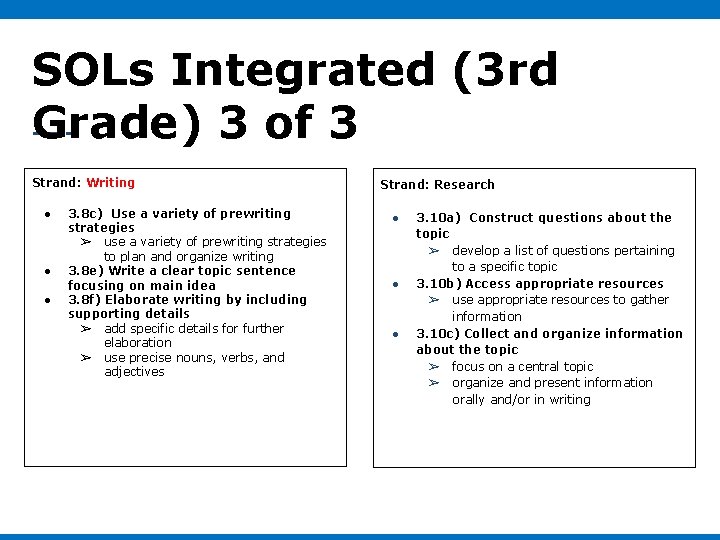
SOLs Integrated (3 rd Grade) 3 of 3 Strand: Writing ● ● ● 3. 8 c) Use a variety of prewriting strategies ➢ use a variety of prewriting strategies to plan and organize writing 3. 8 e) Write a clear topic sentence focusing on main idea 3. 8 f) Elaborate writing by including supporting details ➢ add specific details for further elaboration ➢ use precise nouns, verbs, and adjectives Strand: Research ● ● ● 3. 10 a) Construct questions about the topic ➢ develop a list of questions pertaining to a specific topic 3. 10 b) Access appropriate resources ➢ use appropriate resources to gather information 3. 10 c) Collect and organize information about the topic ➢ focus on a central topic ➢ organize and present information orally and/or in writing
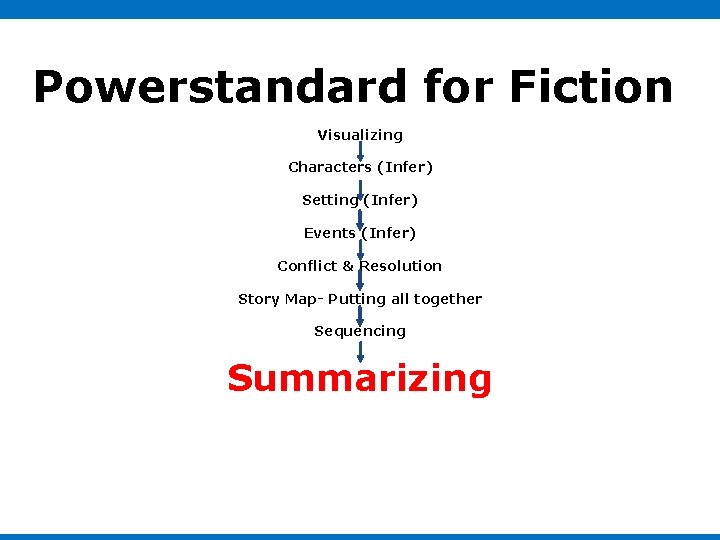
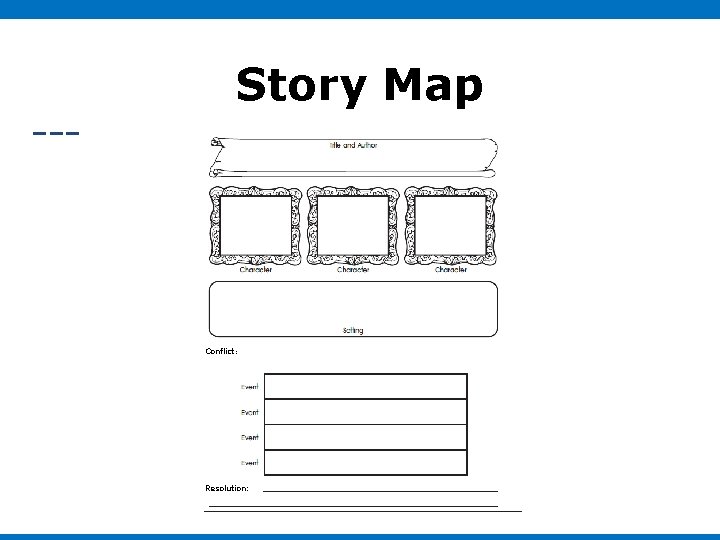
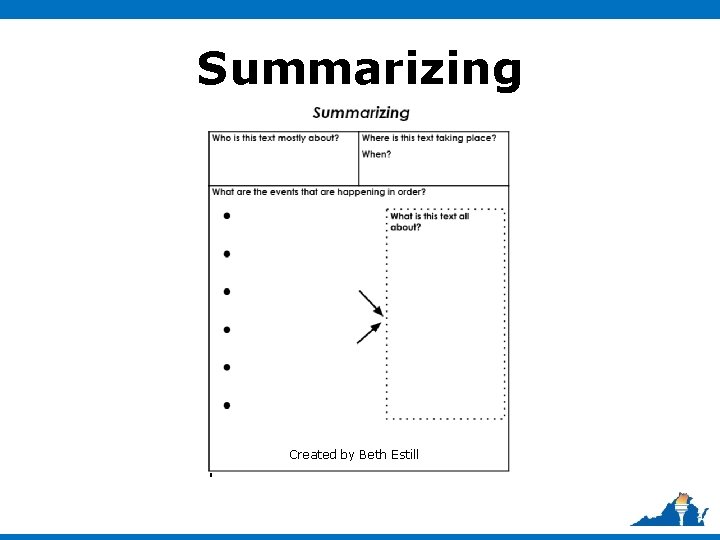
Powerstandard for Fiction Visualizing Characters (Infer) Setting (Infer) Events (Infer) Conflict & Resolution Story Map- Putting all together Sequencing Summarizing
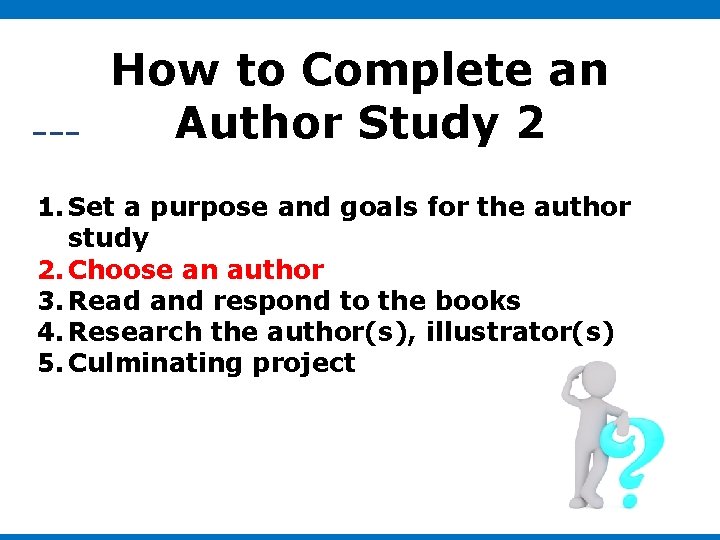
How to Complete an Author Study 2 1. Set a purpose and goals for the author study 2. Choose an author 3. Read and respond to the books 4. Research the author(s), illustrator(s) 5. Culminating project
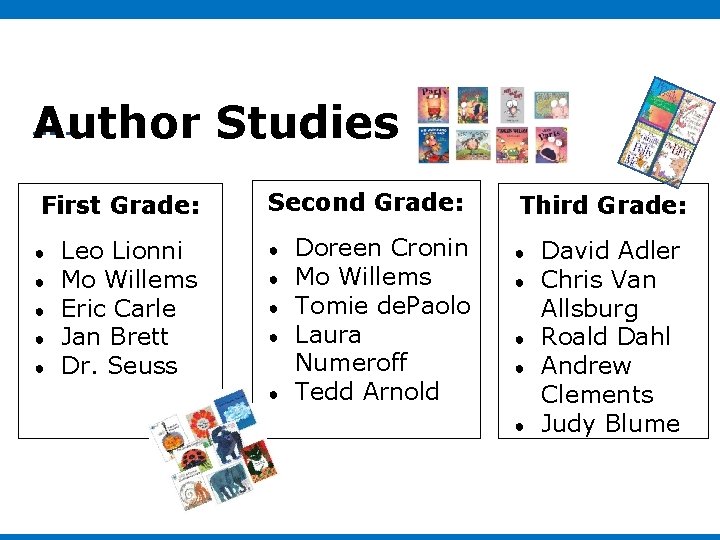
Author Studies First Grade: ● ● ● Leo Lionni Mo Willems Eric Carle Jan Brett Dr. Seuss Second Grade: ● ● ● Doreen Cronin Mo Willems Tomie de. Paolo Laura Numeroff Tedd Arnold Third Grade: ● ● ● David Adler Chris Van Allsburg Roald Dahl Andrew Clements Judy Blume
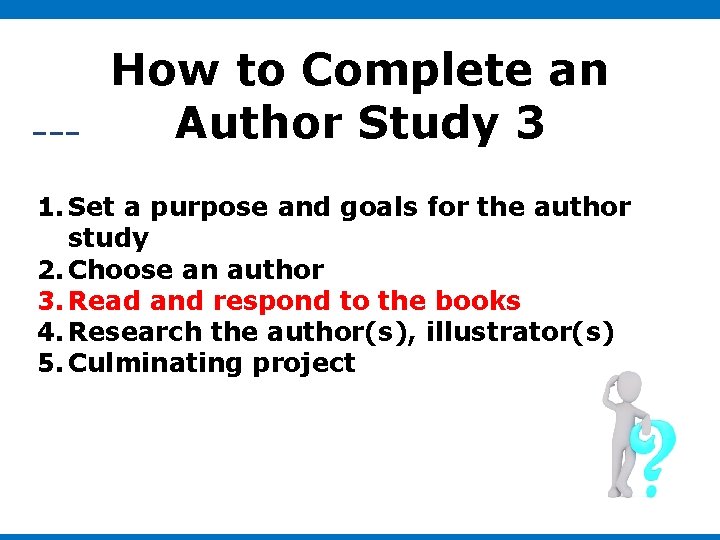
How to Complete an Author Study 3 1. Set a purpose and goals for the author study 2. Choose an author 3. Read and respond to the books 4. Research the author(s), illustrator(s) 5. Culminating project
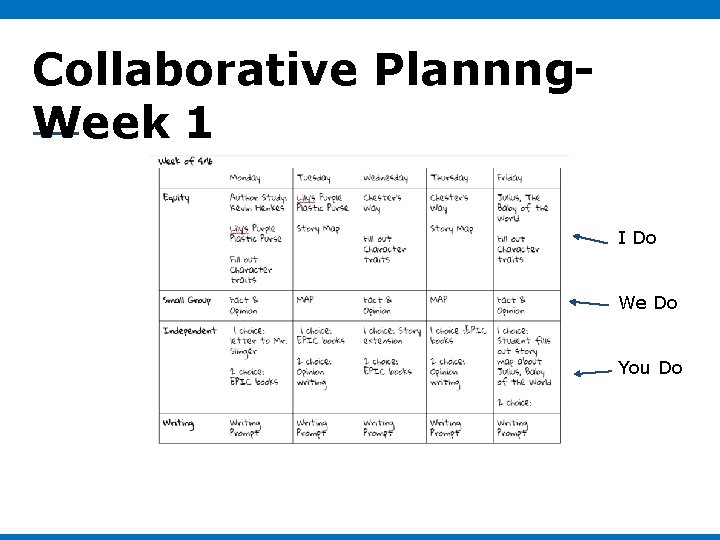
Collaborative Plannng. Week 1 I Do We Do You Do
Story Map Conflict: Resolution:
Character Traits
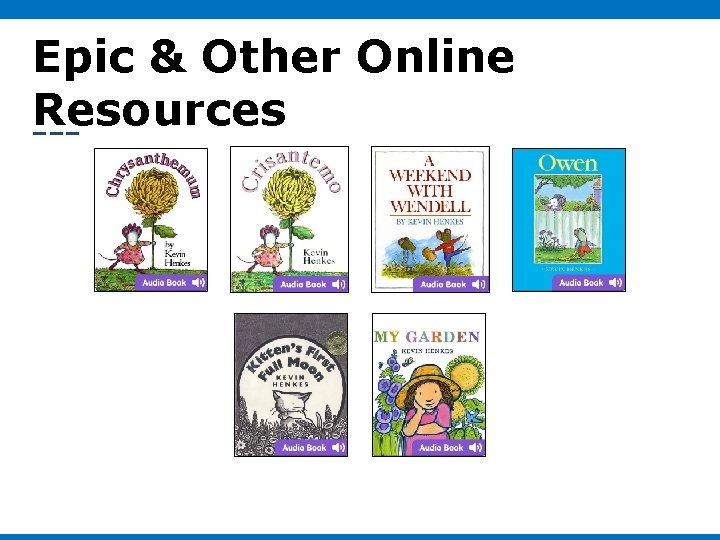
Epic & Other Online Resources
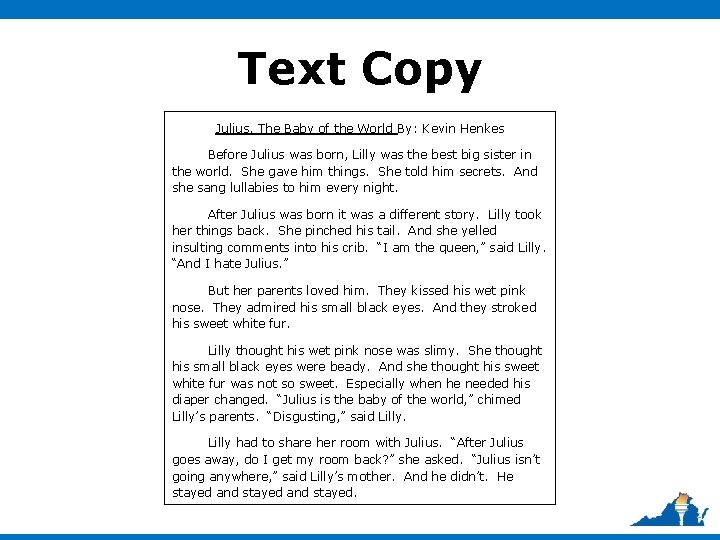
Text Copy Julius, The Baby of the World By: Kevin Henkes Before Julius was born, Lilly was the best big sister in the world. She gave him things. She told him secrets. And she sang lullabies to him every night. After Julius was born it was a different story. Lilly took her things back. She pinched his tail. And she yelled insulting comments into his crib. “I am the queen, ” said Lilly. “And I hate Julius. ” But her parents loved him. They kissed his wet pink nose. They admired his small black eyes. And they stroked his sweet white fur. Lilly thought his wet pink nose was slimy. She thought his small black eyes were beady. And she thought his sweet white fur was not so sweet. Especially when he needed his diaper changed. “Julius is the baby of the world, ” chimed Lilly’s parents. “Disgusting, ” said Lilly had to share her room with Julius. “After Julius goes away, do I get my room back? ” she asked. “Julius isn’t going anywhere, ” said Lilly’s mother. And he didn’t. He stayed and stayed.
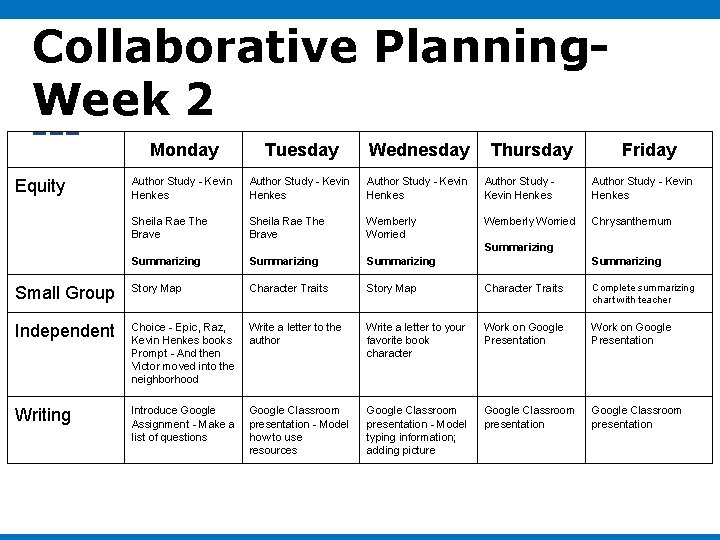
Collaborative Planning. Week 2 Equity Monday Tuesday Wednesday Thursday Friday Author Study - Kevin Henkes Author Study - Kevin Henkes Sheila Rae The Brave Wemberly Worried Chrysanthemum Summarizing Summarizing Small Group Story Map Character Traits Complete summarizing chart with teacher Independent Choice - Epic, Raz, Kevin Henkes books Prompt - And then Victor moved into the neighborhood Write a letter to the author Write a letter to your favorite book character Work on Google Presentation Writing Introduce Google Assignment - Make a list of questions Google Classroom presentation - Model how to use resources Google Classroom presentation - Model typing information; adding picture Google Classroom presentation
Summarizing Created by Beth Estill
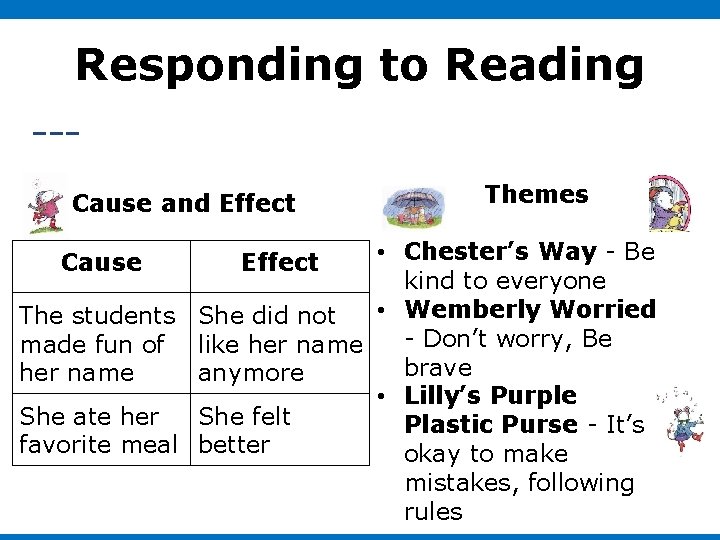
Responding to Reading Cause and Effect Themes • Chester’s Way - Be kind to everyone • Wemberly Worried The students She did not - Don’t worry, Be made fun of like her name brave her name anymore • Lilly’s Purple She ate her She felt Plastic Purse - It’s favorite meal better okay to make mistakes, following rules Cause Effect
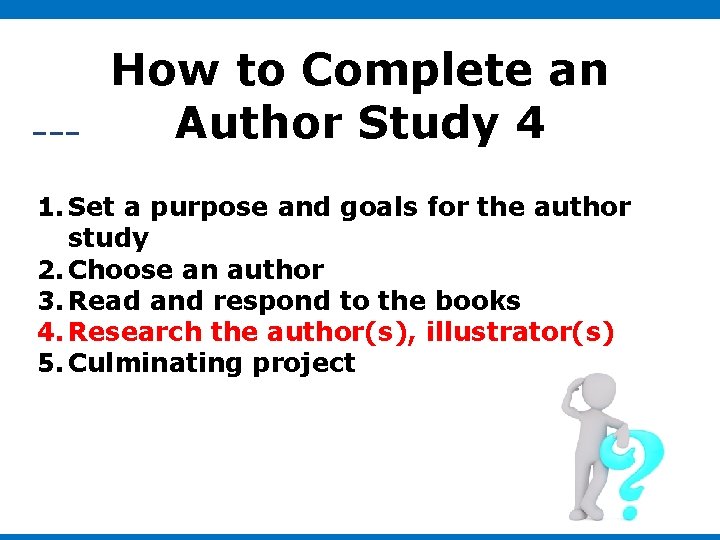
How to Complete an Author Study 4 1. Set a purpose and goals for the author study 2. Choose an author 3. Read and respond to the books 4. Research the author(s), illustrator(s) 5. Culminating project
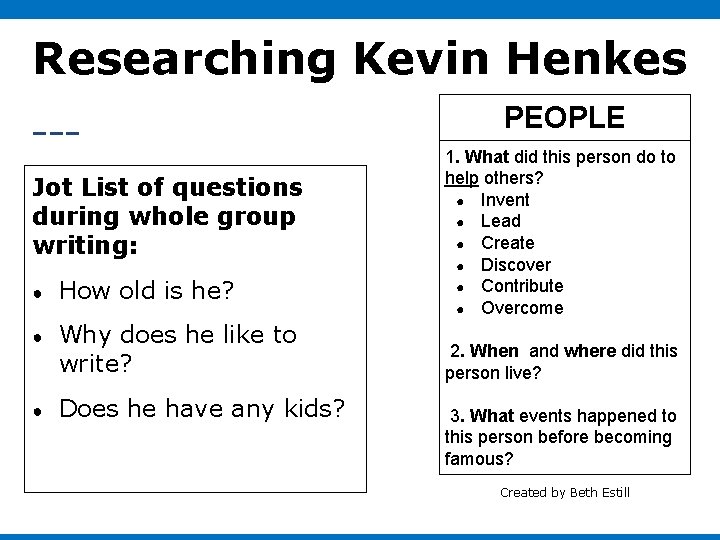
Researching Kevin Henkes PEOPLE Jot List of questions during whole group writing: ● How old is he? ● Why does he like to write? ● Does he have any kids? 1. What did this person do to help others? ● Invent ● Lead ● Create ● Discover ● Contribute ● Overcome 2. When and where did this person live? 3. What events happened to this person before becoming famous? Created by Beth Estill
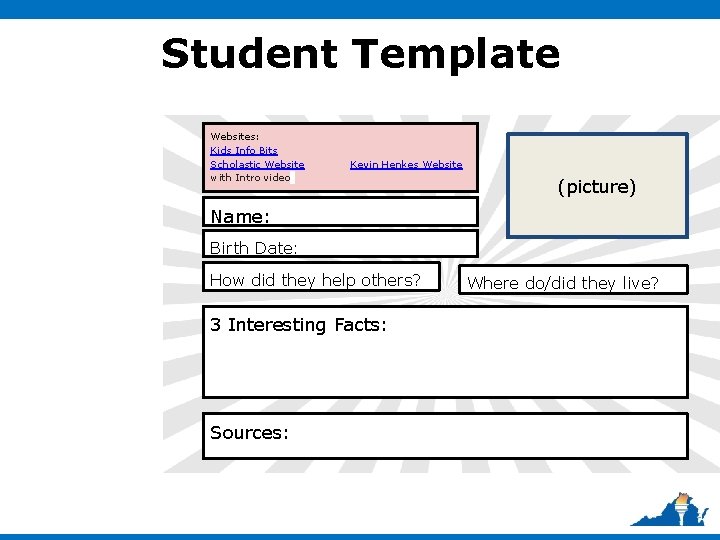
Student Template Websites: Kids Info Bits Scholastic Website with Intro video Kevin Henkes Website (picture) Name: Birth Date: How did they help others? 3 Interesting Facts: Sources: Where do/did they live?
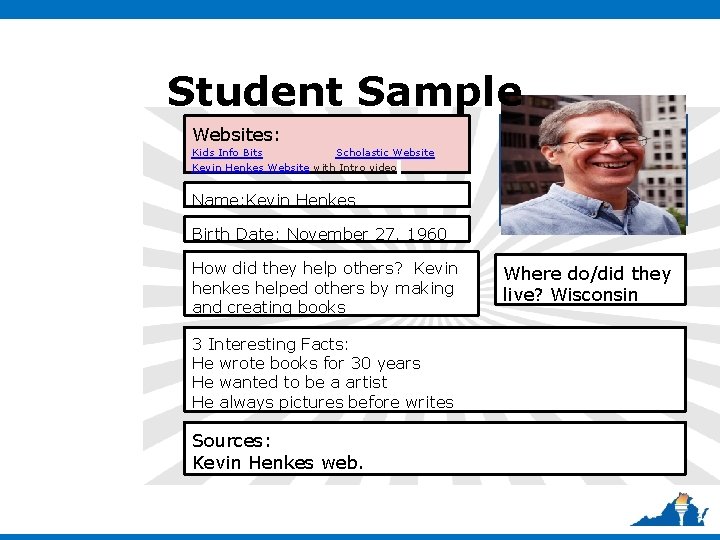
Student Sample Websites: Kids Info Bits Scholastic Website Kevin Henkes Website with Intro video (picture) Name: Kevin Henkes Birth Date: November 27, 1960 How did they help others? Kevin henkes helped others by making and creating books 3 Interesting Facts: He wrote books for 30 years He wanted to be a artist He always pictures before writes Sources: Kevin Henkes web. Where do/did they live? Wisconsin
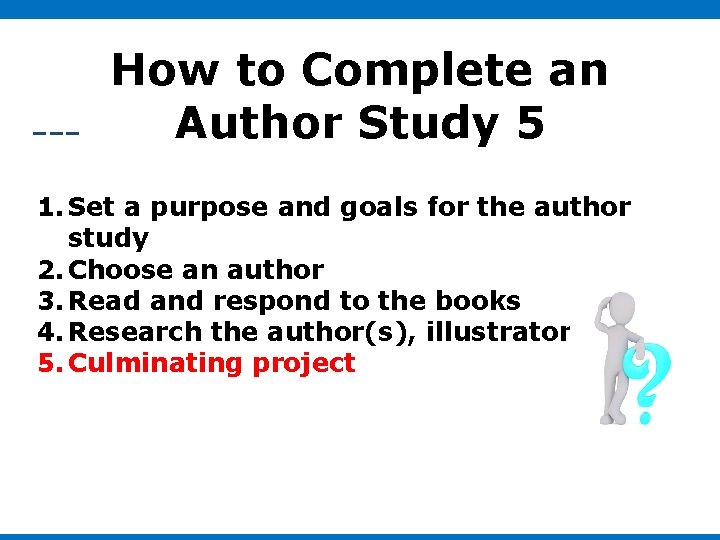
How to Complete an Author Study 5 1. Set a purpose and goals for the author study 2. Choose an author 3. Read and respond to the books 4. Research the author(s), illustrator(s) 5. Culminating project
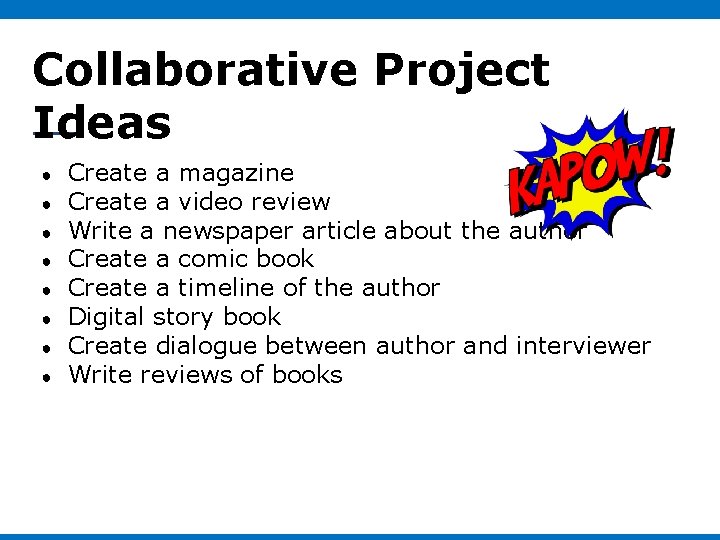
Collaborative Project Ideas ● ● ● ● Create a magazine Create a video review Write a newspaper article about the author Create a comic book Create a timeline of the author Digital story book Create dialogue between author and interviewer Write reviews of books
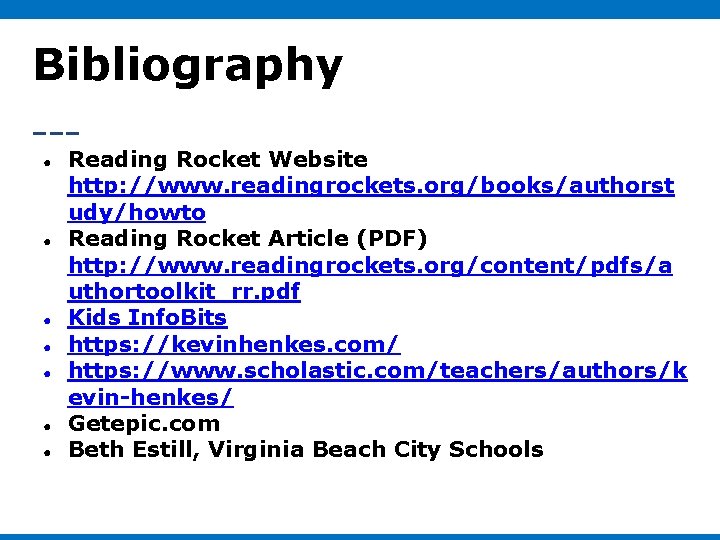
Bibliography ● ● ● ● Reading Rocket Website http: //www. readingrockets. org/books/authorst udy/howto Reading Rocket Article (PDF) http: //www. readingrockets. org/content/pdfs/a uthortoolkit_rr. pdf Kids Info. Bits https: //kevinhenkes. com/ https: //www. scholastic. com/teachers/authors/k evin-henkes/ Getepic. com Beth Estill, Virginia Beach City Schools
Disclaimer • Reference within this presentation to any specific commercial or noncommercial product, process, or service by trade name, trademark, manufacturer or otherwise does not constitute or imply an endorsement, recommendation, or favoring by the Virginia Department of Education.