AP World History Chapter 13 The Spread of
- Slides: 16
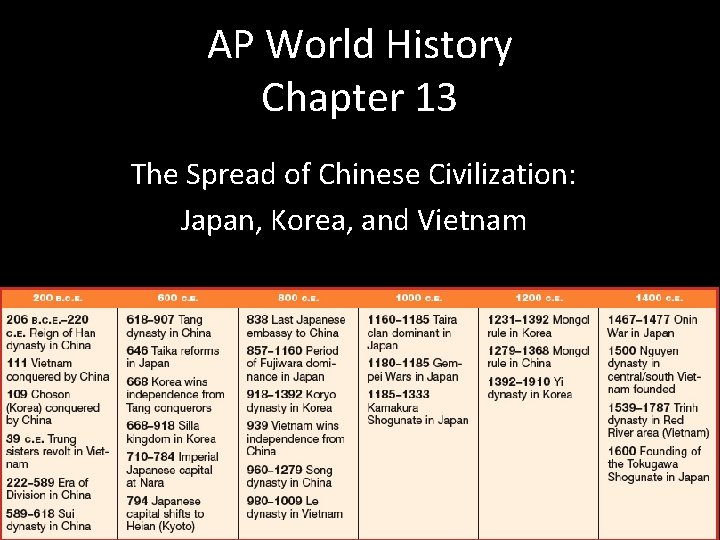
AP World History Chapter 13 The Spread of Chinese Civilization: Japan, Korea, and Vietnam
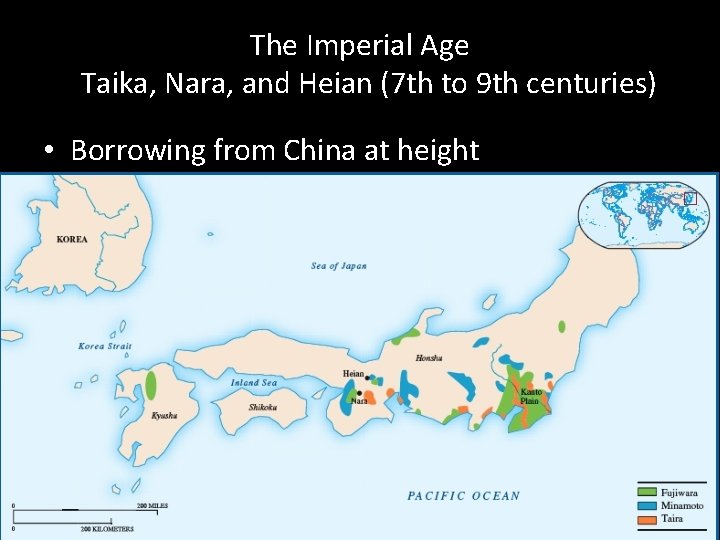
The Imperial Age Taika, Nara, and Heian (7 th to 9 th centuries) • Borrowing from China at height
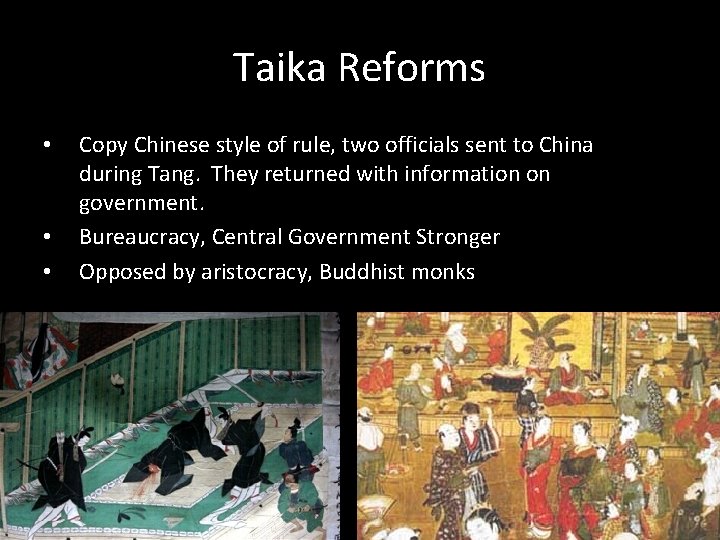
Taika Reforms • • • Copy Chinese style of rule, two officials sent to China during Tang. They returned with information on government. Bureaucracy, Central Government Stronger Opposed by aristocracy, Buddhist monks
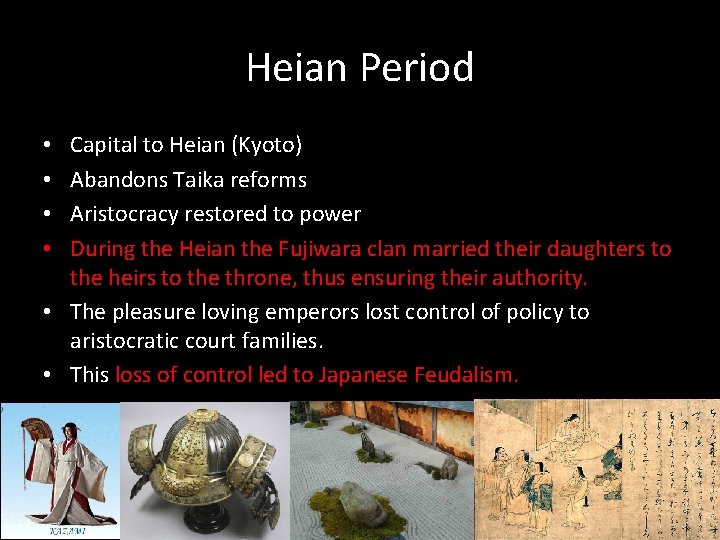
Heian Period Capital to Heian (Kyoto) Abandons Taika reforms Aristocracy restored to power During the Heian the Fujiwara clan married their daughters to the heirs to the throne, thus ensuring their authority. • The pleasure loving emperors lost control of policy to aristocratic court families. • This loss of control led to Japanese Feudalism. • •
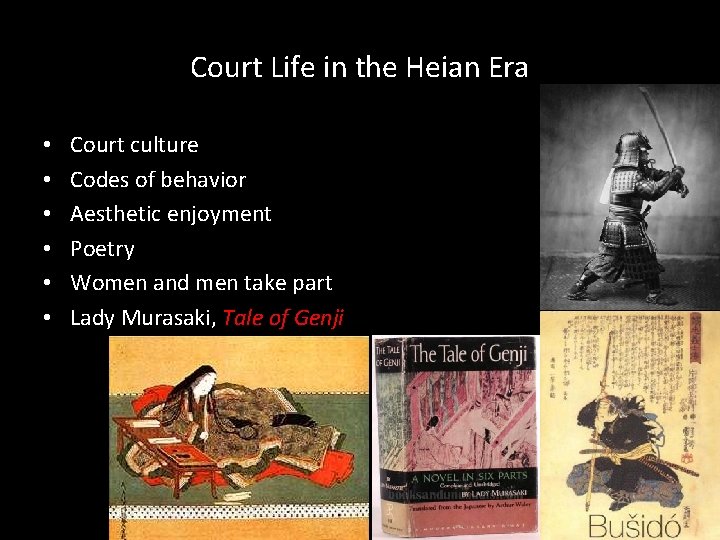
Court Life in the Heian Era • • • Court culture Codes of behavior Aesthetic enjoyment Poetry Women and men take part Lady Murasaki, Tale of Genji
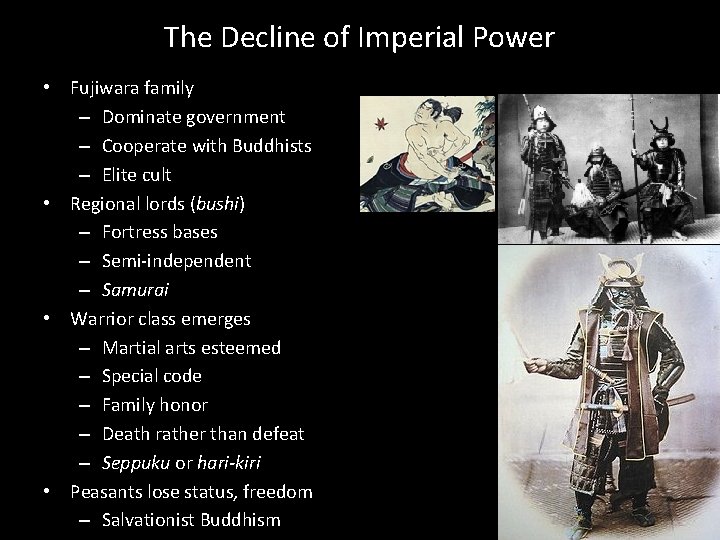
The Decline of Imperial Power • Fujiwara family – Dominate government – Cooperate with Buddhists – Elite cult • Regional lords (bushi) – Fortress bases – Semi-independent – Samurai • Warrior class emerges – Martial arts esteemed – Special code – Family honor – Death rather than defeat – Seppuku or hari-kiri • Peasants lose status, freedom – Salvationist Buddhism
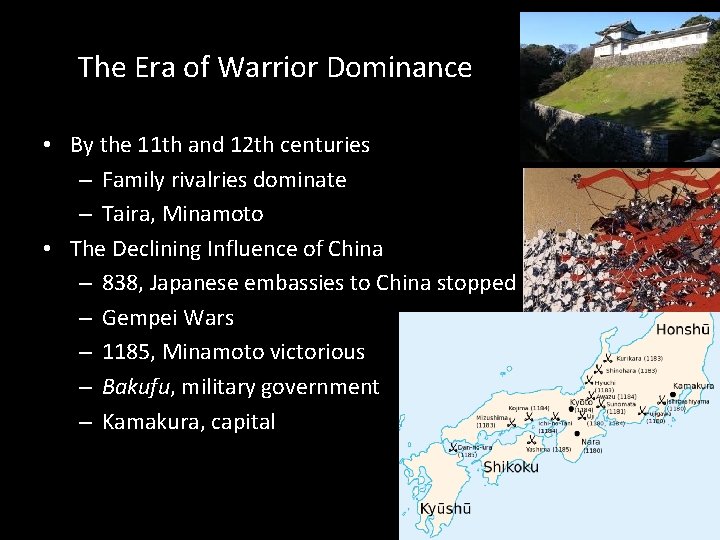
The Era of Warrior Dominance • By the 11 th and 12 th centuries – Family rivalries dominate – Taira, Minamoto • The Declining Influence of China – 838, Japanese embassies to China stopped – Gempei Wars – 1185, Minamoto victorious – Bakufu, military government – Kamakura, capital
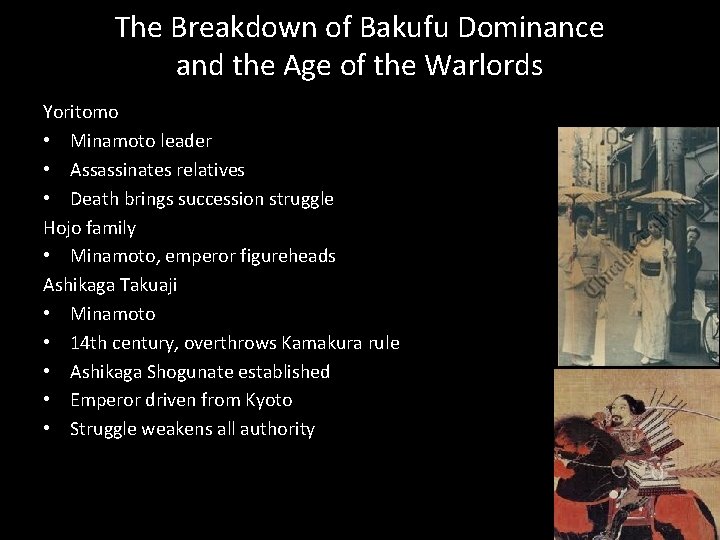
The Breakdown of Bakufu Dominance and the Age of the Warlords Yoritomo • Minamoto leader • Assassinates relatives • Death brings succession struggle Hojo family • Minamoto, emperor figureheads Ashikaga Takuaji • Minamoto • 14 th century, overthrows Kamakura rule • Ashikaga Shogunate established • Emperor driven from Kyoto • Struggle weakens all authority
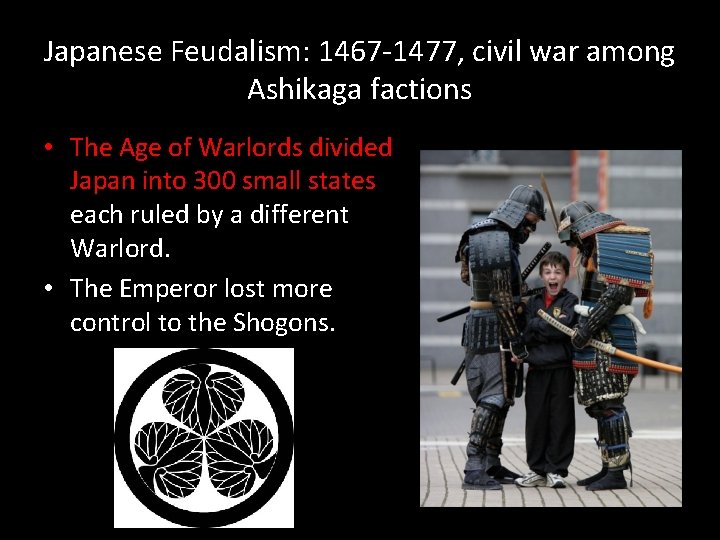
Japanese Feudalism: 1467 -1477, civil war among Ashikaga factions • The Age of Warlords divided Japan into 300 small states each ruled by a different Warlord. • The Emperor lost more control to the Shogons.
• Toward Barbarism? • Military Division and Social Change • Warfare becomes more brutal • Daimyo support commerce • Artistic Solace for a Troubled Age • Zen Buddhism – Important among elite – Point of contact with China
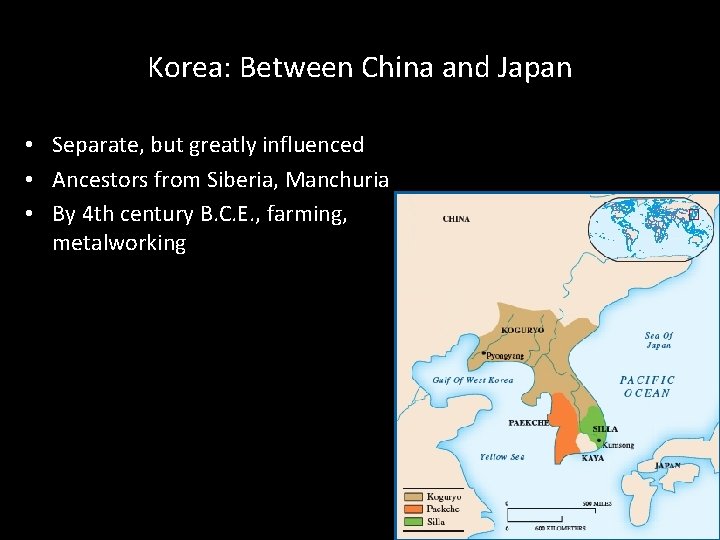
Korea: Between China and Japan • Separate, but greatly influenced • Ancestors from Siberia, Manchuria • By 4 th century B. C. E. , farming, metalworking
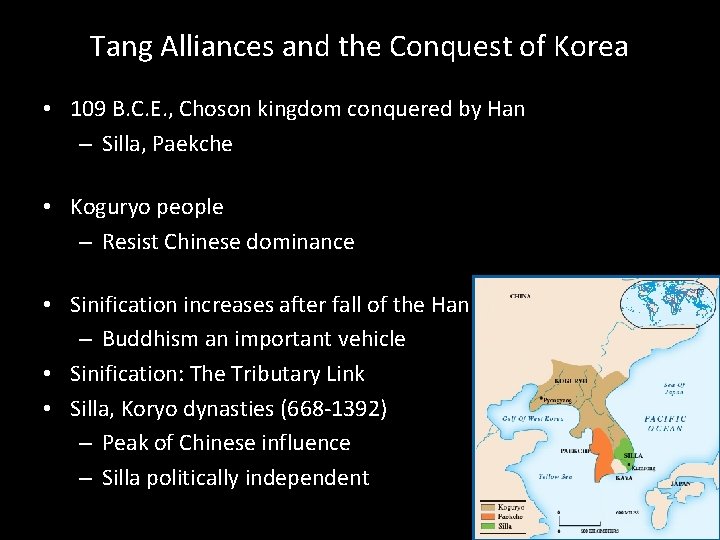
Tang Alliances and the Conquest of Korea • 109 B. C. E. , Choson kingdom conquered by Han – Silla, Paekche • Koguryo people – Resist Chinese dominance • Sinification increases after fall of the Han – Buddhism an important vehicle • Sinification: The Tributary Link • Silla, Koryo dynasties (668 -1392) – Peak of Chinese influence – Silla politically independent
Koryo Collapse, Dynastic Renewal Revolts • Caused by labor, tax burdens • Weaken Silla, Koryo governments 1231, Mongol invasion • Followed by turmoil 1392, Yi dynasty founded • Lasts until 1910
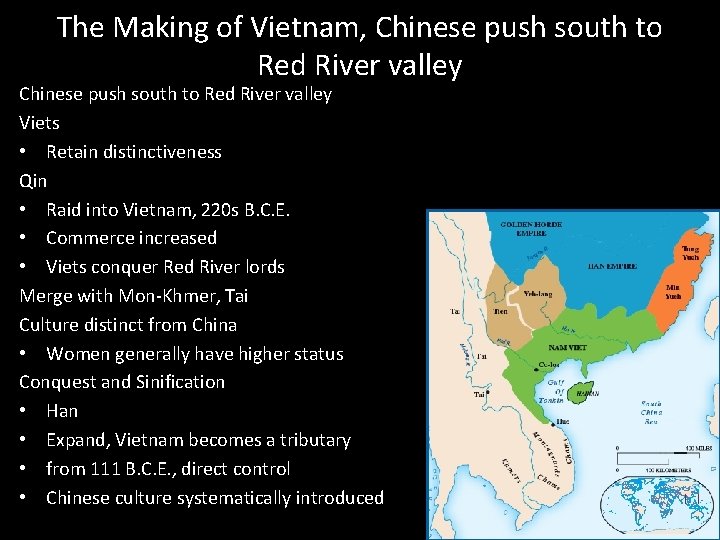
The Making of Vietnam, Chinese push south to Red River valley Viets • Retain distinctiveness Qin • Raid into Vietnam, 220 s B. C. E. • Commerce increased • Viets conquer Red River lords Merge with Mon-Khmer, Tai Culture distinct from China • Women generally have higher status Conquest and Sinification • Han • Expand, Vietnam becomes a tributary • from 111 B. C. E. , direct control • Chinese culture systematically introduced
The Making of Vietnam Roots of Resistance • Resistance from aristocracy, peasants • Women participate • 39 C. E. , Revolt of Trung sisters Winning Independence and Continuing Chinese Influences • Distance from China helps resistance • Independence by 939 until 19 th century • Le Dynasty (980 -1009) – Using Chinese-style bureaucracy
The Making of Vietnam The Vietnamese Drive to the South • Indianized Khmer • Defeated, Viets expand into Mekong delta region Expansion and Division Hanoi • Far from frontiers • Cultural divisions develop following intermarriage with Chams, Khmers Nguyen dynasty • Capital at Hue, by late 1500 s • Challenge Trinh in North • Rivalry until 18 th century