Alison Lindsay Development Officer GIRFEC and Named Person

- Slides: 35
Alison Lindsay Development Officer – GIRFEC and Named Person GIRFEC The Way Forward
Learning Intentions By the end of this session you will have: • an understanding of the legislative context of GIRFEC • an understanding of the revised Continuum of Support (Co. S) • an operational understanding of how the processes fit within the Co. S • thought about how GIRFEC supports young people you work with!
Why GIRFEC? • 2006 Scottish Executive introduced the GIRFEC approach • Subsequent policies encompass GIRFEC including: – – The Early Years Framework Curriculum for Excellence We Can and Must do Better Equally Well • Children and Young People (Scotland) Act 2014
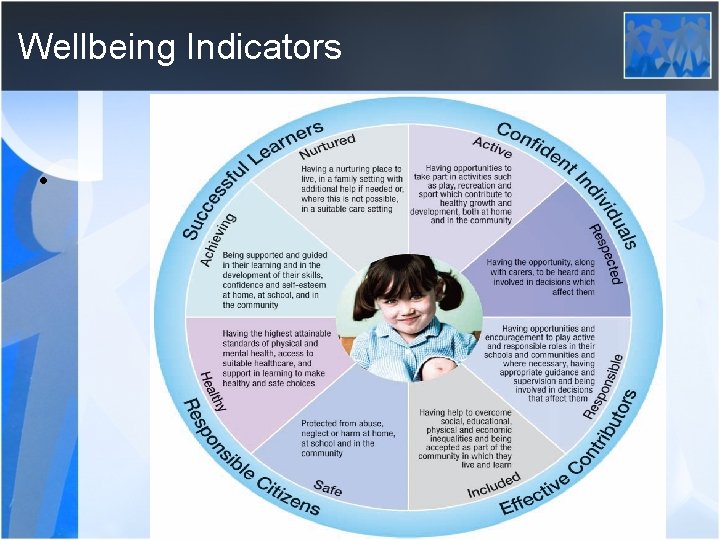
Children and Young People (Scotland) Bill • Proposed GIRFEC duties: • Local Authority Children Service Plans • Agreed definition of wellbeing (SHANARRI) • Named Person Role • Single Child’s Planning Process • Statutory duties to share information
Principles of GIRFEC • Promoting the wellbeing of individual children and young people • Intervening early in the process to facilitate positive change • Keeping children and young people safe • Putting children at the centre • Building on strengths and promoting resilience • Working in partnership with families • Respecting confidentiality and sharing information • Making the most of bringing together each worker’s expertise
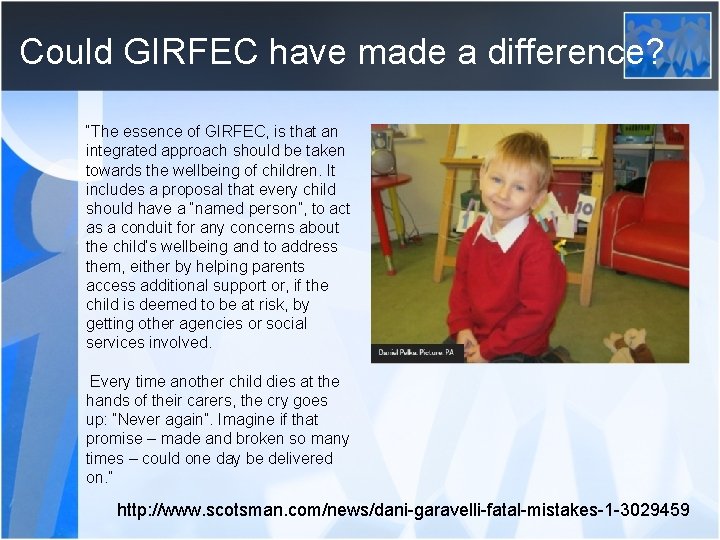
Could GIRFEC have made a difference? “The essence of GIRFEC, is that an integrated approach should be taken towards the wellbeing of children. It includes a proposal that every child should have a “named person”, to act as a conduit for any concerns about the child’s wellbeing and to address them, either by helping parents access additional support or, if the child is deemed to be at risk, by getting other agencies or social services involved. Every time another child dies at the hands of their carers, the cry goes up: “Never again”. Imagine if that promise – made and broken so many times – could one day be delivered on. ” http: //www. scotsman. com/news/dani-garavelli-fatal-mistakes-1 -3029459
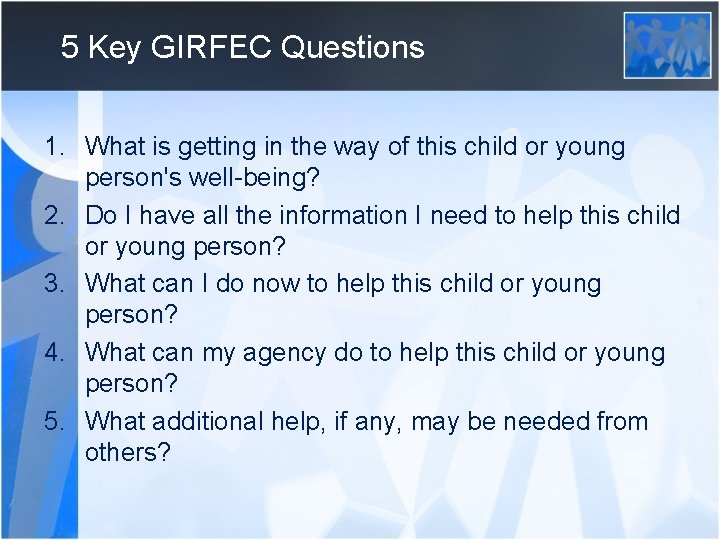
5 Key GIRFEC Questions 1. What is getting in the way of this child or young person's well-being? 2. Do I have all the information I need to help this child or young person? 3. What can I do now to help this child or young person? 4. What can my agency do to help this child or young person? 5. What additional help, if any, may be needed from others?
Wellbeing Indicators •
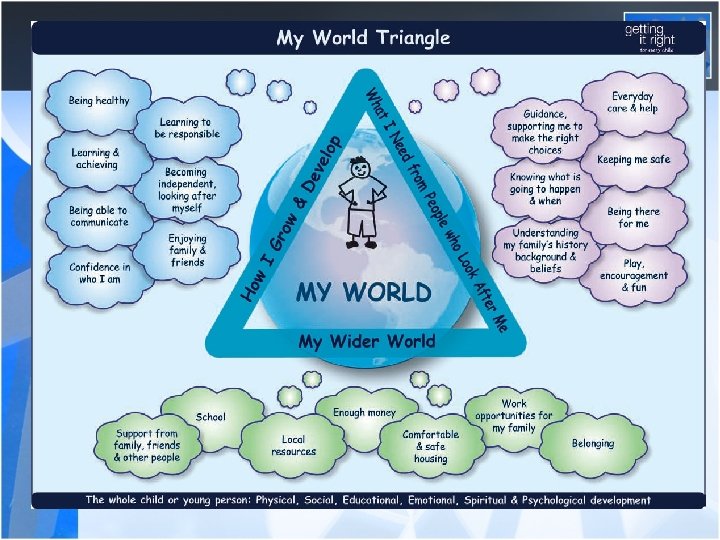
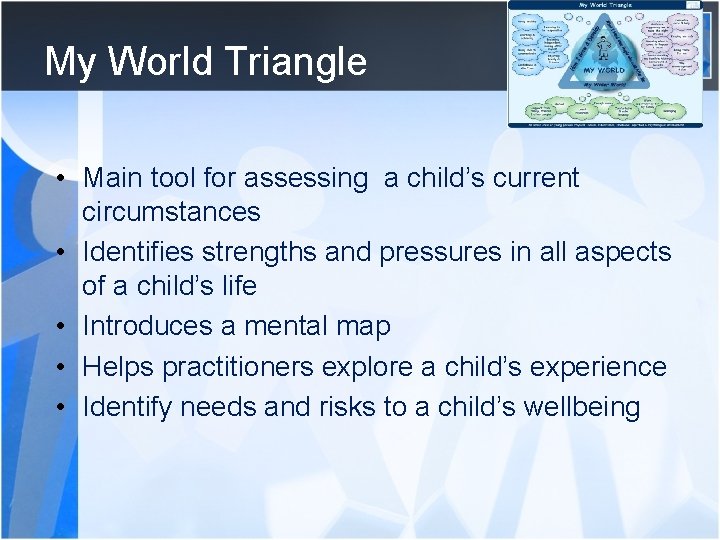
My World Triangle • Main tool for assessing a child’s current circumstances • Identifies strengths and pressures in all aspects of a child’s life • Introduces a mental map • Helps practitioners explore a child’s experience • Identify needs and risks to a child’s wellbeing
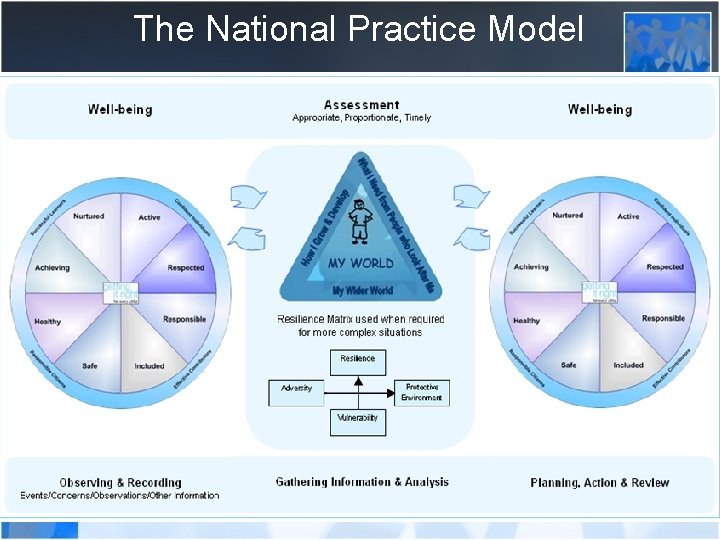
The National Practice Model
Key Roles – Named Person From Aug 2016: legislation will ensure that all children and young people from birth up to the age of 18 have access to a Named Person • • pre-birth to 10 days: 11 days to school entry P 1 to P 7 S 1 to S 6 • S 4 - S 6 (not in school) the midwife the health visitor HT/DHT promoted member of teaching staff Named person service
Key Roles – Named Person • • Main point of contact for a family Involve families in decision making Record concerns that are raised Use the GIRFEC framework to assess the needs of the child and plan for meeting needs Be responsible for the implementation of a single agency plan Ensure information is shared with the right people at the right time Contribute to planning for children who need extra help at key transition points. The role of the Named Person should be no more than they currently do in the course of their work.
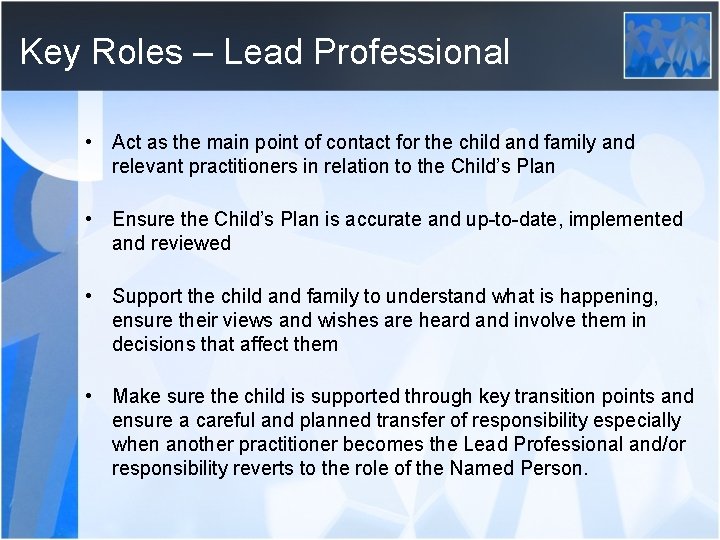
Key Roles – Lead Professional • Act as the main point of contact for the child and family and relevant practitioners in relation to the Child’s Plan • Ensure the Child’s Plan is accurate and up-to-date, implemented and reviewed • Support the child and family to understand what is happening, ensure their views and wishes are heard and involve them in decisions that affect them • Make sure the child is supported through key transition points and ensure a careful and planned transfer of responsibility especially when another practitioner becomes the Lead Professional and/or responsibility reverts to the role of the Named Person.
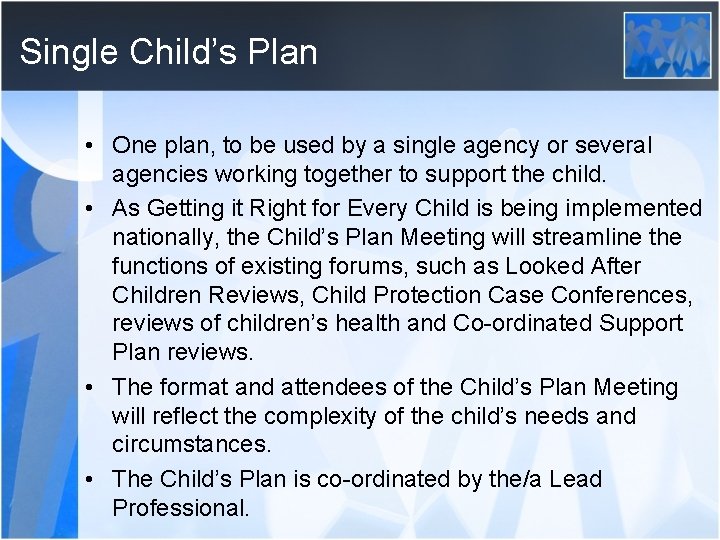
Single Child’s Plan • One plan, to be used by a single agency or several agencies working together to support the child. • As Getting it Right for Every Child is being implemented nationally, the Child’s Plan Meeting will streamline the functions of existing forums, such as Looked After Children Reviews, Child Protection Case Conferences, reviews of children’s health and Co-ordinated Support Plan reviews. • The format and attendees of the Child’s Plan Meeting will reflect the complexity of the child’s needs and circumstances. • The Child’s Plan is co-ordinated by the/a Lead Professional.
GIRFEC in West Lothian
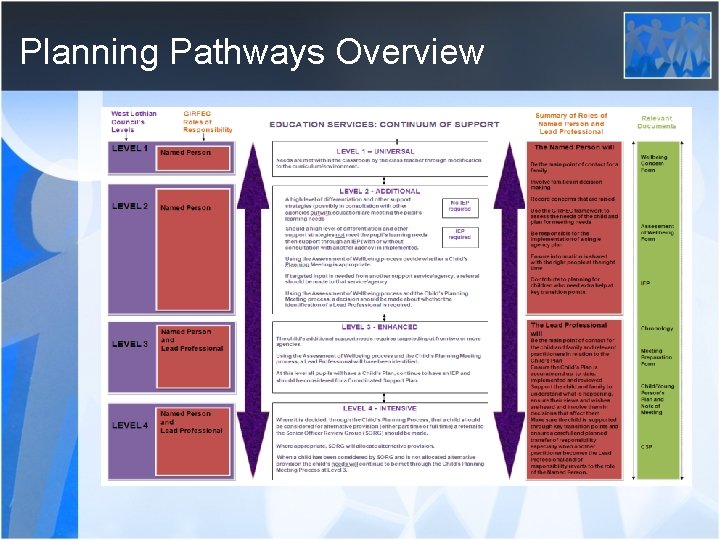
Planning Pathways Overview
Level 1 Co. S: Named Person Responsibilities Wellbeing Concerns process • Main point of contact for the family / public and other professionals regarding the child • Wellbeing Concerns Form to be used to record concerns and to plan for further action • Points to consider: – How will this be used in our school/agency? – How could it be used to record plans that already take place? eg. IEP consideration, Sf. L discussions, decisions about within school additional support
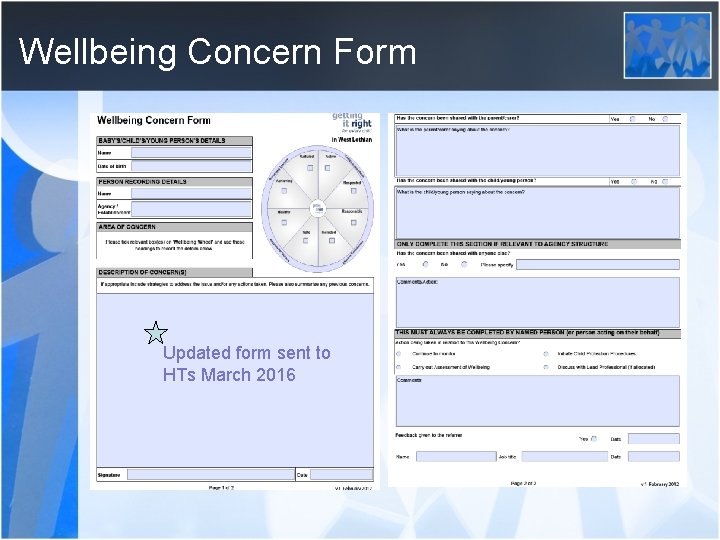
Wellbeing Concern Form Updated form sent to HTs March 2016
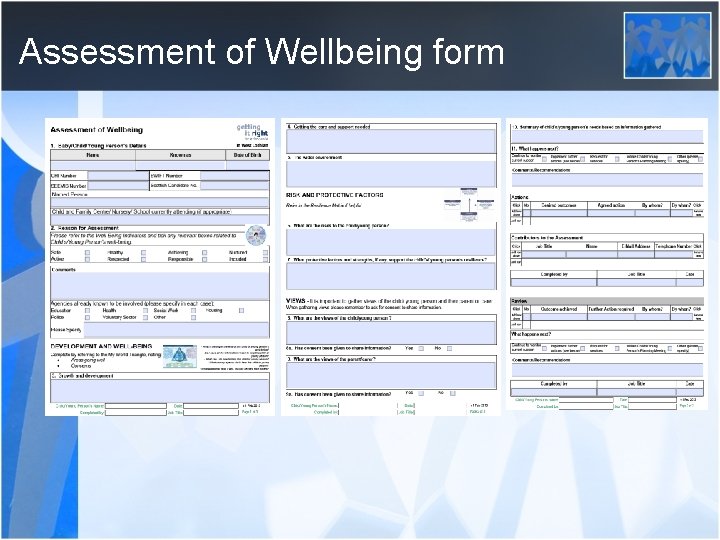
Level 2 Co. S: Named Person responsibilities Assessment of Wellbeing process • The Assessment of Wellbeing form is the start of the Single Child’s Planning process and is part of the Single Child’s Plan. • Designed to support the Named Person in taking decisions about further action • Proforma is a place to record all information about an individual child • Proforma aids decision making process for the Named Person • Propose that process is implemented initially for all children for whom it is appropriate in Nursery, Primary 7, current S 1 and any children currently at Level 3 of Co. S. Ultimately, this requires to be in place for all pupils. Points to consider: How can we plan to implement this for the pupils as outlined above? How can it support processes already in place in our school? How could this be used in within my agency setting?
New for 2016 Inclusion and Wellbeing forum Can go to for advice and support.
Assessment of Wellbeing form
Chronologies “Chronologies have become one of the most talked about and least understood tools in modern social care practice” SWIA Practice Guide Chronology’s 2010
Definition of a Chronology A chronology is a factual record of a significant event or change in circumstances (either progress or concern) that impacts on the child’s safety, welfare and / or development. It is a tool to be used in partnership with children, young people, parents, carers and practitioners so that everyone can understand respond to the unique circumstances and experience of each individual child or young person and the impact on their lives.
Core elements of a Chronology • Key dates of birth, life events, moves etc • Transitions, life changes • Key professional interventions, reviews, hearings etc • Facts • Brief note of an event and reason for its significance • Source of information • The actions which were taken, including no action
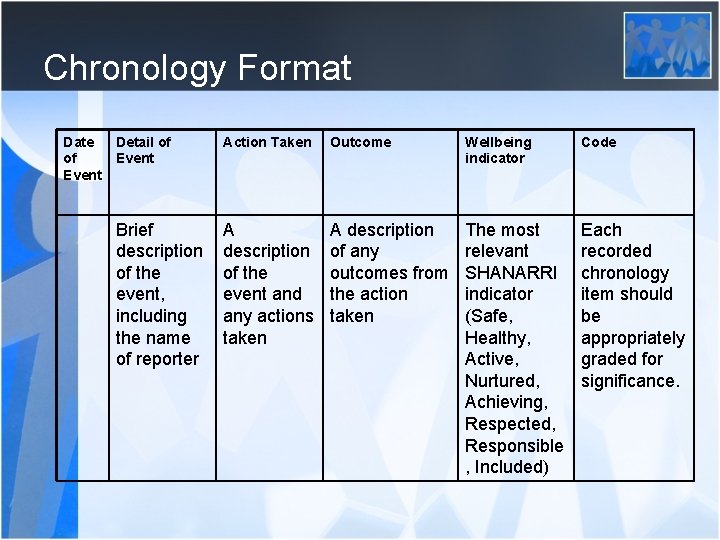
Chronology Format Date of Event Detail of Event Action Taken Outcome Wellbeing indicator Code Brief description of the event, including the name of reporter A description of the event and any actions taken A description of any outcomes from the action taken The most relevant SHANARRI indicator (Safe, Healthy, Active, Nurtured, Achieving, Respected, Responsible , Included) Each recorded chronology item should be appropriately graded for significance.
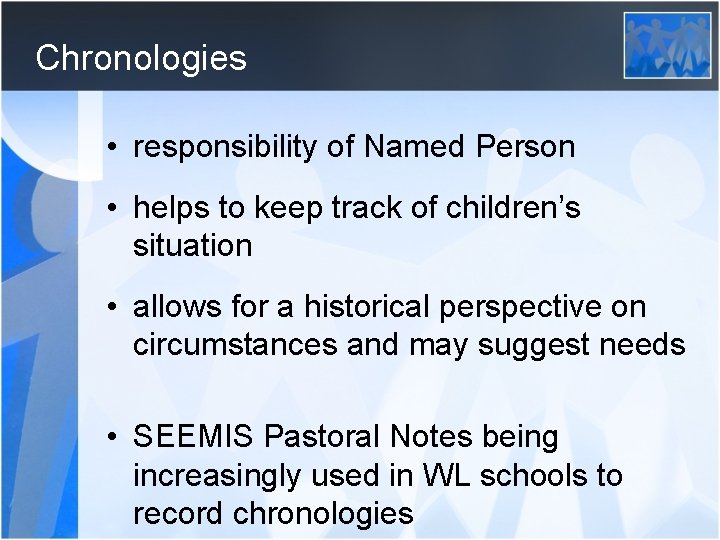
Chronologies • responsibility of Named Person • helps to keep track of children’s situation • allows for a historical perspective on circumstances and may suggest needs • SEEMIS Pastoral Notes being increasingly used in WL schools to record chronologies
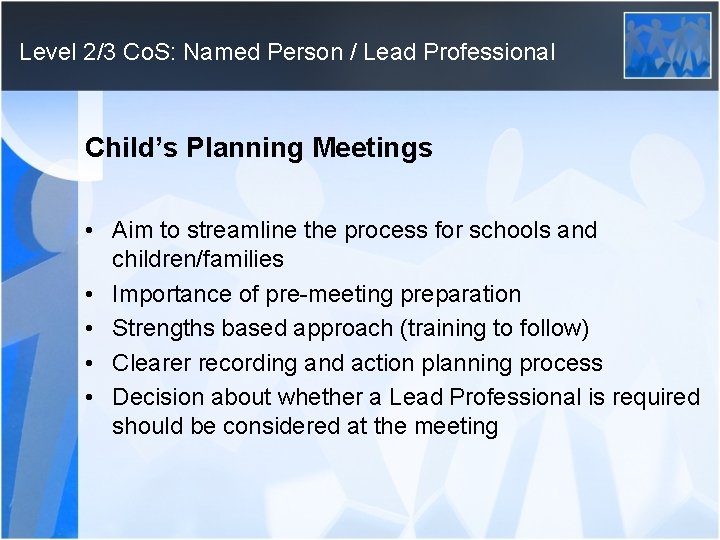
Level 2/3 Co. S: Named Person / Lead Professional Child’s Planning Meetings • Aim to streamline the process for schools and children/families • Importance of pre-meeting preparation • Strengths based approach (training to follow) • Clearer recording and action planning process • Decision about whether a Lead Professional is required should be considered at the meeting
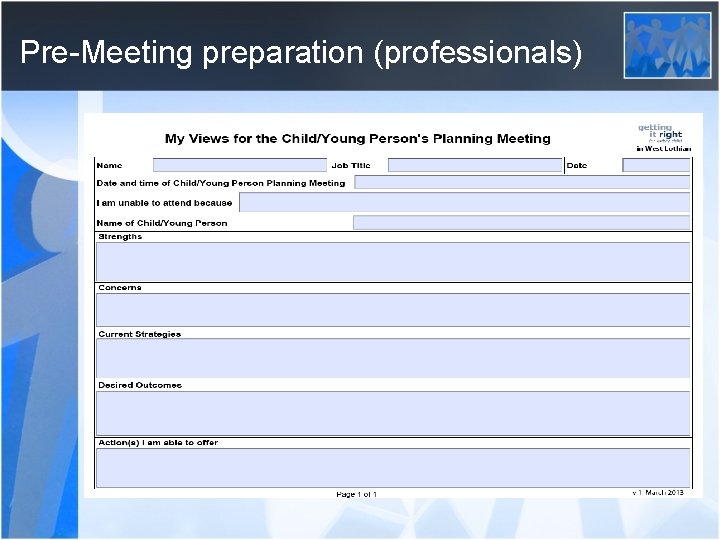
Pre-Meeting preparation (professionals)
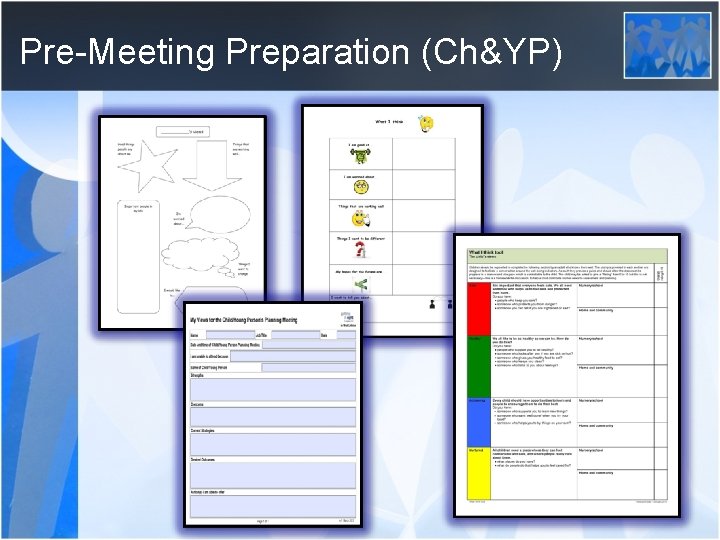
Pre-Meeting Preparation (Ch&YP)
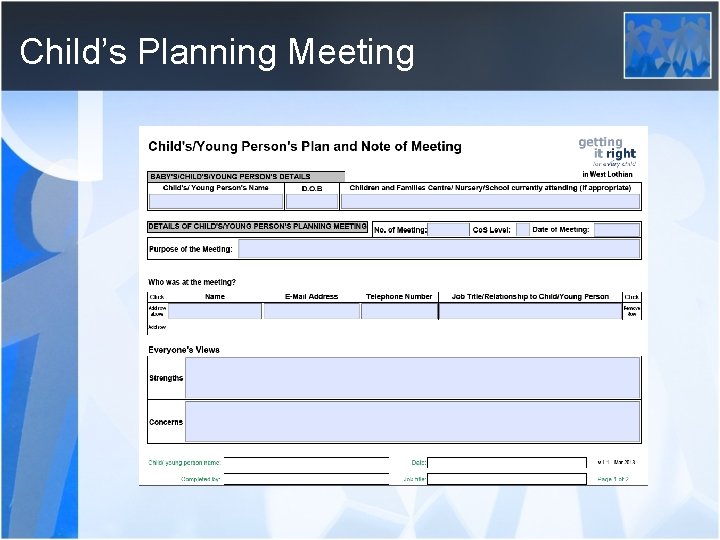
Child’s Planning Meeting
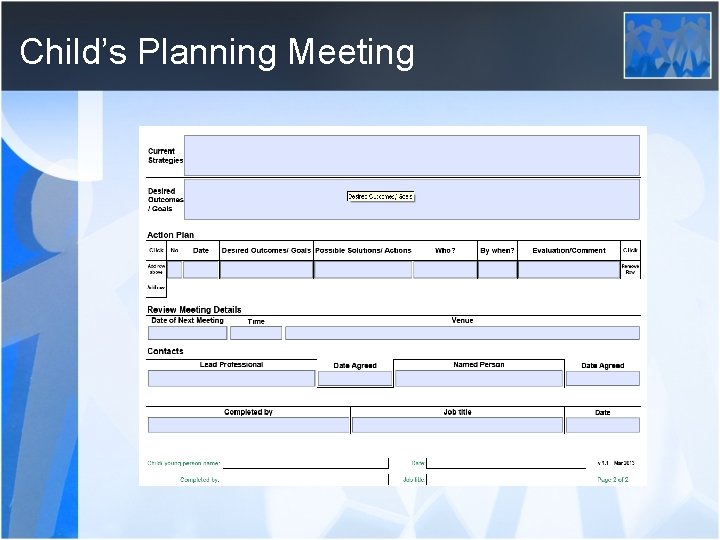
Child’s Planning Meeting
Continuum of Support Level 4: SORG • Presumption of Mainstream • Remit of SORG (regular & transition) • SORG referrals and feedback • Inclusion and Wellbeing forum (IWf)
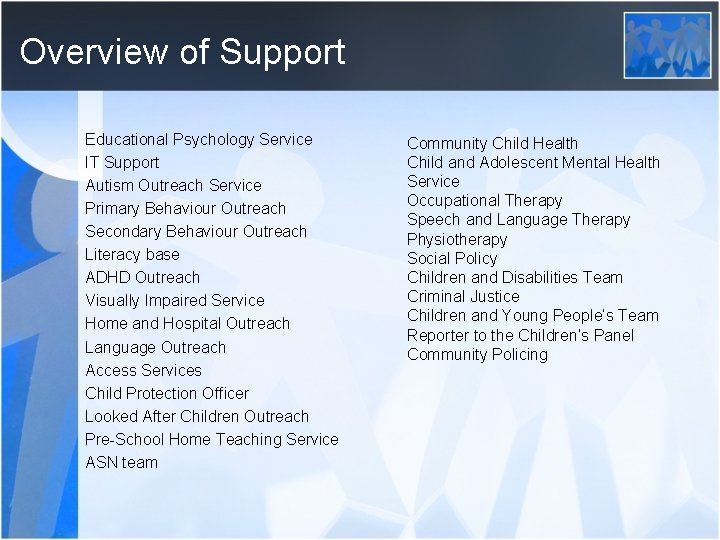
Overview of Support Educational Psychology Service IT Support Autism Outreach Service Primary Behaviour Outreach Secondary Behaviour Outreach Literacy base ADHD Outreach Visually Impaired Service Home and Hospital Outreach Language Outreach Access Services Child Protection Officer Looked After Children Outreach Pre-School Home Teaching Service ASN team Community Child Health Child and Adolescent Mental Health Service Occupational Therapy Speech and Language Therapy Physiotherapy Social Policy Children and Disabilities Team Criminal Justice Children and Young People’s Team Reporter to the Children’s Panel Community Policing
Named Person support • Information and training materials used to support Named Person Implementation can be found on WL Intranet • • Service Areas Education Services Guidelines and Resources GIRFEC folder