Algorithms What Why How 1 Devendra Potnis Ph
- Slides: 13
Algorithms What? Why? How? 1 Devendra Potnis, Ph. D Associate Professor School of Information Sciences dpotnis@utk. edu
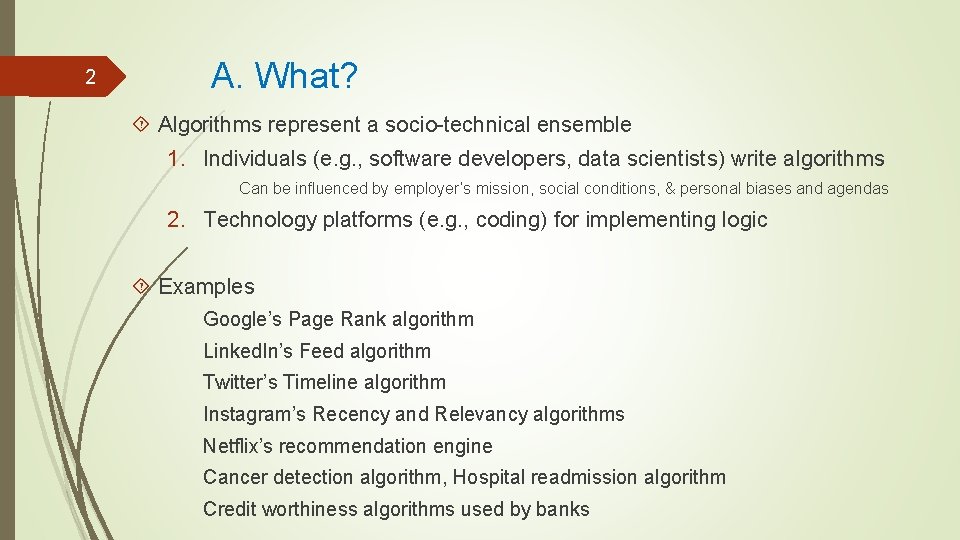
2 A. What? Algorithms represent a socio-technical ensemble 1. Individuals (e. g. , software developers, data scientists) write algorithms Can be influenced by employer’s mission, social conditions, & personal biases and agendas 2. Technology platforms (e. g. , coding) for implementing logic Examples Google’s Page Rank algorithm Linked. In’s Feed algorithm Twitter’s Timeline algorithm Instagram’s Recency and Relevancy algorithms Netflix’s recommendation engine Cancer detection algorithm, Hospital readmission algorithm Credit worthiness algorithms used by banks
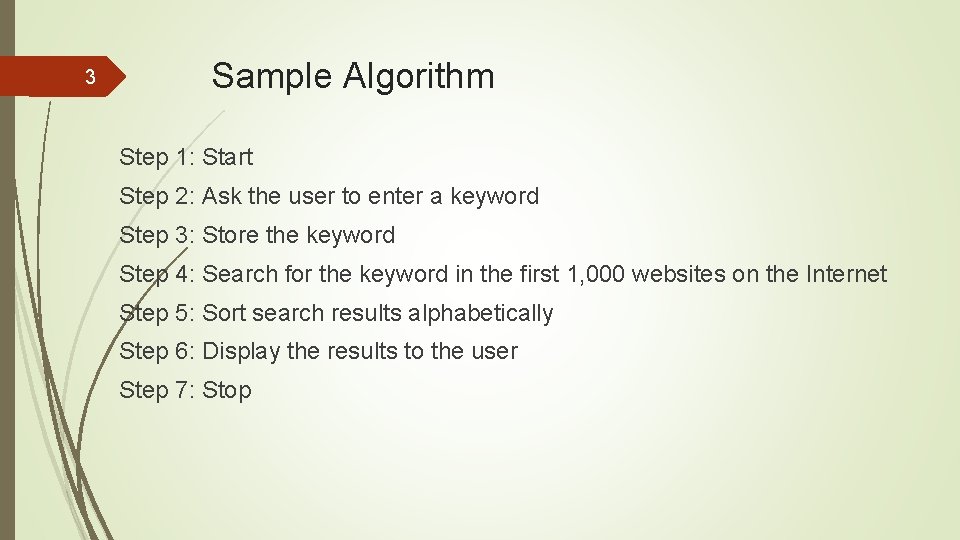
3 Sample Algorithm Step 1: Start Step 2: Ask the user to enter a keyword Step 3: Store the keyword Step 4: Search for the keyword in the first 1, 000 websites on the Internet Step 5: Sort search results alphabetically Step 6: Display the results to the user Step 7: Stop
4 B. Why? (1/2) Making decisions in real time What goes into your orange juice for the consistent taste Analyzing patterns and behavior Types of criminal activities in neighborhoods
5 B. Why? (2/2) Predicting trends, personalities, and expectations Paths of hurricanes and tornados, psychographic profiles of users What would you like to see on Facebook based on past interactions Proposing solutions Best day and time to launch satellites Recommendations for hospitals, banks, police, etc.
6 Consequences? Algorithms can influence Public opinion by managing information flow Feeds and recommendations on Facebook, Tik. Tok, You. Tube, Linked. In, Instagram, etc. Personalized advertisements (i. e. , micro-targeting voters, customers) Search results on Google Activism and engagement by controlling interactions Who could/would interact with whom at what time on social media Financial future of individuals Medical treatment
7 C. How? Operational elements of algorithms 1. Goal 2. Structures 3. Parameters
8 1. Goal (1/2) (Set by individuals and organizations and reflect motivations) What happened? (Descriptive analytics) Identify “meaningful” interactions by analyzing engagement Engagement metrics: reactions, comments, and shares Why did it happen? (Diagnostic analytics) Detect patterns in voting, MRI scans of patients, etc.
9 1. Goal (2/2) What can/will happen? (Predictive analytics) Predict trends (e. g. , shopping, weather, traffic) How can we make it happen? (Prescriptive analytics) Increase the need for acceptance and praise among users Alerts and notifications sent to users based on their interaction history and peak engagement times
10 2. Structures (Determine the execution of steps (e. g. , For, While, Next loops) Rules for repeating a set of actions (Defined by individuals) 1. Search for a keyword online 2. Search engine stops looking for the keyword after scanning the first 1, 000 websites Biased! The remaining websites on the Internet are ignored! Users might never know about other websites! (Information divide created by the search engine)
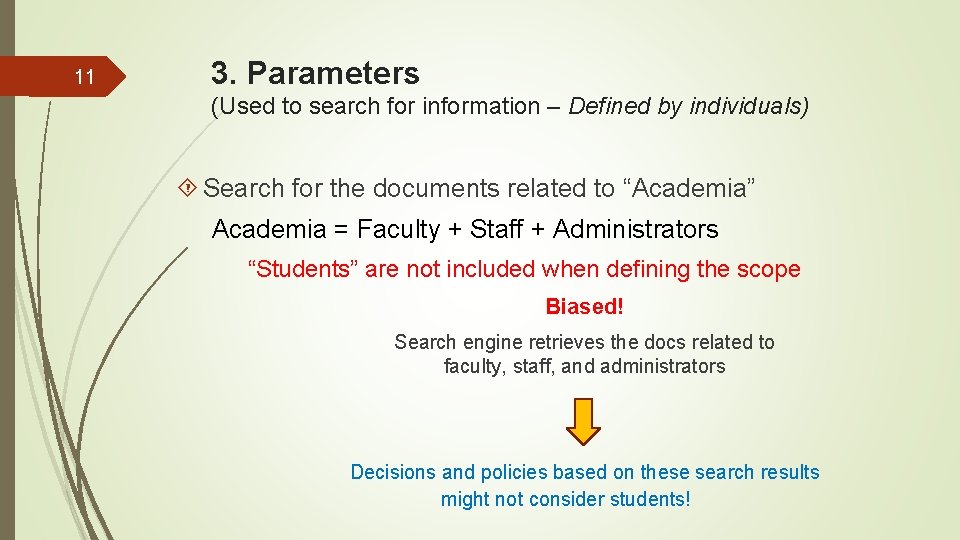
11 3. Parameters (Used to search for information – Defined by individuals) Search for the documents related to “Academia” Academia = Faculty + Staff + Administrators “Students” are not included when defining the scope Biased! Search engine retrieves the docs related to faculty, staff, and administrators Decisions and policies based on these search results might not consider students!
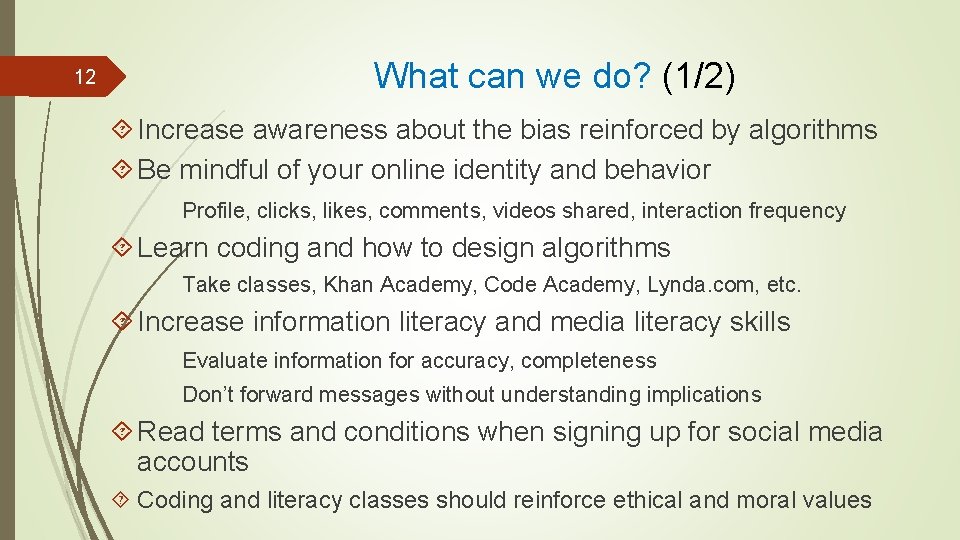
12 What can we do? (1/2) Increase awareness about the bias reinforced by algorithms Be mindful of your online identity and behavior Profile, clicks, likes, comments, videos shared, interaction frequency Learn coding and how to design algorithms Take classes, Khan Academy, Code Academy, Lynda. com, etc. Increase information literacy and media literacy skills Evaluate information for accuracy, completeness Don’t forward messages without understanding implications Read terms and conditions when signing up for social media accounts Coding and literacy classes should reinforce ethical and moral values
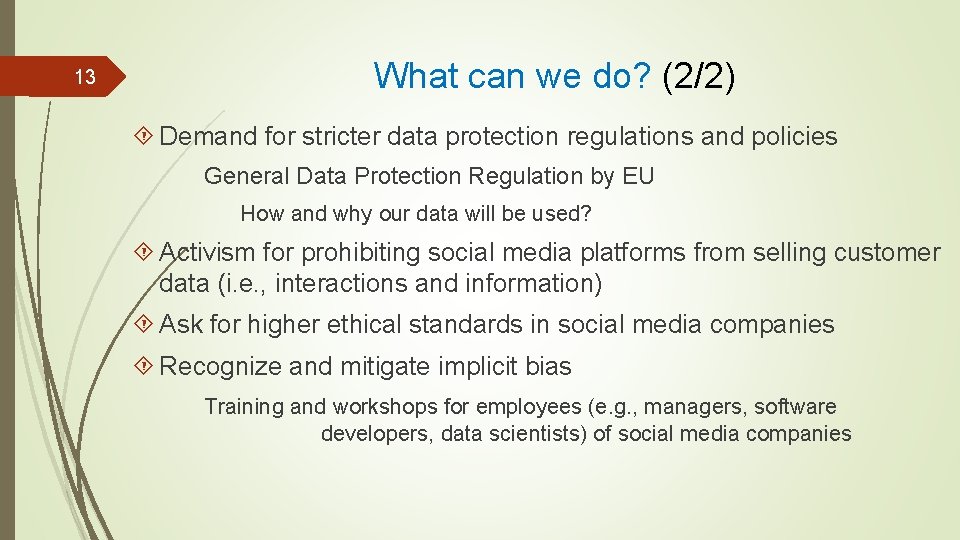
13 What can we do? (2/2) Demand for stricter data protection regulations and policies General Data Protection Regulation by EU How and why our data will be used? Activism for prohibiting social media platforms from selling customer data (i. e. , interactions and information) Ask for higher ethical standards in social media companies Recognize and mitigate implicit bias Training and workshops for employees (e. g. , managers, software developers, data scientists) of social media companies