Agenda Collect Homework 2 Go over Cellular Respiration

- Slides: 20
Agenda • Collect Homework #2 • Go over Cellular Respiration Fill-in • Lecture: – Finish Cellular Respiration, etc – DNA Structure and Function • Lab – Cellular Respiration • Lecture Quiz #4 this afternoon • Lecture – Protein Synthesis and Gene Expression
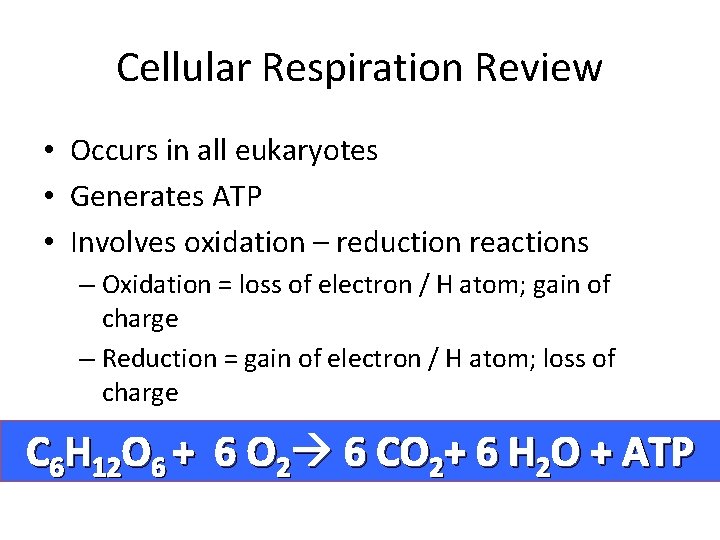
Cellular Respiration Review • Occurs in all eukaryotes • Generates ATP • Involves oxidation – reduction reactions – Oxidation = loss of electron / H atom; gain of charge – Reduction = gain of electron / H atom; loss of charge C 6 H 12 O 6 + 6 O 2 6 CO 2+ 6 H 2 O + ATP
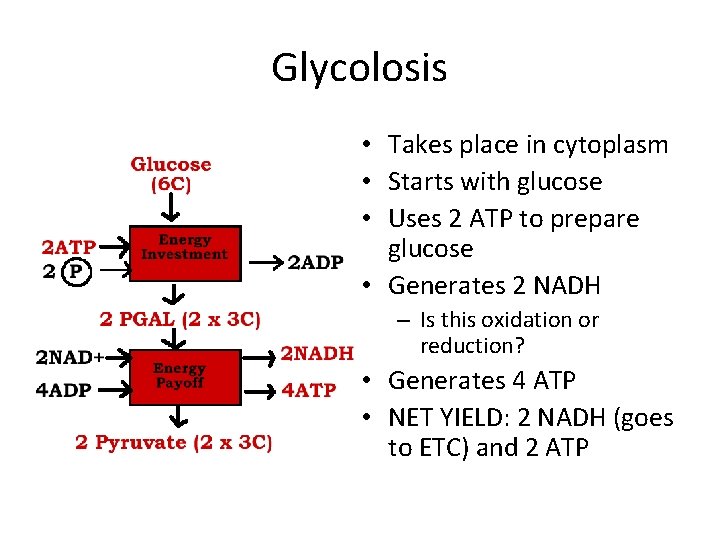
Glycolosis • Takes place in cytoplasm • Starts with glucose • Uses 2 ATP to prepare glucose • Generates 2 NADH – Is this oxidation or reduction? • Generates 4 ATP • NET YIELD: 2 NADH (goes to ETC) and 2 ATP
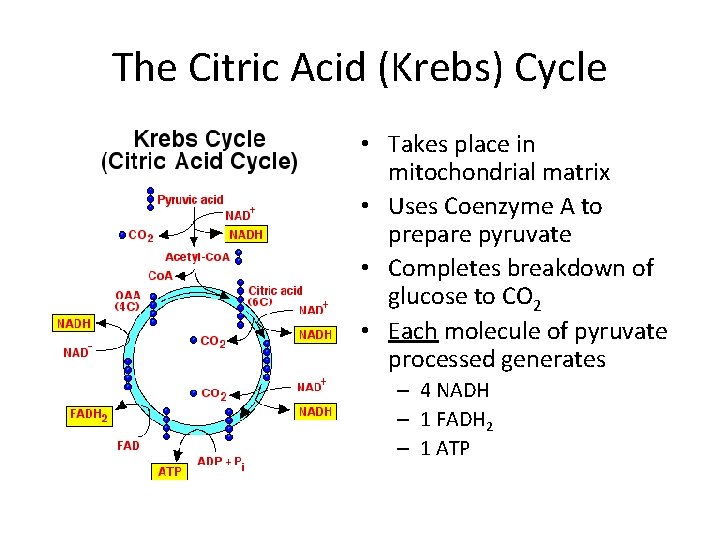
The Citric Acid (Krebs) Cycle • Takes place in mitochondrial matrix • Uses Coenzyme A to prepare pyruvate • Completes breakdown of glucose to CO 2 • Each molecule of pyruvate processed generates – 4 NADH – 1 FADH 2 – 1 ATP
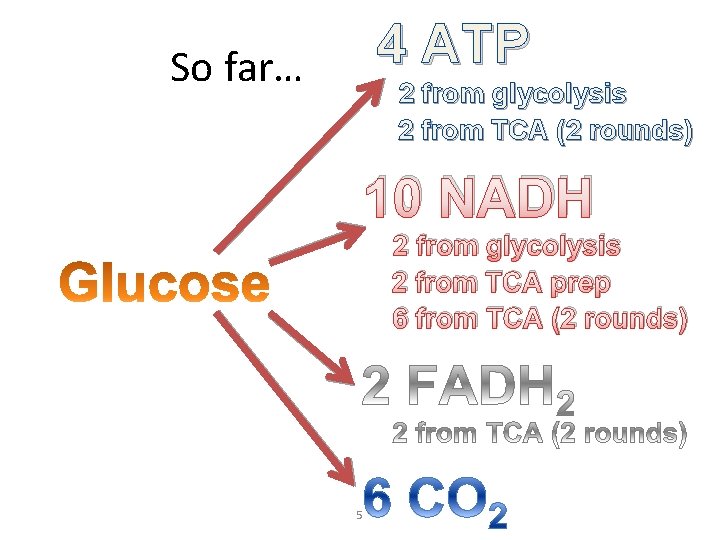
4 ATP So far… 2 from glycolysis 2 from TCA (2 rounds) 10 NADH 2 from glycolysis 2 from TCA prep 6 from TCA (2 rounds) 5
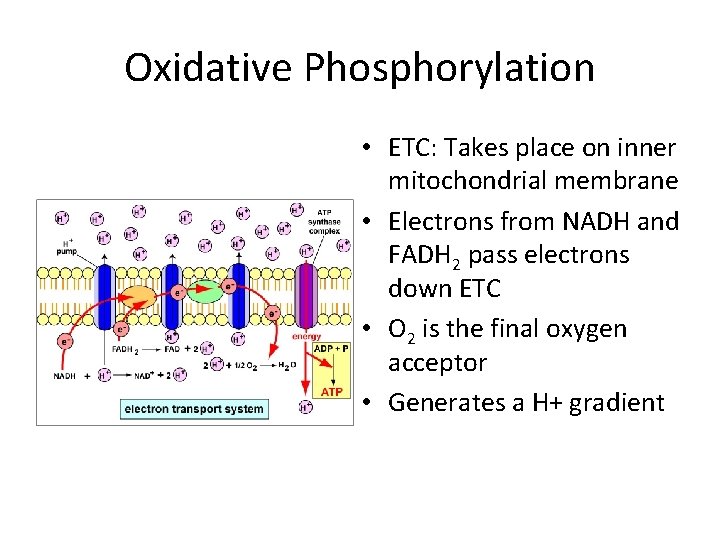
Oxidative Phosphorylation • ETC: Takes place on inner mitochondrial membrane • Electrons from NADH and FADH 2 pass electrons down ETC • O 2 is the final oxygen acceptor • Generates a H+ gradient
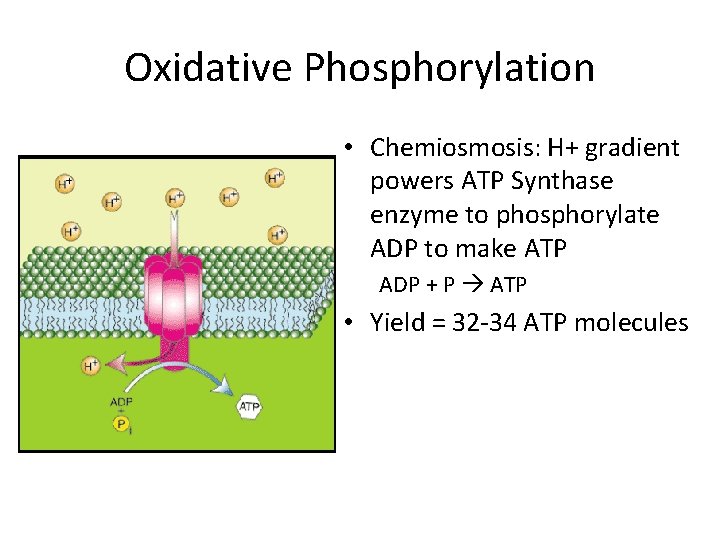
Oxidative Phosphorylation • Chemiosmosis: H+ gradient powers ATP Synthase enzyme to phosphorylate ADP to make ATP ADP + P ATP • Yield = 32 -34 ATP molecules
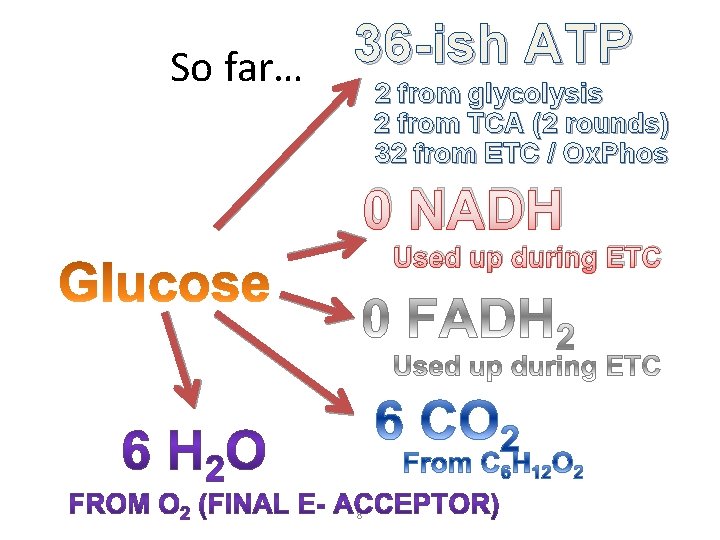
36 -ish ATP So far… 2 from glycolysis 2 from TCA (2 rounds) 32 from ETC / Ox. Phos 0 NADH Used up during ETC 8
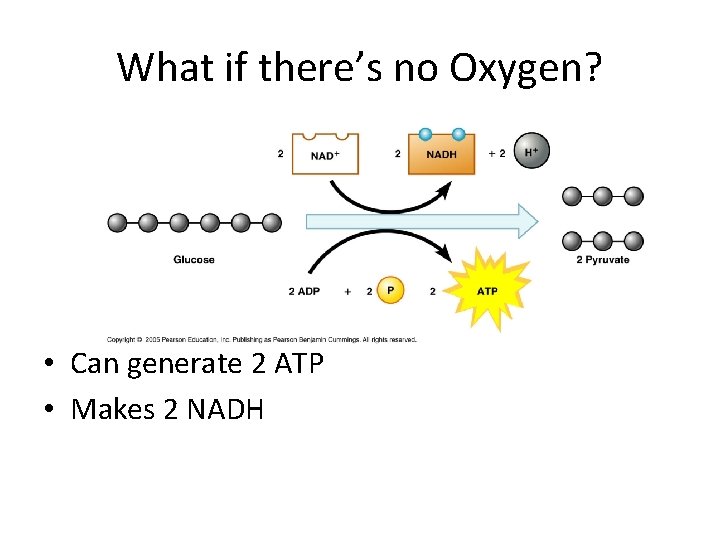
What if there’s no Oxygen? • O 2 can’t act as final electron acceptor • ETC can’t happen • Can still get 2 ATP from glycolysis (doesn’t require O 2)
What if there’s no Oxygen? • Can generate 2 ATP • Makes 2 NADH
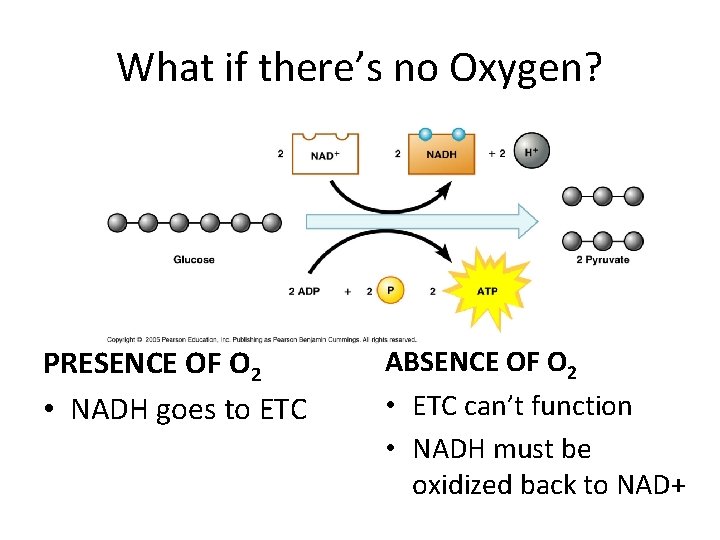
What if there’s no Oxygen? PRESENCE OF O 2 • NADH goes to ETC ABSENCE OF O 2 • ETC can’t function • NADH must be oxidized back to NAD+
Anaerobic Respiration • Cellular respiration in the absence of oxygen • Oxidizes NADH to replenish NAD+ • Lactic Acid Fermentation • Ethanol Fermentation
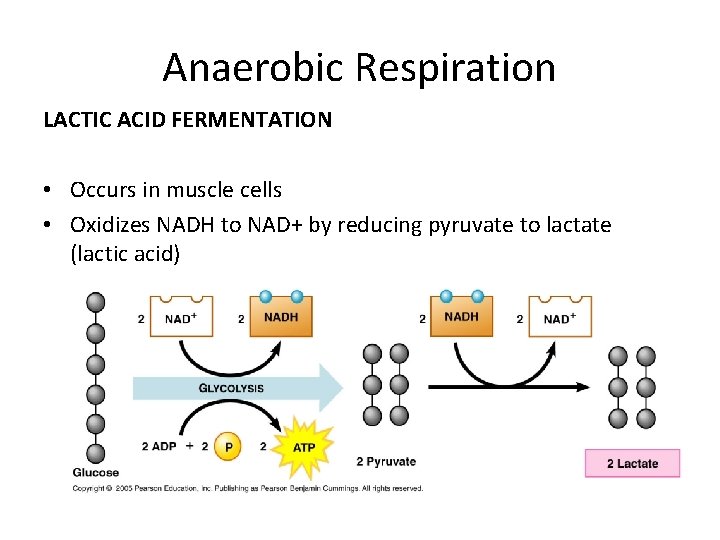
Anaerobic Respiration LACTIC ACID FERMENTATION • Occurs in muscle cells • Oxidizes NADH to NAD+ by reducing pyruvate to lactate (lactic acid)
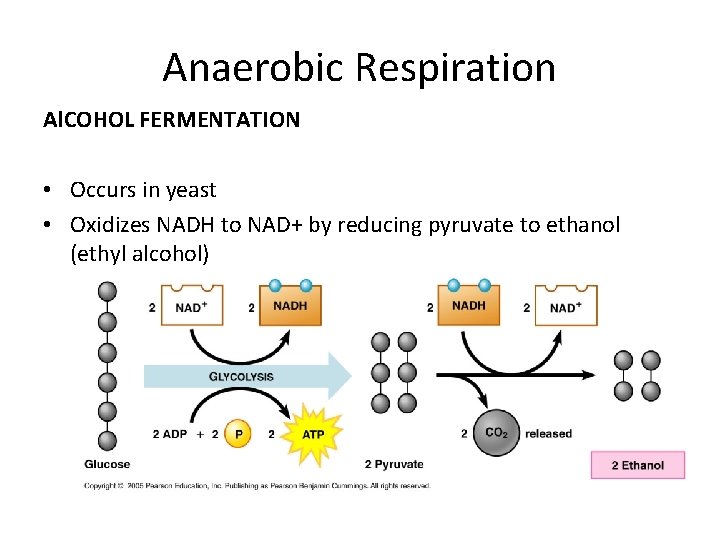
Anaerobic Respiration Al. COHOL FERMENTATION • Occurs in yeast • Oxidizes NADH to NAD+ by reducing pyruvate to ethanol (ethyl alcohol)
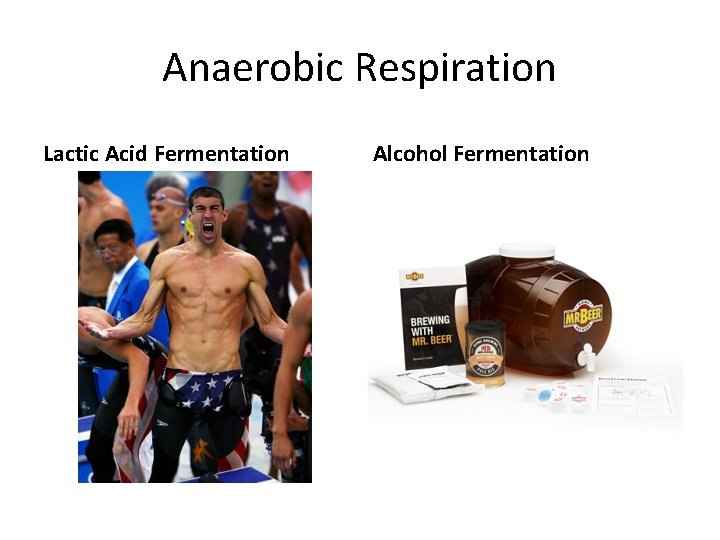
Anaerobic Respiration Lactic Acid Fermentation Alcohol Fermentation
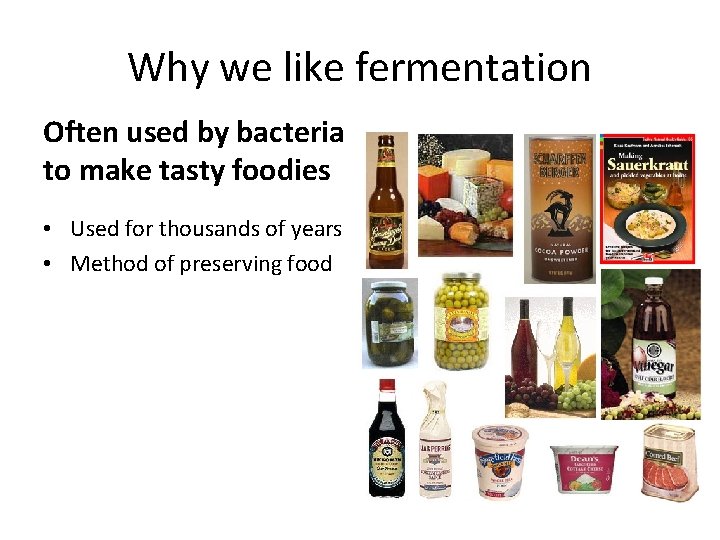
Why we like fermentation Often used by bacteria to make tasty foodies • Used for thousands of years • Method of preserving food
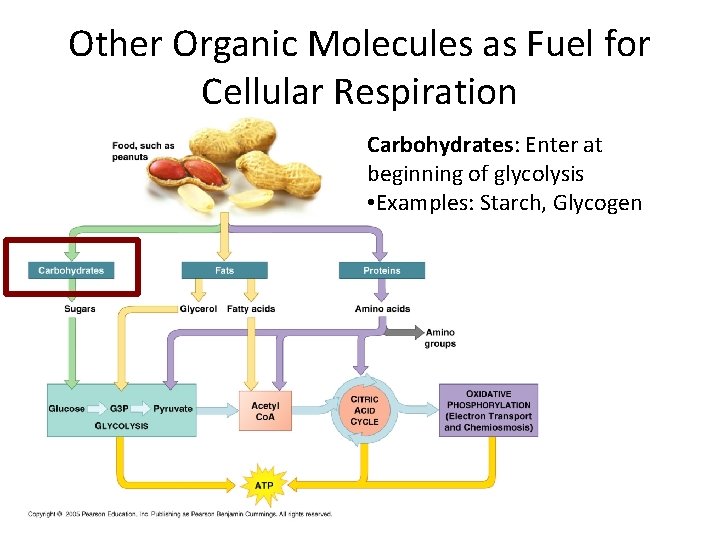
Other Organic Molecules as Fuel for Cellular Respiration Carbohydrates: Enter at beginning of glycolysis • Examples: Starch, Glycogen
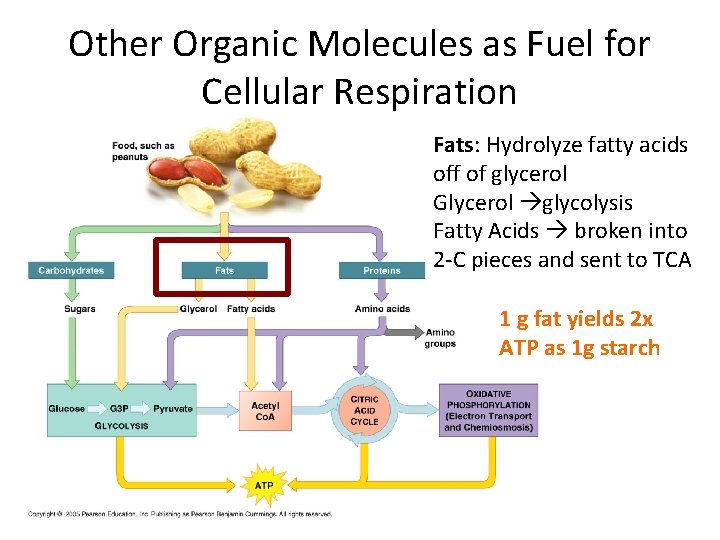
Other Organic Molecules as Fuel for Cellular Respiration Fats: Hydrolyze fatty acids off of glycerol Glycerol glycolysis Fatty Acids broken into 2 -C pieces and sent to TCA 1 g fat yields 2 x ATP as 1 g starch
Other Organic Molecules as Fuel for Cellular Respiration Proteins: Hydrolyze to amino acids, build more proteins Can be used in glycolysis or TCA
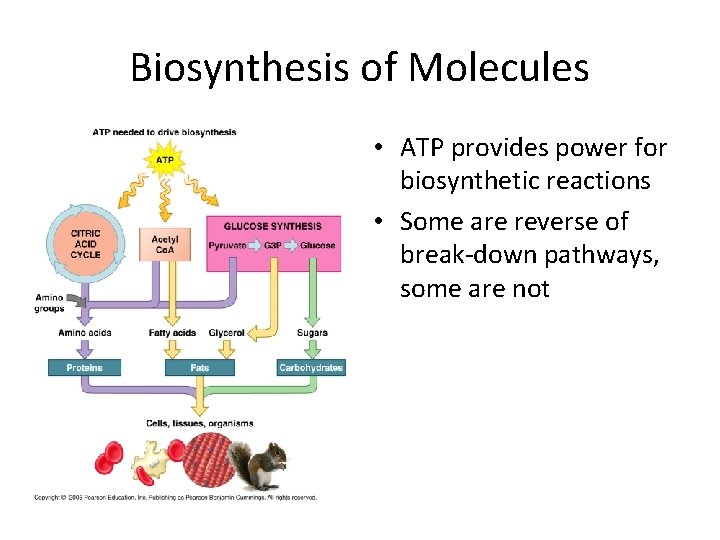
Biosynthesis of Molecules • ATP provides power for biosynthetic reactions • Some are reverse of break-down pathways, some are not