
Lecture 4 PHOTOSYNTHESIS Lifes grand device By Edgar
Lecture 4: PHOTOSYNTHESIS Life’s grand device By Edgar Moctezuma
TODAY… • Photosynthesis I. III. IV. V. VI. • Intro Properties of light and pigments Chloroplast structure and function Light reactions “Dark” or Carbon reactions Summary and conclusions Respiration I. Energy and food chains II. Carbon Cycle
I. Introduction to photosynthesis • From the Greek PHOTO = produced by light SYNTHESIS = a whole made of parts put together. Definition: PHOTOSYNTHESIS is the process whereby plants, algae, some bacteria, use the energy of the sun to synthesize organic compounds (sugars) from inorganic compounds (CO 2 and water).
WHY IS PHOTOSYNTHESIS SO IMPORTANT? PHOTOSYNTHESIS is one of the most important biological process on earth! • Provides the oxygen we breathe • Consumes much of the CO 2 • Food • Energy • Fibers and materials
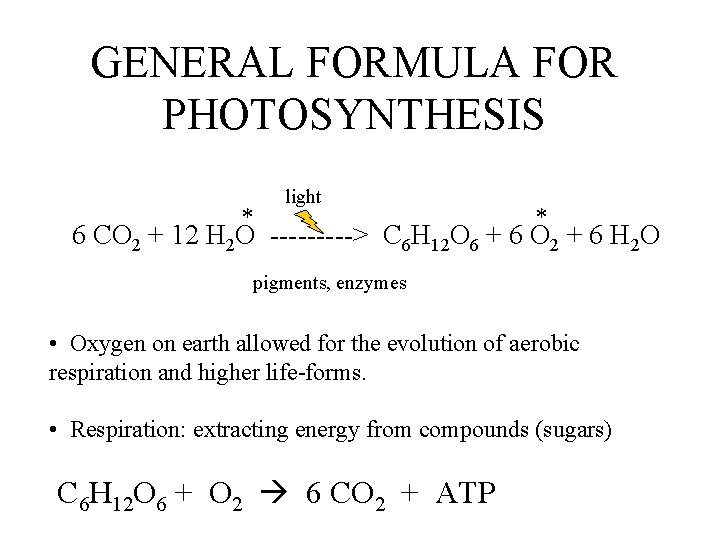
GENERAL FORMULA FOR PHOTOSYNTHESIS * light * 6 CO 2 + 12 H 2 O -----> C 6 H 12 O 6 + 6 O 2 + 6 H 2 O pigments, enzymes • Oxygen on earth allowed for the evolution of aerobic respiration and higher life-forms. • Respiration: extracting energy from compounds (sugars) C 6 H 12 O 6 + O 2 6 CO 2 + ATP
II. PROPERTIES OF LIGHT Virtually all life depends on it! • Light moves in waves, in energy units called PHOTONS • Energy of a PHOTON inversely proportional to its wavelength • Visible light (between UV and IR) occurs in a spectrum of colors
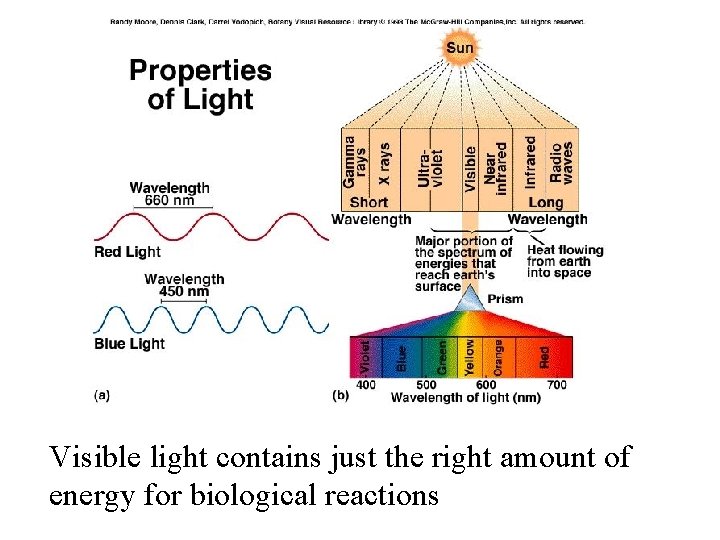
Visible light contains just the right amount of energy for biological reactions
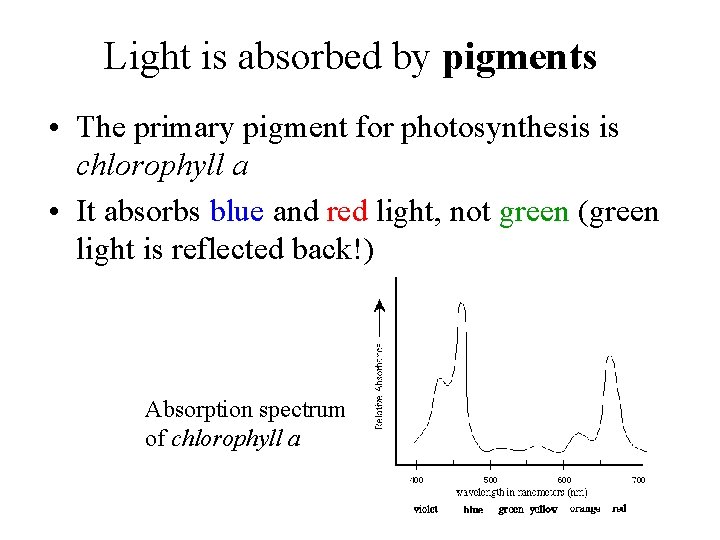
Light is absorbed by pigments • The primary pigment for photosynthesis is chlorophyll a • It absorbs blue and red light, not green (green light is reflected back!) Absorption spectrum of chlorophyll a
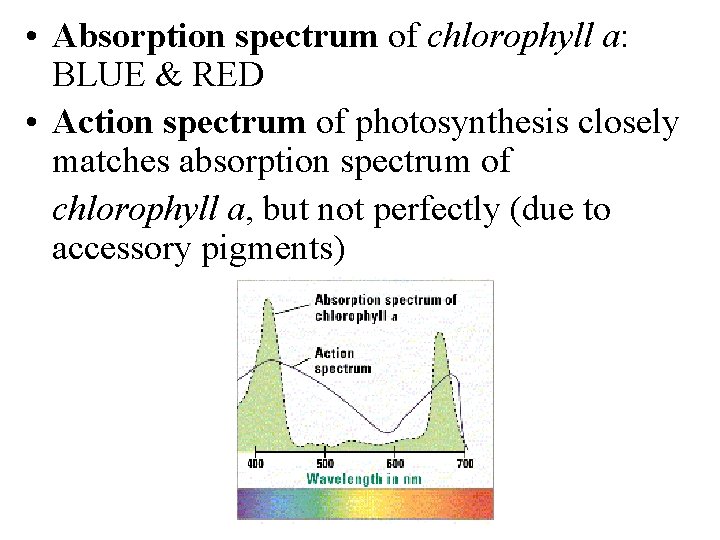
• Absorption spectrum of chlorophyll a: BLUE & RED • Action spectrum of photosynthesis closely matches absorption spectrum of chlorophyll a, but not perfectly (due to accessory pigments)
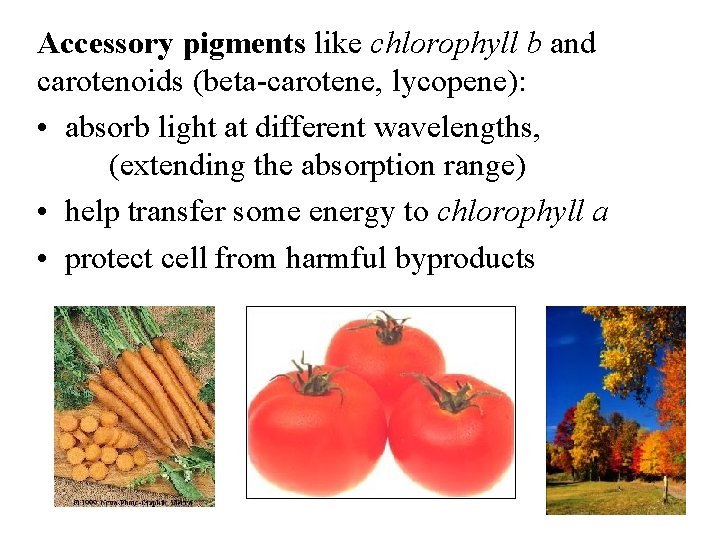
Accessory pigments like chlorophyll b and carotenoids (beta-carotene, lycopene): • absorb light at different wavelengths, (extending the absorption range) • help transfer some energy to chlorophyll a • protect cell from harmful byproducts
Chlorophyll a is the primary photosynthetic pigment that drives photosynthesis. Accessory pigments absorb at different wavelengths, extending the range of light useful for photosynthesis.
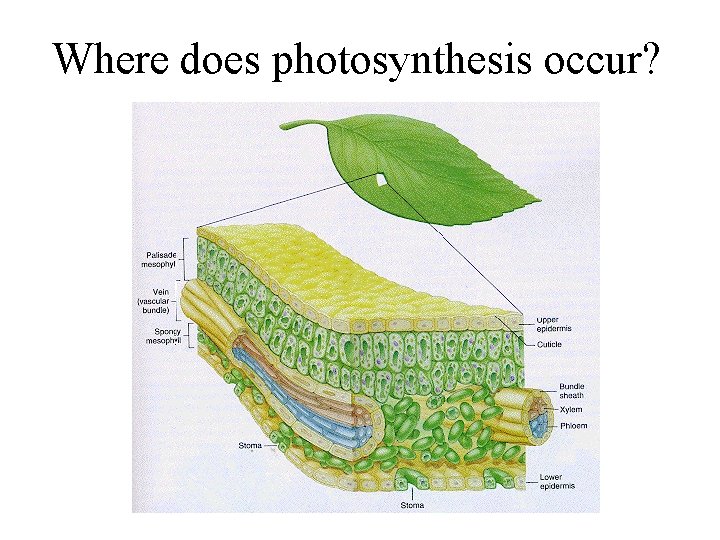
Where does photosynthesis occur?
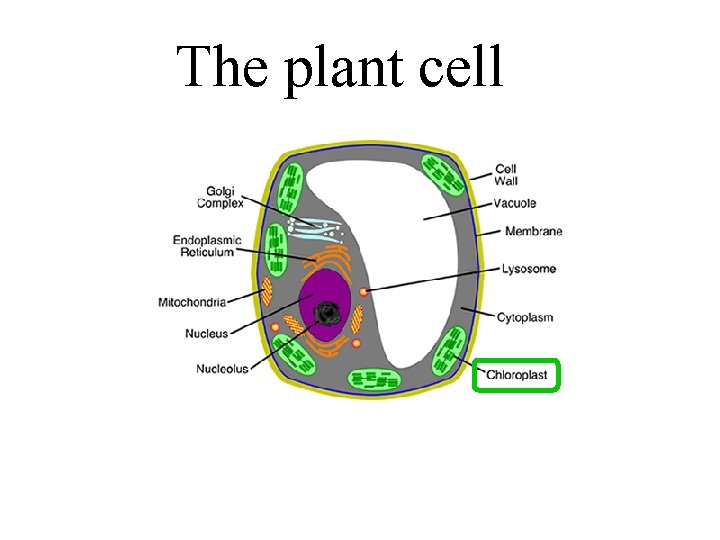
The plant cell
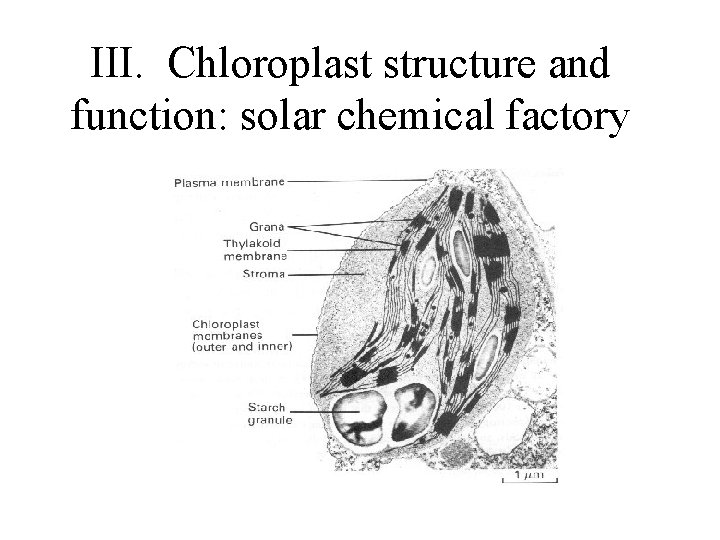
III. Chloroplast structure and function: solar chemical factory
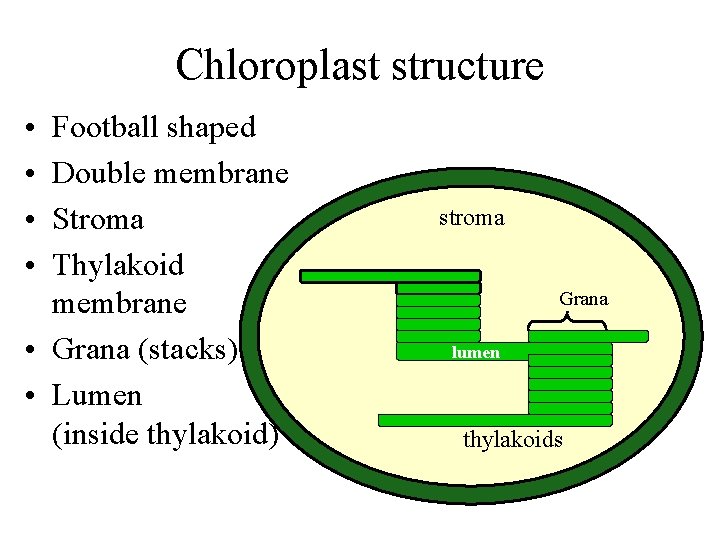
Chloroplast structure • • Football shaped Double membrane Stroma Thylakoid membrane • Grana (stacks) • Lumen (inside thylakoid) stroma Grana lumen thylakoids
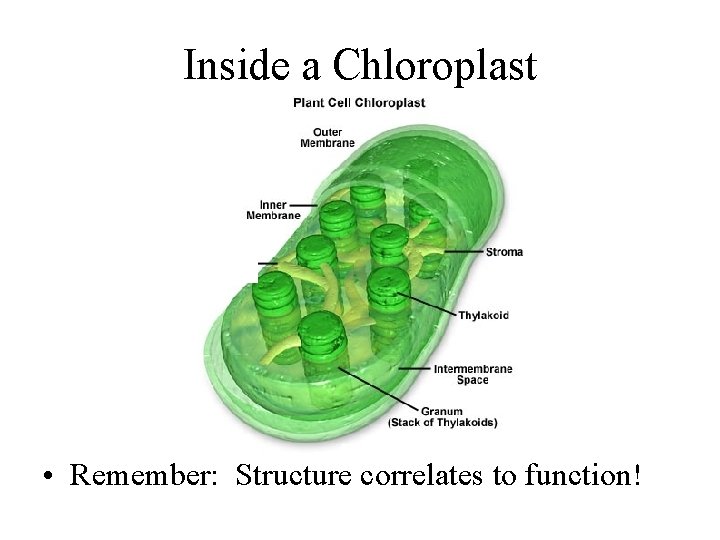
Inside a Chloroplast • Remember: Structure correlates to function!
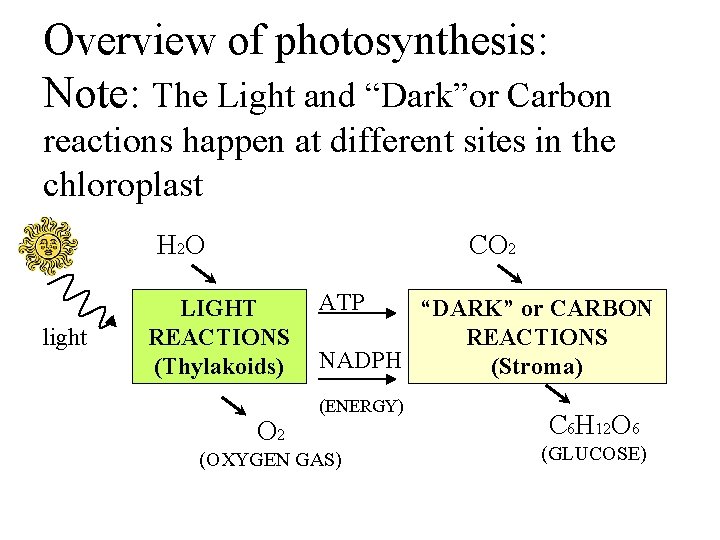
Overview of photosynthesis: Note: The Light and “Dark”or Carbon reactions happen at different sites in the chloroplast H 2 O light CO 2 LIGHT REACTIONS (Thylakoids) O 2 ATP “DARK” or CARBON REACTIONS NADPH (Stroma) (ENERGY) (OXYGEN GAS) C 6 H 12 O 6 (GLUCOSE)
IV. The Light Reactions 1. Light dependent 2. Occur in the thylakoid membrane of chloroplast 3. Water is split into oxygen gas (O 2) and H+ 4. Use light energy (photons) to generate two chemical energy compounds: ATP & NADPH
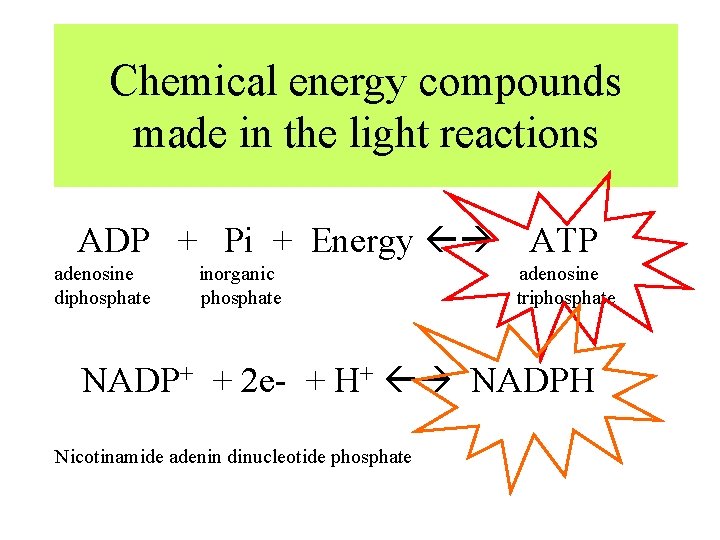
Chemical energy compounds made in the light reactions ADP + Pi + Energy adenosine diphosphate inorganic phosphate ATP adenosine triphosphate NADP+ + 2 e- + H+ NADPH Nicotinamide adenin dinucleotide phosphate
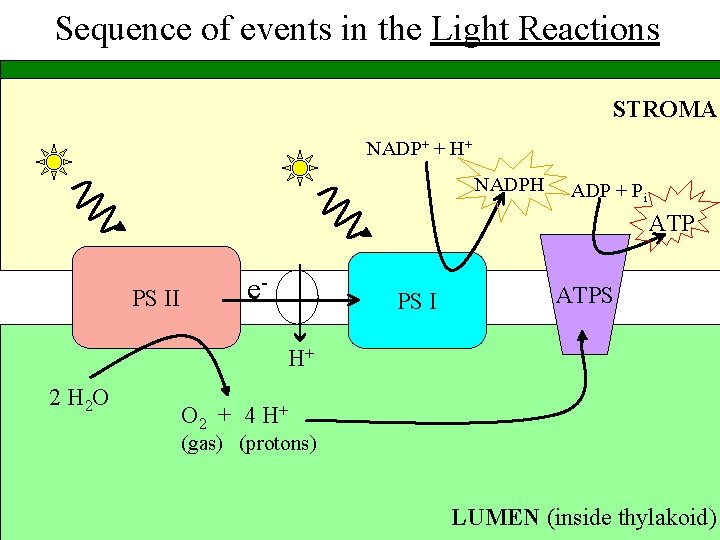
Sequence of events in the Light Reactions STROMA NADP+ + H+ NADPH ADP + Pi ATP PS II e- PS I ATPS H+ 2 H 2 O O 2 + 4 H + (gas) (protons) LUMEN (inside thylakoid)
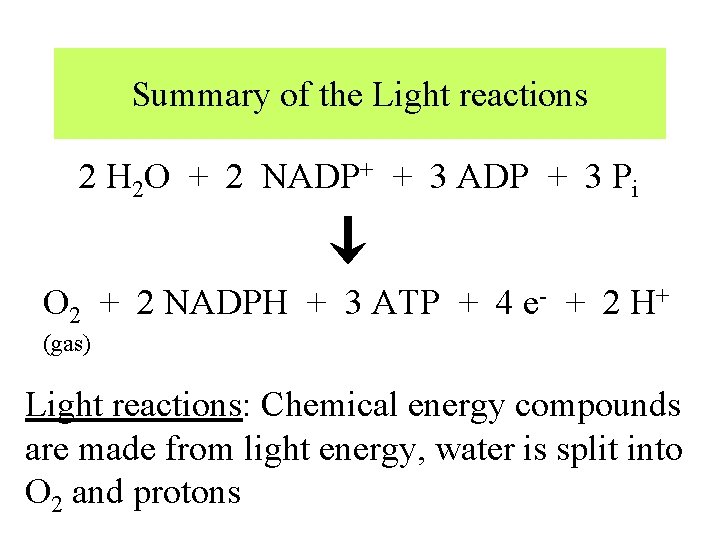
Summary of the Light reactions 2 H 2 O + 2 NADP+ + 3 ADP + 3 Pi O 2 + 2 NADPH + 3 ATP + 4 e- + 2 H+ (gas) Light reactions: Chemical energy compounds are made from light energy, water is split into O 2 and protons
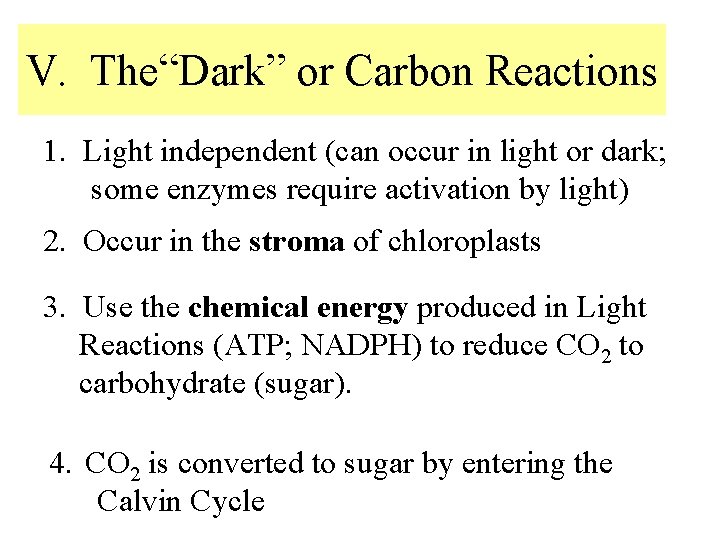
V. The“Dark” or Carbon Reactions 1. Light independent (can occur in light or dark; some enzymes require activation by light) 2. Occur in the stroma of chloroplasts 3. Use the chemical energy produced in Light Reactions (ATP; NADPH) to reduce CO 2 to carbohydrate (sugar). 4. CO 2 is converted to sugar by entering the Calvin Cycle
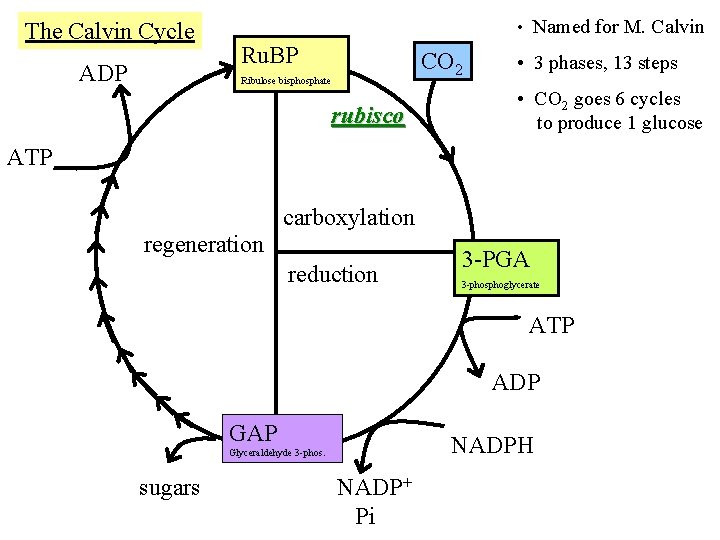
The Calvin Cycle ADP • Named for M. Calvin Ru. BP CO 2 Ribulose bisphosphate rubisco • 3 phases, 13 steps • CO 2 goes 6 cycles to produce 1 glucose ATP carboxylation regeneration reduction 3 -PGA 3 -phosphoglycerate ATP ADP GAP NADPH Glyceraldehyde 3 -phos. sugars NADP+ Pi
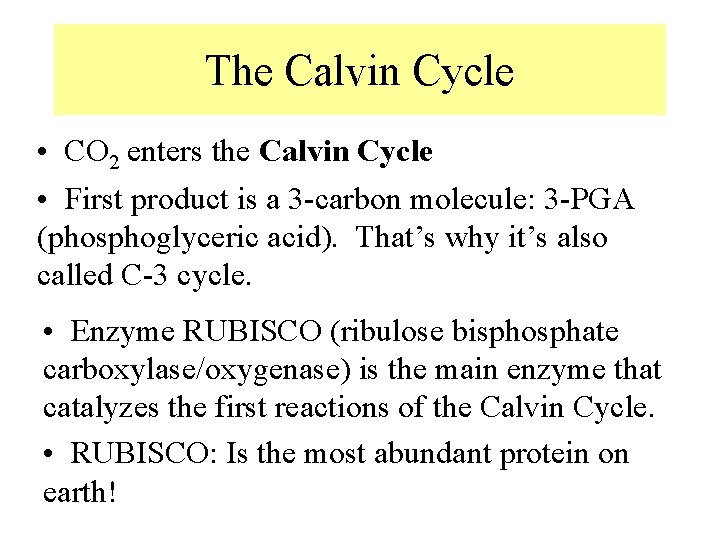
The Calvin Cycle • CO 2 enters the Calvin Cycle • First product is a 3 -carbon molecule: 3 -PGA (phosphoglyceric acid). That’s why it’s also called C-3 cycle. • Enzyme RUBISCO (ribulose bisphosphate carboxylase/oxygenase) is the main enzyme that catalyzes the first reactions of the Calvin Cycle. • RUBISCO: Is the most abundant protein on earth!
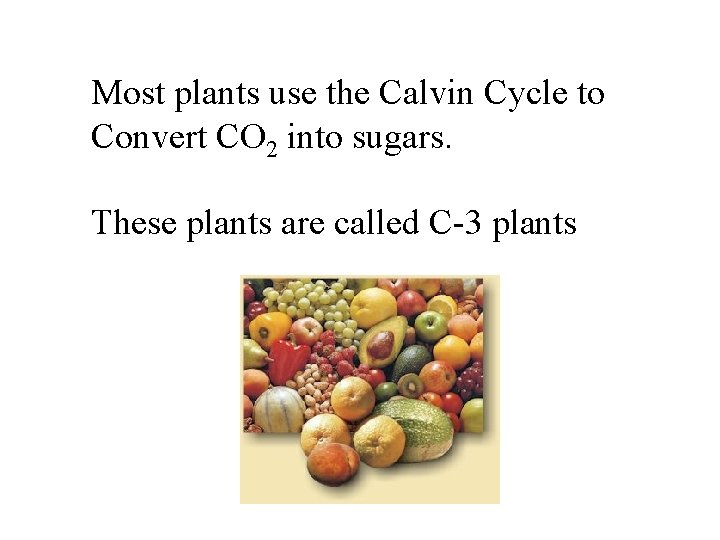
Most plants use the Calvin Cycle to Convert CO 2 into sugars. These plants are called C-3 plants
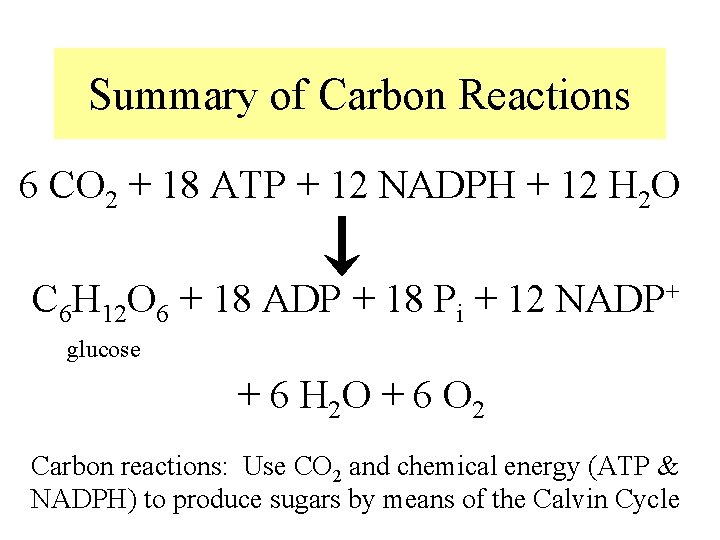
Summary of Carbon Reactions 6 CO 2 + 18 ATP + 12 NADPH + 12 H 2 O C 6 H 12 O 6 + 18 ADP + 18 Pi + 12 NADP+ glucose + 6 H 2 O + 6 O 2 Carbon reactions: Use CO 2 and chemical energy (ATP & NADPH) to produce sugars by means of the Calvin Cycle
Limitations on Photosynthesis • Photosynthesis is not perfect in C-3 plants, it is only 1 - 4 % efficient • Low efficiency due to photorespiration • Photorespiration occurs when internal CO 2 concentration becomes too low (drought); rubisco begins fixing oxygen.
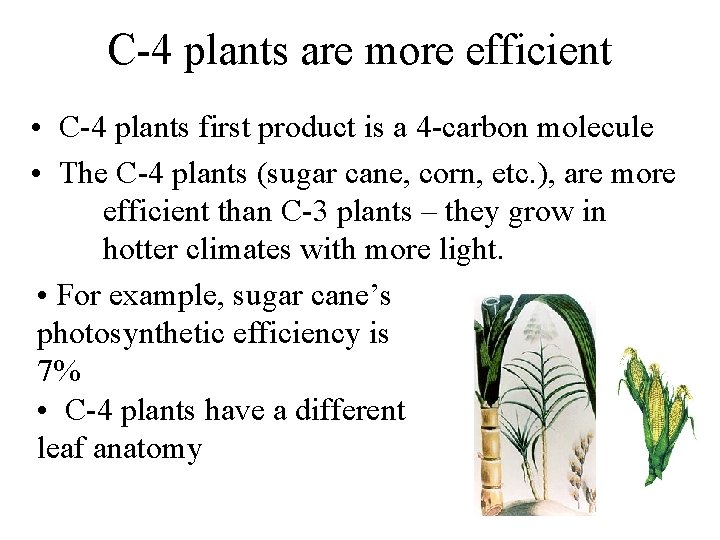
C-4 plants are more efficient • C-4 plants first product is a 4 -carbon molecule • The C-4 plants (sugar cane, corn, etc. ), are more efficient than C-3 plants – they grow in hotter climates with more light. • For example, sugar cane’s photosynthetic efficiency is 7% • C-4 plants have a different leaf anatomy
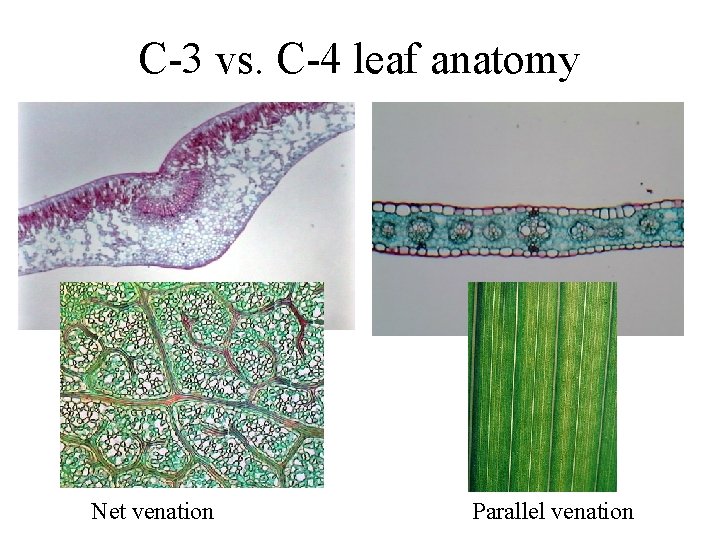
C-3 vs. C-4 leaf anatomy Net venation Parallel venation
VI. Summary of Photosynthesis: 1. Light energy absorbed by chlorophyll a drives the reactions of photosynthesis. 2. Converts light energy into chemical energy to make organic compounds. 3. CO 2 and H 2 O used to produce C 6 H 12 O 6 (glucose) and O 2 (gas).
4. Light Reactions occur in thylakoids of the chloroplasts; ATP and NADPH are formed; water is split to O 2 (gas) and protons. 5. Carbon Reactions occur in stroma – Calvin Cycle fixes CO 2 to produce C 6 H 12 O 6 (glucose). 6. Low efficiency, about 1 - 4% in C-3 plants. 7. Nevertheless, PHOTOSYNTHESIS is still the most important biological process on earth!
Importance of photosynthesis and the impact that it has in all our lives. Without photosynthesis, virtually all plants and animals would become extinct.
Respiration, Energy & Carbon Cycle • • Energy Virtually all organisms require energy of food for: Making chemicals (proteins, carbs, etc. ) Movement Cell division Heat, electricity and light production The way living organisms obtain energy is through Cell respiration
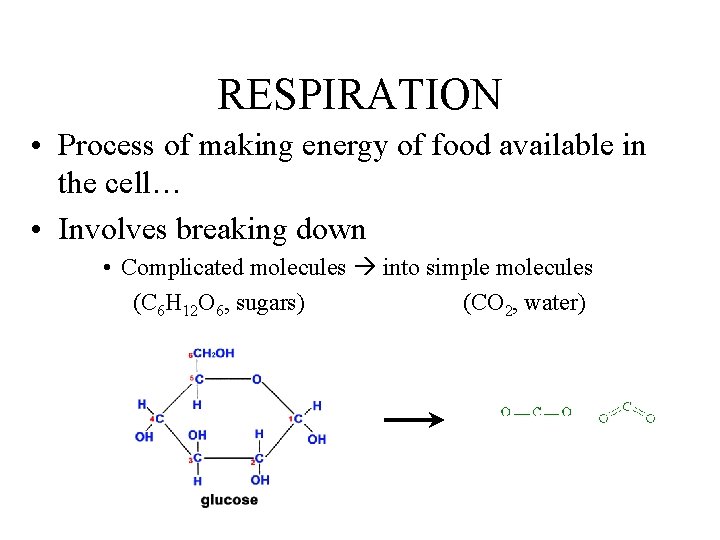
RESPIRATION • Process of making energy of food available in the cell… • Involves breaking down • Complicated molecules into simple molecules (C 6 H 12 O 6, sugars) (CO 2, water)
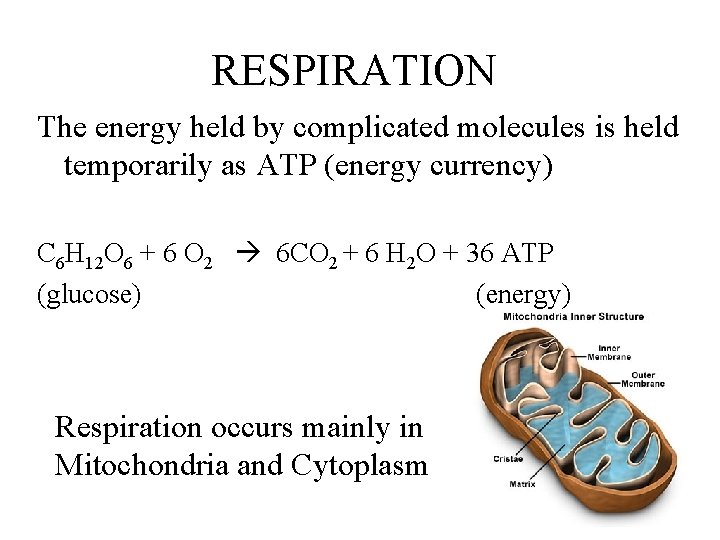
RESPIRATION The energy held by complicated molecules is held temporarily as ATP (energy currency) C 6 H 12 O 6 + 6 O 2 6 CO 2 + 6 H 2 O + 36 ATP (glucose) (energy) Respiration occurs mainly in Mitochondria and Cytoplasm
Stages of Respiration Cellular Respiration has three main stages: • Glycolysis • Krebs Cycle • Electron transport system
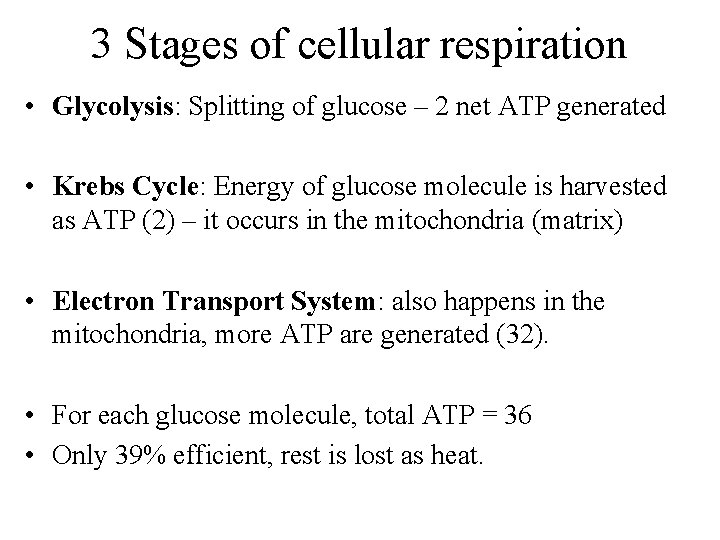
3 Stages of cellular respiration • Glycolysis: Splitting of glucose – 2 net ATP generated • Krebs Cycle: Energy of glucose molecule is harvested as ATP (2) – it occurs in the mitochondria (matrix) • Electron Transport System: also happens in the mitochondria, more ATP are generated (32). • For each glucose molecule, total ATP = 36 • Only 39% efficient, rest is lost as heat.
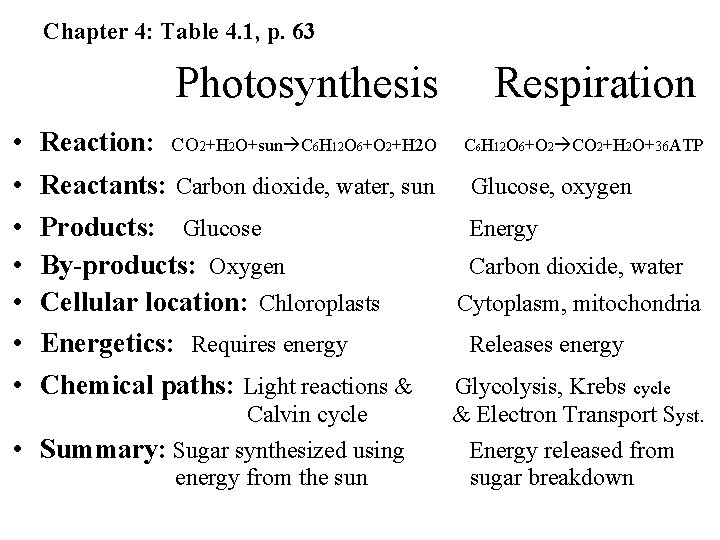
Chapter 4: Table 4. 1, p. 63 Photosynthesis • • Reaction: CO 2+H 2 O+sun C 6 H 12 O 6+O 2+H 2 O Respiration C 6 H 12 O 6+O 2 CO 2+H 2 O+36 ATP Reactants: Carbon dioxide, water, sun Glucose, oxygen Products: Glucose By-products: Oxygen Cellular location: Chloroplasts Energetics: Requires energy Energy Chemical paths: Light reactions & Calvin cycle • Summary: Sugar synthesized using energy from the sun Carbon dioxide, water Cytoplasm, mitochondria Releases energy Glycolysis, Krebs cycle & Electron Transport Syst. Energy released from sugar breakdown
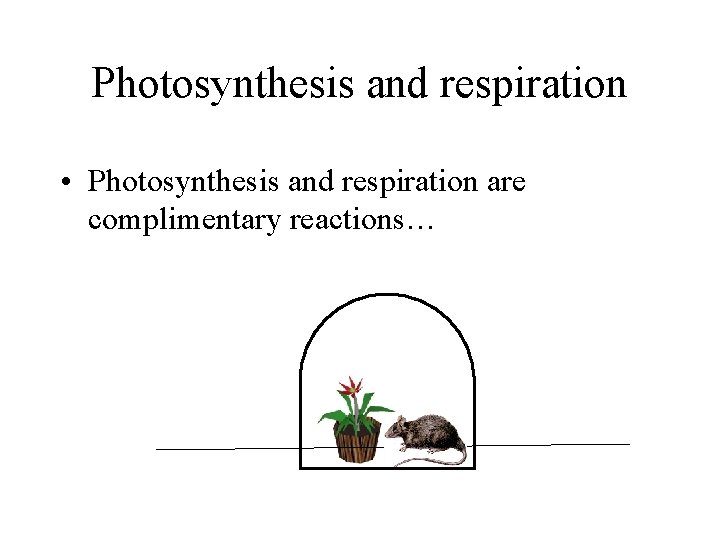
Photosynthesis and respiration • Photosynthesis and respiration are complimentary reactions…
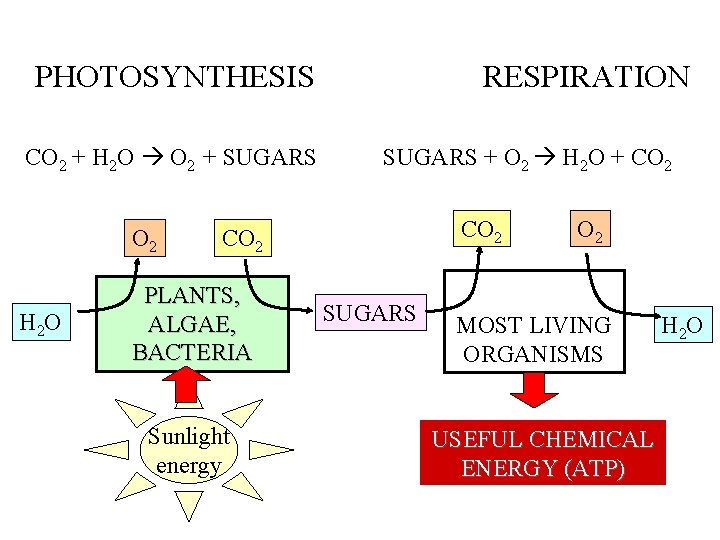
PHOTOSYNTHESIS CO 2 + H 2 O O 2 + SUGARS O 2 H 2 O RESPIRATION SUGARS + O 2 H 2 O + CO 2 PLANTS, ALGAE, BACTERIA Sunlight energy SUGARS O 2 MOST LIVING ORGANISMS USEFUL CHEMICAL ENERGY (ATP) H 2 O
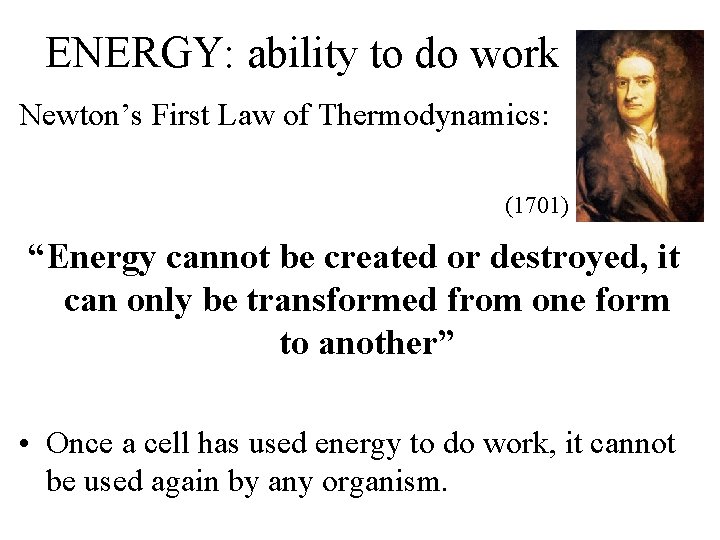
ENERGY: ability to do work Newton’s First Law of Thermodynamics: (1701) “Energy cannot be created or destroyed, it can only be transformed from one form to another” • Once a cell has used energy to do work, it cannot be used again by any organism.
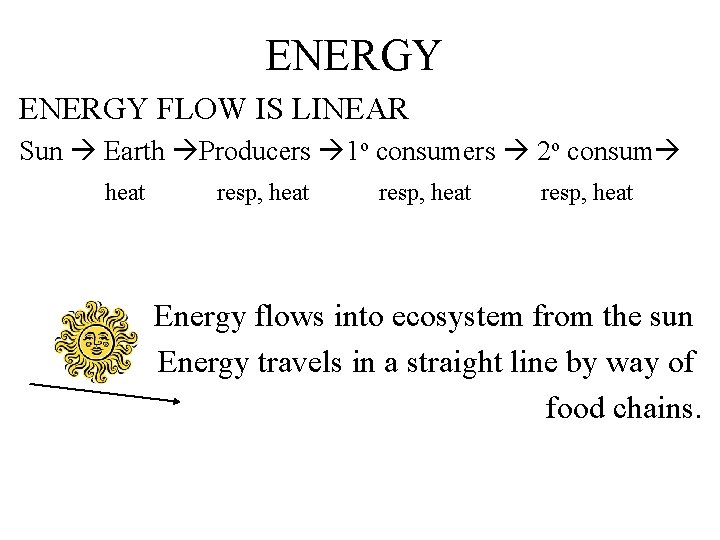
ENERGY FLOW IS LINEAR Sun Earth Producers 1 o consumers 2 o consum heat resp, heat Energy flows into ecosystem from the sun Energy travels in a straight line by way of food chains.
ENERGY However, much energy is lost as heat along the way – as a result of respiration. Approximately 90% energy is lost on each step! • Newton’s Second Law of Thermodynamics: “In any transfer of energy there is always a loss of useful energy to the system, usually in the form of heat”
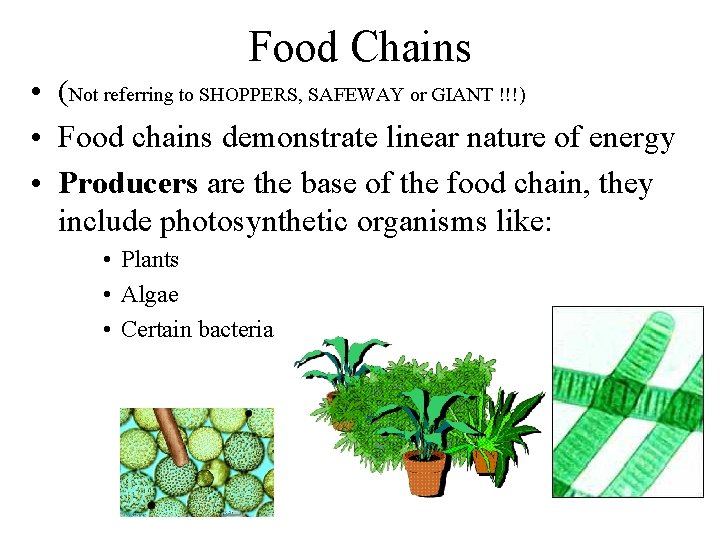
Food Chains • (Not referring to SHOPPERS, SAFEWAY or GIANT !!!) • Food chains demonstrate linear nature of energy • Producers are the base of the food chain, they include photosynthetic organisms like: • Plants • Algae • Certain bacteria
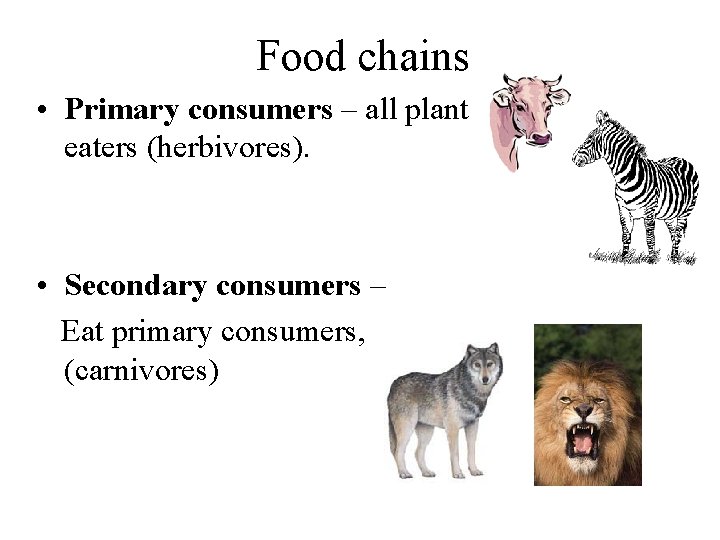
Food chains • Primary consumers – all plant eaters (herbivores). • Secondary consumers – Eat primary consumers, (carnivores)
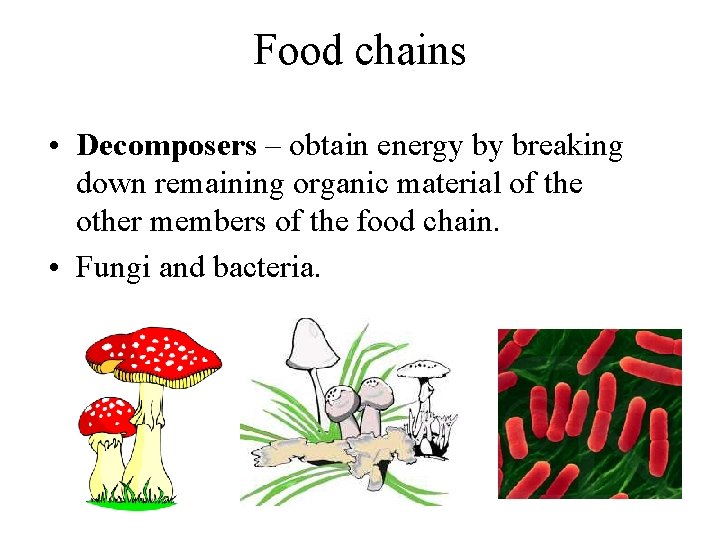
Food chains • Decomposers – obtain energy by breaking down remaining organic material of the other members of the food chain. • Fungi and bacteria.
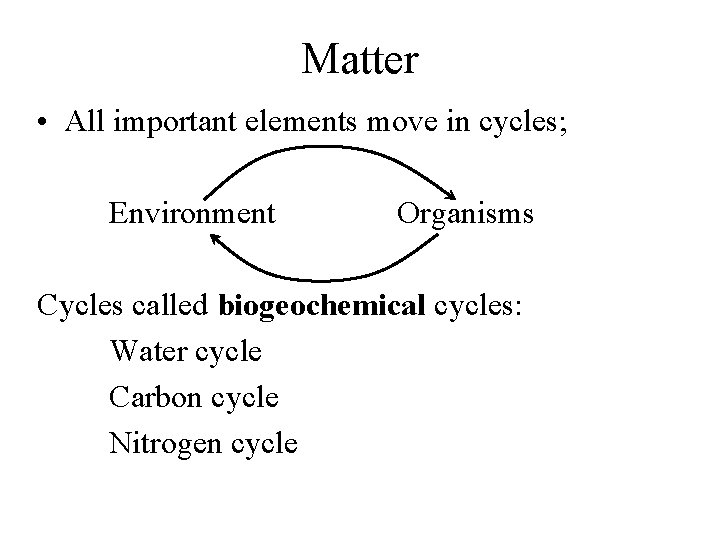
Matter • All important elements move in cycles; Environment Organisms Cycles called biogeochemical cycles: Water cycle Carbon cycle Nitrogen cycle
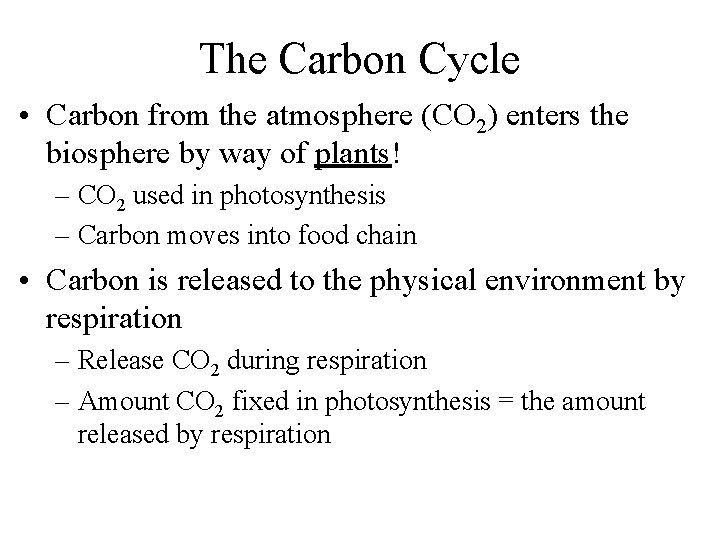
The Carbon Cycle • Carbon from the atmosphere (CO 2) enters the biosphere by way of plants! – CO 2 used in photosynthesis – Carbon moves into food chain • Carbon is released to the physical environment by respiration – Release CO 2 during respiration – Amount CO 2 fixed in photosynthesis = the amount released by respiration
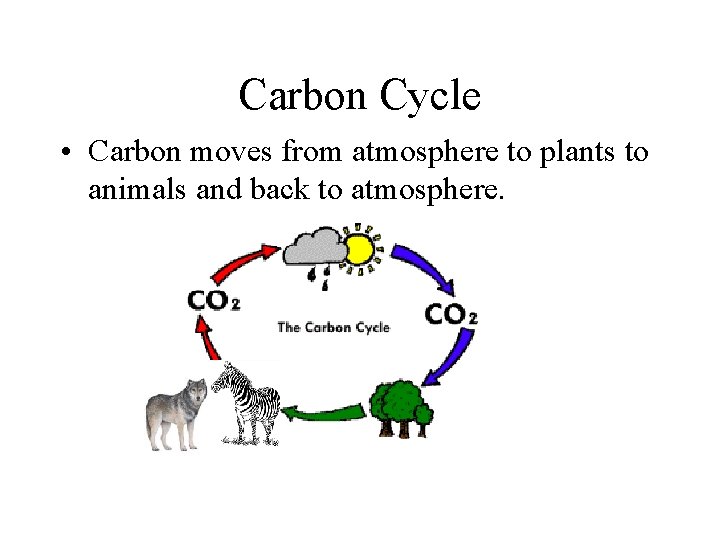
Carbon Cycle • Carbon moves from atmosphere to plants to animals and back to atmosphere.
“Look deep into nature, and then you will understand everything better. ” Albert Einstein
- Slides: 50