Advanced Placement Psychology Pasco High School Dr Steven
![What Is Psychology? Students will know that… 1. ] THE HISTORICAL ROOTS AND PERSPECTIVES](https://slidetodoc.com/presentation_image_h/9a0c02dc37bd60a0d93e66cef9463918/image-3.jpg "What Is Psychology? Students will know that… 1. ] THE HISTORICAL ROOTS AND PERSPECTIVES")

- Slides: 30
Advanced Placement Psychology Pasco High School Dr. Steven Rowley, Ph. D. 2014 -2015
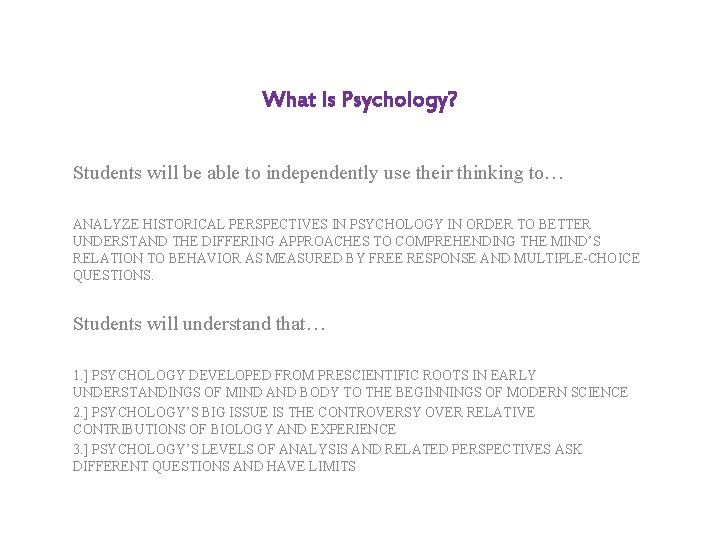
What Is Psychology? Students will be able to independently use their thinking to… ANALYZE HISTORICAL PERSPECTIVES IN PSYCHOLOGY IN ORDER TO BETTER UNDERSTAND THE DIFFERING APPROACHES TO COMPREHENDING THE MIND’S RELATION TO BEHAVIOR AS MEASURED BY FREE RESPONSE AND MULTIPLE-CHOICE QUESTIONS. Students will understand that… 1. ] PSYCHOLOGY DEVELOPED FROM PRESCIENTIFIC ROOTS IN EARLY UNDERSTANDINGS OF MIND AND BODY TO THE BEGINNINGS OF MODERN SCIENCE 2. ] PSYCHOLOGY’S BIG ISSUE IS THE CONTROVERSY OVER RELATIVE CONTRIBUTIONS OF BIOLOGY AND EXPERIENCE 3. ] PSYCHOLOGY’S LEVELS OF ANALYSIS AND RELATED PERSPECTIVES ASK DIFFERENT QUESTIONS AND HAVE LIMITS
What Is Psychology? Students will know that… 1. ] THE HISTORICAL ROOTS AND PERSPECTIVES OF PSYCHOLOGY 2. ] THE CONCEPTUAL PROBLEM IN THE NATURE-NURTURE DEBATE 3. ] DIFFERENT LEVELS OF ANALYSIS AND PERSPECTIVE APPROACHES’ BENEFITS AND LIMITATIONS Students will be skilled at… 1. ] ACTIVE TEXTUAL READINGS AND ANALYSIS USING SUMMARY, ANALYSIS, SYNTHESIS, AND EVALUATION [SASE] METHODOLOGY FOR READING RESPONSE 2. ] DISCUSSING THE PSYCHOLOGICAL APPROACHES/PERSPECTIVES 3. ] PRACTICING AP MULTIPLE-CHOICE AND FREE RESPONSE QUESTIONS
What Is Psychology? Essential Questions: 1. How did psychology develop from its prescientific roots in early understandings of mind and body to the beginnings of modern science? Psychology: History and Approaches 1 Psychology: History and Approaches 2 Psychology: History and Approaches 3 2. When and how did modern psychological science begin? Mental Illness in the 20 th Century: Institutionalization Modern Psychology 3. How did psychology continue to develop from the 1920 s through today? Psychology History and Perspectives Overview
What Is Psychology? • • 4. What is psychology’s historic “big issue”? Nature v. Nurture Debate Nature v. Nurture BBC Documentary Nature v. Nurture Free. Domain Lecture Nature v. Nurture: Gender Nature v. Nurture: Secrets of the Wild Child 1 Nature v. Nurture: Secrets of the Wild Child 2 5. What are psychology’s levels of analysis and related perspectives? • 6. What are psychology’s main subfields?
What Is Psychology? Made from two Greek words: – Logy from the Greek word logos meaning to have words about or to have conversation about something – Psycho from the Greek word psyche meaning a soul or the essence of a human being – So, what IS psychology, anyway? – It is a conversation about what means to be human. Video Links: – What is psychology
What is Psychology? 1. Psychology is a science that seeks to understand questions about how we think, feel, and act. A. Human condition –What is it? [The ancient Greek philosopher Aristotle believed his concept of “catharsis” explained it well enough in that “to be human is to suffer, so to understand humanity you must understand suffering”. B. Aristotle asked the right questions -even if his hypotheses were not as accurate as they could have been [by modern standards] C. Aristotle’s questions sought the roots of the differences in human motivation, emotion, perception, and personality. 2. Early thinkers in the developing field of psychology A. Wilhelm Wundt [sought to “measure” the atoms of the mind with an experimental apparatus –based on sensory perception and an accompanying physical task] B. Beginning researchers in the field of psychology were experts in other fields: i. Charles Darwin: Naturalist ii. Ivan Pavlov: Physiologist iii. Jean Piaget: Biologist iv. William James: Philosopher
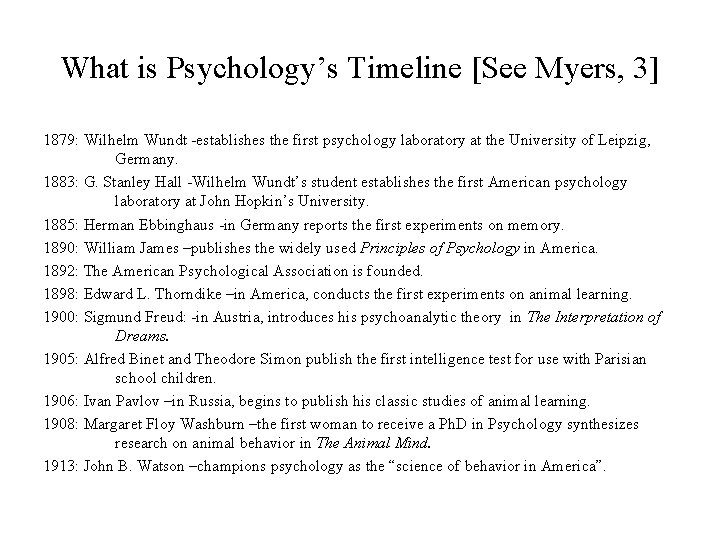
What is Psychology’s Timeline [See Myers, 3] 1879: Wilhelm Wundt -establishes the first psychology laboratory at the University of Leipzig, Germany. 1883: G. Stanley Hall -Wilhelm Wundt’s student establishes the first American psychology laboratory at John Hopkin’s University. 1885: Herman Ebbinghaus -in Germany reports the first experiments on memory. 1890: William James –publishes the widely used Principles of Psychology in America. 1892: The American Psychological Association is founded. 1898: Edward L. Thorndike –in America, conducts the first experiments on animal learning. 1900: Sigmund Freud: -in Austria, introduces his psychoanalytic theory in The Interpretation of Dreams. 1905: Alfred Binet and Theodore Simon publish the first intelligence test for use with Parisian school children. 1906: Ivan Pavlov –in Russia, begins to publish his classic studies of animal learning. 1908: Margaret Floy Washburn –the first woman to receive a Ph. D in Psychology synthesizes research on animal behavior in The Animal Mind. 1913: John B. Watson –champions psychology as the “science of behavior in America”.
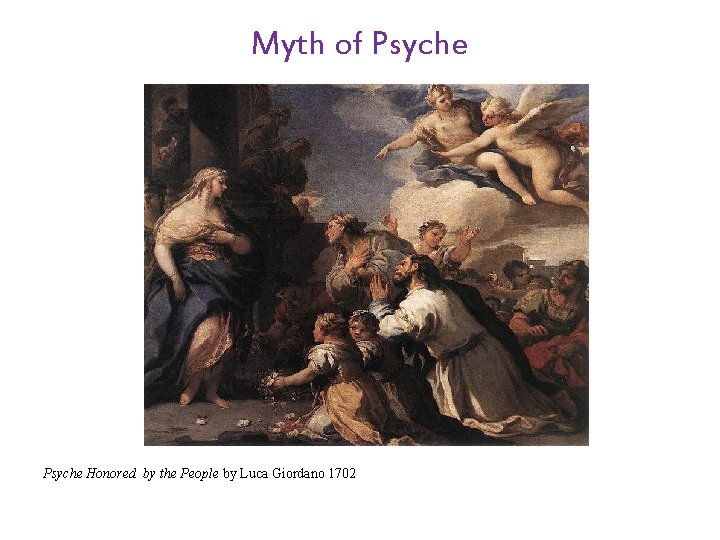
Myth of Psyche Honored by the People by Luca Giordano 1702
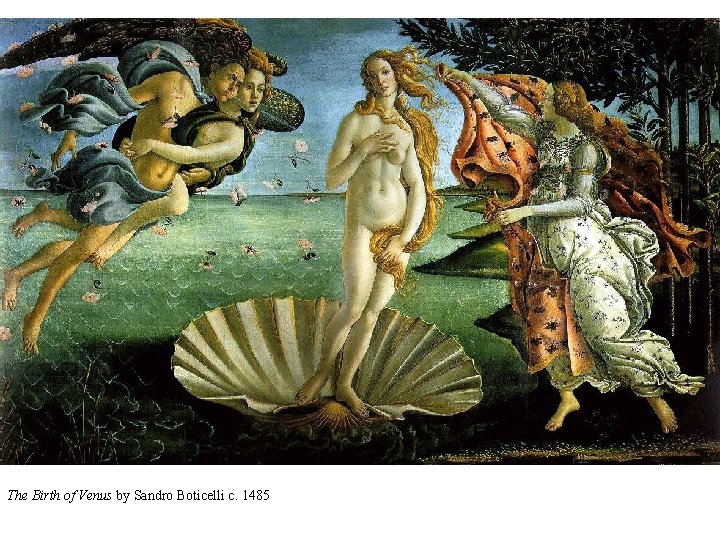
The Birth of Venus by Sandro Boticelli c. 1485
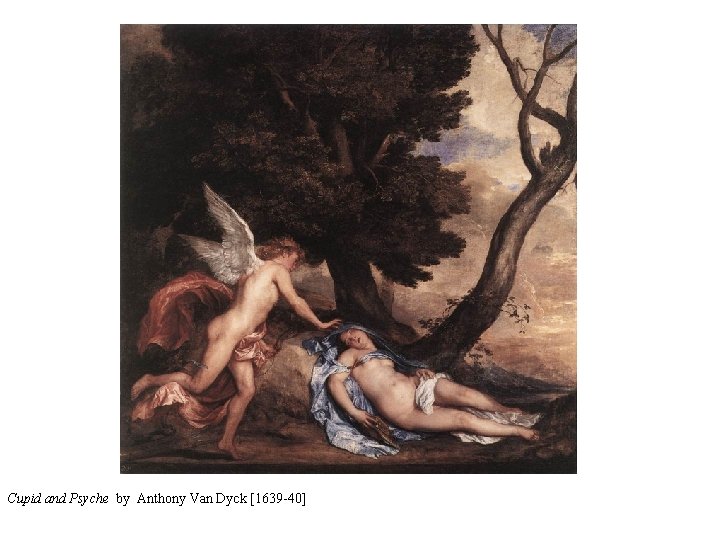
Cupid and Psyche by Anthony Van Dyck [1639 -40]
Essential Question 1: How did psychology develop from its prescientific roots in early understandings of mind and body to the beginnings of modern science? • Ancient India: • • Ancient China: • • Confucius stressed the power of ideas and an educated mind Ancient Israel: • • Gautama Siddhartha [The Buddha] pondered how sensations and perceptions combined to form ideas. Hebrew scholars linked mind and emotion to the body; thinking with the heart and feel with the bowels Ancient Greece: • Socrates [469 -399 BCE] concluded that the mind is separable from the body and continues after the body dies; and that knowledge is innate –born within us. • Plato [428 -348 BCE] concluded that the mind is separable from the body and continues after the body dies; and that knowledge is innate –born within us. • Aristotle [384 -322 BCE] observations and data driven explanations –knowledge is not preexisting, but grows from the experiences stored in memories
Essential Question 1: How did psychology develop from its prescientific roots in early understandings of mind and body to the beginnings of modern science? • Renaissance Europe: • Rene Descartes [1595 – 1650] agreed with Socrates and Plato about the existence of innate ideas and the mind being distinct from the body and able to survive its death; surmised a hollow nerve theory. • Francis Bacon [1561 -1626] suggested the mind is driven to perceive patterns in random events; noticed that the human mind supposes a greater degree of order than what actually exists; also that humans remember in a manner than confirms their beliefs. • John Locke [1632 -1704] argued that the mind at birth is basically a tabula rasa a “blank slate” only to be changed by what we experience; his ideas and Bacon’s ideas helped to form modern empiricism the idea that knowledge originates in experience and that science should rely on observation and experimentation.
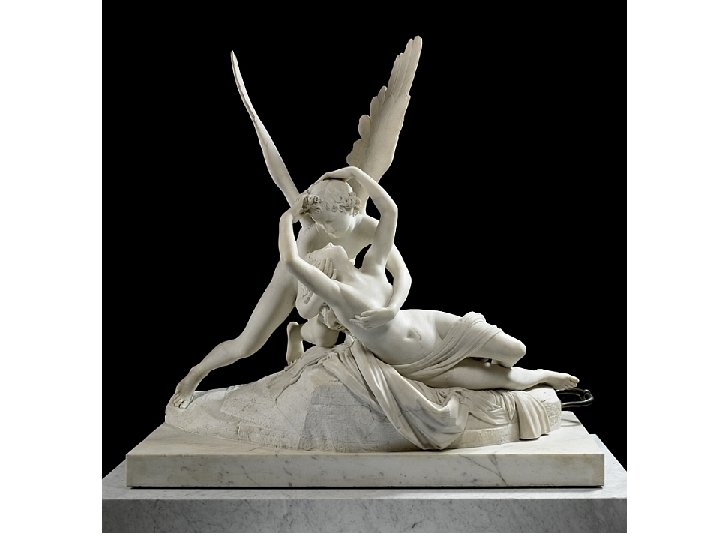
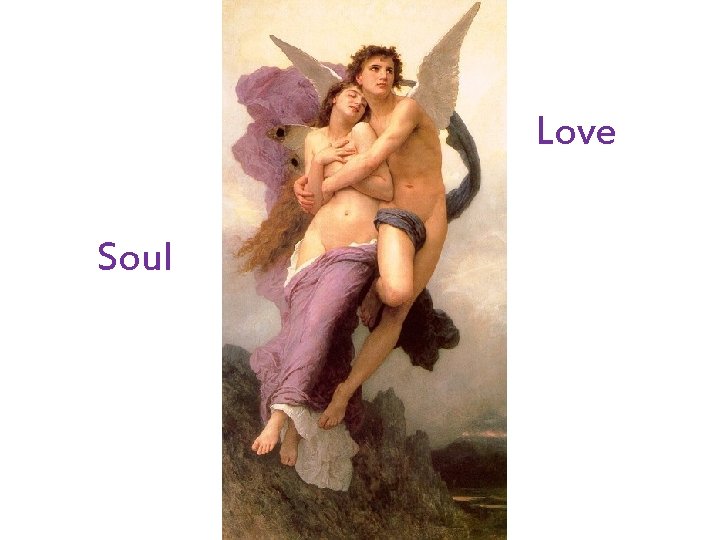
Love Soul
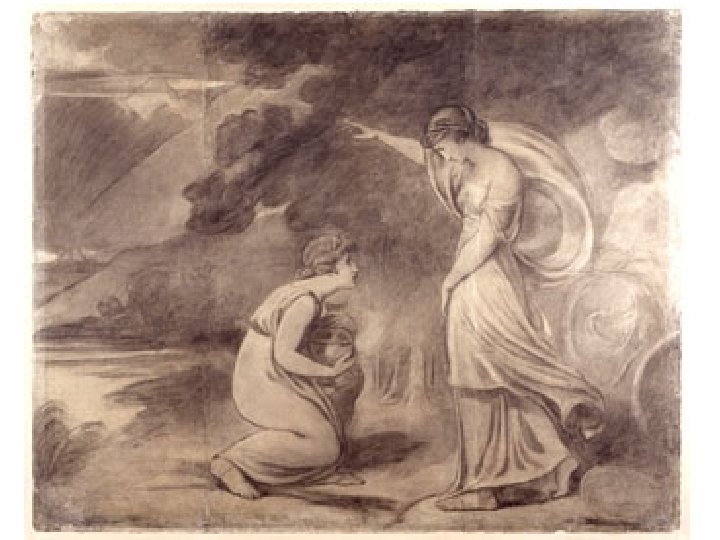
Why is Psychology named after this myth? • Much like Psychology, Psyche’s story is one of searching – Searching for knowledge. – Searching for self-understanding. – Searching for love. • Psyche embodies characteristics of great psychologists, – Psyche was curious – Psyche was passionate – Psyche used teamwork to accomplish the impossible. – Psyche persevered.
What is Psychology? • To me, it is a conversation about what it means to be human. • More specifically, it is the scientific study of human (and animal) behavior and mental processes.
Essential Question 2: When and how did modern psychology begin? • Wilhelm Wundt [1879] established the first modern psychology laboratory at the University of Leipzig, Germany; sought to measure the “atoms of the mind” -the fastest and simplest of mental processes: created a machine [experimental apparatus] that measured the time lag between people’s hearing a ball hit a platform and their pressing of a telegraph key • The new “science” of psychology became organized into different schools of thought: • Structural Psychology: Edward Bradford Titchener [1892] aimed to discover the “structure” of the mind engaging people in introspection [looking inward] training them to report elements of their experiences • Functional Psychology : William James [1842 -1910] considered the evolved functions of thought and actions • Behavioral Psychology: B. F. Skinner [ 1904 -1990] rejected introspection and studied how consequences shape behavior; • • Gestalt Psychology: a school of thought that looks at the human mind and behavior as a whole. Originating in the work of Max Wertheimer, Gestalt psychology formed partially as a response to the structuralism. The development of this area of psychology was influenced by a number of thinkers, including Immanuel Kant, Ernst Mach and Johann Wolfgang von Goethe. Psychoanalytical Psychology: Sigmund Freud [ 1856 -1939] an Austrian neurologist who became known as the founding father of psychoanalysis
Essential Question 3: How did psychology continue to develop from the 1920 s through today? • Prior to the 20 th Century psychology is “the science of mental life” or the inner self. • The study of nerve cell activity • The scientific study of observable behaviors • Sensations , feelings, and thoughts not scientifically observable • The cognitive revolution studies how the mind processes and retains information • The study of brain activity linked with conscious and subconscious processes has developed as cognitive neuroscience • Today psychology is understood as the science of behavior and mental processes • Mental processes can be defined as the internal, subjective experiences we infer from behavior –sensations, perceptions, dreams, • Contemporary psychology includes practitioners from over 69 different nations • Contemporary psychologists are debating the same issues as in the past with more of a focus on the brain, viewing the behavior from the differing perspectives offered by the subfields in which they teach , work, and conduct research.
Essential 4: What is psychology’s historic “big issue”? • Nature vs. Nurture: The biggest and most persistent issue that reappears throughout the scientific history of psychology has been the argument between nature and nurture: to what extent biological inheritance determines behavior and to what extent the care and environment in which a person develops within determines behavior • The origins of the nature-nurture debate are ancient • Nature vs. Nurture Issue: the longstanding controversy over the relative contributions that genes and experience make to the development of psychological traits and behaviors. • Today’s science views traits and behaviors arising from the interaction of nature and nurture. • Natural Selection: [Charles Darwin 1859] argues that natural selection shapes behaviors as well as bodies; believes his theory explained not only animal structures but also animal behaviors such as emotional expressions of lust, rage, despair, and joy.
Essential 4: What is psychology’s historic “big issue”? 1. Stability v. Change A. To what degree do our individual traits change as we age? B. Does a reactive infant become a volatile adult? C. What is “Executive Control” and how is it developed and reinforced? D. Do our personalities change based on our environmental circumstances? 2. Rationality versus Irrationality 3. Relative Contributions of Science v. Experience A. 1600 s: rejecting the inborn traits idea John Locke argued for the concept of a “tabla rasa” or blank slate upon which experience writes. B. 1600 s: Rene Descartes disagreed with John Locke believing some traits are innate from birth. 4. Nature v. Nurture A. Are differences in intelligence, personality, and psychological disorders more influenced by heredity or by environment? B. Are consumption behaviors the result of “inner biology” or “pulled” by external incentives? C. Is depression a brain disorder or a thought disorder? D. How are humans both alike and different? E. Are gender differences biologically predisposed or socially constructed?
Essential Question 5: What are psychology’s levels of analysis and related perspectives? • Biological Perspective: How the body and brain enable emotions, memories, and sensory experiences; how genes combine with environment to influence individual differences. Focuses on how the body and brain create emotions, memories, and sensory experiences [How are messages transmitted within the body? How is blood chemistry linked with moods and motives? ] • Evolutionary Perspective: How the natural selection of traits promoted the survival of genes. How nature selects traits that promote the perpetuation of one’s genes [How does evolution influence behavior tendencies? ] • Psychodynamic Perspective: How behavior springs from unconscious drives and conflicts [Can personality traits and disorders be explained in terms of sexual and aggressive drives or as the disguised effects of unfulfilled wishes and childhood traumas? ] • Behavioral Perspective: How we learn observable responses. How much our genes, and our environment influence our individual differences. How we learn observable responses. [To what extent are physical versus psychological traits such as intelligence, personality, sexual orientation, and vulnerability to depression attributable to our genes? To our environment? How do we learn to fear particular objects or situations? What is the most effective way to alter our behavior? ] • Cognitive Perspective: How we encode, process, store, and retrieve information [How do we use information in remembering? In reasoning? In solving problems? ] • Humanistic Perspective: How we meet our needs for love and acceptance and achieve self-fulfillment. • Socio-cultural Perspective: How behavior and thinking vary across situations and cultures [How are we –as Africans, Asians, Australians, or North Americans –alike as members of one human family? As products of different environmental contexts? How do we differ? ]
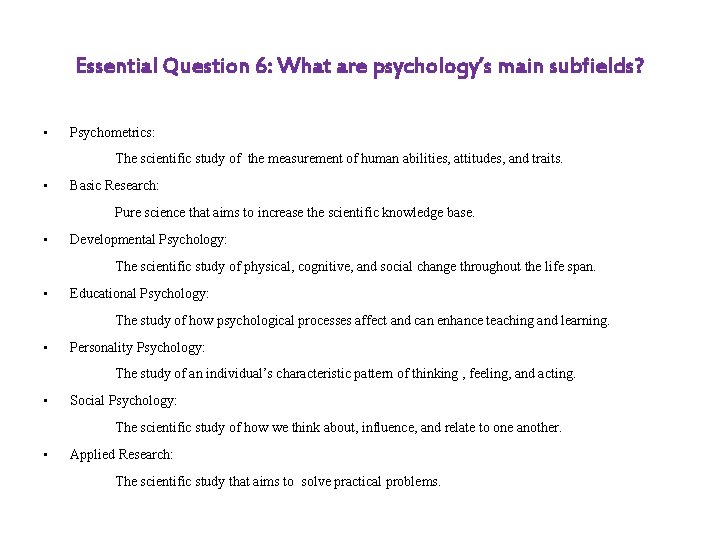
Essential Question 6: What are psychology’s main subfields? • Psychometrics: The scientific study of the measurement of human abilities, attitudes, and traits. • Basic Research: Pure science that aims to increase the scientific knowledge base. • Developmental Psychology: The scientific study of physical, cognitive, and social change throughout the life span. • Educational Psychology: The study of how psychological processes affect and can enhance teaching and learning. • Personality Psychology: The study of an individual’s characteristic pattern of thinking , feeling, and acting. • Social Psychology: The scientific study of how we think about, influence, and relate to one another. • Applied Research: The scientific study that aims to solve practical problems.
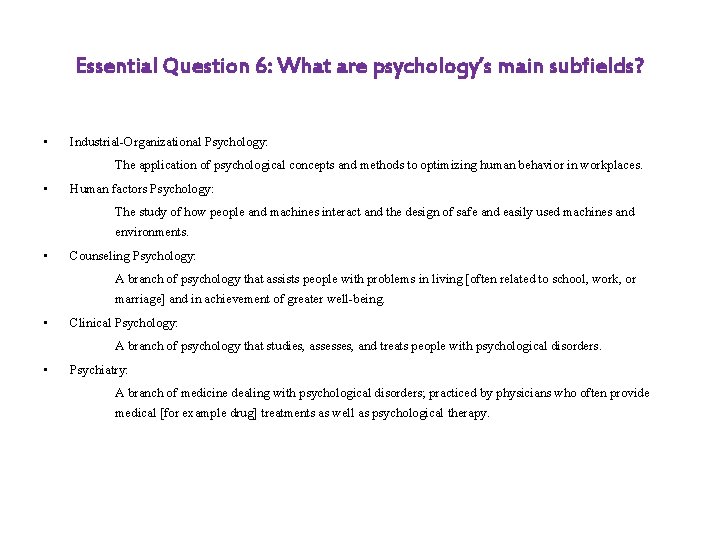
Essential Question 6: What are psychology’s main subfields? • Industrial-Organizational Psychology: The application of psychological concepts and methods to optimizing human behavior in workplaces. • Human factors Psychology: The study of how people and machines interact and the design of safe and easily used machines and environments. • Counseling Psychology: A branch of psychology that assists people with problems in living [often related to school, work, or marriage] and in achievement of greater well-being. • Clinical Psychology: A branch of psychology that studies, assesses, and treats people with psychological disorders. • Psychiatry: A branch of medicine dealing with psychological disorders; practiced by physicians who often provide medical [for example drug] treatments as well as psychological therapy.
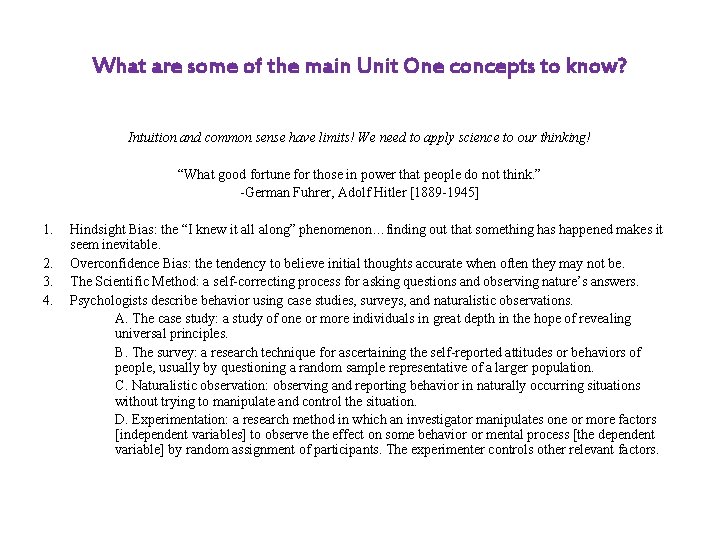
What are some of the main Unit One concepts to know? Intuition and common sense have limits! We need to apply science to our thinking! “What good fortune for those in power that people do not think. ” -German Fuhrer, Adolf Hitler [1889 -1945] 1. 2. 3. 4. Hindsight Bias: the “I knew it all along” phenomenon…finding out that something has happened makes it seem inevitable. Overconfidence Bias: the tendency to believe initial thoughts accurate when often they may not be. The Scientific Method: a self-correcting process for asking questions and observing nature’s answers. Psychologists describe behavior using case studies, surveys, and naturalistic observations. A. The case study: a study of one or more individuals in great depth in the hope of revealing universal principles. B. The survey: a research technique for ascertaining the self-reported attitudes or behaviors of people, usually by questioning a random sample representative of a larger population. C. Naturalistic observation: observing and reporting behavior in naturally occurring situations without trying to manipulate and control the situation. D. Experimentation: a research method in which an investigator manipulates one or more factors [independent variables] to observe the effect on some behavior or mental process [the dependent variable] by random assignment of participants. The experimenter controls other relevant factors.
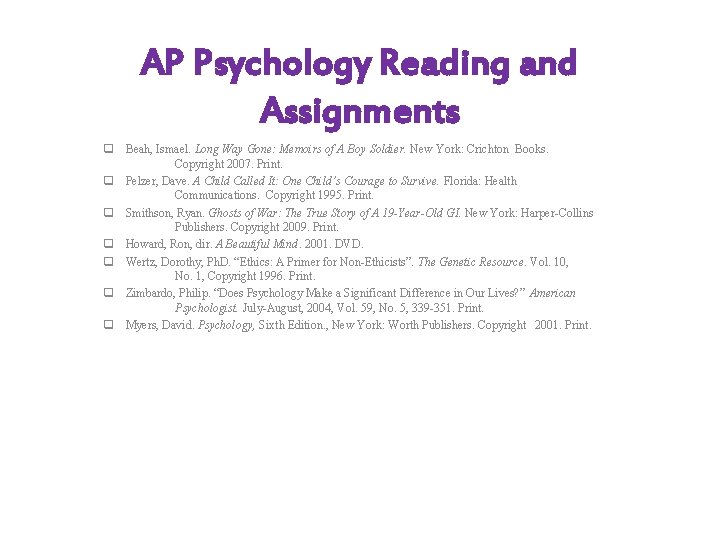
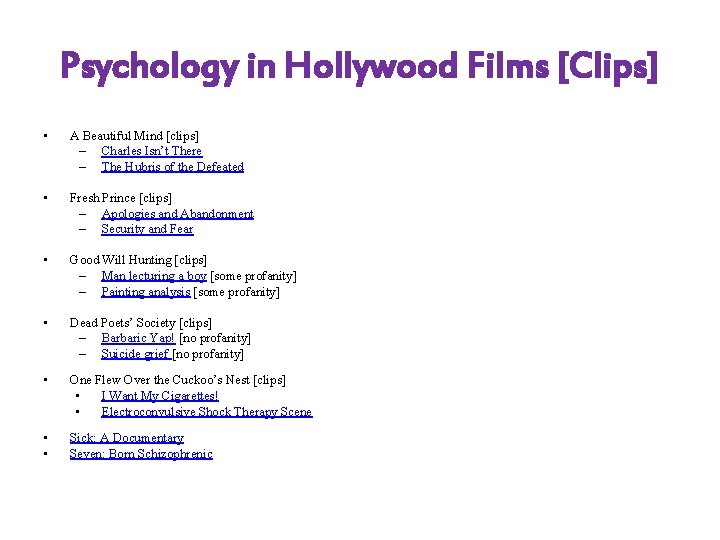
AP Psychology Reading and Assignments q Beah, Ismael. Long Way Gone: Memoirs of A Boy Soldier. New York: Crichton Books. Copyright 2007. Print. q Pelzer, Dave. A Child Called It: One Child’s Courage to Survive. Florida: Health Communications. Copyright 1995. Print. q Smithson, Ryan. Ghosts of War: The True Story of A 19 -Year-Old GI. New York: Harper-Collins Publishers. Copyright 2009. Print. q Howard, Ron, dir. A Beautiful Mind. 2001. DVD. q Wertz, Dorothy, Ph. D. “Ethics: A Primer for Non-Ethicists”. The Genetic Resource. Vol. 10, No. 1, Copyright 1996. Print. q Zimbardo, Philip. “Does Psychology Make a Significant Difference in Our Lives? ” American Psychologist. July-August, 2004, Vol. 59, No. 5, 339 -351. Print. q Myers, David. Psychology, Sixth Edition. , New York: Worth Publishers. Copyright 2001. Print.
Psychology in Hollywood Films [Clips] • A Beautiful Mind [clips] – Charles Isn’t There – The Hubris of the Defeated • Fresh Prince [clips] – Apologies and Abandonment – Security and Fear • Good Will Hunting [clips] – Man lecturing a boy [some profanity] – Painting analysis [some profanity] • Dead Poets’ Society [clips] – Barbaric Yap! [no profanity] – Suicide grief [no profanity] • One Flew Over the Cuckoo’s Nest [clips] • I Want My Cigarettes! • Electroconvulsive Shock Therapy Scene • • Sick: A Documentary Seven: Born Schizophrenic
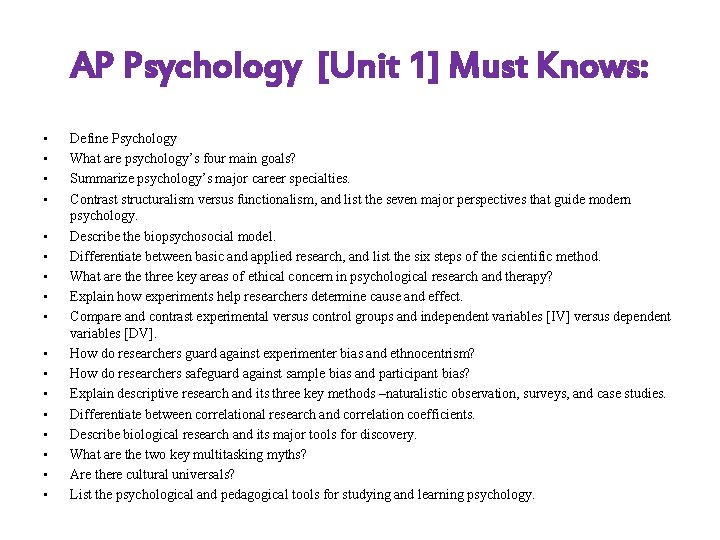
AP Psychology [Unit 1] Must Knows: • • • • • Define Psychology What are psychology’s four main goals? Summarize psychology’s major career specialties. Contrast structuralism versus functionalism, and list the seven major perspectives that guide modern psychology. Describe the biopsychosocial model. Differentiate between basic and applied research, and list the six steps of the scientific method. What are three key areas of ethical concern in psychological research and therapy? Explain how experiments help researchers determine cause and effect. Compare and contrast experimental versus control groups and independent variables [IV] versus dependent variables [DV]. How do researchers guard against experimenter bias and ethnocentrism? How do researchers safeguard against sample bias and participant bias? Explain descriptive research and its three key methods –naturalistic observation, surveys, and case studies. Differentiate between correlational research and correlation coefficients. Describe biological research and its major tools for discovery. What are the two key multitasking myths? Are there cultural universals? List the psychological and pedagogical tools for studying and learning psychology.