Advanced Geometry Inductive Reasoning Lesson 3 Two and

- Slides: 26
Advanced Geometry Inductive Reasoning Lesson 3 Two- and Three. Dimensional Figures
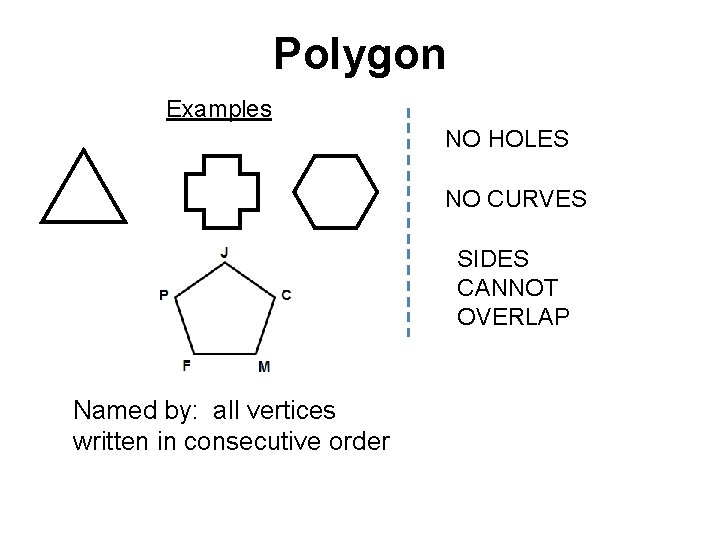
Polygon Examples NO HOLES NO CURVES SIDES CANNOT OVERLAP Named by: all vertices written in consecutive order
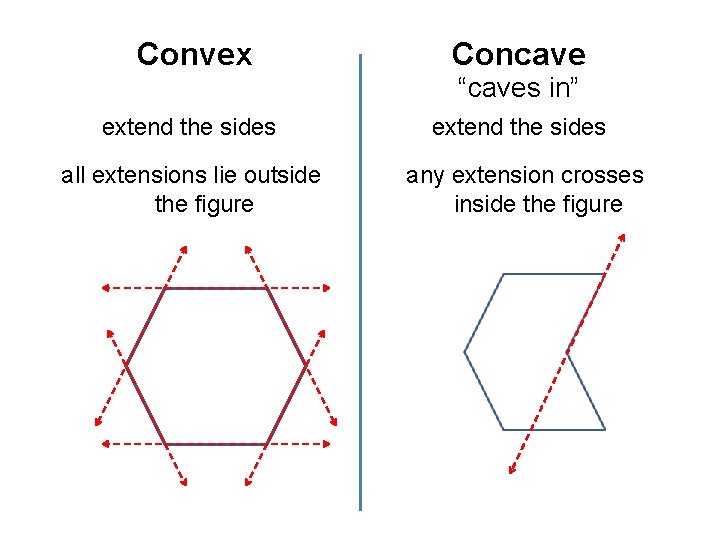
Convex Concave “caves in” extend the sides all extensions lie outside the figure any extension crosses inside the figure
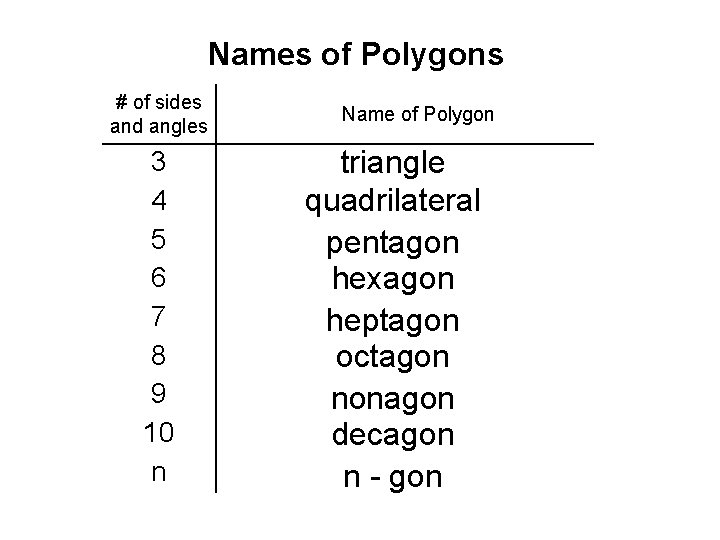
Names of Polygons # of sides and angles 3 4 5 6 7 8 9 10 n Name of Polygon triangle quadrilateral pentagon hexagon heptagon octagon nonagon decagon n - gon
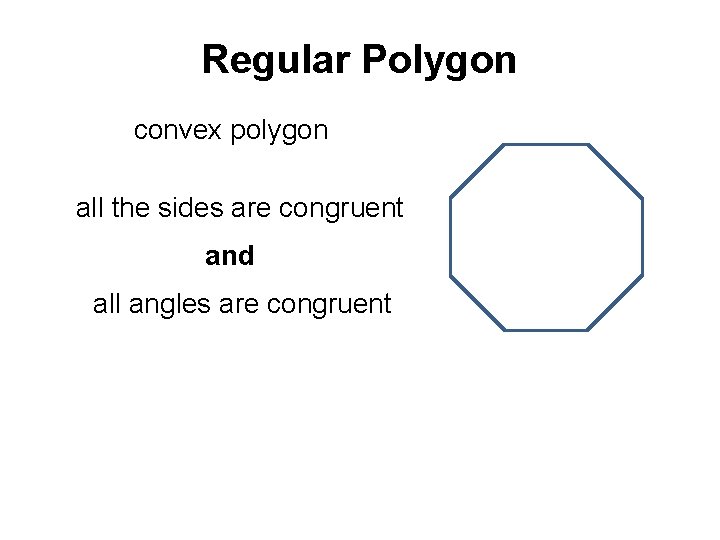
Regular Polygon convex polygon all the sides are congruent and all angles are congruent
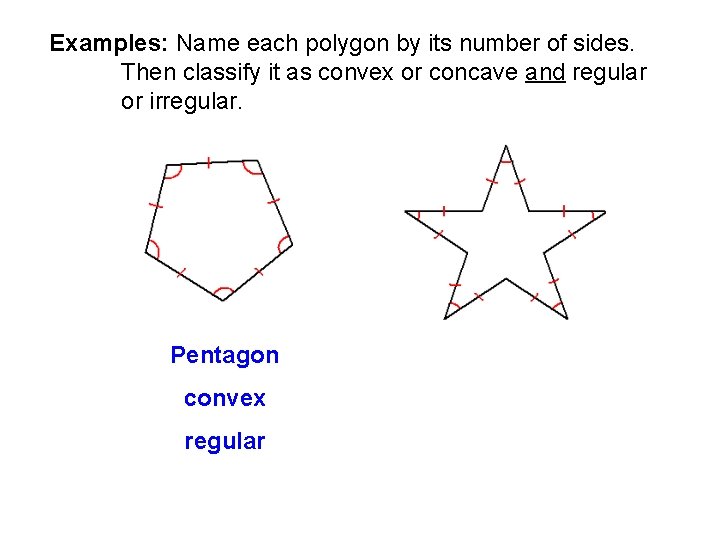
Examples: Name each polygon by its number of sides. Then classify it as convex or concave and regular or irregular. Pentagon convex regular
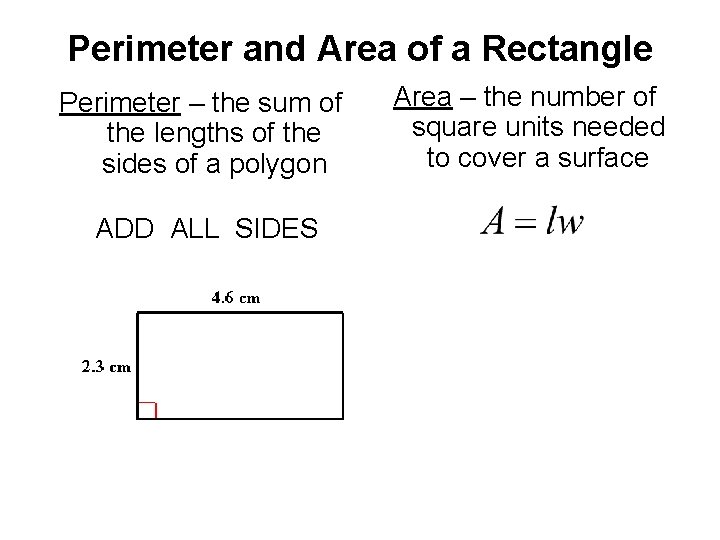
Perimeter and Area of a Rectangle Perimeter – the sum of the lengths of the sides of a polygon ADD ALL SIDES Area – the number of square units needed to cover a surface
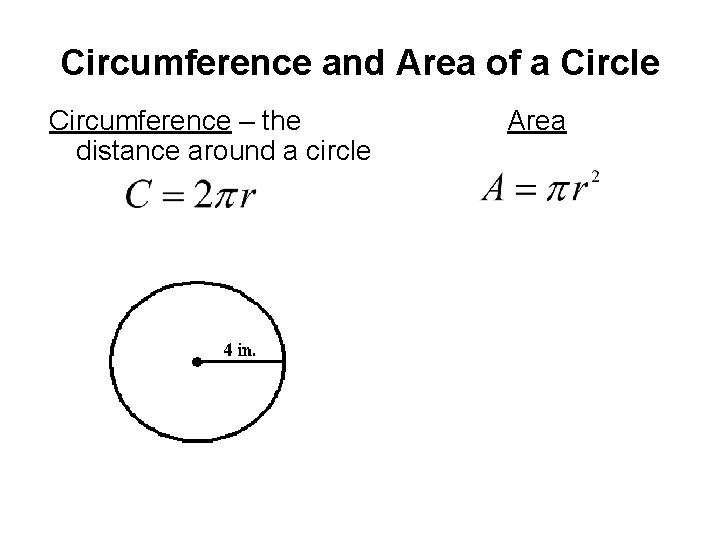
Circumference and Area of a Circle Circumference – the distance around a circle Area
Example: Mr. Smith has a circular fence that encloses an area with a diameter of 12 feet. Using the same fence, he wants to create a square fence. What is the maximum side length of the square?
Example: Find the perimeter of a square with an area of 30 square centimeters.
Example: Find the circumference of a circle with an area of 36 square units.
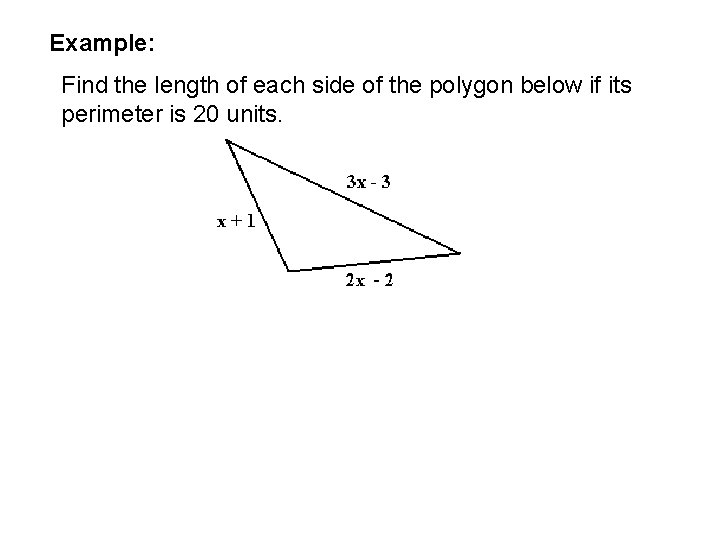
Example: Find the length of each side of the polygon below if its perimeter is 20 units.
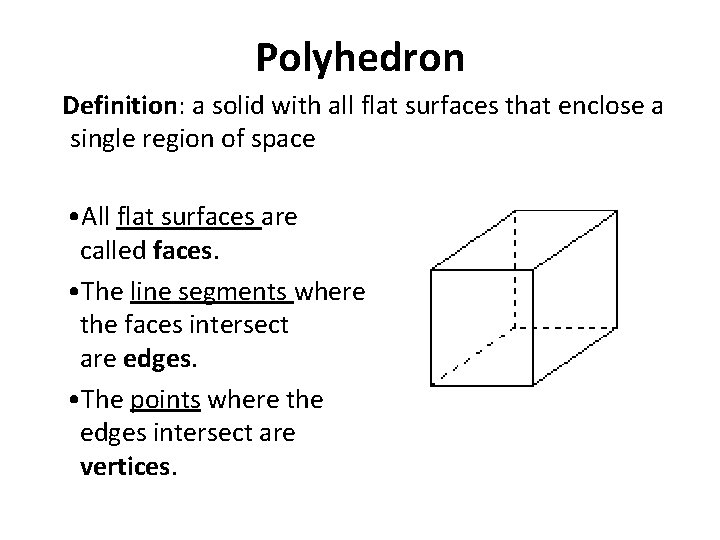
Polyhedron Definition: a solid with all flat surfaces that enclose a single region of space • All flat surfaces are called faces. • The line segments where the faces intersect are edges. • The points where the edges intersect are vertices.
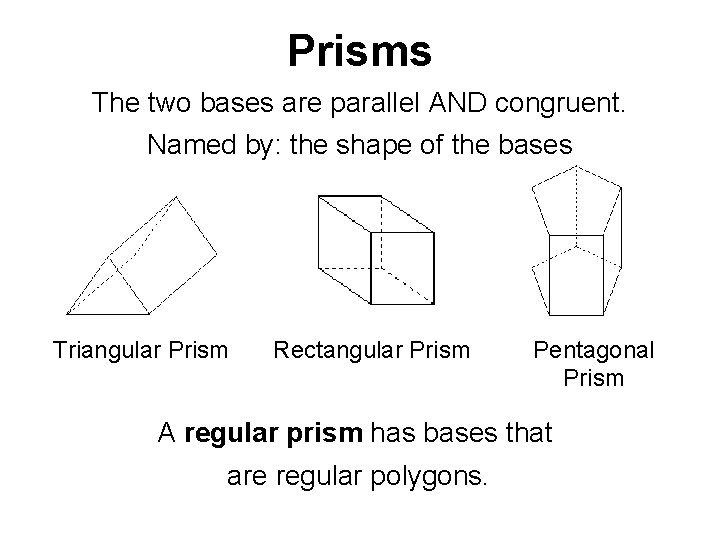
Prisms The two bases are parallel AND congruent. Named by: the shape of the bases Triangular Prism Rectangular Prism Pentagonal Prism A regular prism has bases that are regular polygons.
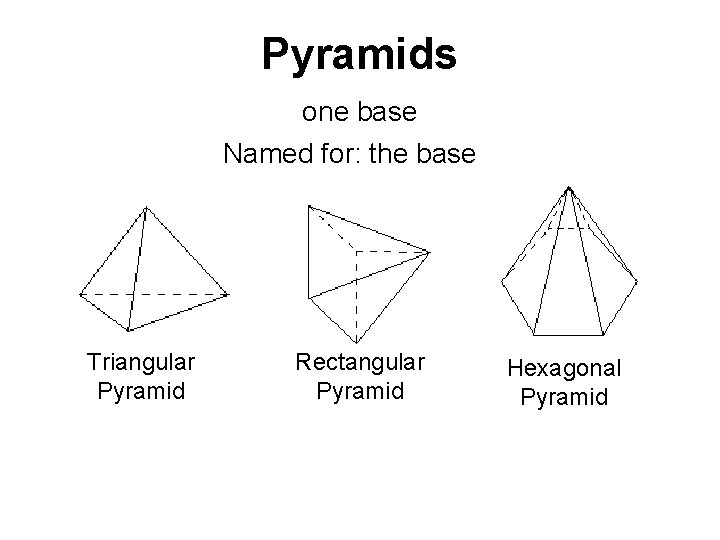
Pyramids one base Named for: the base Triangular Pyramid Rectangular Pyramid Hexagonal Pyramid
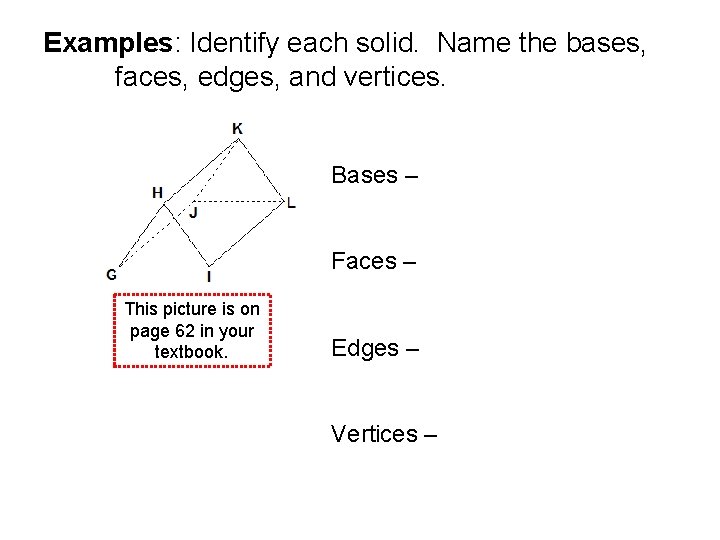
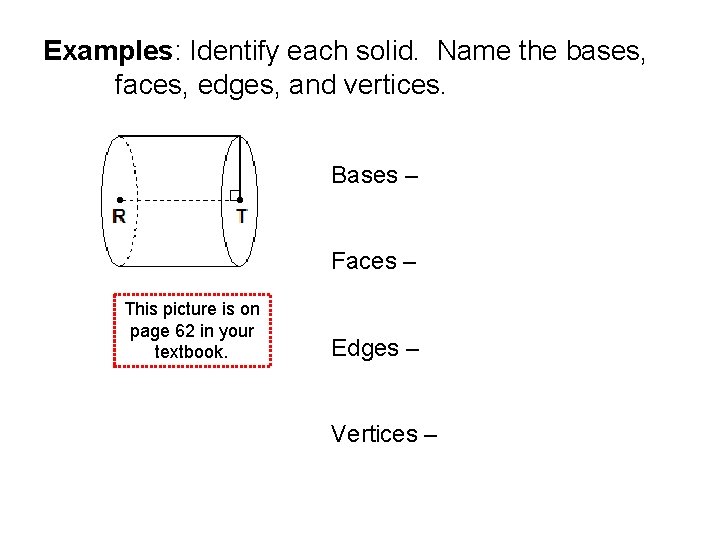
Examples: Identify each solid. Name the bases, faces, edges, and vertices. Bases – Faces – This picture is on page 62 in your textbook. Edges – Vertices –
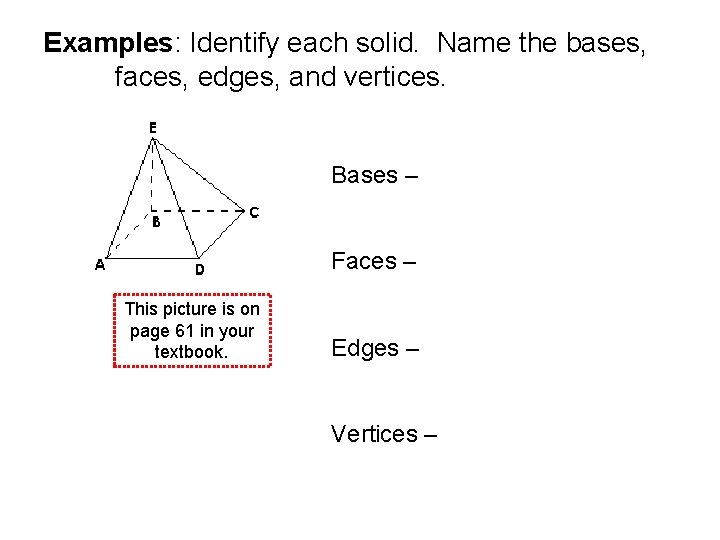
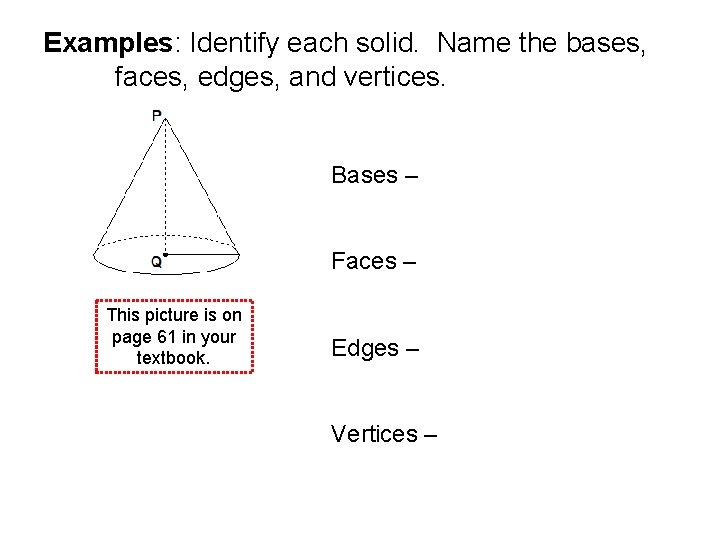
Examples: Identify each solid. Name the bases, faces, edges, and vertices. Bases – Faces – This picture is on page 61 in your textbook. Edges – Vertices –
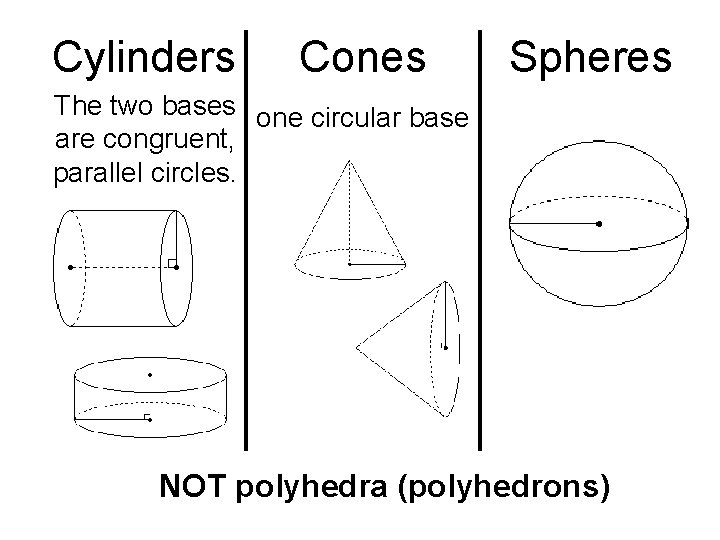
Cylinders Cones Spheres The two bases one circular base are congruent, parallel circles. NOT polyhedra (polyhedrons)
Examples: Identify each solid. Name the bases, faces, edges, and vertices. Bases – Faces – This picture is on page 62 in your textbook. Edges – Vertices –
Examples: Identify each solid. Name the bases, faces, edges, and vertices. Bases – Faces – This picture is on page 61 in your textbook. Edges – Vertices –
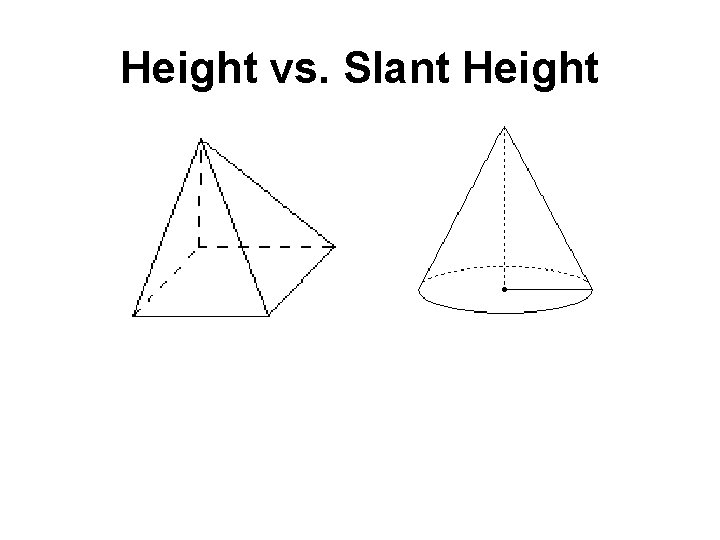
Height vs. Slant Height
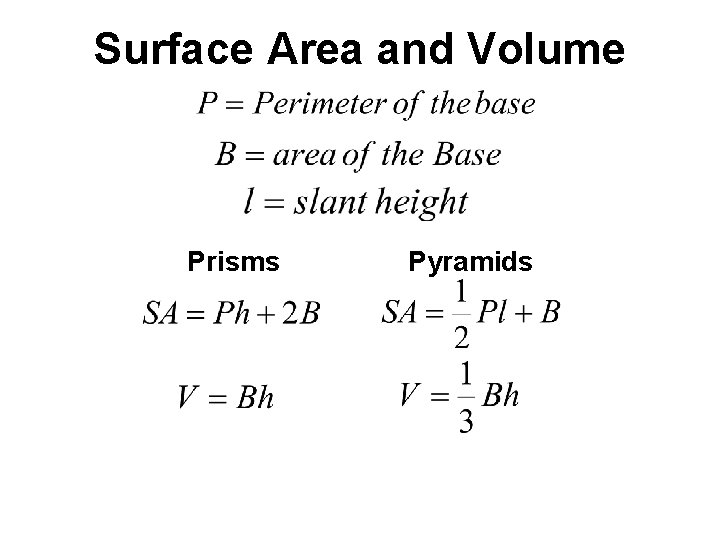
Surface Area and Volume Prisms Pyramids
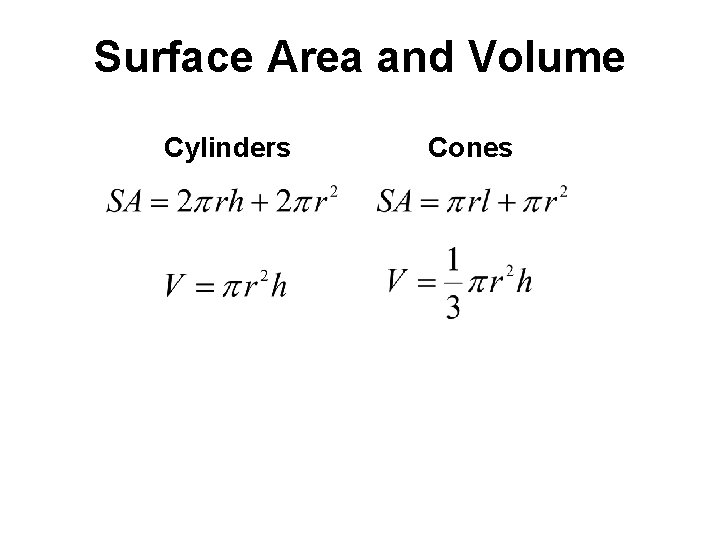
Surface Area and Volume Cylinders Cones
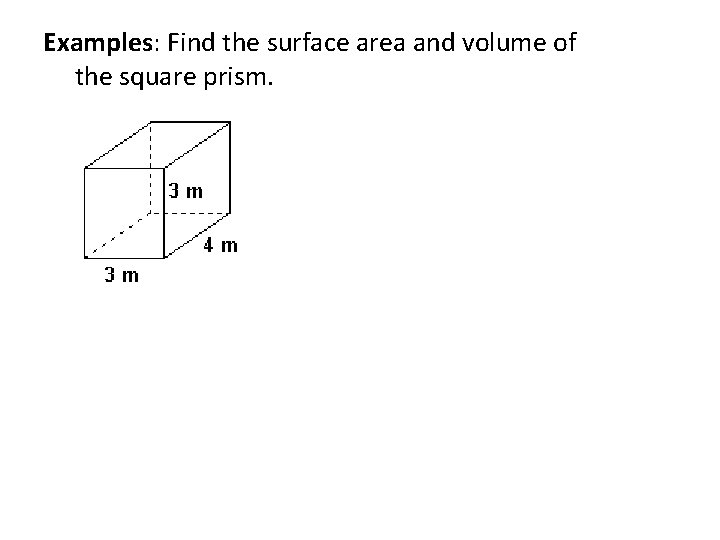
Examples: Find the surface area and volume of the square prism.
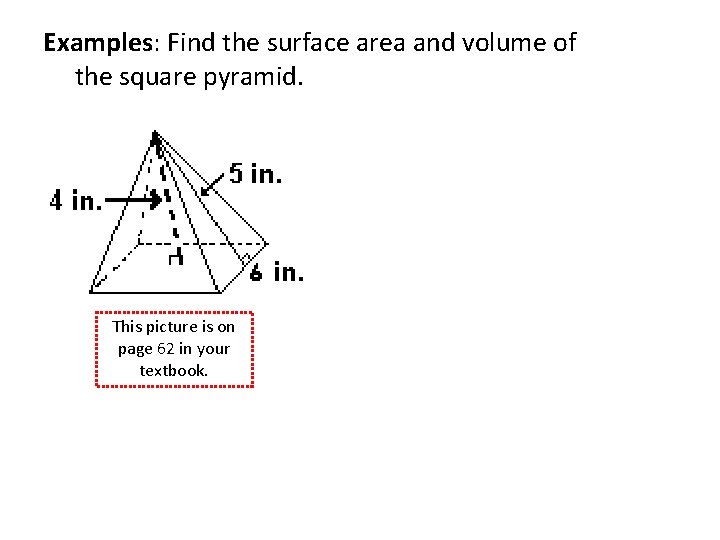
Examples: Find the surface area and volume of the square pyramid. This picture is on page 62 in your textbook.
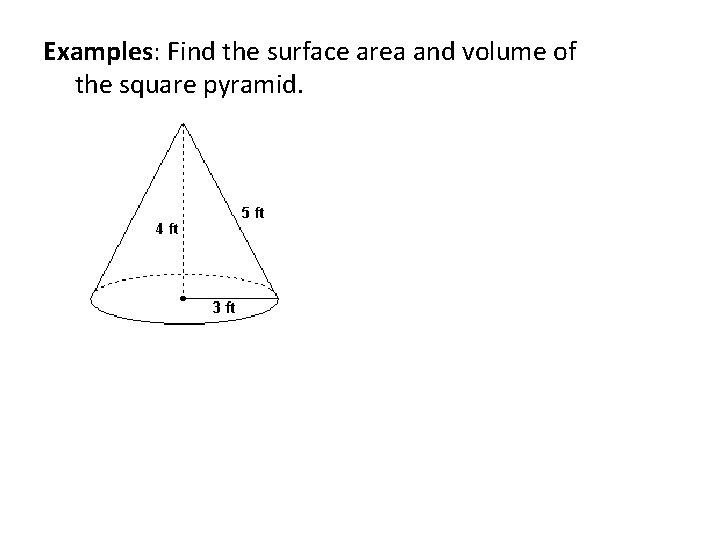
Examples: Find the surface area and volume of the square pyramid.