6 ONETOONE FUNCTIONS AND INVERSE FUNCTIONS OnetoOne Function

- Slides: 17
#6 ONE-TO-ONE FUNCTIONS AND INVERSE FUNCTIONS
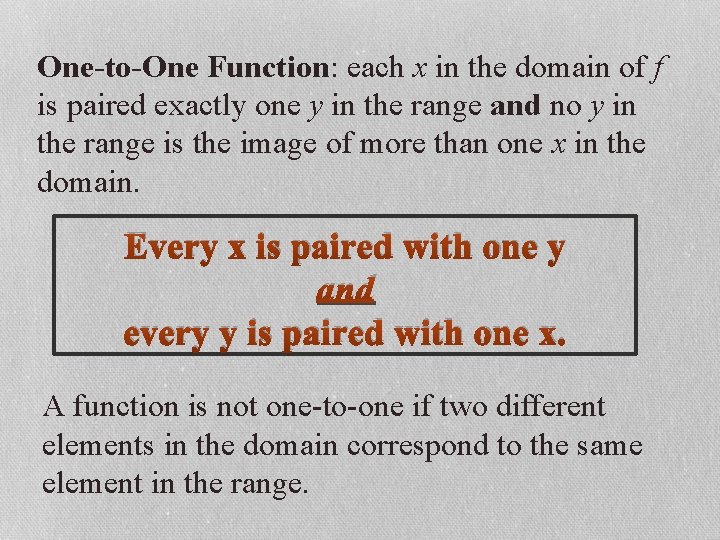
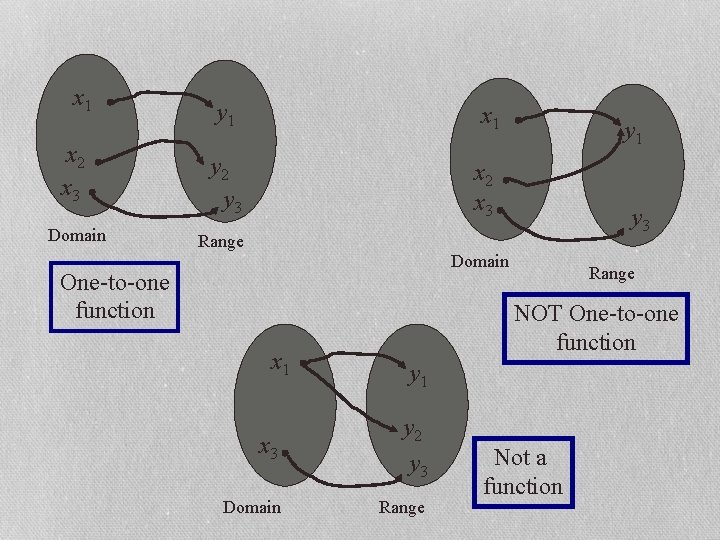
One-to-One Function: each x in the domain of f is paired exactly one y in the range and no y in the range is the image of more than one x in the domain. Every x is paired with one y and every y is paired with one x. A function is not one-to-one if two different elements in the domain correspond to the same element in the range.
x 1 x 2 x 3 Domain y 1 x 1 y 2 y 3 x 2 x 3 Range y 1 y 3 Domain One-to-one function x 1 Range NOT One-to-one function y 1 x 3 y 2 y 3 Domain Range Not a function
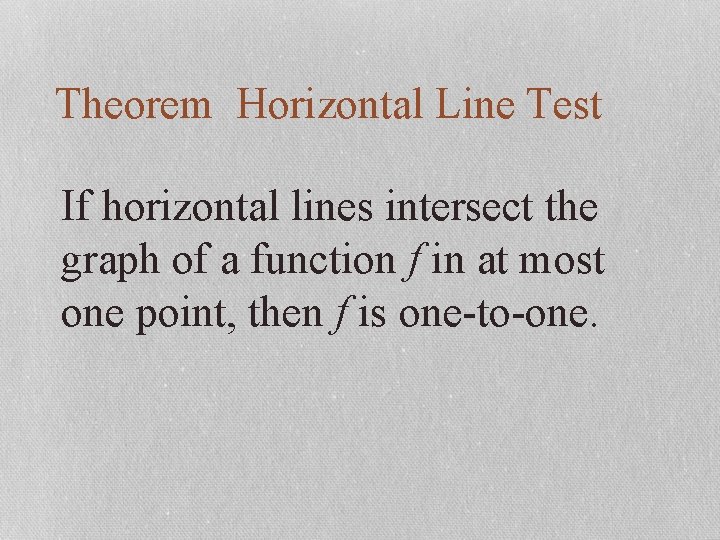
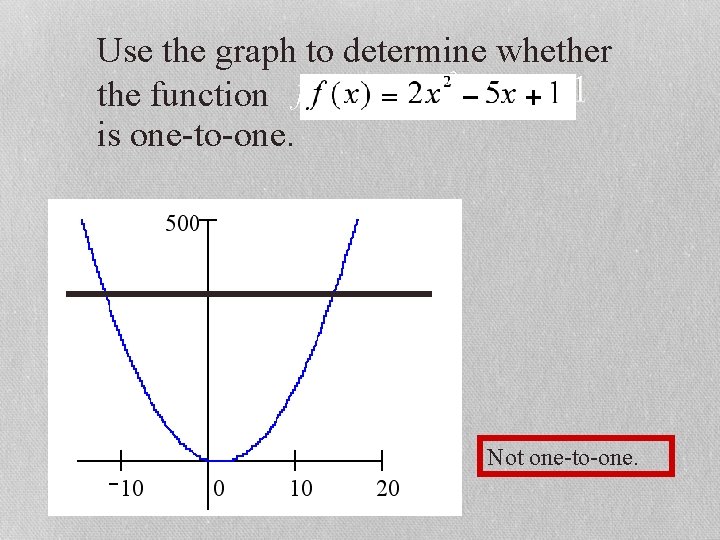
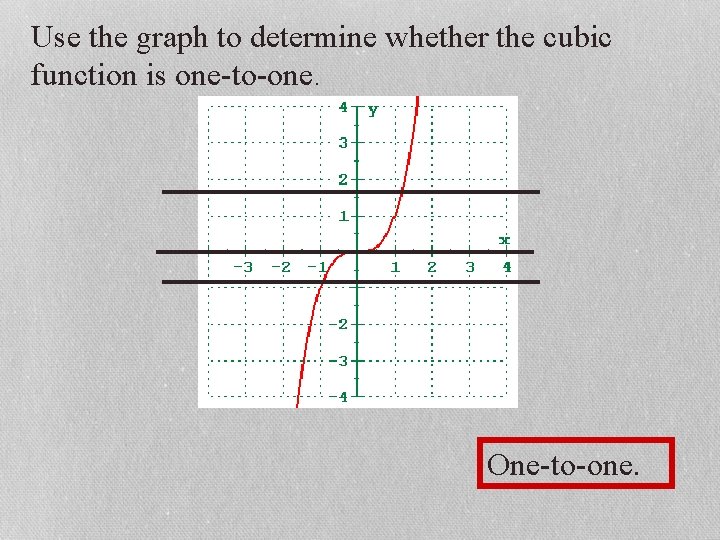
Theorem Horizontal Line Test If horizontal lines intersect the graph of a function f in at most one point, then f is one-to-one.
Use the graph to determine whether the function is one-to-one. Not one-to-one.
Use the graph to determine whether the cubic function is one-to-one. One-to-one.
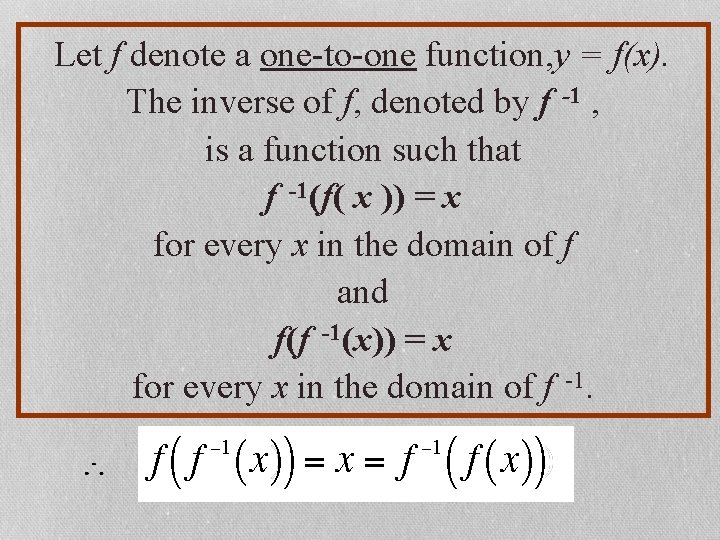
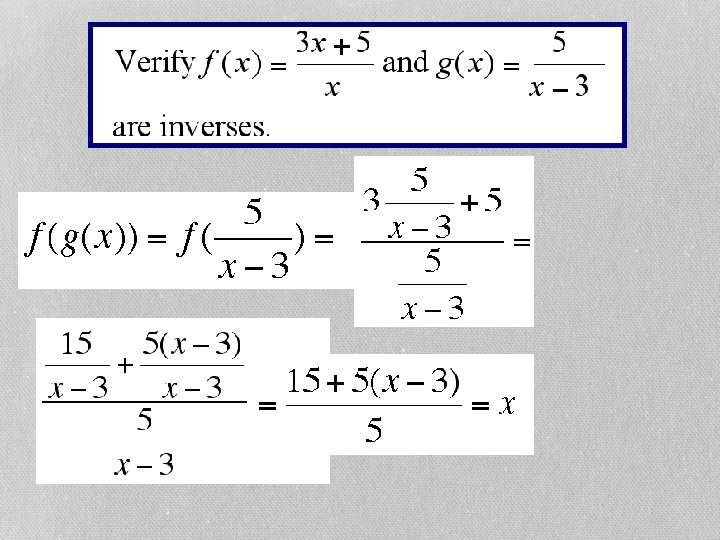
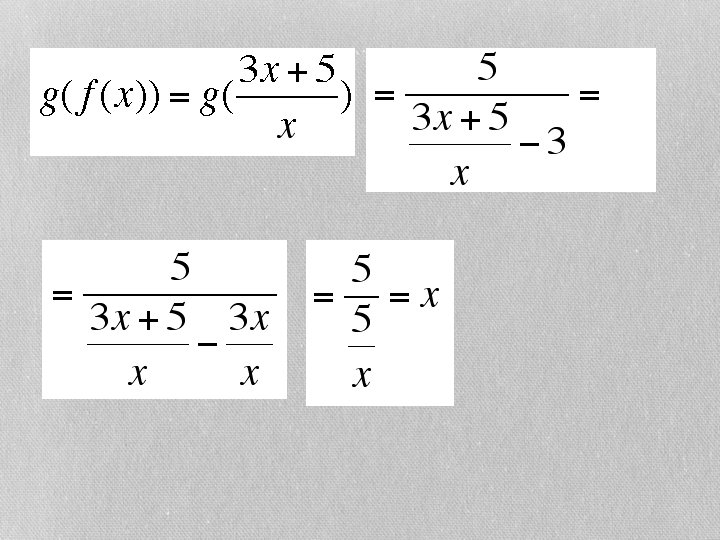
Let f denote a one-to-one function, y = f(x). The inverse of f, denoted by f -1 , is a function such that f -1(f( x )) = x for every x in the domain of f and f(f -1(x)) = x for every x in the domain of f -1.
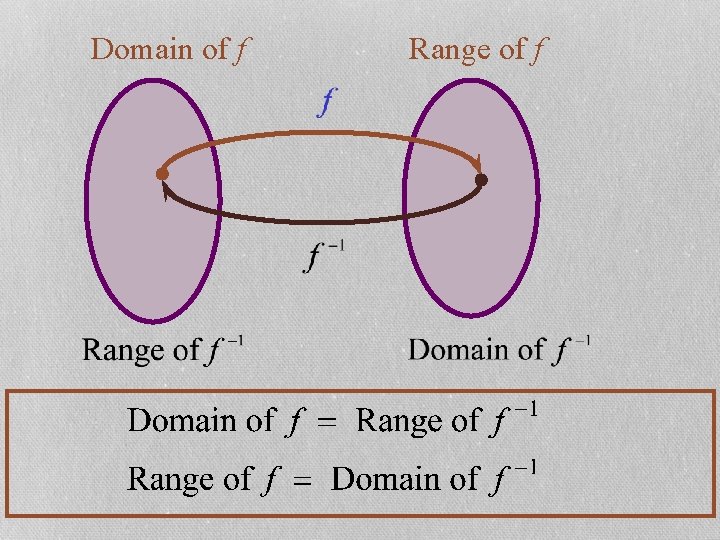
Domain of f Range of f
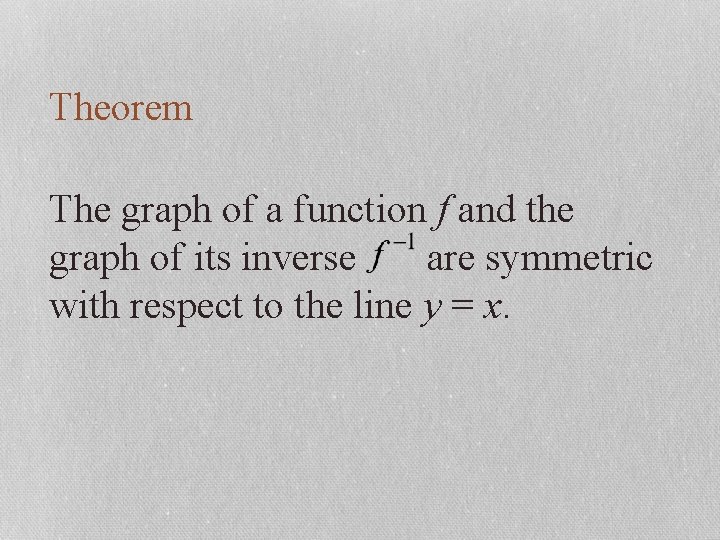
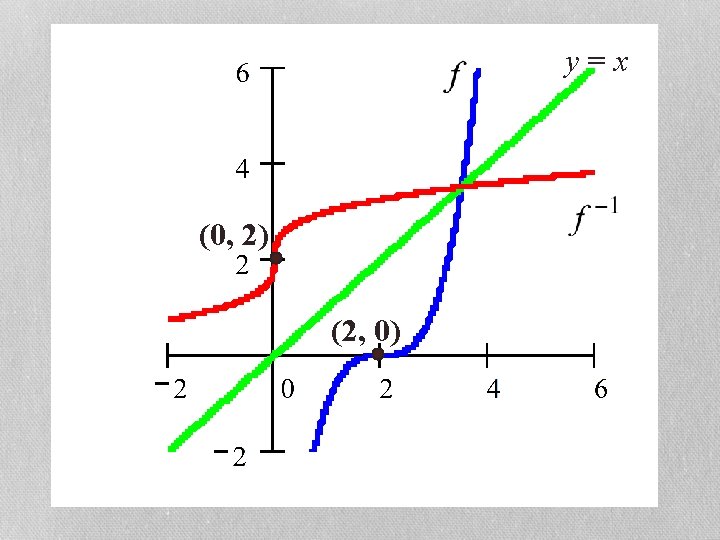
Theorem The graph of a function f and the graph of its inverse are symmetric with respect to the line y = x.
y=x (0, 2) (2, 0)
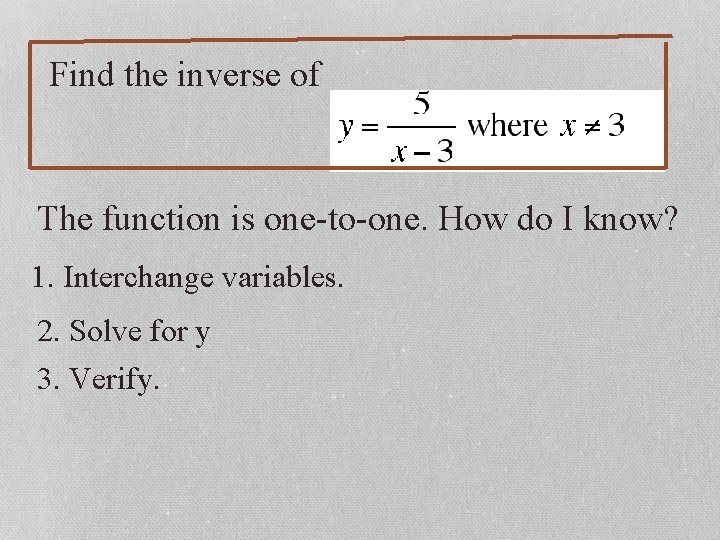
Find the inverse of The function is one-to-one. How do I know? 1. Interchange variables. 2. Solve for y 3. Verify.
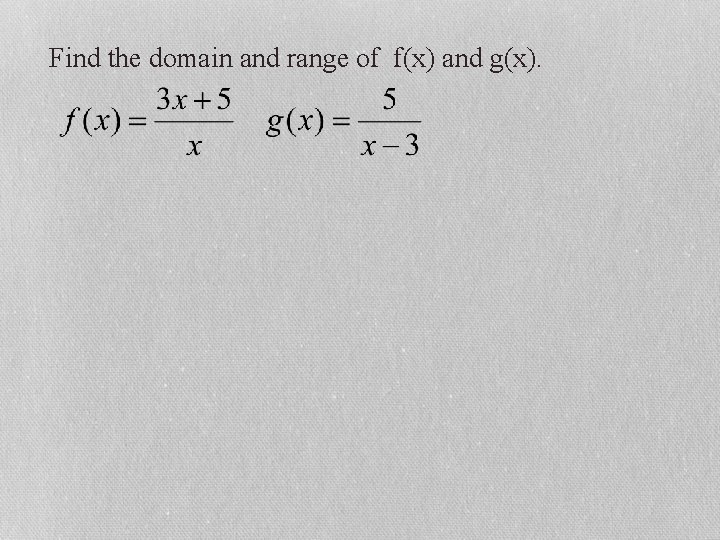
Find the domain and range of f(x) and g(x).
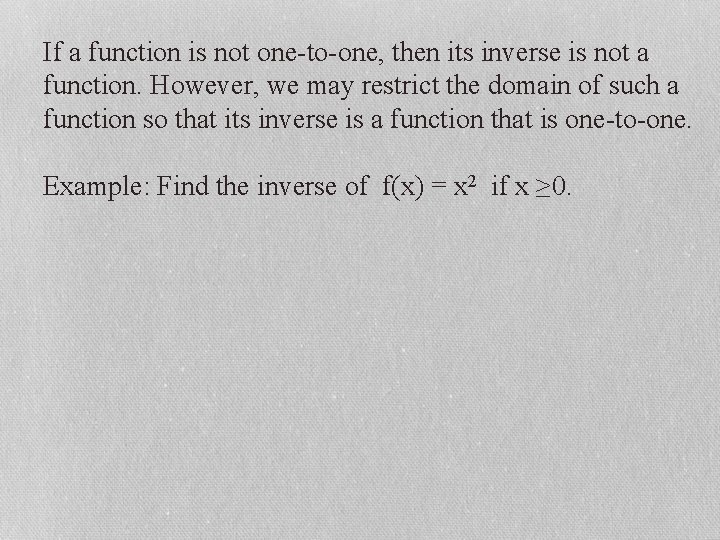
If a function is not one-to-one, then its inverse is not a function. However, we may restrict the domain of such a function so that its inverse is a function that is one-to-one. Example: Find the inverse of f(x) = x 2 if x ≥ 0.
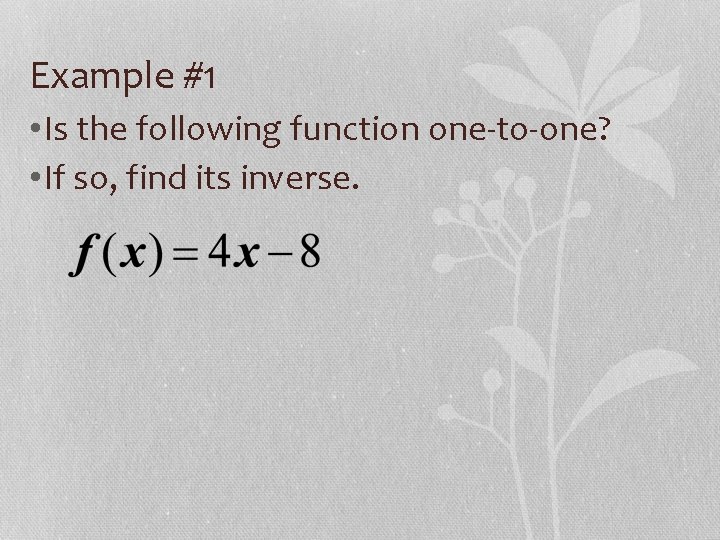
Example #1 • Is the following function one-to-one? • If so, find its inverse.
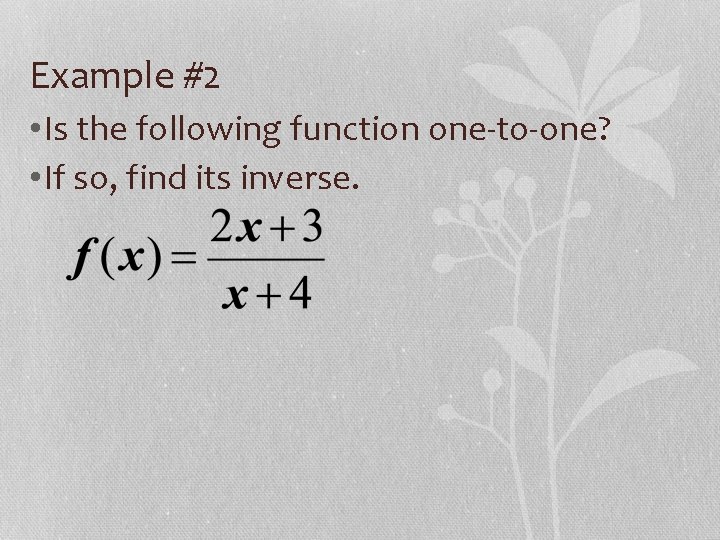
Example #2 • Is the following function one-to-one? • If so, find its inverse.