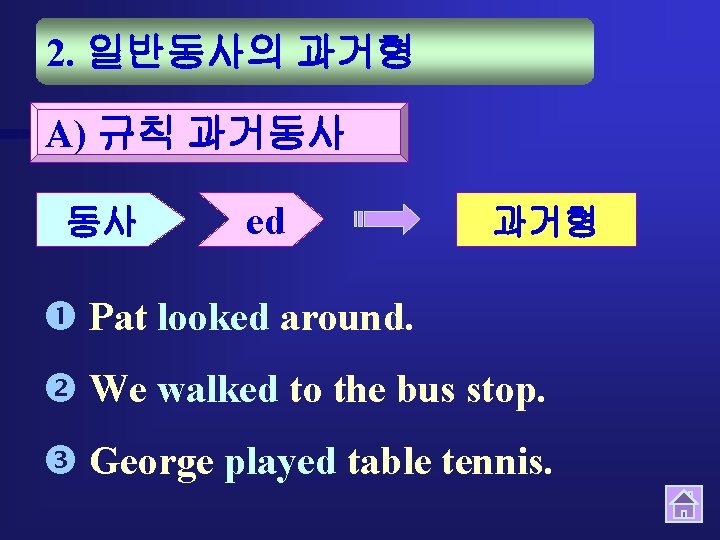
2 A ed Pat looked around We walked
- Slides: 21
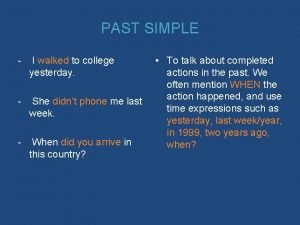
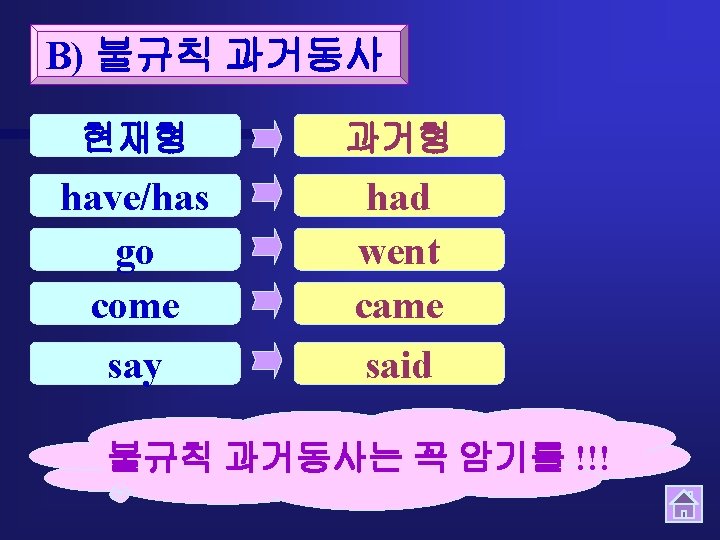
2. 일반동사의 과거형 A) 규칙 과거동사 동사 ed 과거형 Pat looked around. We walked to the bus stop. George played table tennis.
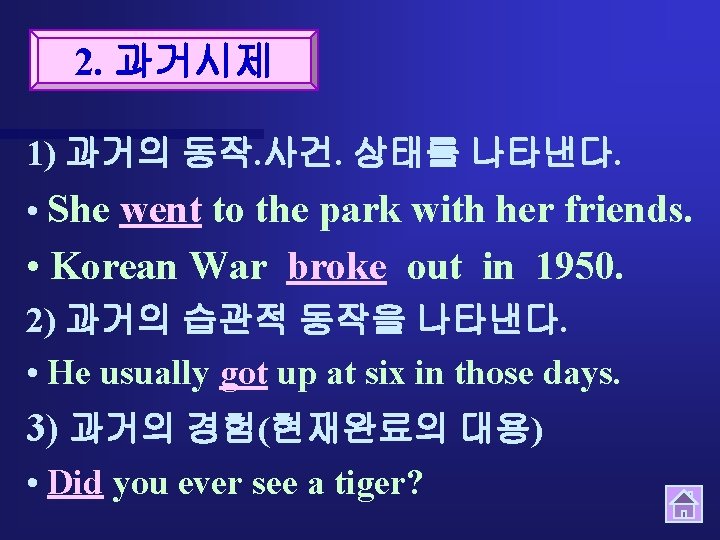
2. 과거시제 1) 과거의 동작. 사건. 상태를 나타낸다. • She went to the park with her friends. • Korean War broke out in 1950. 2) 과거의 습관적 동작을 나타낸다. • He usually got up at six in those days. 3) 과거의 경험(현재완료의 대용) • Did you ever see a tiger?
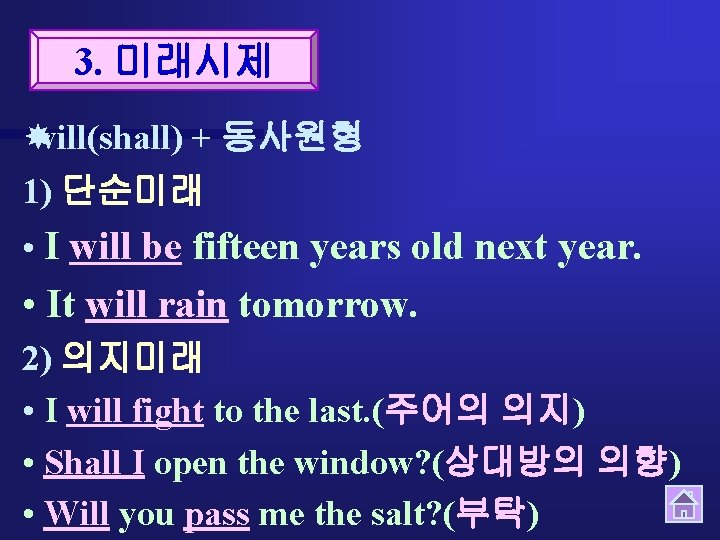
3. 미래시제 will(shall) + 동사원형 1) 단순미래 • I will be fifteen years old next year. • It will rain tomorrow. 2) 의지미래 • I will fight to the last. (주어의 의지) • Shall I open the window? (상대방의 의향) • Will you pass me the salt? (부탁)
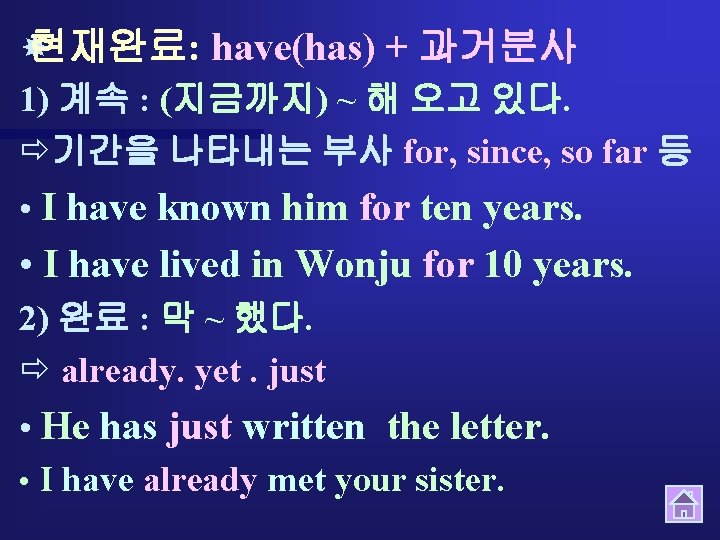
현재완료: have(has) + 과거분사 1) 계속 : (지금까지) ~ 해 오고 있다. ð기간을 나타내는 부사 for, since, so far 등 • I have known him for ten years. • I have lived in Wonju for 10 years. 2) 완료 : 막 ~ 했다. ð already. yet. just • He has just written the letter. • I have already met your sister.
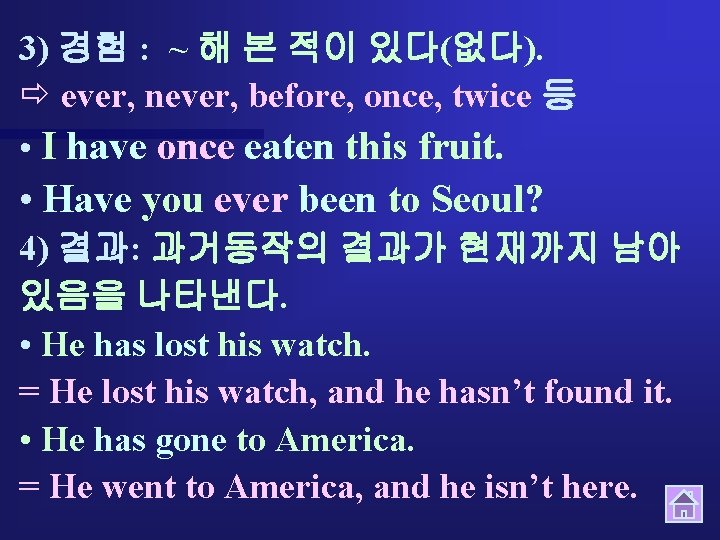
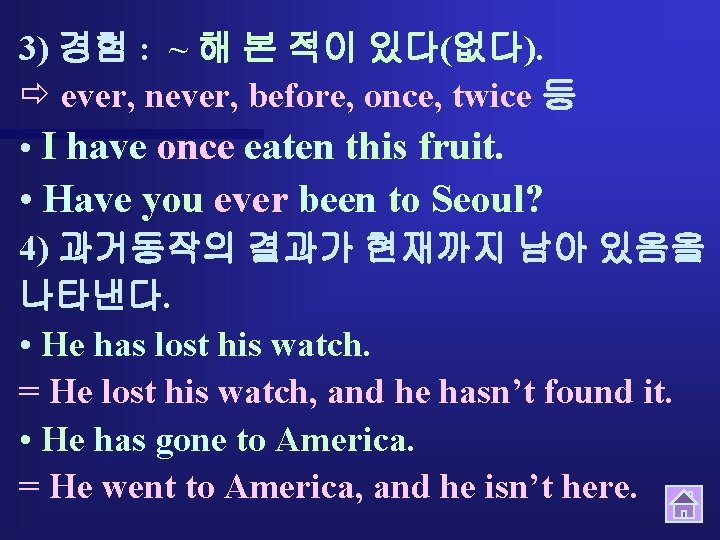
3) 경험 : ~ 해 본 적이 있다(없다). ð ever, never, before, once, twice 등 • I have once eaten this fruit. • Have you ever been to Seoul? 4) 결과: 과거동작의 결과가 현재까지 남아 있음을 나타낸다. • He has lost his watch. = He lost his watch, and he hasn’t found it. • He has gone to America. = He went to America, and he isn’t here.
3) 경험 : ~ 해 본 적이 있다(없다). ð ever, never, before, once, twice 등 • I have once eaten this fruit. • Have you ever been to Seoul? 4) 과거동작의 결과가 현재까지 남아 있음을 나타낸다. • He has lost his watch. = He lost his watch, and he hasn’t found it. • He has gone to America. = He went to America, and he isn’t here.
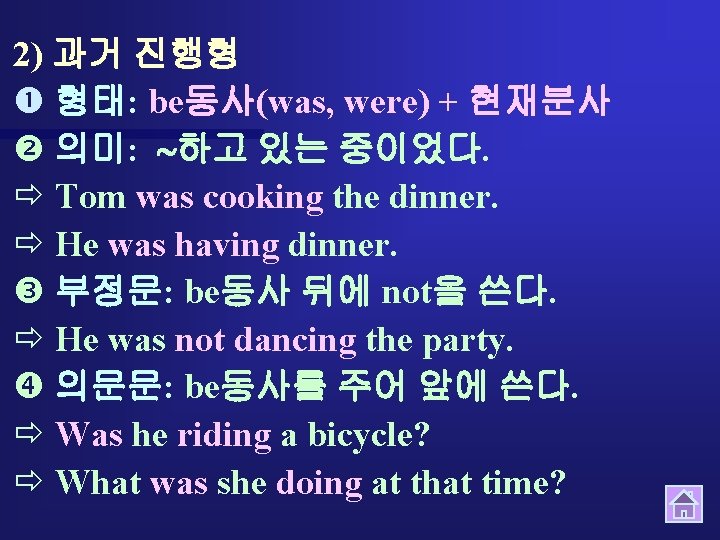
2) 과거 진행형 형태: be동사(was, were) + 현재분사 의미: 하고 있는 중이었다. ð Tom was cooking the dinner. ð He was having dinner. 부정문: be동사 뒤에 not을 쓴다. ð He was not dancing the party. 의문문: be동사를 주어 앞에 쓴다. ð Was he riding a bicycle? ð What was she doing at that time?
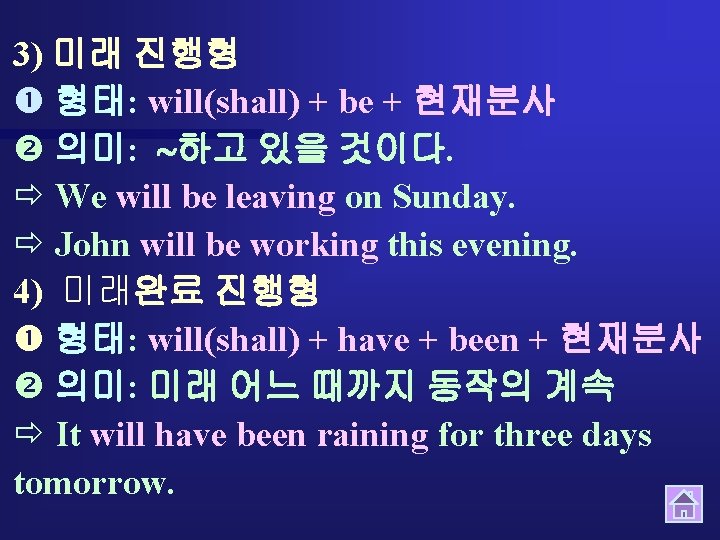
3) 미래 진행형 형태: will(shall) + be + 현재분사 의미: 하고 있을 것이다. ð We will be leaving on Sunday. ð John will be working this evening. 4) 미래완료 진행형 형태: will(shall) + have + been + 현재분사 의미: 미래 어느 때까지 동작의 계속 ð It will have been raining for three days tomorrow.
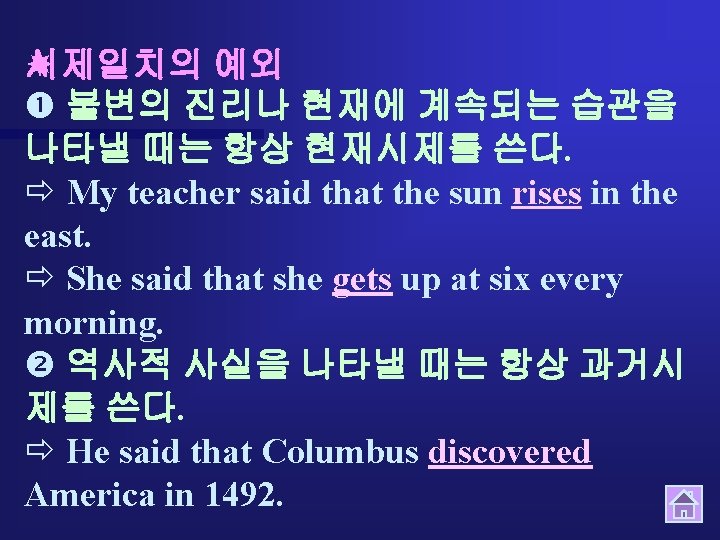
제일치의 예외 시 불변의 진리나 현재에 계속되는 습관을 나타낼 때는 항상 현재시제를 쓴다. ð My teacher said that the sun rises in the east. ð She said that she gets up at six every morning. 역사적 사실을 나타낼 때는 항상 과거시 제를 쓴다. ð He said that Columbus discovered America in 1492.
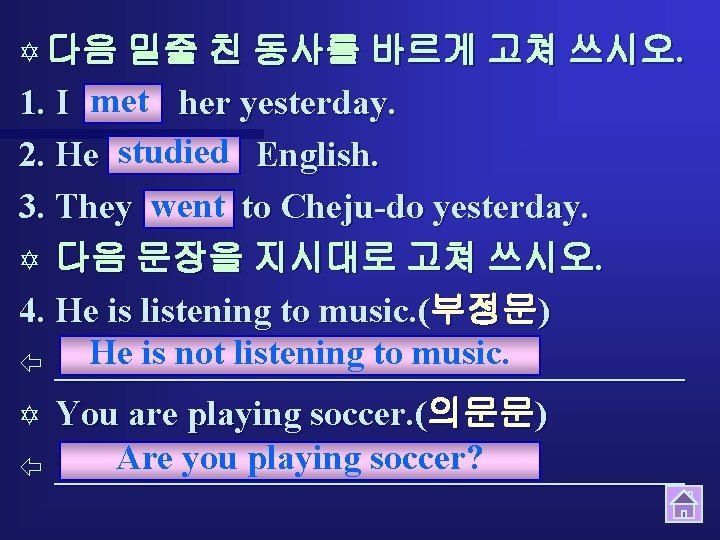
Y 다음 밑줄 친 동사를 바르게 고쳐 쓰시오. met her yesterday. 1. I meet studied English. 2. He studyed 3. They went go to Cheju-do yesterday. Y 다음 문장을 지시대로 고쳐 쓰시오. 4. He is listening to music. (부정문) He is not listening to music. ï __________________ Y You are playing soccer. (의문문) Are you playing soccer? ï __________________