World War 2 Treaty of Versailles Rise of
- Slides: 35
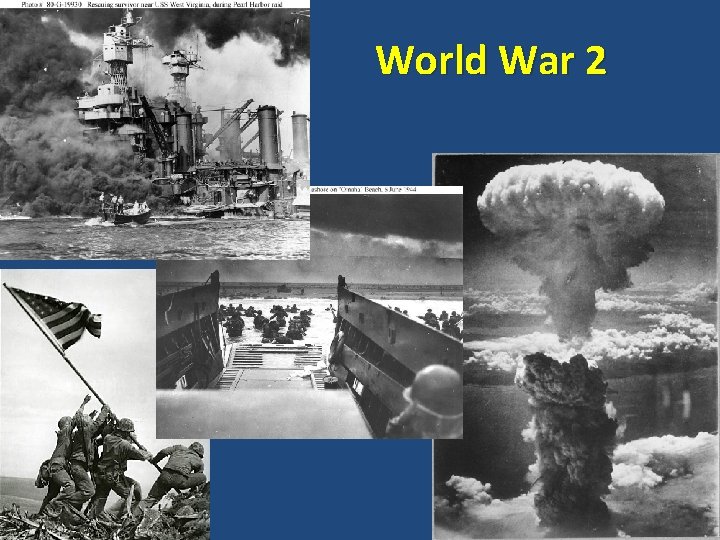
World War 2
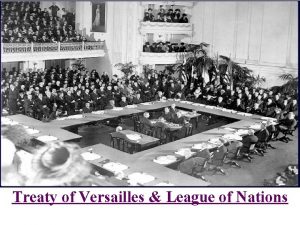
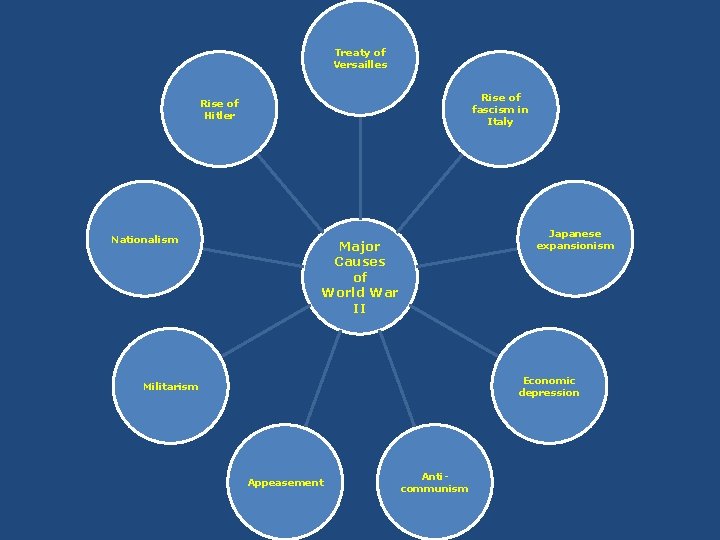
Treaty of Versailles Rise of fascism in Italy Rise of Hitler Nationalism Japanese expansionism Major Causes of World War II Economic depression Militarism Appeasement Anticommunism
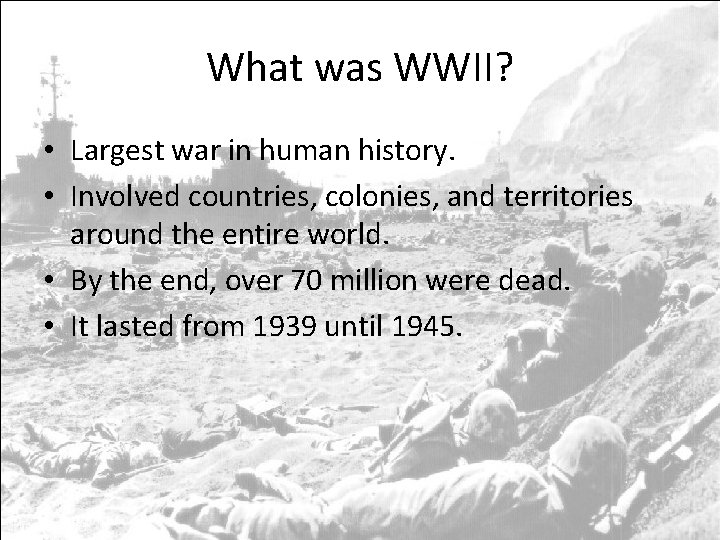
What was WWII? • Largest war in human history. • Involved countries, colonies, and territories around the entire world. • By the end, over 70 million were dead. • It lasted from 1939 until 1945.
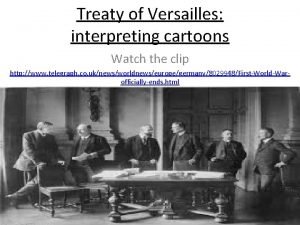
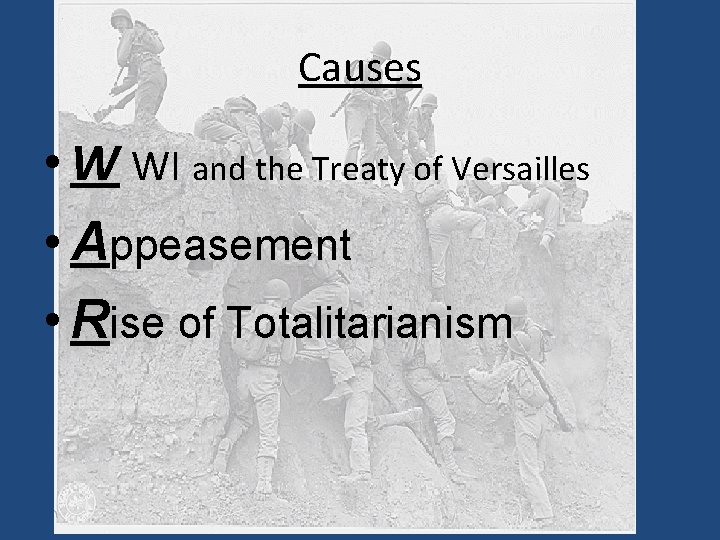
Causes • W WI and the Treaty of Versailles • Appeasement • Rise of Totalitarianism
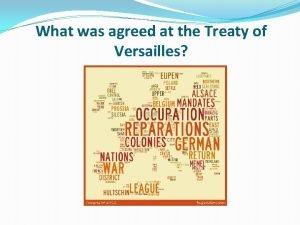
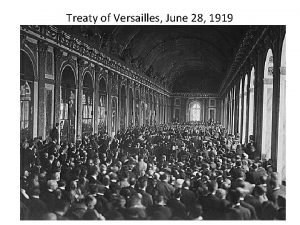
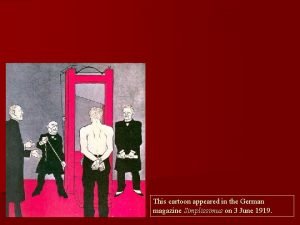
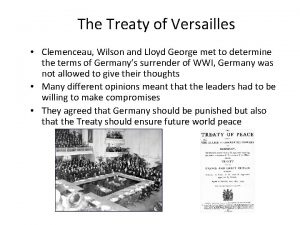
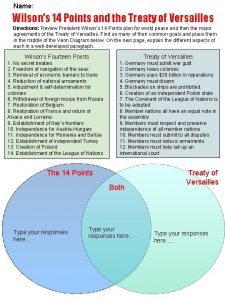
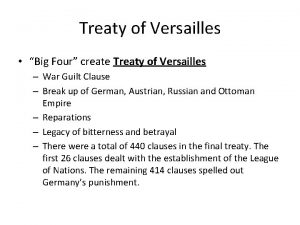
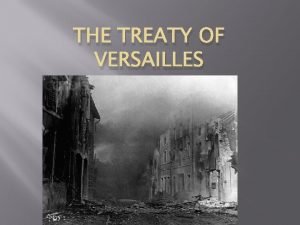
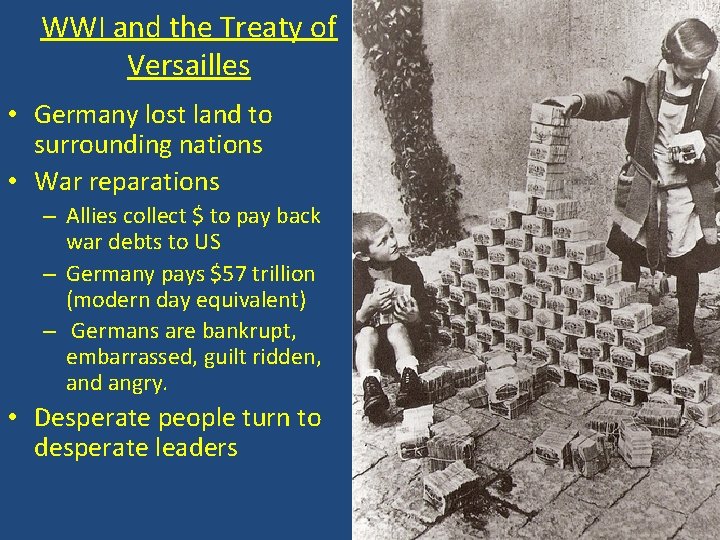
WWI and the Treaty of Versailles • Germany lost land to surrounding nations • War reparations – Allies collect $ to pay back war debts to US – Germany pays $57 trillion (modern day equivalent) – Germans are bankrupt, embarrassed, guilt ridden, and angry. • Desperate people turn to desperate leaders
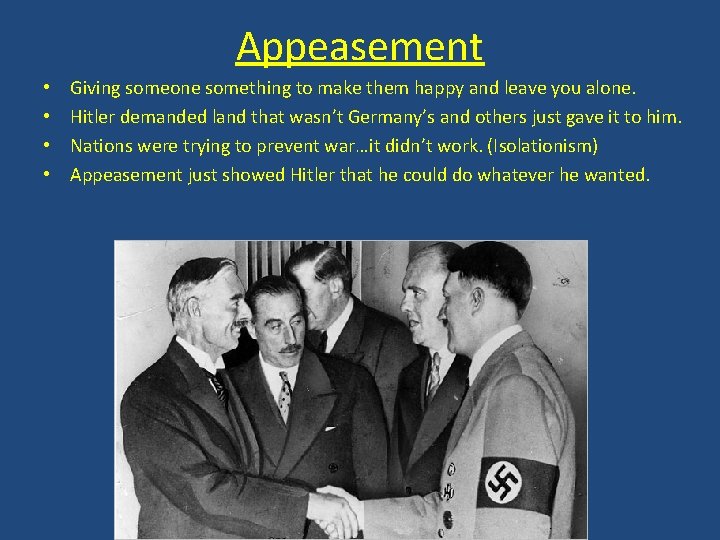
Appeasement • • Giving someone something to make them happy and leave you alone. Hitler demanded land that wasn’t Germany’s and others just gave it to him. Nations were trying to prevent war…it didn’t work. (Isolationism) Appeasement just showed Hitler that he could do whatever he wanted.
How did WWII start? • Germany invaded Poland to get lebensraum
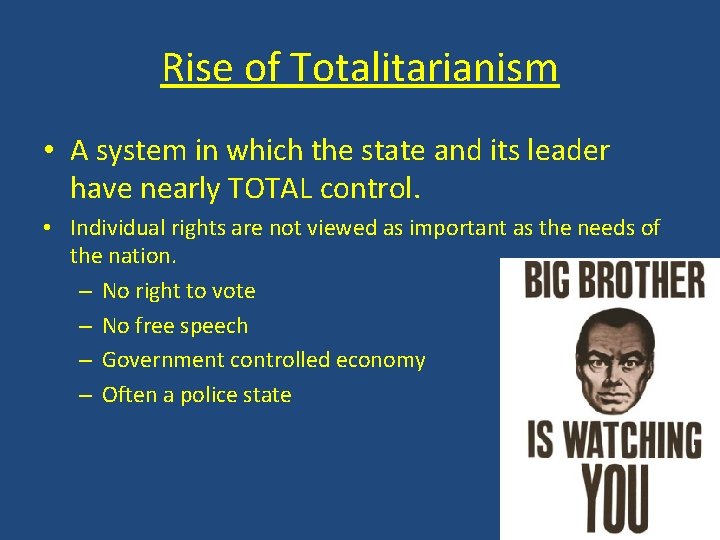
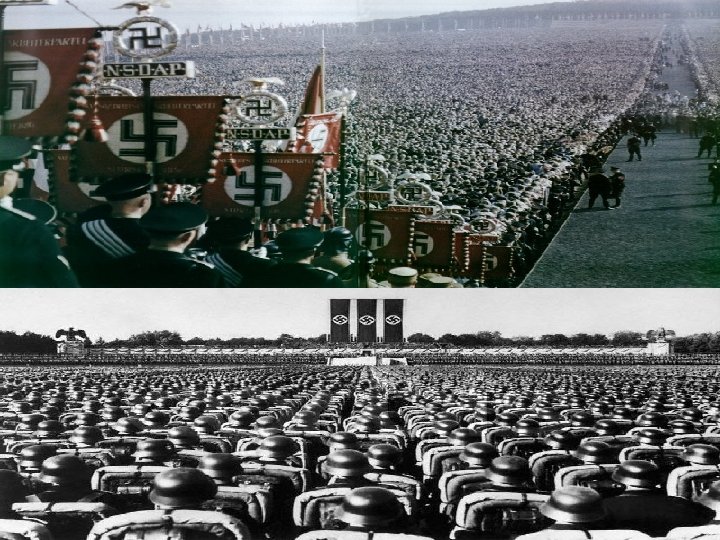
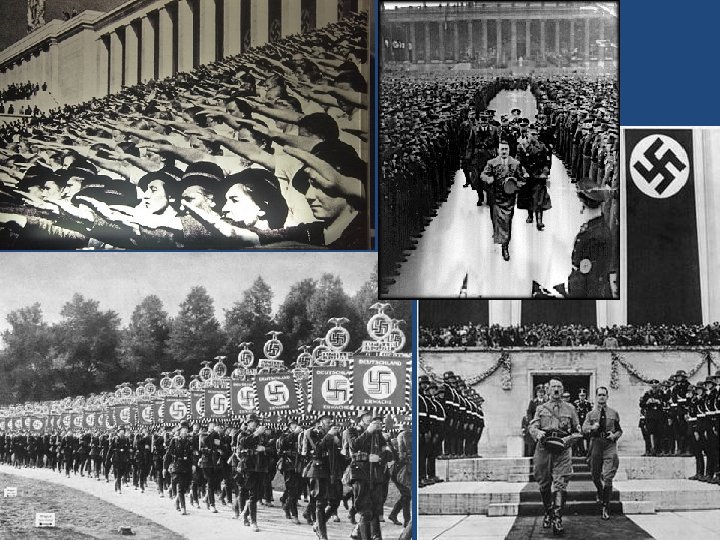
Rise of Totalitarianism • A system in which the state and its leader have nearly TOTAL control. • Individual rights are not viewed as important as the needs of the nation. – No right to vote – No free speech – Government controlled economy – Often a police state
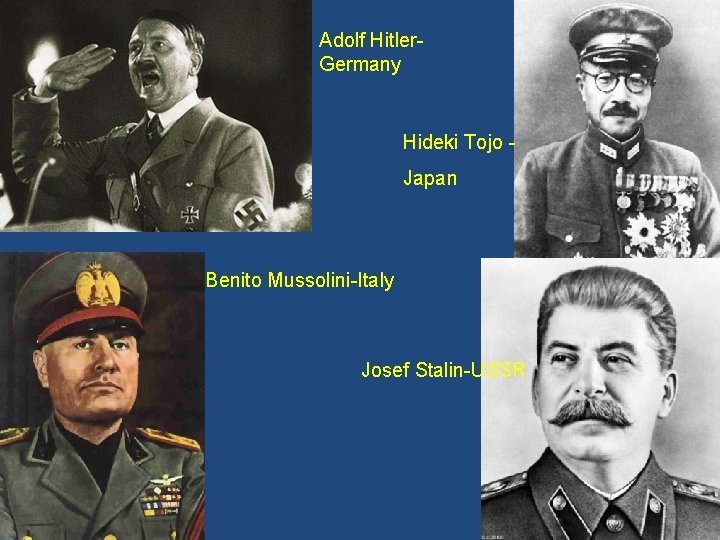
Adolf Hitler. Germany Hideki Tojo Japan Benito Mussolini-Italy Josef Stalin-USSR
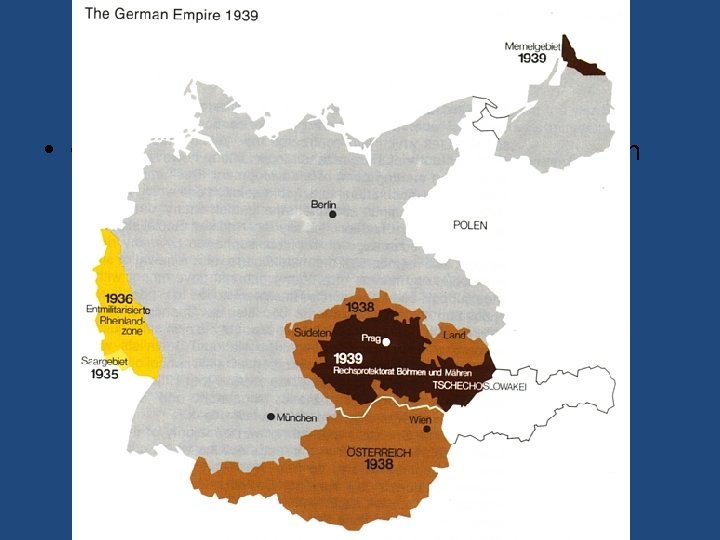
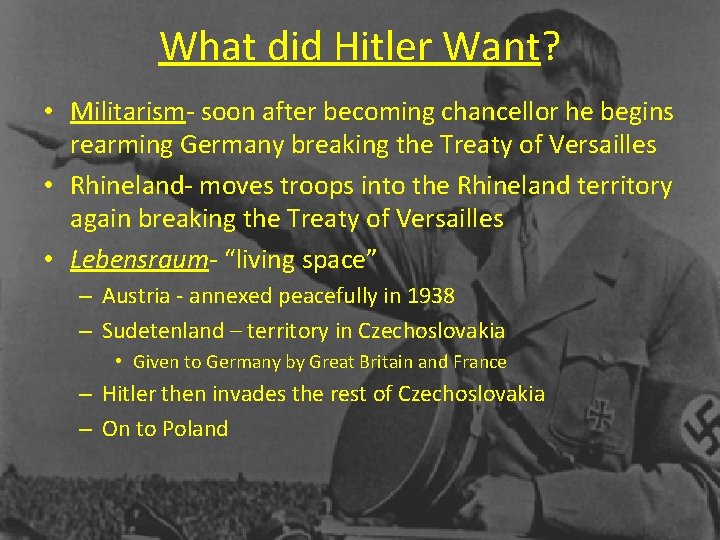
What did Hitler Want? • Militarism- soon after becoming chancellor he begins rearming Germany breaking the Treaty of Versailles • Rhineland- moves troops into the Rhineland territory again breaking the Treaty of Versailles • Lebensraum- “living space” – Austria - annexed peacefully in 1938 – Sudetenland – territory in Czechoslovakia • Given to Germany by Great Britain and France – Hitler then invades the rest of Czechoslovakia – On to Poland
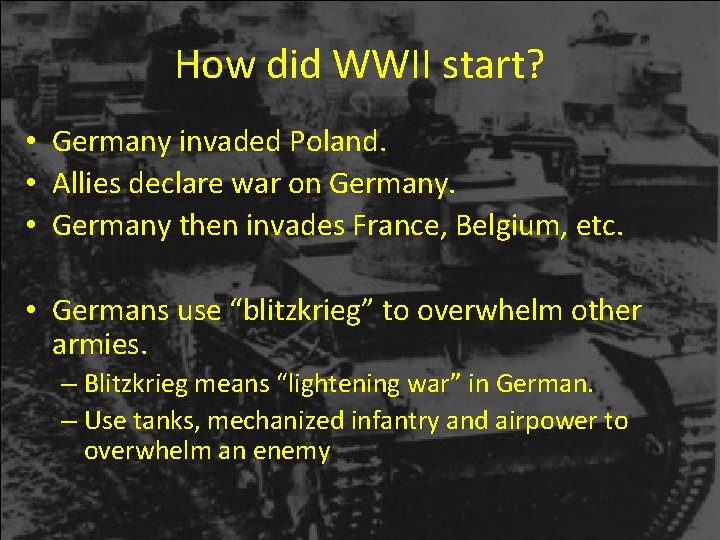
How did WWII start? • Germany invaded Poland. • Allies declare war on Germany. • Germany then invades France, Belgium, etc. • Germans use “blitzkrieg” to overwhelm other armies. – Blitzkrieg means “lightening war” in German. – Use tanks, mechanized infantry and airpower to overwhelm an enemy
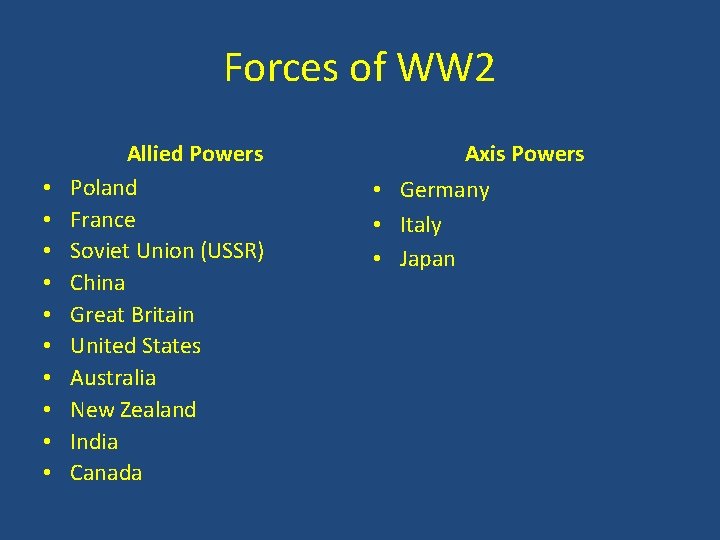
Forces of WW 2 • • • Allied Powers Poland France Soviet Union (USSR) China Great Britain United States Australia New Zealand India Canada Axis Powers • Germany • Italy • Japan
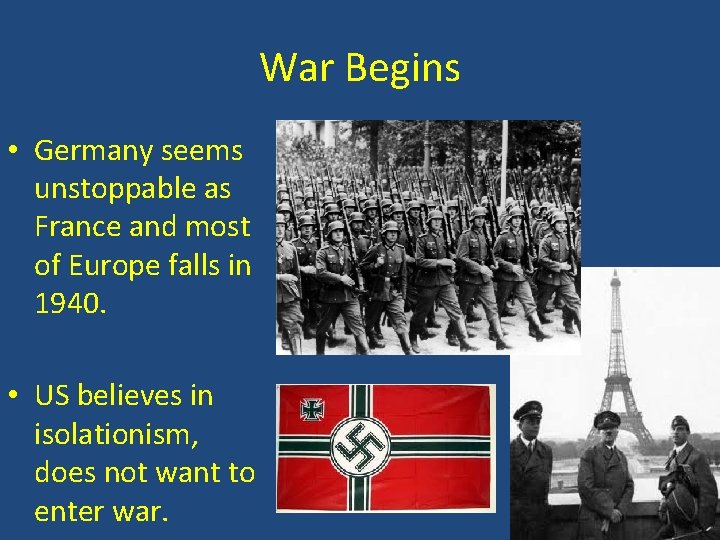
War Begins • Germany seems unstoppable as France and most of Europe falls in 1940. • US believes in isolationism, does not want to enter war.
US Rethinks Isolationism • Due to German victories US reconsiders isolationism • Starts a peace time draft to increase size of army • Congress passes Lend-Lease Act – U. S. could sell, lend or give war materials to Allied nations
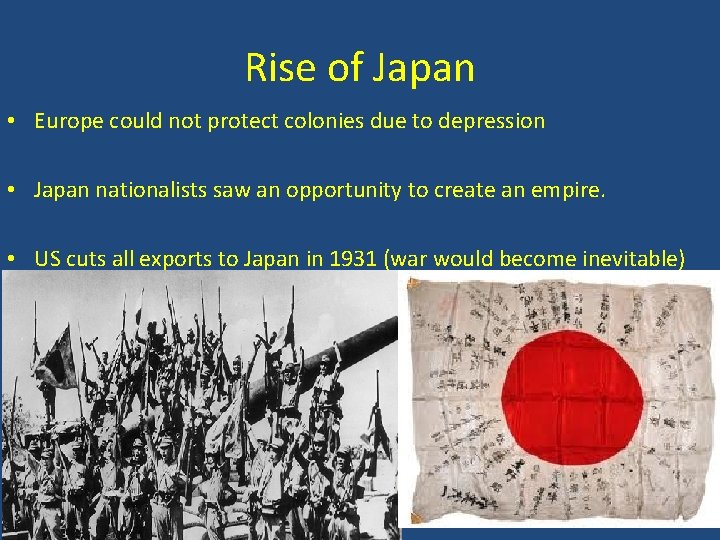
Rise of Japan • Europe could not protect colonies due to depression • Japan nationalists saw an opportunity to create an empire. • US cuts all exports to Japan in 1931 (war would become inevitable)
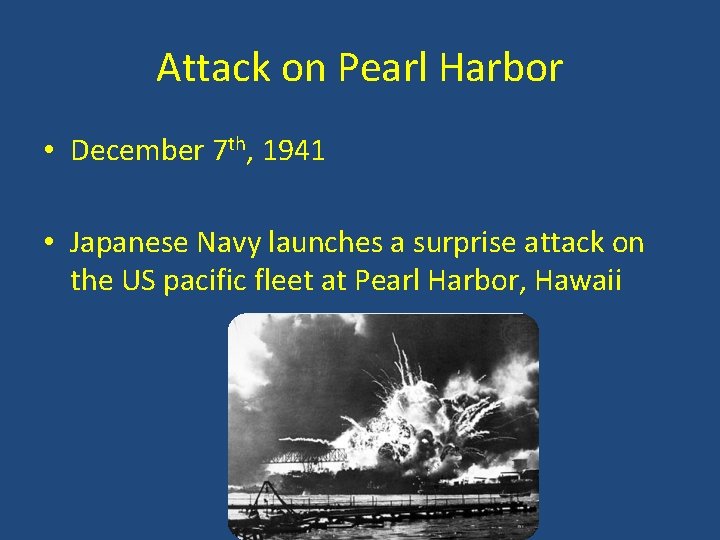
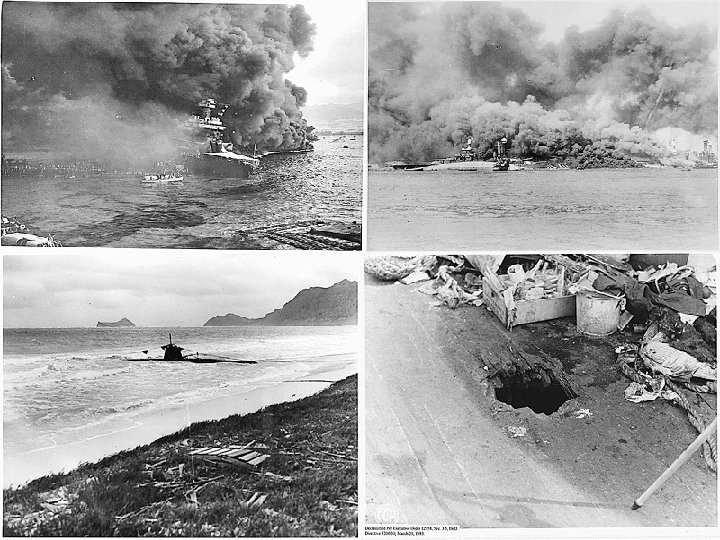
Attack on Pearl Harbor • December 7 th, 1941 • Japanese Navy launches a surprise attack on the US pacific fleet at Pearl Harbor, Hawaii
Key Moments in WW 2 • Battle of Britain – air battle over Britain, the allies gain air superiority after this battle allowing for the bombing of Germany (summer/fall 1940) • D-Day – Allied invasion of France, June 6, 1944 • Stalingrad – German 6 th Army defeated in Russia, turning point in the eastern front. Russia goes on the offensive until the war ends. (1942 -1943)
• Island Hopping – US strategy in the Pacific theater, specific islands were targeted due to value of moving the fight closer to Japan. • Manhattan Project – top secret project to build an atomic bomb
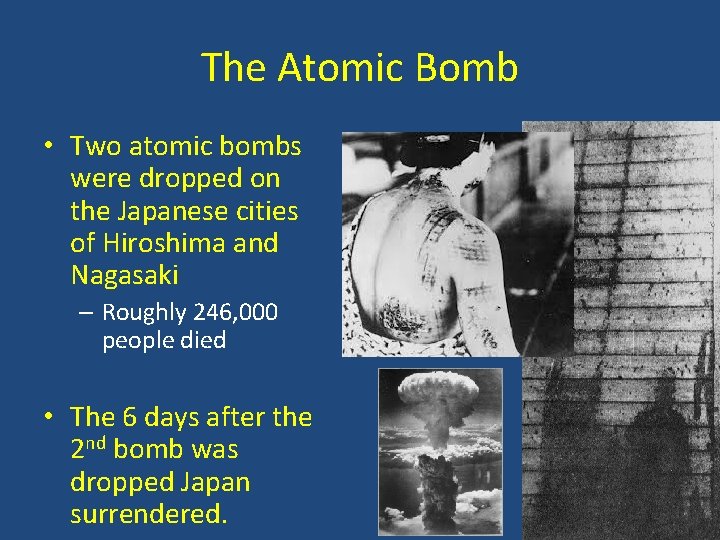
The Atomic Bomb • Two atomic bombs were dropped on the Japanese cities of Hiroshima and Nagasaki – Roughly 246, 000 people died • The 6 days after the 2 nd bomb was dropped Japan surrendered.
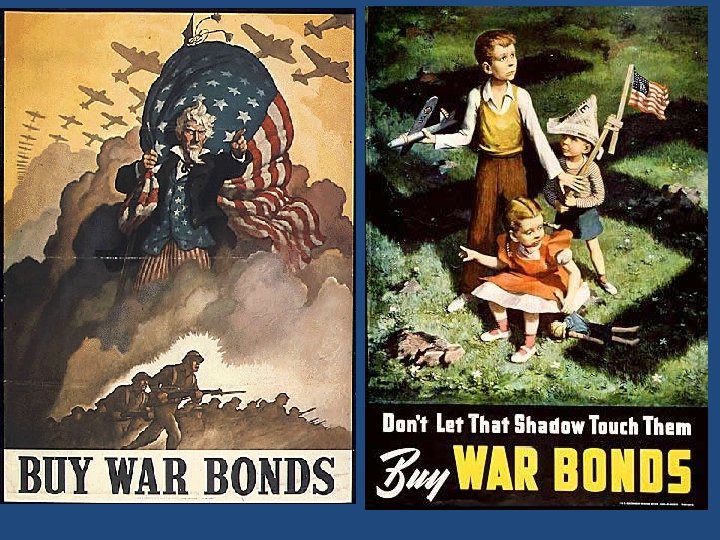
Industry & Labor • Factories converted to war production - auto plants build tanks • Women go to work in war industries - earning 60% of what men earned • Unemployment dropped • Industry began to boom - producing consumer good & war supplies
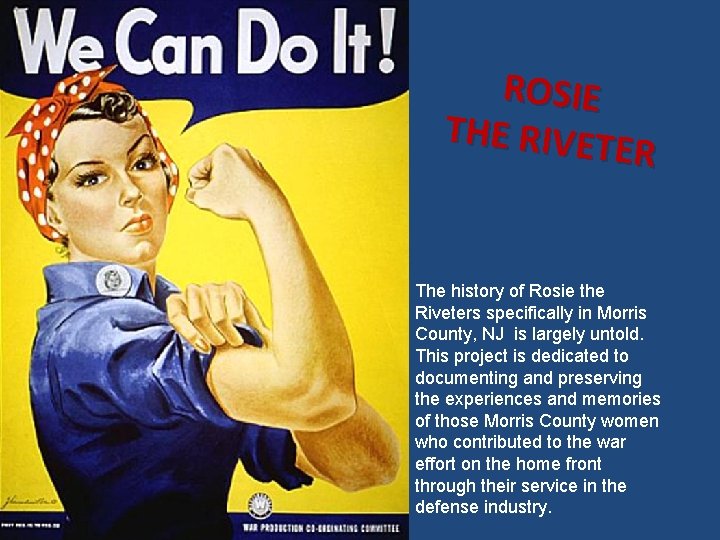
ROSIE THE RIVET ER The history of Rosie the Riveters specifically in Morris County, NJ is largely untold. This project is dedicated to documenting and preserving the experiences and memories of those Morris County women who contributed to the war effort on the home front through their service in the defense industry.
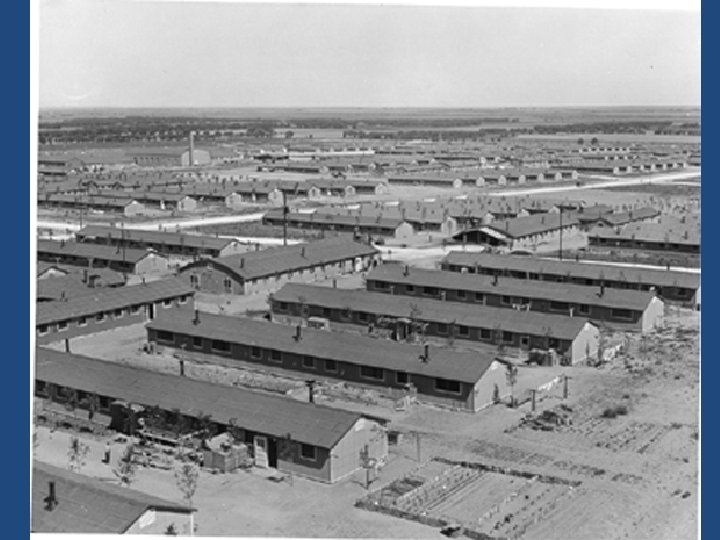
Racial Tensions Internment of Japanese Americans • 110, 000 citizens & aliens of Japanese ancestry • placed in “relocation centers” 2/3 rd were Nisei (Japanese Americans - born in the U. S. ) many had been drafted into the service lost their homes and businesses Camps: no privacy, small living quarters, single rooms per family - Internment continued throughout the war until 1945 -
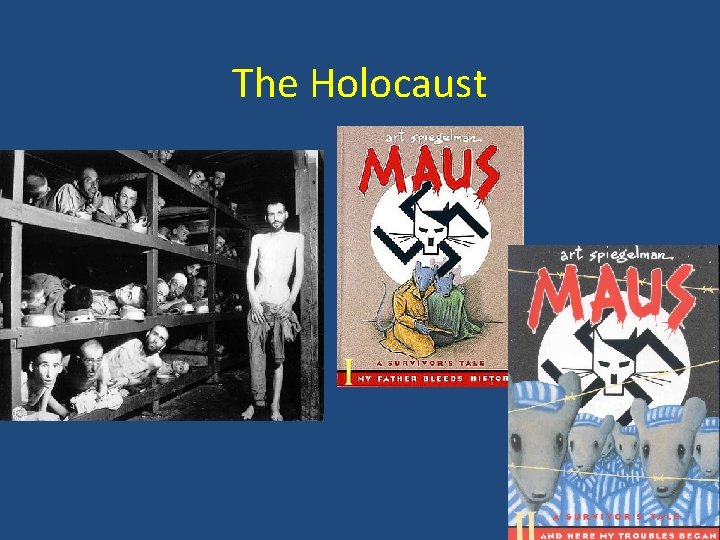
The Holocaust
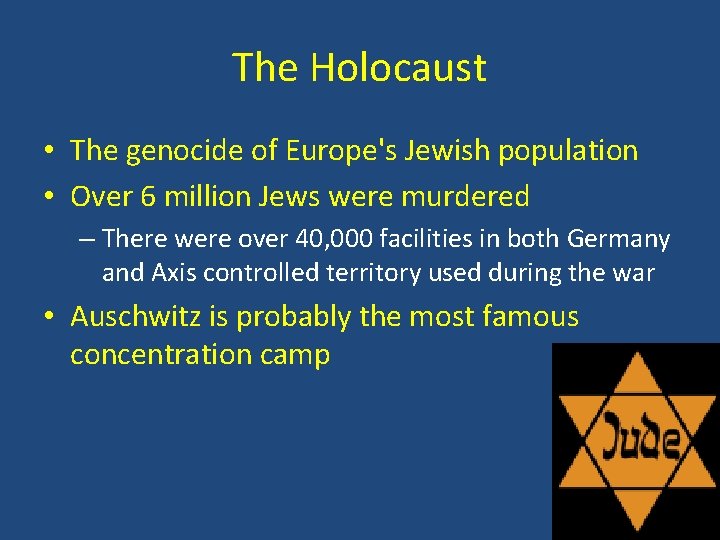
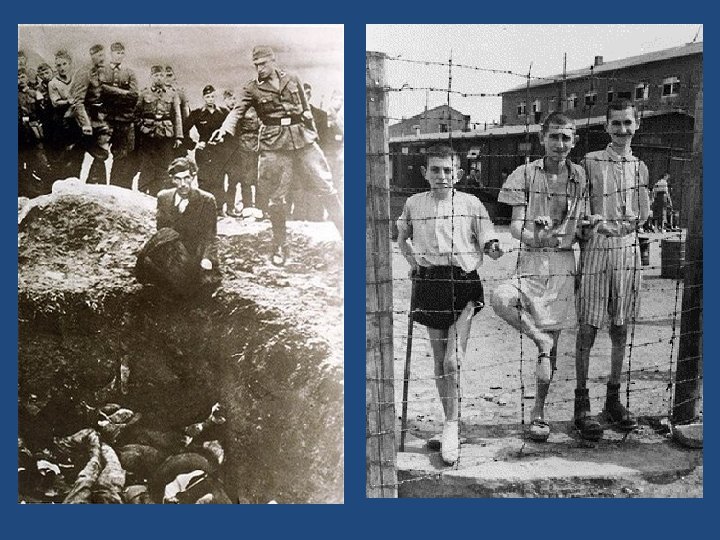
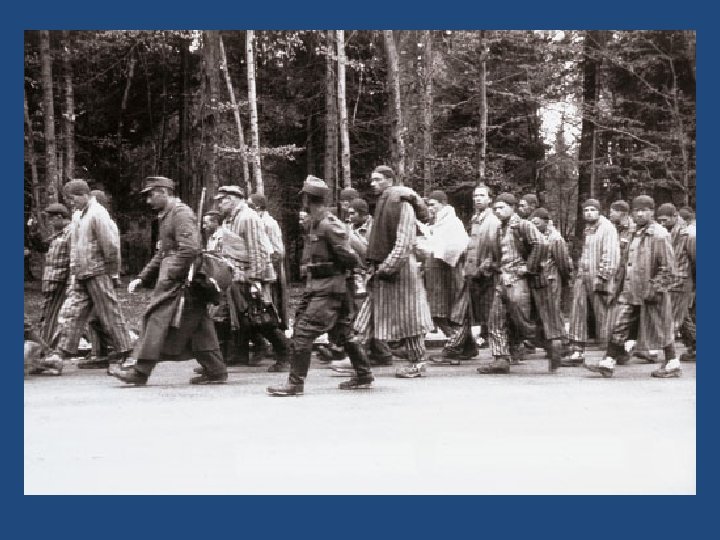
The Holocaust • The genocide of Europe's Jewish population • Over 6 million Jews were murdered – There were over 40, 000 facilities in both Germany and Axis controlled territory used during the war • Auschwitz is probably the most famous concentration camp
Nuremberg Trials • Discovery of camps led the Allies to put 24 surviving Nazi leaders on trial for war crimes, crimes against the peace and against humanity. • Defendants included Nazi party leaders, government ministers, military leaders, etc. – 12 out of 24 are sentenced to death, others in prison – Other smaller trials prosecuted Nazi soldiers: over 200 were tried
Aftermath of WW 2 • Germany divided into districts for each major allied power (US, GB, France and USSR). • USSR forms spreads communism to eastern Europe forming an “eastern block” of communist countries • The Marshal Plan – US pays to rebuild western Europe after WW 2 to prevent the spread of communism
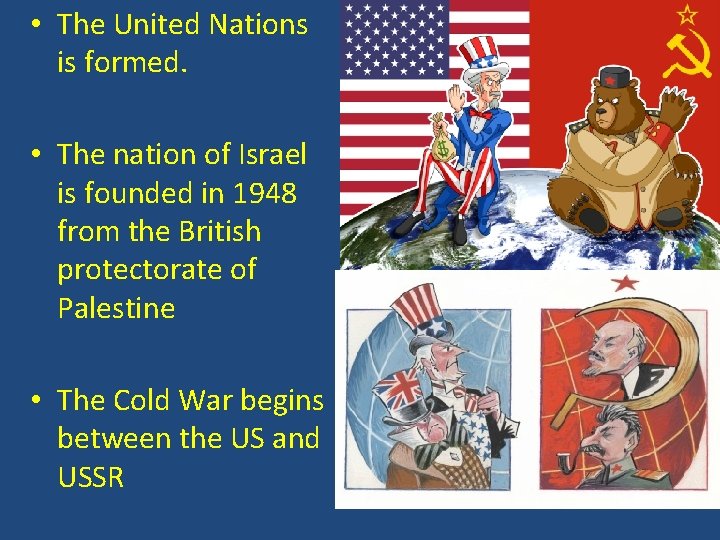
• The United Nations is formed. • The nation of Israel is founded in 1948 from the British protectorate of Palestine • The Cold War begins between the US and USSR