
The Russian Revolution and the Treaty of Versailles

- Slides: 26
The Russian Revolution and the Treaty of Versailles
Europe 1917 • Entering into third full year of World War • Death tolls constantly rising • Drafts have been issued in all European countries by this point • The Germans begin pushing the Russians back east
Russia in 1917 • Technologically behind the rest of Europe • Tsar Nicholas II – Increasingly unpopular as war goes on • Population mostly peasants – 80 percent in Russia – Compared to 40 percent in Germany • War is going badly – No working class=No industry=No guns
Alternative options • Marxist Revolution – Theoretical – End of private property, religion, and class – Social and economic equality – Government owns the means of production • Mensheviks • Bolsheviks – Need tsar gone – Revolution will create Bourgeoisie who will create industry – Once industry is created history will progress as Marx intended – Need Revolution – Industrialize from above – Force peasants to become workers – Skip Bourgeoisie phase
The March Revolution • Tsar abdicates March 1917 • He leaves in charge a provisional government – Mensheviks join – Bolsheviks don’t • Provisional government is recognized by west • Chooses to stay in the war – Unpopular decision
The October Revolution • Actually occurred in November according to west – Russia’s calendar is different at this time • Vladimir Lenin-leader of Bolsheviks • Bolsheviks attempt to win people to their side – Slogan “Peace, bread, and land” • Bolsheviks rise up and claim a mandate from the people – Actually had no popular support so really just a coup
The Russian Civil War • Whites verses Reds – Whites= tsar supporters, provisional government supporters, and western troops – Reds=Bolsheviks – Red Army created by Trotsky under the command of Lenin • Bolsheviks win – Begin Terror – Secret Police called Cheka
What does this mean • Russia pulls out of the war • Germany begins fighting one-front war against Britain, France, and the USA • The Civil War in Russia kills equal to or more than all the Russians killed in World War One • The Bolshevik model for a Marxist Revolution will continue to play out over the next century
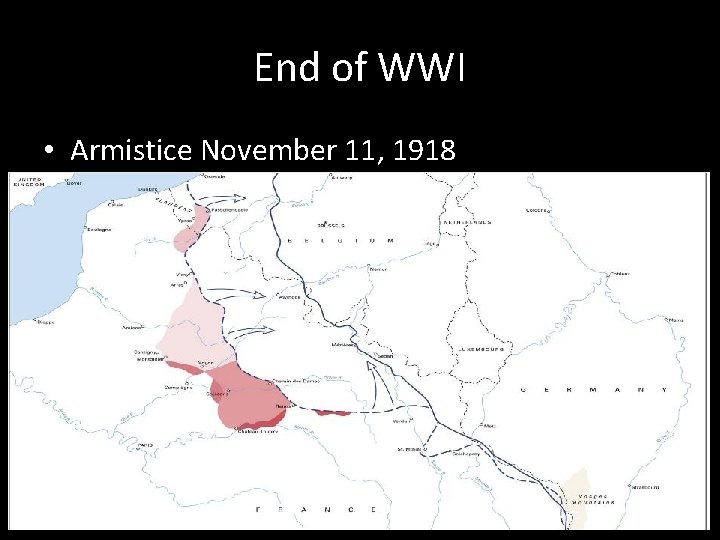
End of WWI • Armistice November 11, 1918
End of WWI • Troops never went into Germany • Peace came as a surprise
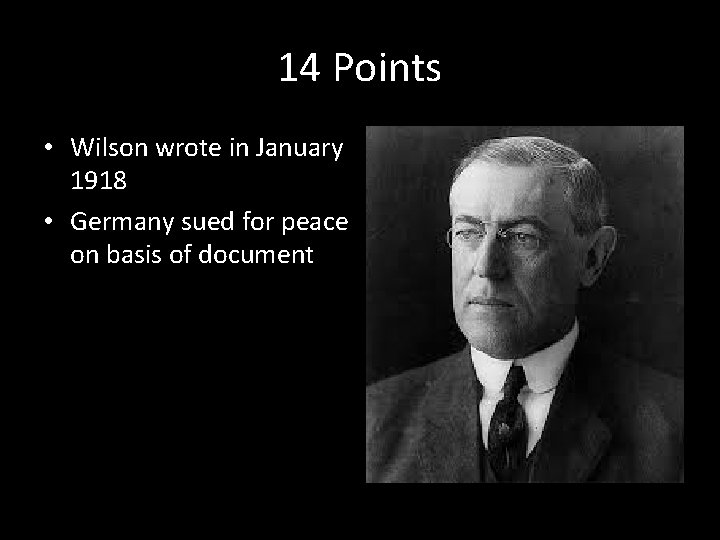
14 Points • Wilson wrote in January 1918 • Germany sued for peace on basis of document
14 Points • • • No secret treaties Freedom of the Seas Reduction in military for all Self-Determination League of Nations No reparations
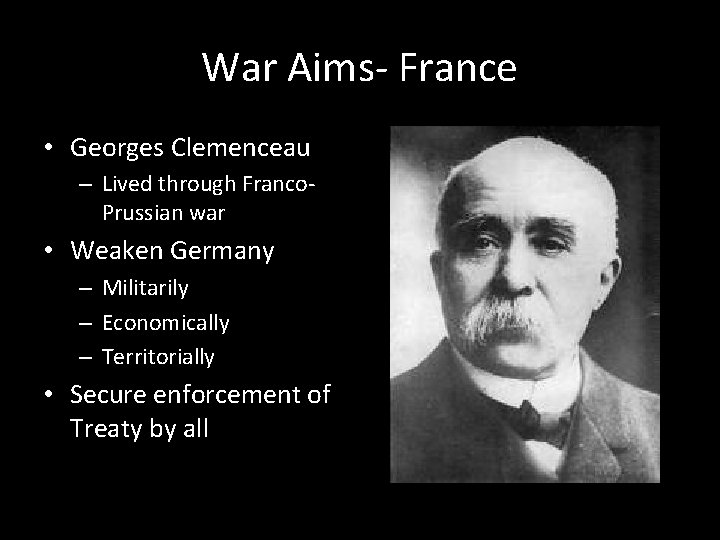
War Aims- France • Georges Clemenceau – Lived through Franco. Prussian war • Weaken Germany – Militarily – Economically – Territorially • Secure enforcement of Treaty by all
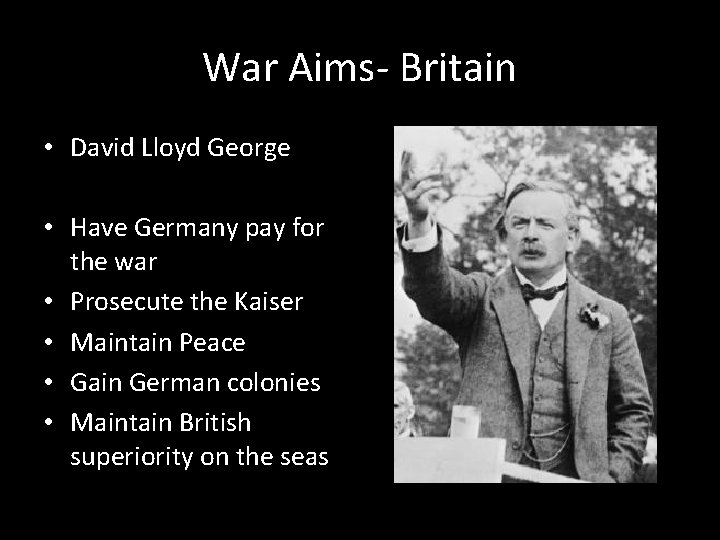
War Aims- Britain • David Lloyd George • Have Germany pay for the war • Prosecute the Kaiser • Maintain Peace • Gain German colonies • Maintain British superiority on the seas
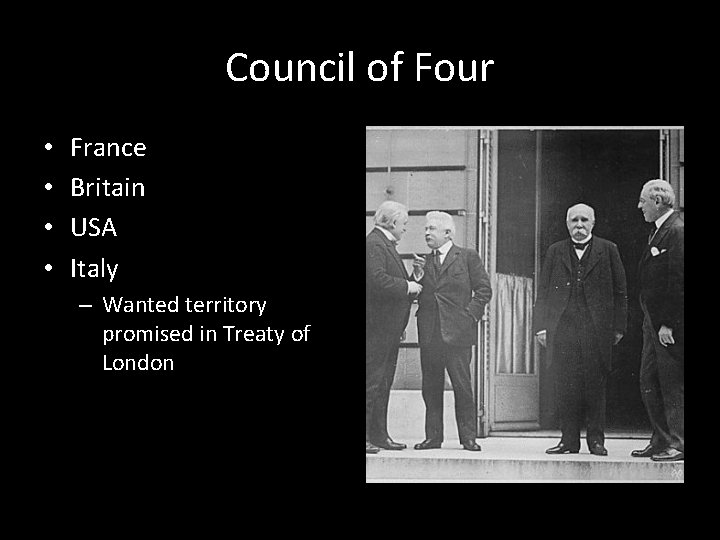
Council of Four • • France Britain USA Italy – Wanted territory promised in Treaty of London
Who Else? • Japan – Fifth power – Alliance with Britain • Britain Commonwealth Countries • Who wasn’t there? • Who was there but not listened to?
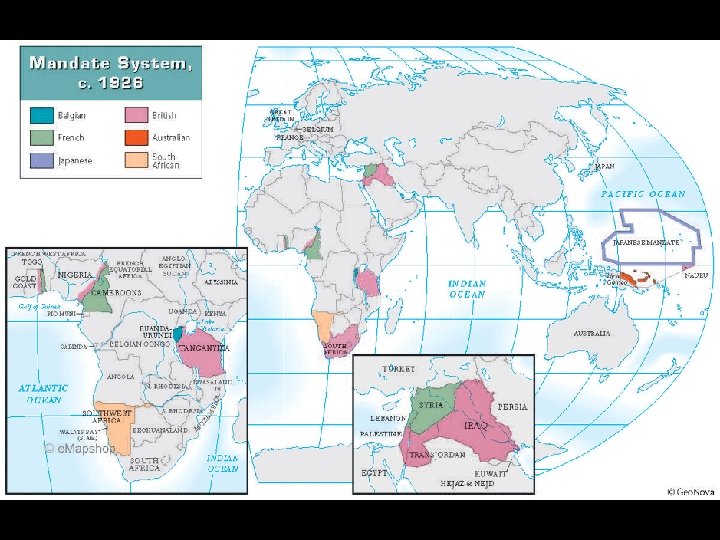
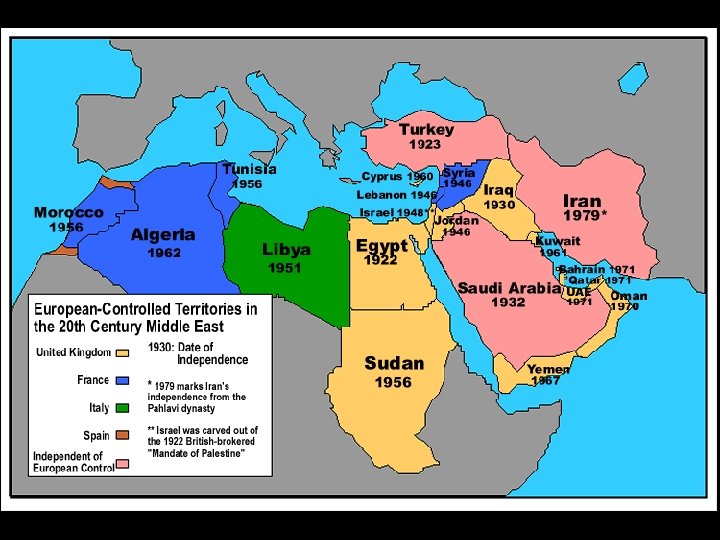
Other Countries and Peace Terms • States made from the old Austro-Hungarian empire or Ottoman Empire – Treated well by Allies – Harsh settlements were not imposed • Japan • Middle East – Sykes Picot Agreement 1916 • Mandate System
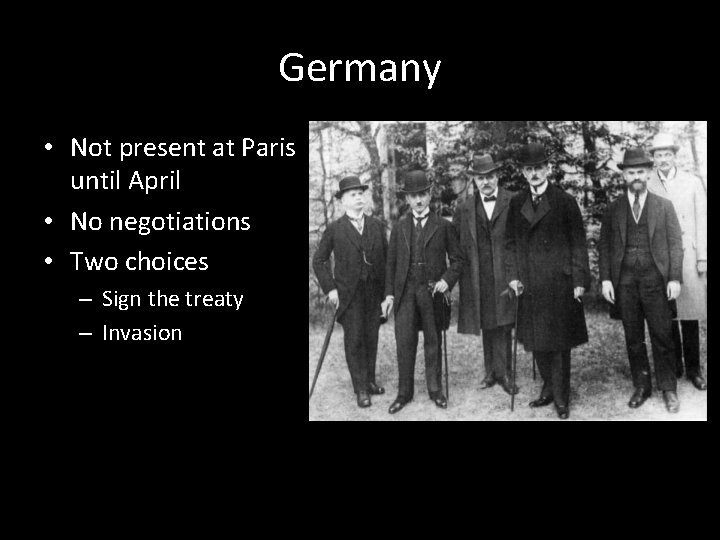
Germany • Not present at Paris until April • No negotiations • Two choices – Sign the treaty – Invasion
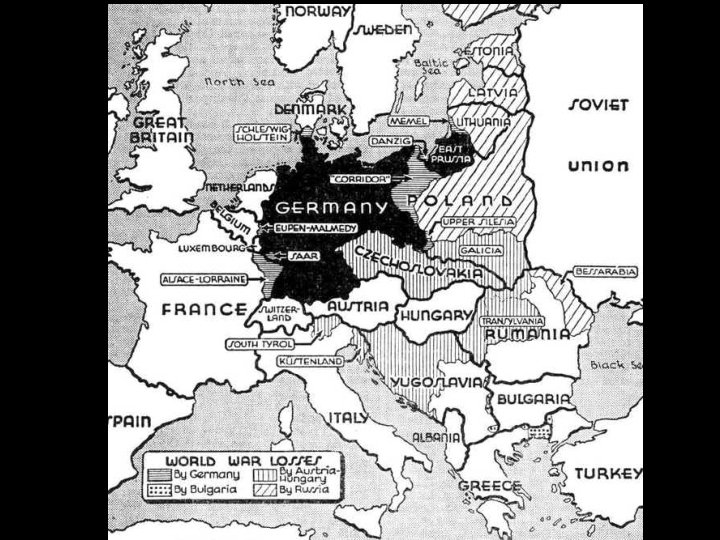
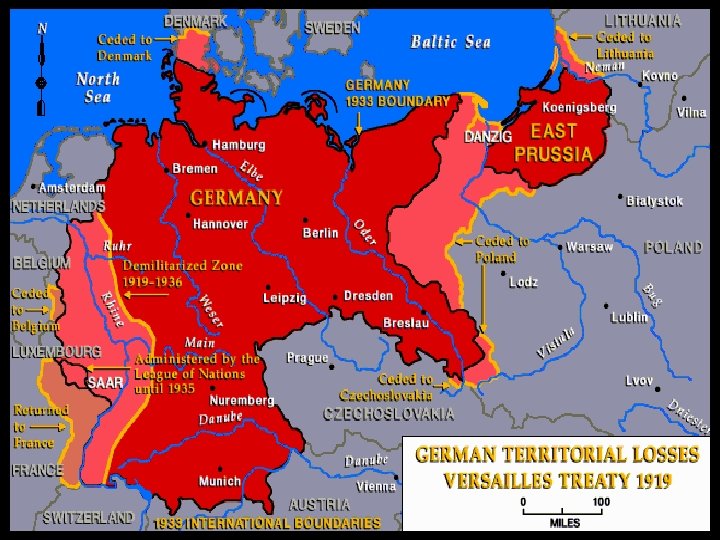
Treaty Stipulations • German military reduced – 100, 000 men and officers – No air force, submarines, or tanks • Compensate Allies for war • Demilitarize the Rhineland • Territorially reduced
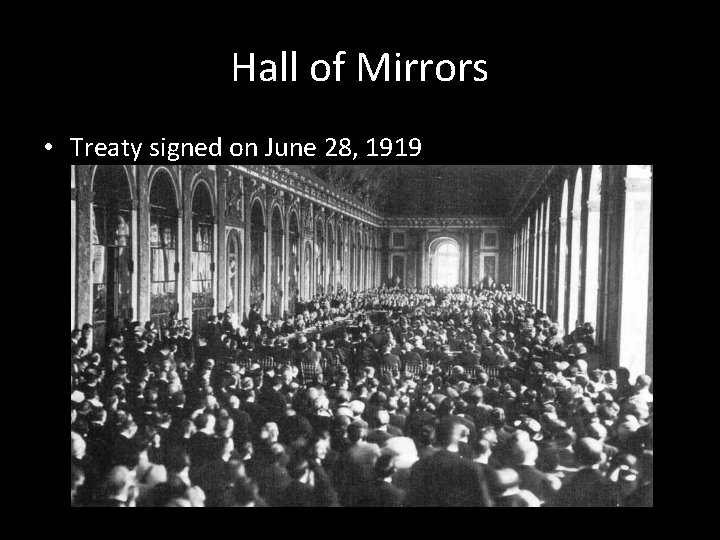
Hall of Mirrors • Treaty signed on June 28, 1919
After the Treaty • America doesn’t join the League of Nations • Countries were separated into victors and vanquished • Some liked the treaty, some felt it needed to be changed, and some felt slighted