Week 9 Challenges to Westphalian State System 2

- Slides: 18
Week 9 – Challenges to Westphalian State System 2
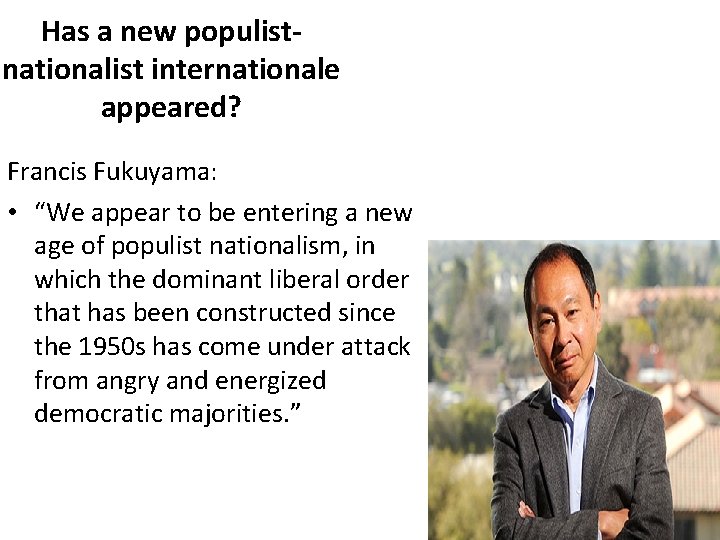
Has a new populistnationalist internationale appeared? Francis Fukuyama: • “We appear to be entering a new age of populist nationalism, in which the dominant liberal order that has been constructed since the 1950 s has come under attack from angry and energized democratic majorities. ”
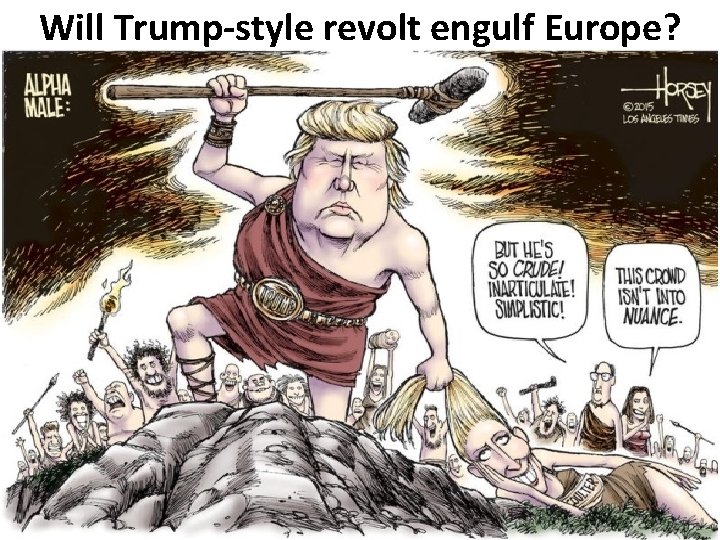
Will Trump-style revolt engulf Europe?
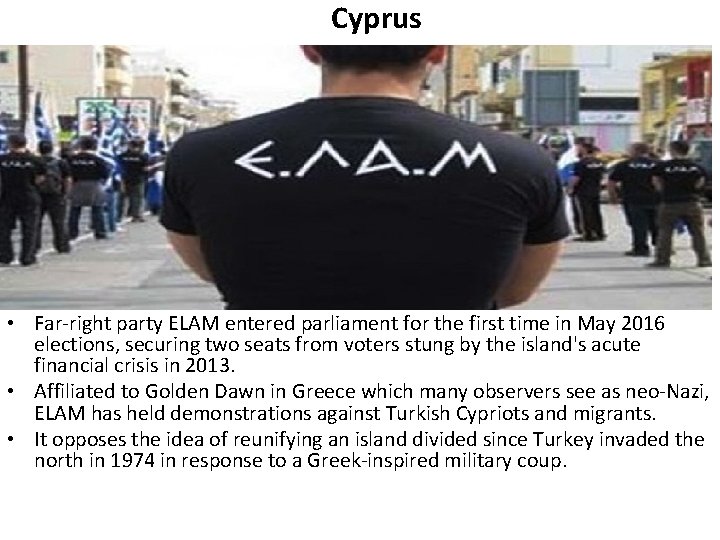
Cyprus • Far-right party ELAM entered parliament for the first time in May 2016 elections, securing two seats from voters stung by the island's acute financial crisis in 2013. • Affiliated to Golden Dawn in Greece which many observers see as neo-Nazi, ELAM has held demonstrations against Turkish Cypriots and migrants. • It opposes the idea of reunifying an island divided since Turkey invaded the north in 1974 in response to a Greek-inspired military coup.
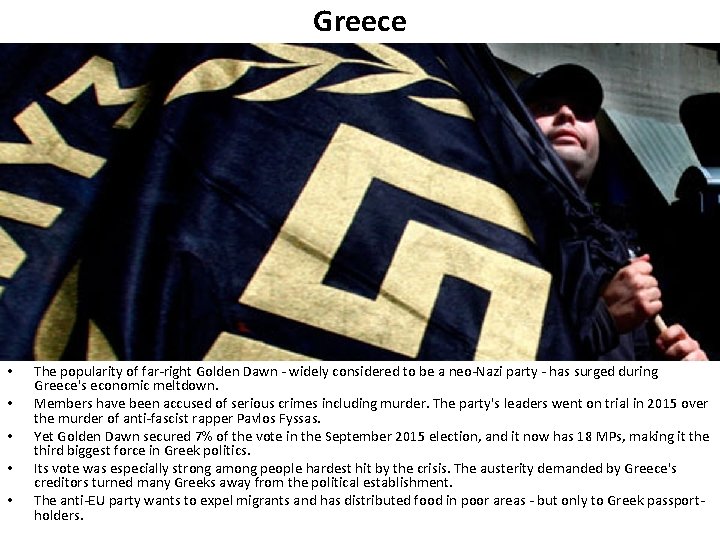
Greece • • • The popularity of far-right Golden Dawn - widely considered to be a neo-Nazi party - has surged during Greece's economic meltdown. Members have been accused of serious crimes including murder. The party's leaders went on trial in 2015 over the murder of anti-fascist rapper Pavlos Fyssas. Yet Golden Dawn secured 7% of the vote in the September 2015 election, and it now has 18 MPs, making it the third biggest force in Greek politics. Its vote was especially strong among people hardest hit by the crisis. The austerity demanded by Greece's creditors turned many Greeks away from the political establishment. The anti-EU party wants to expel migrants and has distributed food in poor areas - but only to Greek passportholders.
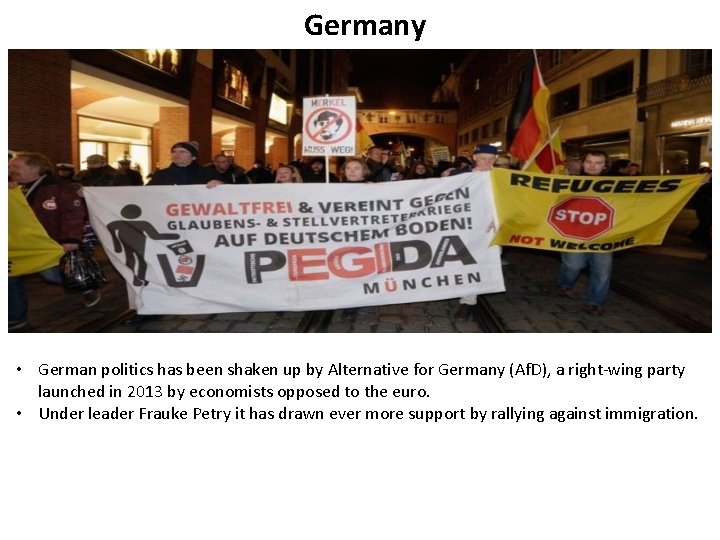
Germany • German politics has been shaken up by Alternative for Germany (Af. D), a right-wing party launched in 2013 by economists opposed to the euro. • Under leader Frauke Petry it has drawn ever more support by rallying against immigration.
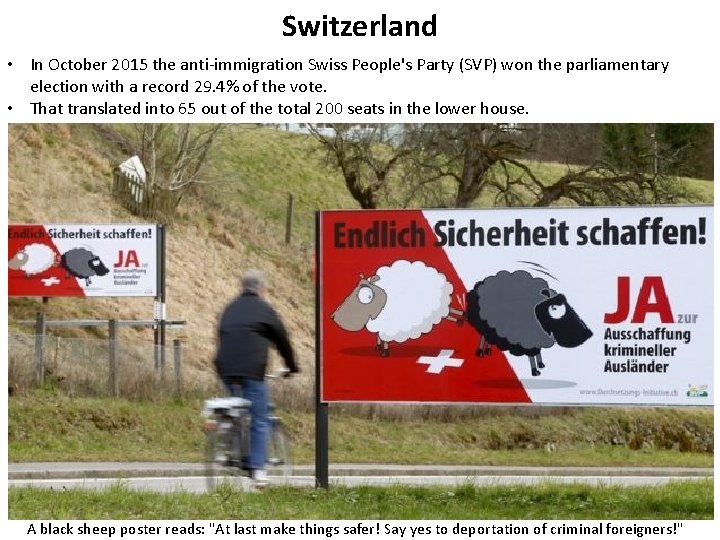
Switzerland • In October 2015 the anti-immigration Swiss People's Party (SVP) won the parliamentary election with a record 29. 4% of the vote. • That translated into 65 out of the total 200 seats in the lower house. A black sheep poster reads: "At last make things safer! Say yes to deportation of criminal foreigners!"
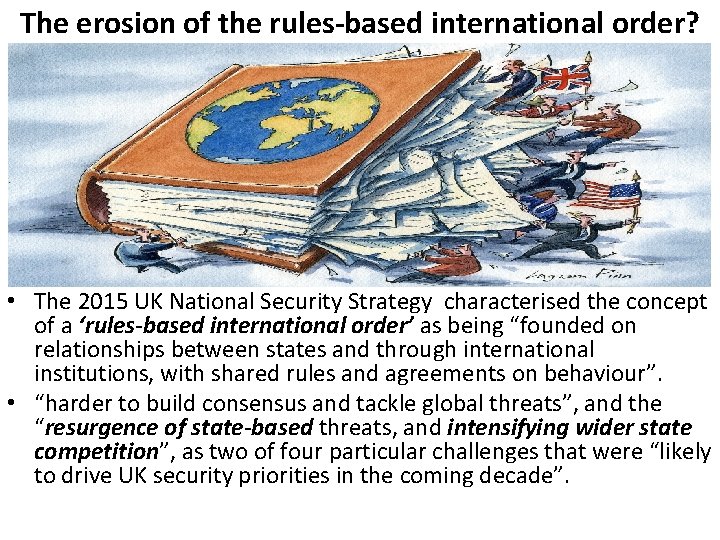
The erosion of the rules-based international order? • The 2015 UK National Security Strategy characterised the concept of a ‘rules-based international order’ as being “founded on relationships between states and through international institutions, with shared rules and agreements on behaviour”. • “harder to build consensus and tackle global threats”, and the “resurgence of state-based threats, and intensifying wider state competition”, as two of four particular challenges that were “likely to drive UK security priorities in the coming decade”.
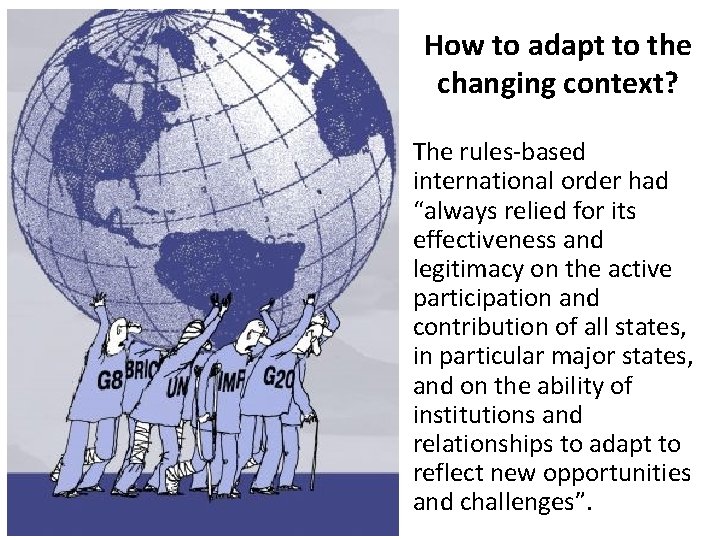
How to adapt to the changing context? The rules-based international order had “always relied for its effectiveness and legitimacy on the active participation and contribution of all states, in particular major states, and on the ability of institutions and relationships to adapt to reflect new opportunities and challenges”.
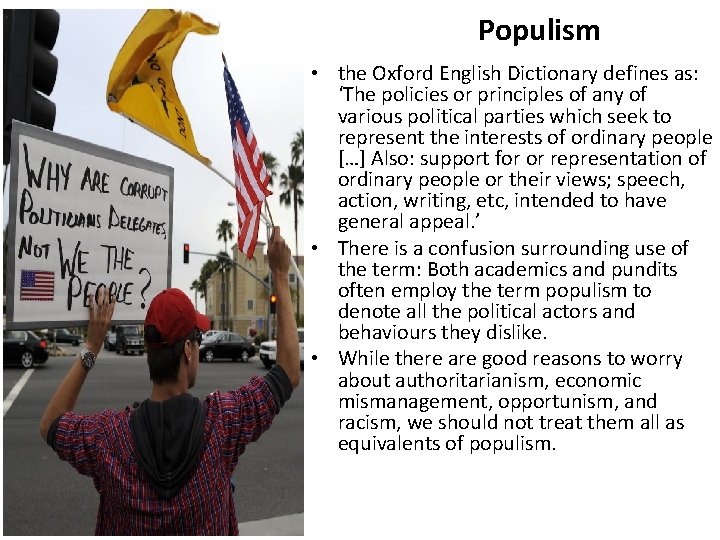
Populism • the Oxford English Dictionary defines as: ‘The policies or principles of any of various political parties which seek to represent the interests of ordinary people […] Also: support for or representation of ordinary people or their views; speech, action, writing, etc, intended to have general appeal. ’ • There is a confusion surrounding use of the term: Both academics and pundits often employ the term populism to denote all the political actors and behaviours they dislike. • While there are good reasons to worry about authoritarianism, economic mismanagement, opportunism, and racism, we should not treat them all as equivalents of populism.
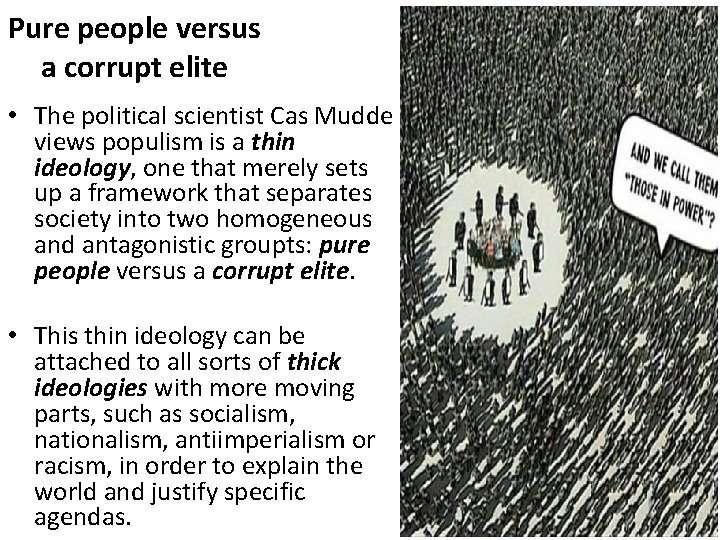
Pure people versus a corrupt elite • The political scientist Cas Mudde views populism is a thin ideology, one that merely sets up a framework that separates society into two homogeneous and antagonistic groupts: pure people versus a corrupt elite. • This thin ideology can be attached to all sorts of thick ideologies with more moving parts, such as socialism, nationalism, antiimperialism or racism, in order to explain the world and justify specific agendas.
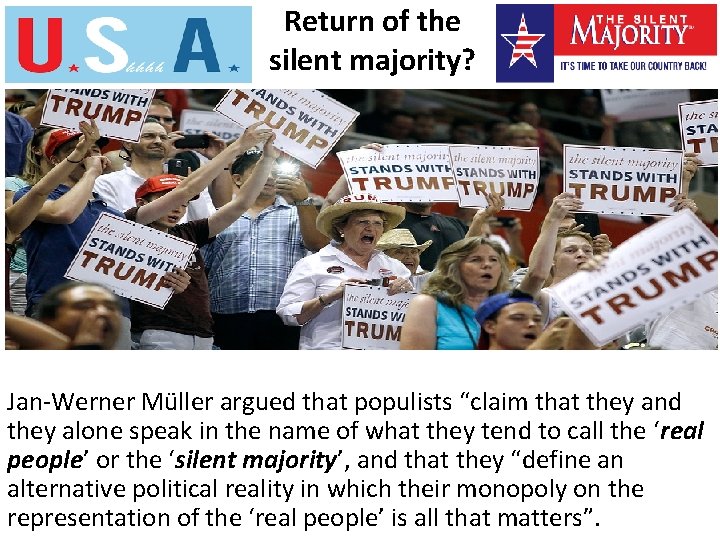
Return of the silent majority? Jan-Werner Müller argued that populists “claim that they and they alone speak in the name of what they tend to call the ‘real people’ or the ‘silent majority’, and that they “define an alternative political reality in which their monopoly on the representation of the ‘real people’ is all that matters”.
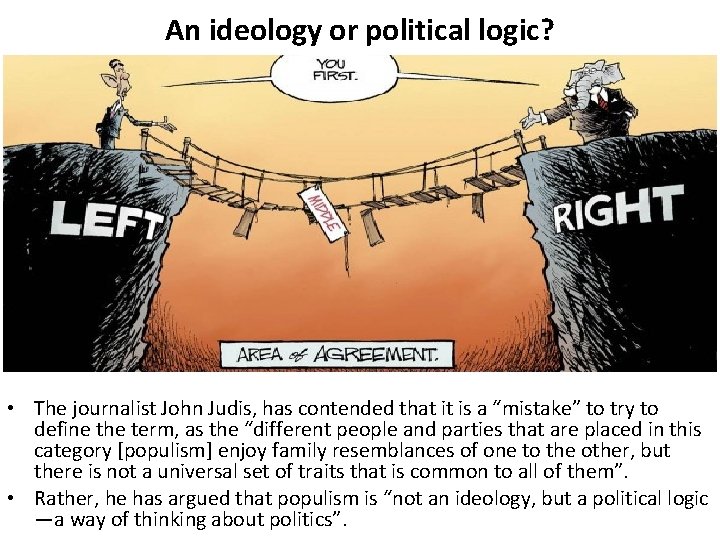
An ideology or political logic? • The journalist John Judis, has contended that it is a “mistake” to try to define the term, as the “different people and parties that are placed in this category [populism] enjoy family resemblances of one to the other, but there is not a universal set of traits that is common to all of them”. • Rather, he has argued that populism is “not an ideology, but a political logic —a way of thinking about politics”.
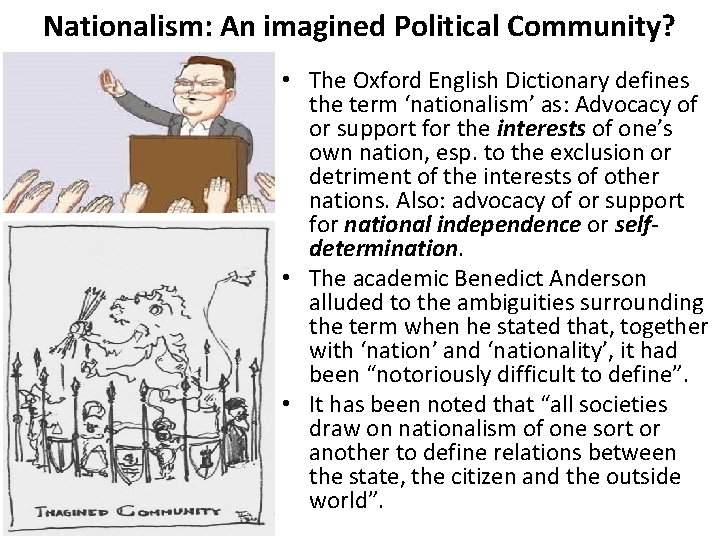
Nationalism: An imagined Political Community? • The Oxford English Dictionary defines the term ‘nationalism’ as: Advocacy of or support for the interests of one’s own nation, esp. to the exclusion or detriment of the interests of other nations. Also: advocacy of or support for national independence or selfdetermination. • The academic Benedict Anderson alluded to the ambiguities surrounding the term when he stated that, together with ‘nation’ and ‘nationality’, it had been “notoriously difficult to define”. • It has been noted that “all societies draw on nationalism of one sort or another to define relations between the state, the citizen and the outside world”.
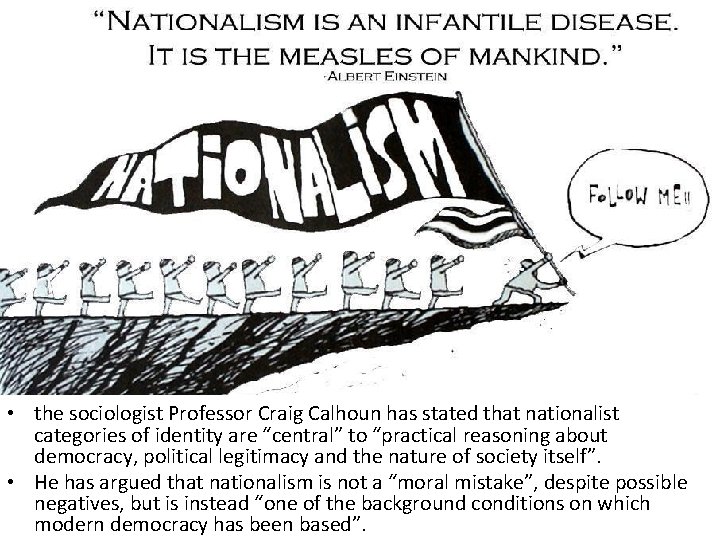
• the sociologist Professor Craig Calhoun has stated that nationalist categories of identity are “central” to “practical reasoning about democracy, political legitimacy and the nature of society itself”. • He has argued that nationalism is not a “moral mistake”, despite possible negatives, but is instead “one of the background conditions on which modern democracy has been based”.
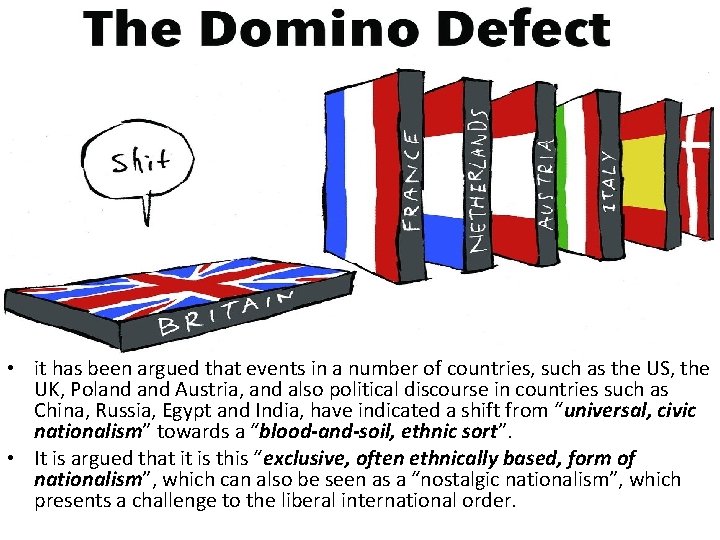
• it has been argued that events in a number of countries, such as the US, the UK, Poland Austria, and also political discourse in countries such as China, Russia, Egypt and India, have indicated a shift from “universal, civic nationalism” towards a “blood-and-soil, ethnic sort”. • It is argued that it is this “exclusive, often ethnically based, form of nationalism”, which can also be seen as a “nostalgic nationalism”, which presents a challenge to the liberal international order.
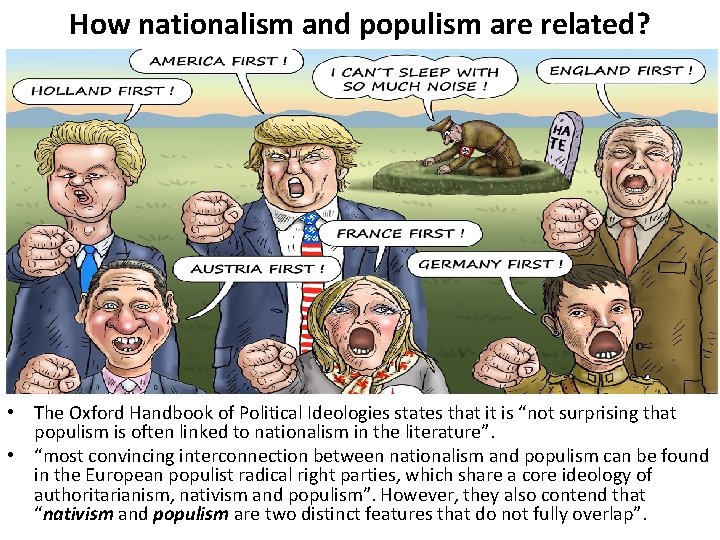
How nationalism and populism are related? • The Oxford Handbook of Political Ideologies states that it is “not surprising that populism is often linked to nationalism in the literature”. • “most convincing interconnection between nationalism and populism can be found in the European populist radical right parties, which share a core ideology of authoritarianism, nativism and populism”. However, they also contend that “nativism and populism are two distinct features that do not fully overlap”.
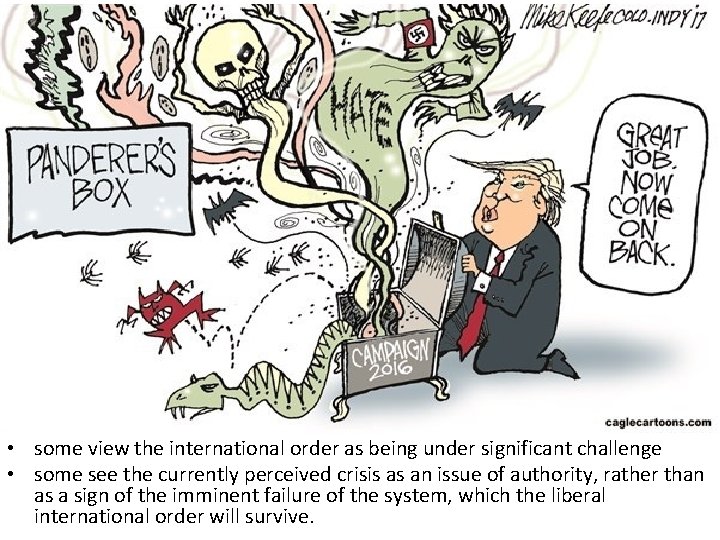
• some view the international order as being under significant challenge • some see the currently perceived crisis as an issue of authority, rather than as a sign of the imminent failure of the system, which the liberal international order will survive.