War Photographer In his darkroom he is finally
- Slides: 14
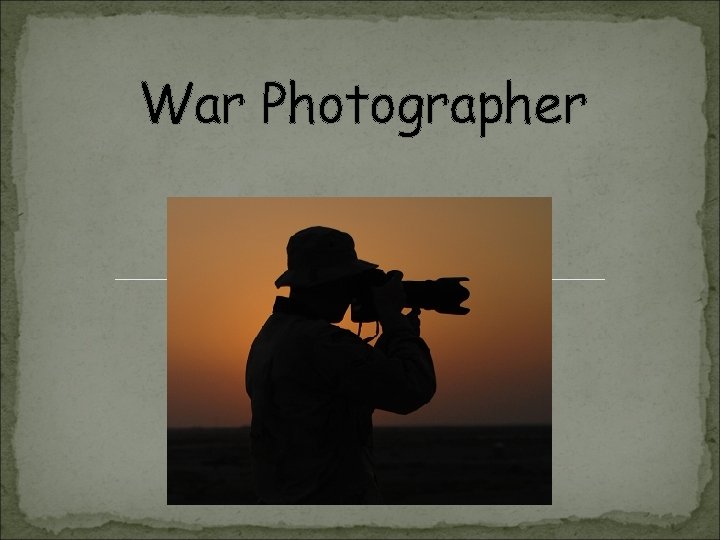
War Photographer
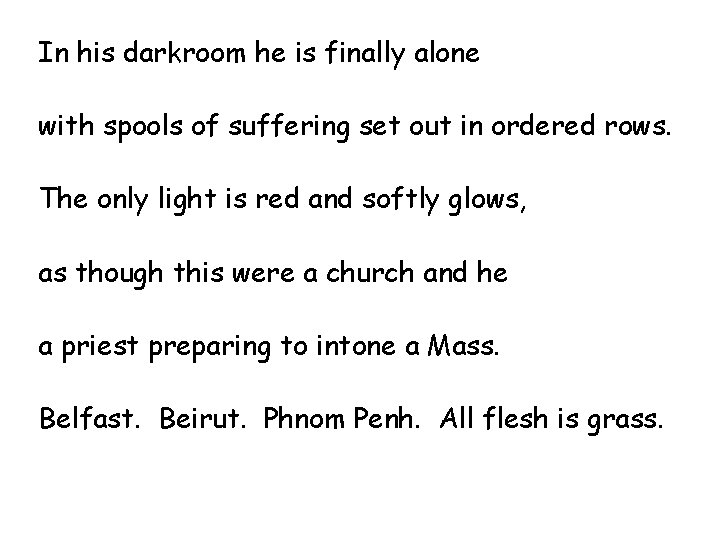
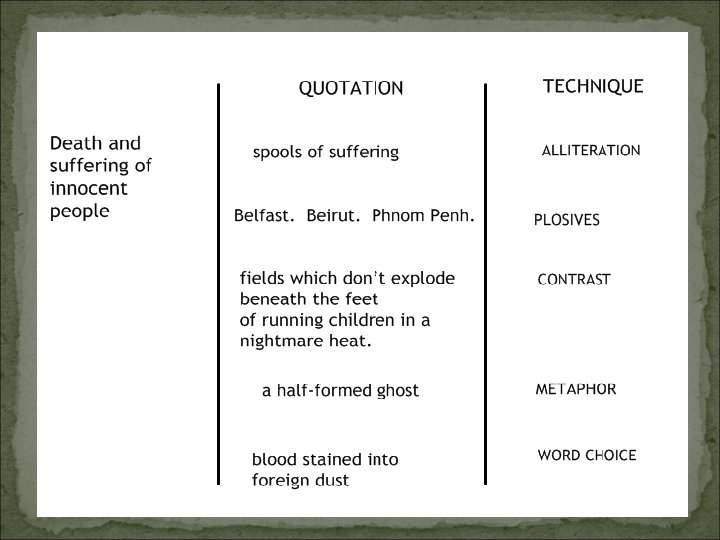
In his darkroom he is finally alone with spools of suffering set out in ordered rows. The only light is red and softly glows, as though this were a church and he a priest preparing to intone a Mass. Belfast. Beirut. Phnom Penh. All flesh is grass.
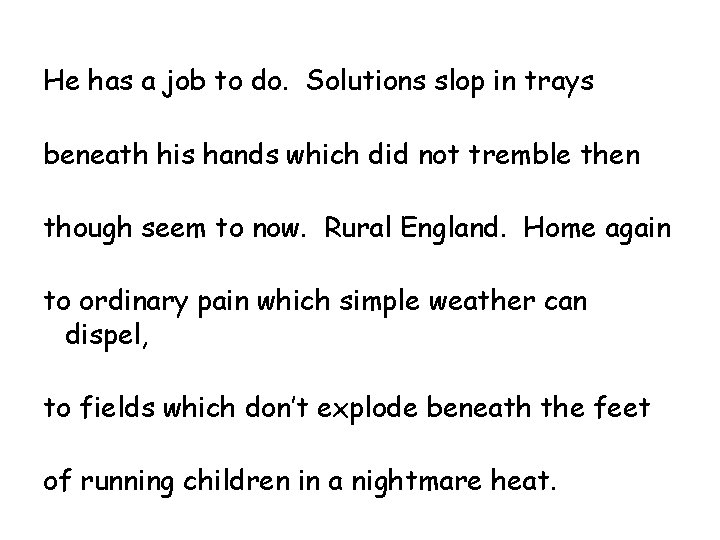
He has a job to do. Solutions slop in trays beneath his hands which did not tremble then though seem to now. Rural England. Home again to ordinary pain which simple weather can dispel, to fields which don’t explode beneath the feet of running children in a nightmare heat.
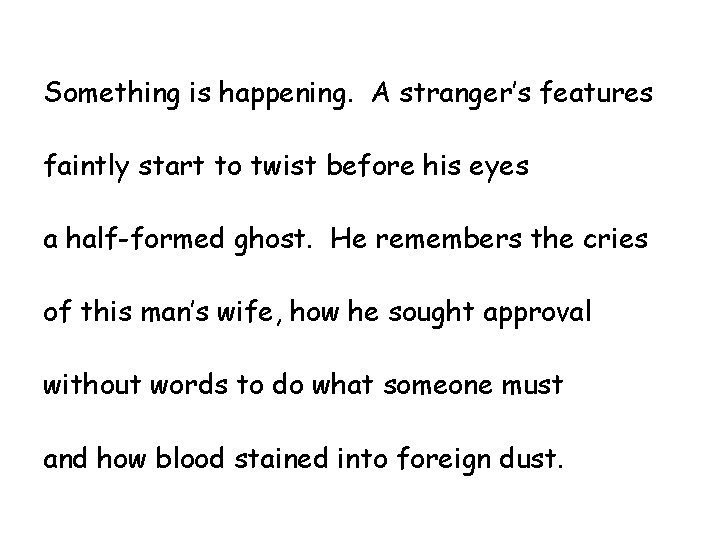
Something is happening. A stranger’s features faintly start to twist before his eyes a half-formed ghost. He remembers the cries of this man’s wife, how he sought approval without words to do what someone must and how blood stained into foreign dust.
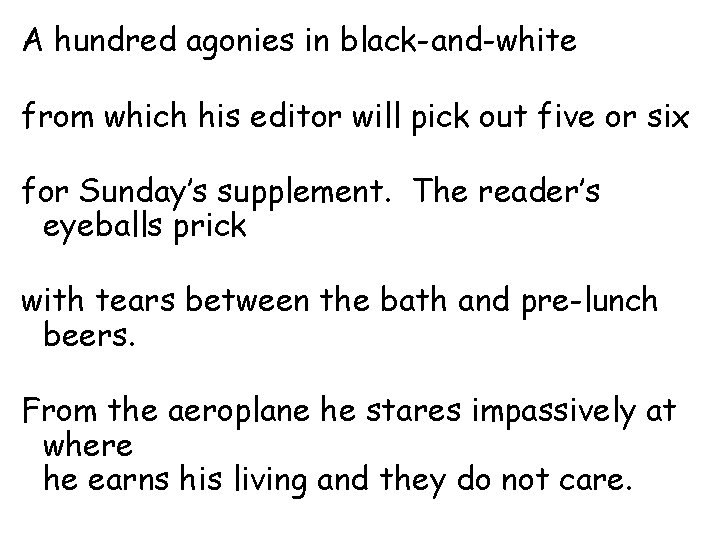
A hundred agonies in black-and-white from which his editor will pick out five or six for Sunday’s supplement. The reader’s eyeballs prick with tears between the bath and pre-lunch beers. From the aeroplane he stares impassively at where he earns his living and they do not care.
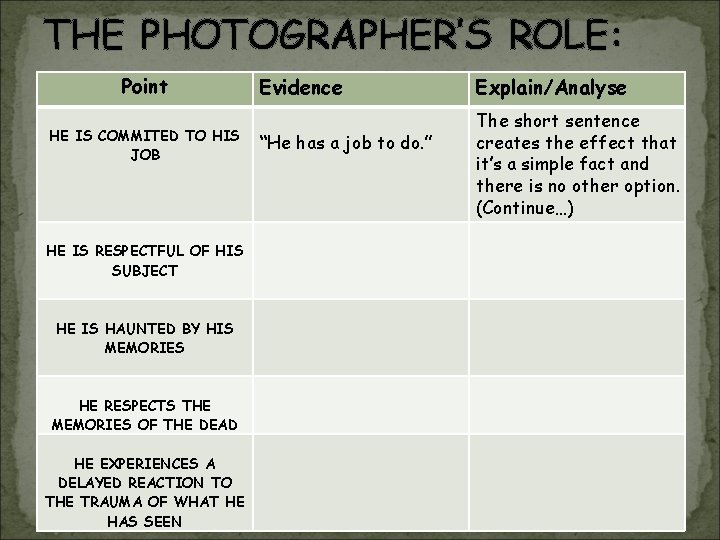
THE PHOTOGRAPHER’S ROLE: Point HE IS COMMITED TO HIS JOB HE IS RESPECTFUL OF HIS SUBJECT HE IS HAUNTED BY HIS MEMORIES HE RESPECTS THE MEMORIES OF THE DEAD HE EXPERIENCES A DELAYED REACTION TO THE TRAUMA OF WHAT HE HAS SEEN Evidence “He has a job to do. ” Explain/Analyse The short sentence creates the effect that it’s a simple fact and there is no other option. (Continue…)
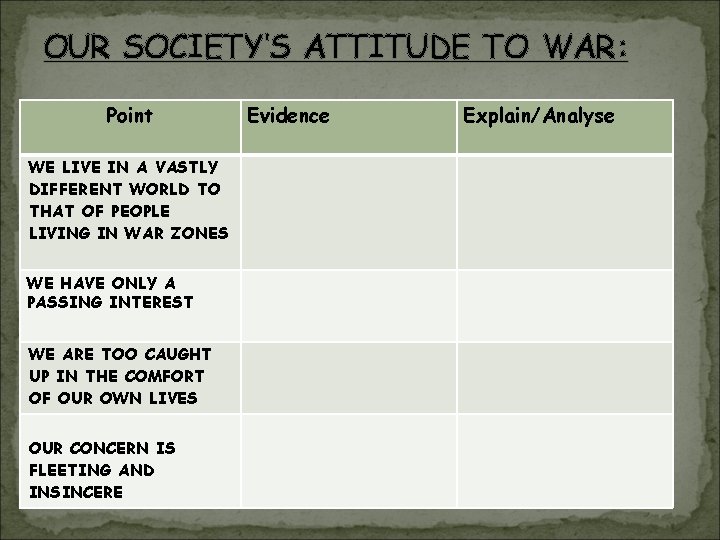
OUR SOCIETY’S ATTITUDE TO WAR: Point WE LIVE IN A VASTLY DIFFERENT WORLD TO THAT OF PEOPLE LIVING IN WAR ZONES WE HAVE ONLY A PASSING INTEREST WE ARE TOO CAUGHT UP IN THE COMFORT OF OUR OWN LIVES OUR CONCERN IS FLEETING AND INSINCERE Evidence Explain/Analyse
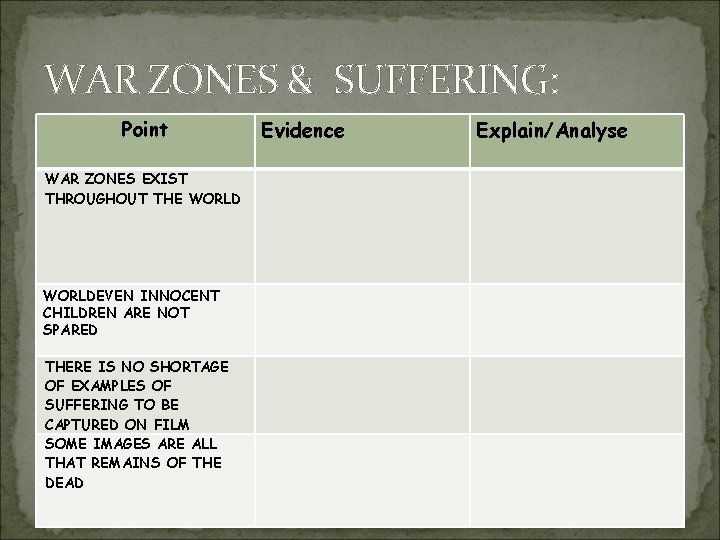
WAR ZONES & SUFFERING: Point WAR ZONES EXIST THROUGHOUT THE WORLDEVEN INNOCENT CHILDREN ARE NOT SPARED THERE IS NO SHORTAGE OF EXAMPLES OF SUFFERING TO BE CAPTURED ON FILM SOME IMAGES ARE ALL THAT REMAINS OF THE DEAD Evidence Explain/Analyse
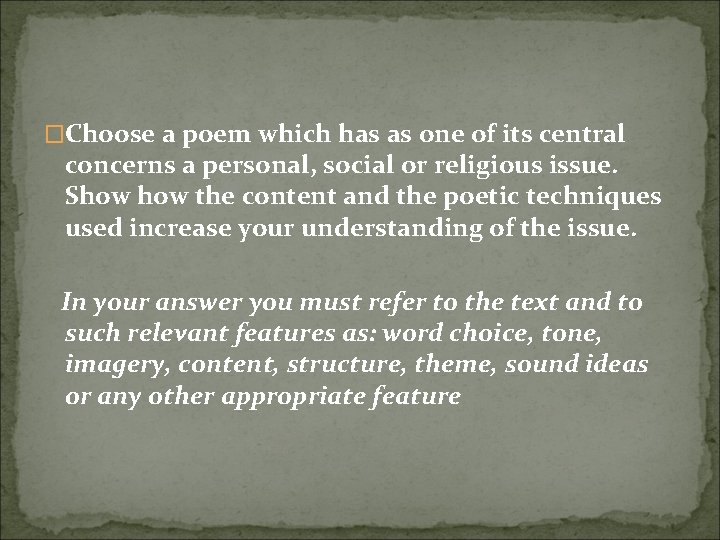
�Choose a poem which has as one of its central concerns a personal, social or religious issue. Show the content and the poetic techniques used increase your understanding of the issue. In your answer you must refer to the text and to such relevant features as: word choice, tone, imagery, content, structure, theme, sound ideas or any other appropriate feature
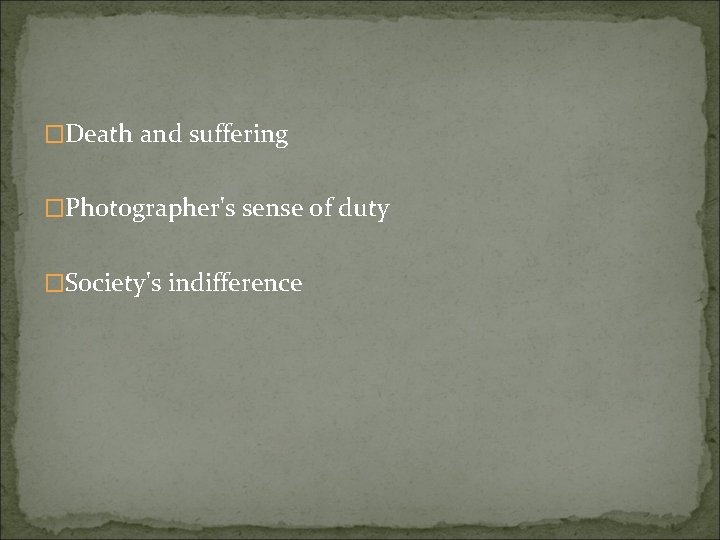
�Death and suffering �Photographer's sense of duty �Society's indifference
�Don’t forget to use the steps you were taught in class: � POINT � EVIDENCE � EXPLAIN � LINK TO QUESTION
�War Photographer is a powerful poem by Carol Ann Duffy that has as one of its central concerns the social issue of war. Through the use of her poetic techniques such as imagery, word choice and theme, Duffy increases understanding of the death and suffering caused by war, the photographer's sense of duty to document war and society's indifference to these terrible events.
Introduction �Introduction – Title Author (poet) Genre Link to question �Refer to what you are going to do in your essay – link to the second sentence in the task and outline the techniques which you will discuss. (avoid using ‘In this essay I will…’ or ‘I am going to…’) � Give a brief summary of the poem. What is it about? What happens? Where is it set?