Visual Literacy Propaganda Art WWII Victory Gardens Alana

- Slides: 14
Visual Literacy + Propaganda Art: WWII Victory Gardens Alana Bond and Seana Mekari 11 IB Year 1
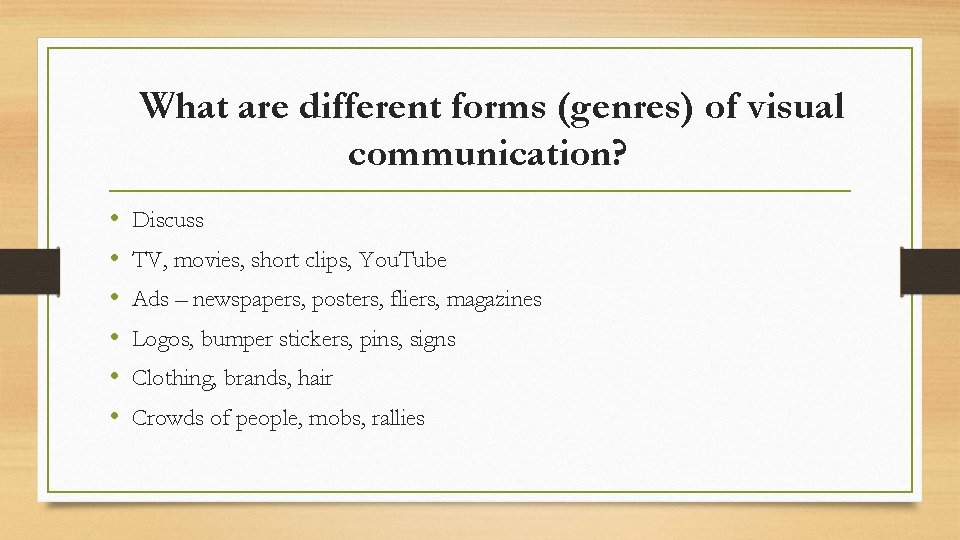
What are different forms (genres) of visual communication? • • • Discuss TV, movies, short clips, You. Tube Ads – newspapers, posters, fliers, magazines Logos, bumper stickers, pins, signs Clothing, brands, hair Crowds of people, mobs, rallies
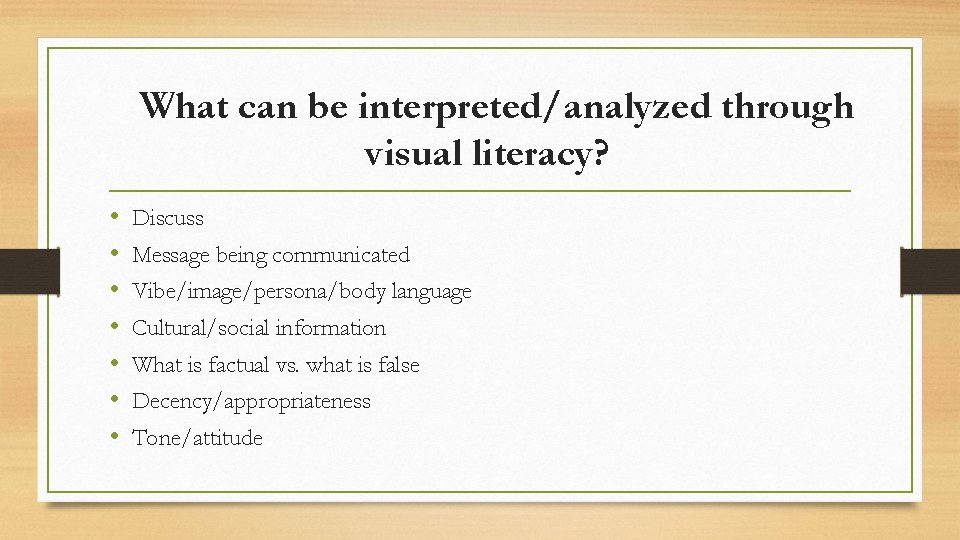
What can be interpreted/analyzed through visual literacy? • • Discuss Message being communicated Vibe/image/persona/body language Cultural/social information What is factual vs. what is false Decency/appropriateness Tone/attitude
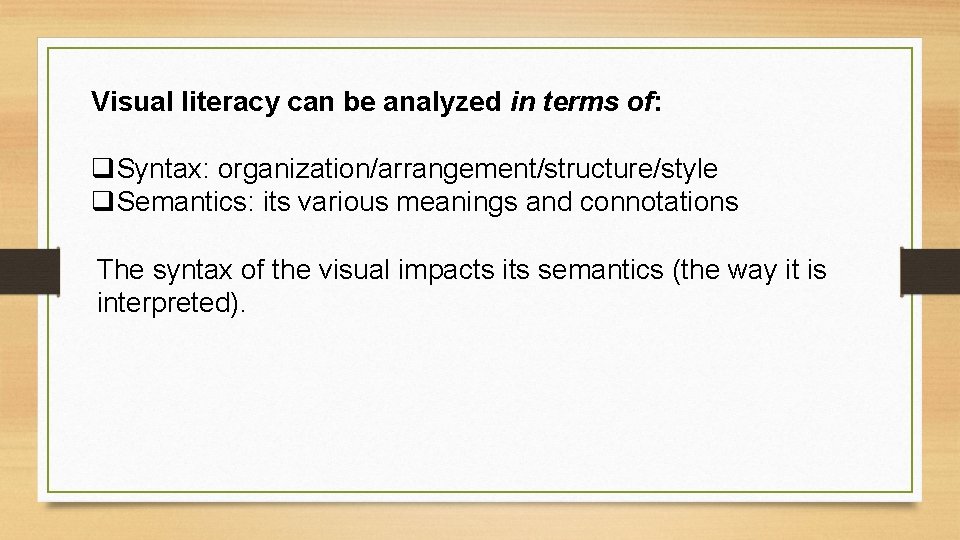
Visual literacy can be analyzed in terms of: q. Syntax: organization/arrangement/structure/style q. Semantics: its various meanings and connotations The syntax of the visual impacts its semantics (the way it is interpreted).
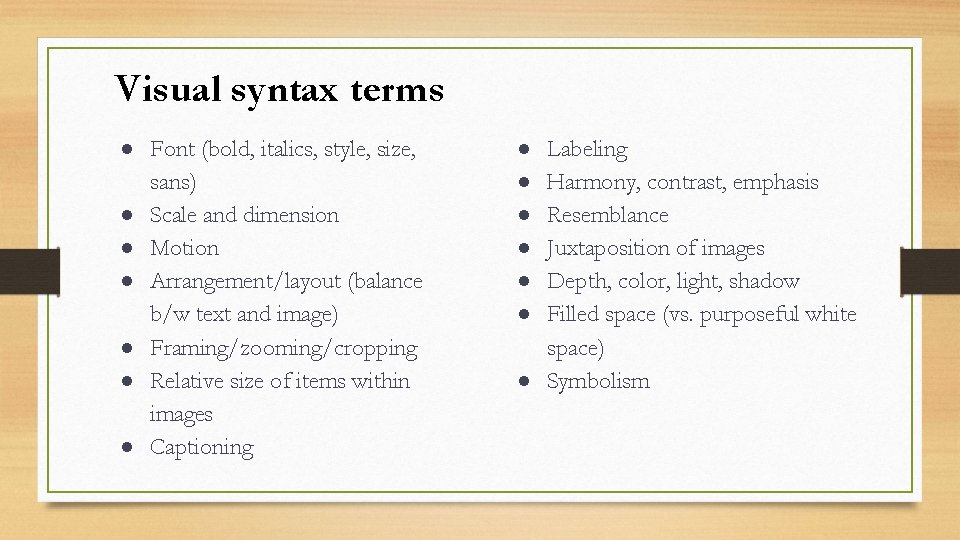
Visual syntax terms ● Font (bold, italics, style, size, sans) ● Scale and dimension ● Motion ● Arrangement/layout (balance b/w text and image) ● Framing/zooming/cropping ● Relative size of items within images ● Captioning ● ● ● Labeling Harmony, contrast, emphasis Resemblance Juxtaposition of images Depth, color, light, shadow Filled space (vs. purposeful white space) ● Symbolism
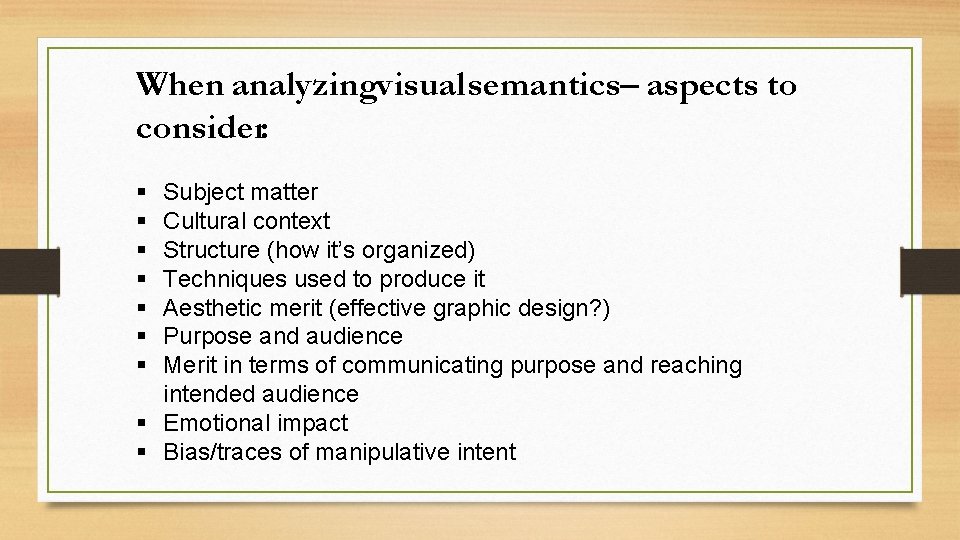
When analyzingvisual semantics– aspects to consider: § § § § Subject matter Cultural context Structure (how it’s organized) Techniques used to produce it Aesthetic merit (effective graphic design? ) Purpose and audience Merit in terms of communicating purpose and reaching intended audience § Emotional impact § Bias/traces of manipulative intent
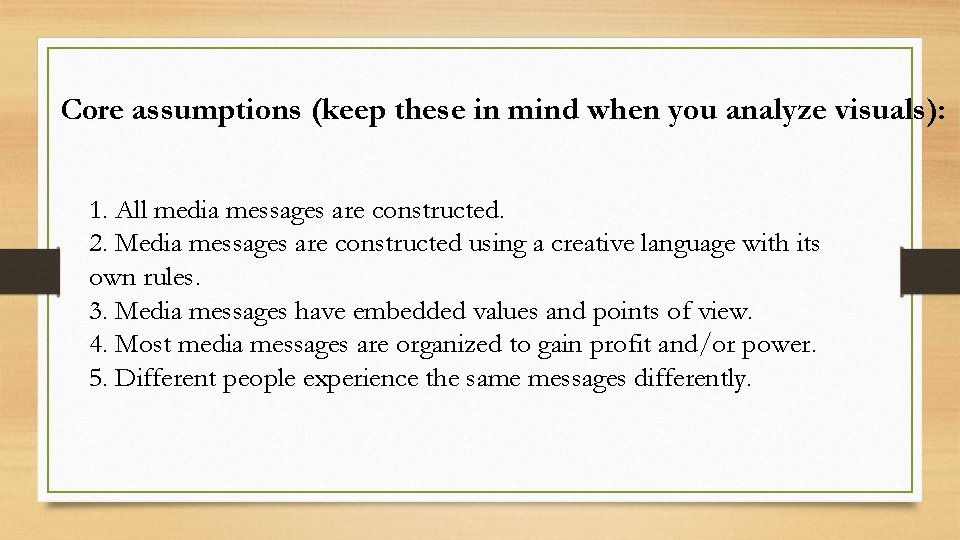
Core assumptions (keep these in mind when you analyze visuals): 1. All media messages are constructed. 2. Media messages are constructed using a creative language with its own rules. 3. Media messages have embedded values and points of view. 4. Most media messages are organized to gain profit and/or power. 5. Different people experience the same messages differently.
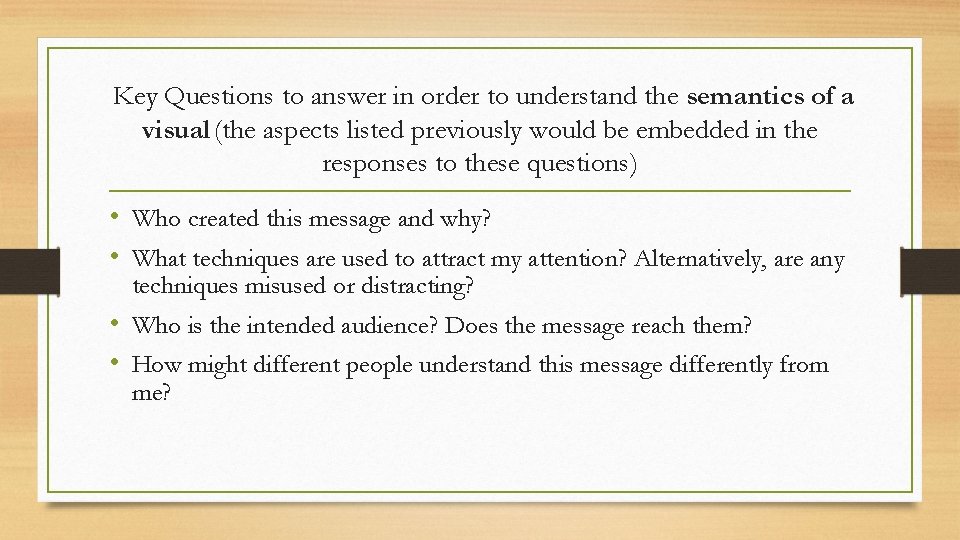
Key Questions to answer in order to understand the semantics of a visual (the aspects listed previously would be embedded in the responses to these questions) • Who created this message and why? • What techniques are used to attract my attention? Alternatively, are any techniques misused or distracting? • Who is the intended audience? Does the message reach them? • How might different people understand this message differently from me?
PROPAGANDA NOUN • 1 Information, especially of a biased or misleading nature, used to promote a political cause or point of view. (Oxford English Dictionary)
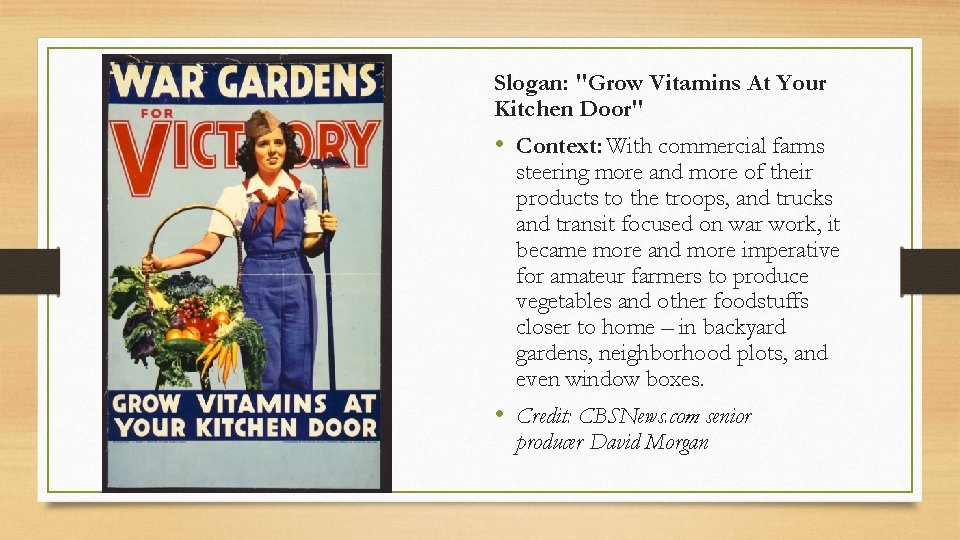
Slogan: "Grow Vitamins At Your Kitchen Door" • Context: With commercial farms steering more and more of their products to the troops, and trucks and transit focused on war work, it became more and more imperative for amateur farmers to produce vegetables and other foodstuffs closer to home – in backyard gardens, neighborhood plots, and even window boxes. • Credit: CBSNews. com senior producer David Morgan
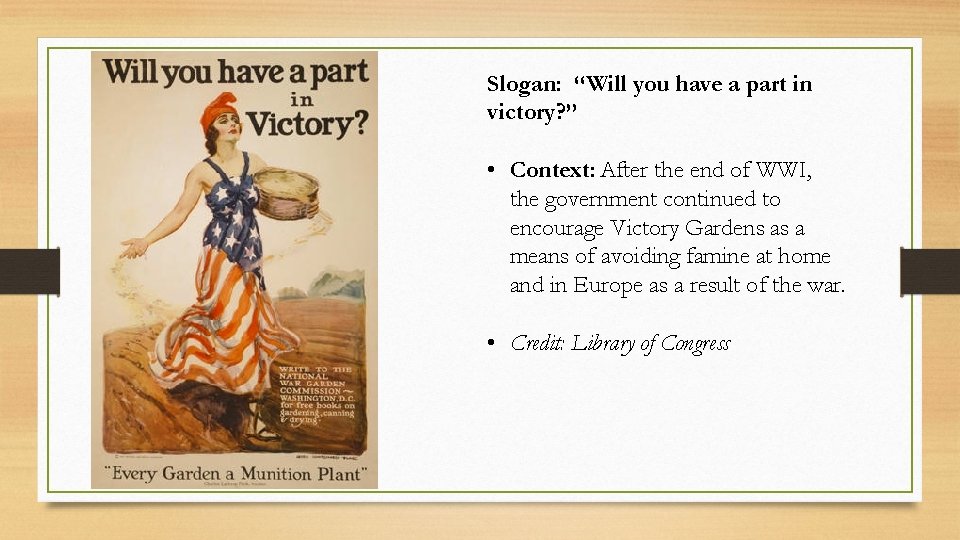
Slogan: “Will you have a part in victory? ” • Context: After the end of WWI, the government continued to encourage Victory Gardens as a means of avoiding famine at home and in Europe as a result of the war. • Credit: Library of Congress
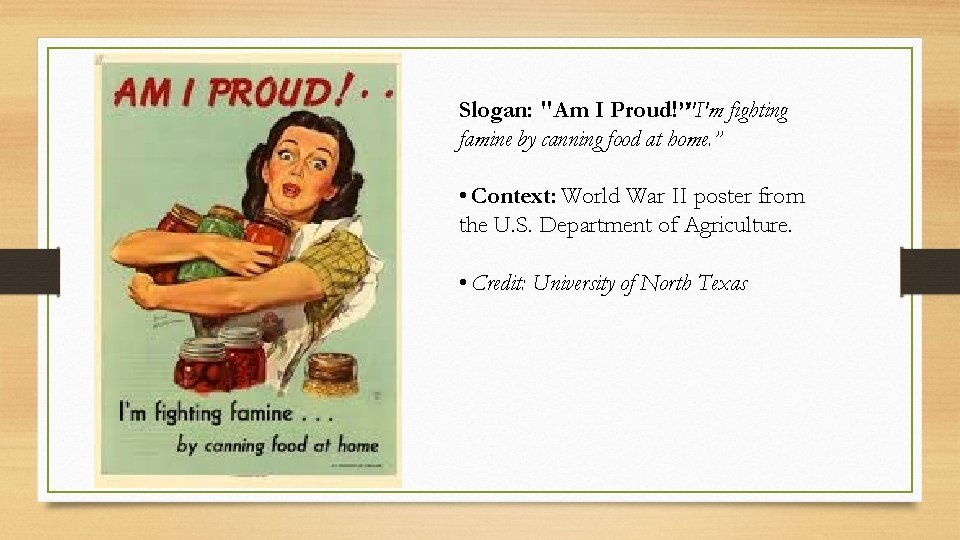
Slogan: "Am I Proud!”"I'm fighting famine by canning food at home. ” • Context: World War II poster from the U. S. Department of Agriculture. • Credit: University of North Texas
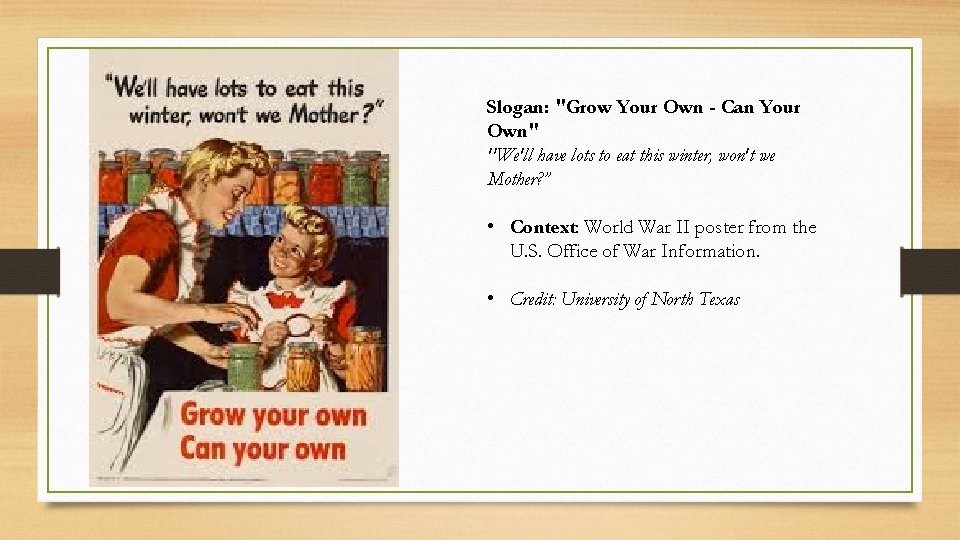
Slogan: "Grow Your Own - Can Your Own" "We'll have lots to eat this winter, won't we Mother? ” • Context: World War II poster from the U. S. Office of War Information. • Credit: University of North Texas
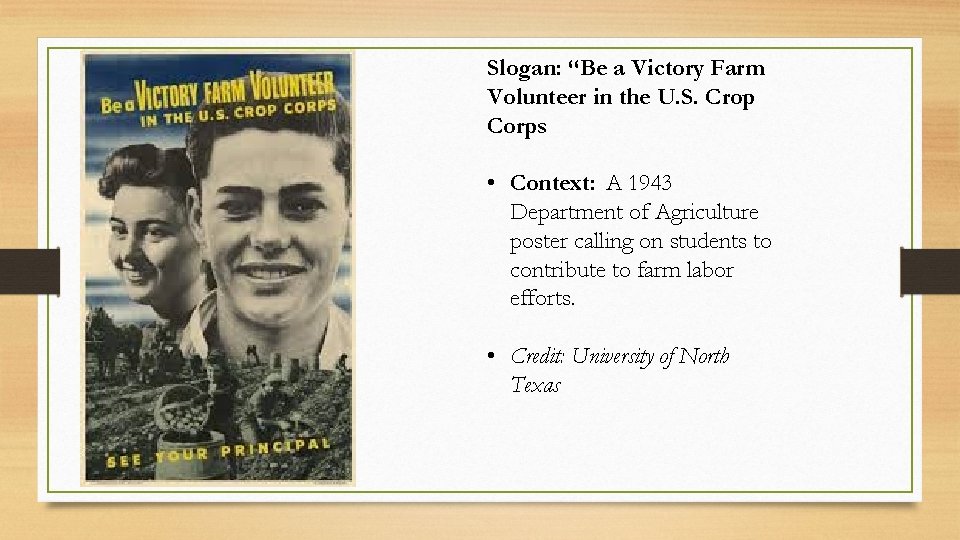
Slogan: “Be a Victory Farm Volunteer in the U. S. Crop Corps • Context: A 1943 Department of Agriculture poster calling on students to contribute to farm labor efforts. • Credit: University of North Texas