Visual Cocktail Party Phenomenon Amanda Caddell Angie French


- Slides: 13
Visual Cocktail Party Phenomenon Amanda Caddell Angie French Kevin Utt Julie Witherup
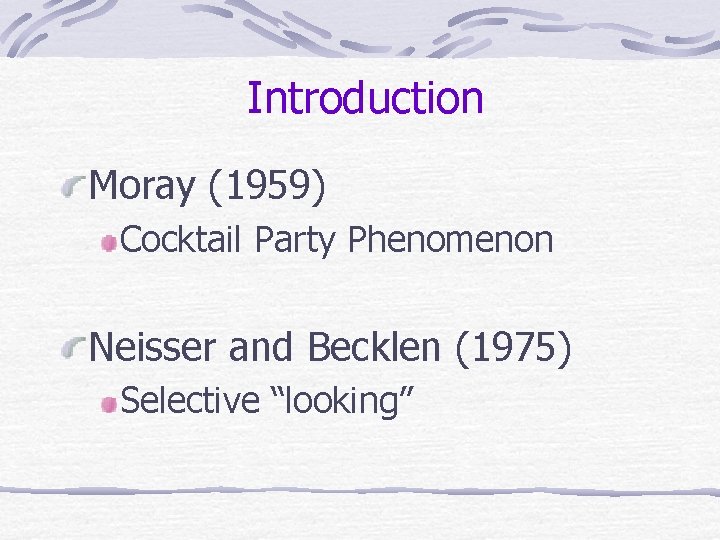
Introduction Moray (1959) Cocktail Party Phenomenon Neisser and Becklen (1975) Selective “looking”
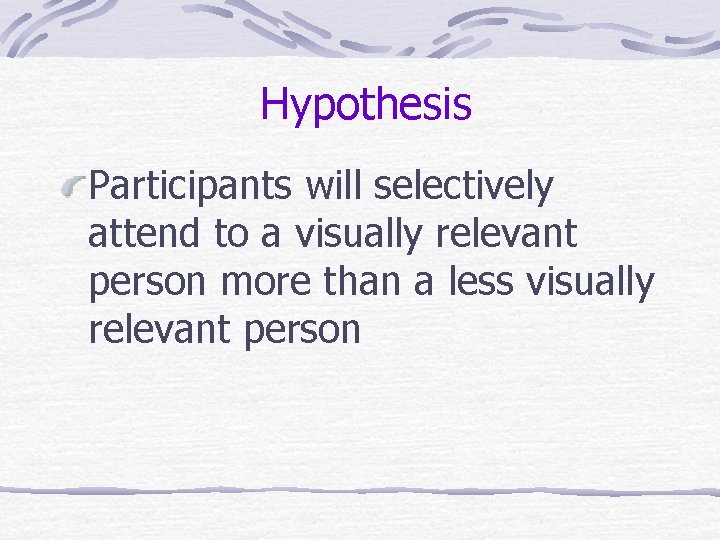
Hypothesis Participants will selectively attend to a visually relevant person more than a less visually relevant person
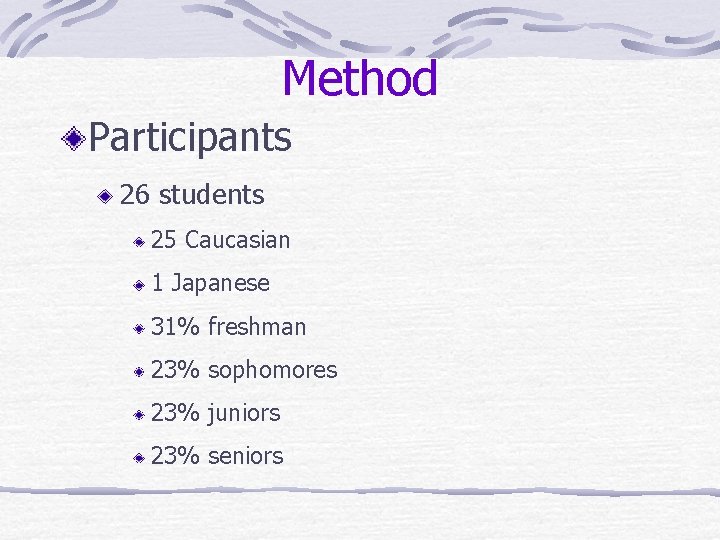
Method Participants 26 students 25 Caucasian 1 Japanese 31% freshman 23% sophomores 23% juniors 23% seniors
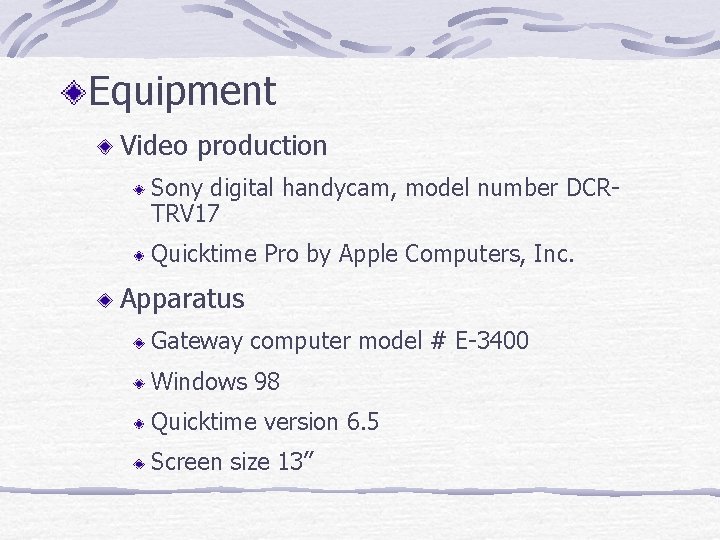
Equipment Video production Sony digital handycam, model number DCRTRV 17 Quicktime Pro by Apple Computers, Inc. Apparatus Gateway computer model # E-3400 Windows 98 Quicktime version 6. 5 Screen size 13”
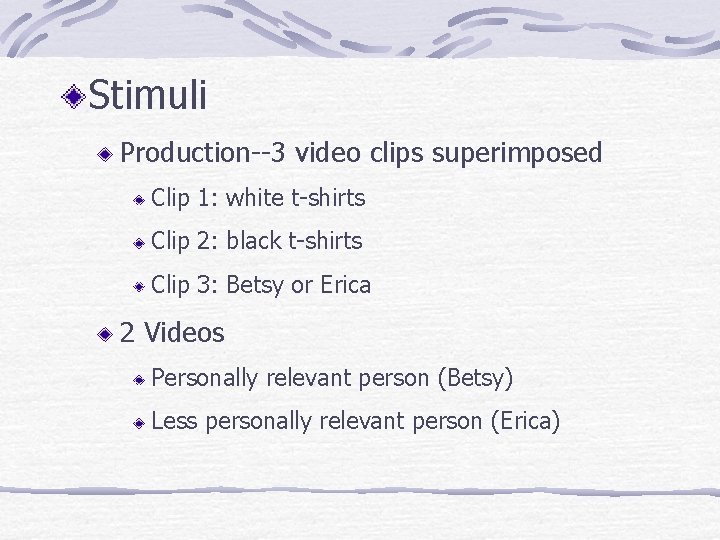
Stimuli Production--3 video clips superimposed Clip 1: white t-shirts Clip 2: black t-shirts Clip 3: Betsy or Erica 2 Videos Personally relevant person (Betsy) Less personally relevant person (Erica)
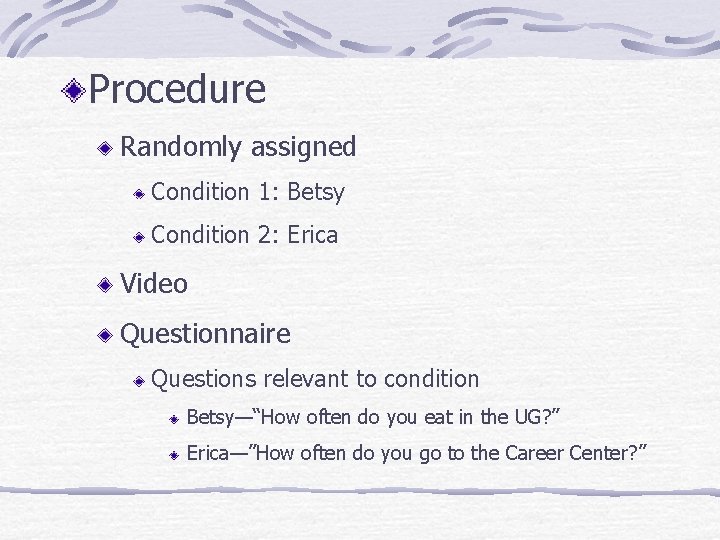
Procedure Randomly assigned Condition 1: Betsy Condition 2: Erica Video Questionnaire Questions relevant to condition Betsy—“How often do you eat in the UG? ” Erica—”How often do you go to the Career Center? ”
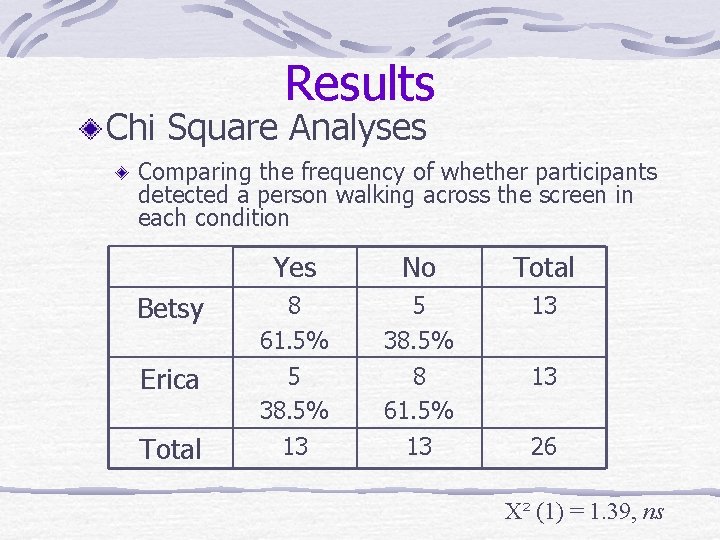
Results Chi Square Analyses Comparing the frequency of whether participants detected a person walking across the screen in each condition Betsy Erica Total Yes No Total 8 61. 5% 5 38. 5% 8 61. 5% 13 13 13 26 13 ² (1) = 1. 39, ns
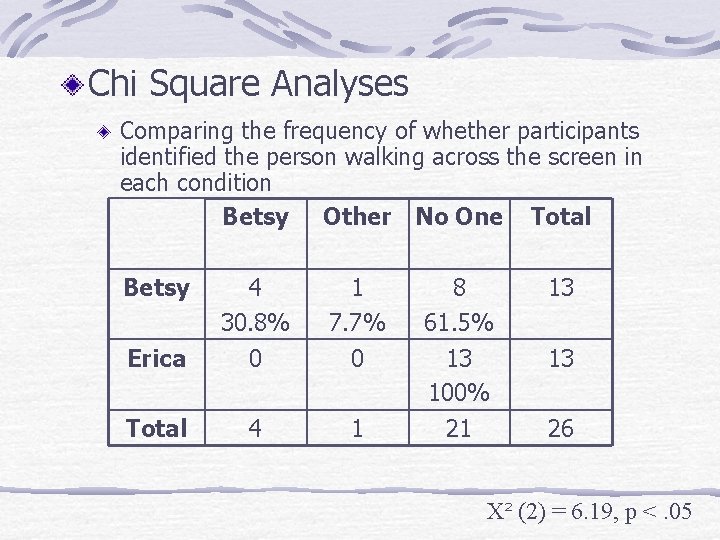
Chi Square Analyses Comparing the frequency of whether participants identified the person walking across the screen in each condition Betsy Other No One Total Betsy 4 30. 8% 1 7. 7% 8 61. 5% 13 Erica 0 0 13 Total 4 1 13 100% 21 26 ² (2) = 6. 19, p <. 05
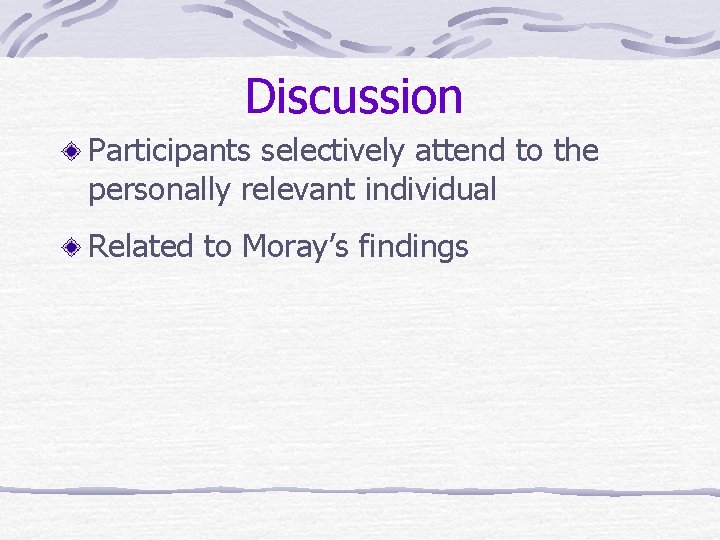
Discussion Participants selectively attend to the personally relevant individual Related to Moray’s findings
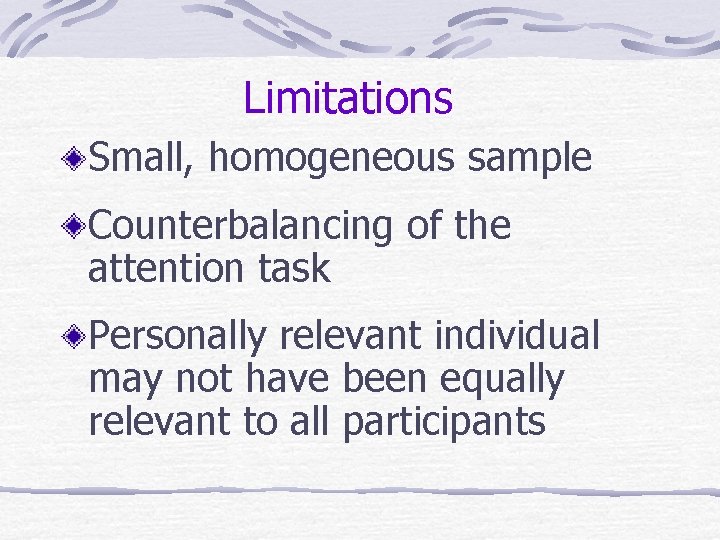
Limitations Small, homogeneous sample Counterbalancing of the attention task Personally relevant individual may not have been equally relevant to all participants
Questions
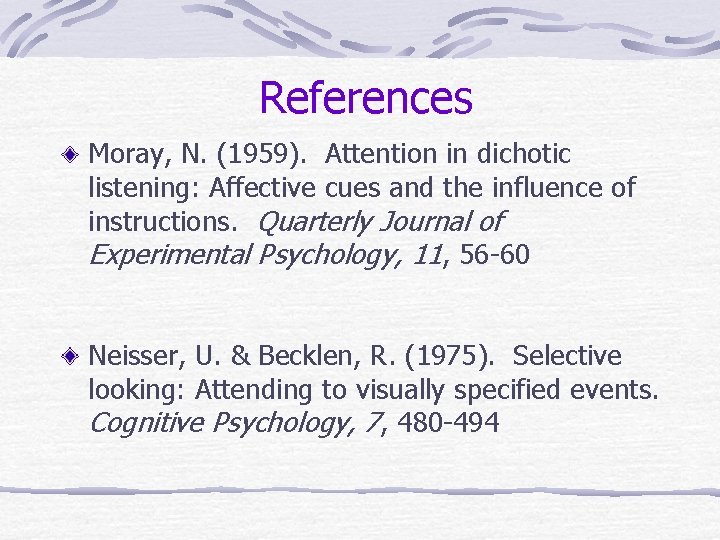
References Moray, N. (1959). Attention in dichotic listening: Affective cues and the influence of instructions. Quarterly Journal of Experimental Psychology, 11, 56 -60 Neisser, U. & Becklen, R. (1975). Selective looking: Attending to visually specified events. Cognitive Psychology, 7, 480 -494