URETHANE CEMENTS or EPOXY COATINGS FLOORING IN A
- Slides: 67
URETHANE CEMENTS or EPOXY COATINGS FLOORING IN A BREWERY Presented by Norm Klapper PEC – Boulder, Colorado
Presentation Outline Why coat concrete floors? When is the best time to coat? Contractor selection Concrete preparation Essential installation details, thickness Urethane cement or epoxy topping? Typical installation applications Key physical properties of each formulation Life cycle comparison and recommendations Summary and conclusions
Issues Unique to Breweries Wet, humid conditions Presence of caustic and chlorine-based CIP and wash down agents Thermal shock: cold floors (<50°F) washed with hot, 180 °F water Presence of yeast which if trapped in crevices, cracks or under coatings can easily cause delamination Tough food grade standards apply, regulated industry Heavy wheeled traffic, impacts from equipment, kegs, fork lifts, pallet jacks Operations usually 24/7, little downtime allowance Public viewing or access to brewing areas and need for aesthetics in a production area Health and safety for personnel, slippery conditions
Why Coat Concrete Floors? Protection from Chemical Attack CIP daily wash down, caustics, chlorine Brewery waste products Yeast, carbonic acid Protection from Mechanical Wear Impact Wear from Pallets, etc. Prevent cracking, abrasion
Why Coat Concrete Floors…. . cont. Provide Slip Resistance for Safety Minimize wet, slippery conditions Aesthetics Provide an appealing and professional look Cleanability & Maximize Service Life Monolithic substrate and smooth transitions to drains
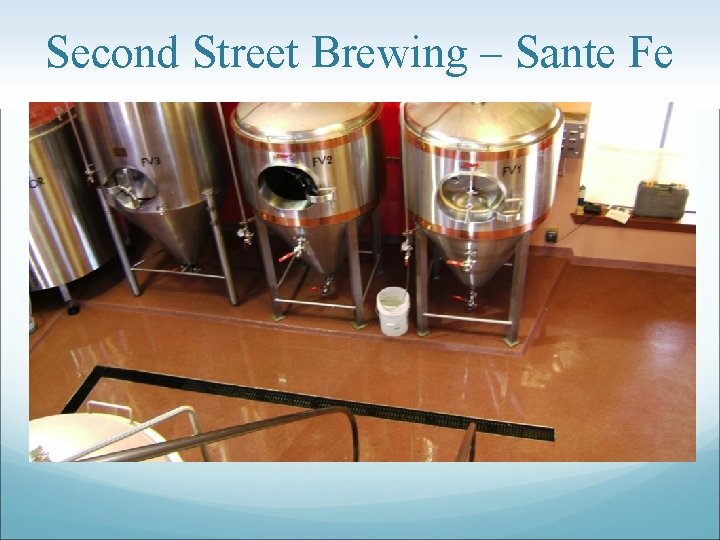
Second Street Brewing – Sante Fe
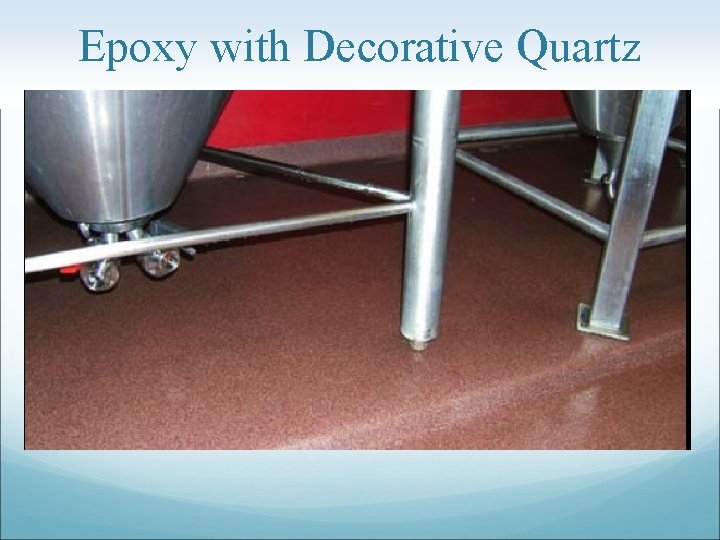
Epoxy with Decorative Quartz
When to Coat? New Floors Best Open area New Construction – BEST for. Contractor No contamination Floor, drains, etc. not compromised No equipment legs Old Floors With existing coating? REMOVE ALL – clean warranty Without existing coating? Use correct preparation techniques
Contractor Selection Contractor MUST be certified by the manufacturer of the coating – suggest you verify Contractor must have a proven track record of successful projects, delivered on time. Contractor must offer a JOINT WARRANTY with the manufacturer which protects the Owner/End-User Get References and check them!
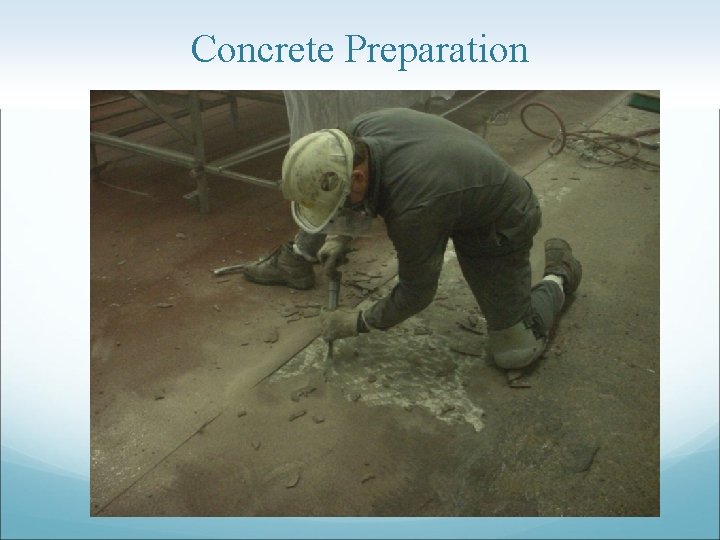
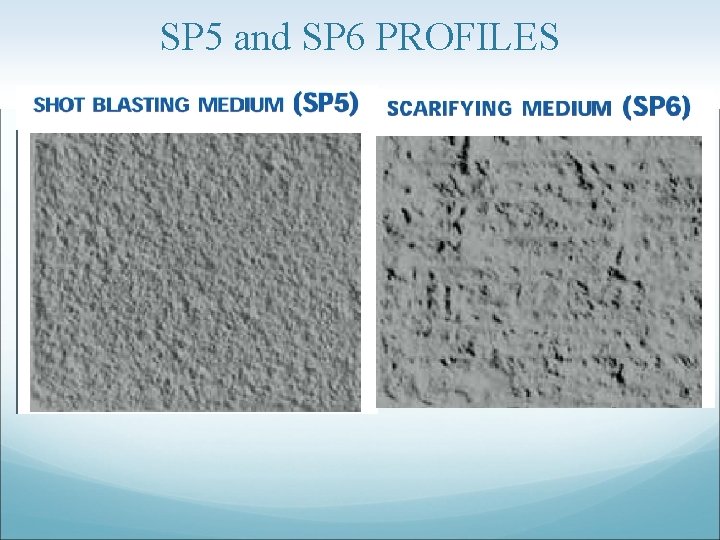
Concrete Preparation All coatings require competent and thorough surface preparation Mechanical Diamond Grinding Scarifying Shot Blasting Crack Chasing Detailing – Keyways, Drains, etc. Profile MUST be equal to an SP 5 – SP 6
Concrete Preparation
SP 5 and SP 6 PROFILES
Concrete Preparation…. cont. All coatings require competent and thorough surface preparation Chemicals are supplements to mechanical techniques Acid Etching Chlorine or Caustic Sanitizing Extensive hot water washing Additional Techniques (Optional) Flaming (Weed Burners) High pressure air / vacuum for standing water removal
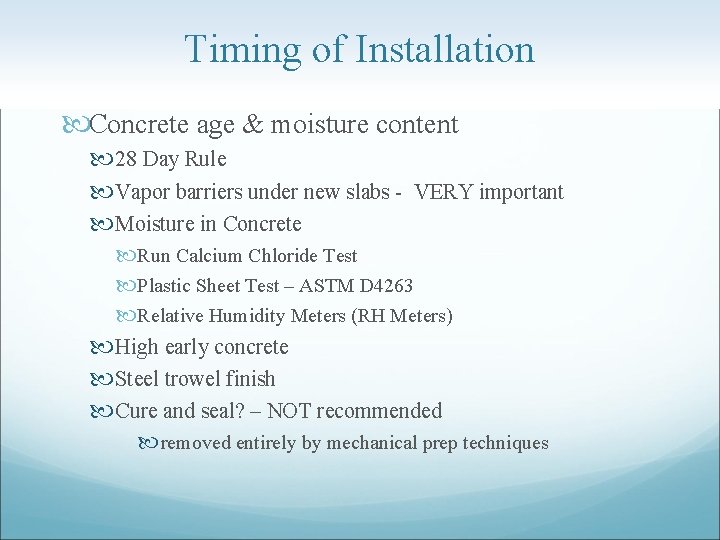
Timing of Installation Concrete age & moisture content 28 Day Rule Vapor barriers under new slabs - VERY important Moisture in Concrete Run Calcium Chloride Test Plastic Sheet Test – ASTM D 4263 Relative Humidity Meters (RH Meters) High early concrete Steel trowel finish Cure and seal? – NOT recommended removed entirely by mechanical prep techniques
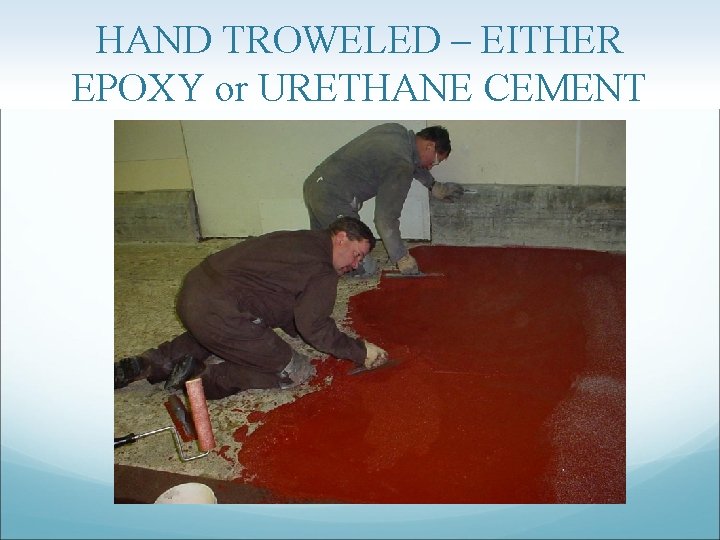
HAND TROWELED – EITHER EPOXY or URETHANE CEMENT
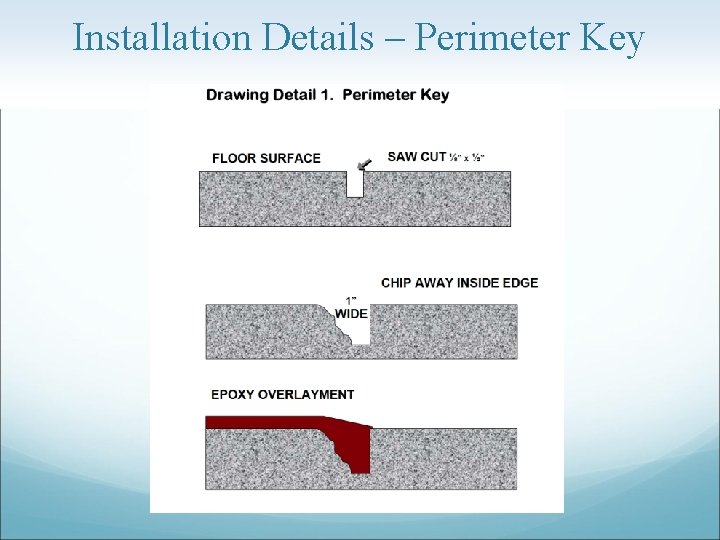
Installation Details – Perimeter Key
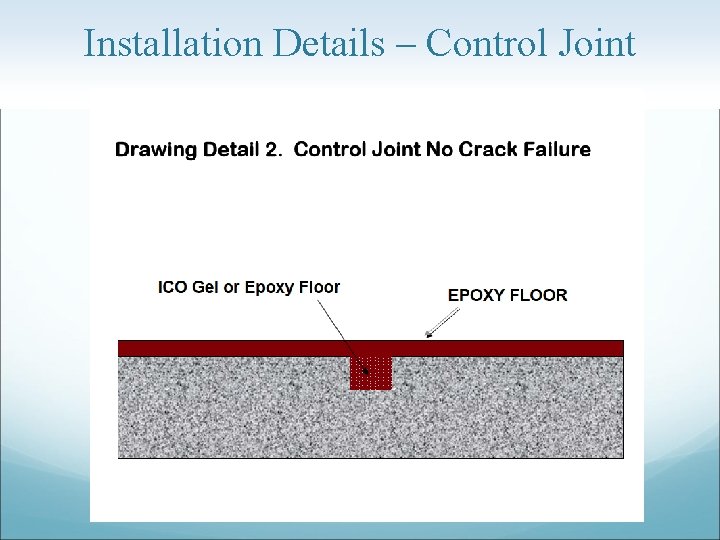
Installation Details – Control Joint
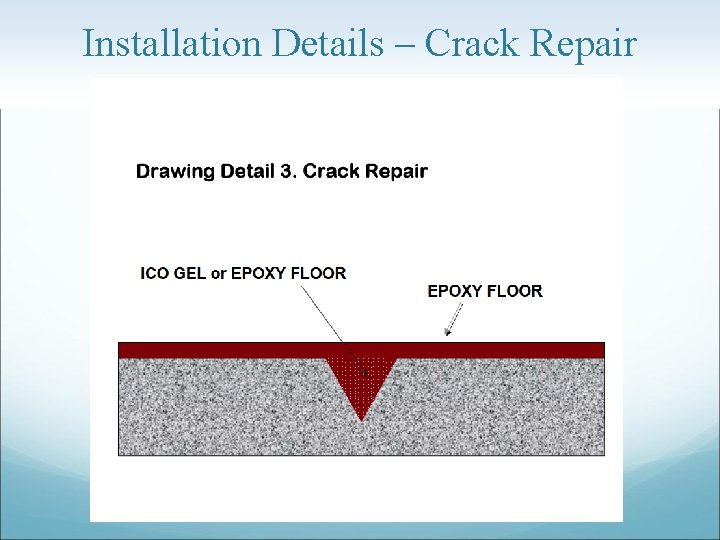
Installation Details – Crack Repair
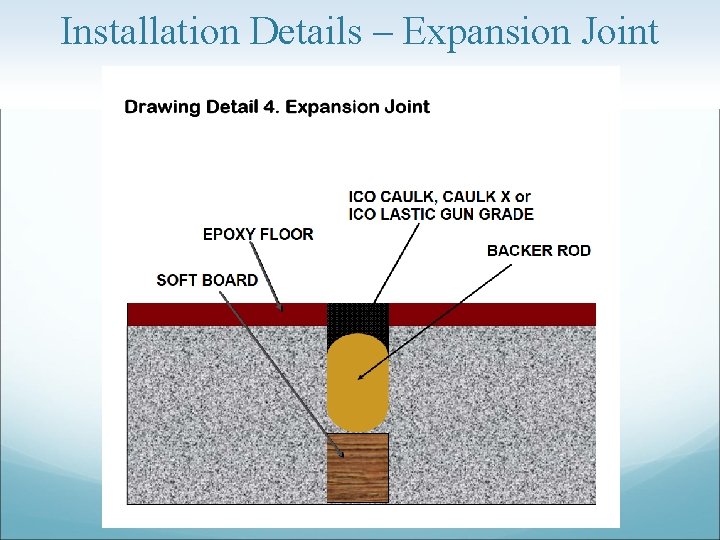
Installation Details – Expansion Joint
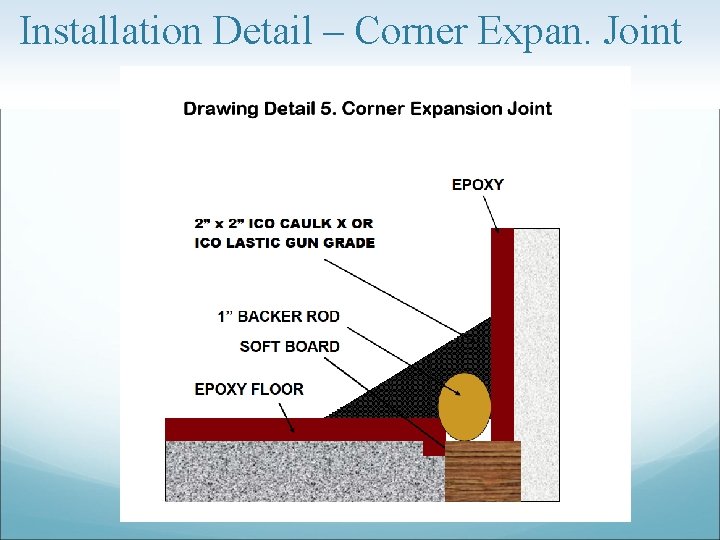
Installation Detail – Corner Expan. Joint
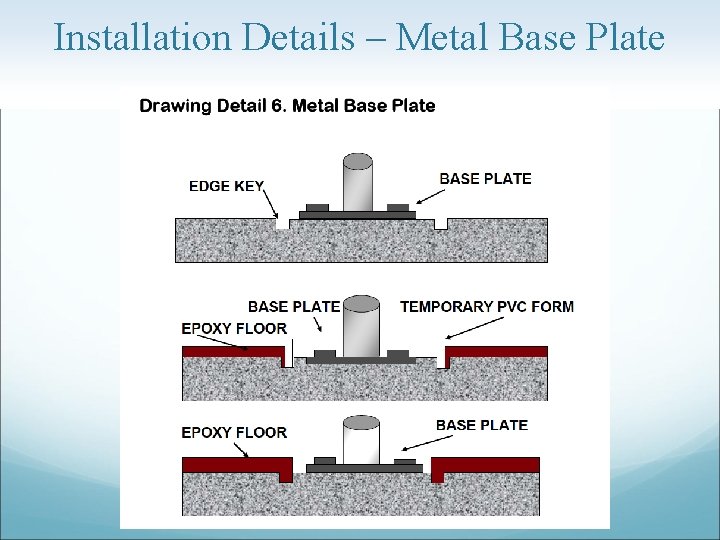
Installation Details – Metal Base Plate
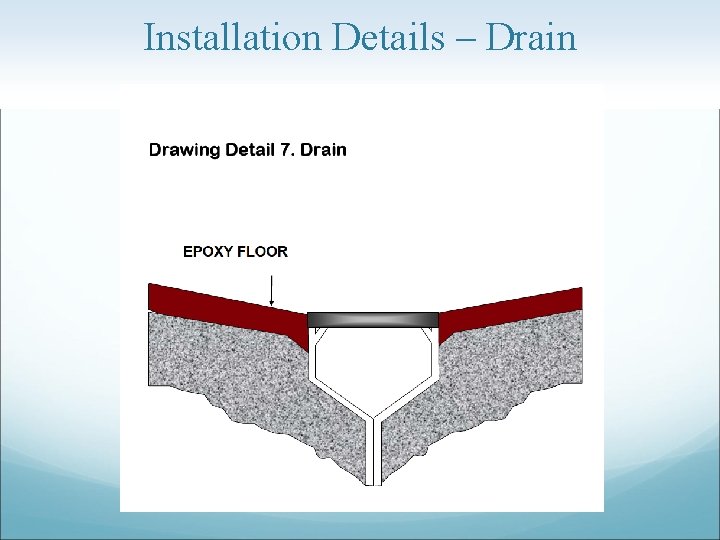
Installation Details – Drain
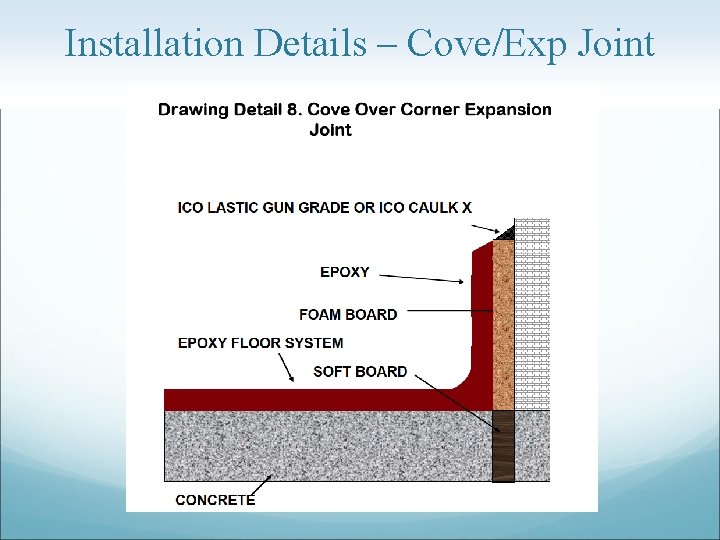
Installation Details – Cove/Exp Joint
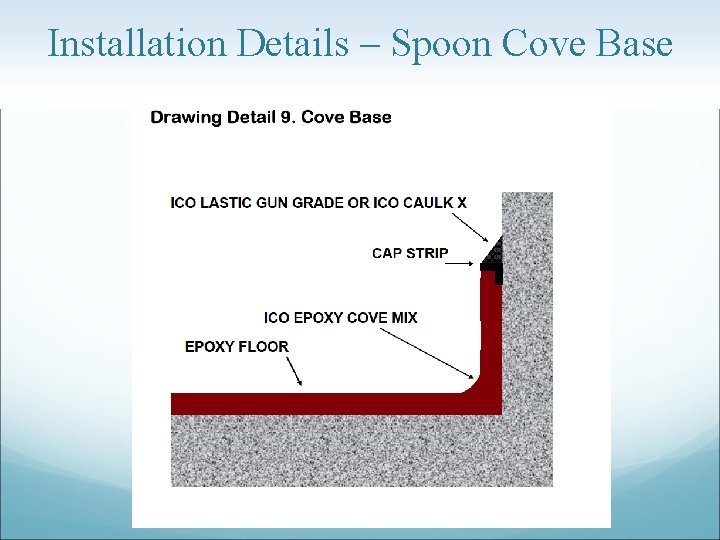
Installation Details – Spoon Cove Base
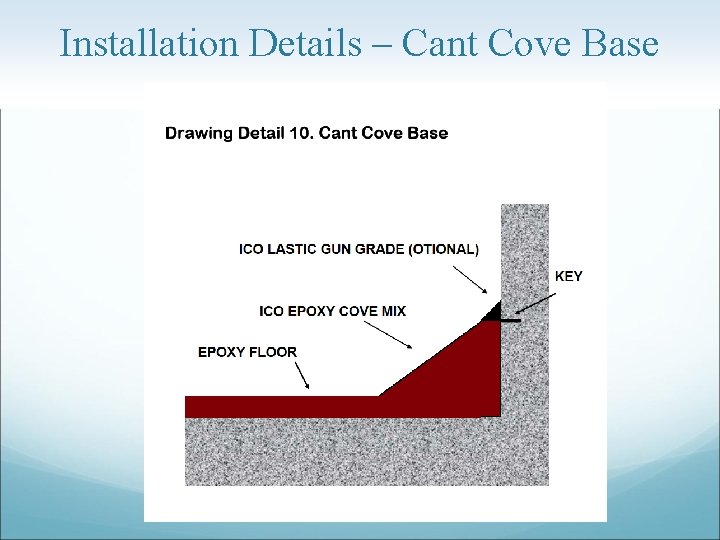
Installation Details – Cant Cove Base
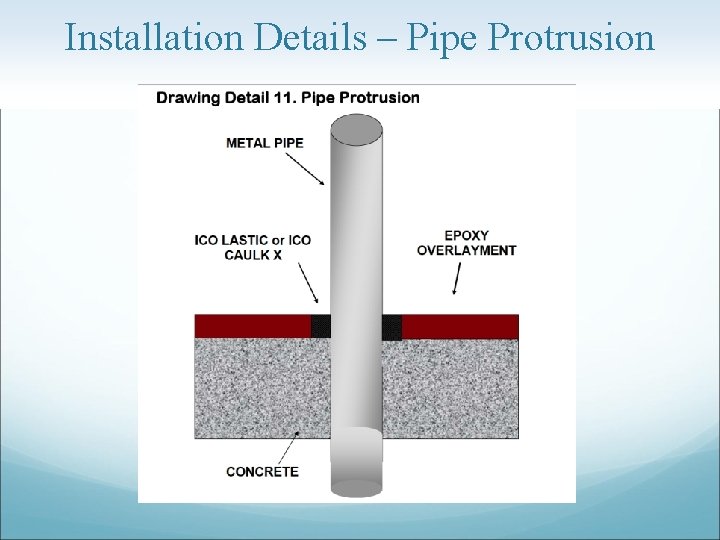
Installation Details – Pipe Protrusion
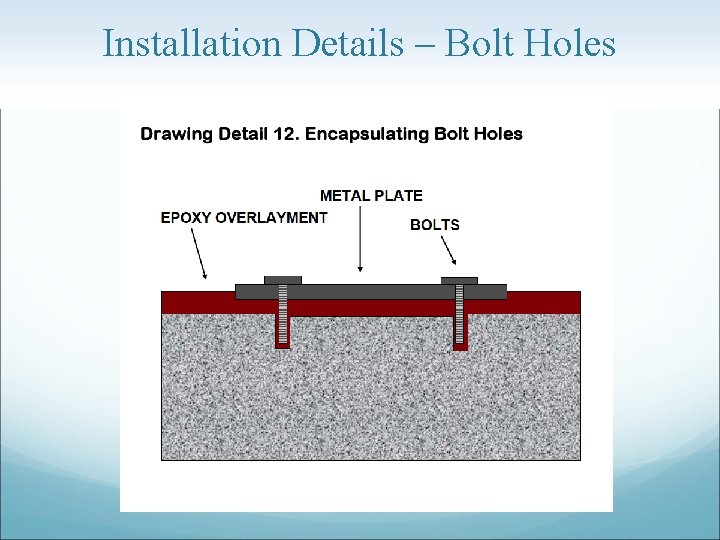
Installation Details – Bolt Holes
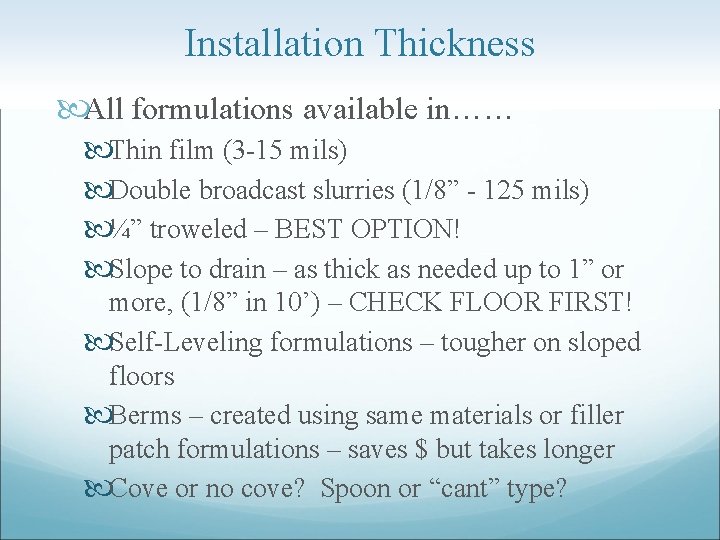
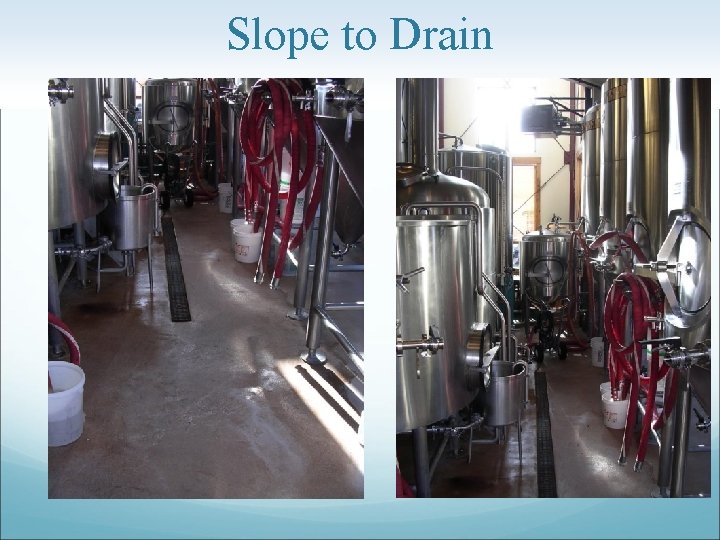
Installation Thickness All formulations available in…… Thin film (3 -15 mils) Double broadcast slurries (1/8” - 125 mils) ¼” troweled – BEST OPTION! Slope to drain – as thick as needed up to 1” or more, (1/8” in 10’) – CHECK FLOOR FIRST! Self-Leveling formulations – tougher on sloped floors Berms – created using same materials or filler patch formulations – saves $ but takes longer Cove or no cove? Spoon or “cant” type?
Urethane Cements / Epoxy Coatings ALL providers of URETHANE CEMENTS have similar formulations ALL have similar: Working Time Temperature Resistance Chemical Resistance Bond Strengths to substrates
Urethane Cements / Epoxy Coatings In Contrast, EPOXY COATINGS all have great variations in formulations WIDE VARIATION in all characteristics Working Time Temperature Resistance Chemical Resistance Bond Strengths to substrates
WHY THE CONTROVERSY? Great variations in epoxy formulations and therefore varied application success Many offered non-resin rich, top-coated (grout-coated) dry systems with high compressive strengths (>1015, 000 psi, 2 -3 x’s concrete!) Harder, more brittle materials with less thermal shock resistance, reduced life spans (1 -2 years!) Urethane cements “took up the slack” and offered viable alternatives Similar coeff. of thermal expansion to that of concrete, less likely to delaminate under thermal shock
WHY THE CONTROVERSY…. cont Early epoxy failures led to: Rise in Polyesters, Vinylesters, Methylmethacrylates (MMA) – all with high odor Followed by lower VOC, more resin-rich epoxies, more impervious to liquids and subsequent failures. Newer, high performance epoxy formulas which maintained resin-rich, LOWER compressive strengths and greater chemical resistance, thermal shock resistance Flexibilized epoxies have been around decades longer than Urethane Cements and these have had wide success
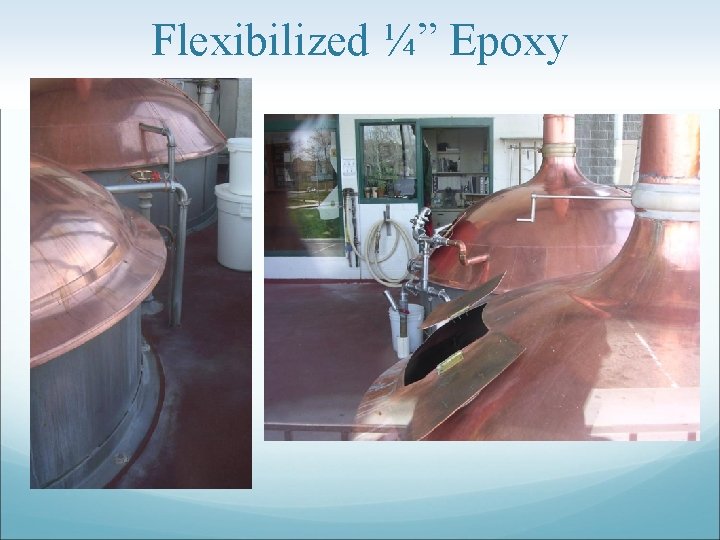
Flexibilized ¼” Epoxy
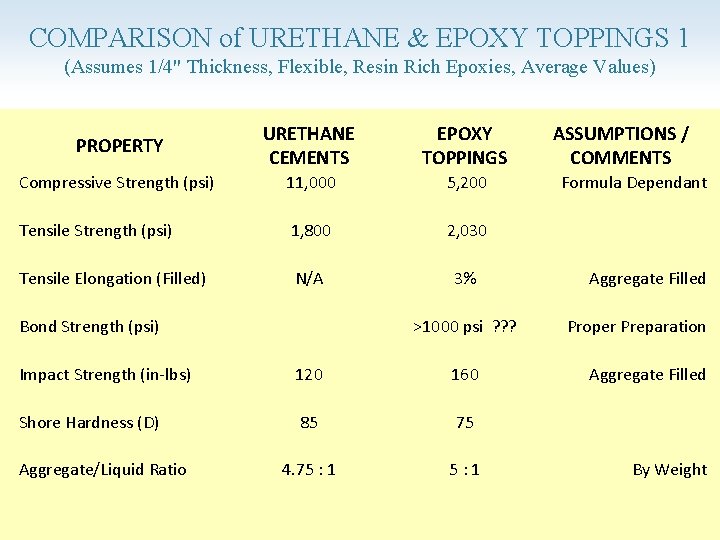
COMPARISON of URETHANE & EPOXY TOPPINGS 1 (Assumes 1/4" Thickness, Flexible, Resin Rich Epoxies, Average Values) PROPERTY URETHANE CEMENTS EPOXY TOPPINGS Compressive Strength (psi) 11, 000 5, 200 Tensile Strength (psi) 1, 800 2, 030 Tensile Elongation (Filled) N/A 3% Bond Strength (psi) >1000 psi ? ? ? Impact Strength (in-lbs) 120 160 Shore Hardness (D) 85 75 4. 75 : 1 5: 1 Aggregate/Liquid Ratio ASSUMPTIONS / COMMENTS Formula Dependant Aggregate Filled Proper Preparation Aggregate Filled By Weight
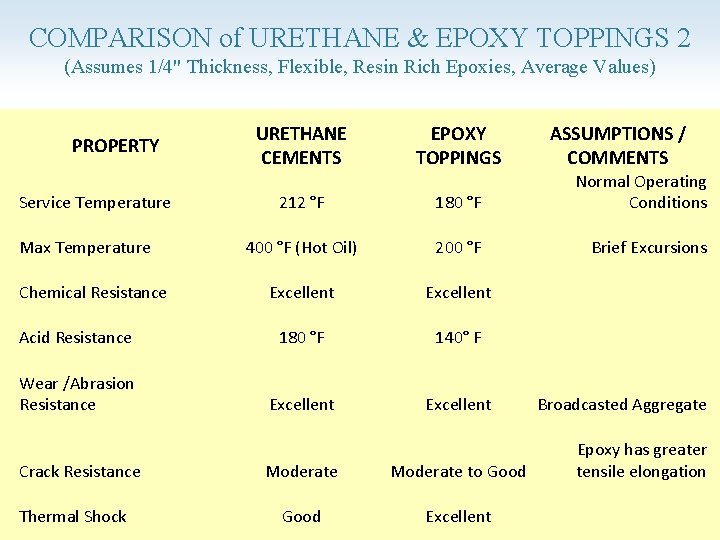
COMPARISON of URETHANE & EPOXY TOPPINGS 2 (Assumes 1/4" Thickness, Flexible, Resin Rich Epoxies, Average Values) PROPERTY URETHANE CEMENTS EPOXY TOPPINGS ASSUMPTIONS / COMMENTS 212 °F 180 °F Normal Operating Conditions 400 °F (Hot Oil) 200 °F Brief Excursions Excellent Acid Resistance 180 °F 140° F Wear /Abrasion Resistance Excellent Service Temperature Max Temperature Chemical Resistance Crack Resistance Thermal Shock Moderate to Good Excellent Broadcasted Aggregate Epoxy has greater tensile elongation
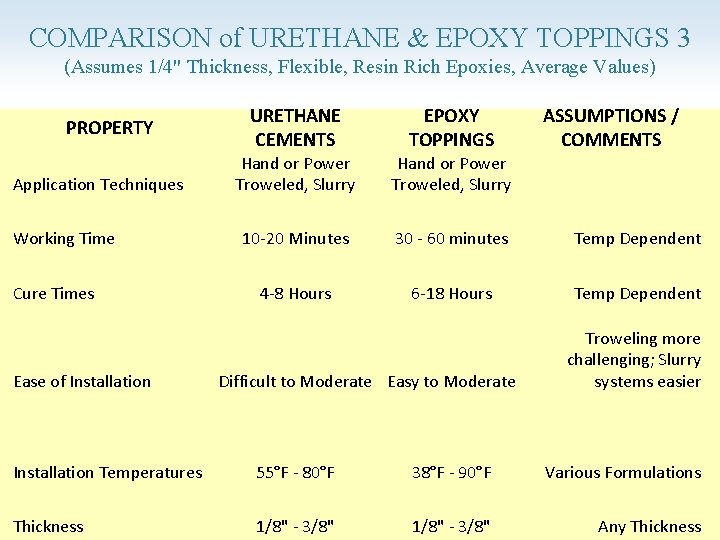
COMPARISON of URETHANE & EPOXY TOPPINGS 3 (Assumes 1/4" Thickness, Flexible, Resin Rich Epoxies, Average Values) PROPERTY Application Techniques Working Time Cure Times Ease of Installation URETHANE CEMENTS EPOXY TOPPINGS Hand or Power Troweled, Slurry 10 -20 Minutes 30 - 60 minutes Temp Dependent 4 -8 Hours 6 -18 Hours Temp Dependent Difficult to Moderate Easy to Moderate ASSUMPTIONS / COMMENTS Troweling more challenging; Slurry systems easier Installation Temperatures 55°F - 80°F 38°F - 90°F Various Formulations Thickness 1/8" - 3/8" Any Thickness
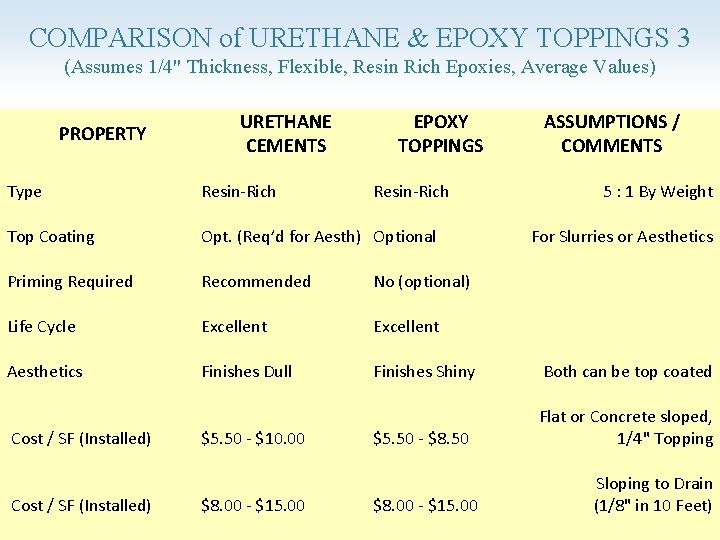
COMPARISON of URETHANE & EPOXY TOPPINGS 3 (Assumes 1/4" Thickness, Flexible, Resin Rich Epoxies, Average Values) PROPERTY URETHANE CEMENTS EPOXY TOPPINGS Type Resin-Rich Top Coating Opt. (Req’d for Aesth) Optional Priming Required Recommended No (optional) Life Cycle Excellent Aesthetics Finishes Dull Finishes Shiny Both can be top coated $5. 50 - $8. 50 Flat or Concrete sloped, 1/4" Topping Cost / SF (Installed) $5. 50 - $10. 00 $8. 00 - $15. 00 Resin-Rich ASSUMPTIONS / COMMENTS $8. 00 - $15. 00 5 : 1 By Weight For Slurries or Aesthetics Sloping to Drain (1/8" in 10 Feet)
Similar Installation Techniques Mixing – virtually the same Troweled – hand or power-troweled Screed method – using screed boxes or bars Slurry system in one or two lifts Uses more resin compared to troweled Finished “as-troweled” Final coat back-rolled, seeded, top coated or not top coated Neither system requires top coating Top coating mostly for aesthetics
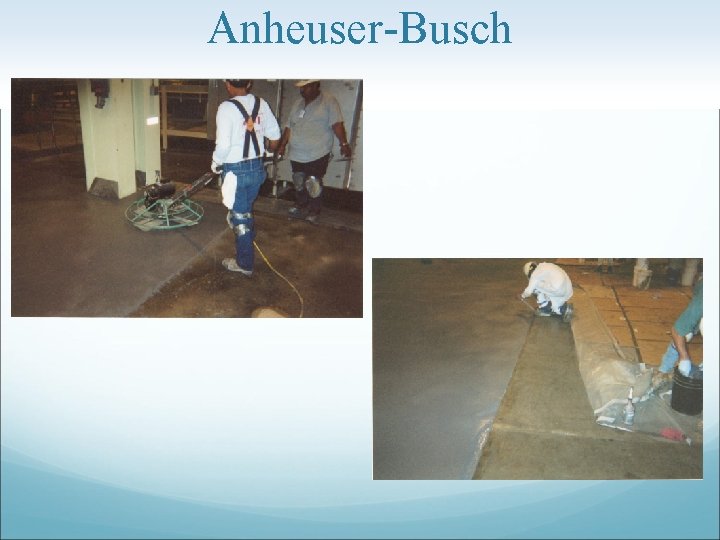
Anheuser-Busch
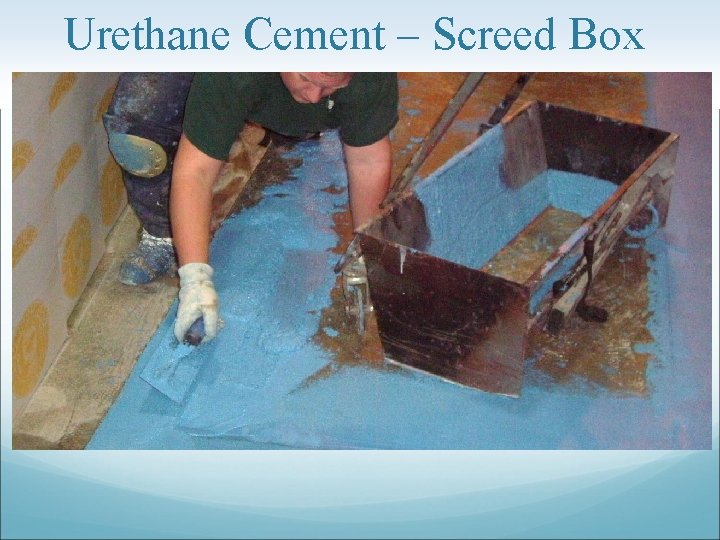
Urethane Cement – Screed Box
Installation Characteristics OPEN (WORKING) TIMES Urethane Cement – open time, 15 minutes Epoxy Topping – open time, 45 -60 minutes CURE TIMES Urethane Cement – cure time, 8 hours (Fixed, not changeable) Epoxy Topping – temperature dependent– cold cure (6 hours), fast cure (8 hours), regular cure (14 -18 hours)
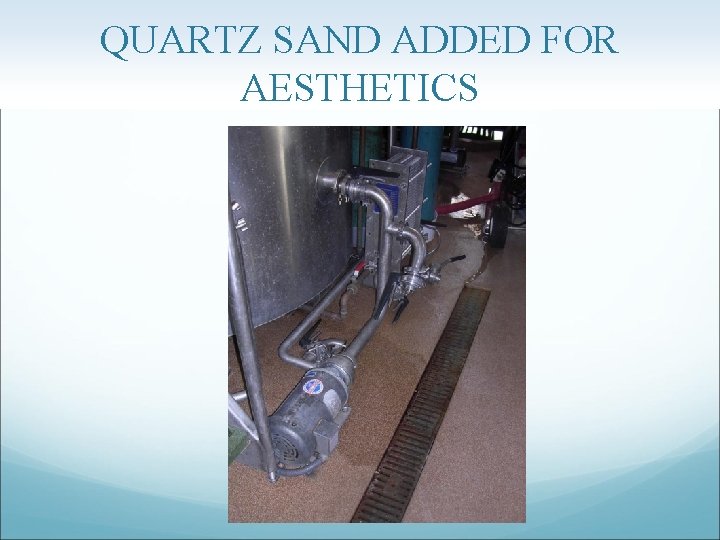
Final Textures & Colors Optional Textures – determined by type and size of sand media Silica Quartz Aluminum Oxide Grit / Mesh Sizes – from 16 to 30 Trade off between slip resistance and cleanability – VERY subjective Strongly suggest sample texture offered for evaluation and approval purposes Maintenance and safety concerns need to be balanced
Recommendations? URETHANE CEMENTS Higher temperatures >220 degrees F Chemicals at higher temperatures New construction for open areas due to less open time for working/application
Recommendations? EPOXY TOPPINGS Reasonable temperatures – 180 degrees max Cost concerns – easier to apply, smaller crews, with usually somewhat lower installed cost Single step – finishes with higher gloss, no top coat
SUMMARY Both urethane cements and epoxy coatings provide excellent concrete protection and safe working surfaces Urethane Cements are formulated virtually the same – Epoxy Coatings vary greatly Epoxy Coatings (resin rich) have greater open times and are easier to apply – also do NOT require a top coat to finish with high gloss Can be applied in one-step, less time
SUMMARY…. . cont. Urethane cements usually require a primer coat while resin rich epoxy coatings do not and therefore can be applied in ONE-STEP Epoxy Toppings have a lower operating temperature when compared to Urethane Cements Epoxy Toppings have greater bond strength to a wider range of substrates
SUMMARY Epoxies vs. Urethane Cements Both are “flexibilized”, resin rich ¼” and will do the job Urethane cements when temps > 212°F or if hot acids hit floor (>140°F-160°F) Epoxies have better damp adhesion Epoxies have better adhesion over quarry tile “As-Troweled” epoxy better gloss than urethane cement troweled system If aesthetics are vital & downtime not critical – best method for both is slurry/topcoat
Conclusions Choose the right product for the project Base your decisions on working conditions, service conditions, temperature, aesthetics Choose suppliers with a proven track record only – in similar brewing applications Choose ONLY reputable contractors, not necessarily based on lowest price Base your decision on technical documentation and not marketing hype Get a solid, clear and unambiguous warranty statement
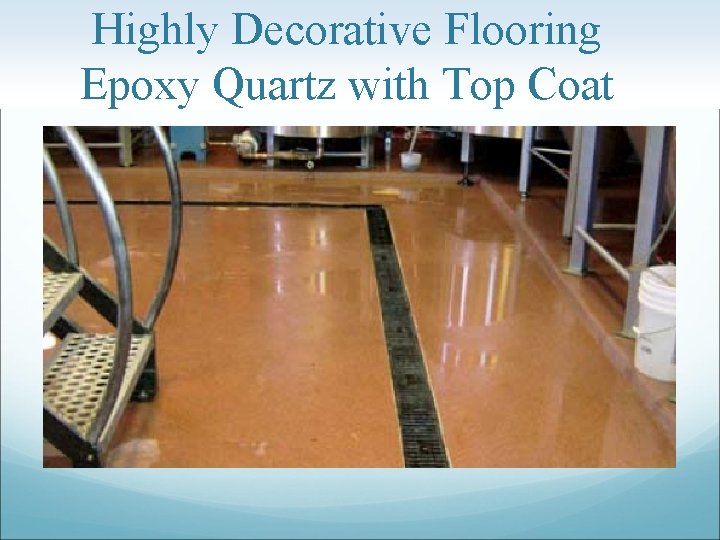
Highly Decorative Flooring Epoxy Quartz with Top Coat
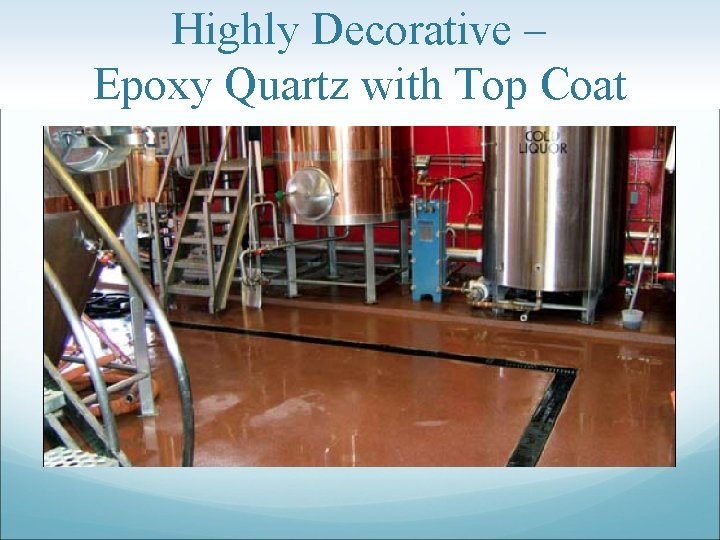
Highly Decorative – Epoxy Quartz with Top Coat
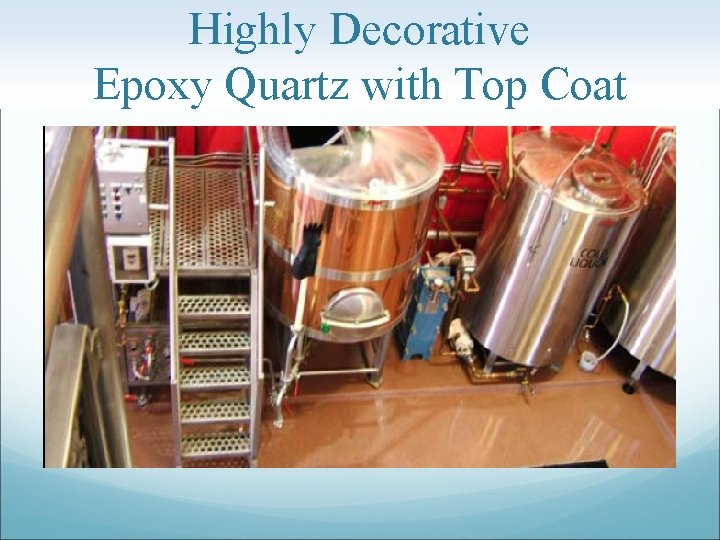
Highly Decorative Epoxy Quartz with Top Coat
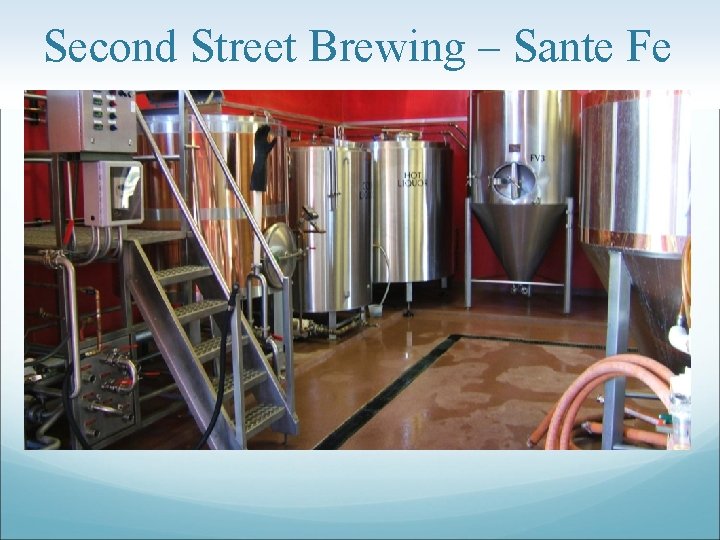
Second Street Brewing – Sante Fe
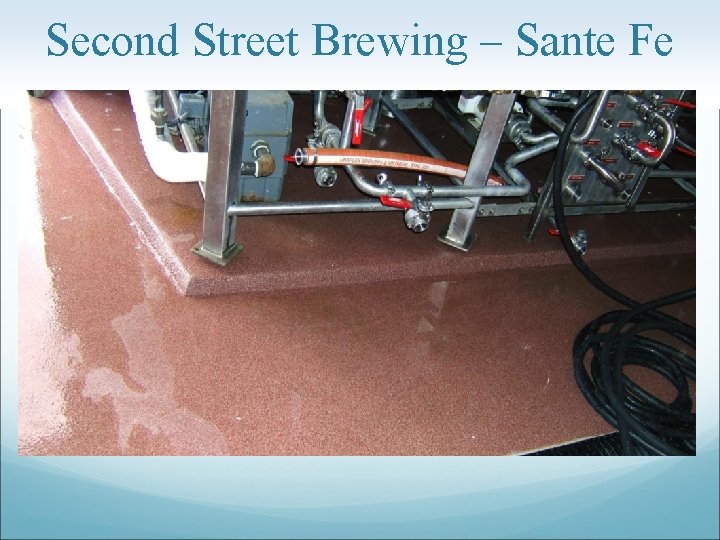
Second Street Brewing – Sante Fe
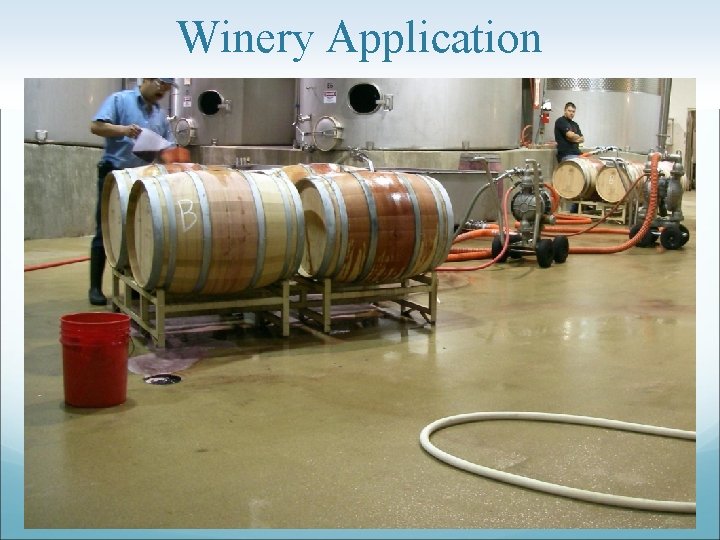
Winery Application
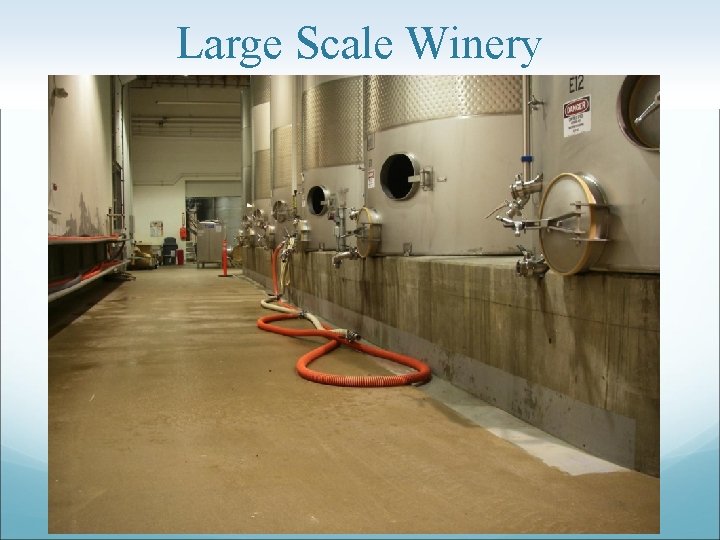
Large Scale Winery
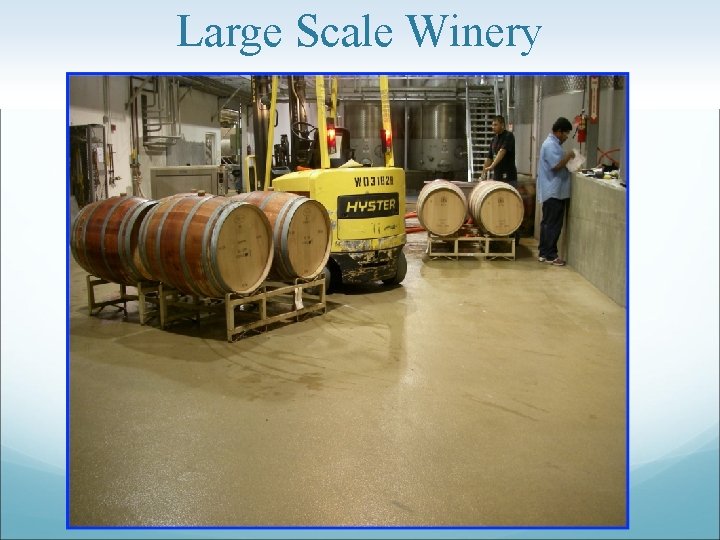
Large Scale Winery
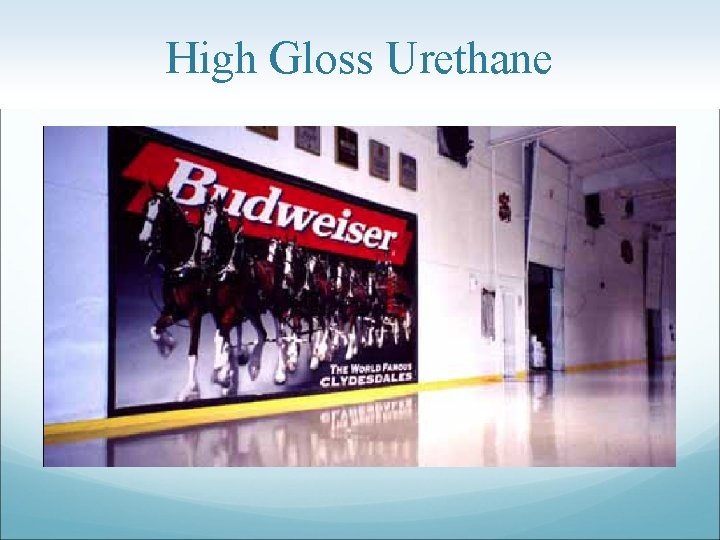
High Gloss Urethane
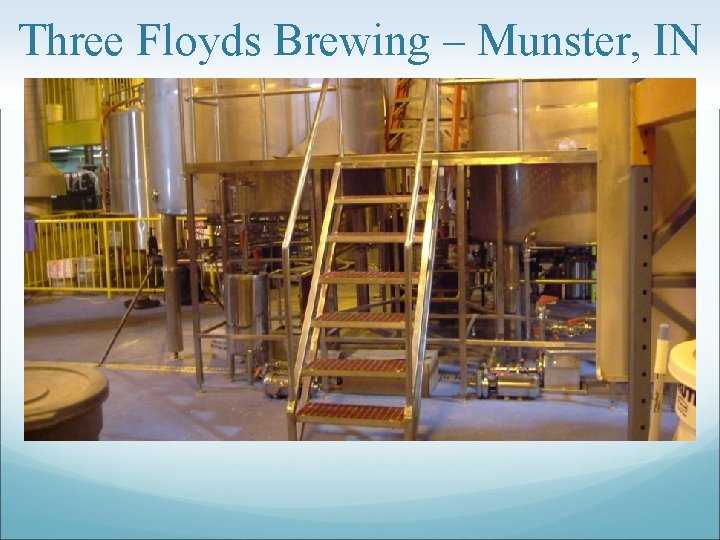
Three Floyds Brewing – Munster, IN
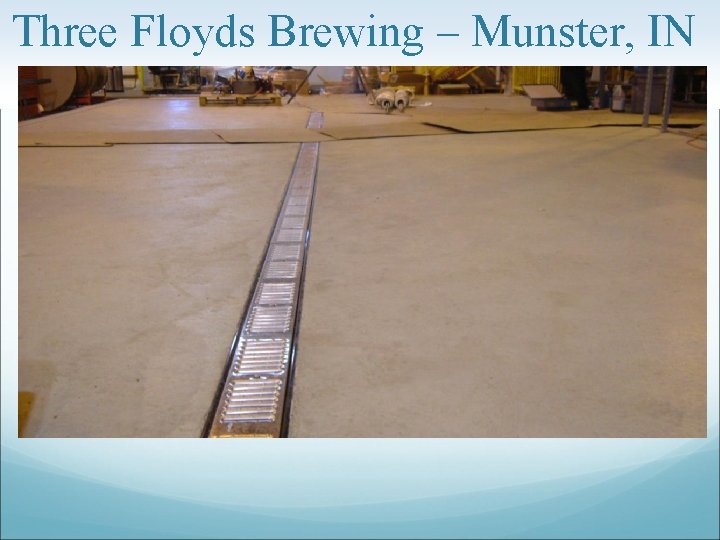
Three Floyds Brewing – Munster, IN
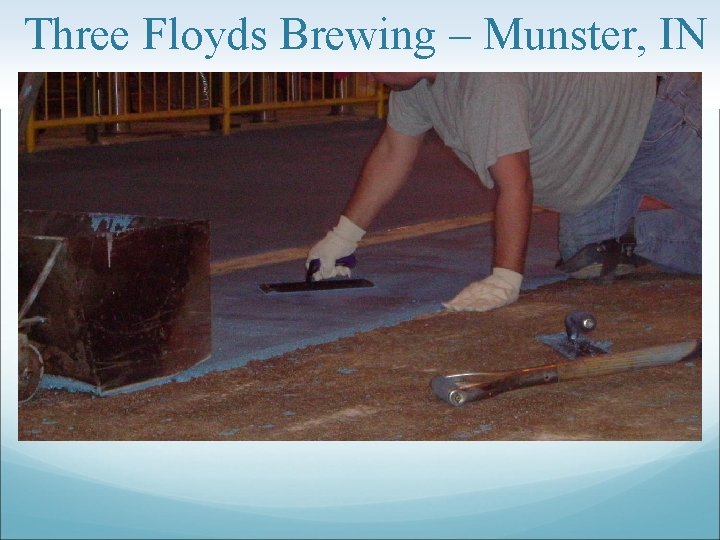
Three Floyds Brewing – Munster, IN
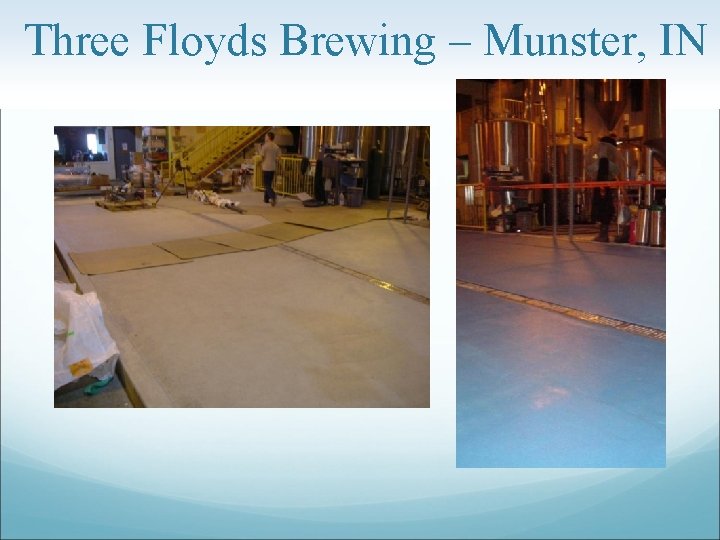
Three Floyds Brewing – Munster, IN
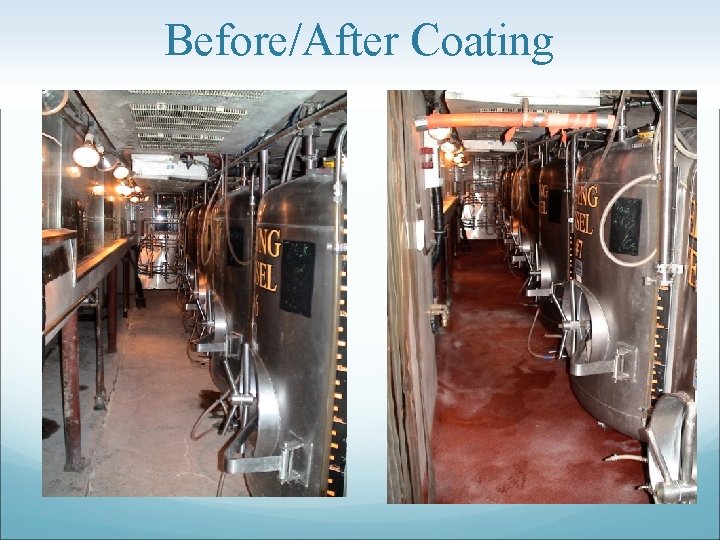
Before/After Coating
Slope to Drain
QUARTZ SAND ADDED FOR AESTHETICS
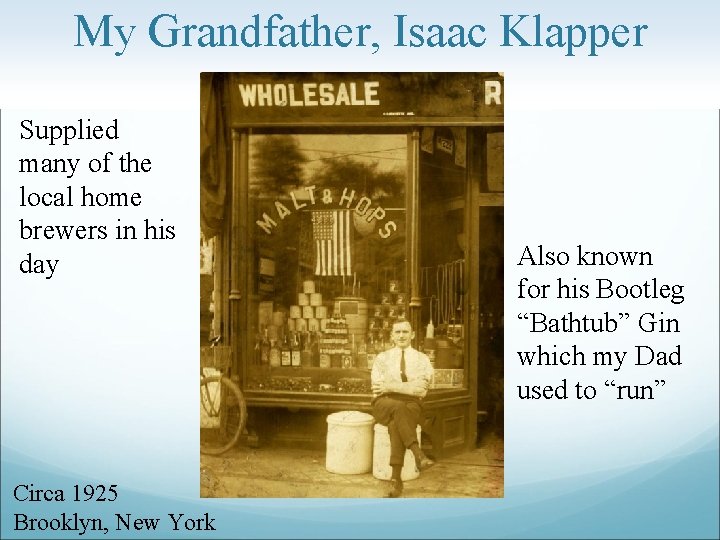
Brewing is in my blood…… Personal history of family involved in the brewing supplies business….
My Grandfather, Isaac Klapper Supplied many of the local home brewers in his day Circa 1925 Brooklyn, New York Also known for his Bootleg “Bathtub” Gin which my Dad used to “run”
URETHANE CEMENTS or EPOXY COATINGS FLOORING IN A BREWERY Presented by Norm Klapper PEC – Boulder, Colorado QUESTIONS?