Upskilling Pathways New Opportunities for Adults Martina N

- Slides: 11
Upskilling Pathways New Opportunities for Adults Martina Ní Cheallaigh DG Employment, Social Affairs and Inclusion
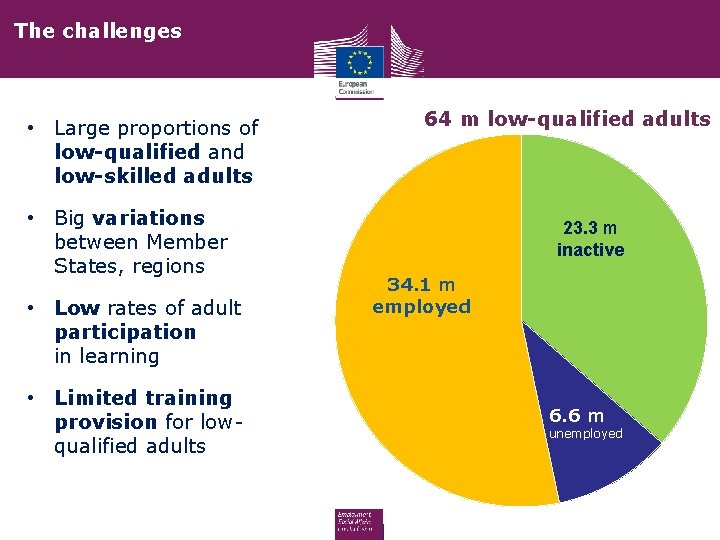
The challenges • Large proportions of low-qualified and low-skilled adults • Big variations between Member States, regions • Low rates of adult participation in learning • Limited training provision for lowqualified adults 64 m low-qualified adults 23. 3 m inactive 34. 1 m employed 6. 6 m unemployed
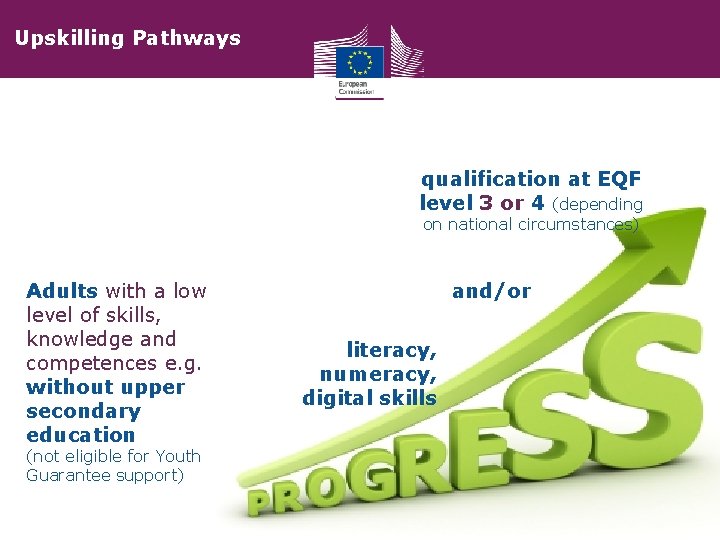
Upskilling Pathways qualification at EQF level 3 or 4 (depending on national circumstances) Adults with a low level of skills, knowledge and competences e. g. without upper secondary education (not eligible for Youth Guarantee support) and/or literacy, numeracy, digital skills
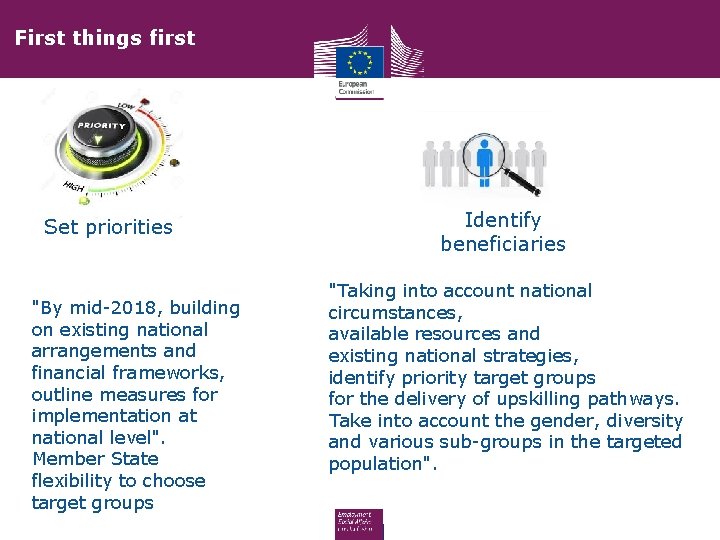
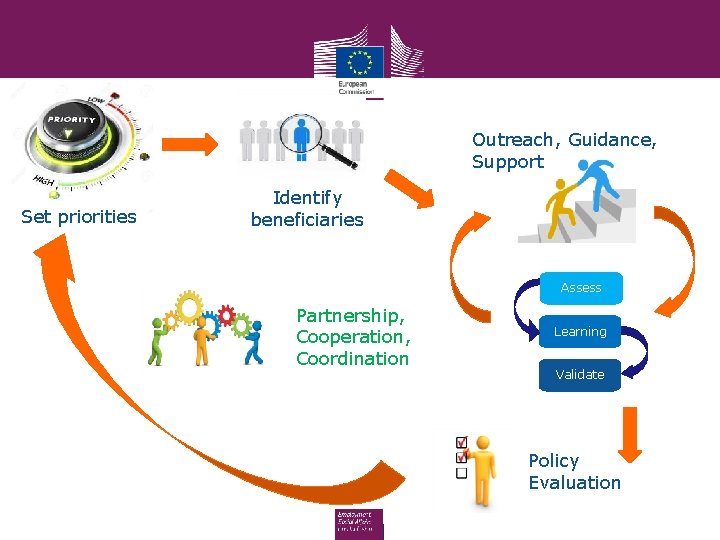
First things first Set priorities "By mid-2018, building on existing national arrangements and financial frameworks, outline measures for implementation at national level". Member State flexibility to choose target groups Identify beneficiaries "Taking into account national circumstances, available resources and existing national strategies, identify priority target groups for the delivery of upskilling pathways. Take into account the gender, diversity and various sub-groups in the targeted population".
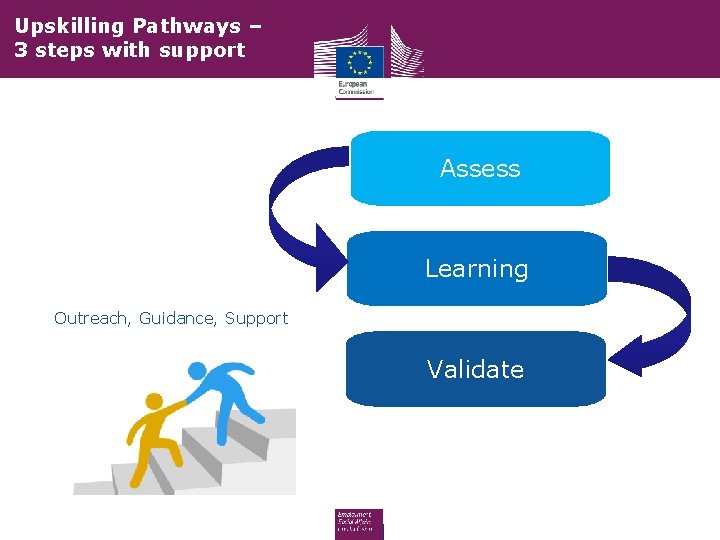
Upskilling Pathways – 3 steps with support Assess Learning Outreach, Guidance, Support Validate
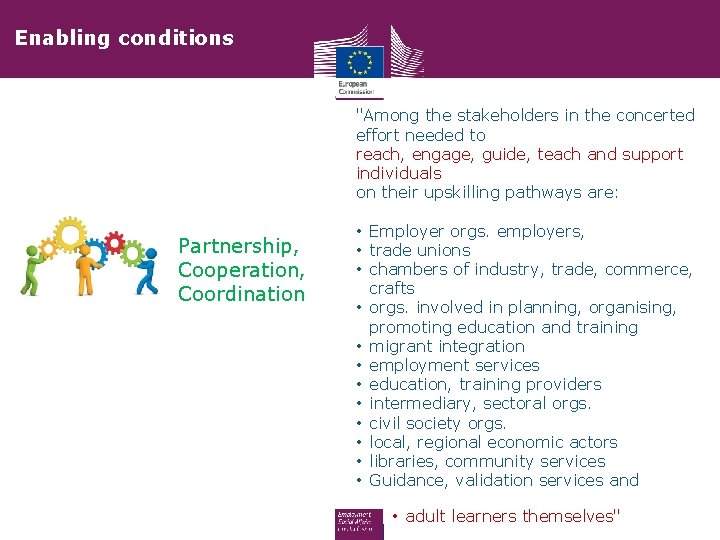
Enabling conditions "Among the stakeholders in the concerted effort needed to reach, engage, guide, teach and support individuals on their upskilling pathways are: Partnership, Cooperation, Coordination • Employer orgs. employers, • trade unions • chambers of industry, trade, commerce, crafts • orgs. involved in planning, organising, promoting education and training • migrant integration • employment services • education, training providers • intermediary, sectoral orgs. • civil society orgs. • local, regional economic actors • libraries, community services • Guidance, validation services and • adult learners themselves"
Enabling conditions Policy evaluation "Evaluate … all measures … and their impact on the progress of the target group towards the acquisition of literacy, numeracy and digital competences and/or towards a qualification at EQF level 3 or 4 …. Use results of evaluation to inform the design and delivery of upskilling pathways and inform further evidence-based policies and reforms. "
Outreach, Guidance, Support Set priorities Identify beneficiaries Partnership, Cooperation, Coordination Assess Learning Validate Policy Evaluation
Upskilling Pathways – ESF "Where appropriate … support use of EU funding programmes" for implementation of UPs. • Embed Upskilling Pathways in relevant Operational Programmes • There is scope to add basic skills components to new projects (in the new round of grants). • Development of basic skills in support for unemployed • Partnership approach and effective coordination; important to involve all stakeholders e. g. : PES, Social Services, Training Providers…. • [PIAAC second cycle: funding of national costs]
Upskilling Pathways – ESF Example 1: TO 8 v - Adaptation to change • could include development of basic skills in workplace, e. g. : Ø embed basic skills within vocational training, or Ø at skills assessment stage, identify basic skills needs & provide basic skills training before or during vocational training. Example 2: TO 10 iii - Enhancing equal access to lifelong learning • could implement the Upskilling Pathways 3 steps model e. g. : Ø insert the 3 steps as obligatory elements of projects; or Ø if ESF finances implementation of Recommendation on Validation, projects could also cover validation of basic skills.
Upskilling Pathways – ESF projects: LV: new skills and opportunities Aim: to improve existing professional qualifications, or learn new professional skills. Education tailored to user needs & needs of labour market. 40, 000 people. € 27 million. HU: Training programme for low skilled adults 2016 -2018. Target: 80, 000 low-qualified active adults without ISCED 3. Will provide: • skills assessment, • tailor-made learning offer, • mentoring, • validation and recognition of skills acquired: leading to a nationally recognised certificate, • follow-up and counselling after the training to promote labour market entry.