UNIT 2 SELF AND OTHERS AREA OF STUDY


- Slides: 13
UNIT 2: SELF AND OTHERS AREA OF STUDY 1: INTERPERSONAL & GROUP BEHAVIOUR
Occurs when we follow the commands of someone in authority, or the rules or laws of our society Interchangeable with Compliance, although compliance does not necessarily involve authority OBEDIENCE
MILGRAM’S EXPERIMENTS ON OBEDIENCE ORIGINAL FOOTAGE OF MILGRAM (1963) http: //www. youtube. com/watch? v=W 1 zl. Cybdvdg MILGRAM EXPERIMENT REPLICATION (2009) http: //www. youtube. com/watch? v=pdb 20 gcc_Ns ZIMBARDO DISCUSSES MILGRAM’S EXPERIMENT http: //www. youtube. com/watch? v=8 g 1 MJe. HYl. E 0 OBEDIENCE
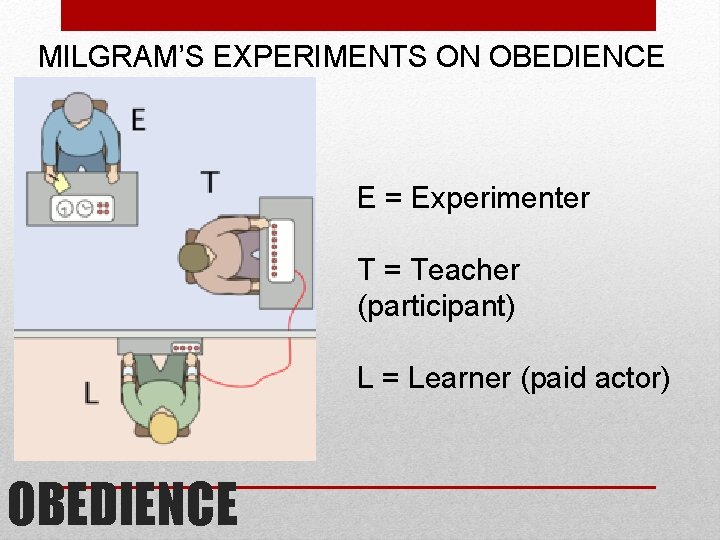
MILGRAM’S EXPERIMENTS ON OBEDIENCE E = Experimenter T = Teacher (participant) L = Learner (paid actor) OBEDIENCE
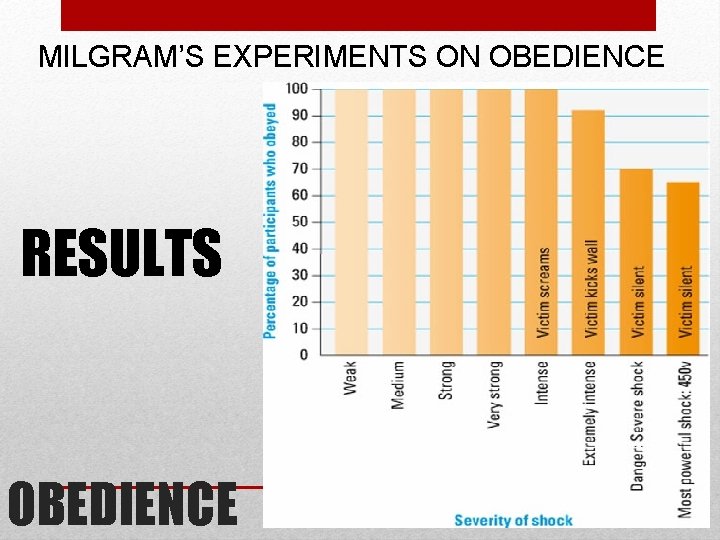
MILGRAM’S EXPERIMENTS ON OBEDIENCE RESULTS OBEDIENCE
WESLEY KILHAM & LEON MANN (1974) Australian study replicating Milgram • Used ‘transmitter’ and ‘executant’ • Transmitter obedience = 54% • Executant obedience OBEDIENCE = 28%
LEARNING ACTIVITY 9. 10 HOMEWORK (pg. 387)
Milgram also identified several factors that must be present to increase the likelihood that someone will be obedient. These include; • SOCIAL PROXIMITY • LEGITIMACY OF AUTHORITY FIGURES • GROUP PRESSURE FACTORS AFFECTING OBEDIENCE
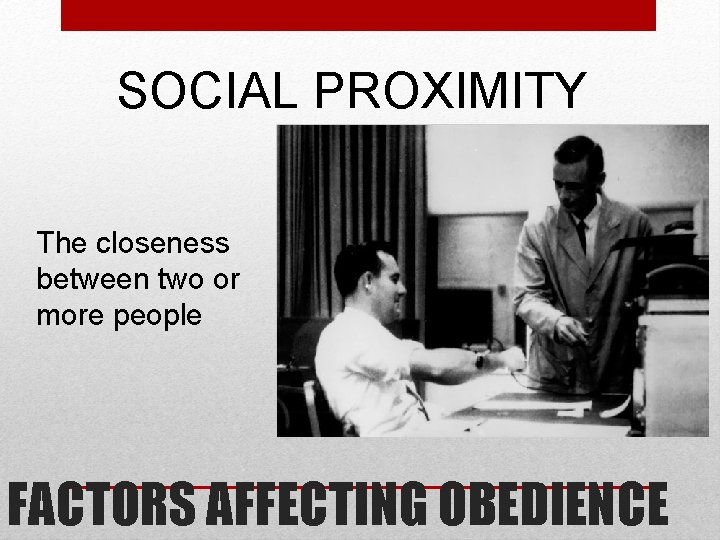
SOCIAL PROXIMITY The closeness between two or more people FACTORS AFFECTING OBEDIENCE
LEGITIMACY OF AUTHORITY FIGURES The authority figure is legitimate and has power that is real FACTORS AFFECTING OBEDIENCE
GROUP PRESSURE Individual more likely to be obedient when there is little or no group support for resisting the authority figure Individual also more likely to be obedient where there is group support for the authority figure FACTORS AFFECTING OBEDIENCE
Milgram did not do the following: • Obtain informed consent from participants • The experiment involved deception • The mental health of participants was not safeguarded • Participants were not given withdrawal rights ETHICAL ISSUES IN OBEDIENCE STUDIES
LEARNING ACTIVITY 9. 12 HOMEWORK (pg. 392)