Unit 2 6 DNA and RNA structure Learning


- Slides: 15
Unit 2. 6 DNA and RNA structure
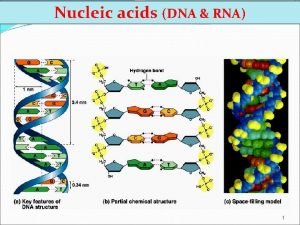
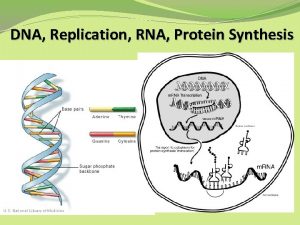
Learning Objectives • Outline the DNA nucleotide structure in terms of sugar, base and phosphate. • State the names of the four bases in DNA • Outline how DNA nucleotides are linked together by covalent bonds into a single strand • Explain how the DNA double helix is formed using complementary base pairing and hydrogen bonds • Draw and label a simple diagram of the molecular structure of DNA • Compare the structure of DNA and RNA
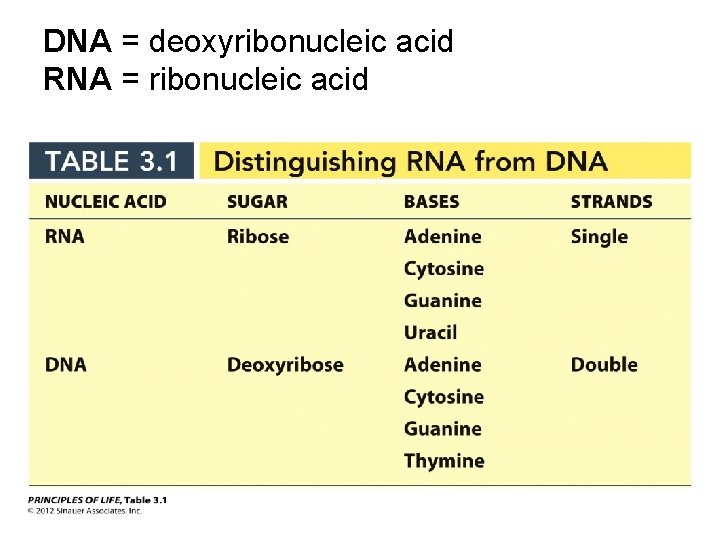
DNA = deoxyribonucleic acid RNA = ribonucleic acid •
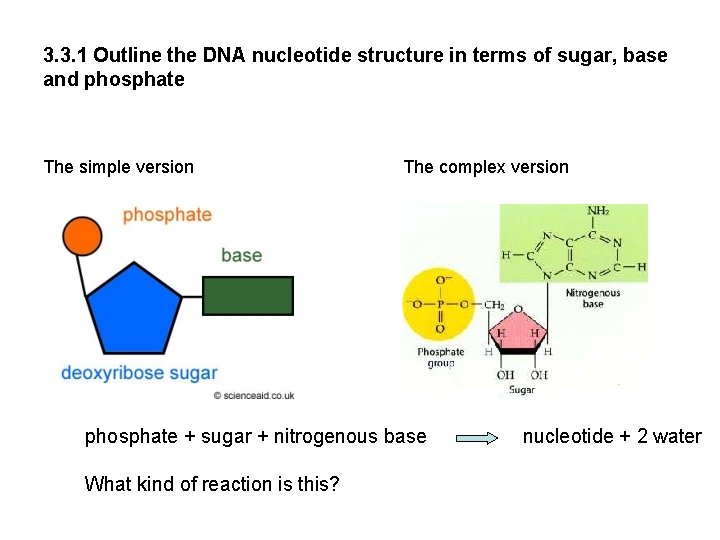
3. 3. 1 Outline the DNA nucleotide structure in terms of sugar, base and phosphate The simple version The complex version phosphate + sugar + nitrogenous base What kind of reaction is this? nucleotide + 2 water
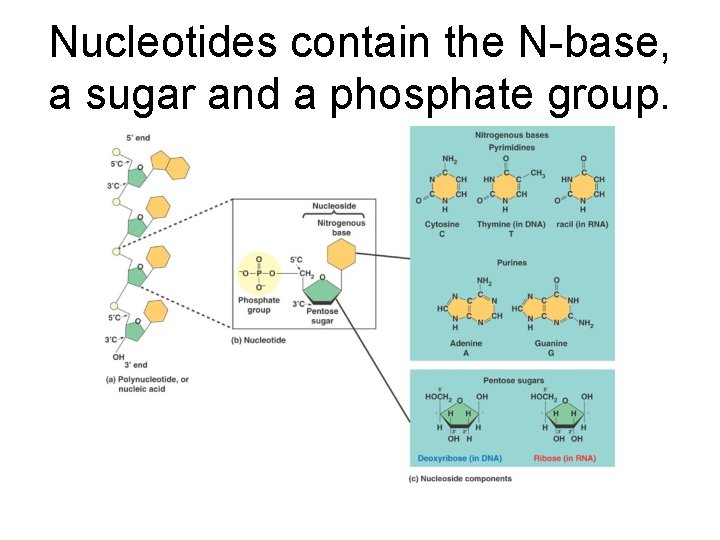
Nucleotides contain the N-base, a sugar and a phosphate group.
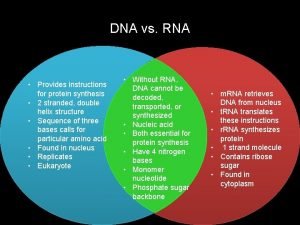
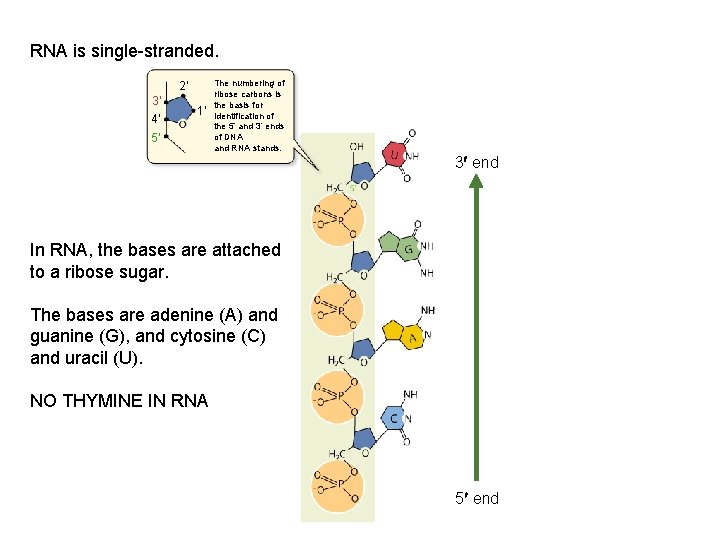
RNA is single-stranded. 2′ 3′ 4′ 1′ 5′ The numbering of ribose carbons is the basis for identification of the 5’ and 3’ ends of DNA and RNA stands. 3¢ end In RNA, the bases are attached to a ribose sugar. The bases are adenine (A) and guanine (G), and cytosine (C) and uracil (U). NO THYMINE IN RNA 5¢ end
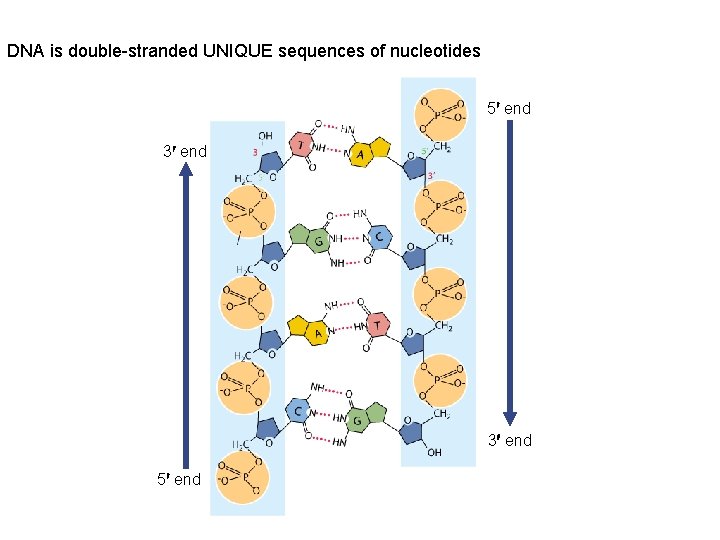
DNA is double-stranded UNIQUE sequences of nucleotides 5¢ end 3¢ end 5¢ end
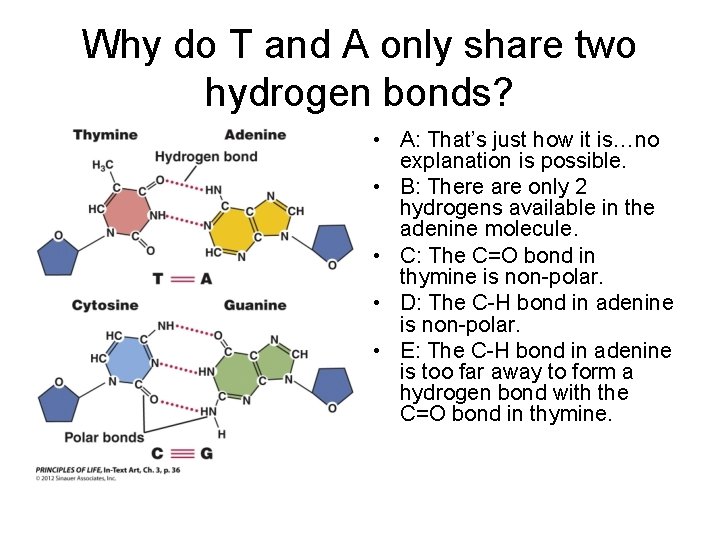
Why do T and A only share two hydrogen bonds? • A: That’s just how it is…no explanation is possible. • B: There are only 2 hydrogens available in the adenine molecule. • C: The C=O bond in thymine is non-polar. • D: The C-H bond in adenine is non-polar. • E: The C-H bond in adenine is too far away to form a hydrogen bond with the C=O bond in thymine.
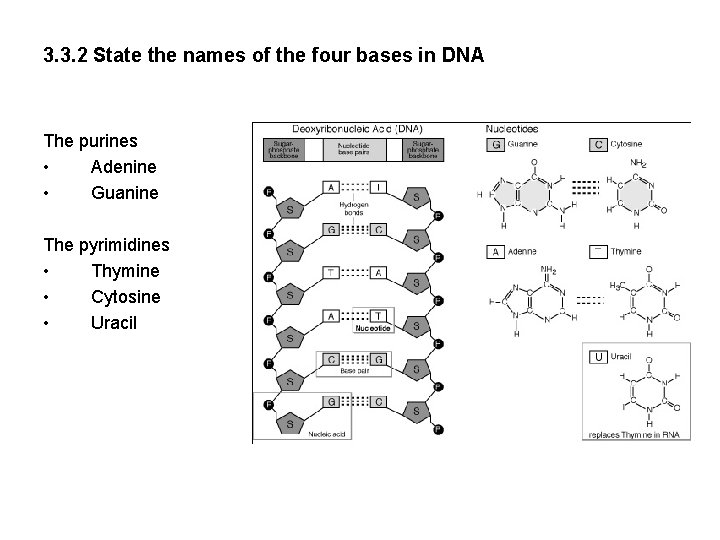
3. 3. 2 State the names of the four bases in DNA The purines • Adenine • Guanine The pyrimidines • Thymine • Cytosine • Uracil
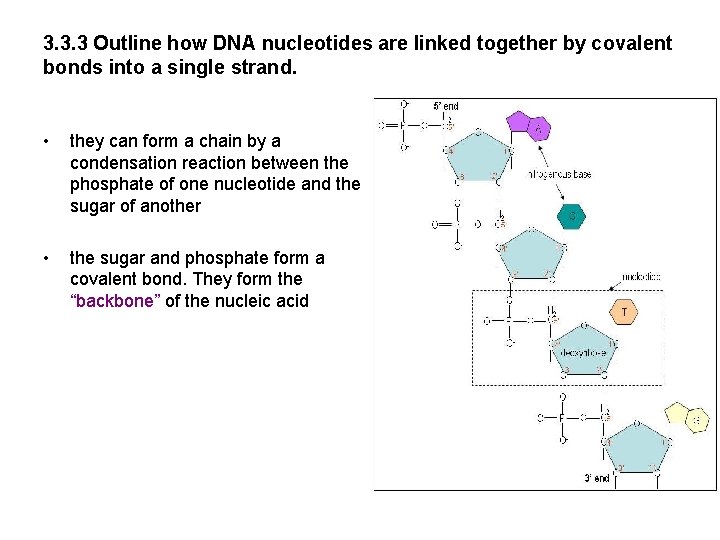
3. 3. 3 Outline how DNA nucleotides are linked together by covalent bonds into a single strand. • they can form a chain by a condensation reaction between the phosphate of one nucleotide and the sugar of another • the sugar and phosphate form a covalent bond. They form the “backbone” of the nucleic acid
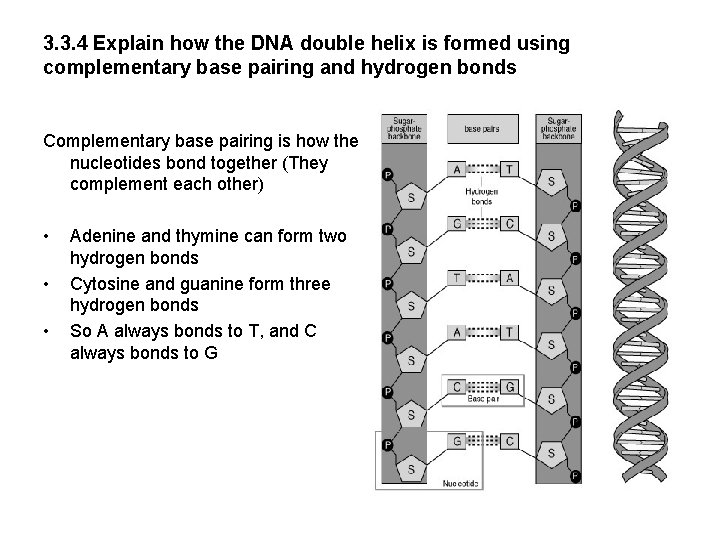
3. 3. 4 Explain how the DNA double helix is formed using complementary base pairing and hydrogen bonds Complementary base pairing is how the nucleotides bond together (They complement each other) • • • Adenine and thymine can form two hydrogen bonds Cytosine and guanine form three hydrogen bonds So A always bonds to T, and C always bonds to G
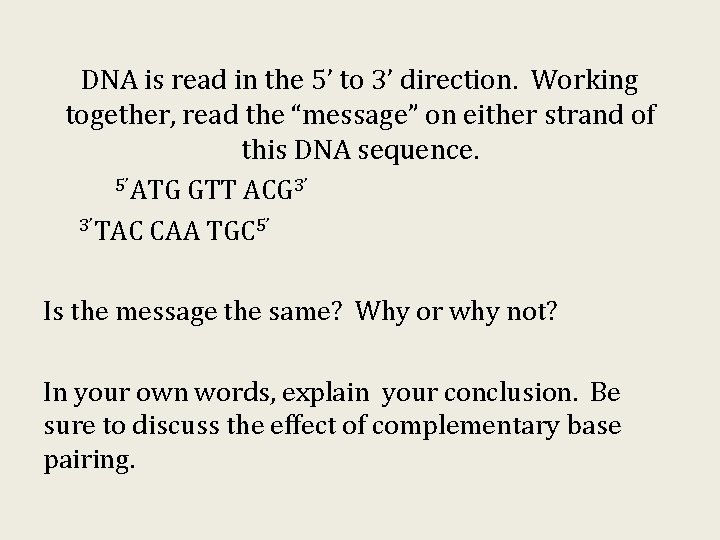
DNA is read in the 5’ to 3’ direction. Working together, read the “message” on either strand of this DNA sequence. 5’ATG GTT ACG 3’ 3’TAC CAA TGC 5’ Is the message the same? Why or why not? In your own words, explain your conclusion. Be sure to discuss the effect of complementary base pairing.
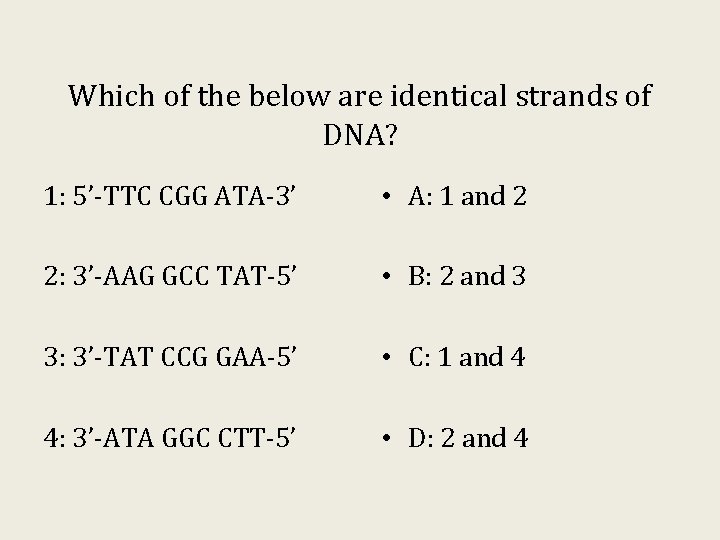
Which of the below are identical strands of DNA? 1: 5’-TTC CGG ATA-3’ • A: 1 and 2 2: 3’-AAG GCC TAT-5’ • B: 2 and 3 3: 3’-TAT CCG GAA-5’ • C: 1 and 4 4: 3’-ATA GGC CTT-5’ • D: 2 and 4
If one strand of a DNA molecule has the sequence 5’-TTC CGG ATA-3’ A: The complement strand is 5’-TTC CGG ATA-3’ B: The complement strand is 3’-AAG GCC TAT-5’ C: The complement strand is 3’-TAT CGG GAA-5’ D: The complement strand is 3’-ATC CGG AA-5’ E: The complement strand is 3’-TTC CGG ATA-5’
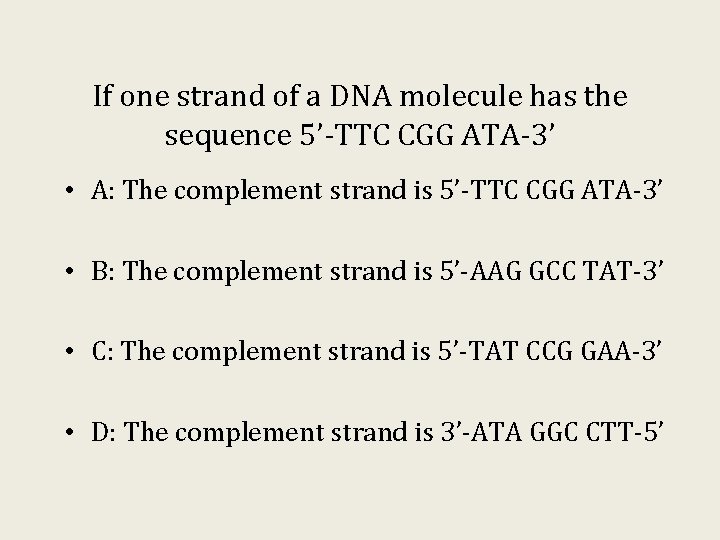
If one strand of a DNA molecule has the sequence 5’-TTC CGG ATA-3’ • A: The complement strand is 5’-TTC CGG ATA-3’ • B: The complement strand is 5’-AAG GCC TAT-3’ • C: The complement strand is 5’-TAT CCG GAA-3’ • D: The complement strand is 3’-ATA GGC CTT-5’