Undergraduate Research Experiences Developing a Purdue Community of
- Slides: 14
Undergraduate Research Experiences Developing a Purdue Community of Practice Kickoff meeting January 25, 2016
Meeting Objectives Build a better understanding of URE landscape at Purdue Explore the value of a community for sharing Knowledge Resources Evaluation Programming Identify areas for efficiencies Identify common challenges
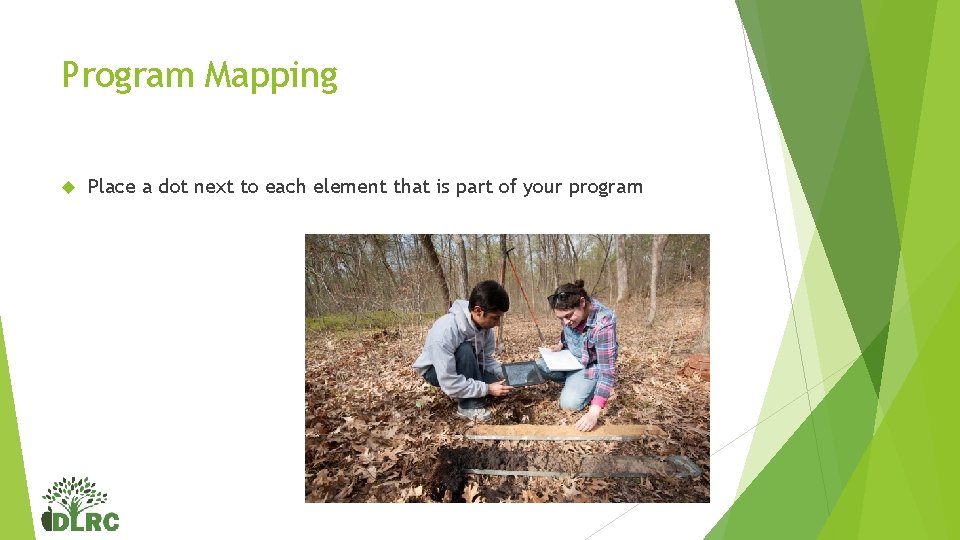
Program Mapping Place a dot next to each element that is part of your program
Undergraduate Research Experience : What research says about URE
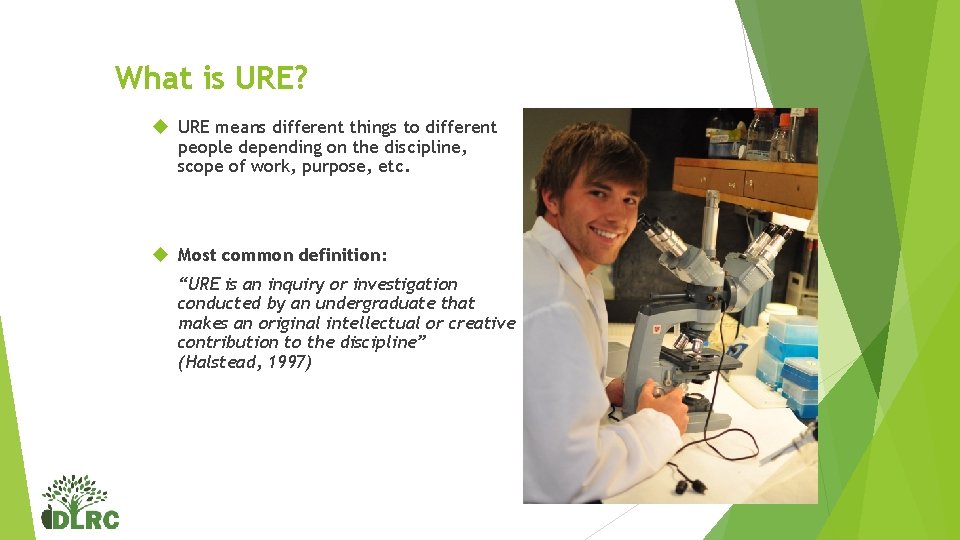
What is URE? URE means different things to different people depending on the discipline, scope of work, purpose, etc. Most common definition: “URE is an inquiry or investigation conducted by an undergraduate that makes an original intellectual or creative contribution to the discipline” (Halstead, 1997)
Outcomes of UREs: What does the research say? UREs benefit student educational and professional outcomes Learning outcomes and skill development (e. g. , critical thinking, communication, teamwork) (Ahlm, 1997; Adedokun, et al. , 2013; Davis & Glazier, 1997; Hunter, Laursen, & Seymour, 2007) Psychosocial and career development (e. g. , increased motivation, selfefficacy beliefs, awareness of career options, identity development) (Miller, Rycek, & Fritson, 2011; Adedokun et al. , 2012; Adedokun et al. , 2013) Persistence in undergraduate and graduate science education for majority and non majority students (Hippel, Lerner, Gregerman, Nagda, & Jonides, 1998; Hathaway, Nagda, & Gregerman, 2002; Jones, Barlow, & Villarejo, 2010) www. purdue. edu/dp/dlc
But how do UREs achieve these outcomes? URE is a cognitive and social apprenticeship (Brown, Collins, Duguid, 1989) social process; Learning is a competence in a domain is defined in terms of expertise rather than innate ability; meaningful learning is active, constructive and regulating; and learning activities should reflect real world rather than decontextualized academic tasks (Shuell, 1997, p. 751, self- cited in Kardash, 2000, p. 192). www. purdue. edu/dp/dlc
UREs as examples of apprenticeship learning Provide opportunities for undergraduate students, as novices in the “art” of research, to learn to “do” research by working collaboratively with research experts and more experienced peers Serve as platforms for the initiation and socialization of undergraduates into the research community of practice Increasingly meaningful activities and ownership of work with time (Fair et al. , 2004; Kardash, 2000; Stamatoplos, 2009) www. purdue. edu/dp/dlc
Flavors of UREs at Purdue -- Introductions Diverse combination of purposes, models, formats, activities, evaluation methods Please introduce yourself (name, department/unit) and your program(s). Where does your program(s) fall on each of the lists around the room? As you look around the room, what is one interesting thing you notice about the “survey” of program features?
Opportunities for a Purdue URE Community (Think/Pair/Share) Pair up with somebody at your table with a program that differs from yours in some aspect. Discuss differences and similarities between programs. Identify one potential area of collaboration between your programs. How could collaboration enhance the value to both programs? Report back to the large group.
Enhancing Value through Collaboration (Table Discussion) Each table member describe 1 -2 challenges your program faces Develop a list of common challenges for your table Record list Post list
Next Steps (Group Brainstorm) How might a URE Community of Practice help address common or specific challenges? What other purposes might a Co. P serve? What are next steps for this community?
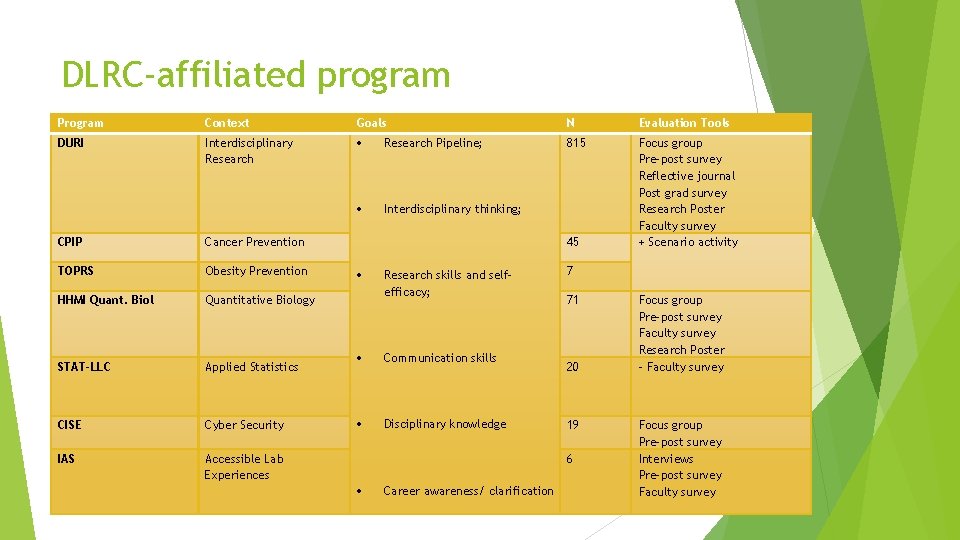
DLRC-affiliated program Program Context Goals N Evaluation Tools DURI Interdisciplinary Research Pipeline; 815 Interdisciplinary thinking; Focus group Pre-post survey Reflective journal Post grad survey Research Poster Faculty survey + Scenario activity CPIP Cancer Prevention TOPRS Obesity Prevention HHMI Quant. Biol Quantitative Biology STAT-LLC Applied Statistics CISE Cyber Security IAS Accessible Lab Experiences 45 Research skills and selfefficacy; Communication skills Disciplinary knowledge 7 71 20 19 6 Career awareness/ clarification Focus group Pre-post survey Faculty survey Research Poster - Faculty survey Focus group Pre-post survey Interviews Pre-post survey Faculty survey
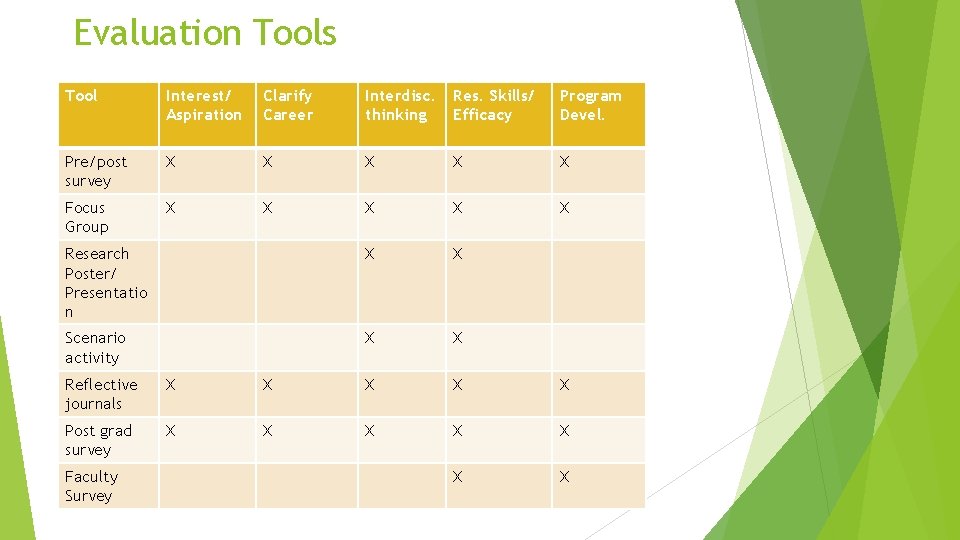
Evaluation Tools Tool Interest/ Aspiration Clarify Career Interdisc. thinking Res. Skills/ Efficacy Program Devel. Pre/post survey X X X Focus Group X X X Research Poster/ Presentatio n X X Scenario activity X X Reflective journals X X X Post grad survey X X X X Faculty Survey