Types of Fever and Inflammations General terms Latin






- Slides: 13
Types of Fever and Inflammations
General terms Latin Greek Definition Febris, f Pyret- Fever Calor, oris, m Therm- Heat
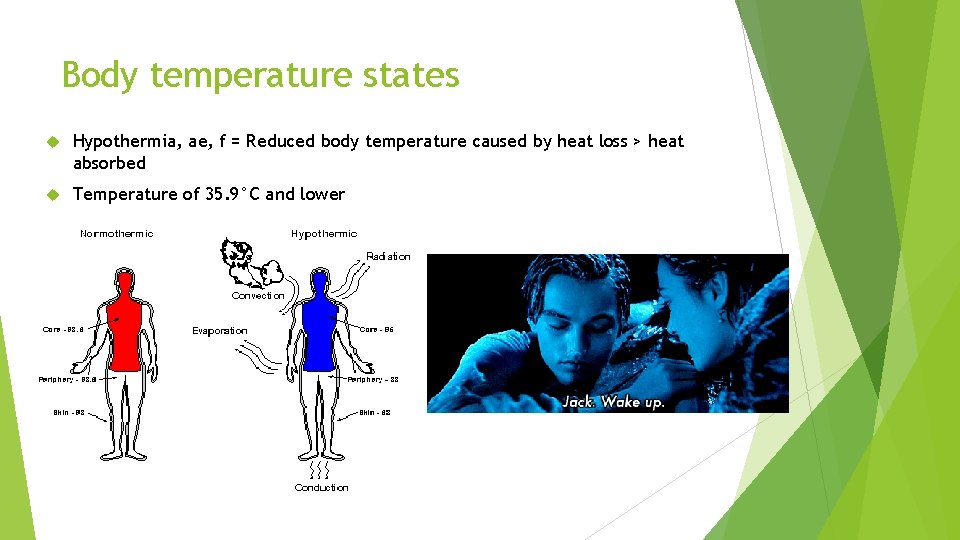
Body temperature states Hypothermia, ae, f = Reduced body temperature caused by heat loss > heat absorbed Temperature of 35. 9°C and lower
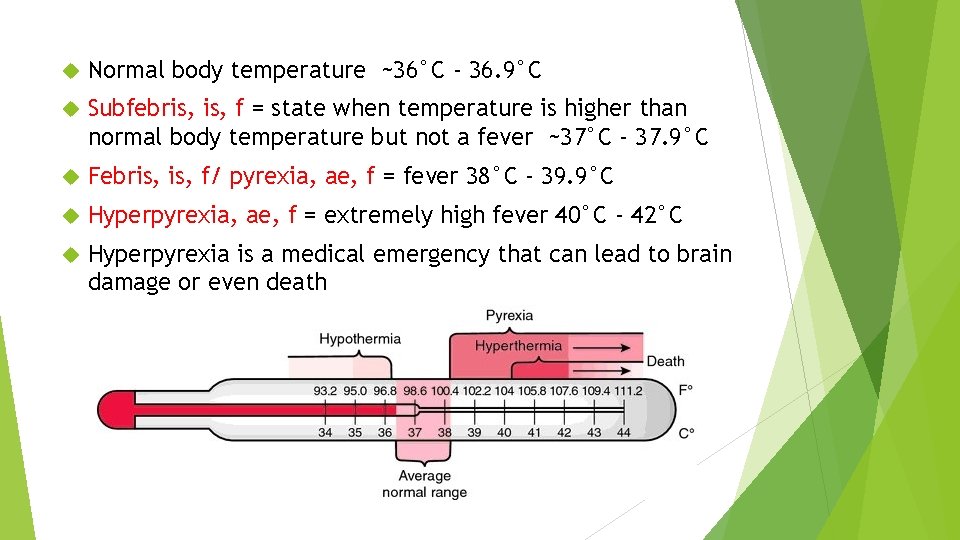
Normal body temperature ~36°C - 36. 9°C Subfebris, f = state when temperature is higher than normal body temperature but not a fever ~37°C - 37. 9°C Febris, f/ pyrexia, ae, f = fever 38°C - 39. 9°C Hyperpyrexia, ae, f = extremely high fever 40°C - 42°C Hyperpyrexia is a medical emergency that can lead to brain damage or even death
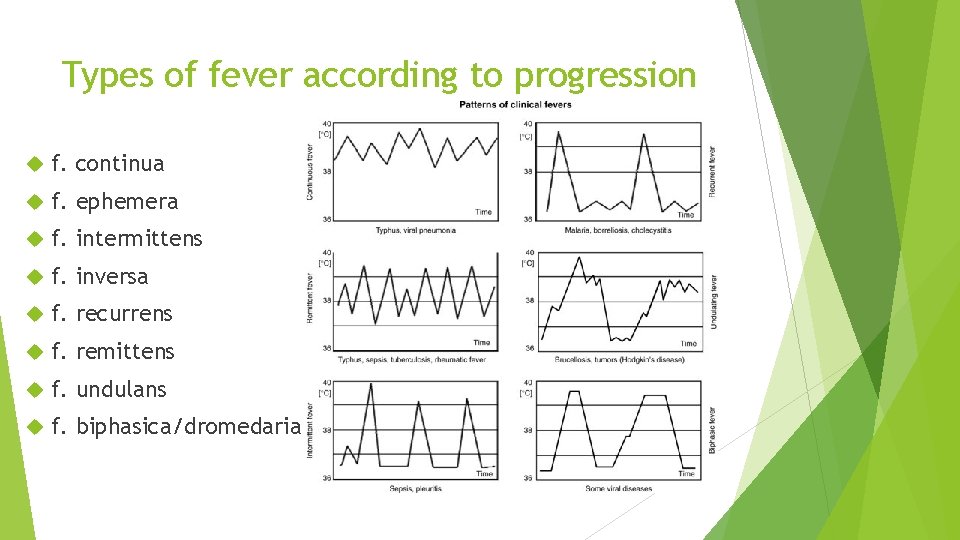
Types of fever according to progression f. continua f. ephemera f. intermittens f. inversa f. recurrens f. remittens f. undulans f. biphasica/dromedaria
Types of fever typically accompanying a particular disease f. glandularis = accompanies mononucleosis f. gastrica = typhoid fever f. herpetica = accompanies herpetic disease f. lactea = accompanies inflammation of mammary gland f. pallida = typical of paleness e. g. rheumatic fever f. tertiana; quartana; quintana; quotidiana = fever repeating itself every 3/4/5 days; typical for malaria
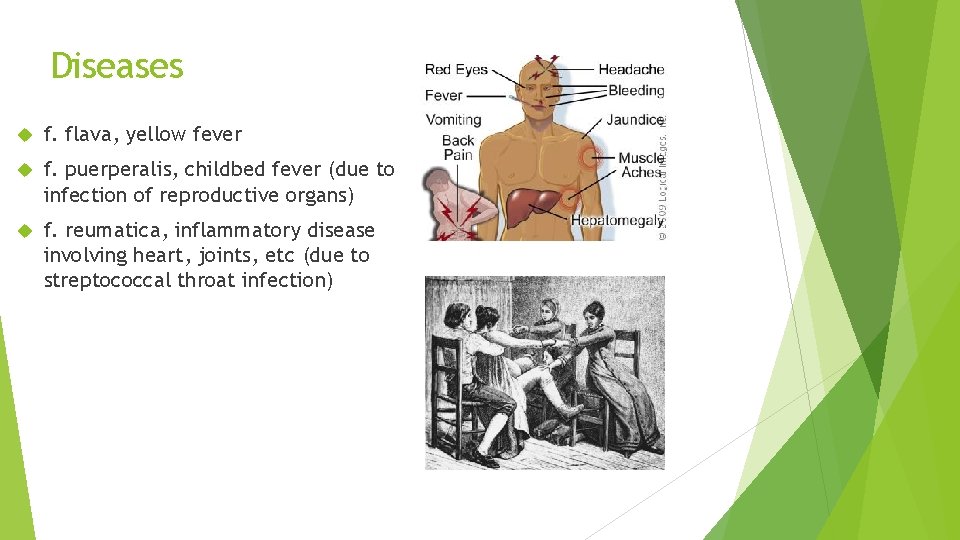
Diseases f. flava, yellow fever f. puerperalis, childbed fever (due to infection of reproductive organs) f. reumatica, inflammatory disease involving heart, joints, etc (due to streptococcal throat infection)
Inflammations General terms Latin Greek Inflammatio, onis, f. – inflammation of sth; rarely used! Phlegmone = originally an inflammation; nowadays it denotes a spreading diffuseinflammatory process with formation of purulent exudate (pus)
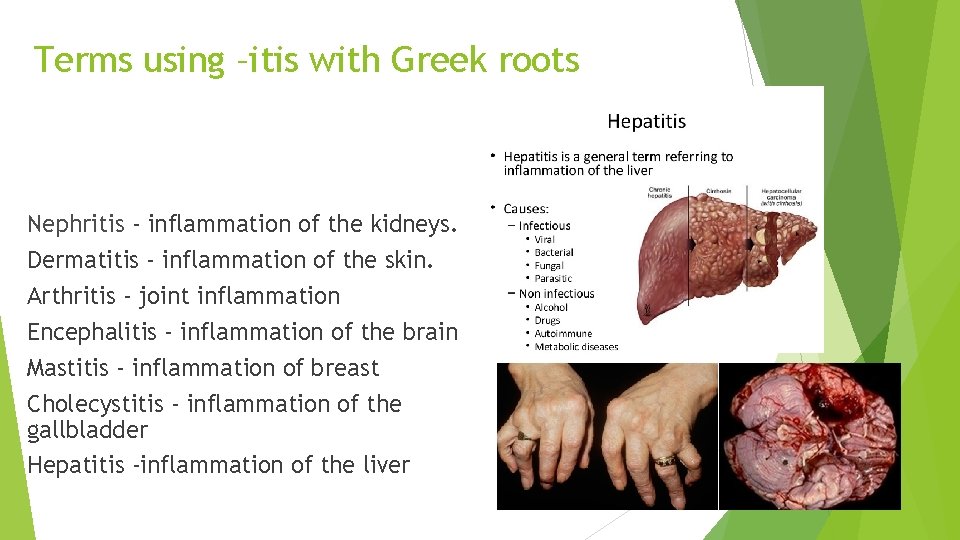
Terms using –itis with Greek roots Nephritis - inflammation of the kidneys. Dermatitis - inflammation of the skin. Arthritis - joint inflammation Encephalitis - inflammation of the brain Mastitis - inflammation of breast Cholecystitis - inflammation of the gallbladder Hepatitis -inflammation of the liver
Terms using –itis with Latin roots appendicitis - inflammation of the appendix gingivitis - inflammation of gums cervicitis - inflammation of the uterine cervix pulpitis - inflammation of dental pulp tissue sinusitis frontalis - inflammation of the sinuses
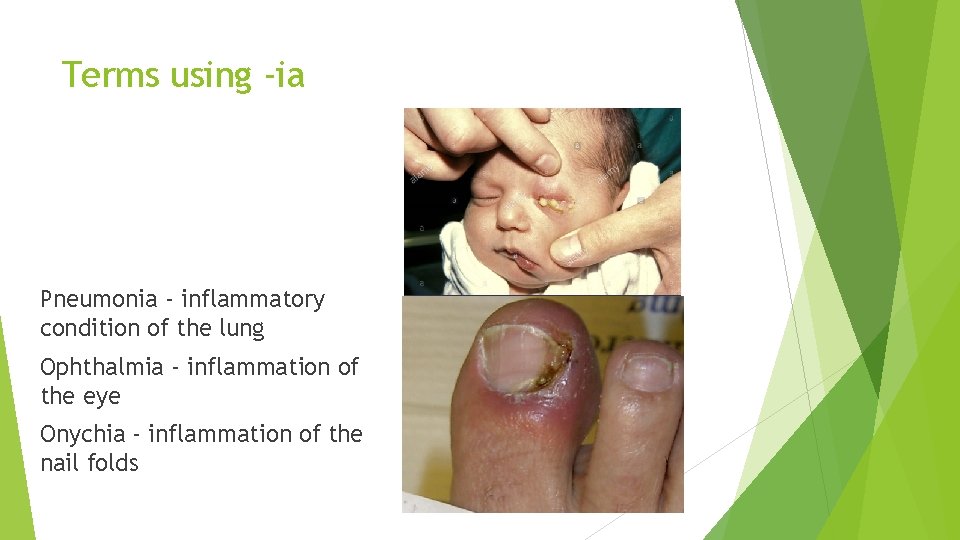
Terms using -ia Pneumonia - inflammatory condition of the lung Ophthalmia - inflammation of the eye Onychia - inflammation of the nail folds
Cholecystitis f. gastrica Onychia f. puerperalis Gingivitis ?
Cholecystitis = inflammation of gallbladder f. gastrica = Thyroid fever Onychia = inflammation of the nail folds f. puerperalis = childbed fever Gingivitis = inflammation of the gums