
MUSIC TERMS DERIVED FROM LATIN By Silvanus GRAVE
MUSIC TERMS DERIVED FROM LATIN By Silvanus
GRAVE Means slow and solemn, it is derived from the Latin term gravis, meaning heavy and serious.
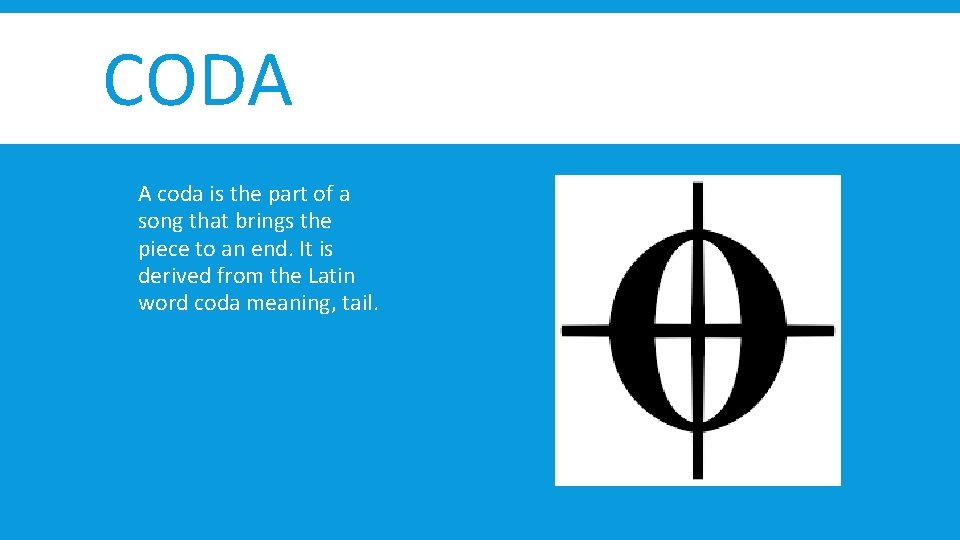
CODA A coda is the part of a song that brings the piece to an end. It is derived from the Latin word coda meaning, tail.
CHORUS A chorus is a group of singers, and its name is taken directly Latin.
MAJOR Means a major key, the intervals of a scale. It is derived from the Latin term, magnus, meaning great.
FORAMINA Refers to the holes in an instrument like a flute. It is derived from the Latin word, farare, meaning to bore a hole.
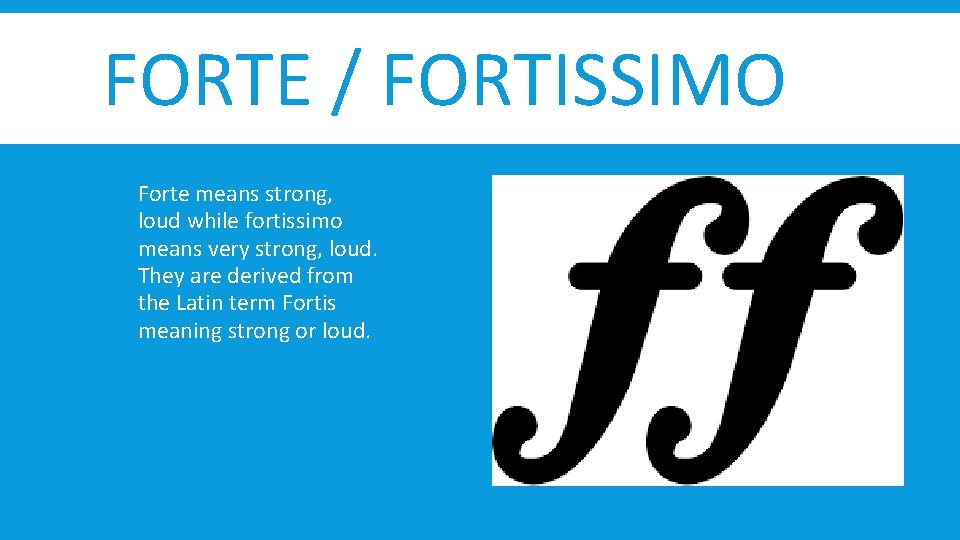
FORTE / FORTISSIMO Forte means strong, loud while fortissimo means very strong, loud. They are derived from the Latin term Fortis meaning strong or loud.
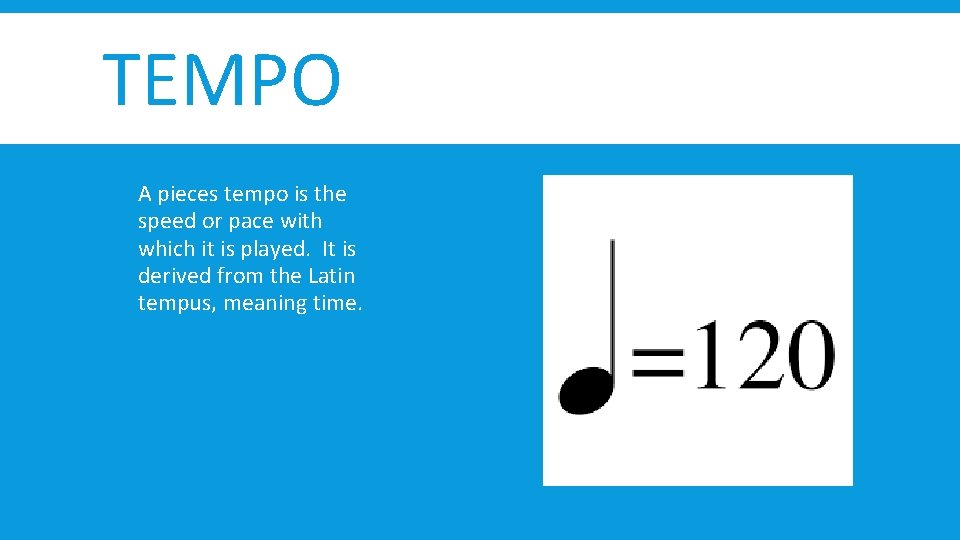
TEMPO A pieces tempo is the speed or pace with which it is played. It is derived from the Latin tempus, meaning time.
SOLO A solo is a section of music where only one musician plays. It is derived from the Latin term solus, meaning alone.
DUET A duet is a piece of music where only two musicians play. It is derived from the Latin number duo, meaning two.
TRIO A trio is group of 3 musicians playing together. It is derived from the Latin number tres, meaning three.
QUARTET A quartet is group of 4 musicians playing together. It is derived from the Latin term quartus, meaning fourth.
QUINTET A quintet is group of 5 musicians playing together. It is derived from the Latin term quintus, meaning fifth.
SEXTET A sextet is a group of 6 musicians playing together. It is derived from the Latin number sex, meaning six.
SEPTET A septet is a group of 7 musicians playing together. It is derived from the Latin number septem, meaning seven.
- Slides: 15