To enforce and comply UK Experience Andrea Appella
- Slides: 13
To enforce and comply – UK Experience Andrea Appella Director of International ACLE, 5 th March 2009
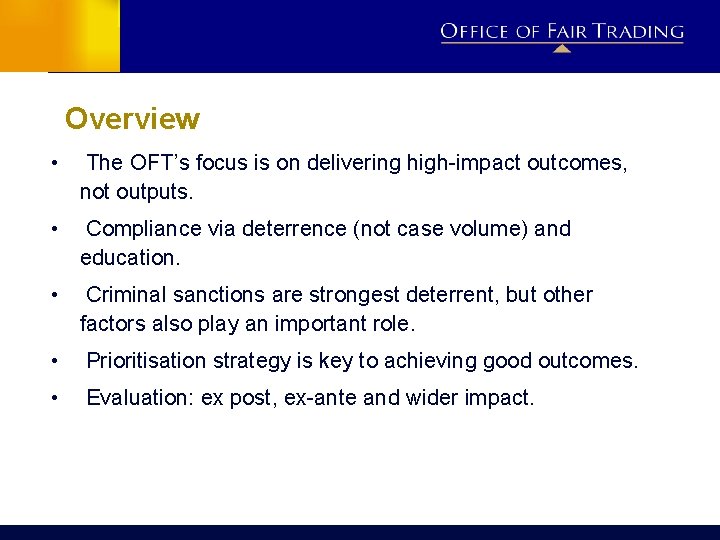
Overview • The OFT’s focus is on delivering high-impact outcomes, not outputs. • Compliance via deterrence (not case volume) and education. • Criminal sanctions are strongest deterrent, but other factors also play an important role. • Prioritisation strategy is key to achieving good outcomes. • Evaluation: ex post, ex-ante and wider impact.
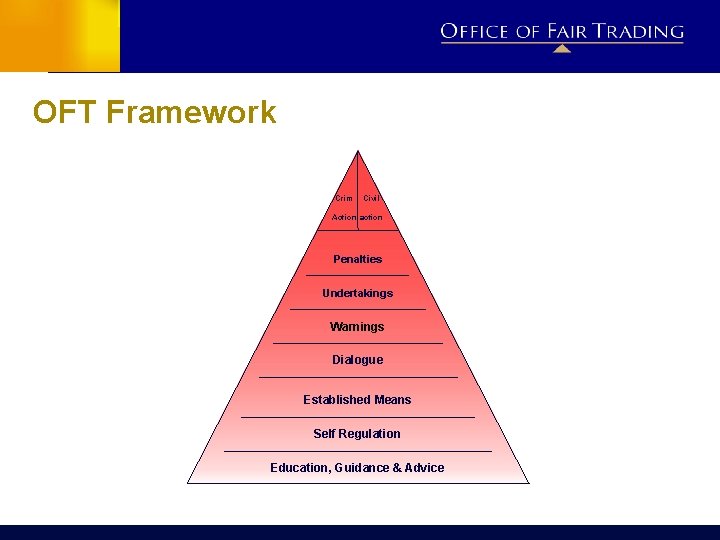
OFT Framework Crim Civil Action action Penalties Undertakings Warnings Dialogue Established Means Self Regulation Education, Guidance & Advice
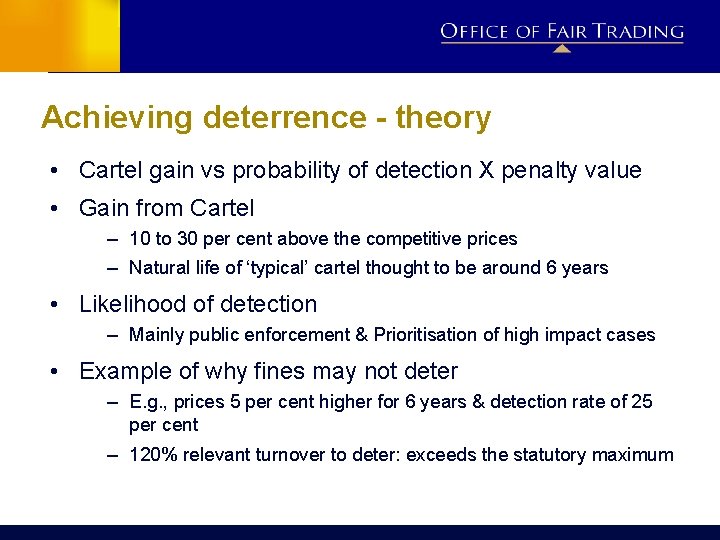
Achieving deterrence - theory • Cartel gain vs probability of detection X penalty value • Gain from Cartel – 10 to 30 per cent above the competitive prices – Natural life of ‘typical’ cartel thought to be around 6 years • Likelihood of detection – Mainly public enforcement & Prioritisation of high impact cases • Example of why fines may not deter – E. g. , prices 5 per cent higher for 6 years & detection rate of 25 per cent – 120% relevant turnover to deter: exceeds the statutory maximum
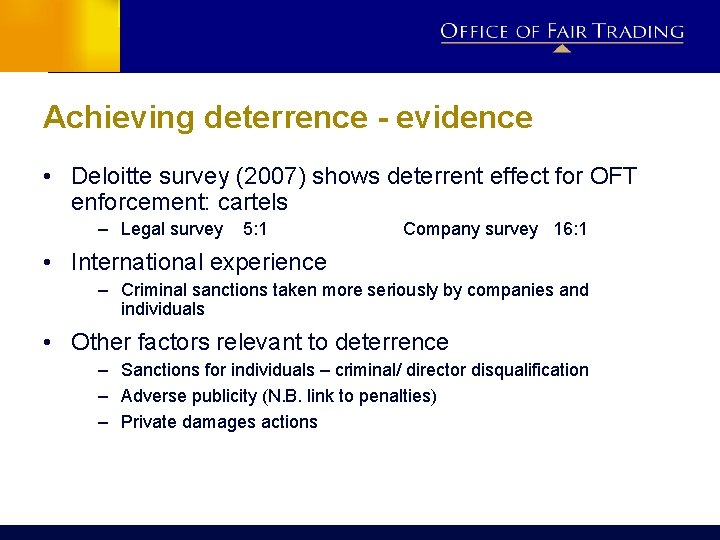
Achieving deterrence - evidence • Deloitte survey (2007) shows deterrent effect for OFT enforcement: cartels – Legal survey 5: 1 Company survey 16: 1 • International experience – Criminal sanctions taken more seriously by companies and individuals • Other factors relevant to deterrence – Sanctions for individuals – criminal/ director disqualification – Adverse publicity (N. B. link to penalties) – Private damages actions
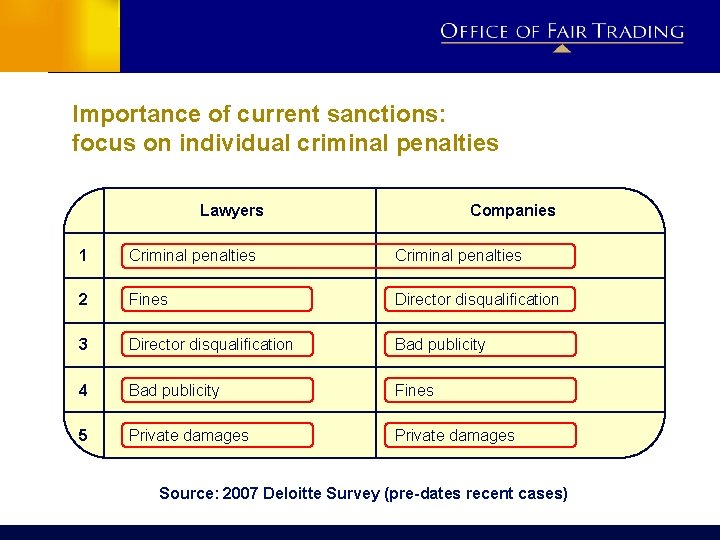
Importance of current sanctions: focus on individual criminal penalties Lawyers Companies 1 Criminal penalties 2 Fines Director disqualification 3 Director disqualification Bad publicity 4 Bad publicity Fines 5 Private damages Source: 2007 Deloitte Survey (pre-dates recent cases)
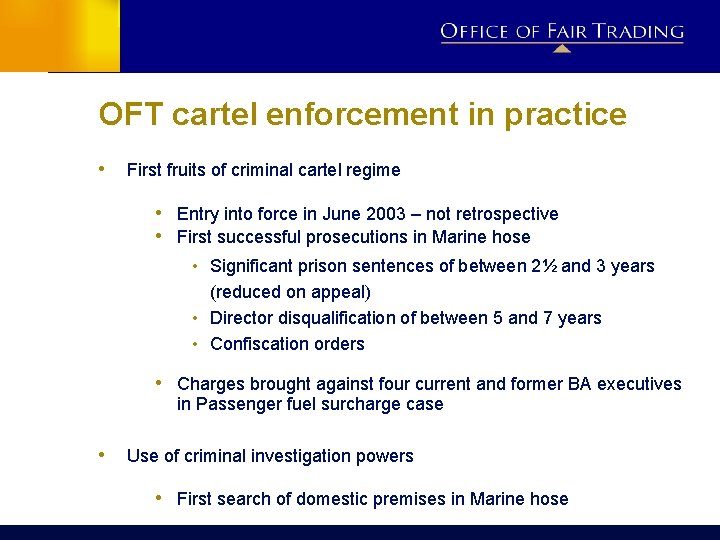
OFT cartel enforcement in practice • First fruits of criminal cartel regime • Entry into force in June 2003 – not retrospective • First successful prosecutions in Marine hose • Significant prison sentences of between 2½ and 3 years (reduced on appeal) • Director disqualification of between 5 and 7 years • Confiscation orders • Charges brought against four current and former BA executives in Passenger fuel surcharge case • Use of criminal investigation powers • First search of domestic premises in Marine hose
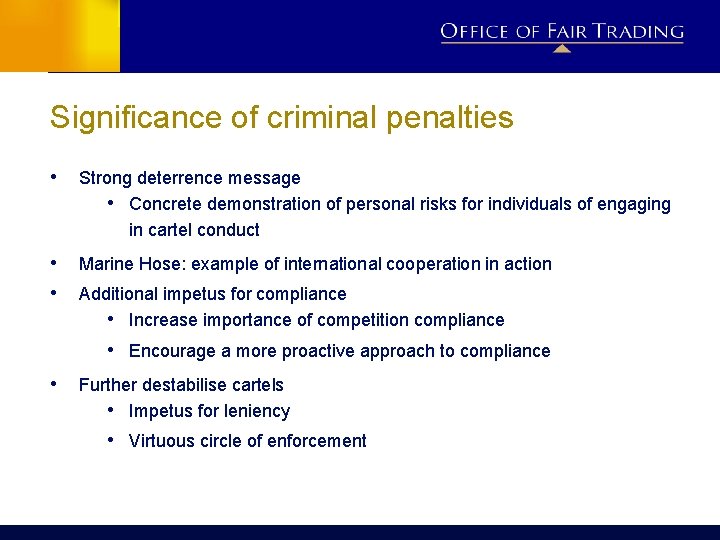
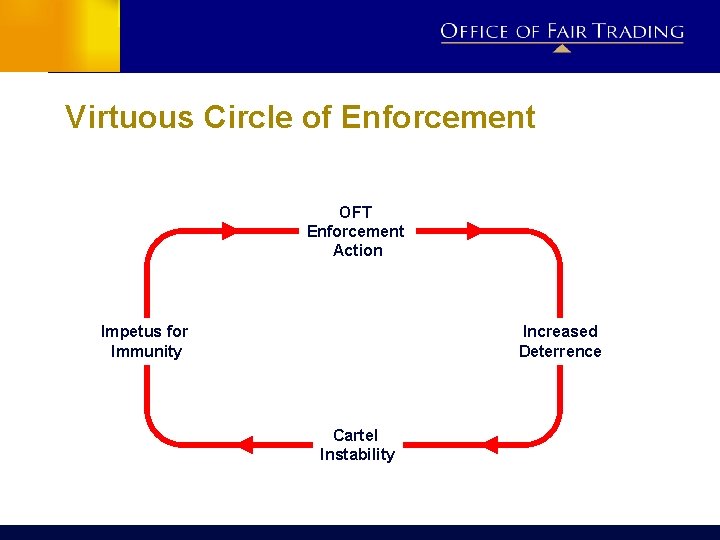
Significance of criminal penalties • Strong deterrence message • Concrete demonstration of personal risks for individuals of engaging in cartel conduct • Marine Hose: example of international cooperation in action • Additional impetus for compliance • Increase importance of competition compliance • Encourage a more proactive approach to compliance • Further destabilise cartels • Impetus for leniency • Virtuous circle of enforcement
Virtuous Circle of Enforcement OFT Enforcement Action Impetus for Immunity Increased Deterrence Cartel Instability
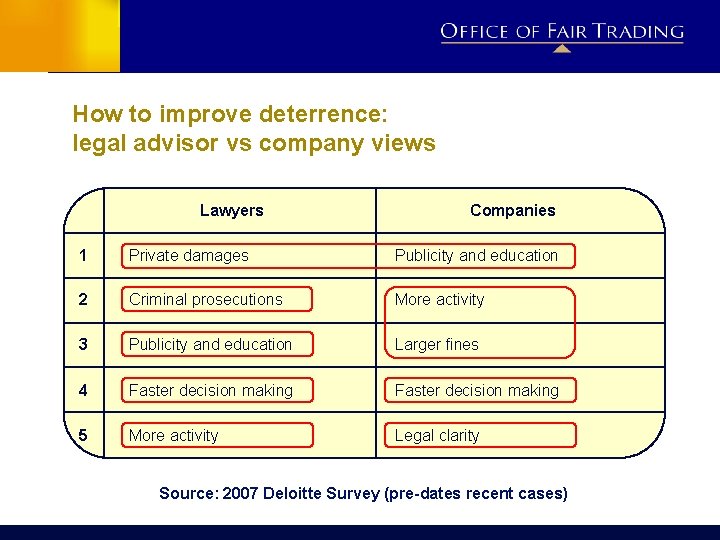
How to improve deterrence: legal advisor vs company views Lawyers Companies 1 Private damages Publicity and education 2 Criminal prosecutions More activity 3 Publicity and education Larger fines 4 Faster decision making 5 More activity Legal clarity Source: 2007 Deloitte Survey (pre-dates recent cases)
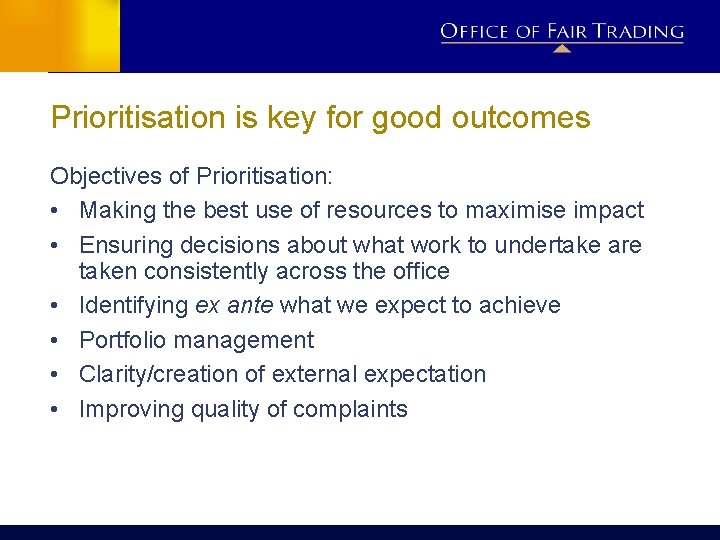
Prioritisation is key for good outcomes Objectives of Prioritisation: • Making the best use of resources to maximise impact • Ensuring decisions about what work to undertake are taken consistently across the office • Identifying ex ante what we expect to achieve • Portfolio management • Clarity/creation of external expectation • Improving quality of complaints
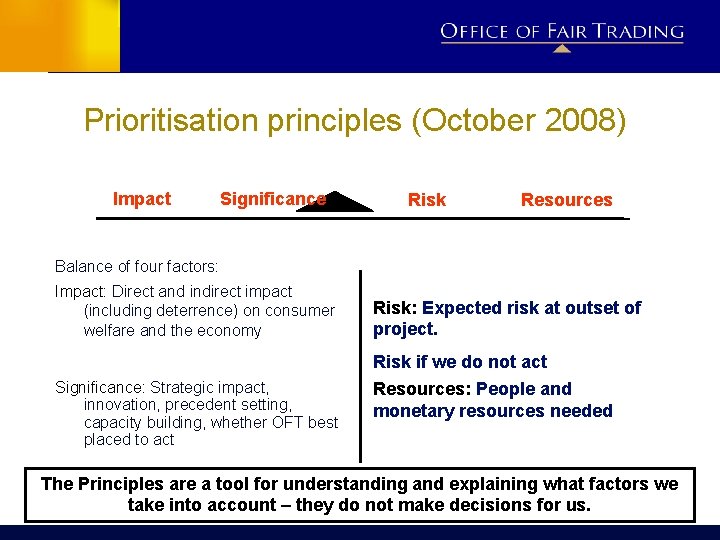
Prioritisation principles (October 2008) Impact Significance Risk Resources Balance of four factors: Impact: Direct and indirect impact (including deterrence) on consumer welfare and the economy Risk: Expected risk at outset of project. Risk if we do not act Significance: Strategic impact, innovation, precedent setting, capacity building, whether OFT best placed to act Resources: People and monetary resources needed The Principles are a tool for understanding and explaining what factors we take into account – they do not make decisions for us.
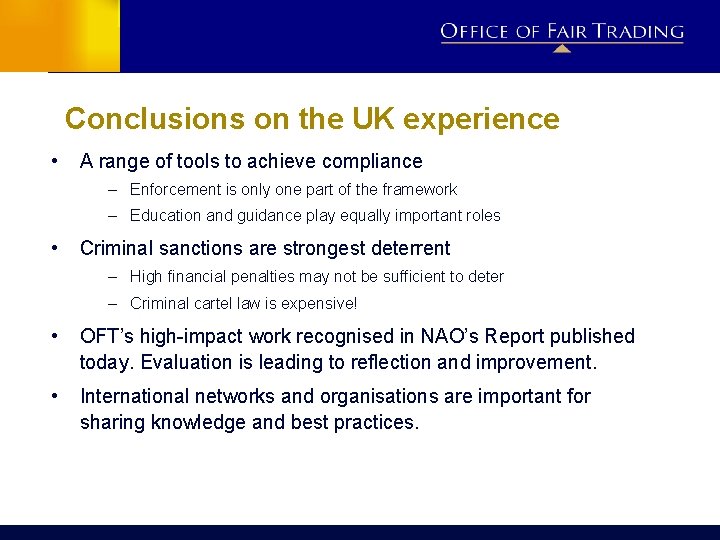
Conclusions on the UK experience • A range of tools to achieve compliance – Enforcement is only one part of the framework – Education and guidance play equally important roles • Criminal sanctions are strongest deterrent – High financial penalties may not be sufficient to deter – Criminal cartel law is expensive! • OFT’s high-impact work recognised in NAO’s Report published today. Evaluation is leading to reflection and improvement. • International networks and organisations are important for sharing knowledge and best practices.