Thyroid Antithyroid Drugs Dept of Pharmacology CIPS Introduction

- Slides: 20
Thyroid & Antithyroid Drugs Dept. of Pharmacology, CIPS
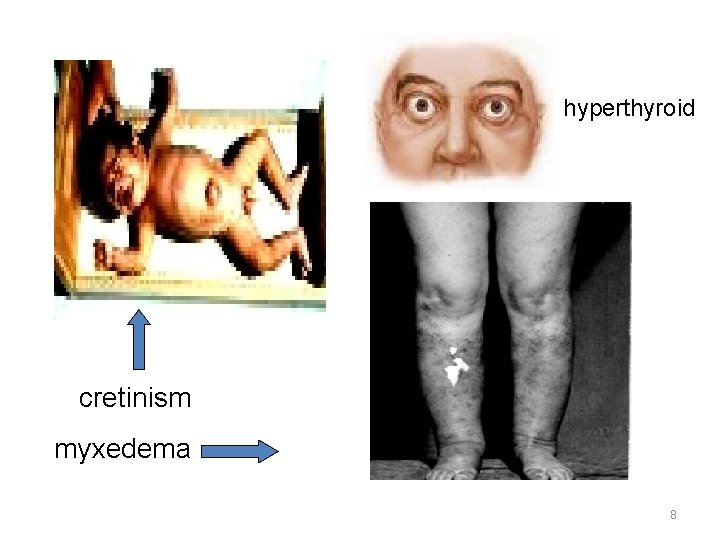
Introduction: • Thyroid releases T 3 & T 4 • The ratio of T 4 to T 3 is 5: 1, so most of the hormone released is thyroxine • Most of the T 3 in the blood is derived from thyroxine • T 3 is three to four times more potent than T 4 • The affinity of the receptor site for T 3 is about ten times higher than that for T 4 Physiological actions of thyroid hormones • To normalize growth and development, body temperature, and energy levels – Insufficiency→ cretinism (infant & child), and myxedema (adult); – Excess→hyperthyroid • To enhance CNS excitability & sensitivity of CVS to NA
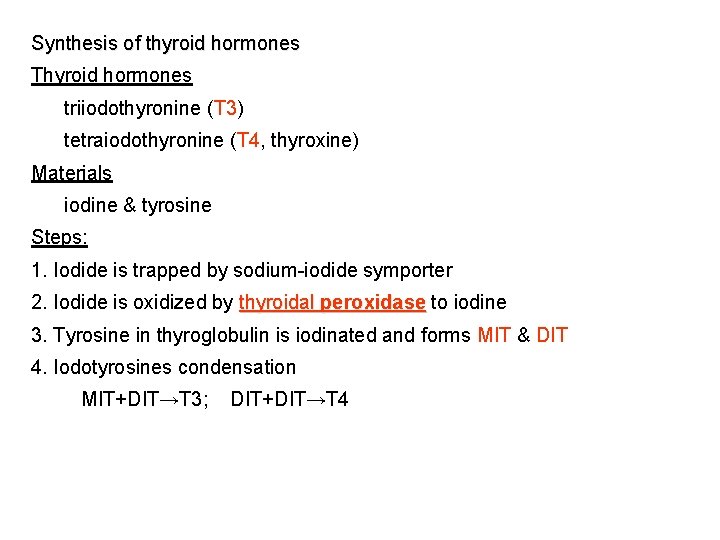
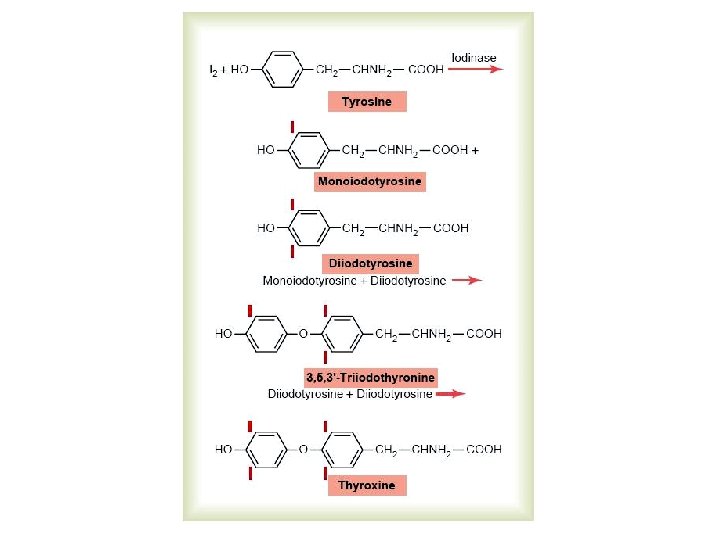
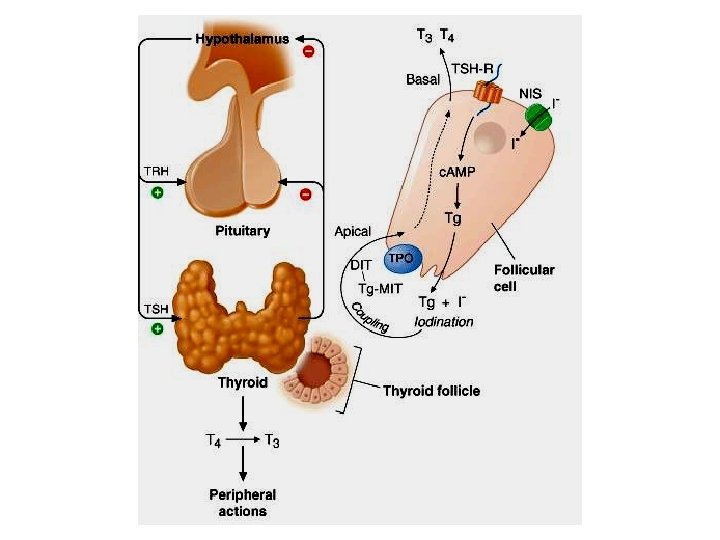
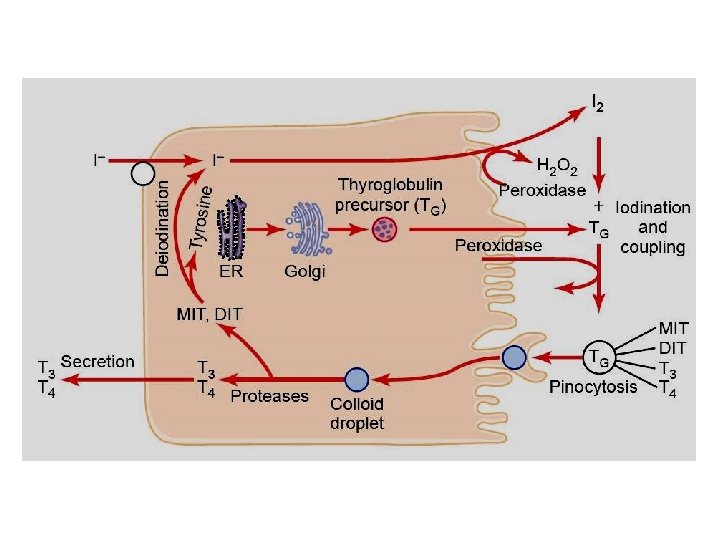
Synthesis of thyroid hormones Thyroid hormones triiodothyronine (T 3) tetraiodothyronine (T 4, thyroxine) Materials iodine & tyrosine Steps: 1. Iodide is trapped by sodium-iodide symporter 2. Iodide is oxidized by thyroidal peroxidase to iodine peroxidase 3. Tyrosine in thyroglobulin is iodinated and forms MIT & DIT 4. Iodotyrosines condensation MIT+DIT→T 3; DIT+DIT→T 4
hyperthyroid cretinism myxedema 8
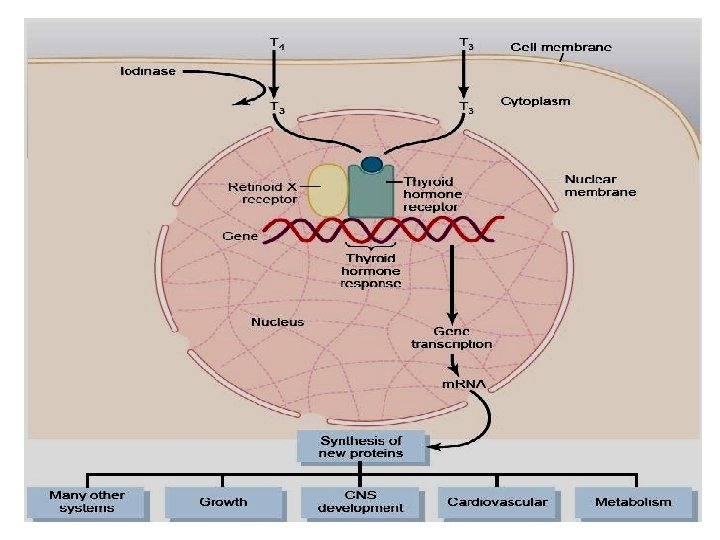
Thyroid hormone activation of target cells: • Thyroxine (T 4) and triiodothyronine (T 3) readily diffuse through the cell membrane. • Much of the T 4 is deiodinated to form T 3, which interacts with the thyroid hormone receptor, bound as a heterodimer with a retinoid X receptor, of the thyroid hormone response element of the gene. • This causes either increases or decreases in transcription of genes that lead to formation of proteins, thus producing the thyroid hormone response of the cell. • The actions of thyroid hormone on cells of several different systems are shown. m. RNA, messenger ribonucleic acid. Thyroid drugs Representative drugs • levothyroxine (L-T 4, levoxyl, synthroid) • liothyronine (T 3, cytomel, triostat) • liotrix (T 4 plus T 3) (euthyroid, thyrolar)
Pharmacokinetics • po easily absorbed; the bioavailablity of T 4 is 80%, and T 3 is 95%. • Drugs that induce hepatic microsomal enzymes (e. g. , rifampin, phenbarbital, phenytoin, and etc) improve their metabolism. • Levothyroxine is the choice drug for hypothyroidism • T 4 is converted to T 3 intracellularly so levothyroxine produces both hormones • If angina pectoris or cardiac arrhythmia develops, it is essential to stop thyroxine immediately Clinical use: 1. Hypothyroidism: cretinism & myxedema; 2. simple goiter: for pathogenisis remaining unclear Adverse reactions – Overmuch leads to thyrotoxicosis; – Angina or myocardial infarction usually appears in ageds
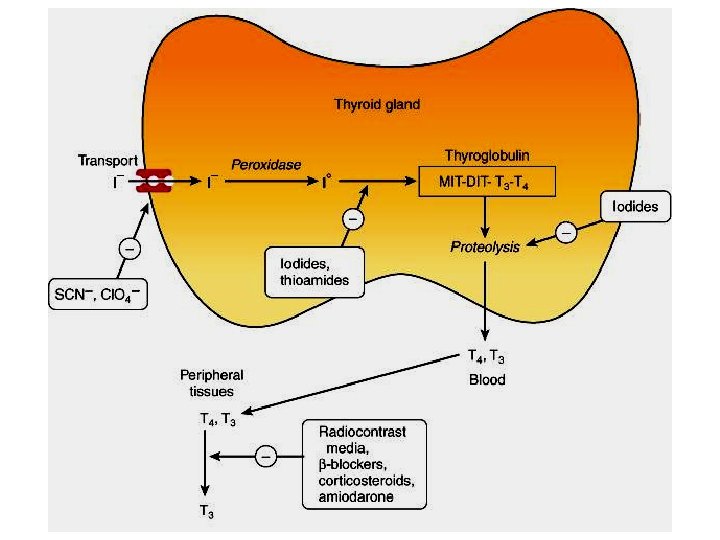
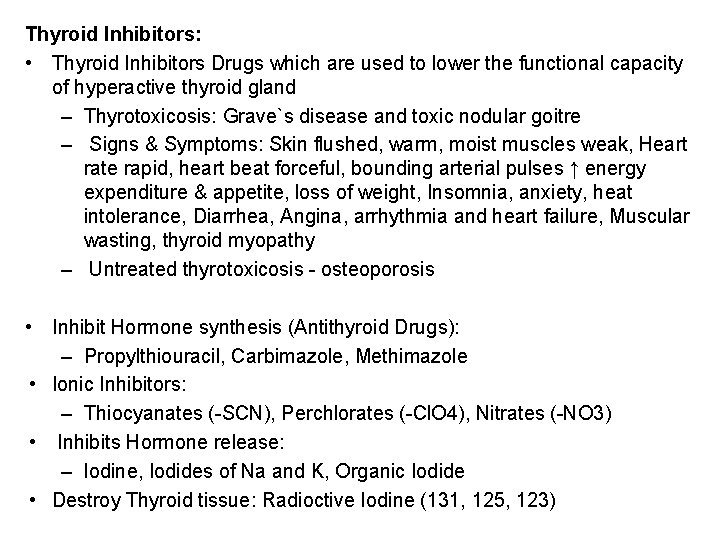
Thyroid Inhibitors: • Thyroid Inhibitors Drugs which are used to lower the functional capacity of hyperactive thyroid gland – Thyrotoxicosis: Grave`s disease and toxic nodular goitre – Signs & Symptoms: Skin flushed, warm, moist muscles weak, Heart rate rapid, heart beat forceful, bounding arterial pulses ↑ energy expenditure & appetite, loss of weight, Insomnia, anxiety, heat intolerance, Diarrhea, Angina, arrhythmia and heart failure, Muscular wasting, thyroid myopathy – Untreated thyrotoxicosis - osteoporosis • Inhibit Hormone synthesis (Antithyroid Drugs): – Propylthiouracil, Carbimazole, Methimazole • Ionic Inhibitors: – Thiocyanates (-SCN), Perchlorates (-Cl. O 4), Nitrates (-NO 3) • Inhibits Hormone release: – Iodine, Iodides of Na and K, Organic Iodide • Destroy Thyroid tissue: Radioctive Iodine (131, 125, 123)
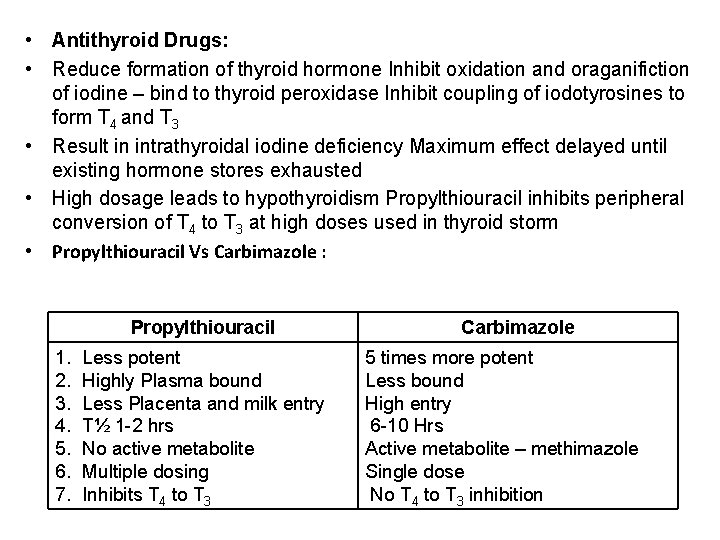
• Antithyroid Drugs: • Reduce formation of thyroid hormone Inhibit oxidation and oraganifiction of iodine – bind to thyroid peroxidase Inhibit coupling of iodotyrosines to form T 4 and T 3 • Result in intrathyroidal iodine deficiency Maximum effect delayed until existing hormone stores exhausted • High dosage leads to hypothyroidism Propylthiouracil inhibits peripheral conversion of T 4 to T 3 at high doses used in thyroid storm • Propylthiouracil Vs Carbimazole : Propylthiouracil 1. 2. 3. 4. 5. 6. 7. Less potent Highly Plasma bound Less Placenta and milk entry T½ 1 -2 hrs No active metabolite Multiple dosing Inhibits T 4 to T 3 Carbimazole 5 times more potent Less bound High entry 6 -10 Hrs Active metabolite – methimazole Single dose No T 4 to T 3 inhibition
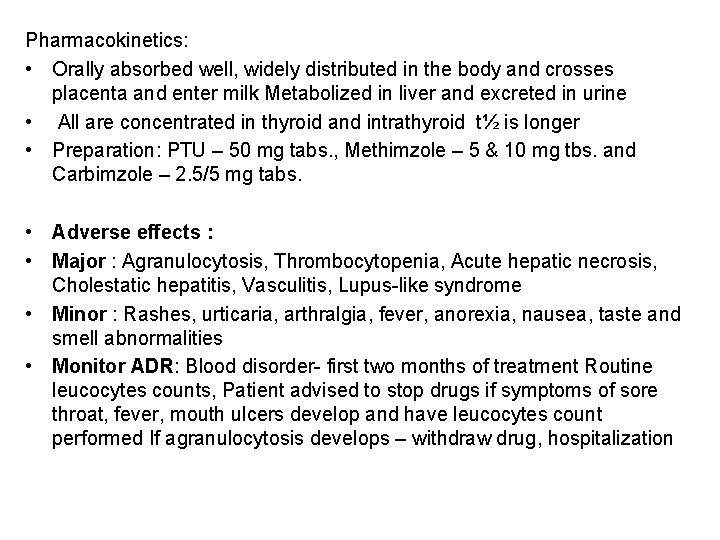
Pharmacokinetics: • Orally absorbed well, widely distributed in the body and crosses placenta and enter milk Metabolized in liver and excreted in urine • All are concentrated in thyroid and intrathyroid t½ is longer • Preparation: PTU – 50 mg tabs. , Methimzole – 5 & 10 mg tbs. and Carbimzole – 2. 5/5 mg tabs. • Adverse effects : • Major : Agranulocytosis, Thrombocytopenia, Acute hepatic necrosis, Cholestatic hepatitis, Vasculitis, Lupus-like syndrome • Minor : Rashes, urticaria, arthralgia, fever, anorexia, nausea, taste and smell abnormalities • Monitor ADR: Blood disorder- first two months of treatment Routine leucocytes counts, Patient advised to stop drugs if symptoms of sore throat, fever, mouth ulcers develop and have leucocytes count performed If agranulocytosis develops – withdraw drug, hospitalization
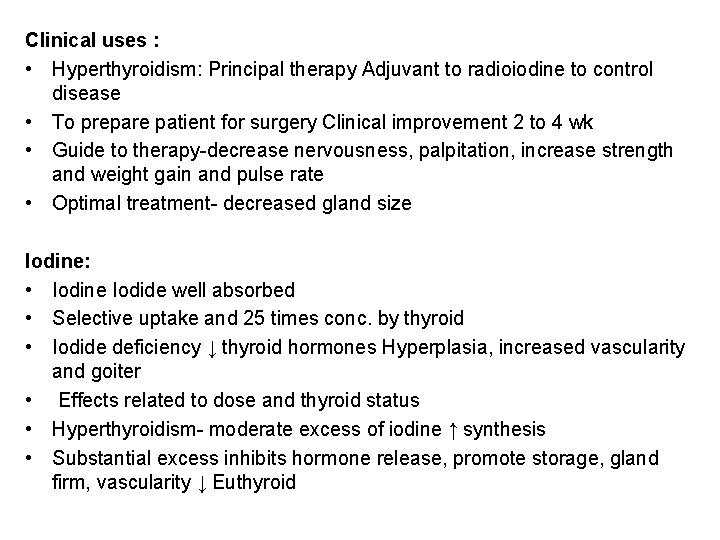
Clinical uses : • Hyperthyroidism: Principal therapy Adjuvant to radioiodine to control disease • To prepare patient for surgery Clinical improvement 2 to 4 wk • Guide to therapy-decrease nervousness, palpitation, increase strength and weight gain and pulse rate • Optimal treatment- decreased gland size Iodine: • Iodine Iodide well absorbed • Selective uptake and 25 times conc. by thyroid • Iodide deficiency ↓ thyroid hormones Hyperplasia, increased vascularity and goiter • Effects related to dose and thyroid status • Hyperthyroidism- moderate excess of iodine ↑ synthesis • Substantial excess inhibits hormone release, promote storage, gland firm, vascularity ↓ Euthyroid
Clinical uses: • Large doses for thyroid crisis • Preparation for thyroidectomy KI 60 mg orally 8 hrly produces effects in 12 days, maximal 10 -24 days KI for 3 days to cover I 132 or I 123 isotopes • Prophylaxis of endemic cretinism –inj. Iodized oil IM 3 -5 years • Antiseptic on skin / surgical scrub, expectorant ADRs : • IODISM- metallic taste, hypersalivation, running eyes and nose, sore throat, cough, diarrhea, skin rashes • Prolonged use- goiter and myxoedema Goiter in asthmatics Neonatal hypothyroidism with topical iodine Flaring of acne
Radioiodine (I 131): • Swallowed I 131 trapped and conc. in thyroid follicles • 90 % Beta radiation (upto 0. 5 mm) • Gamma radiation- deep penetration • Radioactive half life 8 days • Used in diffuse toxic goiter (Thyrotoxicosis/Grave’s disease), toxic nodular goiter, thyroid carcinoma – Diagnosis of thyroid disorder • Contraindication- pregnancy, lactation, children • Beneficial effects within one month • Maximal effects – 3 months • Life long follow-up • Review at 6 weeks • Add antithyroid drugs and beta-blocker in relapsing thyrotoxicosis Disadvantages: : • Iodism • Hypothyroidism • Long latent period of response • Contraindicated in pregnncy • Young patients are contraindicated – lifelong therapy of T 4
Beta Blockers: • In hyerthyroidism - increased tissue sensitivity to catecholamine – Palpitation, tremor, nervousness, sweating, myopathy and sweating • Increased second messenger c. AMP responses • Do not alter course of disease and thyroid function tests • Used in: – Preoperative therapy with Iodine – Awaiting response to carbimazole – Propranolol 20 – 80 mg 6 -8 Hrly Thyroid storm or crisis: • A sudden exacerbation of symptoms of thyrotoxicosis, characterized by fever, sweating, tachycardia, extreme nervous excitability, and pulmonary edema • Life-threatening emergency • Large amount of hormone into circulation occurs in untreated or incompletely treated patient. • Precipitated by infection, trauma, toxemia of pregnancy
Thyroid storm or Crisis - Treatment: • Inj. Propranolol IV, slow, 1 mg / min. to max. 10 mg followed by 40 -80 mg oral every 8 Hrly • Propylthiouracil- large doses 300 -400 mg 4 -6 Hrly • Potassium Iodide 600 mg to 1 g orally in first 24 hr to inhibit hormone release or Ipanoic acid/ipodate (radioiodine) • Hydrocortisone 100 mg 8 Hrly IV followed by oral prednisolone • Hyperthermia – cooling and aspirin • Heart failure- conventional treatment – Diltiazem: 60 -120 mg BD oral Thyroid malfunction and Pregnancy • In a pregnant hypothyroid patient, it is extremely important that the dose of thyroxine be adequate. • This is because early development of the fetal brain depends on maternal thyroxine • If thyrotoxicosis occurs, propylthiouracil is used an elective subtotal thyroidectomy performed
Thank you