THROAT and THORAX INJURIES CHAPTER 7 Anatomy of

- Slides: 22
THROAT and THORAX INJURIES CHAPTER 7
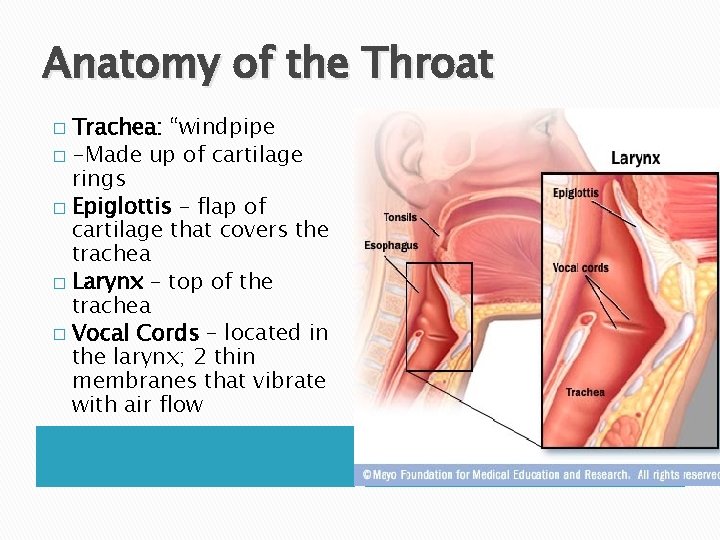
Anatomy of the Throat Trachea: “windpipe � -Made up of cartilage rings � Epiglottis – flap of cartilage that covers the trachea � Larynx – top of the trachea � Vocal Cords – located in the larynx; 2 thin membranes that vibrate with air flow �
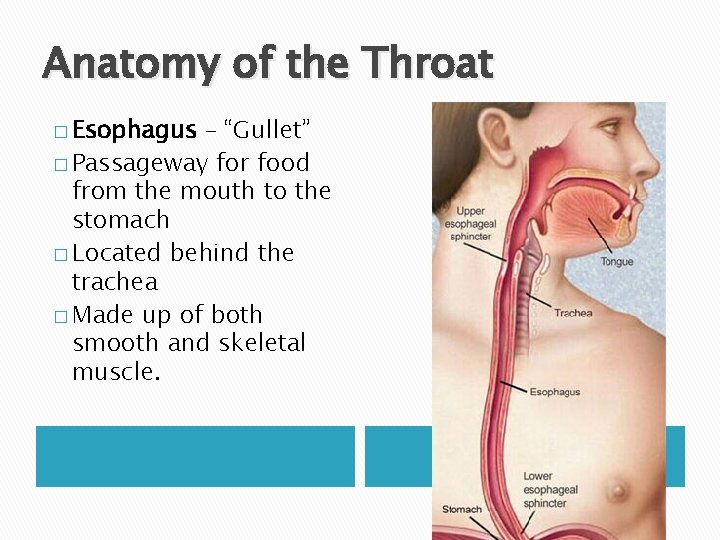
Anatomy of the Throat � Esophagus – “Gullet” � Passageway for food from the mouth to the stomach � Located behind the trachea � Made up of both smooth and skeletal muscle.
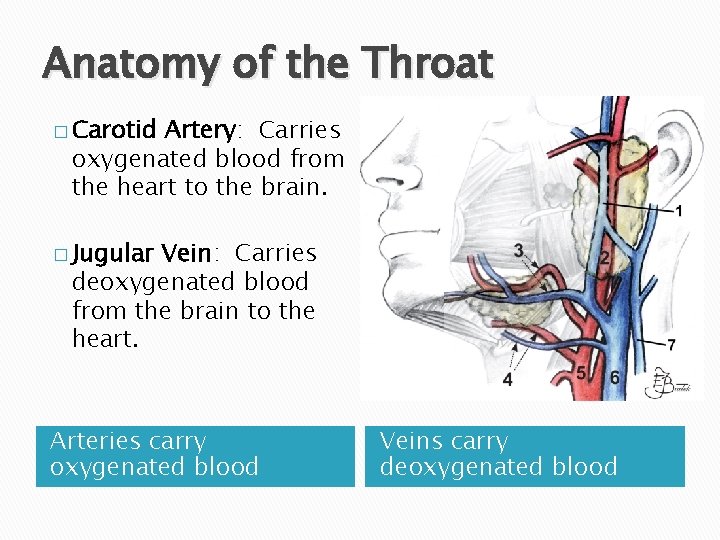
Anatomy of the Throat � Carotid Artery: Carries oxygenated blood from the heart to the brain. � Jugular Vein: Carries deoxygenated blood from the brain to the heart. Arteries carry oxygenated blood Veins carry deoxygenated blood
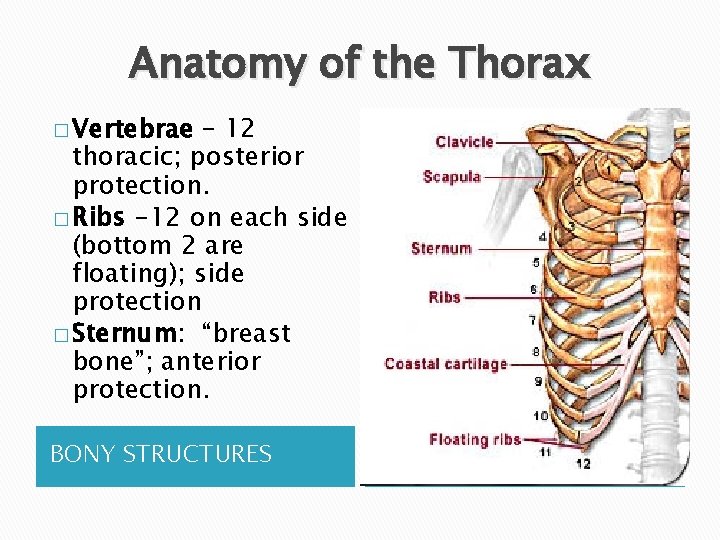
Anatomy of the Thorax � Vertebrae – 12 thoracic; posterior protection. � Ribs -12 on each side (bottom 2 are floating); side protection � Sternum: “breast bone”; anterior protection. BONY STRUCTURES
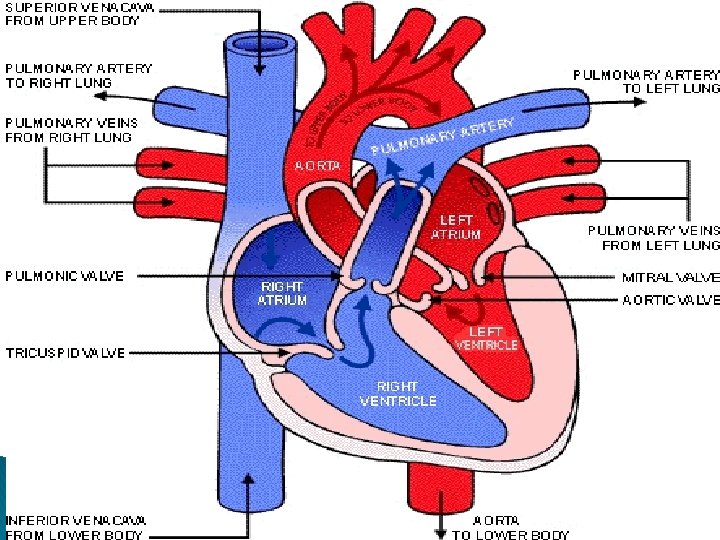
Anatomy of the Thorax Heart ◦ A. Purpose ◦ B. 4 chambers ◦ C. Process ◦ E. Arteries and Veins
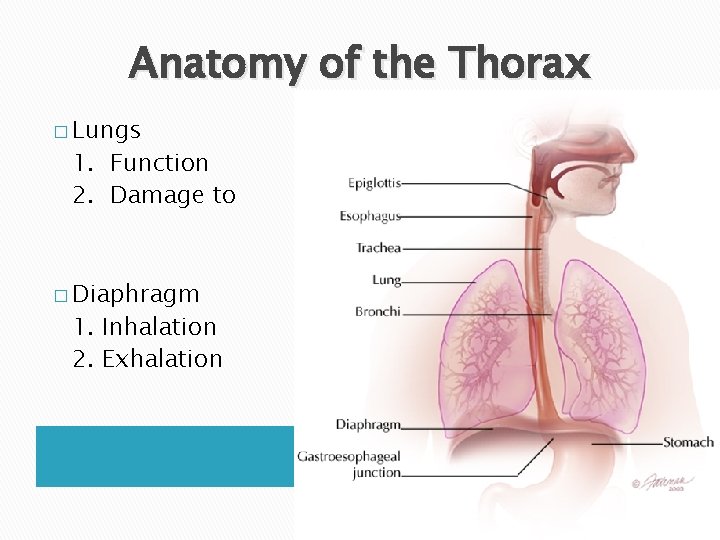
Anatomy of the Thorax � Lungs 1. Function 2. Damage to � Diaphragm 1. Inhalation 2. Exhalation
Preventing Injuries � 1. Throat protectors � 2. Chest protectors � 3. Shoulder pads � 4. Sternal pads � 5. Rules
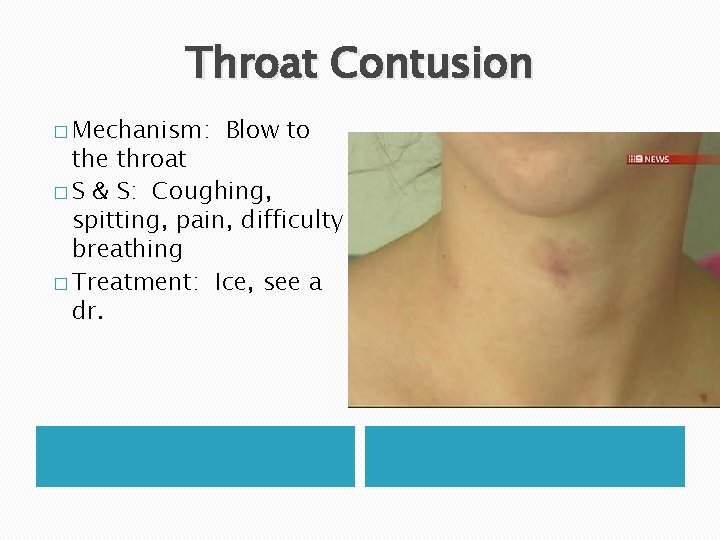
Throat Contusion � Mechanism: Blow to the throat � S & S: Coughing, spitting, pain, difficulty breathing � Treatment: Ice, see a dr.
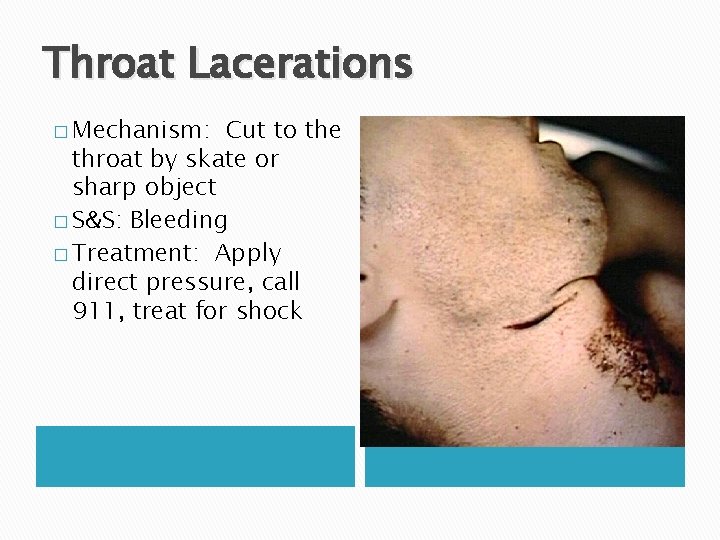
Throat Lacerations � Mechanism: Cut to the throat by skate or sharp object � S&S: Bleeding � Treatment: Apply direct pressure, call 911, treat for shock
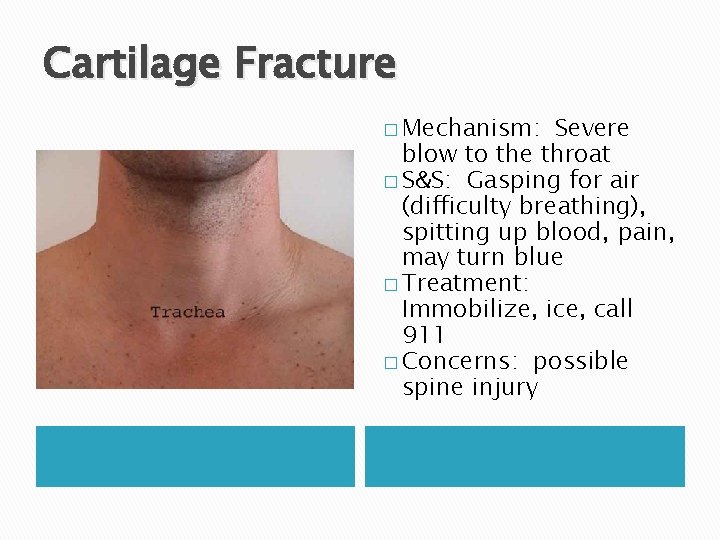
Cartilage Fracture � Mechanism: Severe blow to the throat � S&S: Gasping for air (difficulty breathing), spitting up blood, pain, may turn blue � Treatment: Immobilize, ice, call 911 � Concerns: possible spine injury
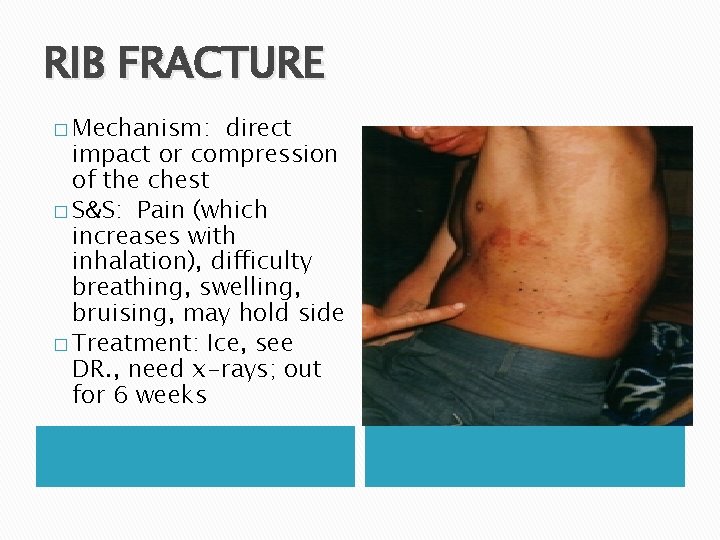
RIB FRACTURE � Mechanism: direct impact or compression of the chest � S&S: Pain (which increases with inhalation), difficulty breathing, swelling, bruising, may hold side � Treatment: Ice, see DR. , need x-rays; out for 6 weeks
RIB Contusion � Mechanism: direct impact or compression of the chest � S&S: Pain (with inhalation and exhalation), difficulty breathing, swelling, bruising, may hold side � Treatment: Ice, see DR. , need x-rays; out until pain ceases
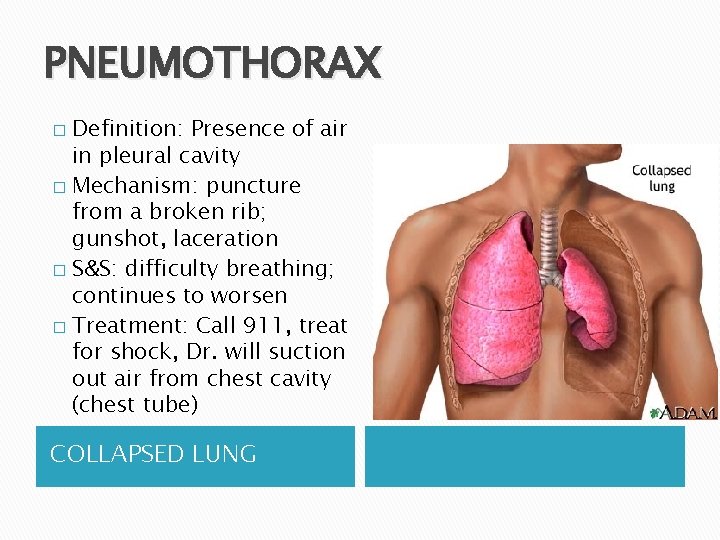
PNEUMOTHORAX Definition: Presence of air in pleural cavity � Mechanism: puncture from a broken rib; gunshot, laceration � S&S: difficulty breathing; continues to worsen � Treatment: Call 911, treat for shock, Dr. will suction out air from chest cavity (chest tube) � COLLAPSED LUNG
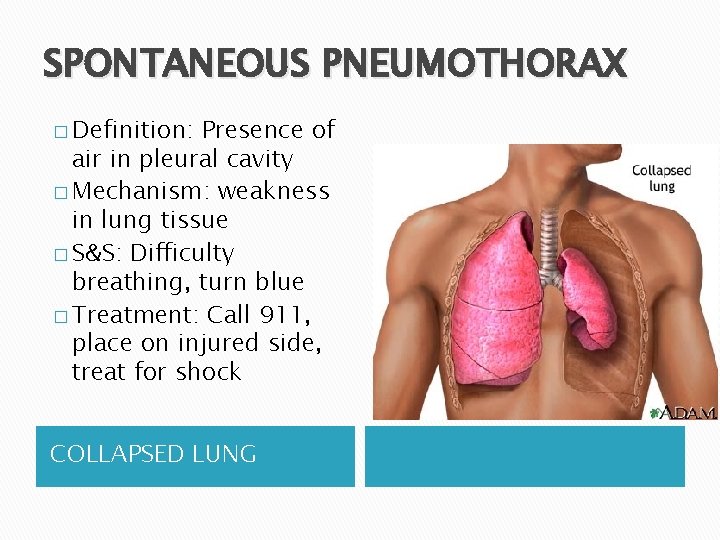
SPONTANEOUS PNEUMOTHORAX � Definition: Presence of air in pleural cavity � Mechanism: weakness in lung tissue � S&S: Difficulty breathing, turn blue � Treatment: Call 911, place on injured side, treat for shock COLLAPSED LUNG
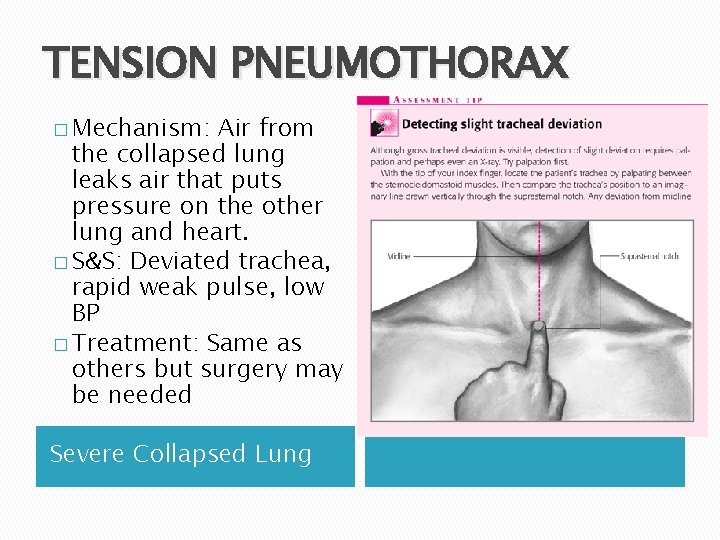
TENSION PNEUMOTHORAX � Mechanism: Air from the collapsed lung leaks air that puts pressure on the other lung and heart. � S&S: Deviated trachea, rapid weak pulse, low BP � Treatment: Same as others but surgery may be needed Severe Collapsed Lung
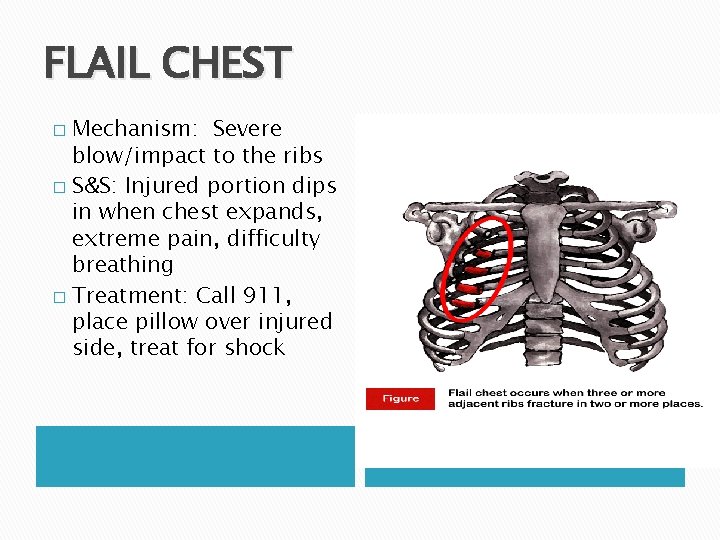
FLAIL CHEST Mechanism: Severe blow/impact to the ribs � S&S: Injured portion dips in when chest expands, extreme pain, difficulty breathing � Treatment: Call 911, place pillow over injured side, treat for shock �
PULMONARY CONTUSION � Bruised Lung � Mechanism: Direct impact to chest (being tackled) � S&S: Bleeding and swelling in the lungs, difficulty breathing, turning blue, may cough up blood � Treatment: call 911, may need oxygen, ice
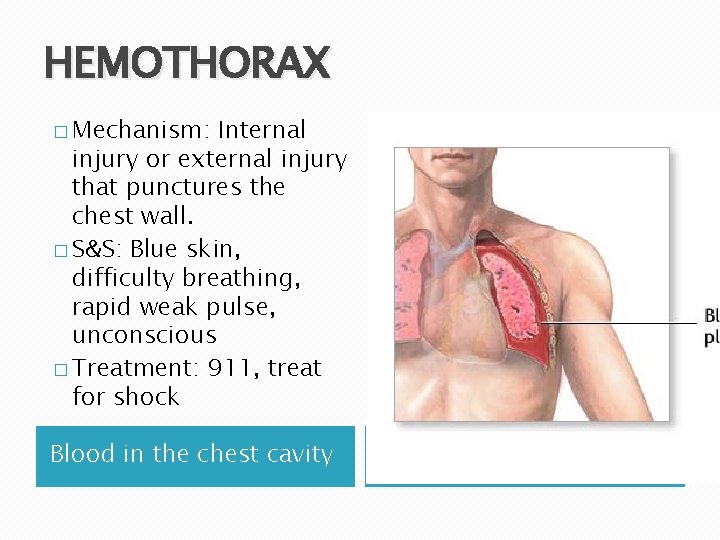
HEMOTHORAX � Mechanism: Internal injury or external injury that punctures the chest wall. � S&S: Blue skin, difficulty breathing, rapid weak pulse, unconscious � Treatment: 911, treat for shock Blood in the chest cavity
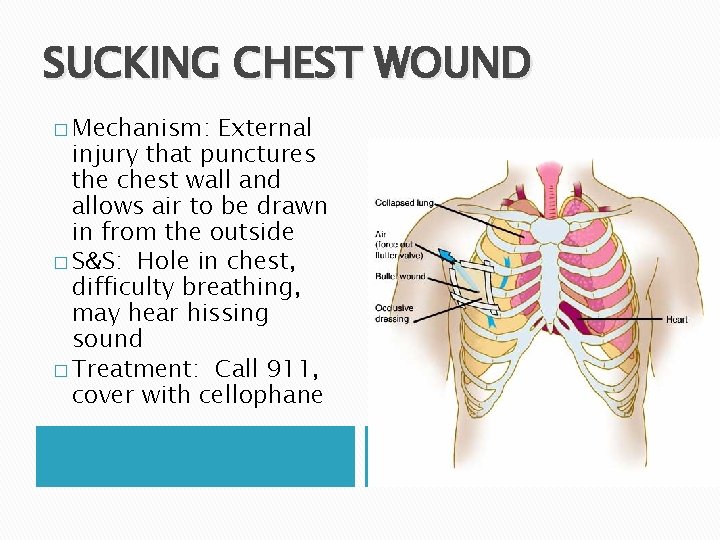
SUCKING CHEST WOUND � Mechanism: External injury that punctures the chest wall and allows air to be drawn in from the outside � S&S: Hole in chest, difficulty breathing, may hear hissing sound � Treatment: Call 911, cover with cellophane
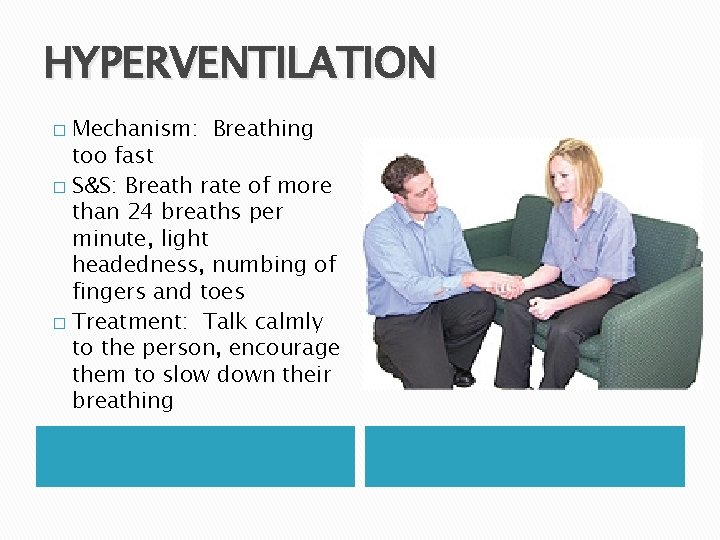
HYPERVENTILATION Mechanism: Breathing too fast � S&S: Breath rate of more than 24 breaths per minute, light headedness, numbing of fingers and toes � Treatment: Talk calmly to the person, encourage them to slow down their breathing �